Oregons Methane Project Experience and Potential Mike Gamroth

- Slides: 26
Oregon’s Methane Project Experience and Potential Mike Gamroth Oregon State University Dept. of Animal Sciences
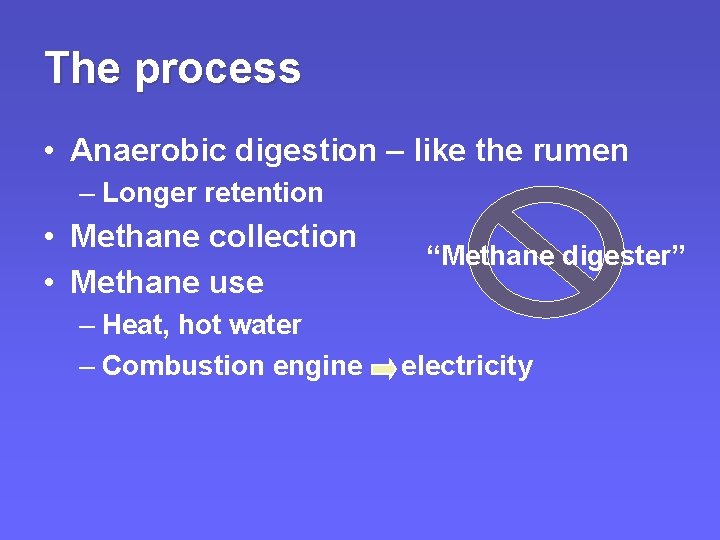
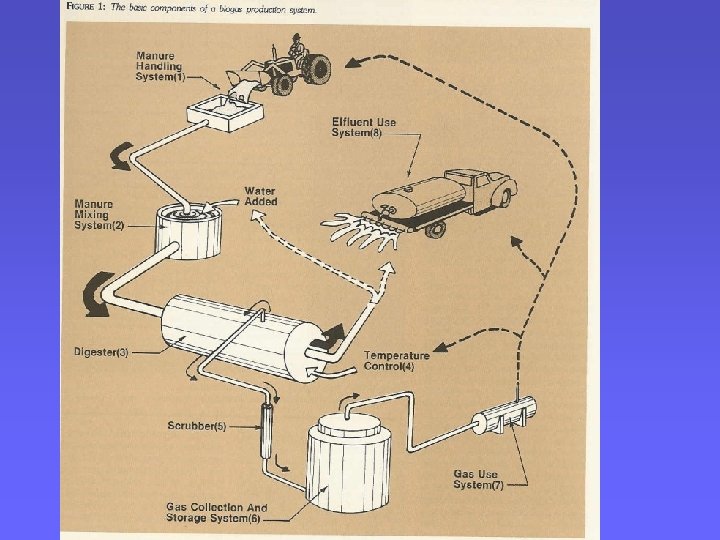
The process • Anaerobic digestion – like the rumen – Longer retention • Methane collection • Methane use – Heat, hot water – Combustion engine “Methane digester” electricity
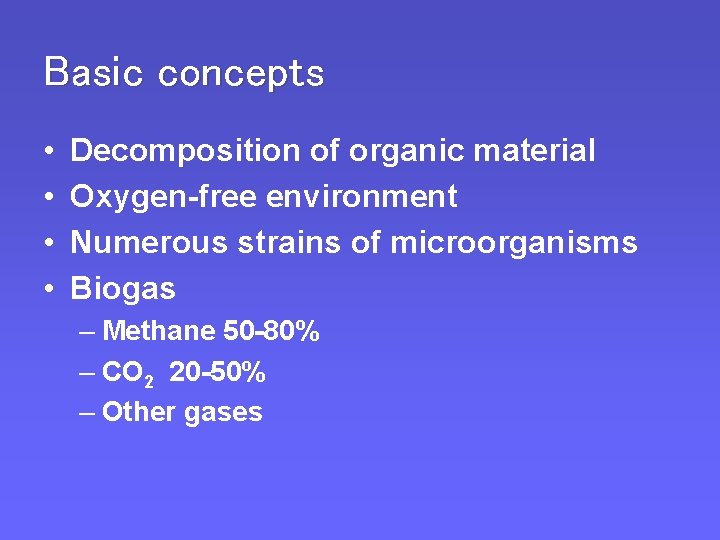
Basic concepts • • Decomposition of organic material Oxygen-free environment Numerous strains of microorganisms Biogas – Methane 50 -80% – CO 2 20 -50% – Other gases
• Ambient temperature – Covered lagoon – Lowest output • Mesophilic – Around 100º F – More forgiving • Thermophilic – Highest output, lower retention time
Digester types • Plug flow – Suited to scraped manure – Most common on dairies – Long rectangular tanks – Heat added, in-ground or insulated – Retention time (RT) 15 to 20 days
Digester types • Complete mix – Typically upright round tanks – Benefits from regular feeding – Can handle “wetter” manure – When co-digesting, mixing important
Digester types • Covered lagoon – Lowest cost, simplest to operate – Best suited to warm climates, wet manure – Lowest gas output – Often will be “seasonal”
Digester types • Biofilm – Can augment any digester – A place for bacterial activity – Reduces retention time
Economics 101 • A thrifty digester system can payback in 7 to 10 years – Initial cost – Operation costs – Value of energy, tax credits – Other benefits – odor control, solids sales
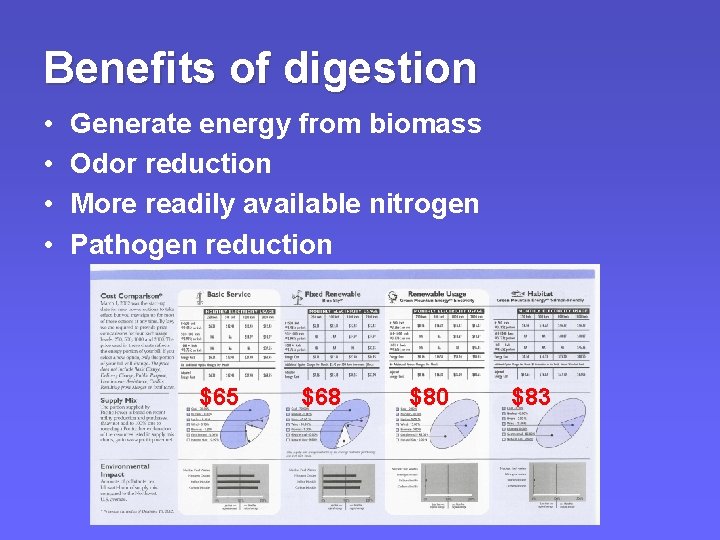
Benefits of digestion • • Generate energy from biomass Odor reduction More readily available nitrogen Pathogen reduction $65 $68 $80 $83
Why there aren’t more… • • • Poor design Lack of skills, time Excessive maintenance, operation time Diminishing returns over time Lack of interest Out of business EPA and Meyer, et al
Keys to success • Know your manure quality • Match the digester technology with the manure • Select a tested design and keep it simple • Take advantage of incentives • Monitor the system daily • Line up operation and maintenance backup
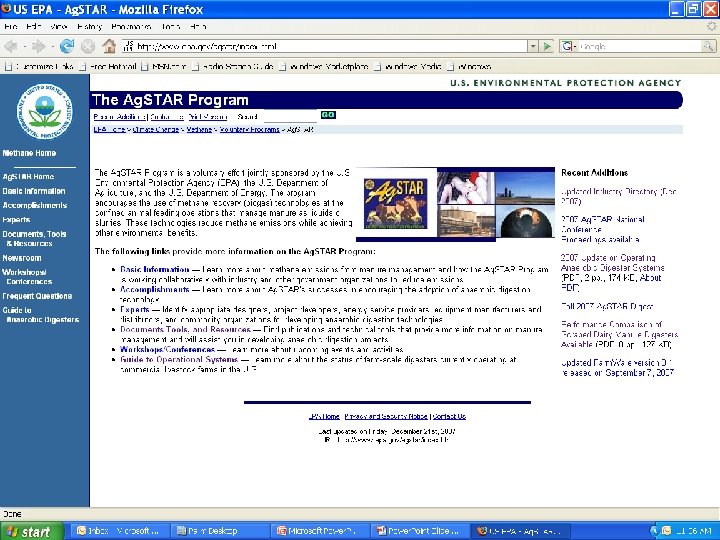
Resources • http: //www. epa. gov/agstar/index. html • Our project: – Energy Trust of Oregon – Oregon Beef Council – Oregon Dairy Farmers Association • Amanda Green (360) 751 -4190
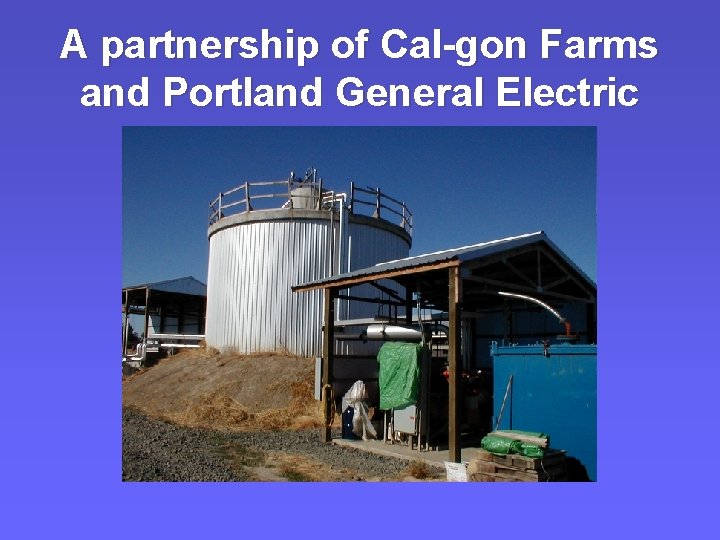
A partnership of Cal-gon Farms and Portland General Electric
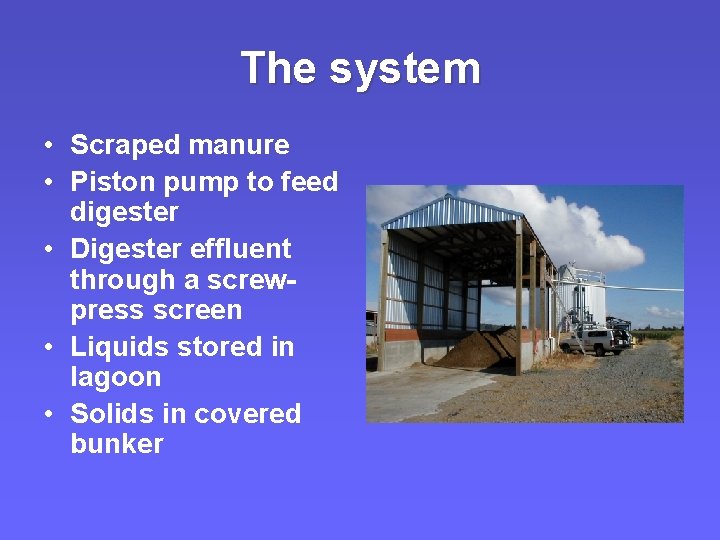
The system • Scraped manure • Piston pump to feed digester • Digester effluent through a screwpress screen • Liquids stored in lagoon • Solids in covered bunker
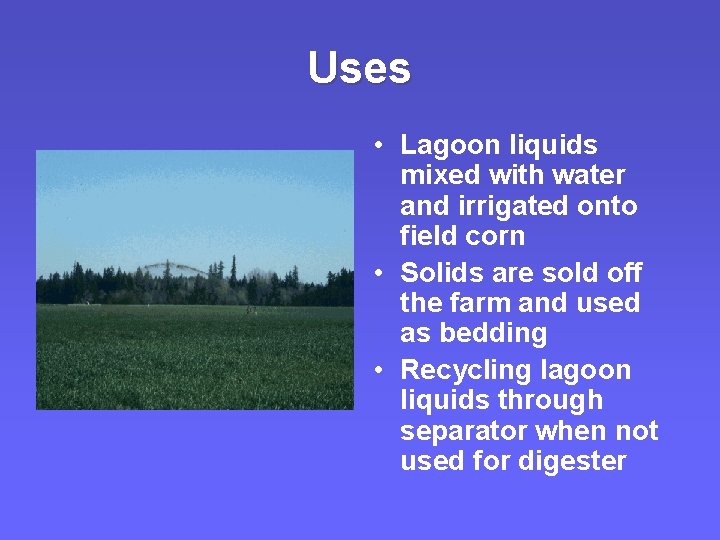
Uses • Lagoon liquids mixed with water and irrigated onto field corn • Solids are sold off the farm and used as bedding • Recycling lagoon liquids through separator when not used for digester
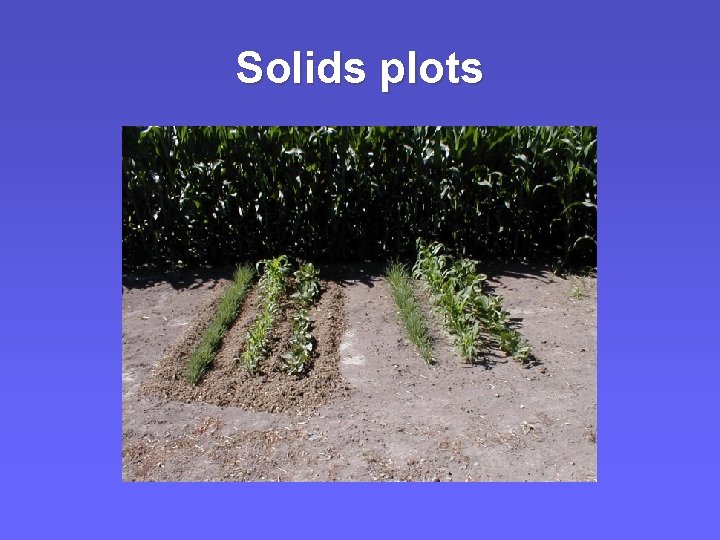
Research project • Questions about the farm’s nutrient balance • Questions about the start-up and stabilization of the digester • Received money from a grant program to sample the digester during start-up and for a two month period during operation • Evaluate solids as a soil amendment
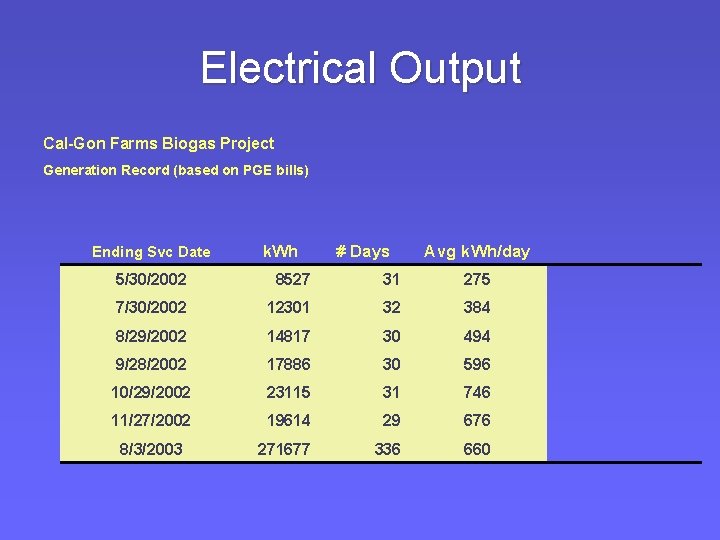
Electrical Output Cal-Gon Farms Biogas Project Generation Record (based on PGE bills) Ending Svc Date k. Wh # Days Avg k. Wh/day 5/30/2002 8527 31 275 7/30/2002 12301 32 384 8/29/2002 14817 30 494 9/28/2002 17886 30 596 10/29/2002 23115 31 746 11/27/2002 19614 29 676 8/3/2003 271677 336 660
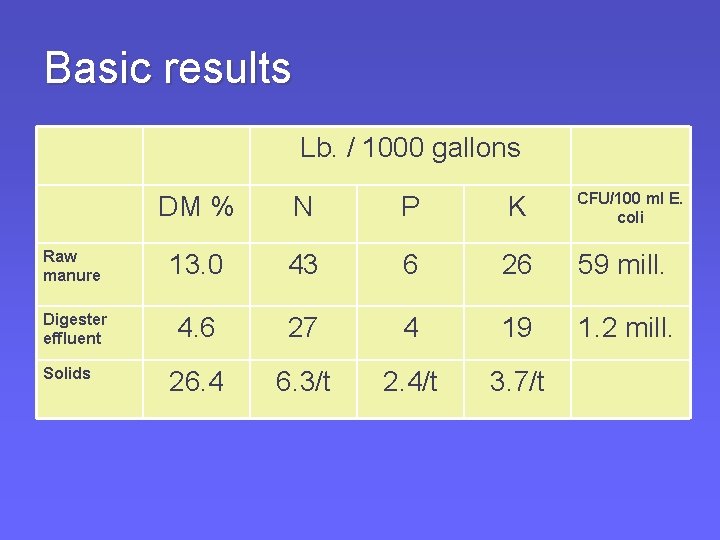
Basic results Lb. / 1000 gallons CFU/100 ml E. coli DM % N P K Raw manure 13. 0 43 6 26 59 mill. Digester effluent 4. 6 27 4 19 1. 2 mill. 26. 4 6. 3/t 2. 4/t 3. 7/t Solids
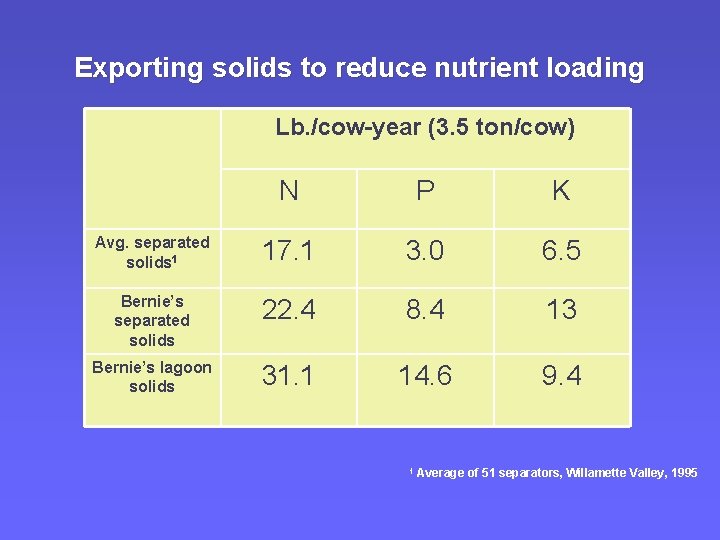
Exporting solids to reduce nutrient loading Lb. /cow-year (3. 5 ton/cow) N P K Avg. separated solids 1 17. 1 3. 0 6. 5 Bernie’s separated solids 22. 4 8. 4 13 Bernie’s lagoon solids 31. 1 14. 6 9. 4 1 Average of 51 separators, Willamette Valley, 1995
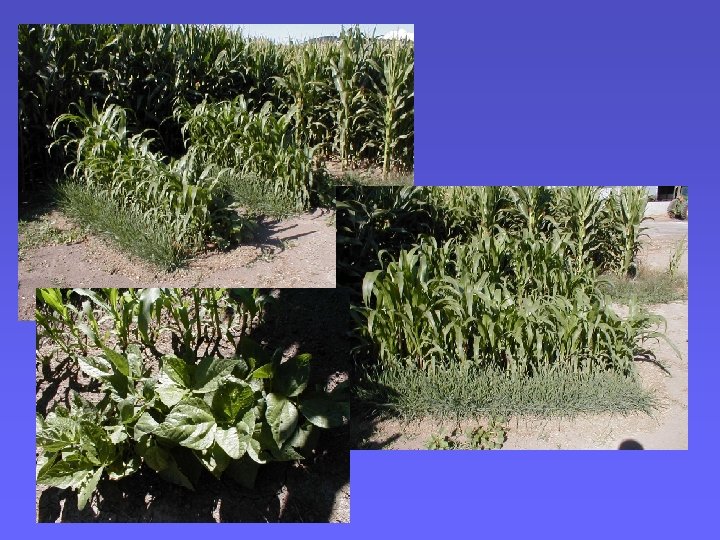
Solids plots
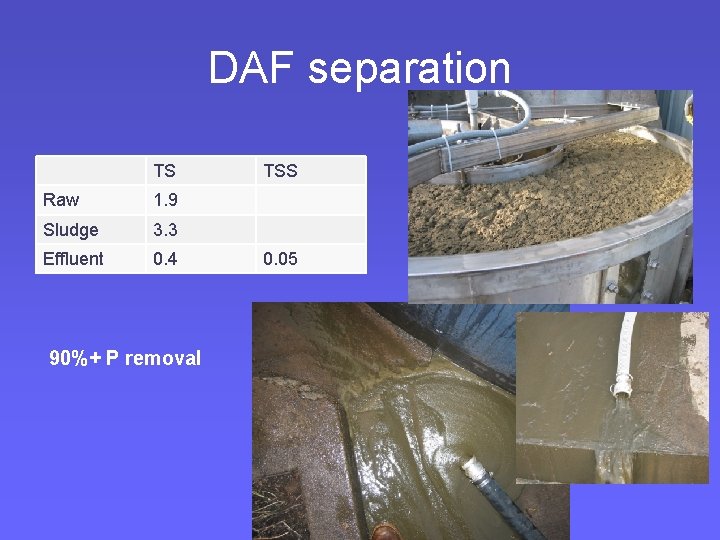
DAF separation TS Raw 1. 9 Sludge 3. 3 Effluent 0. 4 90%+ P removal TSS 0. 05