Oregon Math in Real Life Project Connecting Math


- Slides: 20
Oregon Math in Real Life Project: Connecting Math to CTE Context NWMC October 11, 2019 Mark Freed – Oregon Department of Education Tom Thompson – Oregon Department of Education
Setting the Stage: Why High School Math? • Known Issues: • • Too many high school math standards Single pathway to calculus Need for more relevant applications Inequitable practices for students and teachers (lack of student voice)
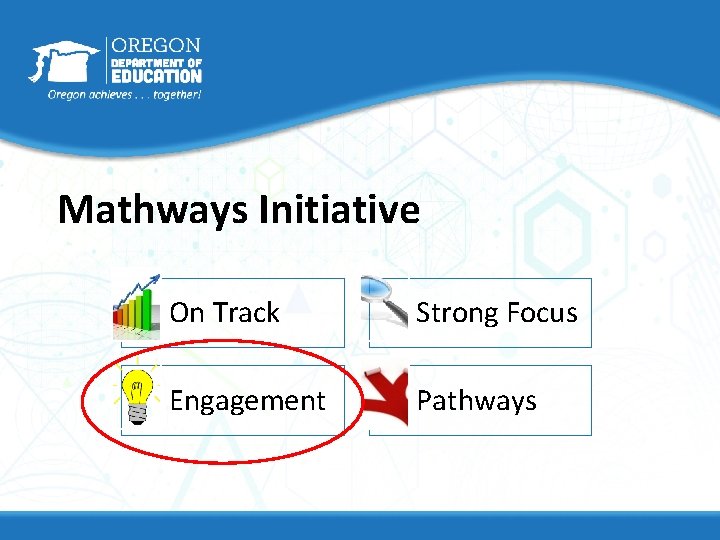
Mathways Initiative On Track Strong Focus Engagement Pathways
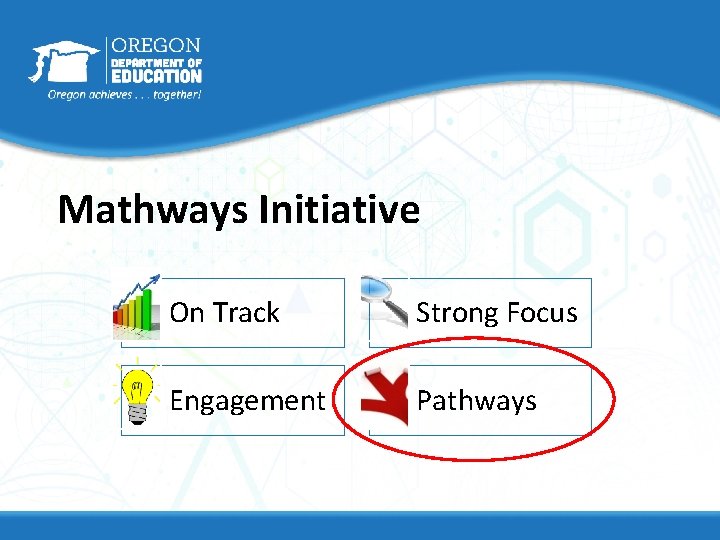
Mathways Initiative On Track Strong Focus Engagement Pathways
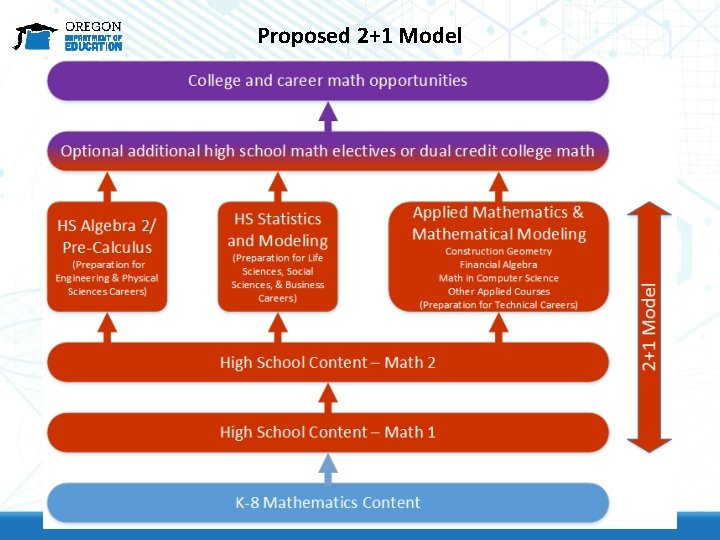
Proposed 2+1 Model
Mathways Initiative On Track Strong Focus Engagement Pathways
Math in Real Life – Highlights • • • Lane County Central Oregon Portland Metro Oregon State University Southern Oregon Eastern Oregon
Connections to CTE • Idea started with Math in CTE • Contextual experience for math teachers • Context expert (CTE Teacher, Externship, Community) • Content expert (Math Teacher) • Loose lesson study model • Lessons executed in math class
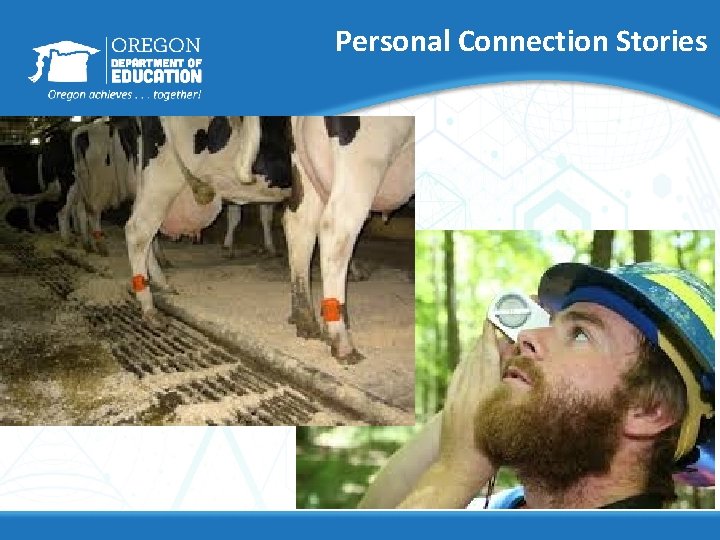
Personal Connection Stories • Picture of dairy barn and trees
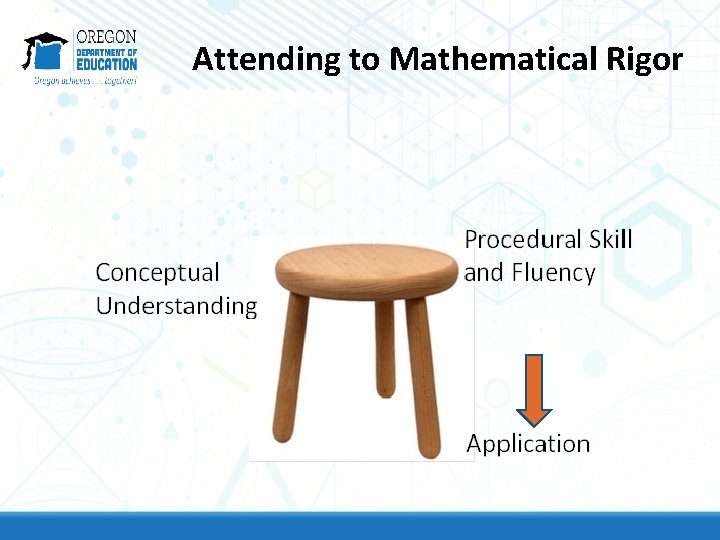
Attending to Mathematical Rigor
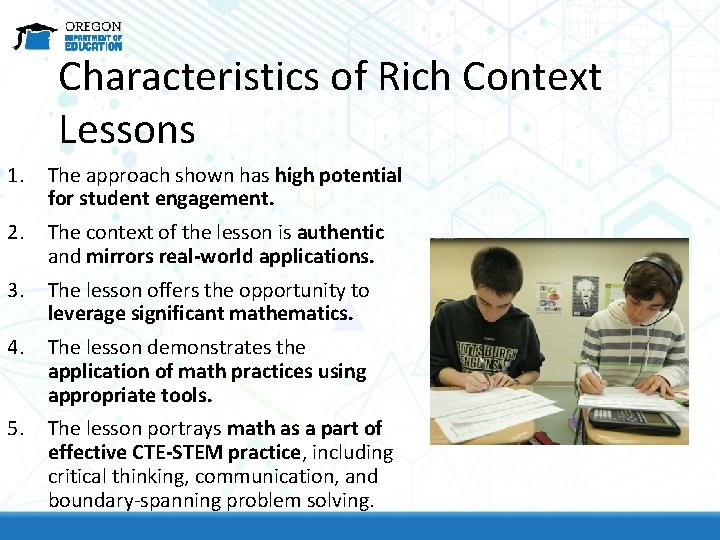
Characteristics of Rich Context Lessons 1. The approach shown has high potential for student engagement. 2. The context of the lesson is authentic and mirrors real-world applications. 3. The lesson offers the opportunity to leverage significant mathematics. 4. The lesson demonstrates the application of math practices using appropriate tools. 5. The lesson portrays math as a part of effective CTE-STEM practice, including critical thinking, communication, and boundary-spanning problem solving.
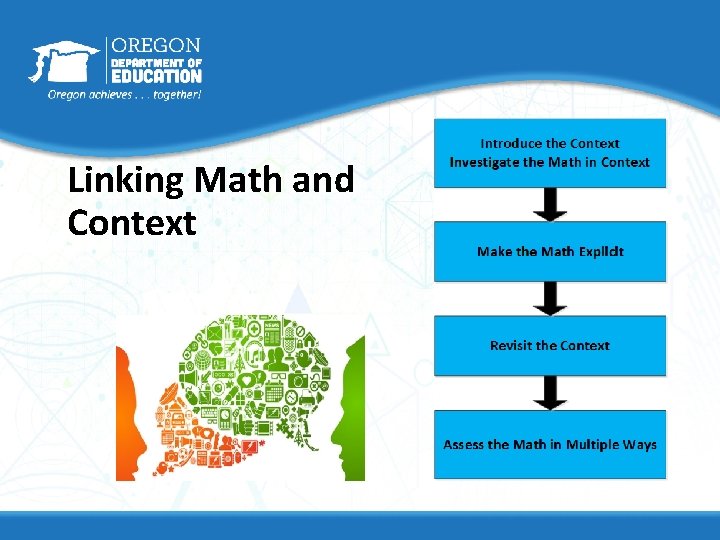
Linking Math and Context
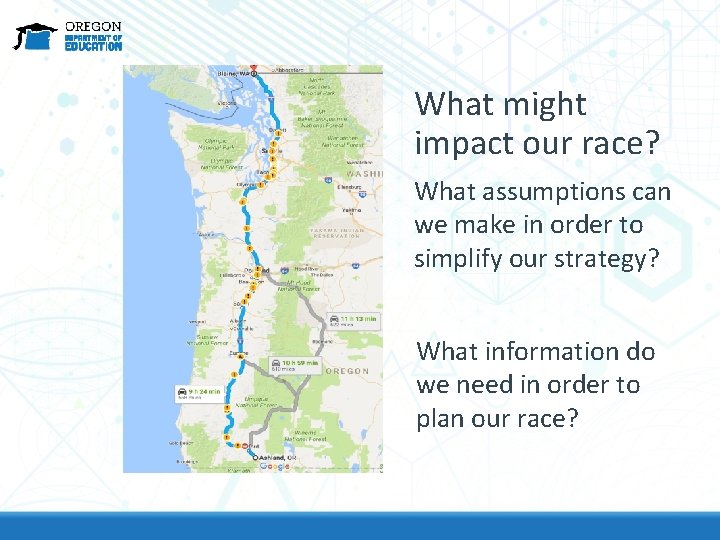
What might impact our race? What assumptions can we make in order to simplify our strategy? What information do we need in order to plan our race?
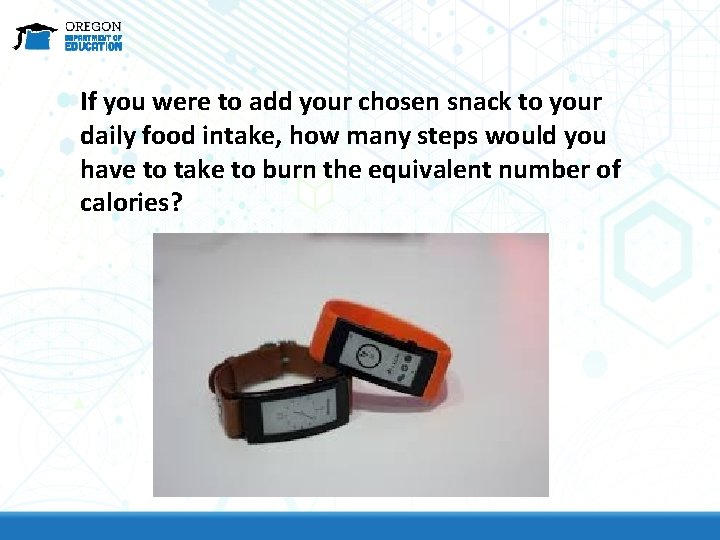
If you were to add your chosen snack to your daily food intake, how many steps would you have to take to burn the equivalent number of calories?
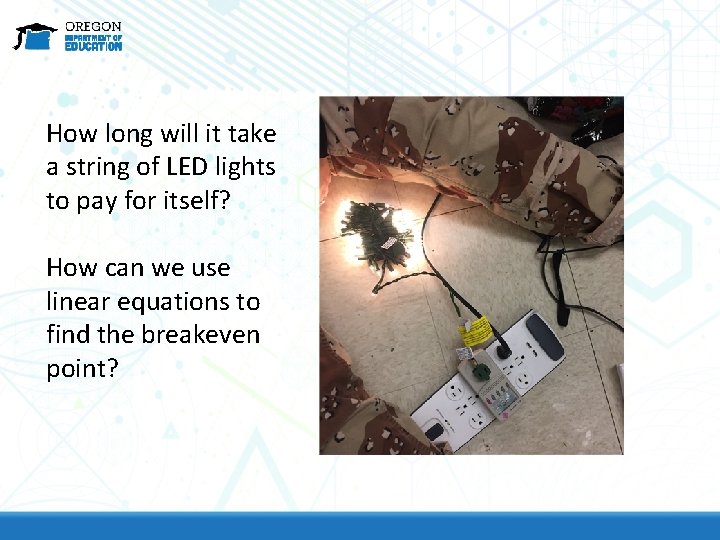
How long will it take a string of LED lights to pay for itself? How can we use linear equations to find the breakeven point?
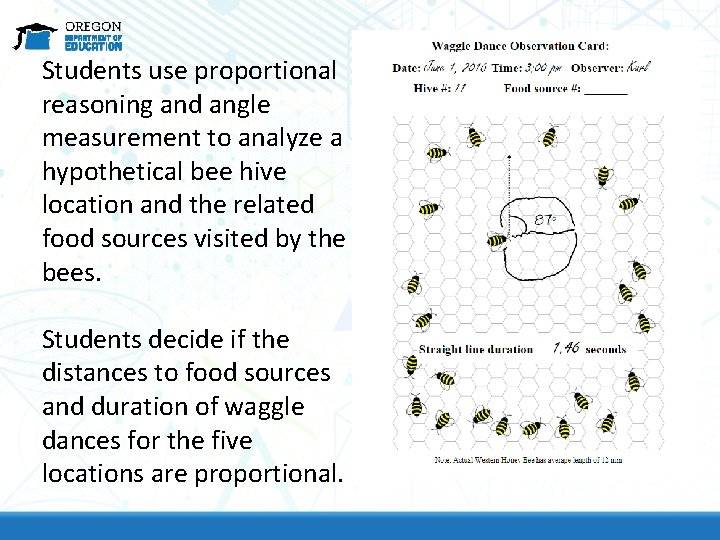
Students use proportional reasoning and angle measurement to analyze a hypothetical bee hive location and the related food sources visited by the bees. Students decide if the distances to food sources and duration of waggle dances for the five locations are proportional.
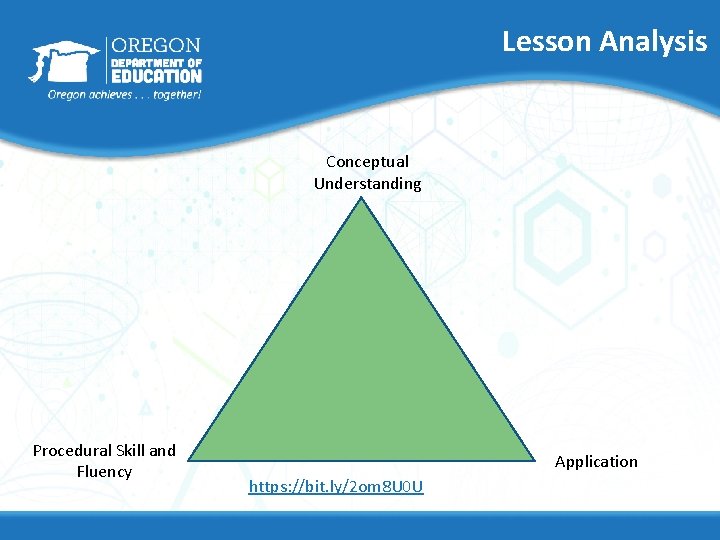
Lesson Analysis Conceptual Understanding Procedural Skill and Fluency Application https: //bit. ly/2 om 8 U 0 U
Learnings • • • Teacher need for opportunities to see math in context. Developing lessons is a catalyst for changing practice. PLC structure Start with a single idea Have a context expert on hand
Next Steps • Consolidation of resources. • Professional development tools. • Building courses. • Building leadership.