OPTIMIZING DEFOAMER USAGE IN DRILLING CEMENTING APPLICATIONS TECHNOLOGY



- Slides: 27
OPTIMIZING DEFOAMER USAGE IN DRILLING & CEMENTING APPLICATIONS: TECHNOLOGY REVIEW & TESTING METHODOLOGIES Luciana Bava, Amir Mahmoudkhani, Robert Wilson, Leanne Levy, Patricia De Palma and Henry Masias Atlanta R&D Center, Atlanta, Georgia, USA Buenos Aires, 7 al 10 de agosto de 2012
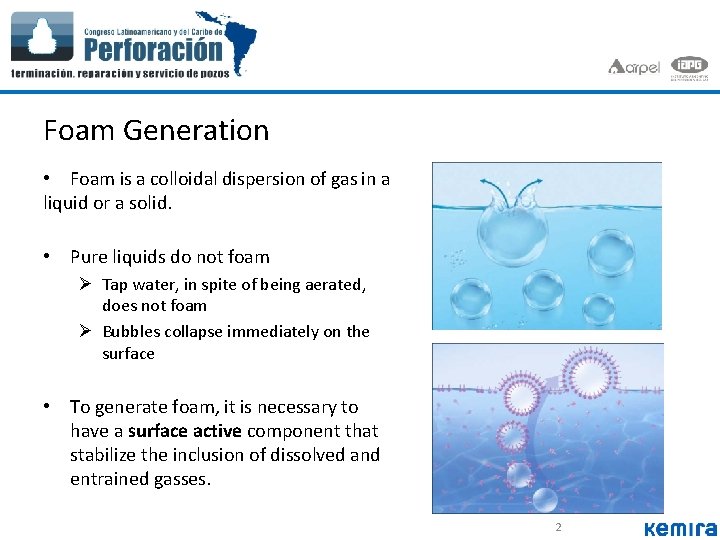
Foam Generation • Foam is a colloidal dispersion of gas in a liquid or a solid. • Pure liquids do not foam Ø Tap water, in spite of being aerated, does not foam Ø Bubbles collapse immediately on the surface • To generate foam, it is necessary to have a surface active component that stabilize the inclusion of dissolved and entrained gasses. 2
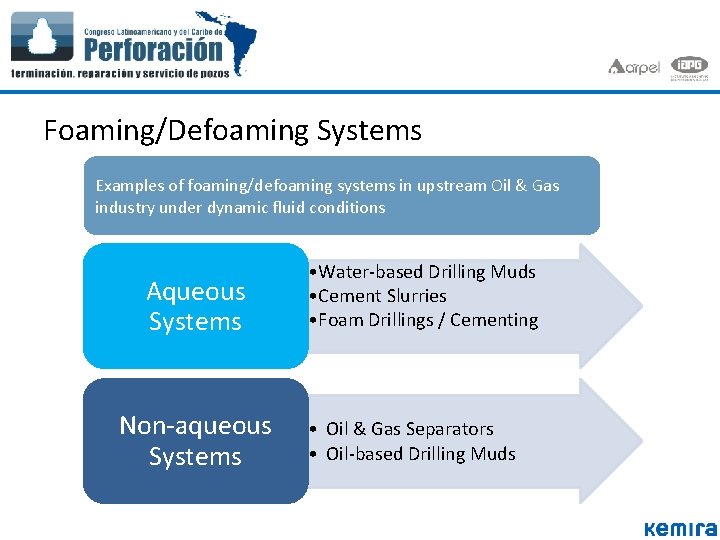
Foaming/Defoaming Systems Examples of foaming/defoaming systems in upstream Oil & Gas industry under dynamic fluid conditions Aqueous Systems Non-aqueous Systems • Water-based Drilling Muds • Cement Slurries • Foam Drillings / Cementing • Oil & Gas Separators • Oil-based Drilling Muds
Well Completion Cement
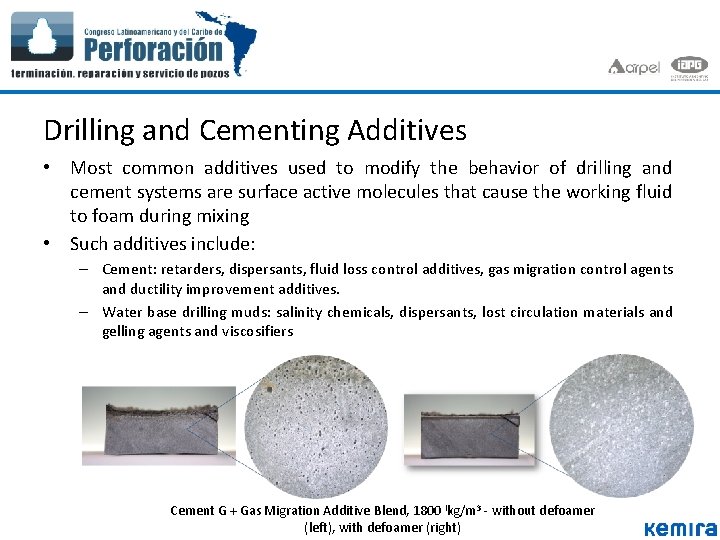
Drilling and Cementing Additives • Most common additives used to modify the behavior of drilling and cement systems are surface active molecules that cause the working fluid to foam during mixing • Such additives include: – Cement: retarders, dispersants, fluid loss control additives, gas migration control agents and ductility improvement additives. – Water base drilling muds: salinity chemicals, dispersants, lost circulation materials and gelling agents and viscosifiers Cement G + Gas Migration Additive Blend, 1800 ikg/m 3 - without defoamer (left), with defoamer (right)
Foam in Drilling and Cementing Operations • Excessive slurry foaming can have several undesirable consequences: – Loss of hydraulic pressure during pumping can occur owing to cavitation in the mixing system – Air entrainment may cause higher than desired slurry densities – Air entrainment also increases the risk of gas permeability and of improper wetting and mixing – Liquid or Dry Defoamers are used
Well Cementing – Cement Mixing Recirculating Centrifugal Pumps (max 4000 L /min) Slurry Tubs: 1000 – 8000 L
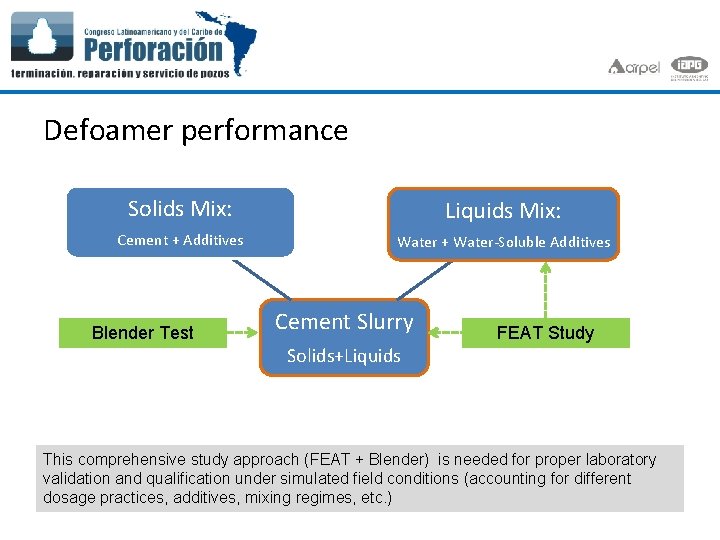
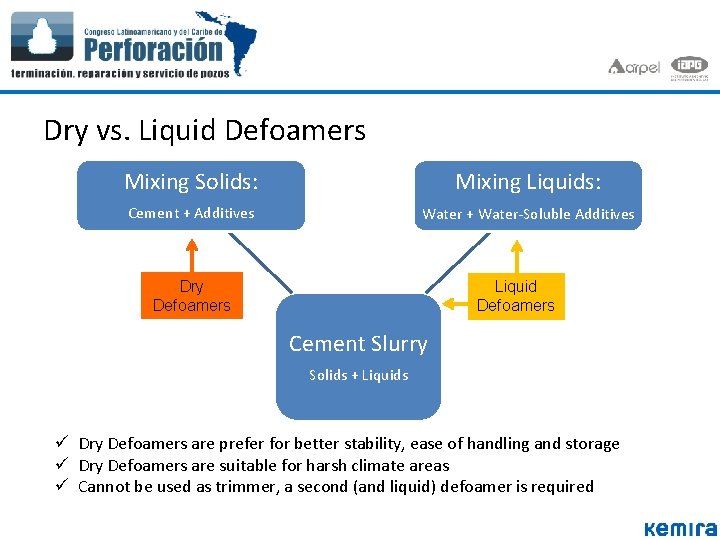
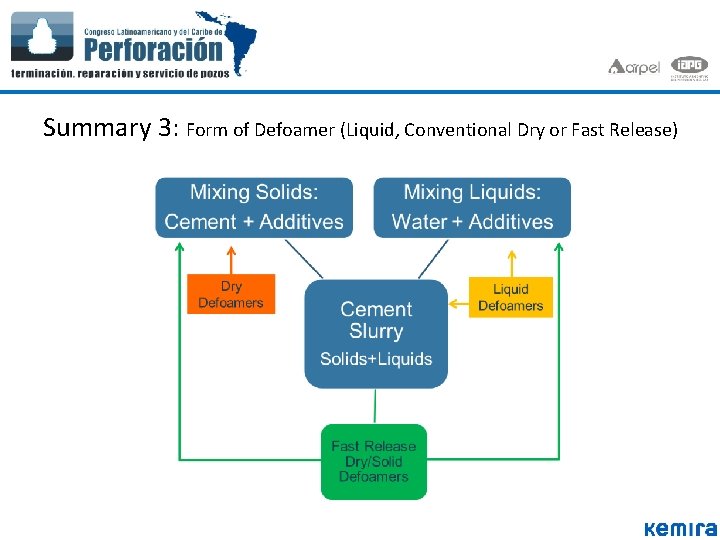
Well Cementing – Cement Mixing Solids Mix: Liquids Mix: Cement + Solid Additives Water + Water-Soluble Additives Dry Defoamers Cement Slurry Liquid Defoamers Solids + Liquids Foam Generation
Performance Evaluation Methods
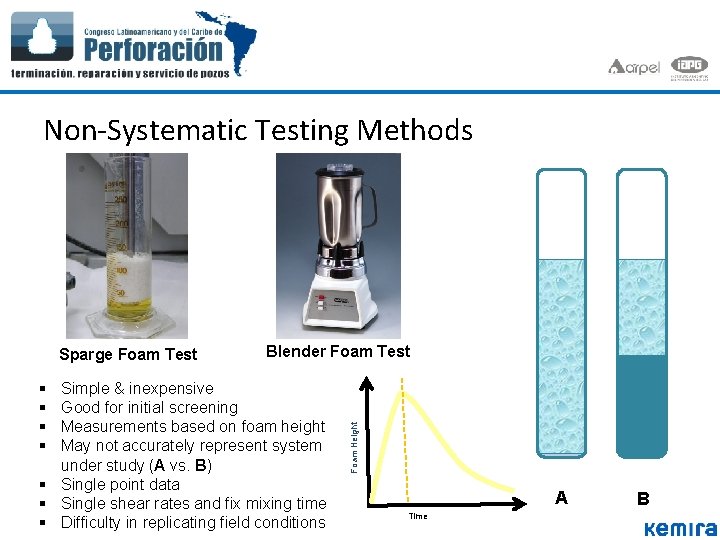
Non-Systematic Testing Methods § § Blender Foam Test Simple & inexpensive Good for initial screening Measurements based on foam height May not accurately represent system under study (A vs. B) § Single point data § Single shear rates and fix mixing time § Difficulty in replicating field conditions Foam Height Sparge Foam Test A Time B
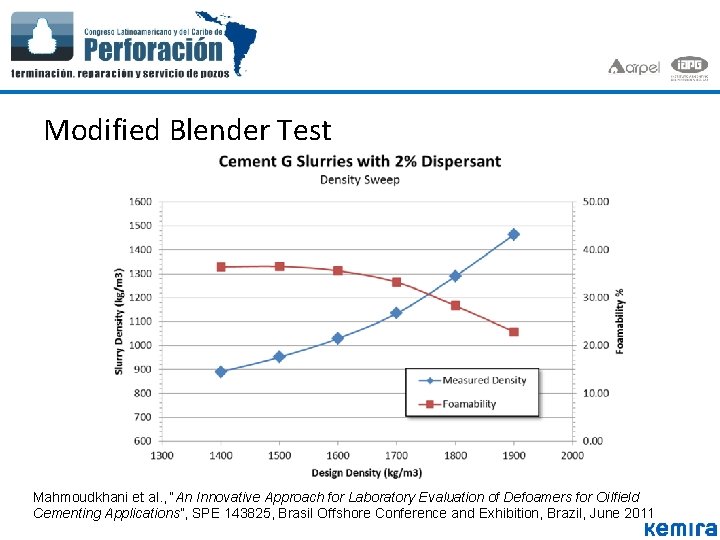
Modified Blender Test Mahmoudkhani et al. , “An Innovative Approach for Laboratory Evaluation of Defoamers for Oilfield Cementing Applications”, SPE 143825, Brasil Offshore Conference and Exhibition, Brazil, June 2011
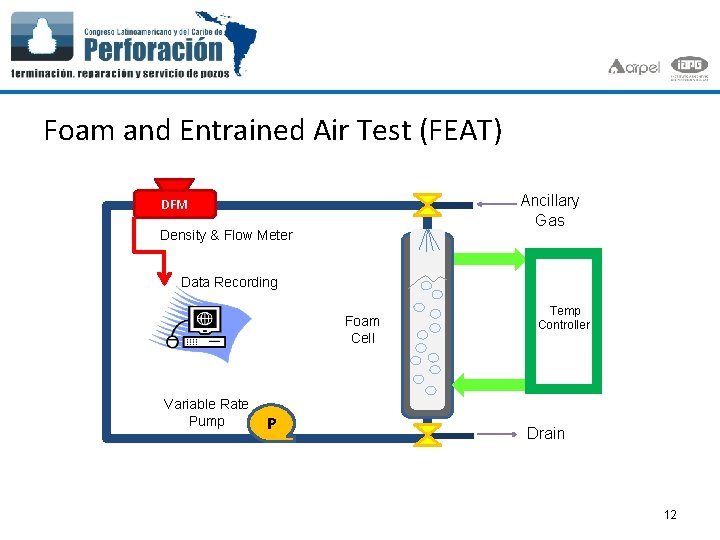
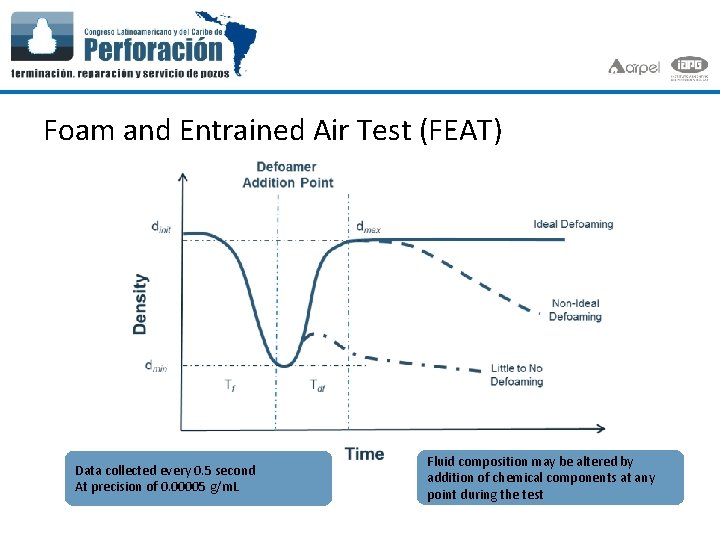
Foam and Entrained Air Test (FEAT) Ancillary Gas DFM Density & Flow Meter Data Recording Foam Cell Variable Rate Pump P Temp Controller Drain 12
Foam and Entrained Air Test (FEAT) Data collected every 0. 5 second At precision of 0. 00005 g/m. L Fluid composition may be altered by addition of chemical components at any point during the test
Defoamer performance Solids Mix: Liquids Mix: Cement + Additives Water + Water-Soluble Additives Blender Test Cement Slurry Solids+Liquids FEAT Study This comprehensive study approach (FEAT + Blender) is needed for proper laboratory validation and qualification under simulated field conditions (accounting for different dosage practices, additives, mixing regimes, etc. )
Performance Evaluation: Defoamer Chemistry & Cement Additives
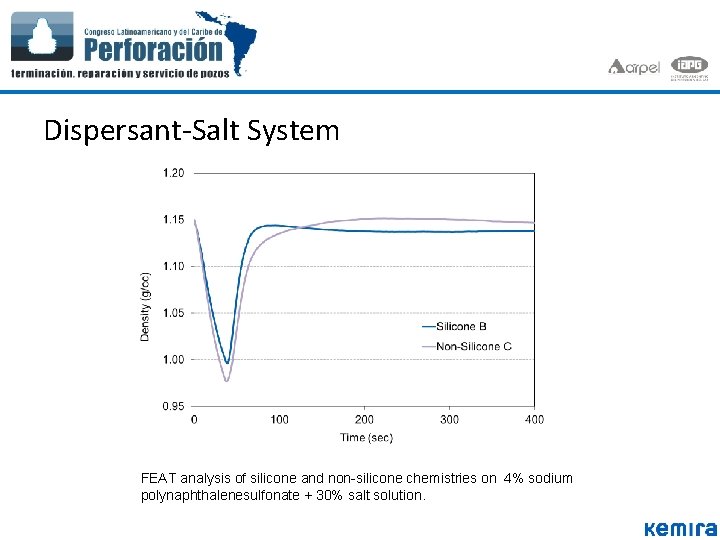
Dispersant-Salt System FEAT analysis of silicone and non-silicone chemistries on 4% sodium polynaphthalenesulfonate + 30% salt solution.
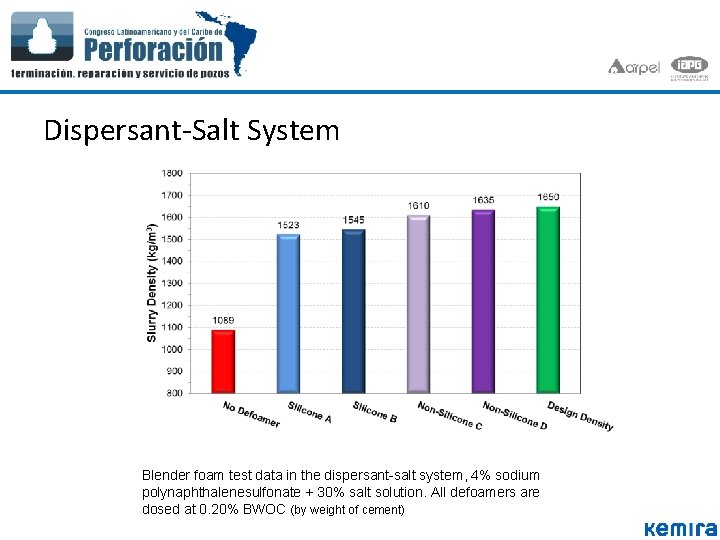
Dispersant-Salt System Blender foam test data in the dispersant-salt system, 4% sodium polynaphthalenesulfonate + 30% salt solution. All defoamers are dosed at 0. 20% BWOC (by weight of cement)
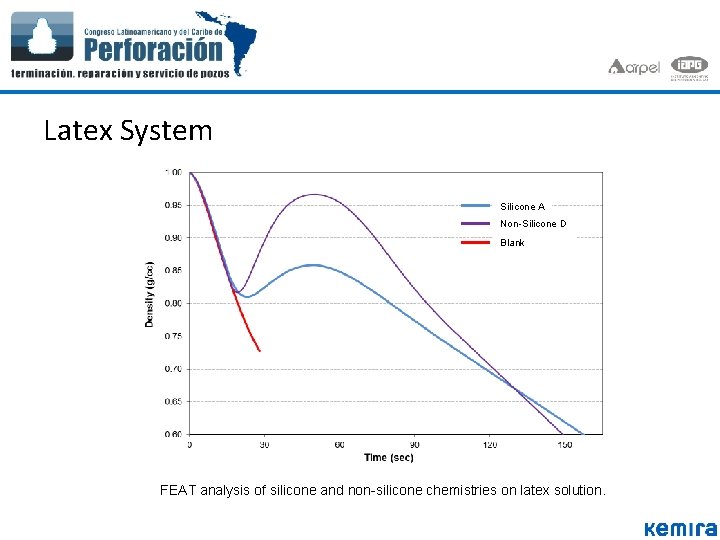
Latex System Silicone A Non-Silicone D Blank FEAT analysis of silicone and non-silicone chemistries on latex solution.
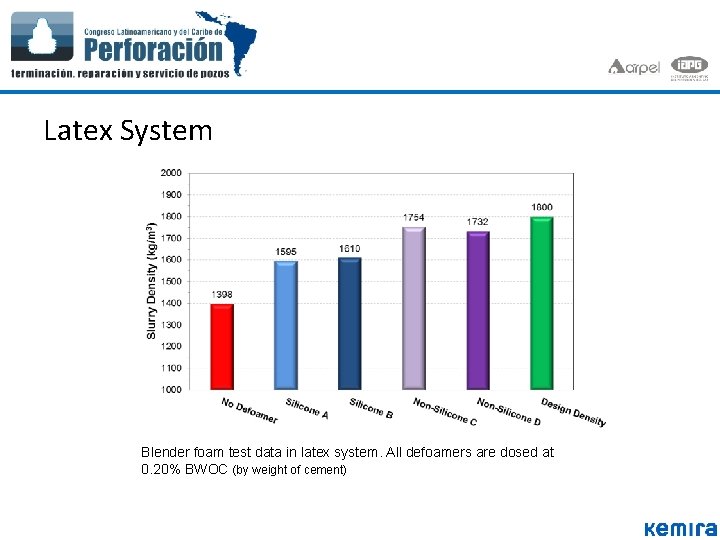
Latex System Blender foam test data in latex system. All defoamers are dosed at 0. 20% BWOC (by weight of cement)
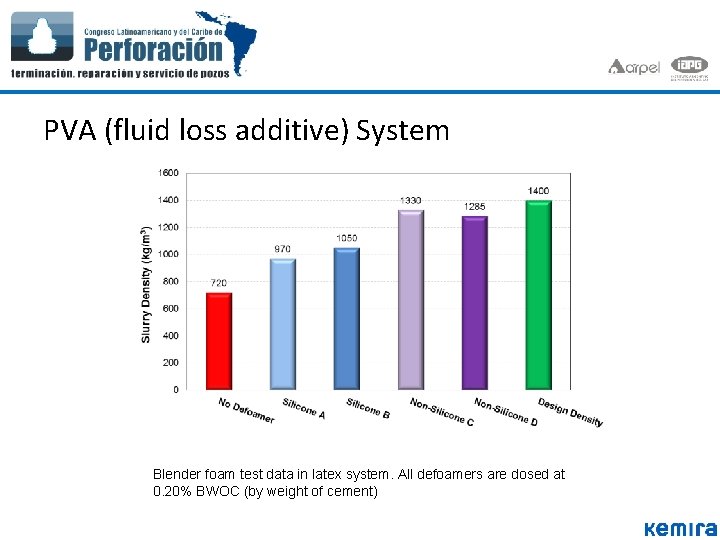
PVA (fluid loss additive) System Blender foam test data in latex system. All defoamers are dosed at 0. 20% BWOC (by weight of cement)
Dry vs. Liquid Defoamers Mixing Solids: Mixing Liquids: Cement + Additives Water + Water-Soluble Additives Dry Defoamers Liquid Defoamers Cement Slurry Solids + Liquids ü Dry Defoamers are prefer for better stability, ease of handling and storage ü Dry Defoamers are suitable for harsh climate areas ü Cannot be used as trimmer, a second (and liquid) defoamer is required
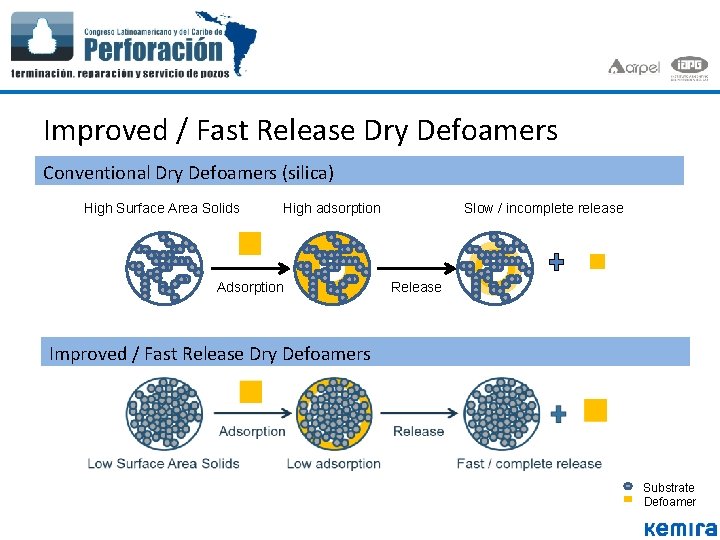
Improved / Fast Release Dry Defoamers Conventional Dry Defoamers (silica) High Surface Area Solids High adsorption Adsorption Slow / incomplete release Release Improved / Fast Release Dry Defoamers Substrate Defoamer
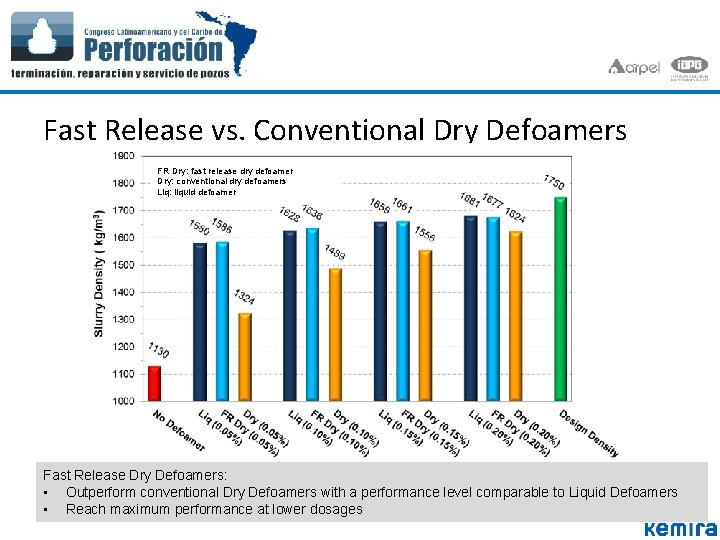
Fast Release vs. Conventional Dry Defoamers FR Dry: fast release dry defoamer Dry: conventional dry defoamers Liq: liquid defoamer Fast Release Dry Defoamers: • Outperform conventional Dry Defoamers with a performance level comparable to Liquid Defoamers • Reach maximum performance at lower dosages
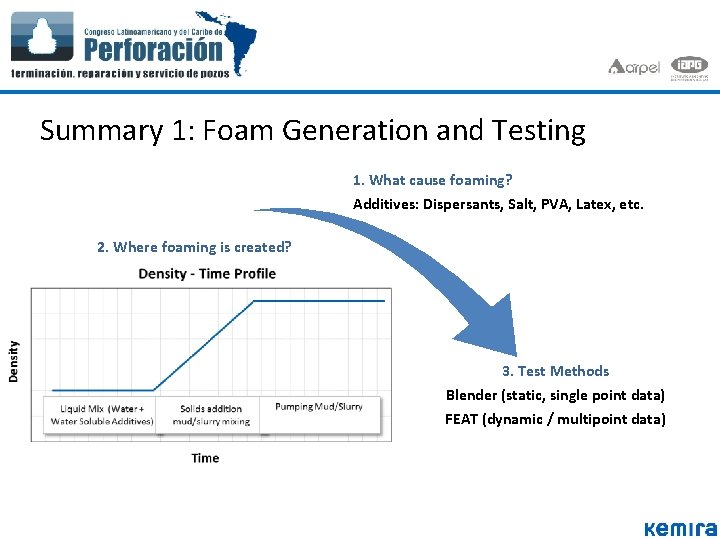
Summary 1: Foam Generation and Testing 1. What cause foaming? Additives: Dispersants, Salt, PVA, Latex, etc. 2. Where foaming is created? 3. Test Methods Blender (static, single point data) FEAT (dynamic / multipoint data)
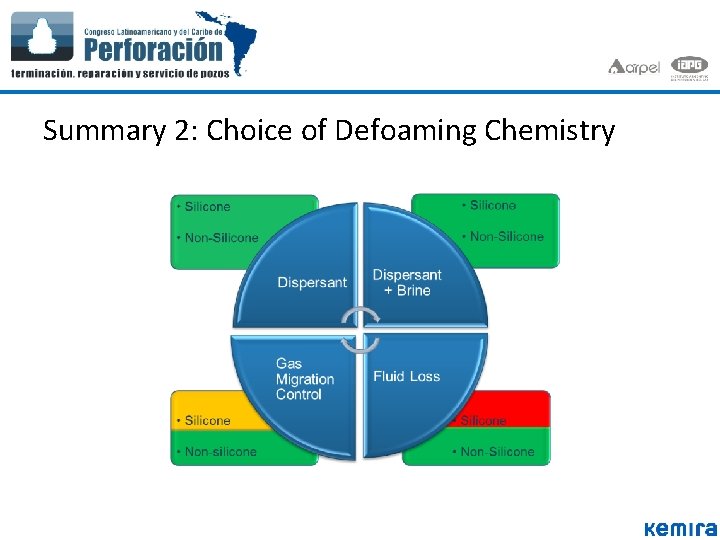
Summary 2: Choice of Defoaming Chemistry
Summary 3: Form of Defoamer (Liquid, Conventional Dry or Fast Release)
Thank you luciana. bava@kemira. com patricia. depalma@kemira. com