On Symmetry Illusory Contours and Visual Perception Introduction
- Slides: 11
On Symmetry, Illusory Contours and Visual Perception Introduction to Computational and Biological Vision 2007
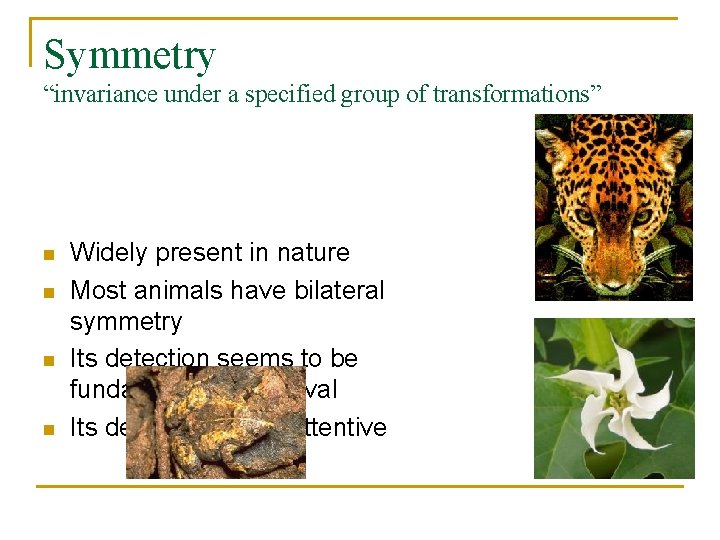
Symmetry “invariance under a specified group of transformations” n n Widely present in nature Most animals have bilateral symmetry Its detection seems to be fundamental to survival Its detection is pre-attentive
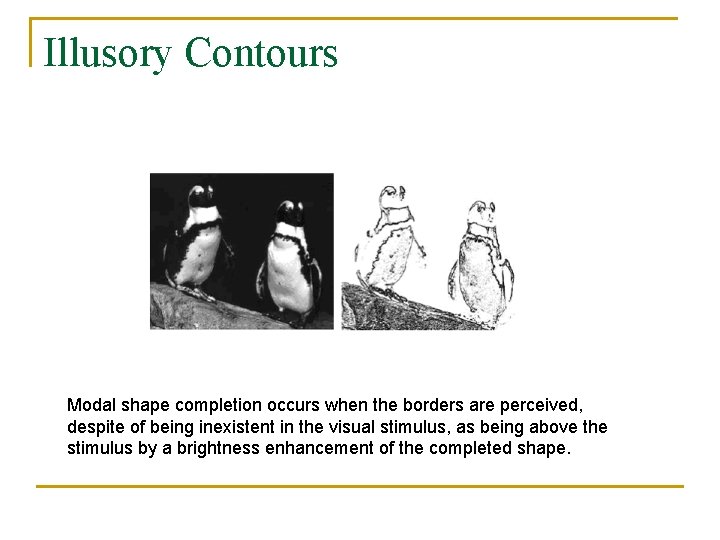
Illusory Contours Modal shape completion occurs when the borders are perceived, despite of being inexistent in the visual stimulus, as being above the stimulus by a brightness enhancement of the completed shape.
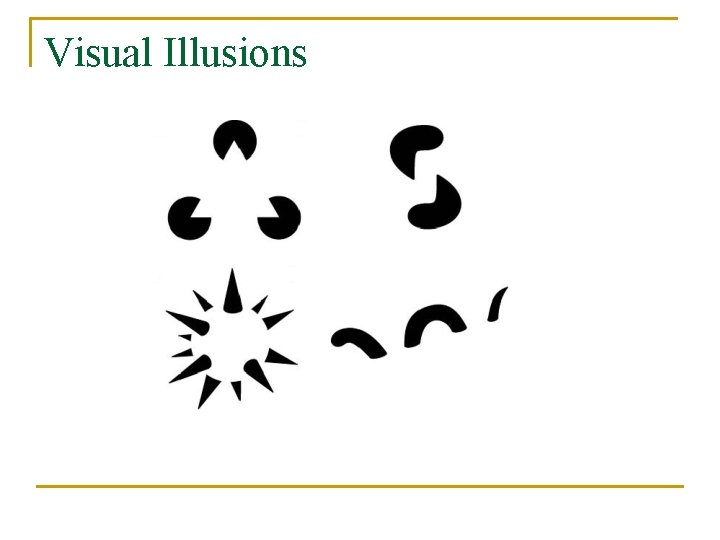
Visual Illusions
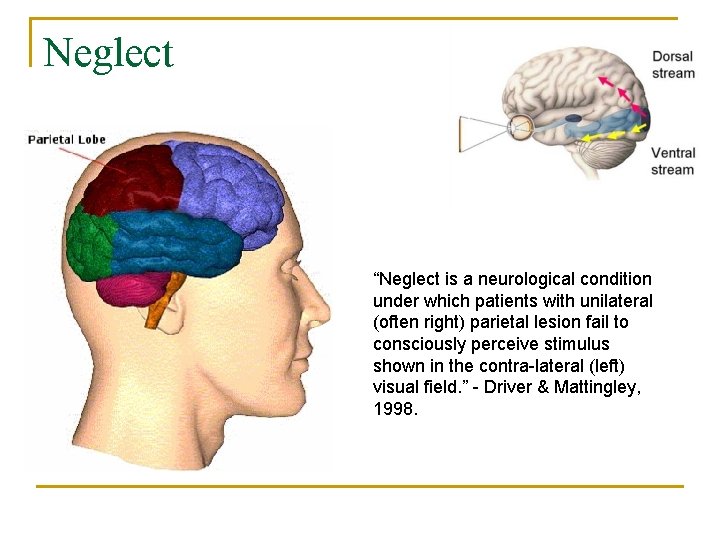
Neglect “Neglect is a neurological condition under which patients with unilateral (often right) parietal lesion fail to consciously perceive stimulus shown in the contra-lateral (left) visual field. ” - Driver & Mattingley, 1998.
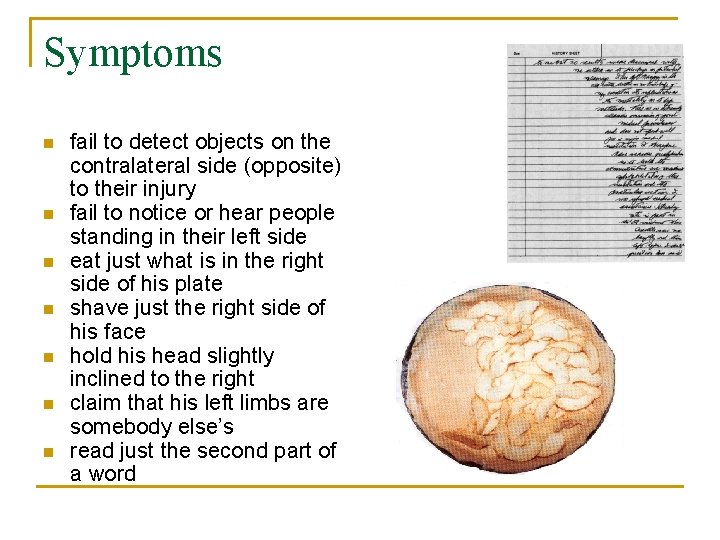
Symptoms n n n n fail to detect objects on the contralateral side (opposite) to their injury fail to notice or hear people standing in their left side eat just what is in the right side of his plate shave just the right side of his face hold his head slightly inclined to the right claim that his left limbs are somebody else’s read just the second part of a word
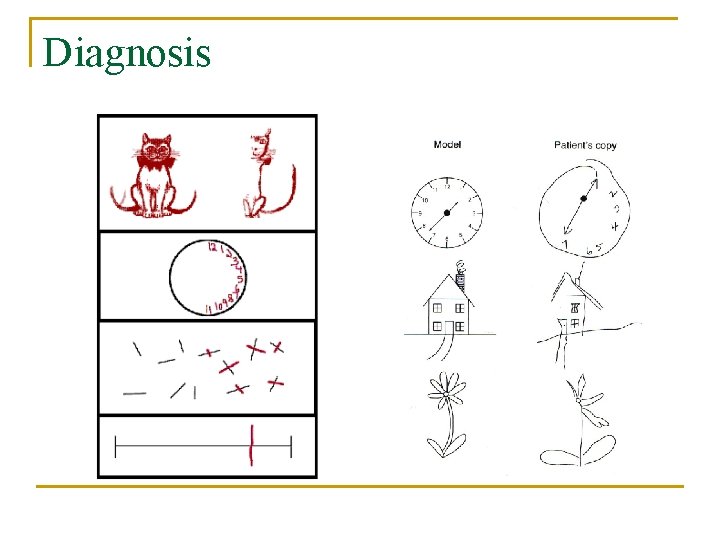
Diagnosis
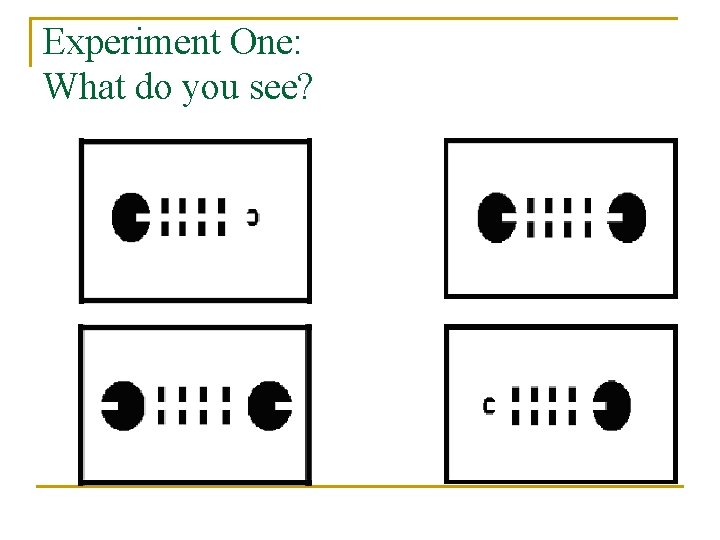
Experiment One: What do you see?
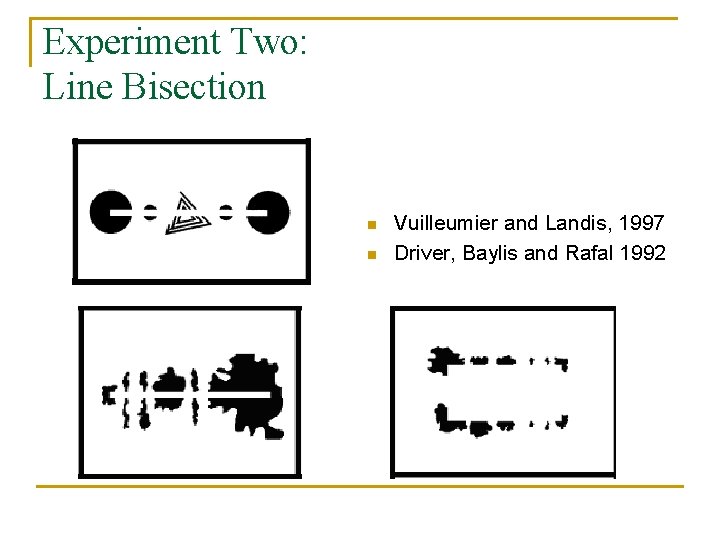
Experiment Two: Line Bisection n n Vuilleumier and Landis, 1997 Driver, Baylis and Rafal 1992
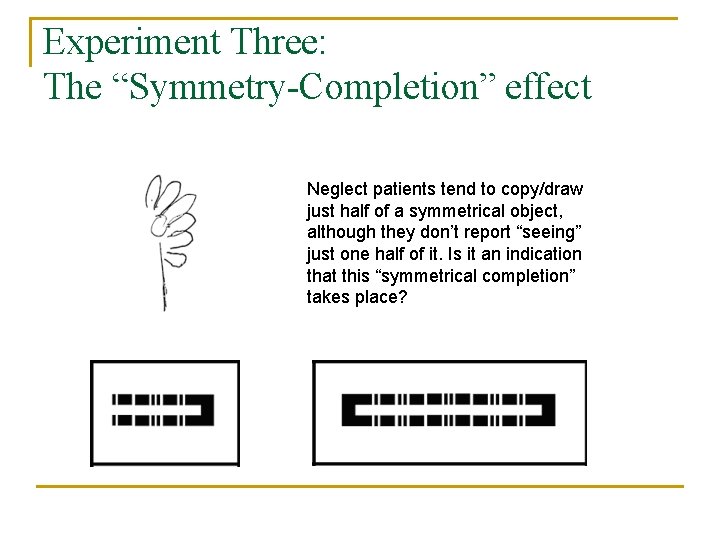
Experiment Three: The “Symmetry-Completion” effect Neglect patients tend to copy/draw just half of a symmetrical object, although they don’t report “seeing” just one half of it. Is it an indication that this “symmetrical completion” takes place?
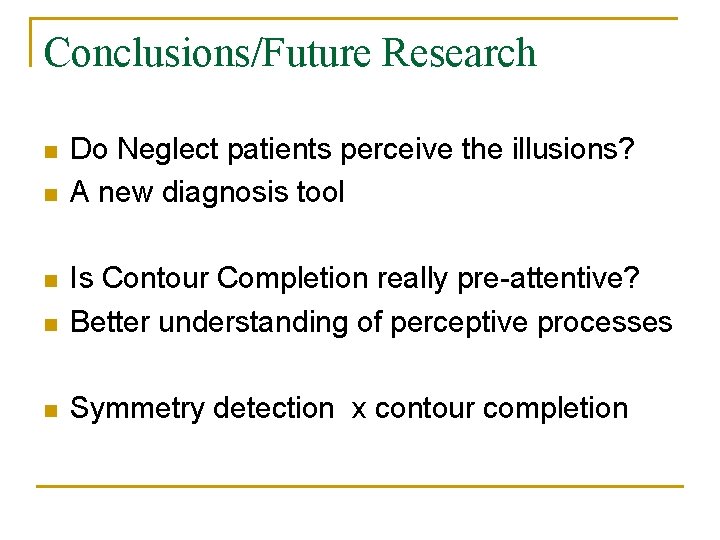
Conclusions/Future Research n n Do Neglect patients perceive the illusions? A new diagnosis tool n Is Contour Completion really pre-attentive? Better understanding of perceptive processes n Symmetry detection x contour completion n