Ohio Deans Compact Conference January 23 25 2019

- Slides: 41
Ohio Dean’s Compact Conference January 23 -25, 2019 ceedar. org 1
A RATIONALE FOR PRACTICE BASED TEACHER EDUCATION AND AN EXAMPLE FROM PRACTICE 2
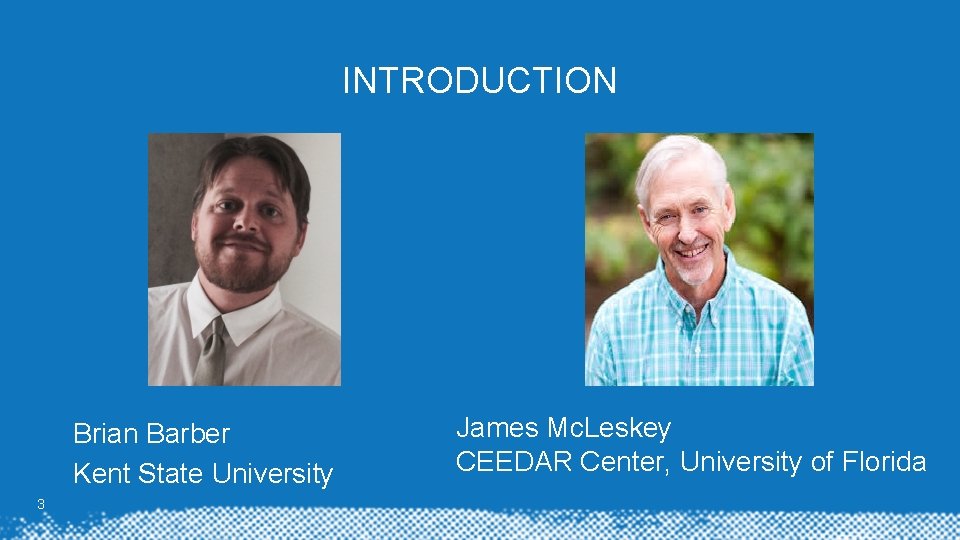
INTRODUCTION Brian Barber Kent State University 3 James Mc. Leskey CEEDAR Center, University of Florida
PRESENTATION TOPICS • Introduction • Rationale for Practice Based Teacher Education (PBTE) • Research on Expertise Development • Why Core or High Leverage Practices? • An Example of PBTE at Kent State • Program Development and Implementation • Importance of School/University Partnerships • Resources to support PBTE • Question/comments/discussion 4
RATIONALE FOR PBTE/CORE PRACTICES • Student achievement • Teacher practice • Research in teacher education • Research related to the development of expertise across professions 5
RATIONALE FOR PBTE/CORE PRACTICES • Student achievement—remains less than desirable for students with disabilities and many who struggle in school • Teacher Practice—effective practices have been identified, but teacher don’t use them very often 6
RATIONALE FOR PBTE/CORE PRACTICES • In response to these changing expectations (for improved teacher practice), teacher education is “undergoing a major shift…toward specifying teaching practices” (Mc. Donald, Kazemi, & Kavanaugh, 2013, p. 378) and systematically preparing candidates to use these practices in classrooms. 7
RATIONALE FOR PBTE/CORE PRACTICES • “To prepare effective teachers for 21 st century classrooms, teacher education must shift away from a norm which emphasizes academic preparation and course work loosely linked to school-based experiences. Rather, it must move to programs that are fully grounded in clinical practice and interwoven with academic content and professional courses” (NCATE, 2010, p. ii). 8
RESEARCH IN TEACHER EDUCATION • Candidates are more likely to be effective and to stay in the profession when their preparation experiences are connected to classroom practice (Boyd, Lankford, Loeb, & Wyckoff, 2009; Ronfeldt & Reininger, 2012) (Benedict et al. , 2016, p. 2) 9
RESEARCH ON THE DEVELOPMENT OF EXPERTISE • Learn from other professions • Development of expertise • Anders Ericsson—Peak: Secrets from the New Science of Expertise (Ericsson & Pool, 2016) 10
PROFESSIONS HAVE IN COMMON • Step 1 --identify essential practices • Step 2—systematically train novices to use these practices before entering the profession • Step 3—assess performance of novices on essential practices
LEARNING FROM OTHER PROFESSIONS • Plumber • Airline Pilot • Physician • Nurse • Cosmetologist
STEP 1—IDENTIFY ESSENTIAL PRACTICES--PILOTS • Conduct pre-flight inspection • Perform normal and cross-wind approaches and landings • Execute straight turns and climbing turns • Perform effective visual scanning • Avoid a runway incursion • AND SO FORTH
STEP 2—GAINING EXPERTISE • Not gained by reading or talking about practices • Gained through well-structured opportunities to practice particular skills in authentic settings with support and feedback
TO DEVELOP EXPERTISE • Address specific identified practices • Opportunities to learn • Well structured • Authentic or approximations of authentic settings • Support (scaffolding, models) • Feedback (coaching, reflection)
EXPERTISE • Cannot develop expertise unless essential practices are identified • One of the major barriers to improving the practice of special educators and other teachers is that we have not identified the most important practices they should learn to use.
CORE PRACTICES FOR SPECIAL EDUCATION TEACHERS • High Leverage Practices developed by CEC
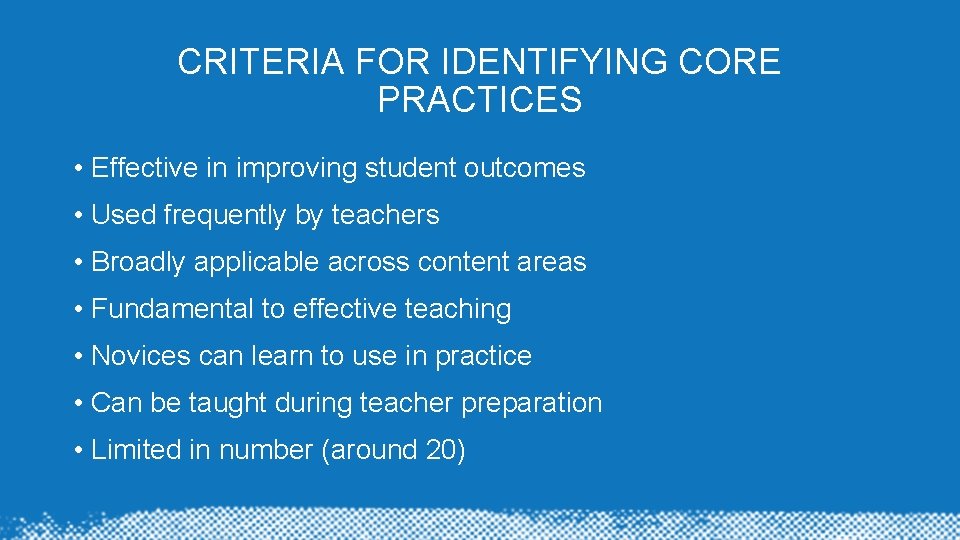
CRITERIA FOR IDENTIFYING CORE PRACTICES • Effective in improving student outcomes • Used frequently by teachers • Broadly applicable across content areas • Fundamental to effective teaching • Novices can learn to use in practice • Can be taught during teacher preparation • Limited in number (around 20)
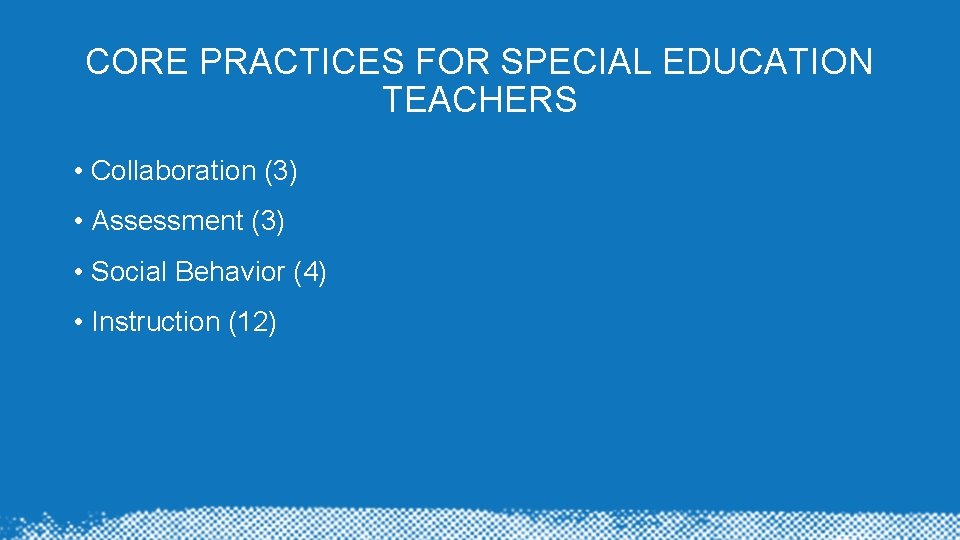
CORE PRACTICES FOR SPECIAL EDUCATION TEACHERS • Collaboration (3) • Assessment (3) • Social Behavior (4) • Instruction (12)
INTEGRATING PRACTICES INTO PREPARATION • A complex process! • Paradigm shift in teacher preparation • Often starts with changes in a course or group of related courses • Example of how this was done at Kent State University 20
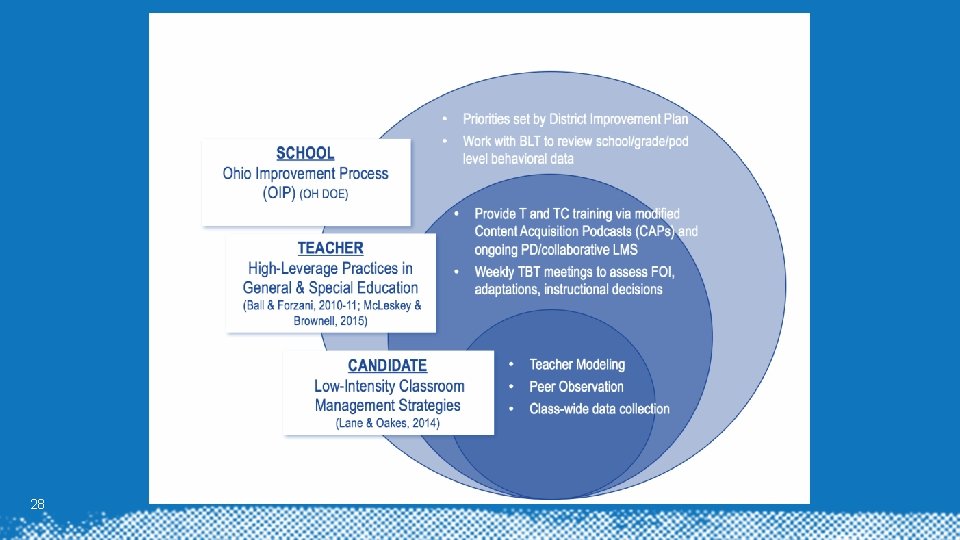
AN EXAMPLE FROM PRACTICE - KENT STATE UNIVERSITY Project funded by the Ohio Dean’s Compact on Exceptional Children Establish partnerships for teacher preparation through university-public school partnerships as contexts for mutually beneficial learning, or “simultaneous renewal” 1 Focus on creating shared opportunities for teacher learning and development embedded in practical activities related to the analysis of P-12 student behavioral outcomes 1 (Goodlad, 21 1994)
PURPOSE Address major concern of teacher preparation – CM skills are not taught thoroughly or with adequate supervision in a real classroom context 2 Teachers who have significant problems with behavior management and classroom discipline report high levels of stress and are frequently ineffective 3 • concrete examples of P 12 student outcomes • collaborative participation by pre-service teachers, veteran teachers and university faculty • potential for learning outcomes of direct relevance to the core institutional mission and responsibilities 2 22 (Reschly, 2012) & Yell, 1994) 3 (Espin
GUIDING FRAMEWORKS: CLASS-WIDE FOCUS Focusing on preventive rather than reactive procedures establishes a positive classroom environment in which the teacher focuses on students who appropriately behave 4 Many behavioral difficulties and disorders begin with or are made worse through behavioral processes such as modeling, reinforcement, extinction, and punishment 5 Pragmatic for beginning educators because student behaviors are not severe, and thus candidates skill level does not factor as heavily into student success 4 Evertson, Emmer, Sanford, & Clements (1983) Reid, & Dishion (1992) 5 Patterson, 23
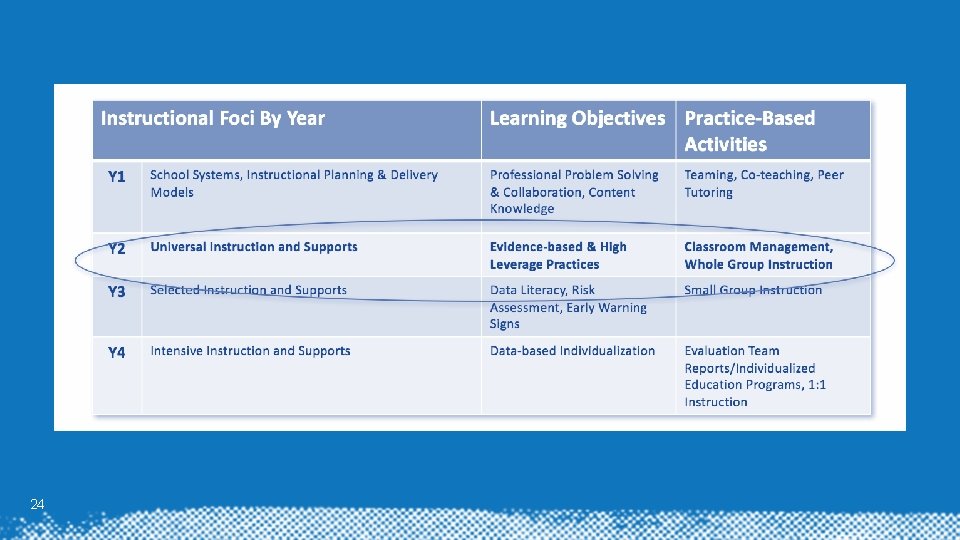
24
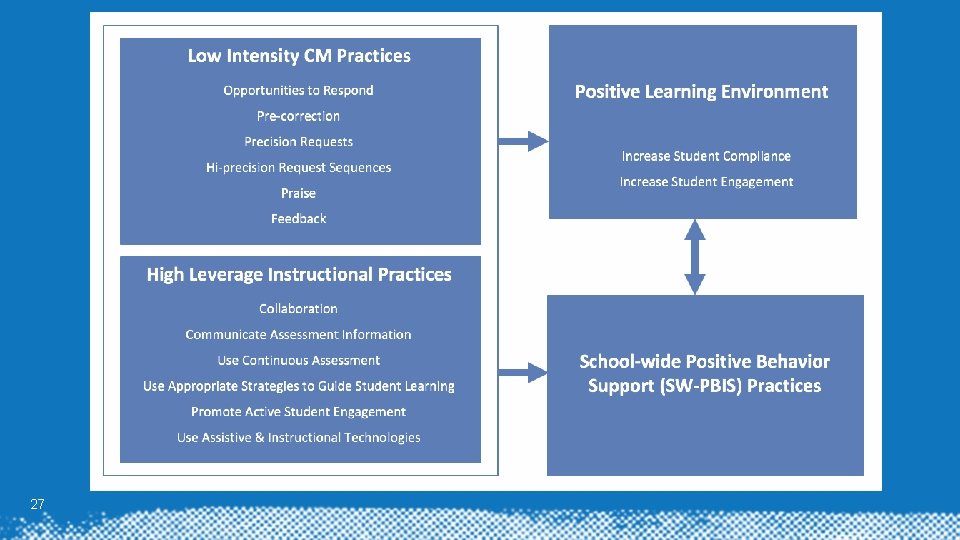
GUIDING FRAMEWORKS: LOW-INTENSITY CM STRATEGIES Many Low Intensity CM practices involve steps that can be followed via an implementation checklist, making them ideal for teacher candidates who do not have fluency with the practice 6 q q Have clear goals and procedures Implementation fidelity is easily achieved Compatible with any age, level, content area, and tier Show proximal effects on student behavior 6 25 Ennis, Oakes, & Lane (2014)
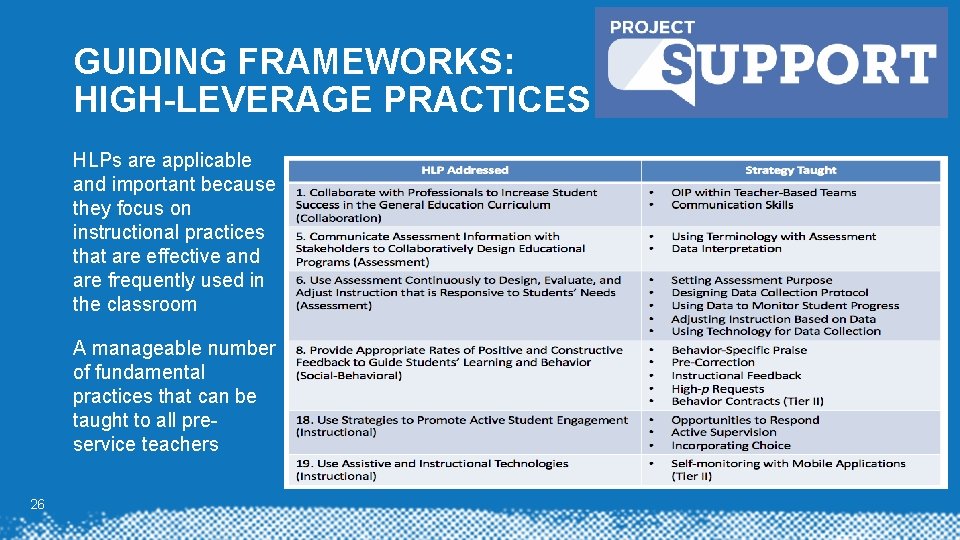
GUIDING FRAMEWORKS: HIGH-LEVERAGE PRACTICES HLPs are applicable and important because they focus on instructional practices that are effective and are frequently used in the classroom A manageable number of fundamental practices that can be taught to all preservice teachers 26
27
28
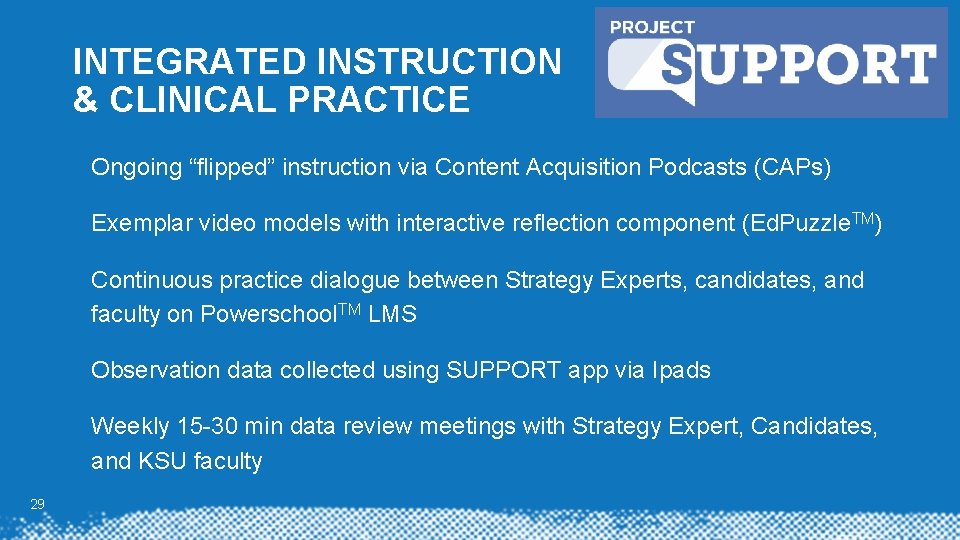
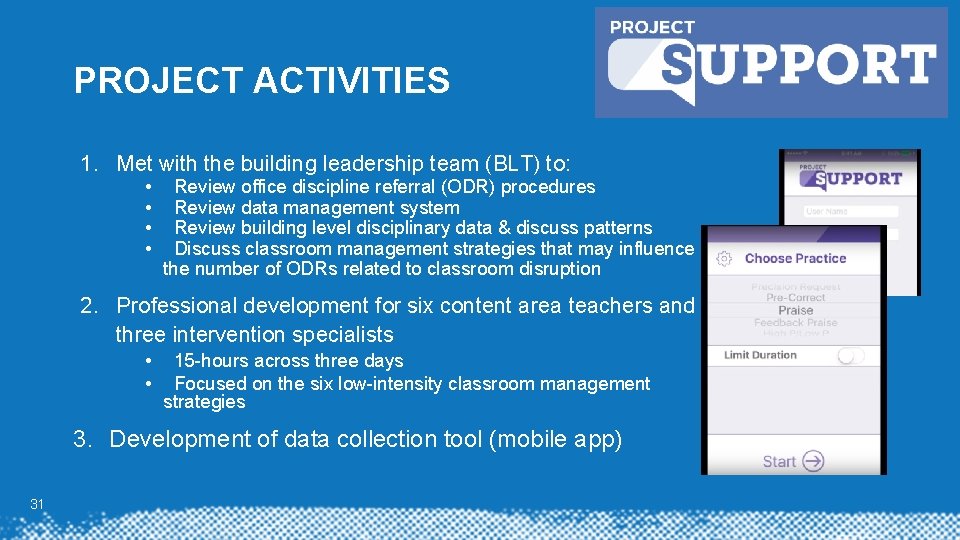
INTEGRATED INSTRUCTION & CLINICAL PRACTICE Ongoing “flipped” instruction via Content Acquisition Podcasts (CAPs) Exemplar video models with interactive reflection component (Ed. Puzzle. TM) Continuous practice dialogue between Strategy Experts, candidates, and faculty on Powerschool. TM LMS Observation data collected using SUPPORT app via Ipads Weekly 15 -30 min data review meetings with Strategy Expert, Candidates, and KSU faculty 29
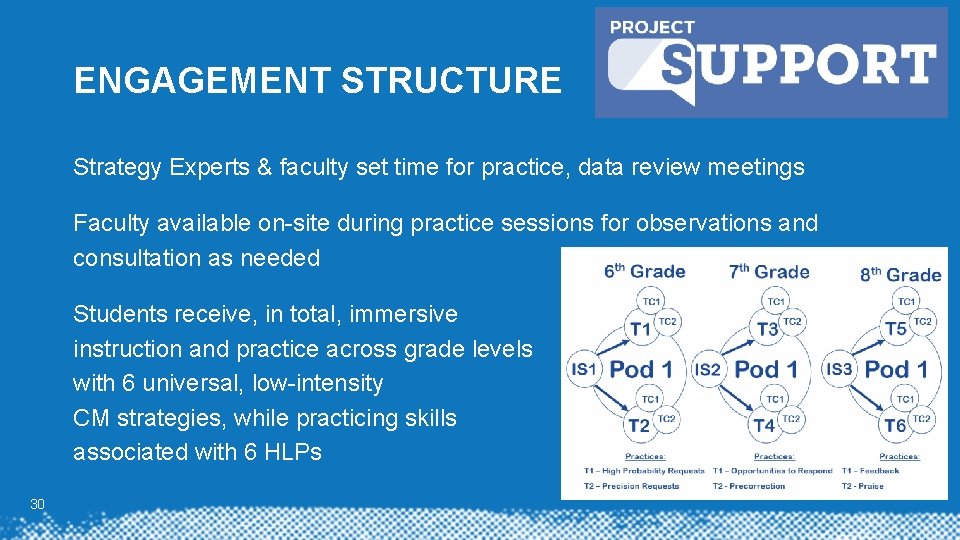
ENGAGEMENT STRUCTURE Strategy Experts & faculty set time for practice, data review meetings Faculty available on-site during practice sessions for observations and consultation as needed Students receive, in total, immersive instruction and practice across grade levels with 6 universal, low-intensity CM strategies, while practicing skills associated with 6 HLPs 30
PROJECT ACTIVITIES 1. Met with the building leadership team (BLT) to: • • Review office discipline referral (ODR) procedures Review data management system Review building level disciplinary data & discuss patterns Discuss classroom management strategies that may influence the number of ODRs related to classroom disruption 2. Professional development for six content area teachers and three intervention specialists • • 15 -hours across three days Focused on the six low-intensity classroom management strategies 3. Development of data collection tool (mobile app) 31
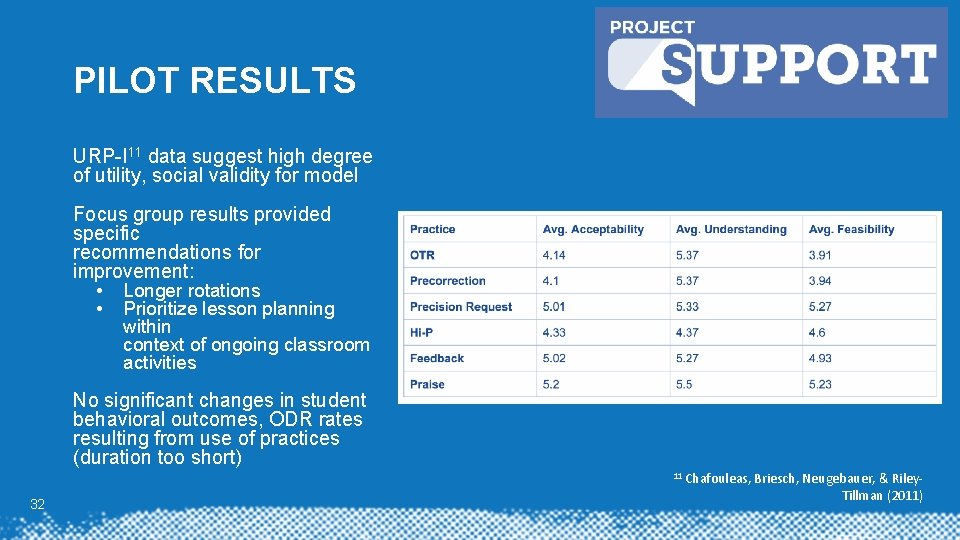
PILOT RESULTS URP-I 11 data suggest high degree of utility, social validity for model Focus group results provided specific recommendations for improvement: • Longer rotations • Prioritize lesson planning within context of ongoing classroom activities No significant changes in student behavioral outcomes, ODR rates resulting from use of practices (duration too short) 11 Chafouleas, 32 Briesch, Neugebauer, & Riley. Tillman (2011)
RESOURCES TO SUPPORT PBTE Brief Website: Teaching. Works. org 33
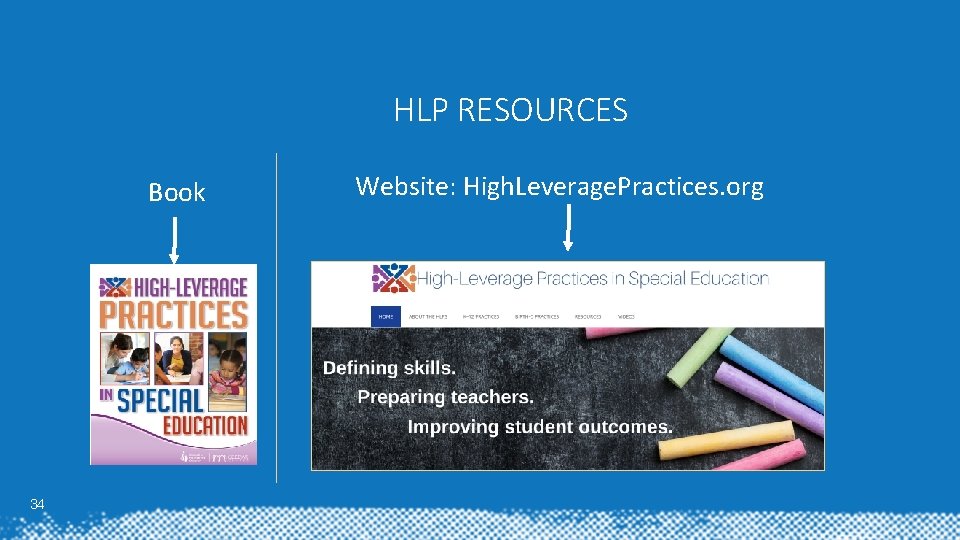
HLP RESOURCES Book 34 Website: High. Leverage. Practices. org
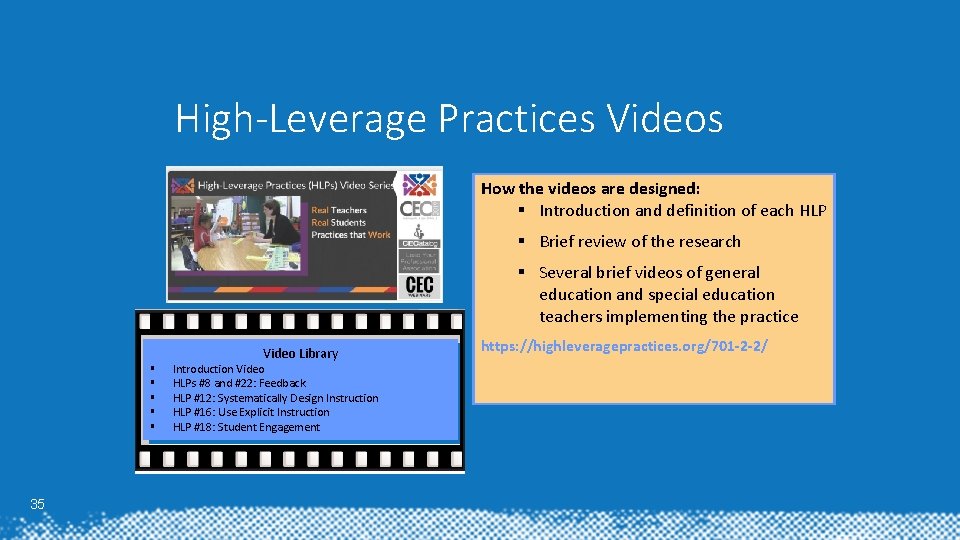
High-Leverage Practices Videos How the videos are designed: § Introduction and definition of each HLP § Brief review of the research § Several brief videos of general education and special education teachers implementing the practice § § § 35 Video Library Introduction Video HLPs #8 and #22: Feedback HLP #12: Systematically Design Instruction HLP #16: Use Explicit Instruction HLP #18: Student Engagement https: //highleveragepractices. org/701 -2 -2/
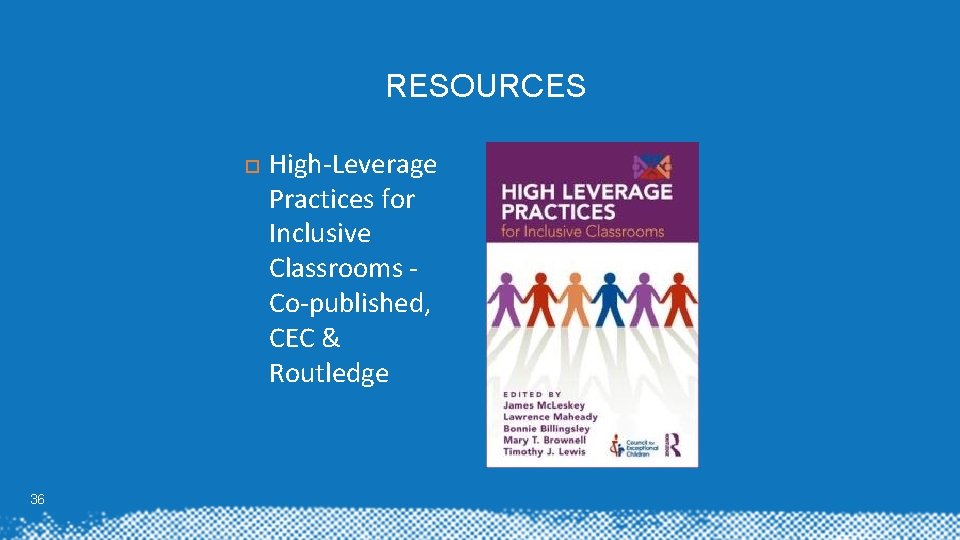
RESOURCES 36 High-Leverage Practices for Inclusive Classrooms Co-published, CEC & Routledge
RESOURCES • Other resources on highleveragepractices. org (CEC) • IRIS Center--https: //iris. peabody. vanderbilt. edu/ 37
QUESTIONS OR COMMENTS? 38
RESOURCES • Benedict, A. , Holdheide, L. , Brownell, M. , & Foley, A. M. (2016). Learning to teach: Practice-based preparation in teacher education. Retrieved from http: //ceedar. education. ufl. edu/wp-content/uploads/2016/07/Learning_To_Teach. pdf • Mc. Cray, E. , Kamman, M. , & Brownell, M. T. , & Robinson, S. (2017). High-leverage practices and evidence-based practices: A promising pair. Retrieved from http: //ceedar. education. ufl. edu/wp-content/uploads/2017/11/HLPs-and-EBPs -A-Promising-Pair-FINAL. pdf • Mc. Leskey, J. , Barringer, M. , Billingsley, B. , Brownell, M. , Jackson, D. , Kennedy, M. , Lewis, T. , Maheady, L. , Rodriguez, J. , Scheeler, M. , Winn, J. , & Ziegler, D. (2017). High leverage practices in special education: The final report of the HLP Writing Team. Arlington, VA: CEC & CEEDAR Center. Retrieved from http: //ceedar. education. ufl. edu/portfolio/ccsc 2017 -high-leverage-practices/. • Mc. Leskey, J. & Brownell, M. (2015). High leverage practices and teacher preparation in special education (Document No. PR-1). Retrieved from http: //ceedar. education. ufl. edu/wp-content/uploads/2016/05/High-Leverage-Practices-and. Teacher-Preparation-in-Special-Education. pdf • Mc. Leskey, J. , Maheady, L. , Billingsley, B. , Brownell, M. , & Lewis, T. (Eds. ) (2019). High leverage practices for inclusive settings. New York & Arlington, VA: Routledge and CEC. 39
CONTACT INFORMATION Brian Barber bbarber 8@kent. edu James Mc. Leskey mcleskey@coe. ufl. edu 40
DISCLAIMER This content was produced under U. S. Department of Education, Office of Special Education Programs, Award No. H 325 A 170003. Bonnie Jones and David Guardino serve as the project officers. The views expressed herein do not necessarily represent the positions or polices of the U. S. Department of Education. No official endorsement by the U. S. Department of Education of any product, commodity, service, or enterprise mentioned in this website is intended or should be inferred. 41