Nursing Care Priorities for Those in Shock Keith



- Slides: 38
Nursing Care & Priorities for Those in Shock Keith Rischer RN, MA, CEN 1
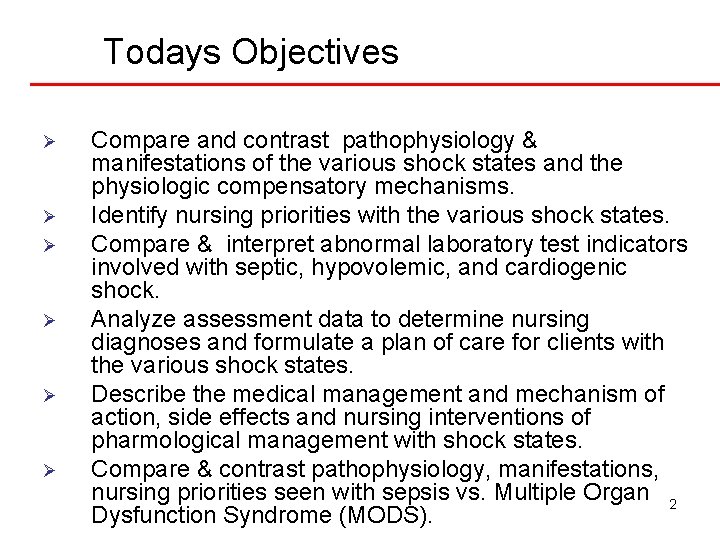
Todays Objectives Ø Ø Ø Compare and contrast pathophysiology & manifestations of the various shock states and the physiologic compensatory mechanisms. Identify nursing priorities with the various shock states. Compare & interpret abnormal laboratory test indicators involved with septic, hypovolemic, and cardiogenic shock. Analyze assessment data to determine nursing diagnoses and formulate a plan of care for clients with the various shock states. Describe the medical management and mechanism of action, side effects and nursing interventions of pharmological management with shock states. Compare & contrast pathophysiology, manifestations, nursing priorities seen with sepsis vs. Multiple Organ 2 Dysfunction Syndrome (MODS).
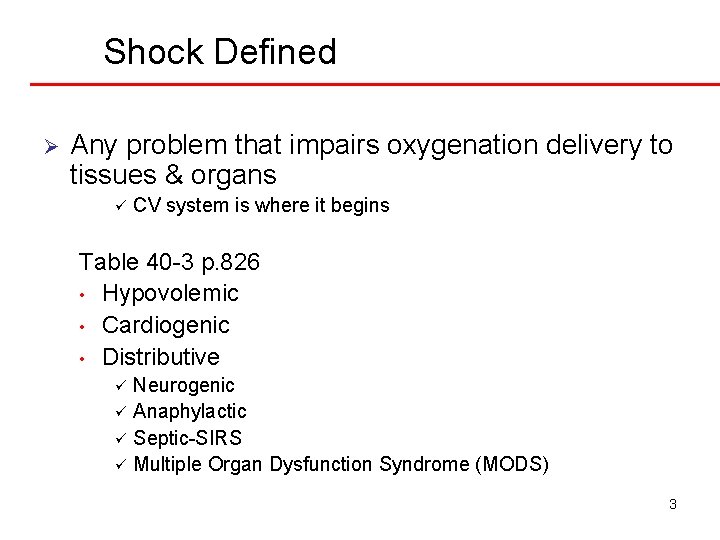
Shock Defined Ø Any problem that impairs oxygenation delivery to tissues & organs ü CV system is where it begins Table 40 -3 p. 826 • Hypovolemic • Cardiogenic • Distributive Neurogenic ü Anaphylactic ü Septic-SIRS ü Multiple Organ Dysfunction Syndrome (MODS) ü 3
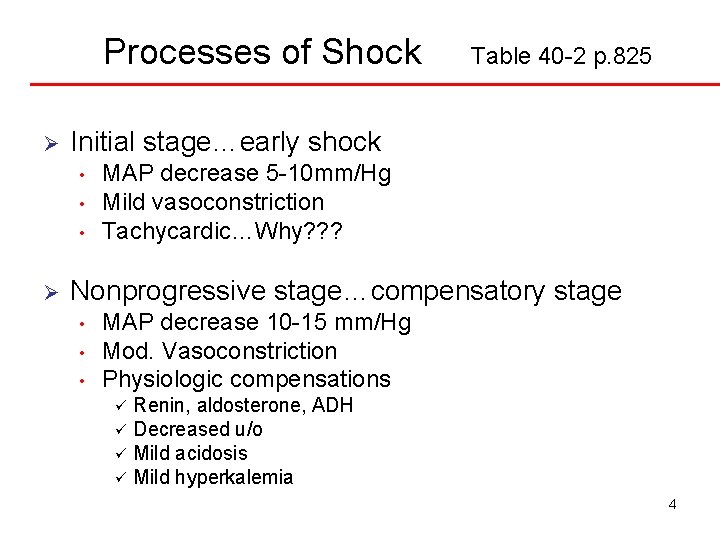
Processes of Shock Ø Initial stage…early shock • • • Ø Table 40 -2 p. 825 MAP decrease 5 -10 mm/Hg Mild vasoconstriction Tachycardic…Why? ? ? Nonprogressive stage…compensatory stage • • • MAP decrease 10 -15 mm/Hg Mod. Vasoconstriction Physiologic compensations Renin, aldosterone, ADH ü Decreased u/o ü Mild acidosis ü Mild hyperkalemia ü 4
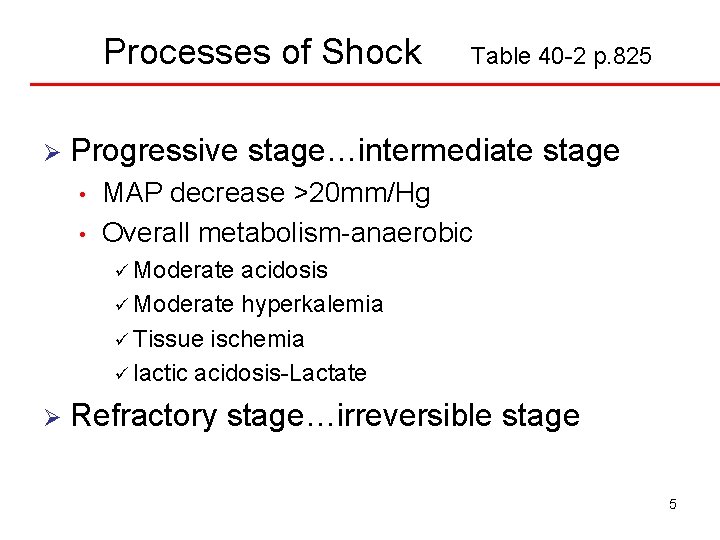
Processes of Shock Ø Table 40 -2 p. 825 Progressive stage…intermediate stage • • MAP decrease >20 mm/Hg Overall metabolism-anaerobic ü Moderate acidosis ü Moderate hyperkalemia ü Tissue ischemia ü lactic acidosis-Lactate Ø Refractory stage…irreversible stage 5
Hypovolemic Shock: Physical Assessment Ø Cardiovascular changes • • Pulse Blood pressure Skin changes Ø Respiratory changes Ø • • Oxygen saturation RR Renal and urinary changes Ø Central nervous system changes Ø 6
Hypovolemic Shock: Nursing Priorities Ø Impaired gas exchange • Ø Deficient fluid volume • Ø Nursing interventions Decreased cardiac output • Ø Nursing interventions Risk for ineffective tissue perfusion • • Body systems impacted? ? ? Nursing interventions 7
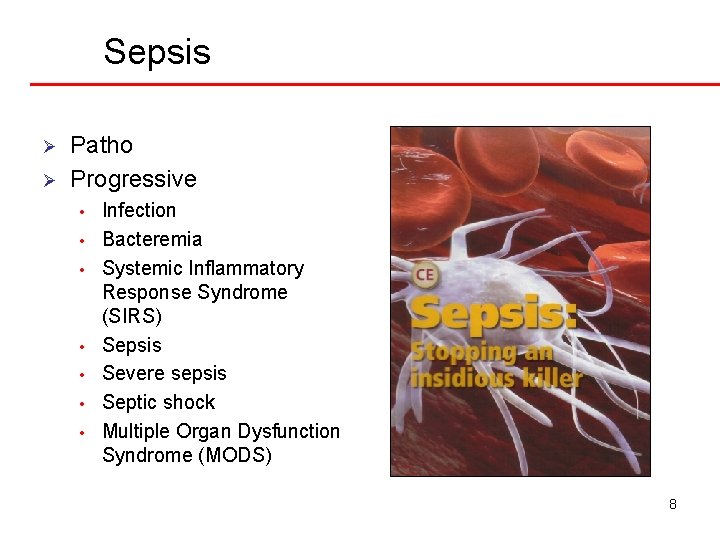
Sepsis Ø Ø Patho Progressive • • Infection Bacteremia Systemic Inflammatory Response Syndrome (SIRS) Sepsis Severe sepsis Septic shock Multiple Organ Dysfunction Syndrome (MODS) 8
Sepsis: Hyperdynamic (early) Cardiovascular changes Ø Skin changes Ø Respiratory changes Ø Renal and urinary changes Ø Central nervous system changes Ø 9
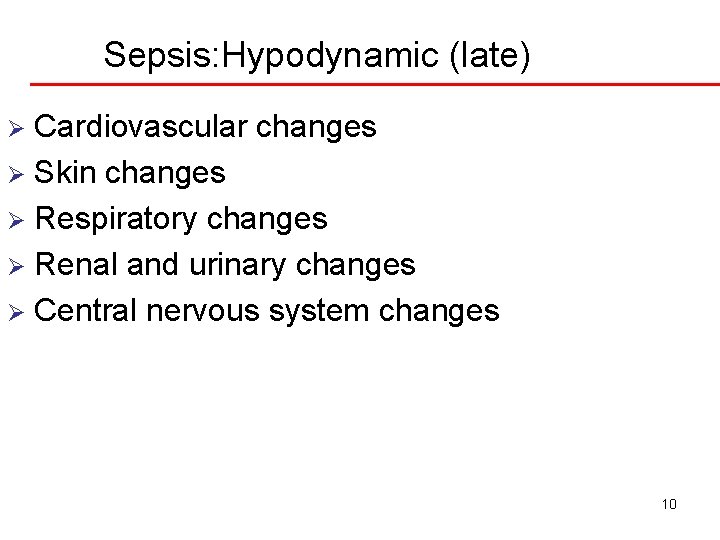
Sepsis: Hypodynamic (late) Cardiovascular changes Ø Skin changes Ø Respiratory changes Ø Renal and urinary changes Ø Central nervous system changes Ø 10
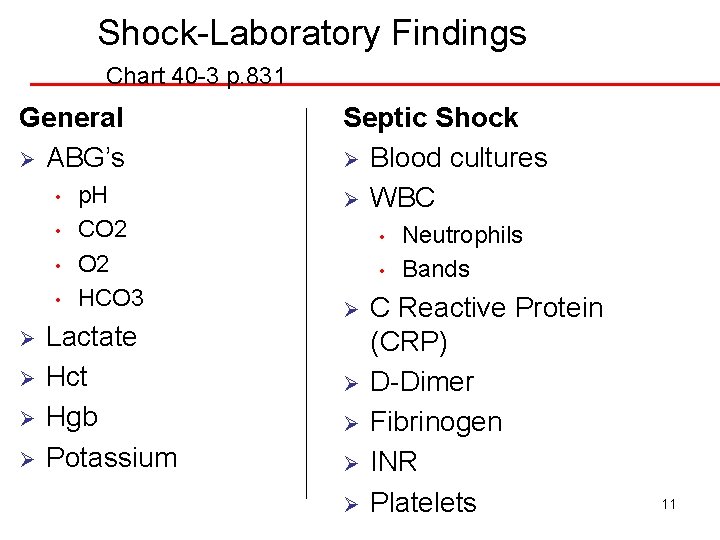
Shock-Laboratory Findings Chart 40 -3 p. 831 General Ø ABG’s • • Ø Ø p. H CO 2 HCO 3 Lactate Hct Hgb Potassium Septic Shock Ø Blood cultures Ø WBC • • Ø Ø Ø Neutrophils Bands C Reactive Protein (CRP) D-Dimer Fibrinogen INR Platelets 11
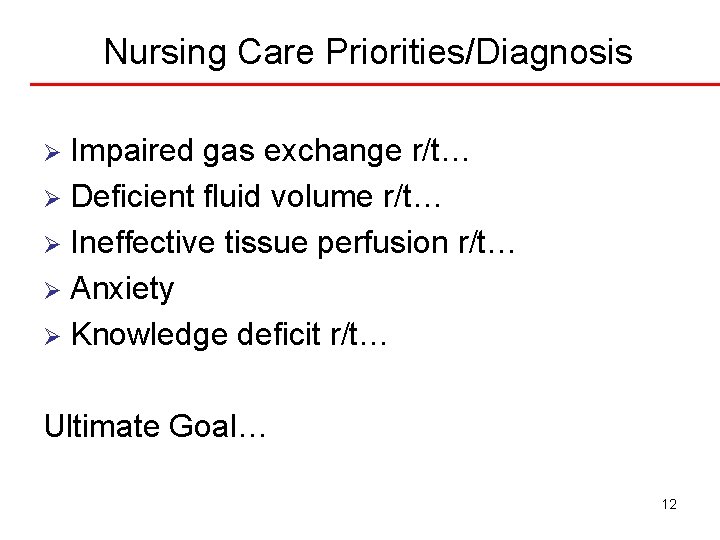
Nursing Care Priorities/Diagnosis Impaired gas exchange r/t… Ø Deficient fluid volume r/t… Ø Ineffective tissue perfusion r/t… Ø Anxiety Ø Knowledge deficit r/t… Ø Ultimate Goal… 12
General Shock: Nursing Interventions Remember A, B, C, D Ø Reverse the shock • • Ø Restore fluid volume • • Ø Ø Ø Administer O 2 Establish IV access Colloid Crystalloid Vasoactive gtts Administer blood products as ordered Nursing assessment • • • Pulse/rhythm BP-CVP RR-O 2 sats Urine output Skin color Monitor labs 13
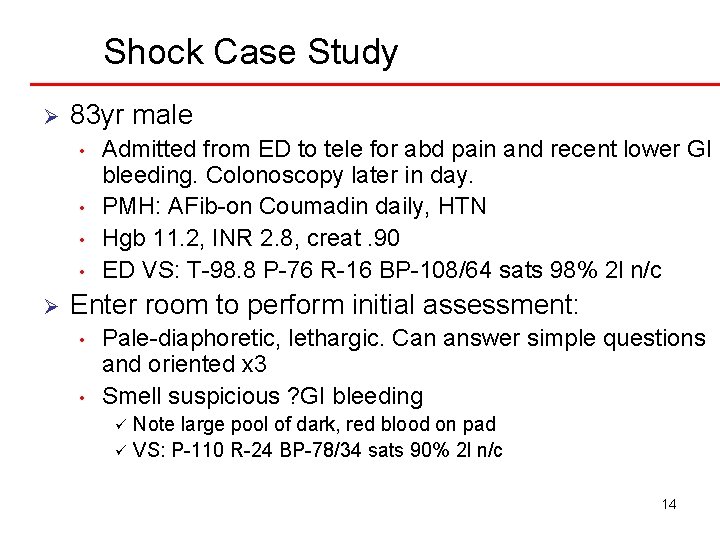
Shock Case Study Ø 83 yr male • • Ø Admitted from ED to tele for abd pain and recent lower GI bleeding. Colonoscopy later in day. PMH: AFib-on Coumadin daily, HTN Hgb 11. 2, INR 2. 8, creat. 90 ED VS: T-98. 8 P-76 R-16 BP-108/64 sats 98% 2 l n/c Enter room to perform initial assessment: • • Pale-diaphoretic, lethargic. Can answer simple questions and oriented x 3 Smell suspicious ? GI bleeding Note large pool of dark, red blood on pad ü VS: P-110 R-24 BP-78/34 sats 90% 2 l n/c ü 14
Shock Case Study Nursing priorities… Ø Rapid Response paged Ø SBAR to primary MD Ø Medical/Nursing management: Ø • • • 2 large bore IV’s NS 1000 cc FF Prepare for transfer to ICU Stat Hgb Obtain 2 u PRBC from blood bank 15
15” later… VS: P-100 R-20 BP-92/46 sats 98% 6 l n/c Ø Hgb 8. 2 Ø First unit of blood initiated Ø Prepare for transfer to ICU…unable to take at this time Ø Foley catheter placed Ø VS just before transfer: P-88 R-18 BP 102/64 sats 100% 4 l n/c Ø 16
Septic Shock: Nursing Interventions All the same as previous slide and… Ø Obtain blood, urine cultures as ordered Ø Administer IV abx Ø Administer anti-arrythmics Ø Aggressive IV fluid resuscitation Ø Assess closely for signs of bleeding…DIC Ø Strict aseptic technique Ø Fever reduction as needed Ø Client-family education 17
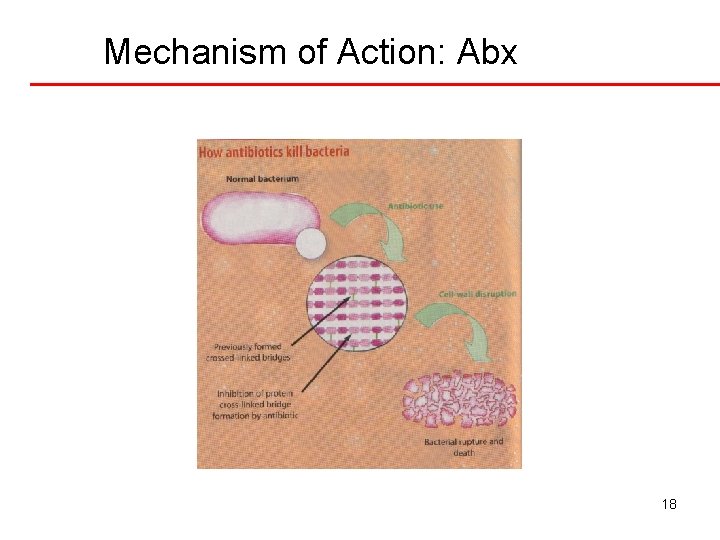
Mechanism of Action: Abx 18
Vasoactive Gtts Ø chart 40 -6 p. 833 Dopamine • • • Renal Beta effect Alpha effect Levophed (norepinephrine) Ø Phenylephrine (neo-synephrine) Ø 19
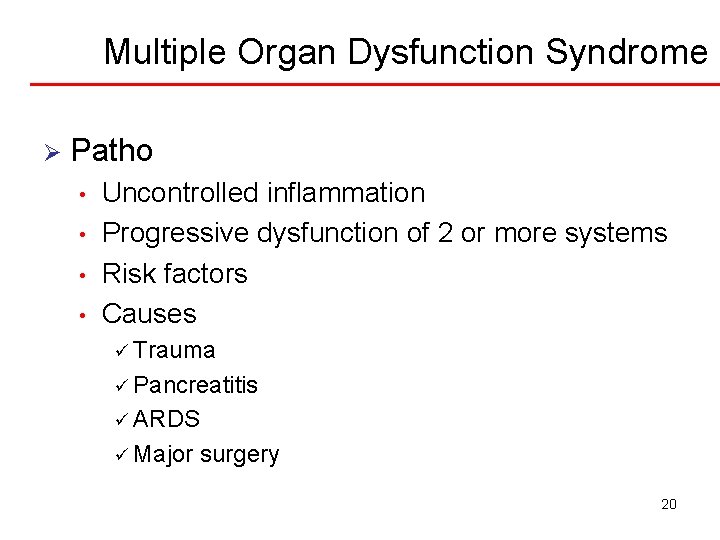
Multiple Organ Dysfunction Syndrome Ø Patho • • Uncontrolled inflammation Progressive dysfunction of 2 or more systems Risk factors Causes ü Trauma ü Pancreatitis ü ARDS ü Major surgery 20
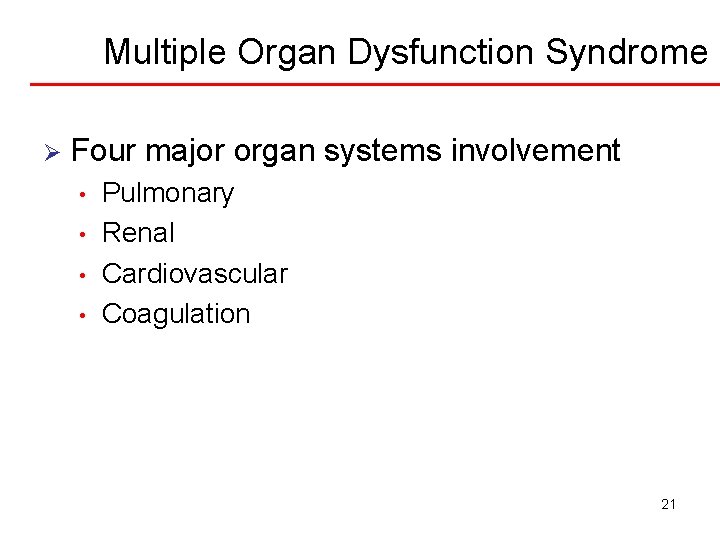
Multiple Organ Dysfunction Syndrome Ø Four major organ systems involvement • • Pulmonary Renal Cardiovascular Coagulation 21
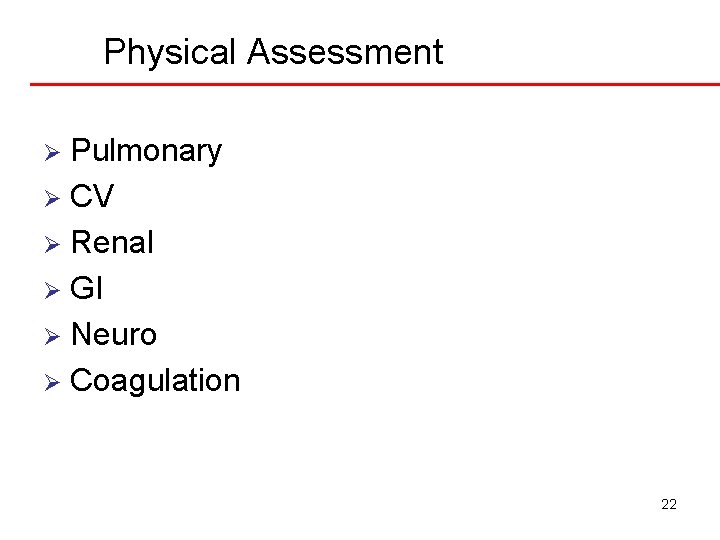
Physical Assessment Pulmonary Ø CV Ø Renal Ø GI Ø Neuro Ø Coagulation Ø 22
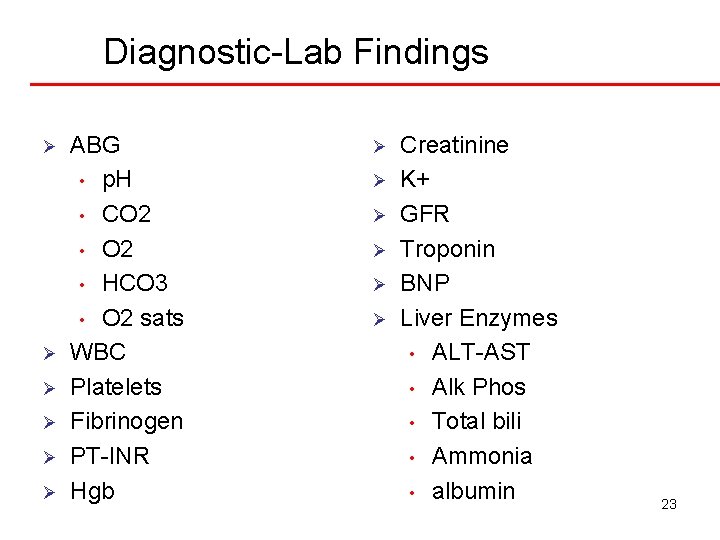
Diagnostic-Lab Findings Ø Ø Ø ABG • p. H • CO 2 • HCO 3 • O 2 sats WBC Platelets Fibrinogen PT-INR Hgb Ø Ø Ø Creatinine K+ GFR Troponin BNP Liver Enzymes • ALT-AST • Alk Phos • Total bili • Ammonia • albumin 23
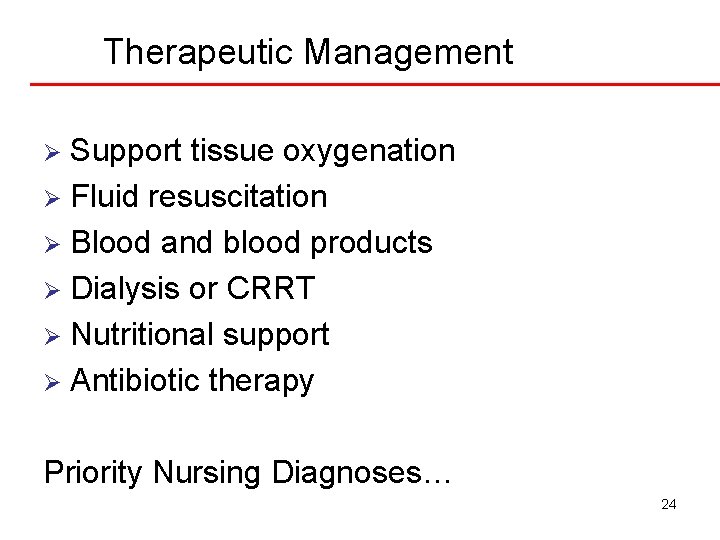
Therapeutic Management Support tissue oxygenation Ø Fluid resuscitation Ø Blood and blood products Ø Dialysis or CRRT Ø Nutritional support Ø Antibiotic therapy Ø Priority Nursing Diagnoses… 24
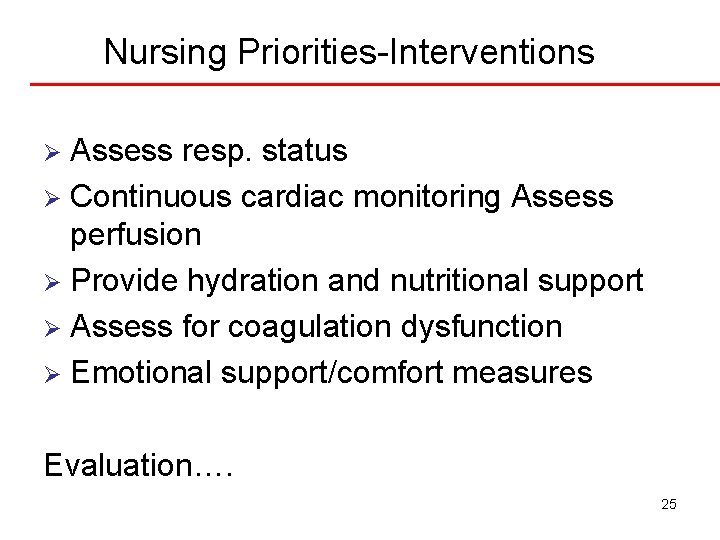
Nursing Priorities-Interventions Assess resp. status Ø Continuous cardiac monitoring Assess perfusion Ø Provide hydration and nutritional support Ø Assess for coagulation dysfunction Ø Emotional support/comfort measures Ø Evaluation…. 25
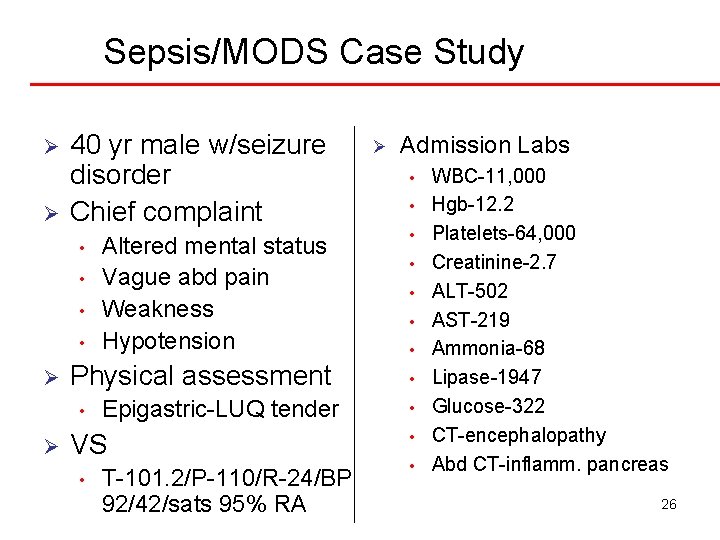
Sepsis/MODS Case Study Ø Ø 40 yr male w/seizure disorder Chief complaint • • Ø Physical assessment • Ø Altered mental status Vague abd pain Weakness Hypotension Epigastric-LUQ tender VS • T-101. 2/P-110/R-24/BP 92/42/sats 95% RA Ø Admission Labs • • • WBC-11, 000 Hgb-12. 2 Platelets-64, 000 Creatinine-2. 7 ALT-502 AST-219 Ammonia-68 Lipase-1947 Glucose-322 CT-encephalopathy Abd CT-inflamm. pancreas 26
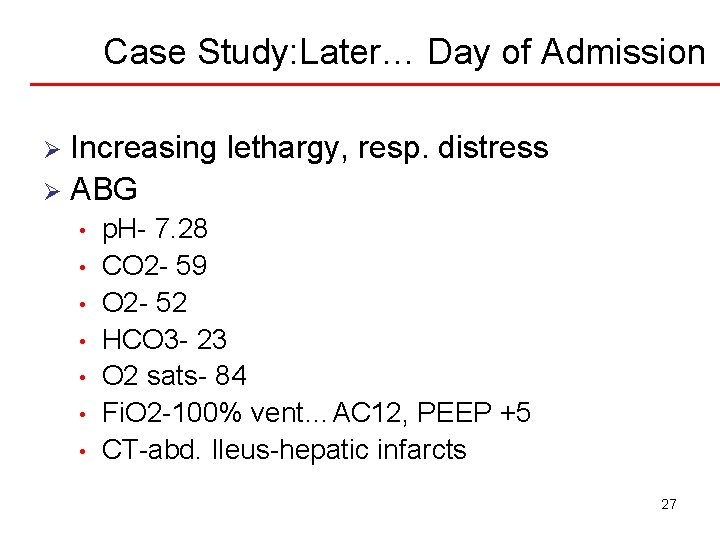
Case Study: Later… Day of Admission Increasing lethargy, resp. distress Ø ABG Ø • • p. H- 7. 28 CO 2 - 59 O 2 - 52 HCO 3 - 23 O 2 sats- 84 Fi. O 2 -100% vent…AC 12, PEEP +5 CT-abd. Ileus-hepatic infarcts 27
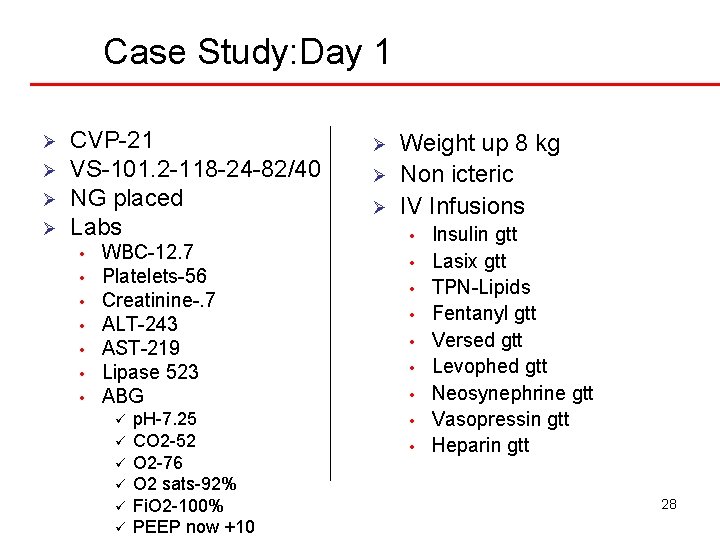
Case Study: Day 1 Ø Ø CVP-21 VS-101. 2 -118 -24 -82/40 NG placed Labs • • WBC-12. 7 Platelets-56 Creatinine-. 7 ALT-243 AST-219 Lipase 523 ABG ü ü ü p. H-7. 25 CO 2 -52 O 2 -76 O 2 sats-92% Fi. O 2 -100% PEEP now +10 Ø Ø Ø Weight up 8 kg Non icteric IV Infusions • • • Insulin gtt Lasix gtt TPN-Lipids Fentanyl gtt Versed gtt Levophed gtt Neosynephrine gtt Vasopressin gtt Heparin gtt 28
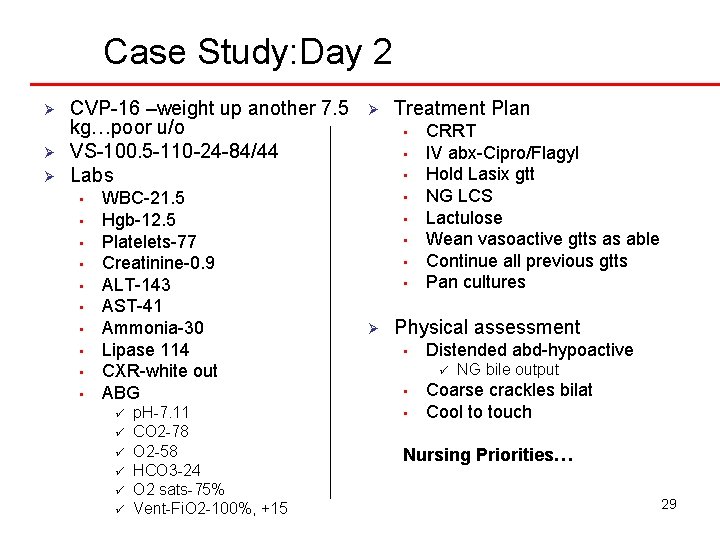
Case Study: Day 2 Ø Ø Ø CVP-16 –weight up another 7. 5 kg…poor u/o VS-100. 5 -110 -24 -84/44 Labs • • • WBC-21. 5 Hgb-12. 5 Platelets-77 Creatinine-0. 9 ALT-143 AST-41 Ammonia-30 Lipase 114 CXR-white out ABG ü ü ü p. H-7. 11 CO 2 -78 O 2 -58 HCO 3 -24 O 2 sats-75% Vent-Fi. O 2 -100%, +15 Ø Treatment Plan • • Ø CRRT IV abx-Cipro/Flagyl Hold Lasix gtt NG LCS Lactulose Wean vasoactive gtts as able Continue all previous gtts Pan cultures Physical assessment • Distended abd-hypoactive ü • • NG bile output Coarse crackles bilat Cool to touch Nursing Priorities… 29
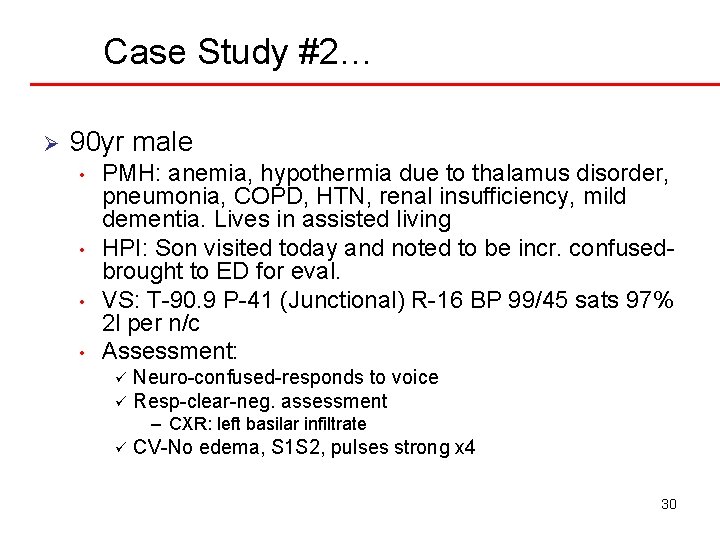
Case Study #2… Ø 90 yr male • • PMH: anemia, hypothermia due to thalamus disorder, pneumonia, COPD, HTN, renal insufficiency, mild dementia. Lives in assisted living HPI: Son visited today and noted to be incr. confusedbrought to ED for eval. VS: T-90. 9 P-41 (Junctional) R-16 BP 99/45 sats 97% 2 l per n/c Assessment: Neuro-confused-responds to voice ü Resp-clear-neg. assessment ü – CXR: left basilar infiltrate ü CV-No edema, S 1 S 2, pulses strong x 4 30
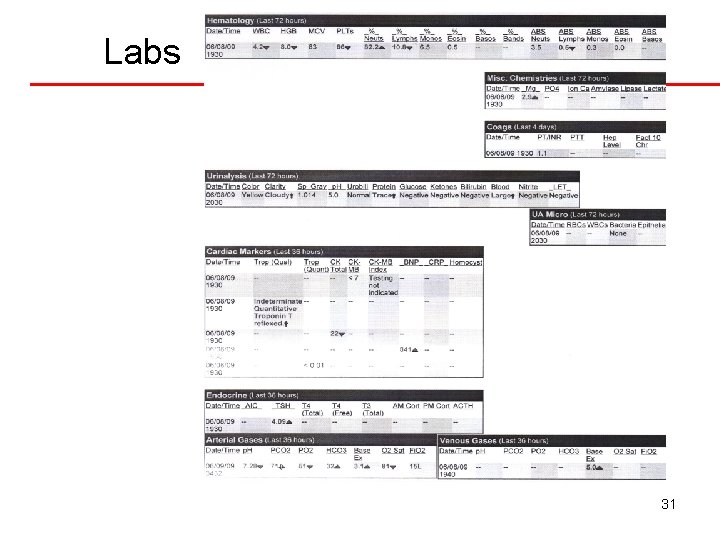
Labs 31
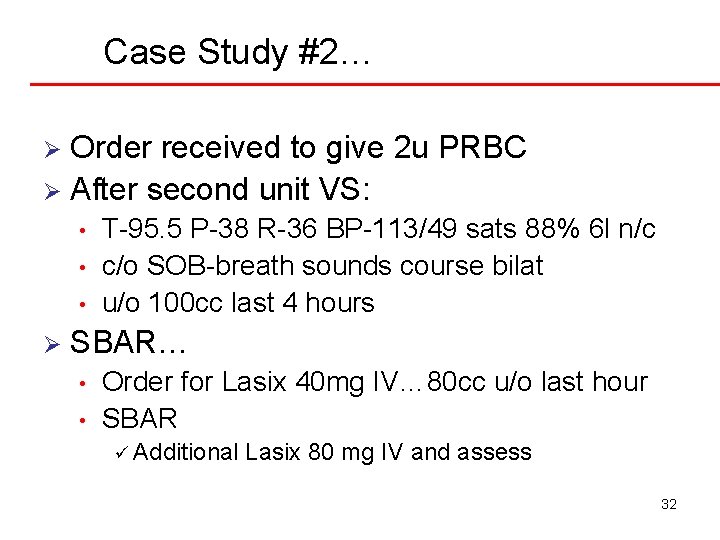
Case Study #2… Order received to give 2 u PRBC Ø After second unit VS: Ø • • • Ø T-95. 5 P-38 R-36 BP-113/49 sats 88% 6 l n/c c/o SOB-breath sounds course bilat u/o 100 cc last 4 hours SBAR… • • Order for Lasix 40 mg IV… 80 cc u/o last hour SBAR ü Additional Lasix 80 mg IV and assess 32
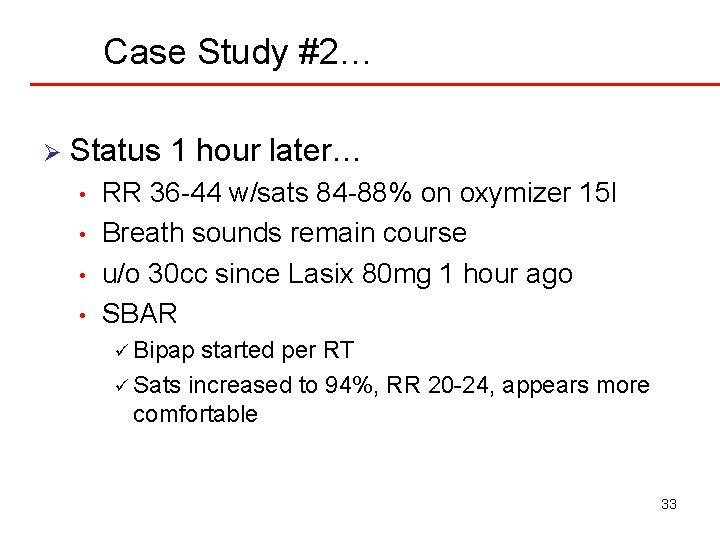
Case Study #2… Ø Status 1 hour later… • • RR 36 -44 w/sats 84 -88% on oxymizer 15 l Breath sounds remain course u/o 30 cc since Lasix 80 mg 1 hour ago SBAR ü Bipap started per RT ü Sats increased to 94%, RR 20 -24, appears more comfortable 33
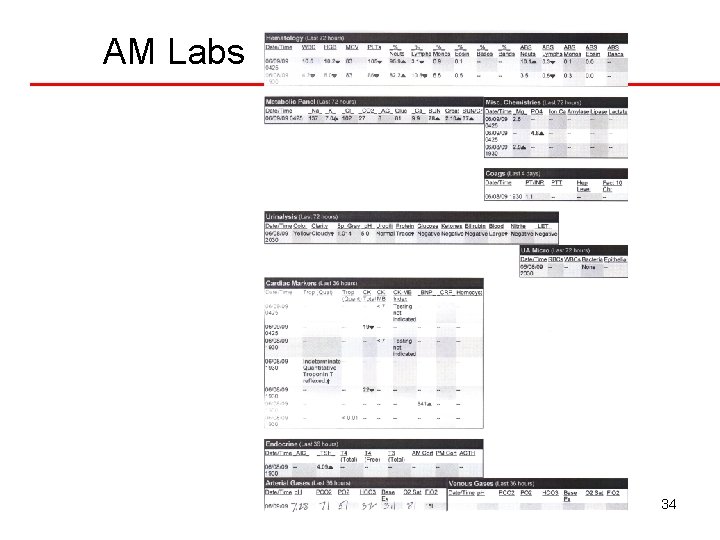
AM Labs 34
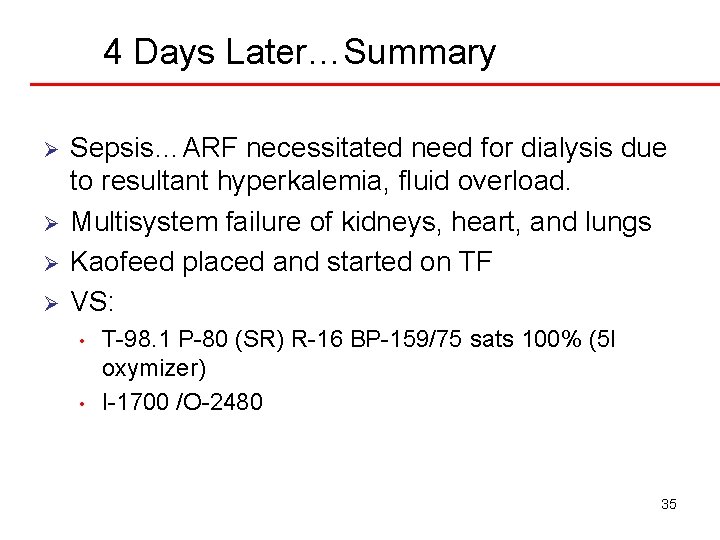
4 Days Later…Summary Ø Ø Sepsis…ARF necessitated need for dialysis due to resultant hyperkalemia, fluid overload. Multisystem failure of kidneys, heart, and lungs Kaofeed placed and started on TF VS: • • T-98. 1 P-80 (SR) R-16 BP-159/75 sats 100% (5 l oxymizer) I-1700 /O-2480 35
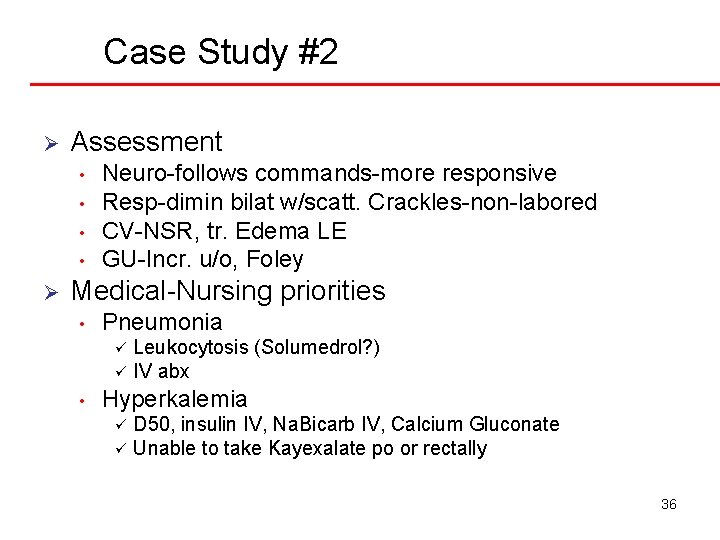
Case Study #2 Ø Assessment • • Ø Neuro-follows commands-more responsive Resp-dimin bilat w/scatt. Crackles-non-labored CV-NSR, tr. Edema LE GU-Incr. u/o, Foley Medical-Nursing priorities • Pneumonia Leukocytosis (Solumedrol? ) ü IV abx ü • Hyperkalemia D 50, insulin IV, Na. Bicarb IV, Calcium Gluconate ü Unable to take Kayexalate po or rectally ü 36
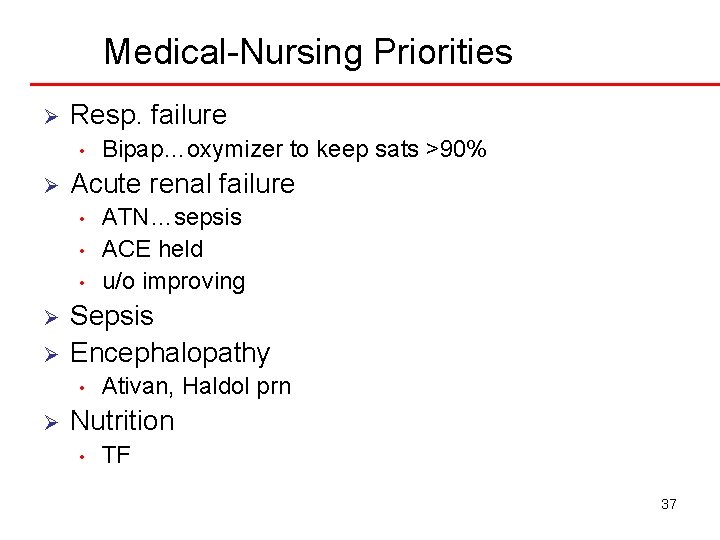
Medical-Nursing Priorities Ø Resp. failure • Ø Acute renal failure • • • Ø Ø ATN…sepsis ACE held u/o improving Sepsis Encephalopathy • Ø Bipap…oxymizer to keep sats >90% Ativan, Haldol prn Nutrition • TF 37
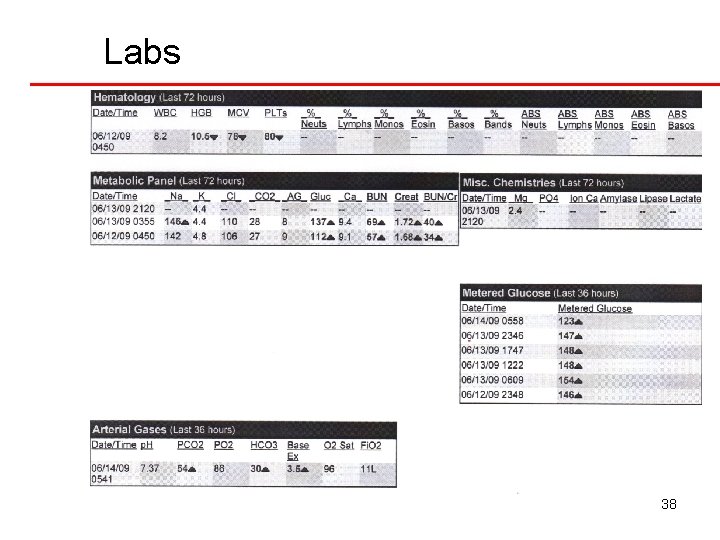
Labs 38