New Wave Cinema in the US Towards Art
- Slides: 27
New Wave Cinema in the US Towards Art Cinema
Table of Contents 1) American New Wave Cinema 2) New Hollywood and Independent Filmmaking 3) Realist or formalist
American New Wave Cinema ① Recession in the film industry in the late 60 s Costly flops of blockbuster films: Doctor Do Little (1967) and Star! (1968) Competition from TV networks ABC and CBS (stopped bidding for pictures and production of their own films) Movie attendance reduced to 1 billion a year Annual loss of $200 million by 1969
American New Wave Cinema ② Abandonment of the ‘Hayes’ Code (1930 - 1967) Three pillars 1) Moral standard - no sympathy to crime and sin 2) Only correct standard of life must be shown. 3) Law should not be ridiculed.
American New Wave Cinema - Nudity, ridicule of religion, illegal drug use, detailed criminal methods, foul language, realistic murdering scenes, matrimonial unsanctity (adultery and illicit sex), homosexuality, miscegenation, lustful kissing - Introduction of a new MPAA rating system; M (Mature), R (Restricted), and X (No one under 16 admitted)
American New Wave Cinema ③ Influence of European and other non-American cinema - French Nouvelle vague - Italian, Swedish and Japanese film
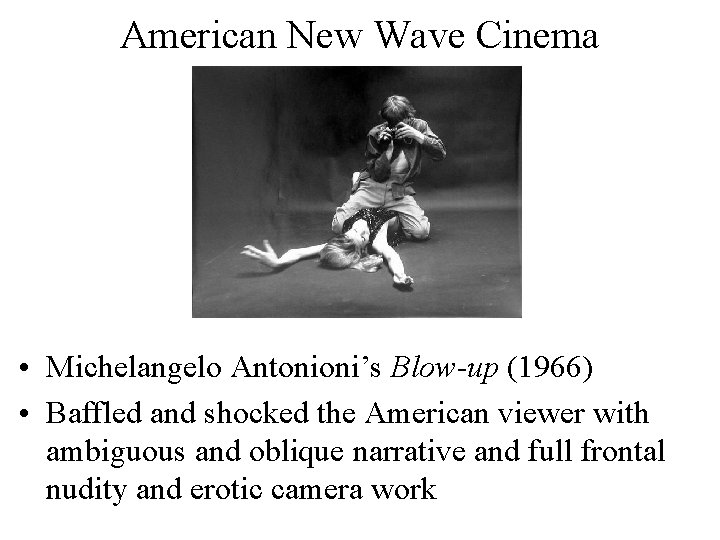
American New Wave Cinema • Michelangelo Antonioni’s Blow-up (1966) • Baffled and shocked the American viewer with ambiguous and oblique narrative and full frontal nudity and erotic camera work
American New Wave Cinema NEW LATITUDE leads to: - Expressive freedom (in low budget films) - Pursuit of more realistic and formalistic possibility * Film realism - location shooting, narrative with more reality effects, more faithful reflection of the society * Film formalism - more experimental filmmaking without restrain of conventional film realism
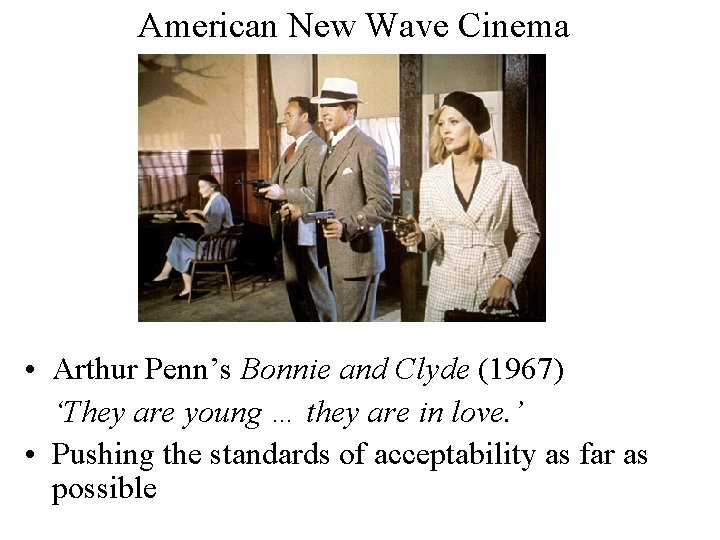
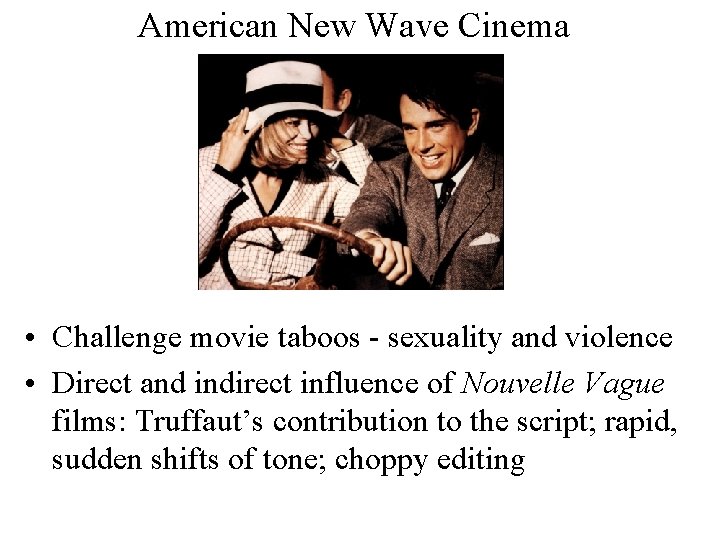
American New Wave Cinema • Arthur Penn’s Bonnie and Clyde (1967) ‘They are young … they are in love. ’ • Pushing the standards of acceptability as far as possible
American New Wave Cinema • Challenge movie taboos - sexuality and violence • Direct and indirect influence of Nouvelle Vague films: Truffaut’s contribution to the script; rapid, sudden shifts of tone; choppy editing
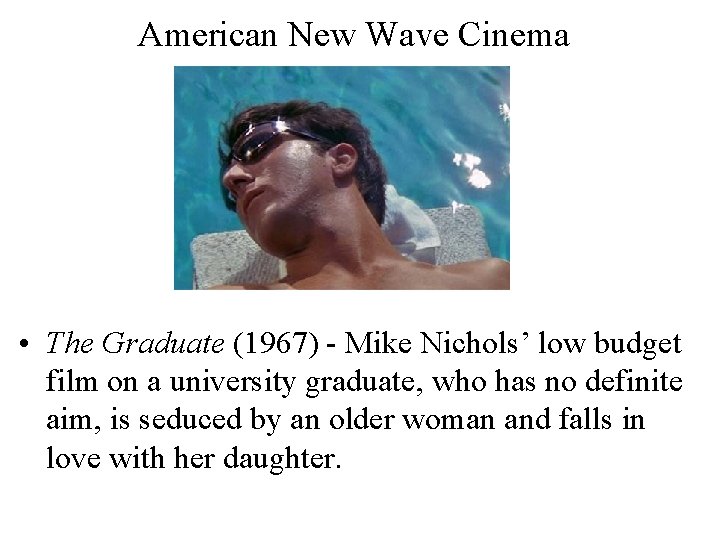
American New Wave Cinema • The Graduate (1967) - Mike Nichols’ low budget film on a university graduate, who has no definite aim, is seduced by an older woman and falls in love with her daughter.
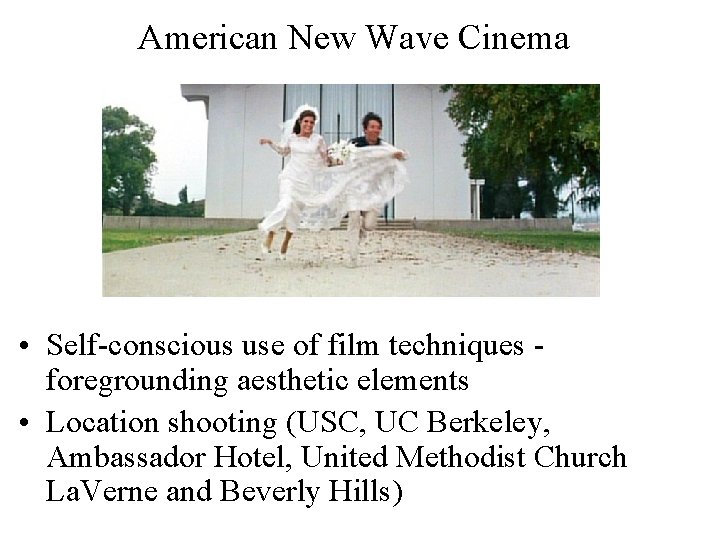
American New Wave Cinema • Self-conscious use of film techniques foregrounding aesthetic elements • Location shooting (USC, UC Berkeley, Ambassador Hotel, United Methodist Church La. Verne and Beverly Hills)
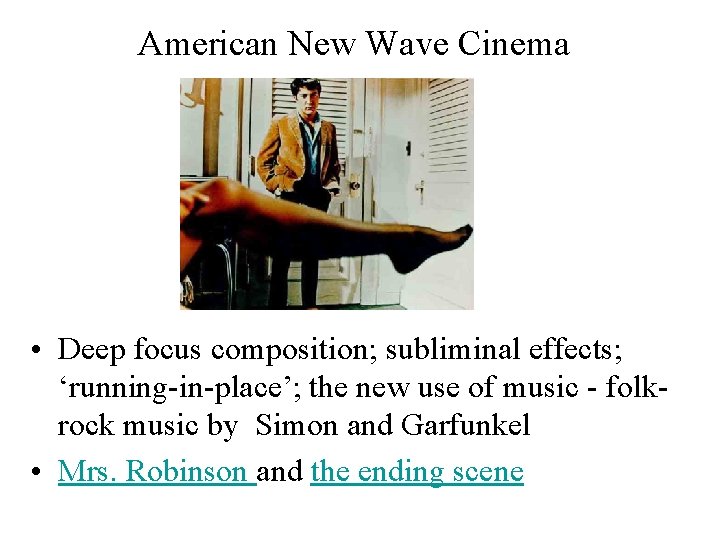
American New Wave Cinema • Deep focus composition; subliminal effects; ‘running-in-place’; the new use of music - folkrock music by Simon and Garfunkel • Mrs. Robinson and the ending scene
American New Wave Youth Film • Phenomenal successes of The Graduate (Mike Nichols, 1967) and Bonnie and Clyde (Arthur Penn, 1967) • Studios launched a serious of ‘youthpic’, youth rebellion and counter-culture: campus rebellion and unorthodox lifestyles
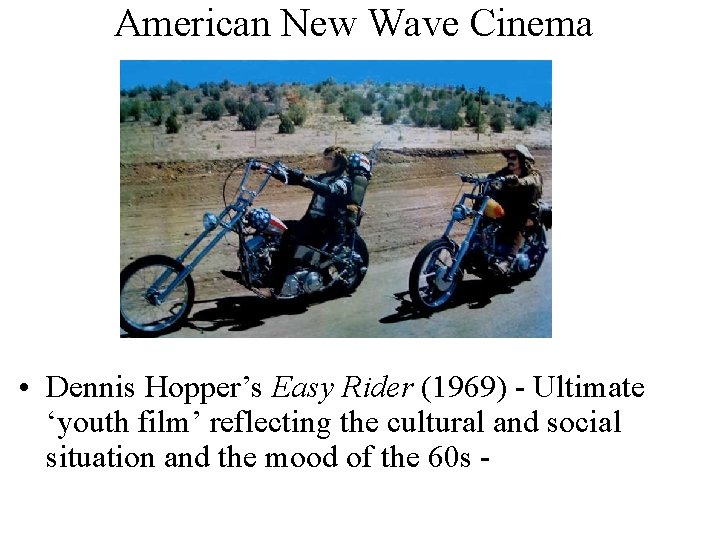
American New Wave Cinema • Dennis Hopper’s Easy Rider (1969) - Ultimate ‘youth film’ reflecting the cultural and social situation and the mood of the 60 s -
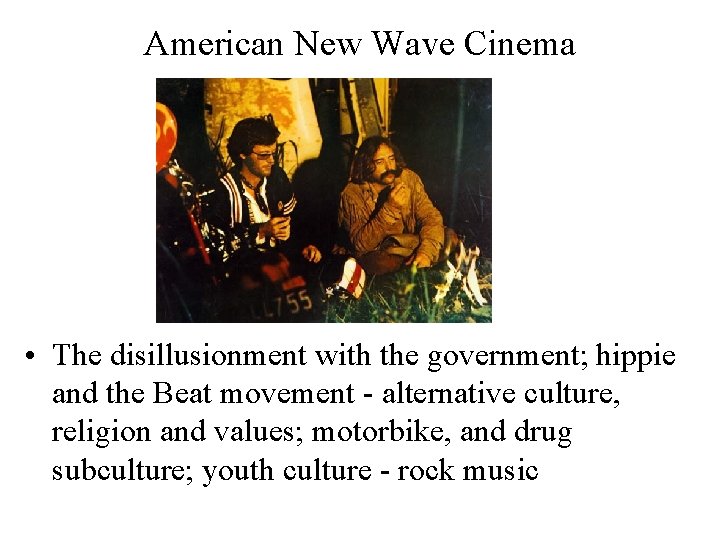
American New Wave Cinema • The disillusionment with the government; hippie and the Beat movement - alternative culture, religion and values; motorbike, and drug subculture; youth culture - rock music
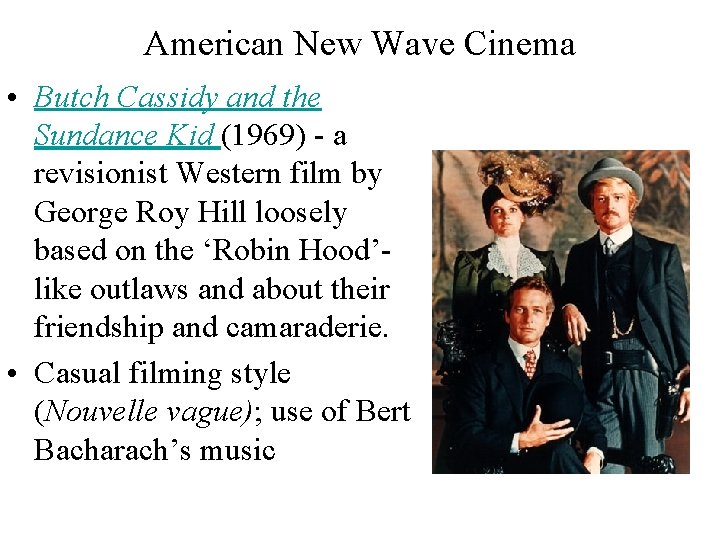
American New Wave Cinema • Butch Cassidy and the Sundance Kid (1969) - a revisionist Western film by George Roy Hill loosely based on the ‘Robin Hood’like outlaws and about their friendship and camaraderie. • Casual filming style (Nouvelle vague); use of Bert Bacharach’s music
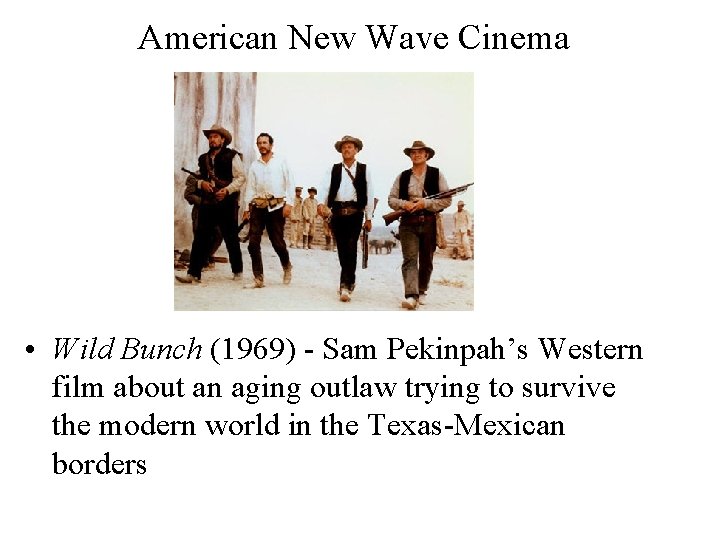
American New Wave Cinema • Wild Bunch (1969) - Sam Pekinpah’s Western film about an aging outlaw trying to survive the modern world in the Texas-Mexican borders
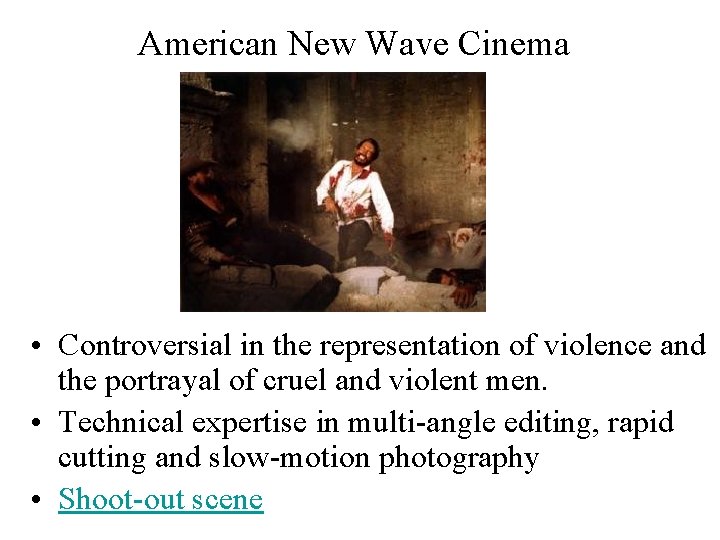
American New Wave Cinema • Controversial in the representation of violence and the portrayal of cruel and violent men. • Technical expertise in multi-angle editing, rapid cutting and slow-motion photography • Shoot-out scene
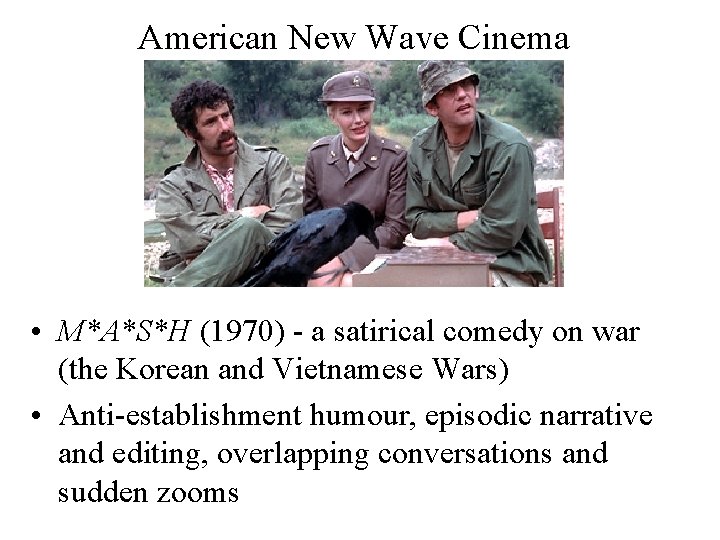
American New Wave Cinema • M*A*S*H (1970) - a satirical comedy on war (the Korean and Vietnamese Wars) • Anti-establishment humour, episodic narrative and editing, overlapping conversations and sudden zooms
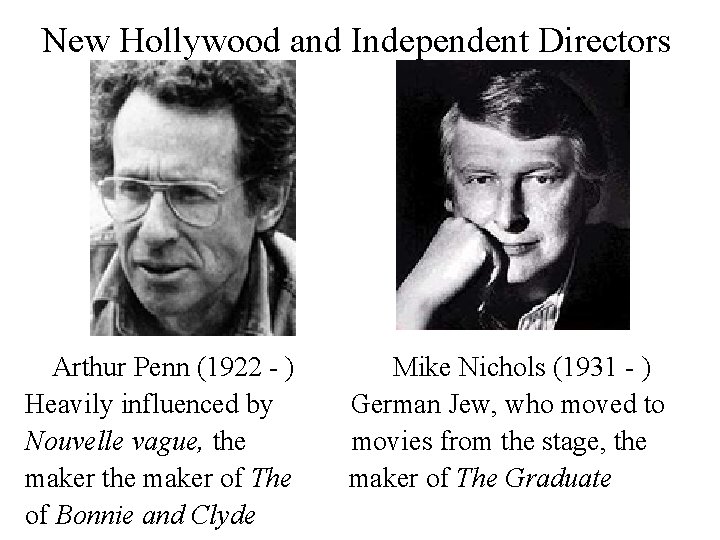
New Hollywood and Independent Directors Arthur Penn (1922 - ) Heavily influenced by Nouvelle vague, the maker of The of Bonnie and Clyde Mike Nichols (1931 - ) German Jew, who moved to movies from the stage, the maker of The Graduate
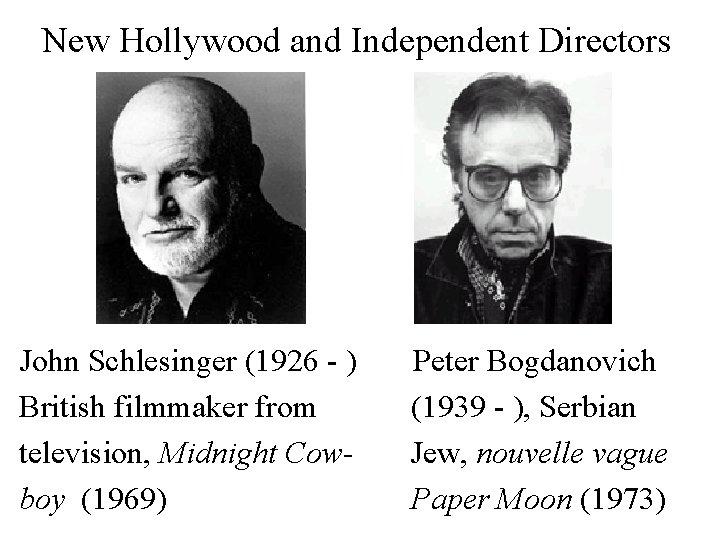
New Hollywood and Independent Directors John Schlesinger (1926 - ) British filmmaker from television, Midnight Cowboy (1969) Peter Bogdanovich (1939 - ), Serbian Jew, nouvelle vague Paper Moon (1973)
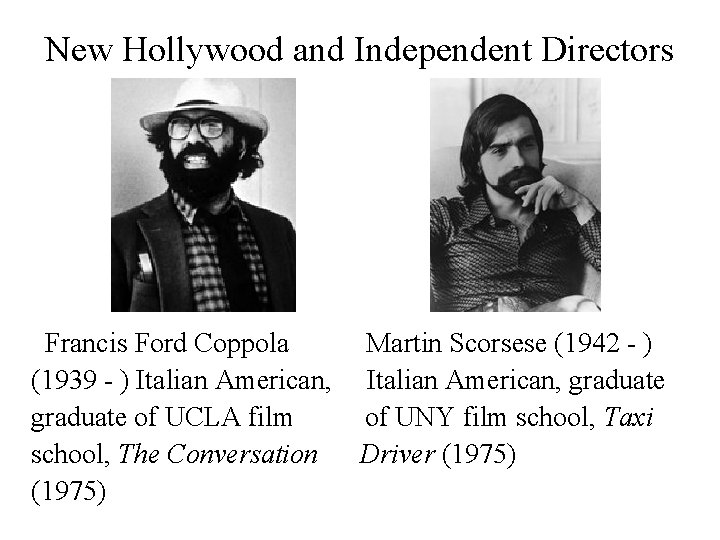
New Hollywood and Independent Directors Francis Ford Coppola (1939 - ) Italian American, graduate of UCLA film school, The Conversation (1975) Martin Scorsese (1942 - ) Italian American, graduate of UNY film school, Taxi Driver (1975)
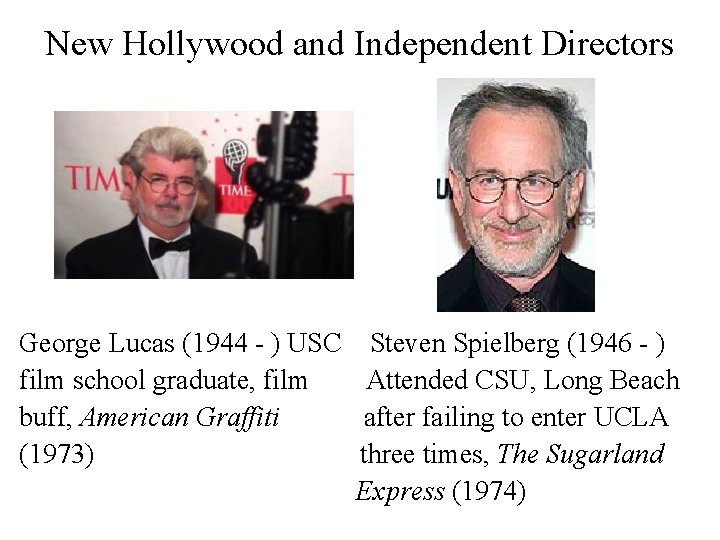
New Hollywood and Independent Directors George Lucas (1944 - ) USC Steven Spielberg (1946 - ) film school graduate, film Attended CSU, Long Beach buff, American Graffiti after failing to enter UCLA (1973) three times, The Sugarland Express (1974)
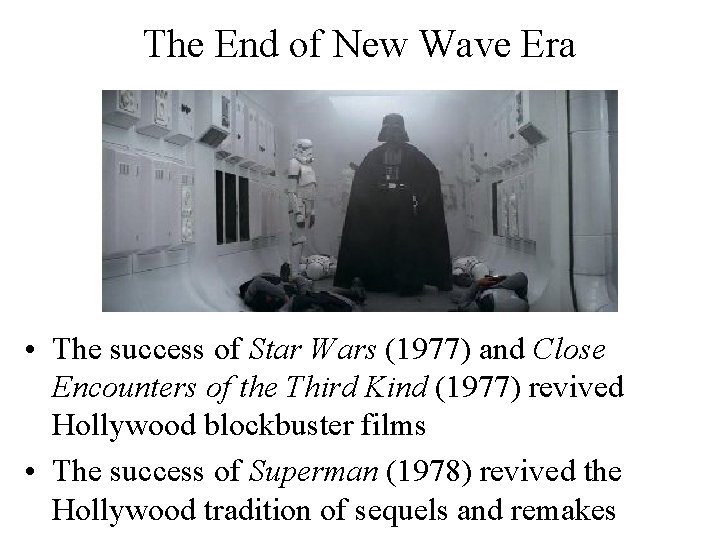
The End of New Wave Era • The success of Star Wars (1977) and Close Encounters of the Third Kind (1977) revived Hollywood blockbuster films • The success of Superman (1978) revived the Hollywood tradition of sequels and remakes
The End of New Wave Era • High concept cinema • With concentration on tie-in merchandise (toys) • With spin-offs into other media (books, magazines, television and later video) • With the use of sequels • Cinema is commercialized again • Reflecting economy rather than personal visions of filmmakers
Styles in American New Wave Cinema • More freedom in filmmaking • Renovation of genres • DIVERSE STYLES: more formalist and more experiemental • Self-conscious stylists • Personal films