
Waves Chapter 10 Nature of Waves Wave Repeating
- Slides: 16
Waves Chapter 10
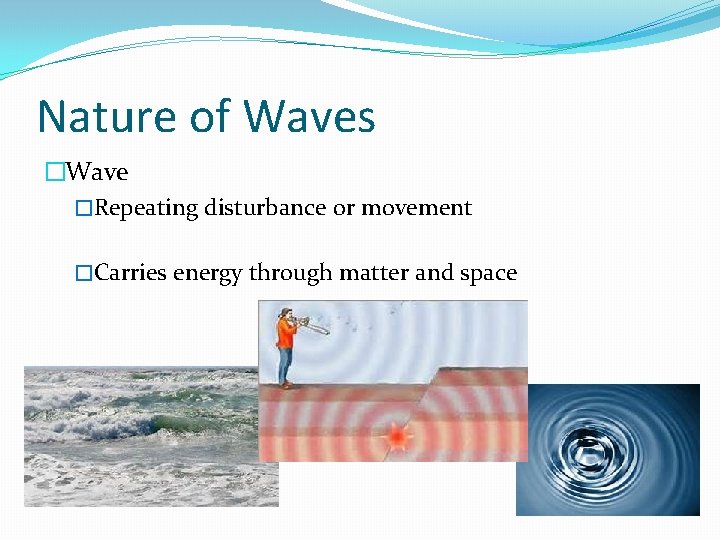
Nature of Waves �Wave �Repeating disturbance or movement �Carries energy through matter and space
Vibrations �Anything that moves in a rhythmic patter � Up and down � Back and forth � What is a Wave �All waves are produced when something vibrates �Pendulum
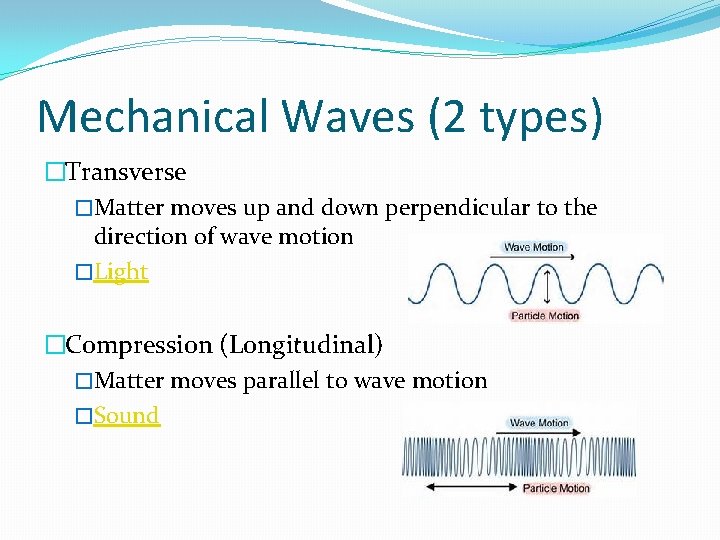
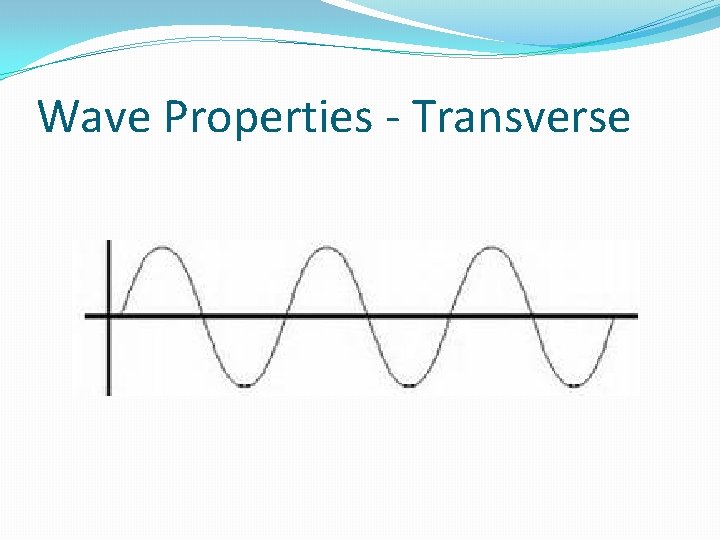
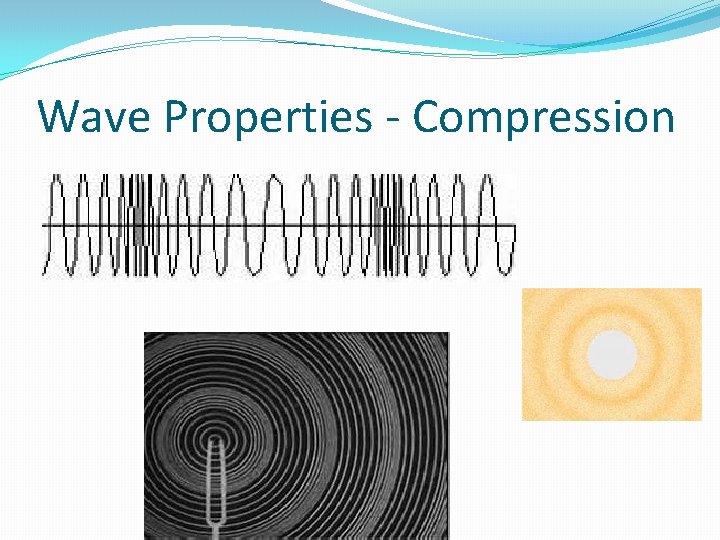
Mechanical Waves (2 types) �Transverse �Matter moves up and down perpendicular to the direction of wave motion �Light �Compression (Longitudinal) �Matter moves parallel to wave motion �Sound
Wave Properties - Transverse
Wave Properties - Compression
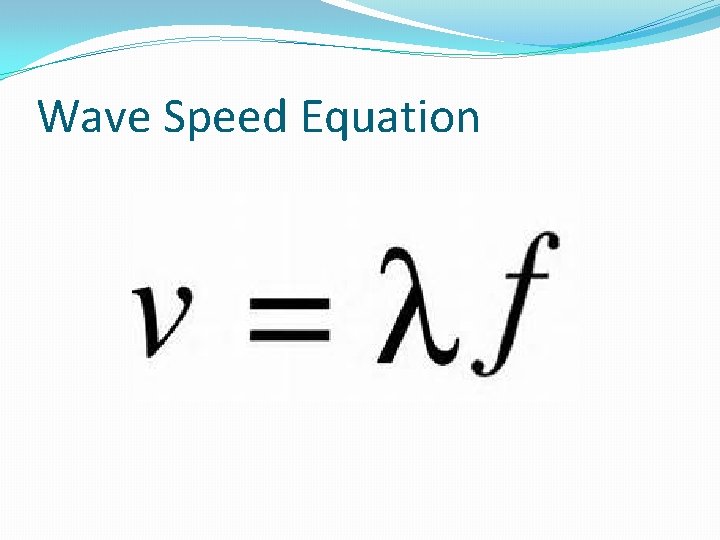
Measuring Waves �Wavelength (m) �Distance between one point on a wave and the same point on the next wave �Frequency (1/s or Hertz) �Number of wavelengths that pass a fixed point each second �How fast the source vibrates �Relationship between frequency and wavelength is…
Wave Speed �Medium – matter through which a wave will travel �Speed of the wave depends on the medium �Sound �Light �Temperature also affects wave speed
Wave Speed Equation
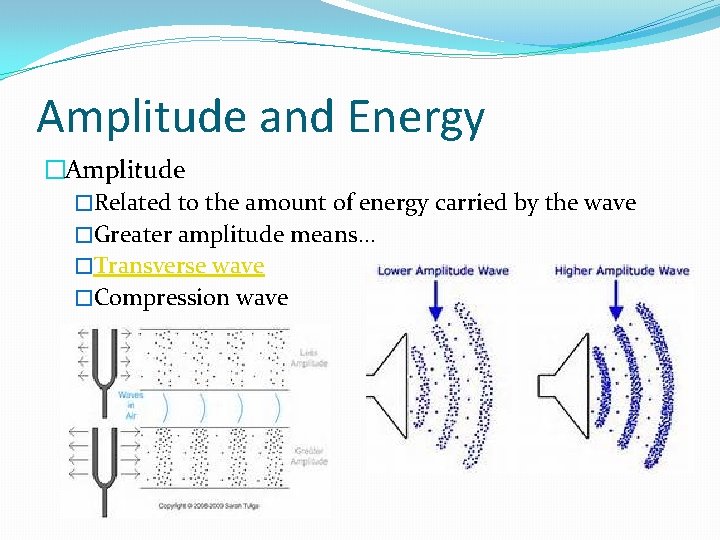
Amplitude and Energy �Amplitude �Related to the amount of energy carried by the wave �Greater amplitude means… �Transverse wave �Compression wave
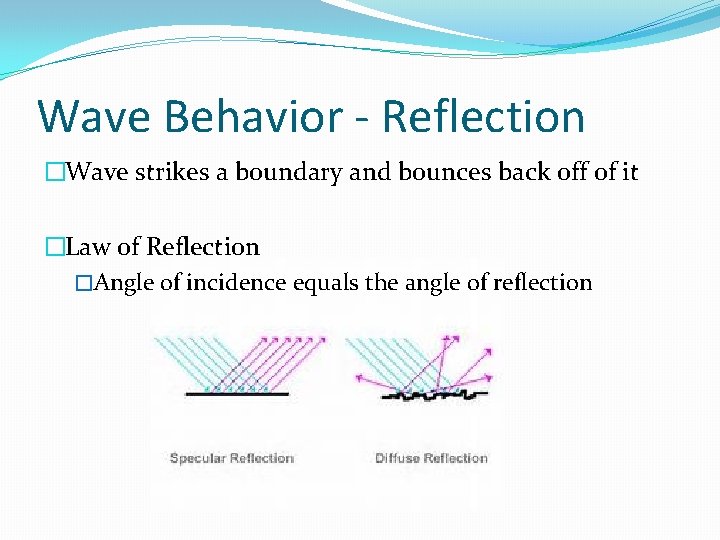
Wave Behavior - Reflection �Wave strikes a boundary and bounces back off of it �Law of Reflection �Angle of incidence equals the angle of reflection
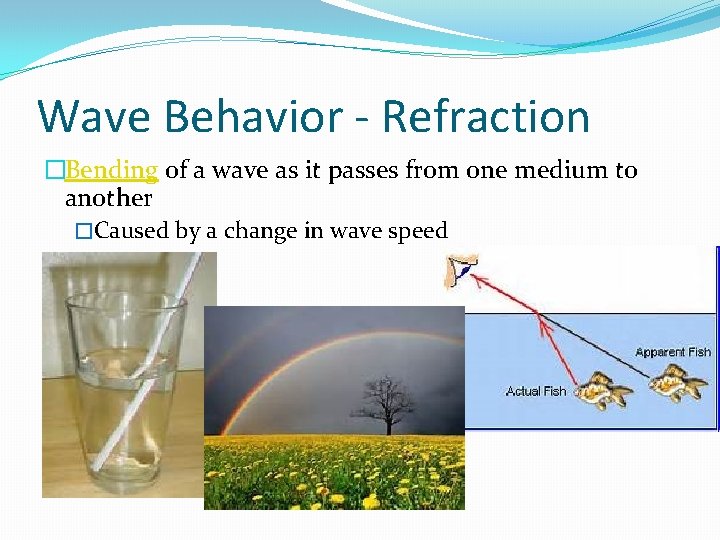
Wave Behavior - Refraction �Bending of a wave as it passes from one medium to another �Caused by a change in wave speed
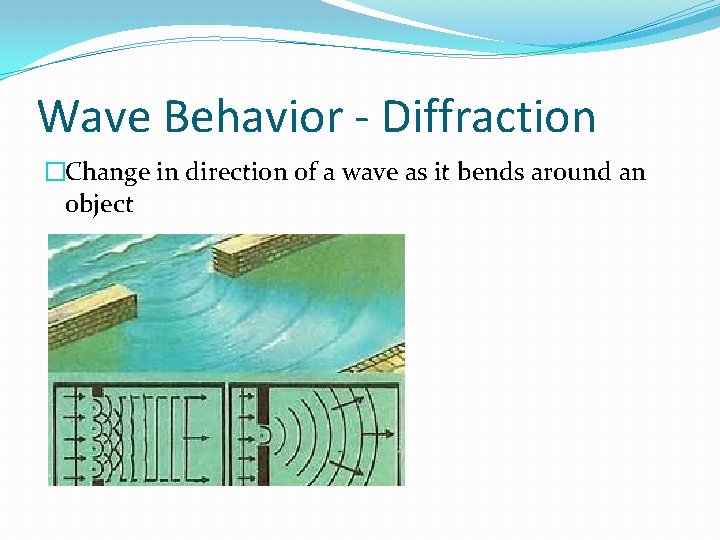
Wave Behavior - Diffraction �Change in direction of a wave as it bends around an object
Wave Behavior - Interference �Two or more waves overlap and combine to form a new wave �Light �Sound
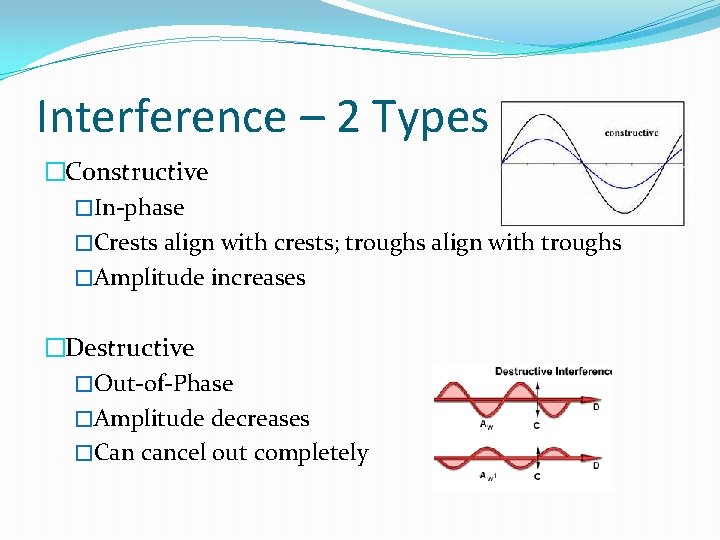
Interference – 2 Types �Constructive �In-phase �Crests align with crests; troughs align with troughs �Amplitude increases �Destructive �Out-of-Phase �Amplitude decreases �Can cancel out completely
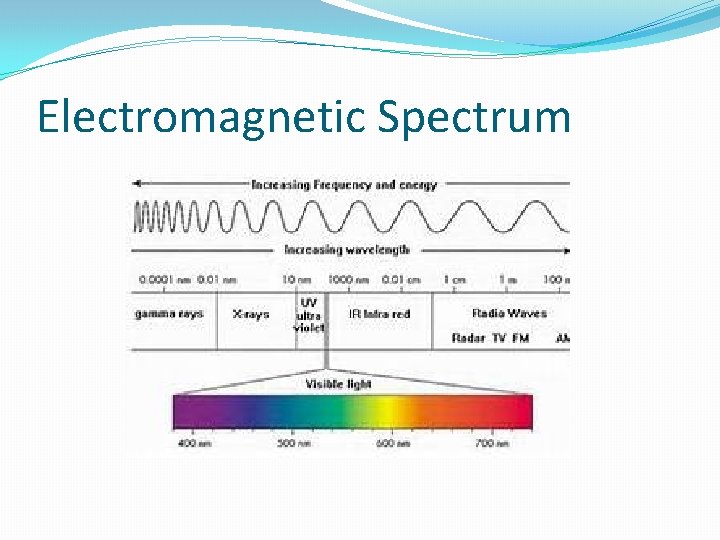
Electromagnetic Spectrum