Natural Selection Speciation 3 Types of Natural Selection
- Slides: 26
Natural Selection & Speciation
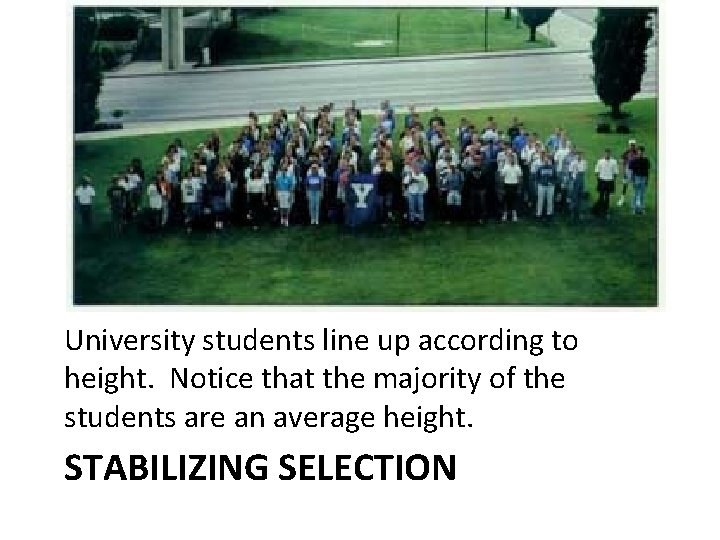
3 Types of Natural Selection • Stabilizing Selection—the extremes are selected against – Example: height, most human beings tend toward average height. In other words, there aren’t too many really short or really tall ones.
University students line up according to height. Notice that the majority of the students are an average height. STABILIZING SELECTION
3 Types of Natural Selection • Directional selection-- One extreme value is selected for – Example: size; in the animal world, larger organisms can typically survive better than smaller ones
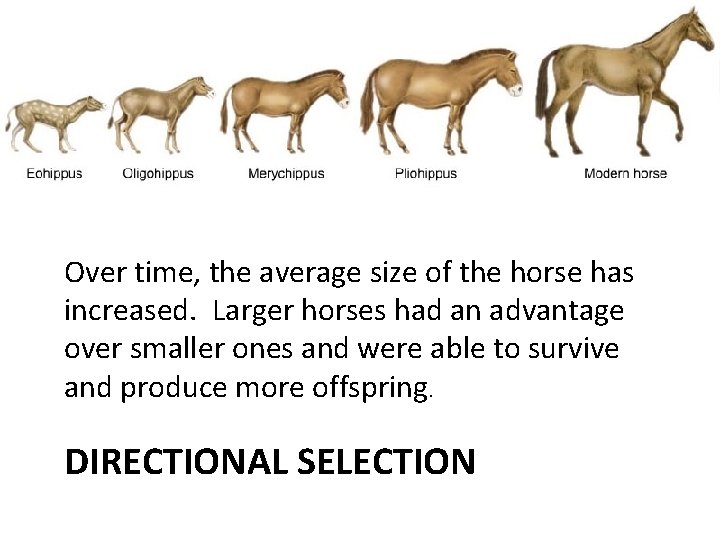
Over time, the average size of the horse has increased. Larger horses had an advantage over smaller ones and were able to survive and produce more offspring. DIRECTIONAL SELECTION
3 Types of Natural Selection • Disruptive selection-- The extremes are both selected for. – This type of selection is not as common as the first two. Example: Prey-type animal with distinctive markings which the predators know will over time move away from the norm in both directions.
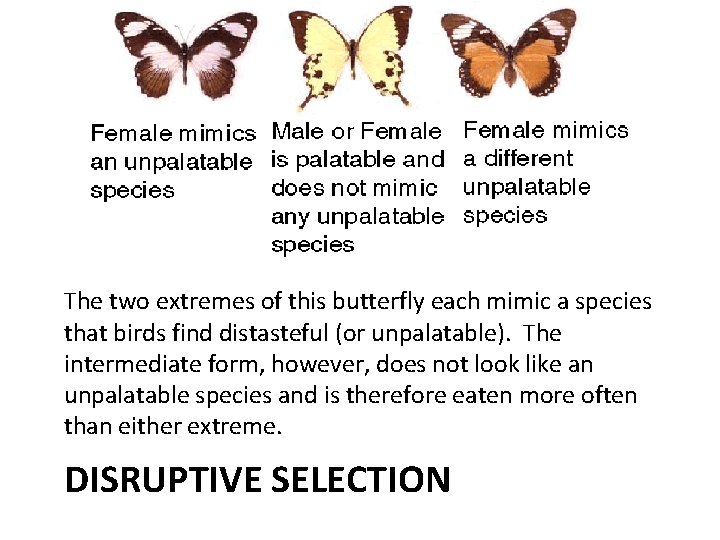
The two extremes of this butterfly each mimic a species that birds find distasteful (or unpalatable). The intermediate form, however, does not look like an unpalatable species and is therefore eaten more often than either extreme. DISRUPTIVE SELECTION
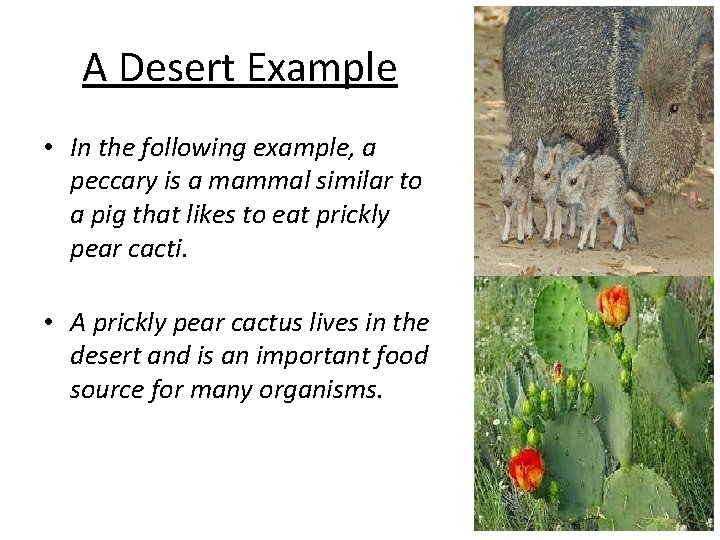
A Desert Example • In the following example, a peccary is a mammal similar to a pig that likes to eat prickly pear cacti. • A prickly pear cactus lives in the desert and is an important food source for many organisms.
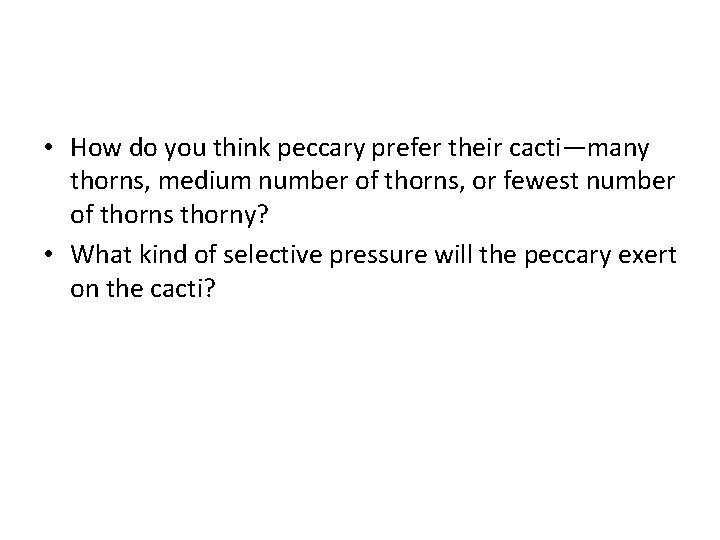
• How do you think peccary prefer their cacti—many thorns, medium number of thorns, or fewest number of thorns thorny? • What kind of selective pressure will the peccary exert on the cacti?
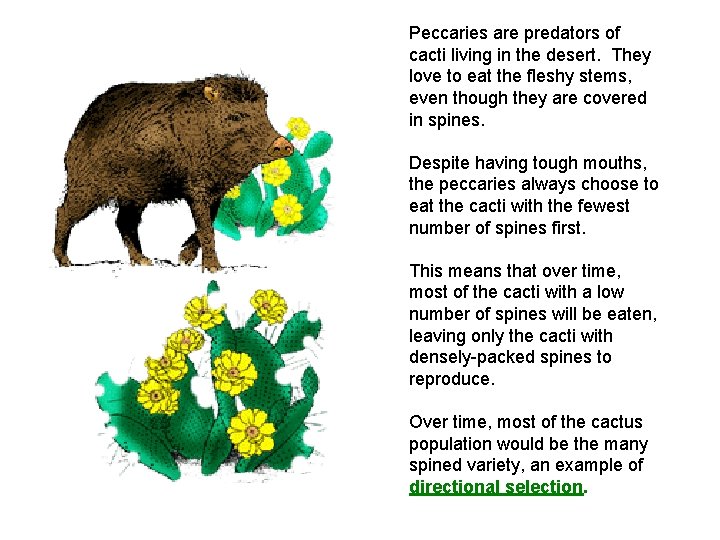
Peccaries are predators of cacti living in the desert. They love to eat the fleshy stems, even though they are covered in spines. Despite having tough mouths, the peccaries always choose to eat the cacti with the fewest number of spines first. This means that over time, most of the cacti with a low number of spines will be eaten, leaving only the cacti with densely-packed spines to reproduce. Over time, most of the cactus population would be the many spined variety, an example of directional selection.
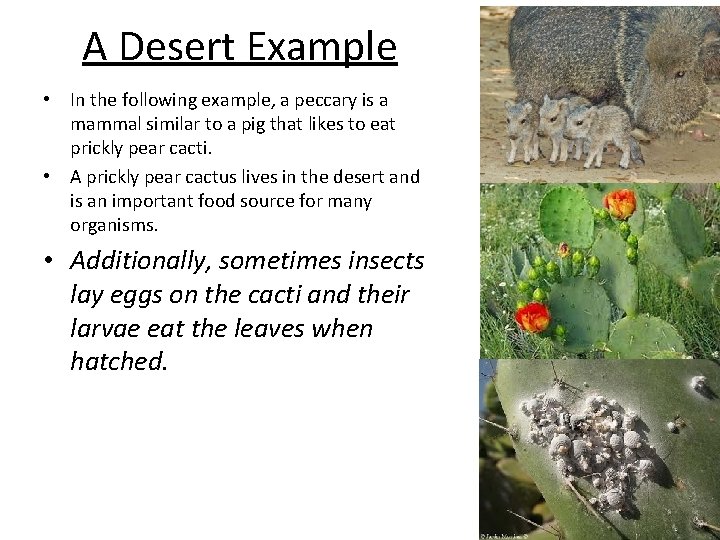
A Desert Example • In the following example, a peccary is a mammal similar to a pig that likes to eat prickly pear cacti. • A prickly pear cactus lives in the desert and is an important food source for many organisms. • Additionally, sometimes insects lay eggs on the cacti and their larvae eat the leaves when hatched.
• How do you think these insects prefer their cacti—many thorns, medium number of thorns, or fewest number of thorns thorny? • What kind of selective pressure will these insects exert on the cacti? • What kind of selective pressure will result when both insects and peccary exert their influence on the cacti at the same time?
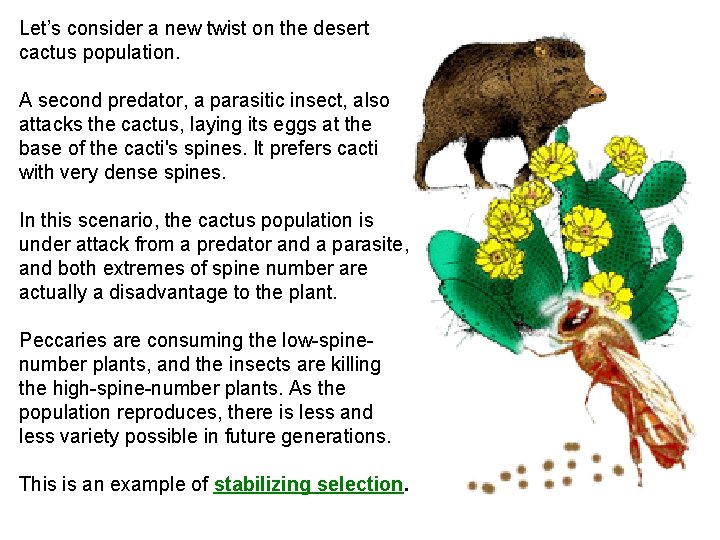
Let’s consider a new twist on the desert cactus population. A second predator, a parasitic insect, also attacks the cactus, laying its eggs at the base of the cacti's spines. It prefers cacti with very dense spines. In this scenario, the cactus population is under attack from a predator and a parasite, and both extremes of spine number are actually a disadvantage to the plant. Peccaries are consuming the low-spinenumber plants, and the insects are killing the high-spine-number plants. As the population reproduces, there is less and less variety possible in future generations. This is an example of stabilizing selection.
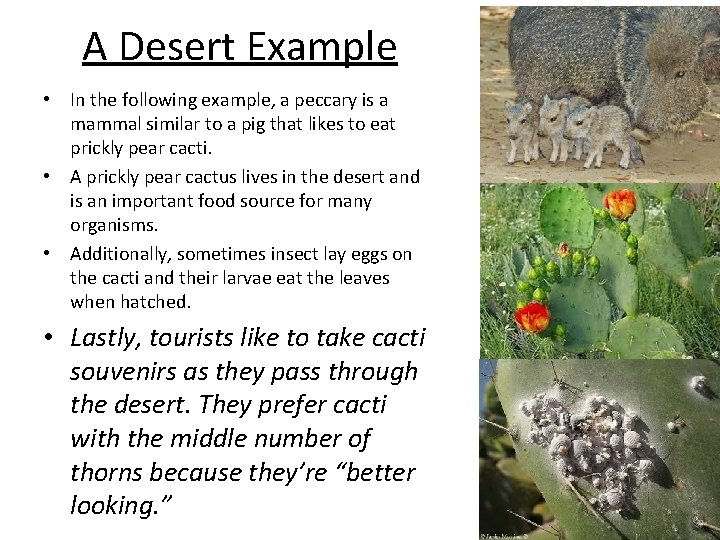
A Desert Example • In the following example, a peccary is a mammal similar to a pig that likes to eat prickly pear cacti. • A prickly pear cactus lives in the desert and is an important food source for many organisms. • Additionally, sometimes insect lay eggs on the cacti and their larvae eat the leaves when hatched. • Lastly, tourists like to take cacti souvenirs as they pass through the desert. They prefer cacti with the middle number of thorns because they’re “better looking. ”
• What kind of selective pressure will the tourist exert on the cacti?
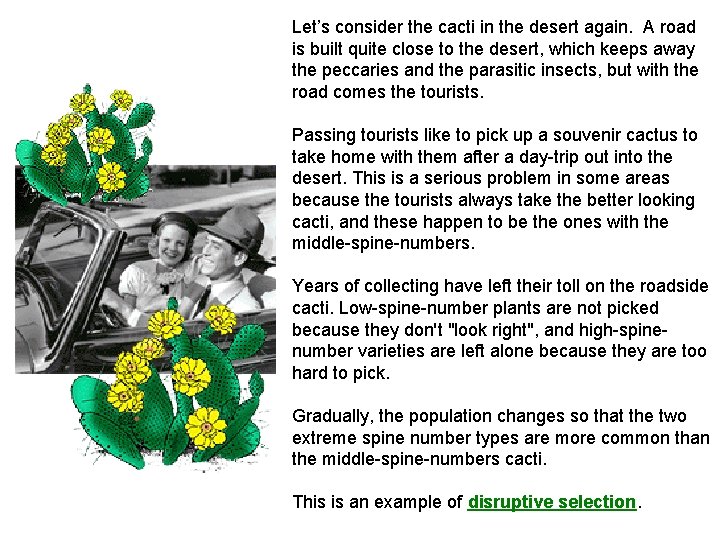
Let’s consider the cacti in the desert again. A road is built quite close to the desert, which keeps away the peccaries and the parasitic insects, but with the road comes the tourists. Passing tourists like to pick up a souvenir cactus to take home with them after a day-trip out into the desert. This is a serious problem in some areas because the tourists always take the better looking cacti, and these happen to be the ones with the middle-spine-numbers. Years of collecting have left their toll on the roadside cacti. Low-spine-number plants are not picked because they don't "look right", and high-spinenumber varieties are left alone because they are too hard to pick. Gradually, the population changes so that the two extreme spine number types are more common than the middle-spine-numbers cacti. This is an example of disruptive selection.
Species • Biological Species Concept – The genetics of two organisms are similar enough for them to be able to produce viable, fertile offspring – This model is problematic for organisms that reproduce asexually – https: //www. khanacademy. org/science/biology/h er/tree-of-life/v/species
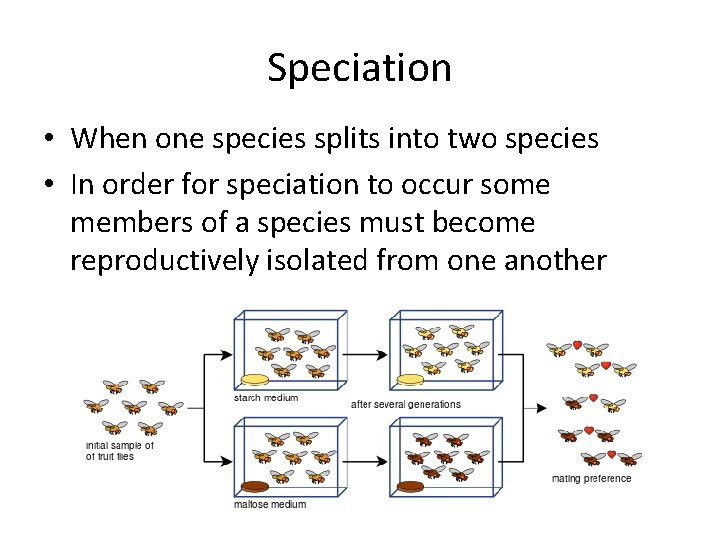
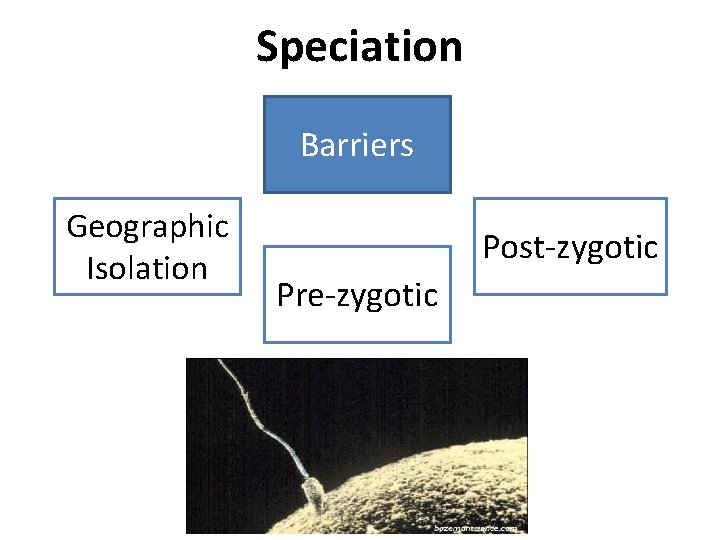
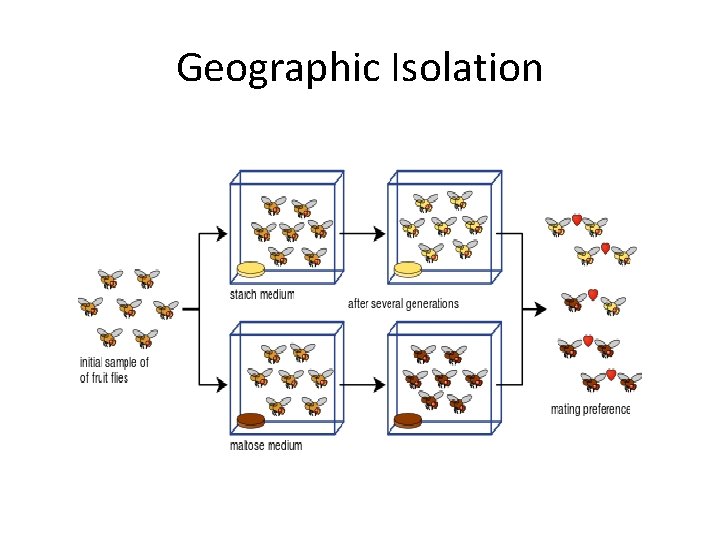
Speciation • When one species splits into two species • In order for speciation to occur some members of a species must become reproductively isolated from one another
Speciation
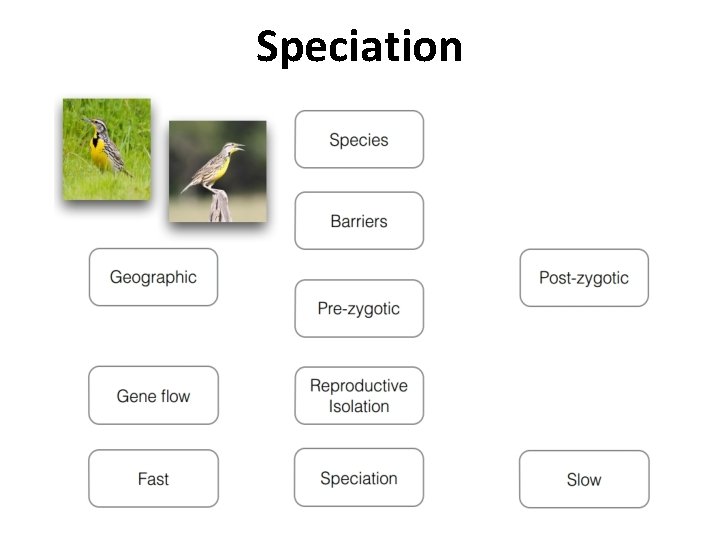
Speciation Barriers Geographic Isolation Post-zygotic Pre-zygotic
Geographic Isolation
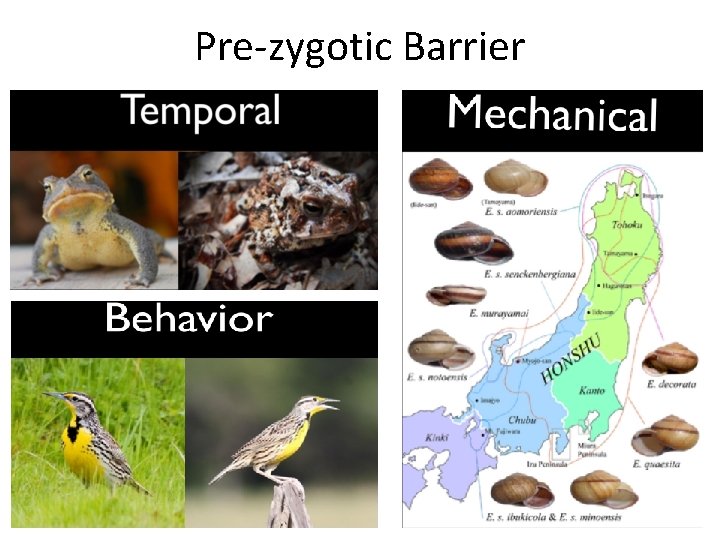
Pre-zygotic Barrier
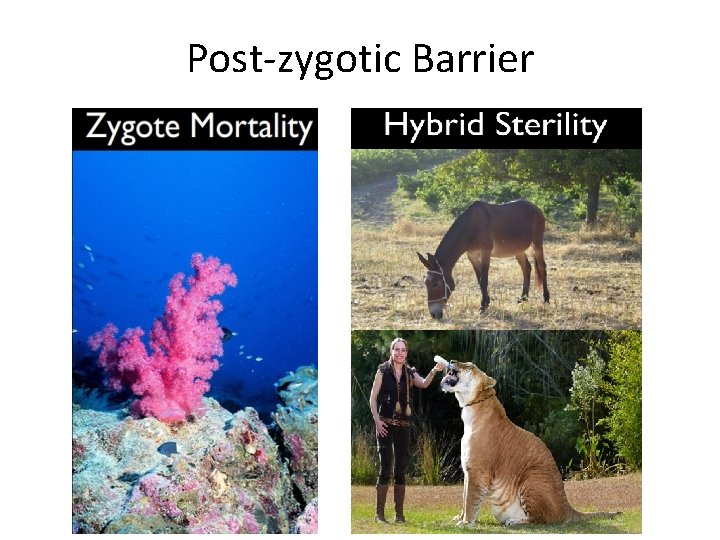
Post-zygotic Barrier
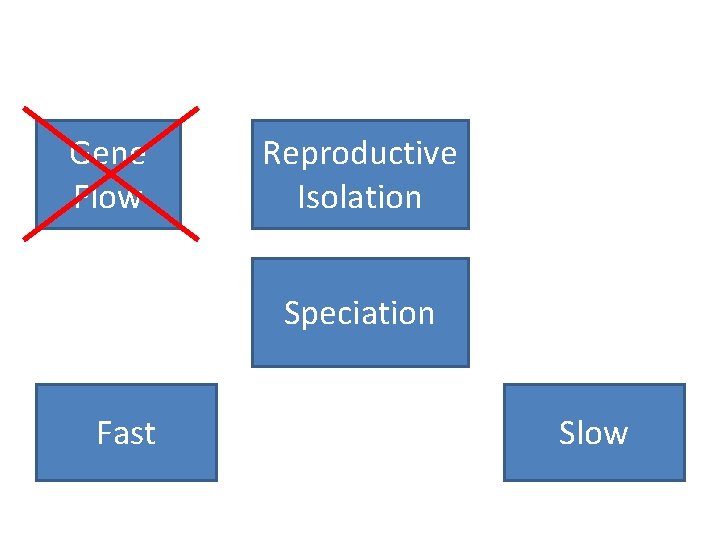
Gene Flow Reproductive Isolation Speciation Fast Slow
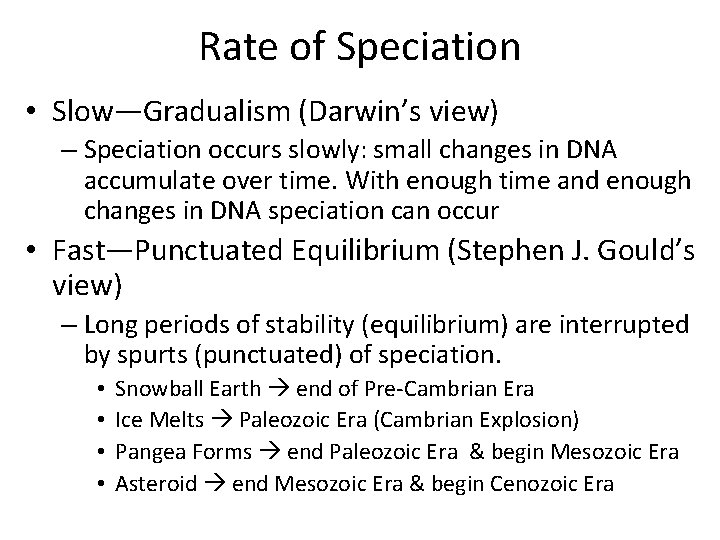
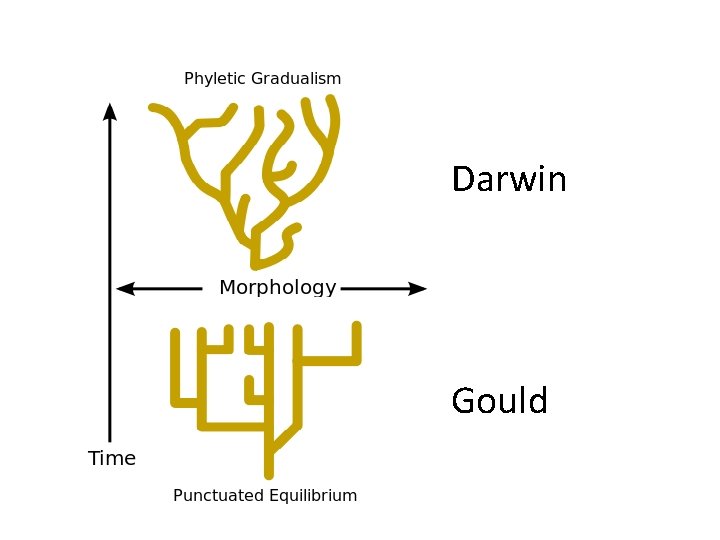
Rate of Speciation • Slow—Gradualism (Darwin’s view) – Speciation occurs slowly: small changes in DNA accumulate over time. With enough time and enough changes in DNA speciation can occur • Fast—Punctuated Equilibrium (Stephen J. Gould’s view) – Long periods of stability (equilibrium) are interrupted by spurts (punctuated) of speciation. • • Snowball Earth end of Pre-Cambrian Era Ice Melts Paleozoic Era (Cambrian Explosion) Pangea Forms end Paleozoic Era & begin Mesozoic Era Asteroid end Mesozoic Era & begin Cenozoic Era
Darwin Gould