MONITORING THE IMPACT OF DESALINATION PLANT DISCHARGE ON
- Slides: 16
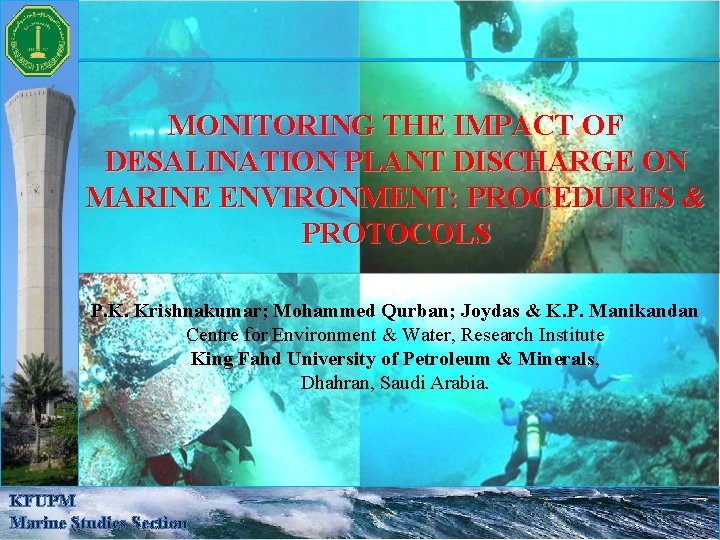
MONITORING THE IMPACT OF DESALINATION PLANT DISCHARGE ON MARINE ENVIRONMENT: PROCEDURES & PROTOCOLS P. K. Krishnakumar; Mohammed Qurban; Joydas & K. P. Manikandan Centre for Environment & Water, Research Institute King Fahd University of Petroleum & Minerals, Dhahran, Saudi Arabia. KFUPM Marine Studies Section
WHAT IS ENVIRONMENTAL EFFECTS MONITORING? § A science-based tool that can detect and measure changes in the ecosystems (i. e. , receiving environments) potentially affected by human activity (i. e. , effluent discharges). § Required by law and helps to assess the adequacy of the effluent & discharge regulations for protecting the environment (Compliance). § An interactive system of monitoring to assess the effectiveness of environmental management measures. § An assessment tool to determine the sustainability of human activities on ecosystem health. KFUPM Marine Studies Section
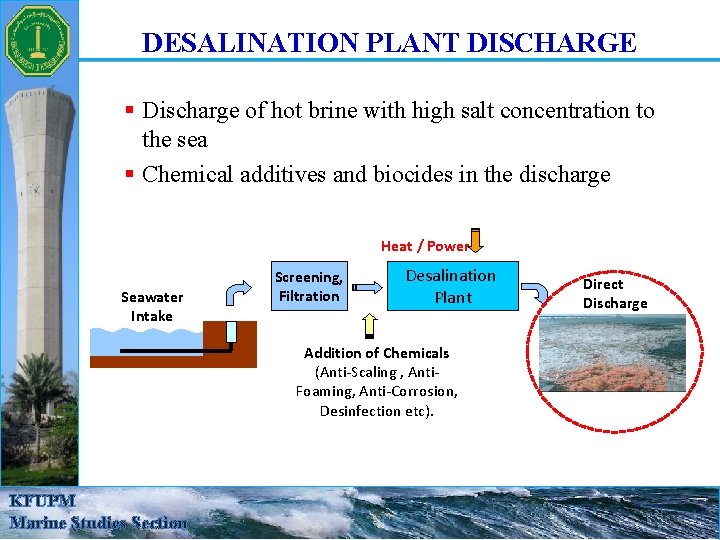
DESALINATION PLANT DISCHARGE § Discharge of hot brine with high salt concentration to the sea § Chemical additives and biocides in the discharge Heat / Power Seawater Intake Screening, Filtration Desalination Plant Addition of Chemicals (Anti-Scaling , Anti. Foaming, Anti-Corrosion, Desinfection etc). KFUPM Marine Studies Section Direct Discharge
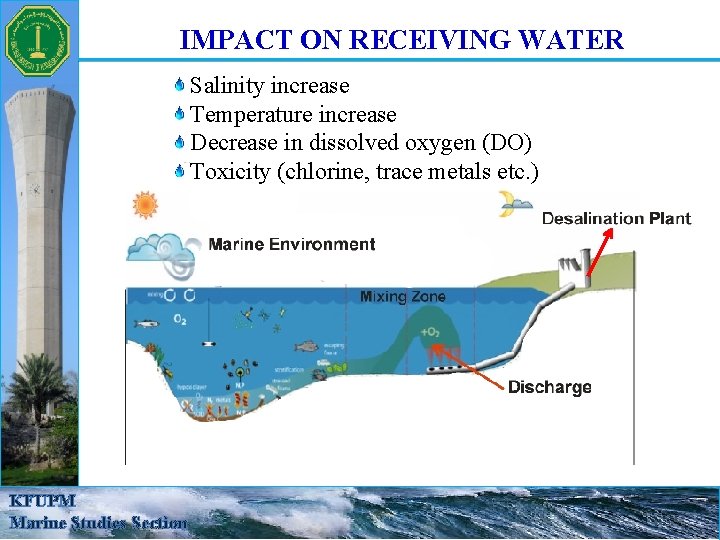
IMPACT ON RECEIVING WATER Salinity increase Temperature increase Decrease in dissolved oxygen (DO) Toxicity (chlorine, trace metals etc. ) KFUPM Marine Studies Section
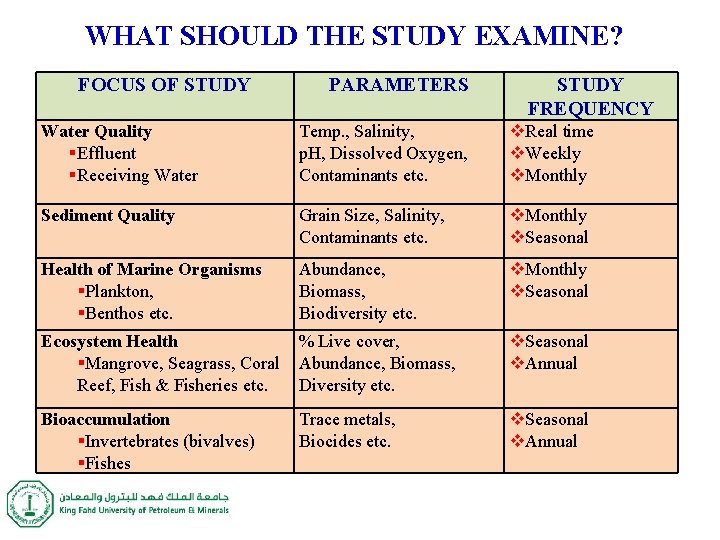
WHAT SHOULD THE STUDY EXAMINE? FOCUS OF STUDY PARAMETERS STUDY FREQUENCY Water Quality §Effluent §Receiving Water Temp. , Salinity, p. H, Dissolved Oxygen, Contaminants etc. v. Real time v. Weekly v. Monthly Sediment Quality Grain Size, Salinity, Contaminants etc. v. Monthly v. Seasonal Health of Marine Organisms §Plankton, §Benthos etc. Abundance, Biomass, Biodiversity etc. v. Monthly v. Seasonal Ecosystem Health §Mangrove, Seagrass, Coral Reef, Fish & Fisheries etc. % Live cover, Abundance, Biomass, Diversity etc. v. Seasonal v. Annual Bioaccumulation §Invertebrates (bivalves) §Fishes Trace metals, Biocides etc. v. Seasonal v. Annual
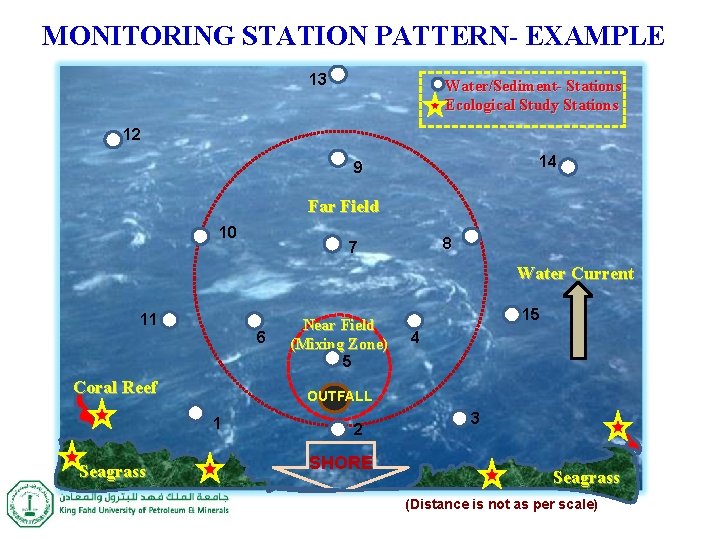
MONITORING STATION PATTERN- EXAMPLE 13 Water/Sediment- Stations Ecological Study Stations 12 14 9 Far Field 10 8 7 Water Current 11 6 Coral Reef 15 4 OUTFALL 1 Seagrass Near Field (Mixing Zone) 5 2 SHORE 3 Seagrass (Distance is not as per scale)
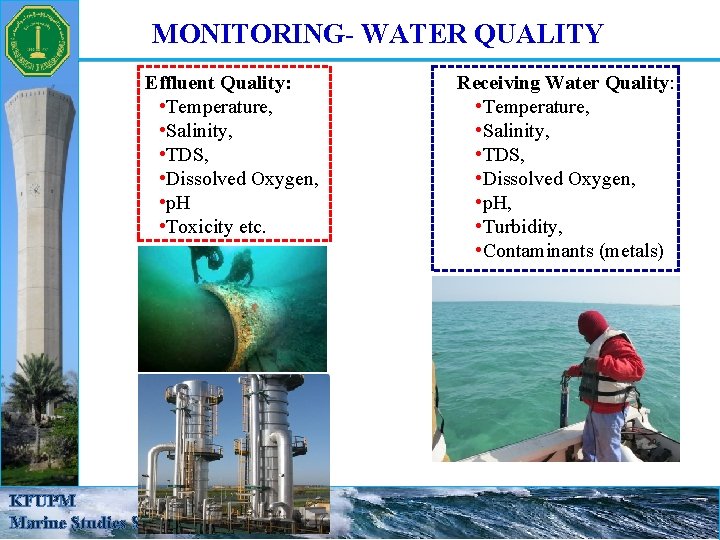
MONITORING- WATER QUALITY Effluent Quality: • Temperature, • Salinity, • TDS, • Dissolved Oxygen, • p. H • Toxicity etc. KFUPM Marine Studies Section Receiving Water Quality: • Temperature, • Salinity, • TDS, • Dissolved Oxygen, • p. H, • Turbidity, • Contaminants (metals)
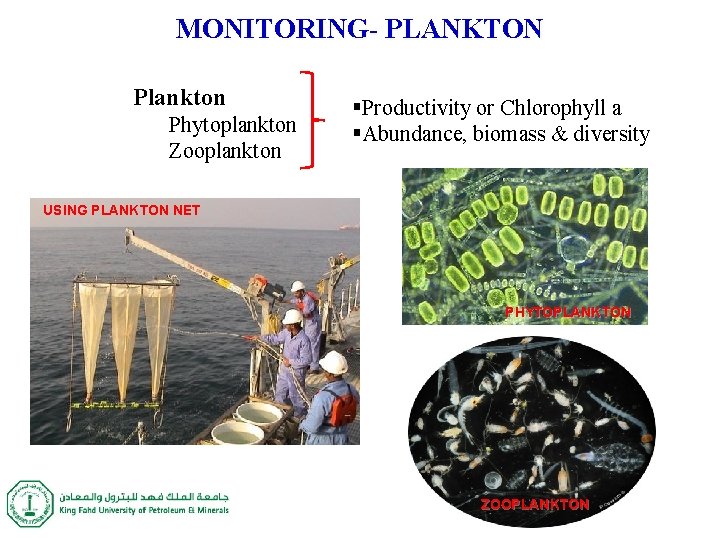
MONITORING- PLANKTON Plankton Phytoplankton Zooplankton §Productivity or Chlorophyll a §Abundance, biomass & diversity USING PLANKTON NET PHYTOPLANKTON ZOOPLANKTON
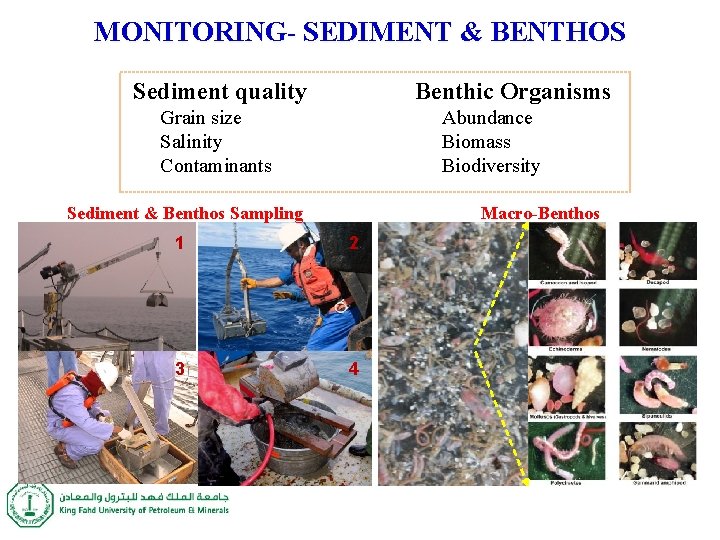
MONITORING- SEDIMENT & BENTHOS Sediment quality Benthic Organisms Grain size Salinity Contaminants Abundance Biomass Biodiversity Sediment & Benthos Sampling Macro-Benthos 1 2 3 4
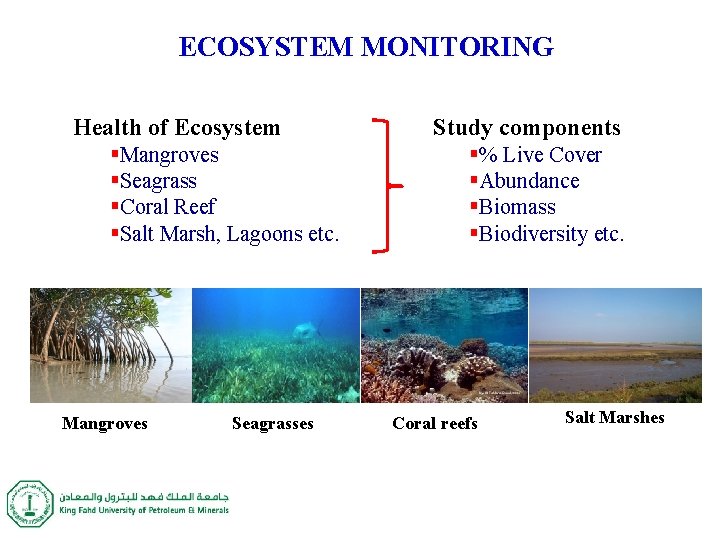
ECOSYSTEM MONITORING Health of Ecosystem §Mangroves §Seagrass §Coral Reef §Salt Marsh, Lagoons etc. Mangroves Seagrasses Study components §% Live Cover §Abundance §Biomass §Biodiversity etc. Coral reefs Salt Marshes
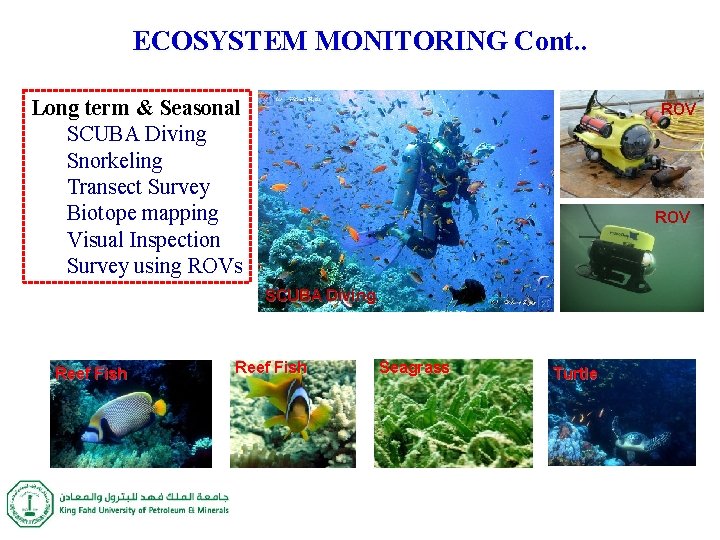
ECOSYSTEM MONITORING Cont. . Long term & Seasonal SCUBA Diving Snorkeling Transect Survey Biotope mapping Visual Inspection Survey using ROVs ROV SCUBA Diving Reef Fish Seagrass Turtle
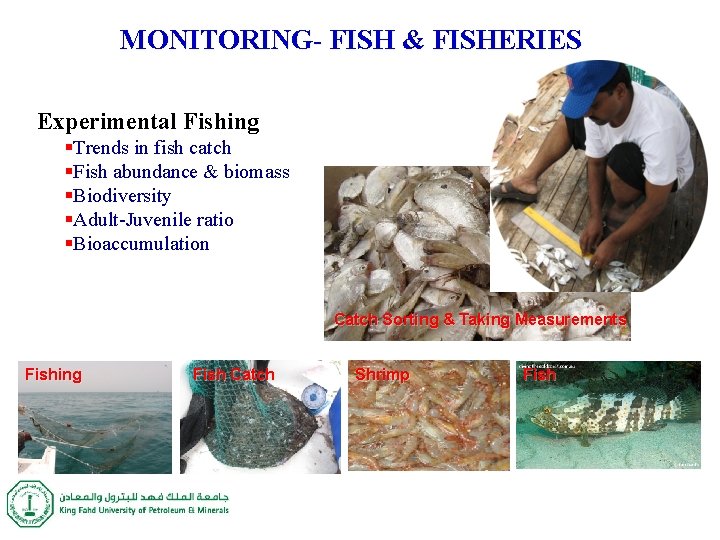
MONITORING- FISH & FISHERIES Experimental Fishing §Trends in fish catch §Fish abundance & biomass §Biodiversity §Adult-Juvenile ratio §Bioaccumulation Catch Sorting & Taking Measurements Fishing Fish Catch Shrimp Fish
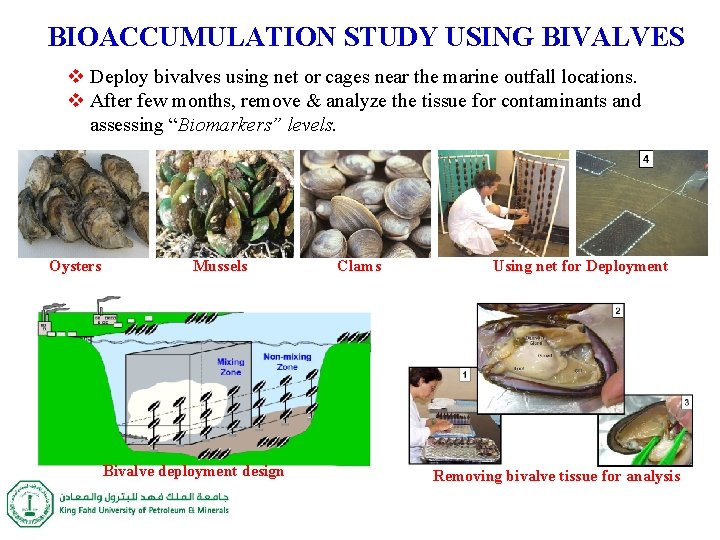
BIOACCUMULATION STUDY USING BIVALVES v Deploy bivalves using net or cages near the marine outfall locations. v After few months, remove & analyze the tissue for contaminants and assessing “Biomarkers” levels. Oysters Mussels Bivalve deployment design Clams Using net for Deployment Removing bivalve tissue for analysis
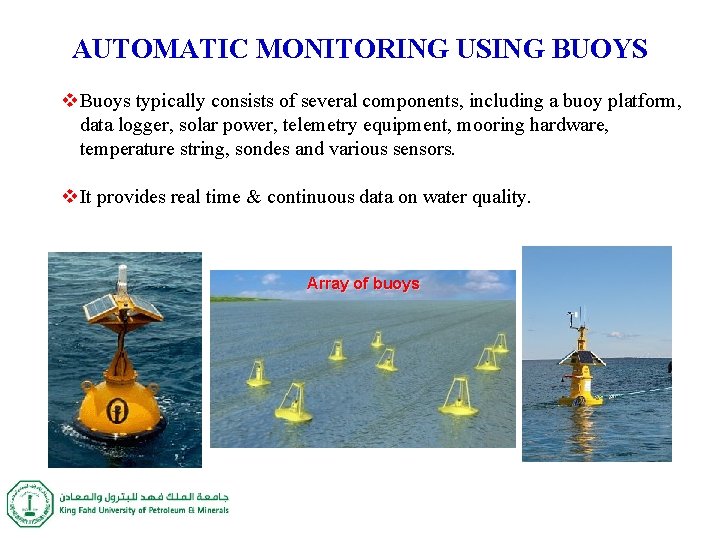
AUTOMATIC MONITORING USING BUOYS v. Buoys typically consists of several components, including a buoy platform, data logger, solar power, telemetry equipment, mooring hardware, temperature string, sondes and various sensors. v. It provides real time & continuous data on water quality. Array of buoys
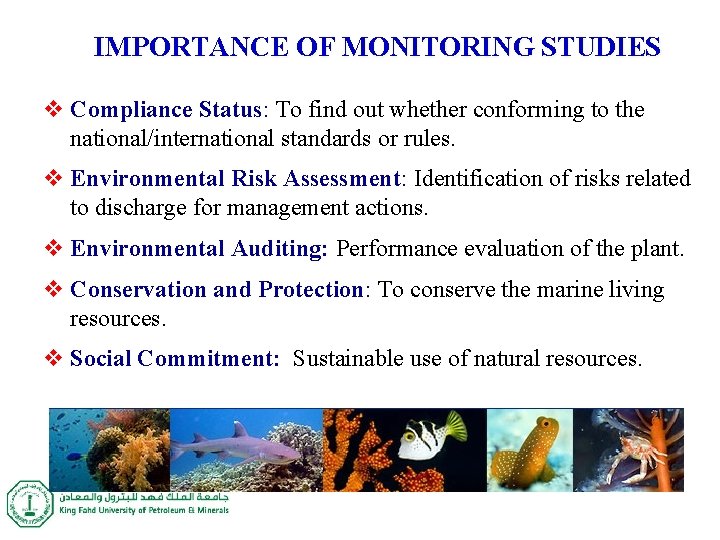
IMPORTANCE OF MONITORING STUDIES v Compliance Status: To find out whether conforming to the national/international standards or rules. v Environmental Risk Assessment: Identification of risks related to discharge for management actions. v Environmental Auditing: Performance evaluation of the plant. v Conservation and Protection: To conserve the marine living resources. v Social Commitment: Sustainable use of natural resources.
THANK YOU KFUPM Marine Studies Section