Monitoring Evaluation of RNTCP Dr Rajeswari Ramachandran Retd

- Slides: 34
Monitoring & Evaluation of RNTCP Dr Rajeswari Ramachandran Retd. Dy. Director (Sr Gr) Tuberculosis Research Centre (ICMR) Chennai
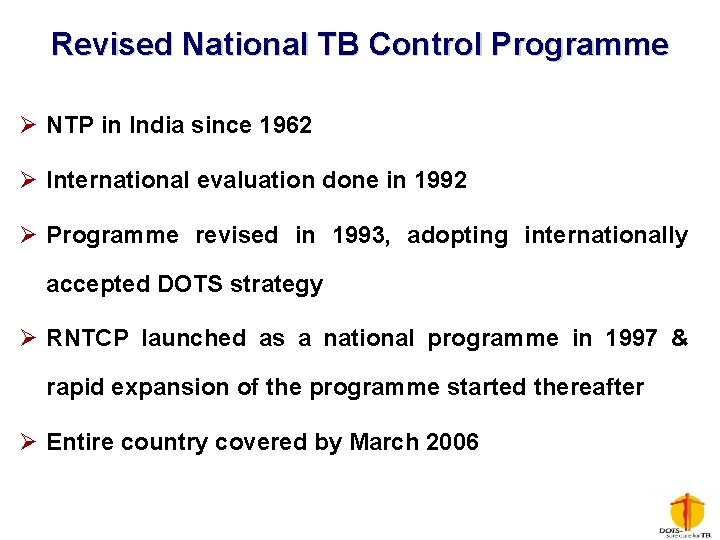
Revised National TB Control Programme Ø NTP in India since 1962 Ø International evaluation done in 1992 Ø Programme revised in 1993, adopting internationally accepted DOTS strategy Ø RNTCP launched as a national programme in 1997 & rapid expansion of the programme started thereafter Ø Entire country covered by March 2006
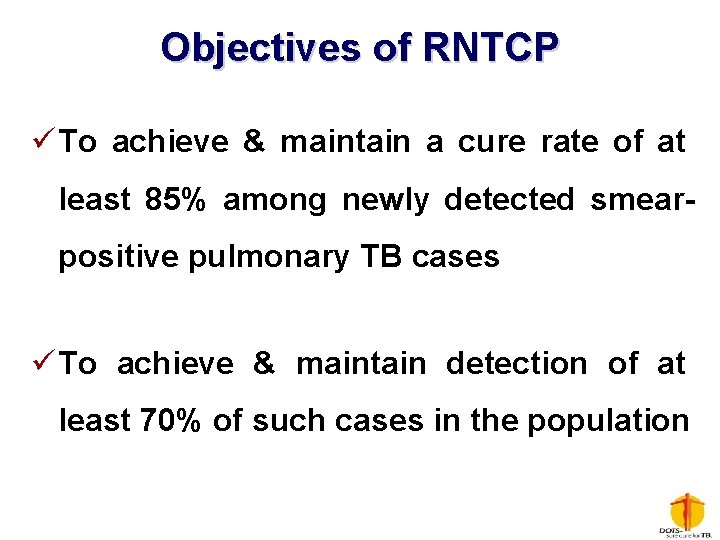
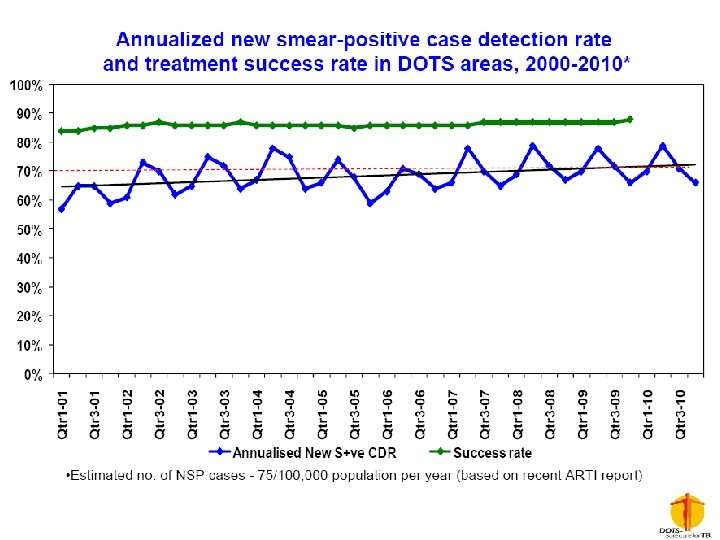
Objectives of RNTCP ü To achieve & maintain a cure rate of at least 85% among newly detected smearpositive pulmonary TB cases ü To achieve & maintain detection of at least 70% of such cases in the population
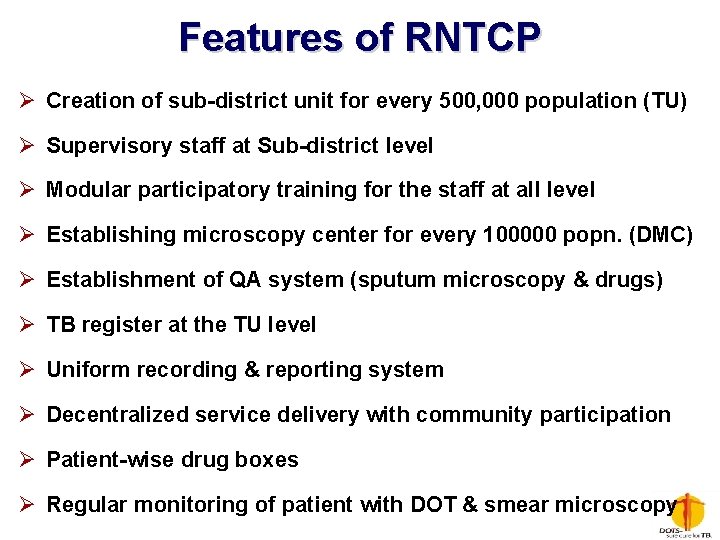
Features of RNTCP Ø Creation of sub-district unit for every 500, 000 population (TU) Ø Supervisory staff at Sub-district level Ø Modular participatory training for the staff at all level Ø Establishing microscopy center for every 100000 popn. (DMC) Ø Establishment of QA system (sputum microscopy & drugs) Ø TB register at the TU level Ø Uniform recording & reporting system Ø Decentralized service delivery with community participation Ø Patient-wise drug boxes Ø Regular monitoring of patient with DOT & smear microscopy
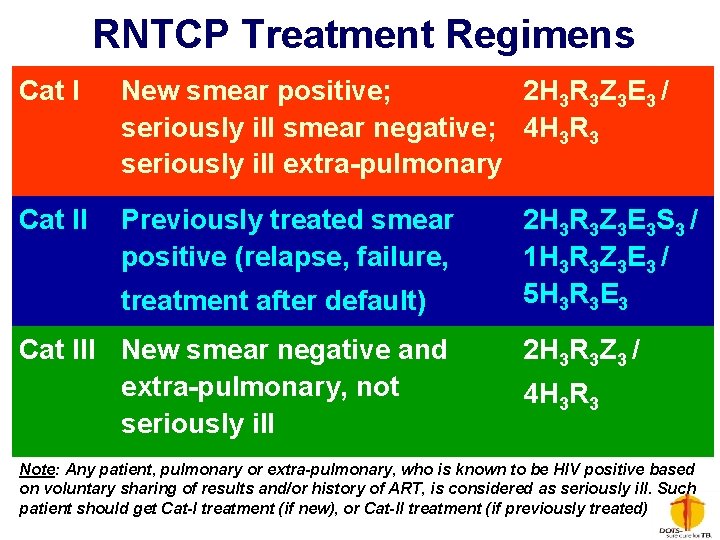
RNTCP Treatment Regimens Cat I New smear positive; 2 H 3 R 3 Z 3 E 3 / seriously ill smear negative; 4 H 3 R 3 seriously ill extra-pulmonary Cat II Previously treated smear positive (relapse, failure, treatment after default) Cat III New smear negative and extra-pulmonary, not seriously ill 2 H 3 R 3 Z 3 E 3 S 3 / 1 H 3 R 3 Z 3 E 3 / 5 H 3 R 3 E 3 2 H 3 R 3 Z 3 / 4 H 3 R 3 Note: Any patient, pulmonary or extra-pulmonary, who is known to be HIV positive based on voluntary sharing of results and/or history of ART, is considered as seriously ill. Such patient should get Cat-I treatment (if new), or Cat-II treatment (if previously treated)
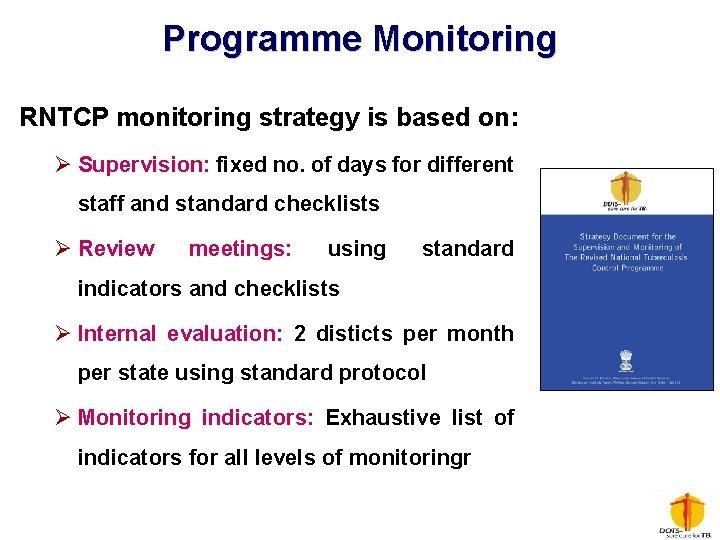
Programme Monitoring RNTCP monitoring strategy is based on: Ø Supervision: fixed no. of days for different staff and standard checklists Ø Review meetings: using standard indicators and checklists Ø Internal evaluation: 2 disticts per month per state using standard protocol Ø Monitoring indicators: Exhaustive list of indicators for all levels of monitoringr
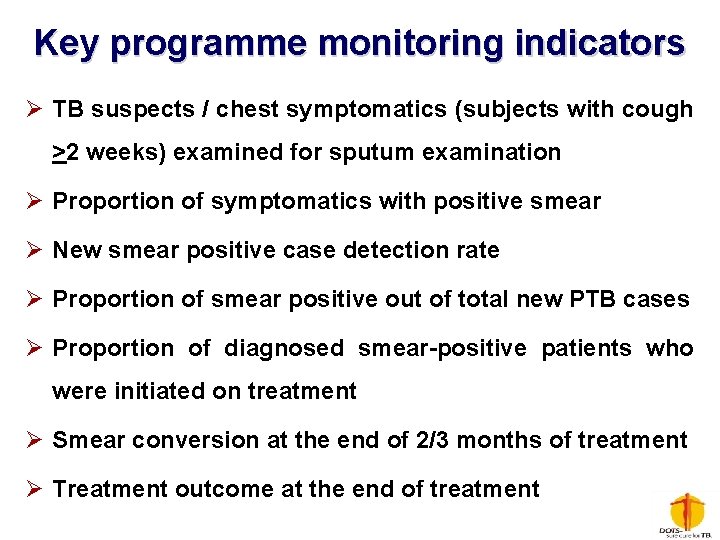
Key programme monitoring indicators Ø TB suspects / chest symptomatics (subjects with cough >2 weeks) examined for sputum examination Ø Proportion of symptomatics with positive smear Ø New smear positive case detection rate Ø Proportion of smear positive out of total new PTB cases Ø Proportion of diagnosed smear-positive patients who were initiated on treatment Ø Smear conversion at the end of 2/3 months of treatment Ø Treatment outcome at the end of treatment
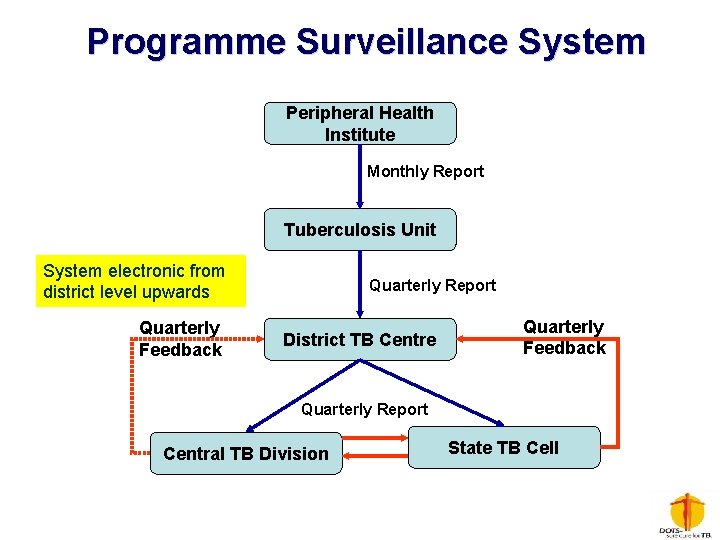
Programme Surveillance System Peripheral Health Institute Monthly Report Tuberculosis Unit System electronic from district level upwards Quarterly Feedback Quarterly Report District TB Centre Quarterly Feedback Quarterly Report Central TB Division State TB Cell
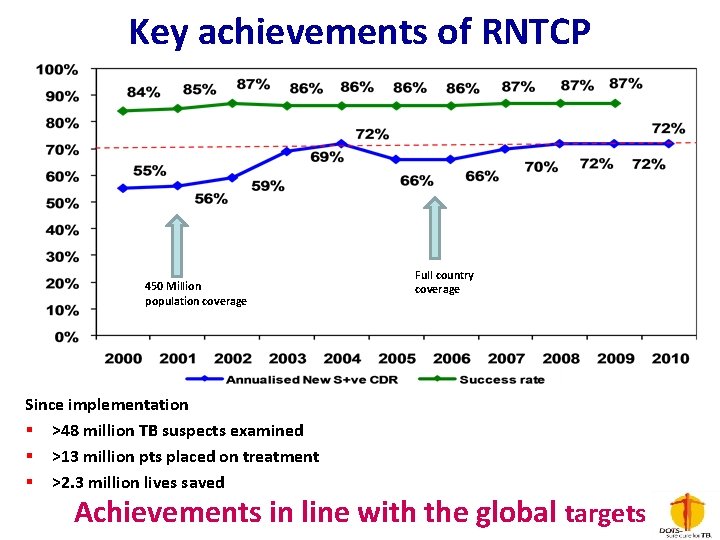
Key achievements of RNTCP 450 Million population coverage Since implementation § >48 million TB suspects examined § >13 million pts placed on treatment § >2. 3 million lives saved Full country coverage Achievements in line with the global targets
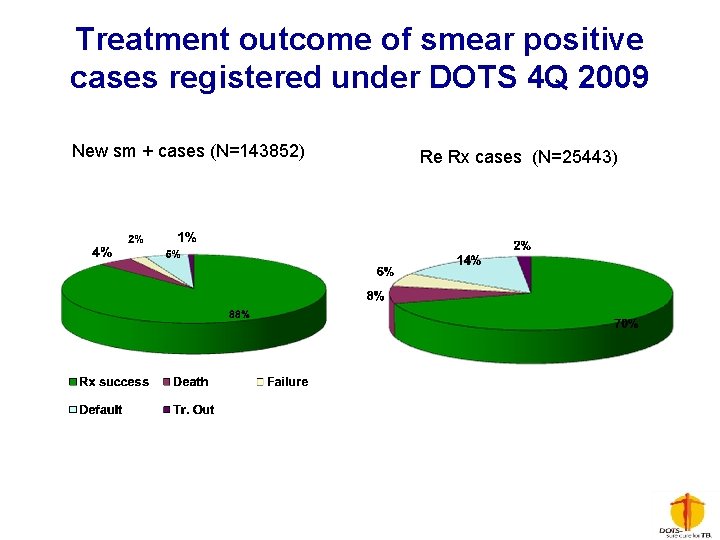
Treatment outcome of smear positive cases registered under DOTS 4 Q 2009 New sm + cases (N=143852) Re Rx cases (N=25443)
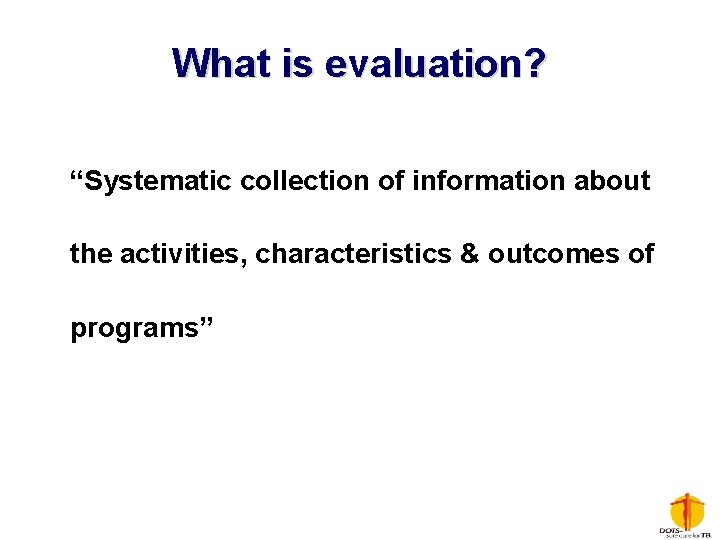
What is evaluation? “Systematic collection of information about the activities, characteristics & outcomes of programs”
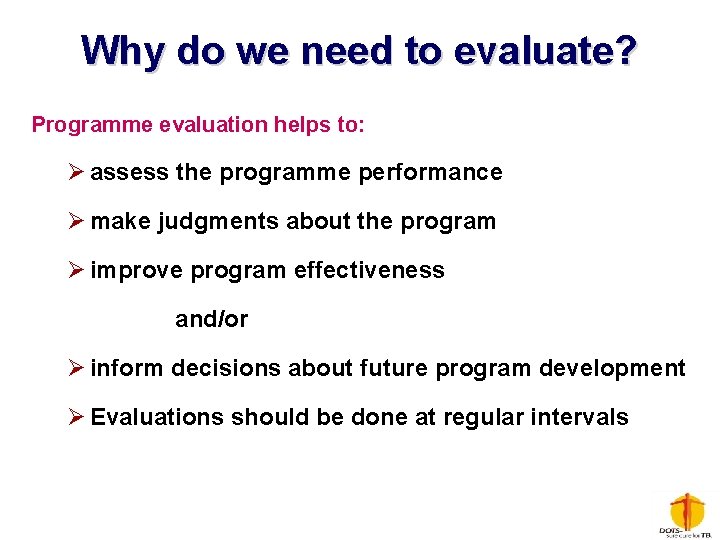
Why do we need to evaluate? Programme evaluation helps to: Ø assess the programme performance Ø make judgments about the program Ø improve program effectiveness and/or Ø inform decisions about future program development Ø Evaluations should be done at regular intervals
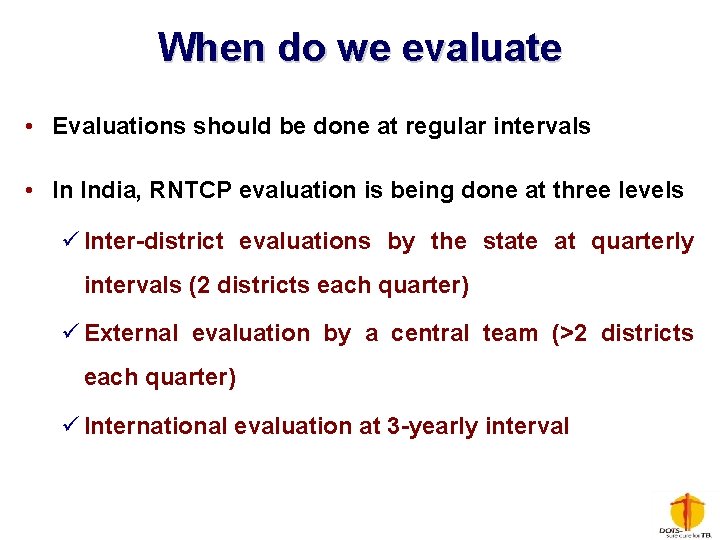
When do we evaluate • Evaluations should be done at regular intervals • In India, RNTCP evaluation is being done at three levels ü Inter-district evaluations by the state at quarterly intervals (2 districts each quarter) ü External evaluation by a central team (>2 districts each quarter) ü International evaluation at 3 -yearly interval
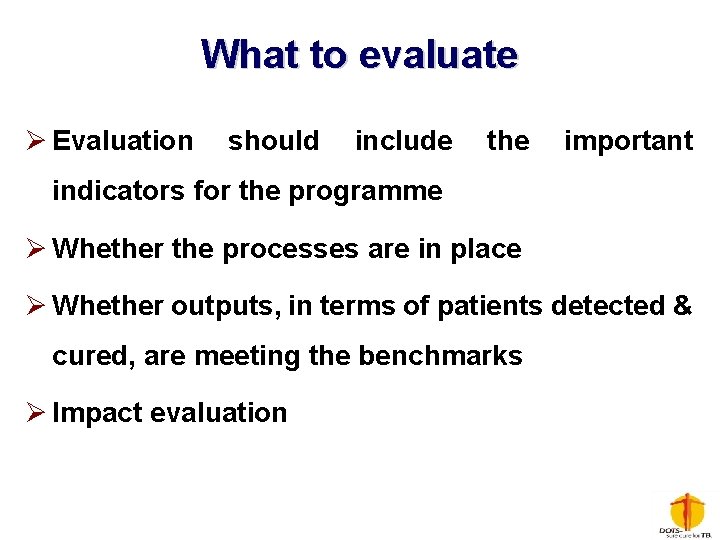
What to evaluate Ø Evaluation should include the important indicators for the programme Ø Whether the processes are in place Ø Whether outputs, in terms of patients detected & cured, are meeting the benchmarks Ø Impact evaluation
Evaluation of RNTCP Ø Process & outcome evaluation Ø Impact evaluation Ø Evaluation by funding agencies
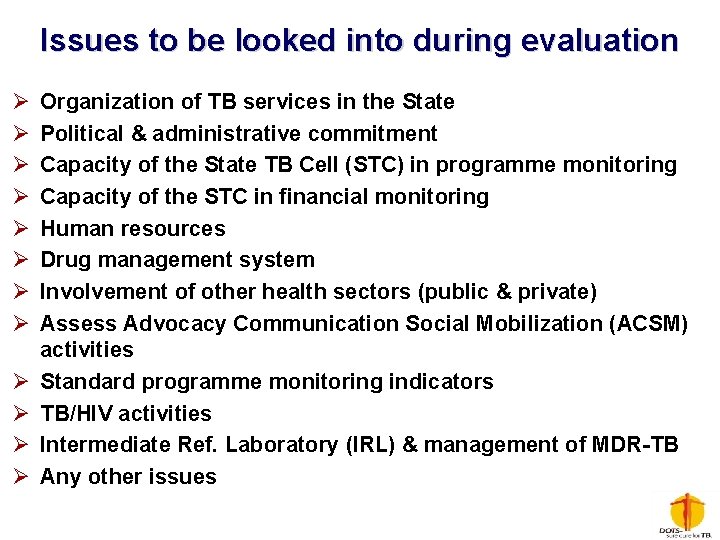
Issues to be looked into during evaluation Ø Ø Ø Organization of TB services in the State Political & administrative commitment Capacity of the State TB Cell (STC) in programme monitoring Capacity of the STC in financial monitoring Human resources Drug management system Involvement of other health sectors (public & private) Assess Advocacy Communication Social Mobilization (ACSM) activities Standard programme monitoring indicators TB/HIV activities Intermediate Ref. Laboratory (IRL) & management of MDR-TB Any other issues
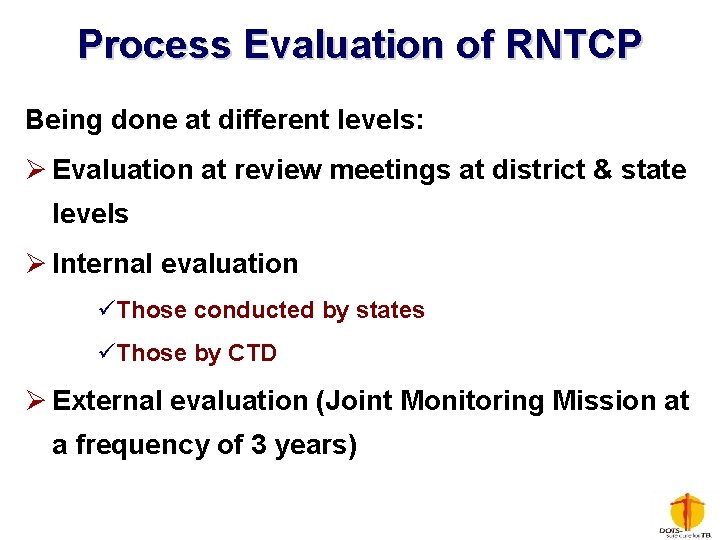
Process Evaluation of RNTCP Being done at different levels: Ø Evaluation at review meetings at district & state levels Ø Internal evaluation üThose conducted by states üThose by CTD Ø External evaluation (Joint Monitoring Mission at a frequency of 3 years)
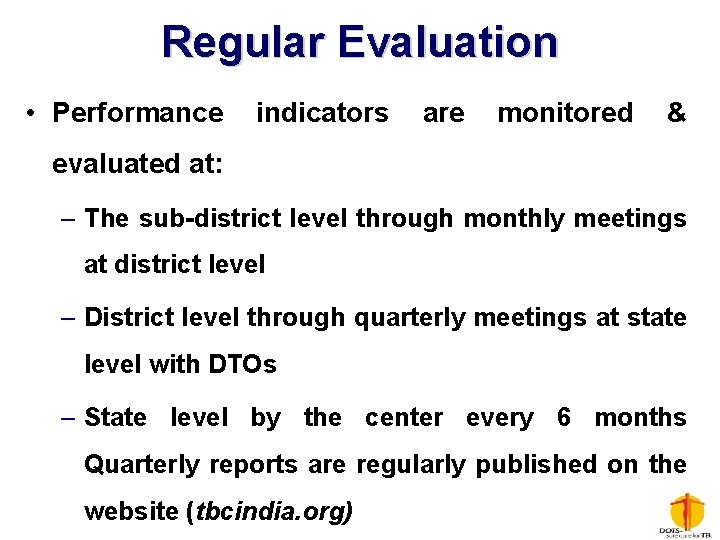
Regular Evaluation • Performance indicators are monitored & evaluated at: – The sub-district level through monthly meetings at district level – District level through quarterly meetings at state level with DTOs – State level by the center every 6 months Quarterly reports are regularly published on the website (tbcindia. org)
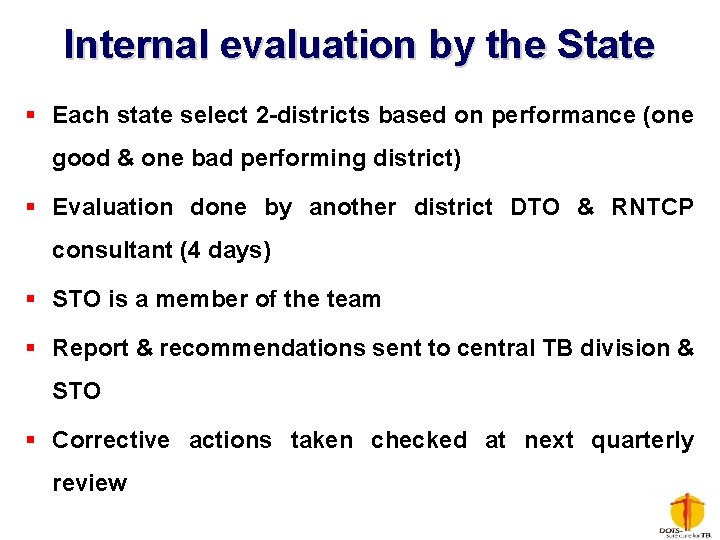
Internal evaluation by the State § Each state select 2 -districts based on performance (one good & one bad performing district) § Evaluation done by another district DTO & RNTCP consultant (4 days) § STO is a member of the team § Report & recommendations sent to central TB division & STO § Corrective actions taken checked at next quarterly review
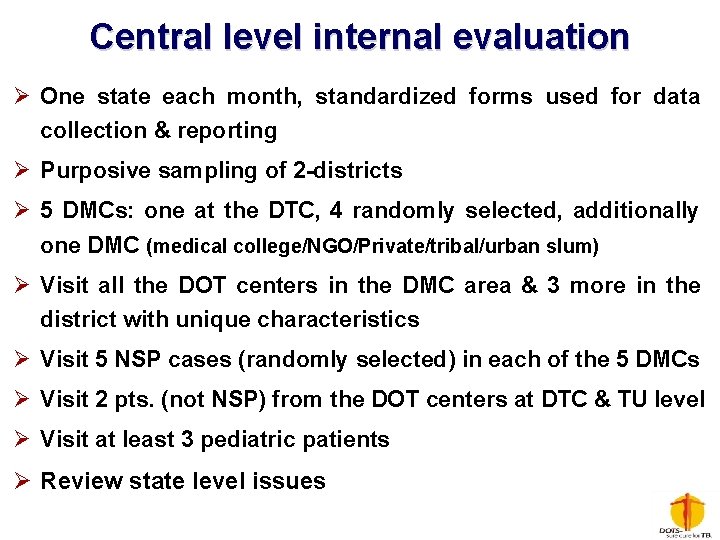
Central level internal evaluation Ø One state each month, standardized forms used for data collection & reporting Ø Purposive sampling of 2 -districts Ø 5 DMCs: one at the DTC, 4 randomly selected, additionally one DMC (medical college/NGO/Private/tribal/urban slum) Ø Visit all the DOT centers in the DMC area & 3 more in the district with unique characteristics Ø Visit 5 NSP cases (randomly selected) in each of the 5 DMCs Ø Visit 2 pts. (not NSP) from the DOT centers at DTC & TU level Ø Visit at least 3 pediatric patients Ø Review state level issues
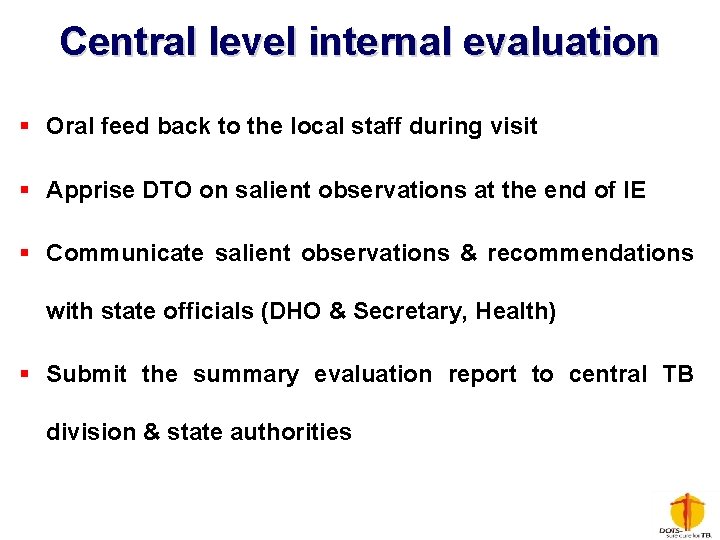
Central level internal evaluation § Oral feed back to the local staff during visit § Apprise DTO on salient observations at the end of IE § Communicate salient observations & recommendations with state officials (DHO & Secretary, Health) § Submit the summary evaluation report to central TB division & state authorities
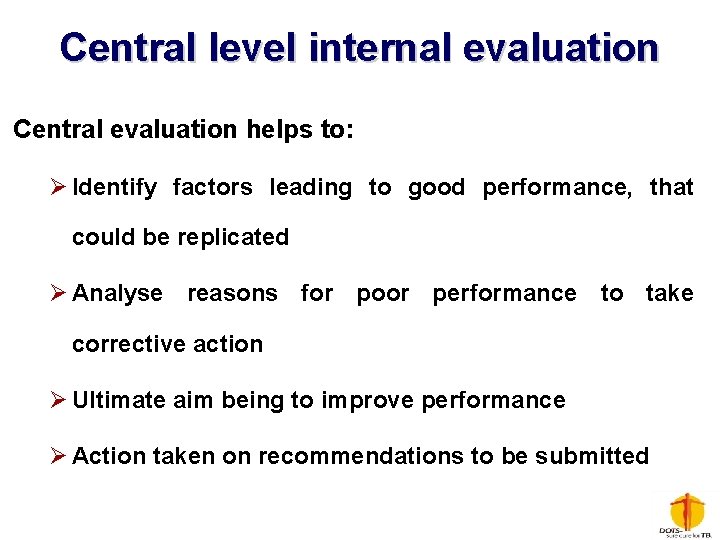
Central level internal evaluation Central evaluation helps to: Ø Identify factors leading to good performance, that could be replicated Ø Analyse reasons for poor performance to take corrective action Ø Ultimate aim being to improve performance Ø Action taken on recommendations to be submitted
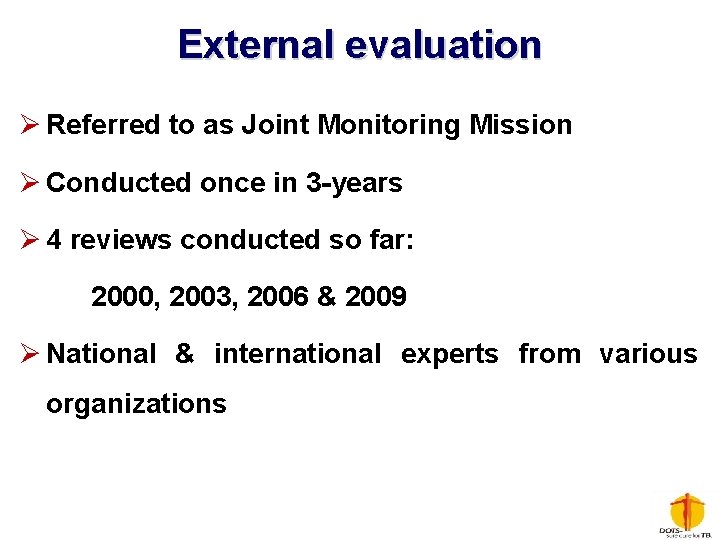
External evaluation Ø Referred to as Joint Monitoring Mission Ø Conducted once in 3 -years Ø 4 reviews conducted so far: 2000, 2003, 2006 & 2009 Ø National & international experts from various organizations
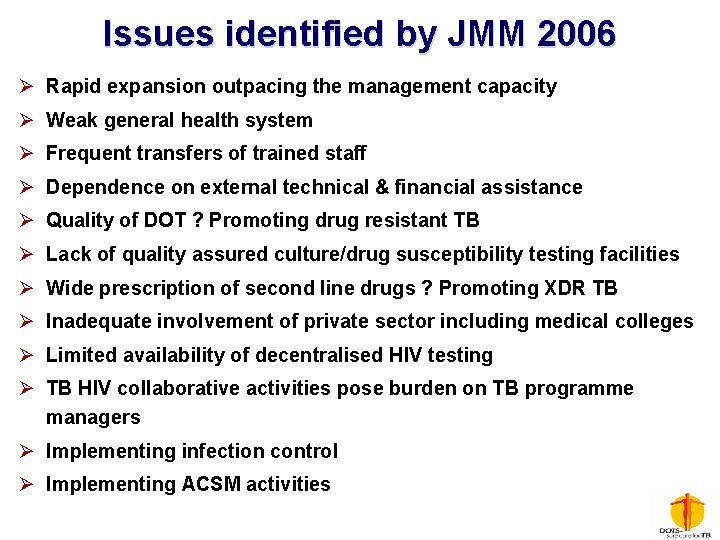
Issues identified by JMM 2006 Ø Rapid expansion outpacing the management capacity Ø Weak general health system Ø Frequent transfers of trained staff Ø Dependence on external technical & financial assistance Ø Quality of DOT ? Promoting drug resistant TB Ø Lack of quality assured culture/drug susceptibility testing facilities Ø Wide prescription of second line drugs ? Promoting XDR TB Ø Inadequate involvement of private sector including medical colleges Ø Limited availability of decentralised HIV testing Ø TB HIV collaborative activities pose burden on TB programme managers Ø Implementing infection control Ø Implementing ACSM activities
JMM Recommendations India 2009
Main Recommendations • Political commitment, strengthening management & health system – In line with the Stop TB Strategy, Go. I & RNTCP to aim to achieve universal access for all forms of TB, going well beyond the 2005 targets of at least 70% CDR & 85% treatment success. – To mobilize greater resources (both financial & human) & in underperforming states & districts, to enhance political & administrative commitment & improve supervision & monitoring • Review the financial requirements & commitments for the period 2010 to 2015, including those of Go. I & external sources, to ensure that sufficient resources are available for the expected dramatic increase in costs for the planned MDR-TB management scale up & for meeting the 2015 TB-related targets. To leverage the increasing Go. I commitment to health financing to meet the increasing financial needs of the TB programme.
Impact evaluation Ø Repeat community based survey in a rural area of Tamilnadu, TRC, Chennai Ø Two ARTI survey completed disease prevalence surveys at 5 sentinel sites Ø Drug Resistance Surveillance
ARTI survey Ø A nation wide survey to estimate ARTI was conducted & the ARTI for the year 2000 was estimated to be 1. 5% with zonal variation Ø Repeat survey has been completed
Sentinel surveillance Ø Six sites have been identified for sentinel surveillance of the prevalence of disease survey to be done at periodic intervals Ø First round of survey has been completed
Drug resistance surveillance ü TRC has been monitoring DRS in the project area among patients admitted for treatment ü Initial surveillance has been carried out in two states ü Plans to be done in more states
Donor evaluations • External funding for the RNTCP – World bank: >60% of RNTCP – USAID: Haryana – GFATM: AP, Chhattisgarh, Jharkand, Uttaranchal, Orissa & parts of Bihar and UP – DFID: For drugs through GDF/WHO (almost half of the drug requirement of RNTCP supplied by DFID) Donor evaluations on financing and HR once in 6 m / one year
Summary Ø RNTCP Internal Evaluation helps to take corrective actions Ø Regular monitoring and inbuilt process evaluations helped the programme implementation Ø Baselines were not available so Impact Evaluations were planned few years before
Thank You