MODULE 2 Meaning and discourse in English INTRODUCTION



- Slides: 15
MODULE 2 Meaning and discourse in English INTRODUCTION AND OVERVIEW Lecture 1
www. uniroma 2. it/didattica/english 1 Cliccate …. Elenco corsi n Lingua Inglese 1 LLEM (Bowles) n Deposito file n Lettorato matricole. doc n
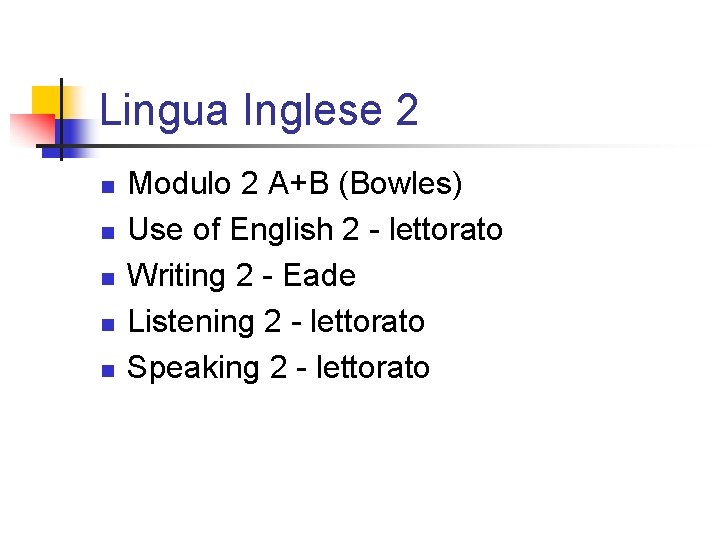
Lingua Inglese 2 n n n Modulo 2 A+B (Bowles) Use of English 2 - lettorato Writing 2 - Eade Listening 2 - lettorato Speaking 2 - lettorato
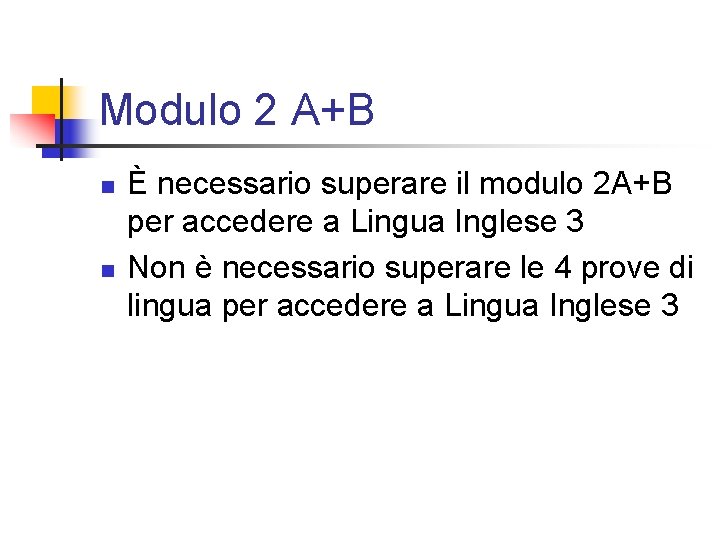
Modulo 2 A+B n n È necessario superare il modulo 2 A+B per accedere a Lingua Inglese 3 Non è necessario superare le 4 prove di lingua per accedere a Lingua Inglese 3
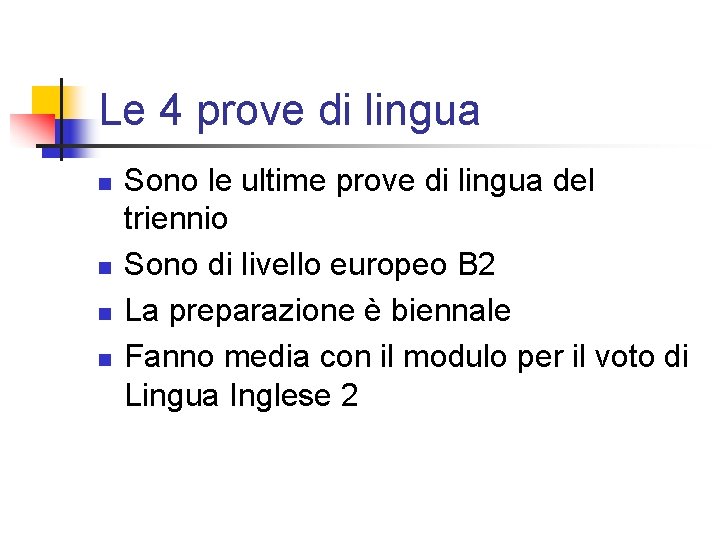
Le 4 prove di lingua n n Sono le ultime prove di lingua del triennio Sono di livello europeo B 2 La preparazione è biennale Fanno media con il modulo per il voto di Lingua Inglese 2
“Good morning” n What does “good morning” mean? Good + morning?
‘I didn’t mean to hurt you’ n In this usage, meaning is connected to INTENTION. The speaker uses the word ‘mean’ to describe what he intended (or didn’t intend) to do.
‘those black clouds mean rain’ n In this usage, meaning has a signalling function.
‘dog’ means ‘cane’ n In this usage, meaning refers to the sense of words or sentences. LEXICAL SEMANTICS IS CONCERNED WITH THIS USAGE - THE CONVENTIONAL MEANING OF WORDS AND SENTENCES
LIZZIE AND MR DARCY CONVERSATION n In this case we are concerned with meaning in use rather than the meaning of words and sentences in isolation. We will study this when we do discourse analysis.
Words are not always single units of meaning MANY WORDS = ONE CONCEPT n to be caught red-handed ONE WORD = DIFFERENT CONCEPTS n charge (electrical) n charge (request for money) n charge (cavalry)
It is sometimes hard to separate units of meaning … n n good morning = morning which is good ? good singer = singer who is good? heavy smoker = smoker who is heavy ? criminal lawyer = lawyer who is criminal ? … because the meanings of words affect each other collocation (lesson 3)
Transparent v. opaque OPAQUE TRANSPARENT cranberry strawberry gooseberry blackberry bullfinch chaffinch greenfinch
Lexemes n n n A lexeme is a unit of lexical meaning which exists regardless of inflection or number of words ‘love’ is a lexeme; ‘loved’ is a different lexeme; ‘red-handed’ is a lexeme In lexical semantics it is better to refer to lexemes than to words
Lexical semantics (LESSONS 2+3) We will be looking at: n Sense relations n Collocation