Modern Cataract Surgery Professor Ejaz Ansari FRCOphth MD

- Slides: 22
Modern Cataract Surgery Professor Ejaz Ansari, FRCOphth MD
Modern cataract surgery- benefits to your patients § § § Cataract- what is it, its symptoms and signs Indications for cataract surgery The procedure and results Recent innovations for your patients Video (if time!) v
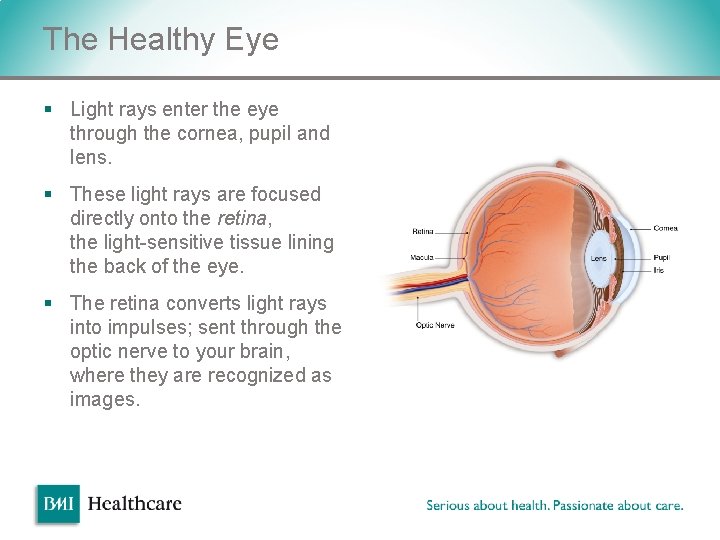
The Healthy Eye § Light rays enter the eye through the cornea, pupil and lens. § These light rays are focused directly onto the retina, the light-sensitive tissue lining the back of the eye. § The retina converts light rays v into impulses; sent through the optic nerve to your brain, where they are recognized as images.
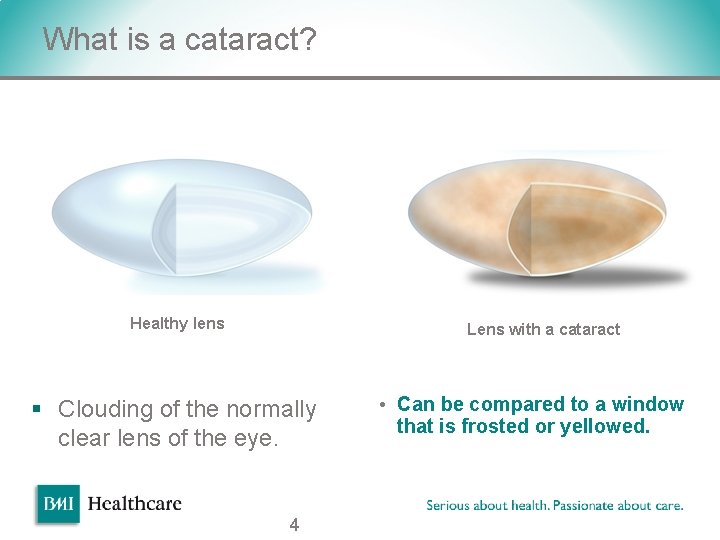
What is a cataract? v Healthy lens Lens with a cataract § Clouding of the normally clear lens of the eye. 4 • Can be compared to a window that is frosted or yellowed.
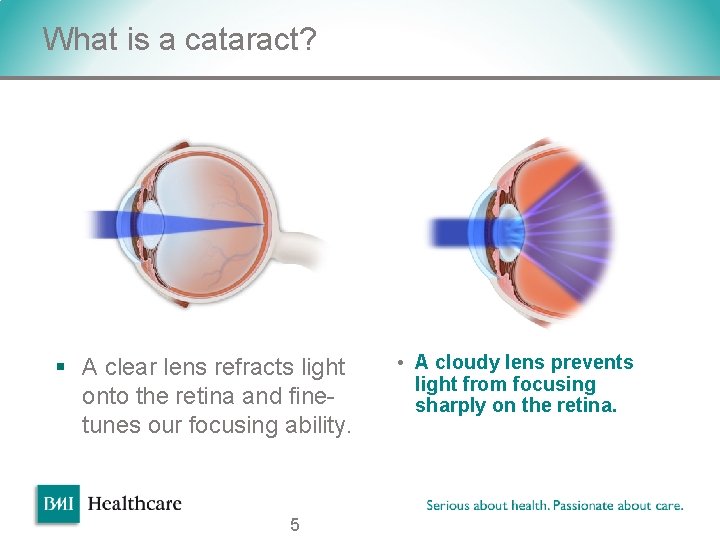
What is a cataract? v § A clear lens refracts light onto the retina and finetunes our focusing ability. 5 • A cloudy lens prevents light from focusing sharply on the retina.
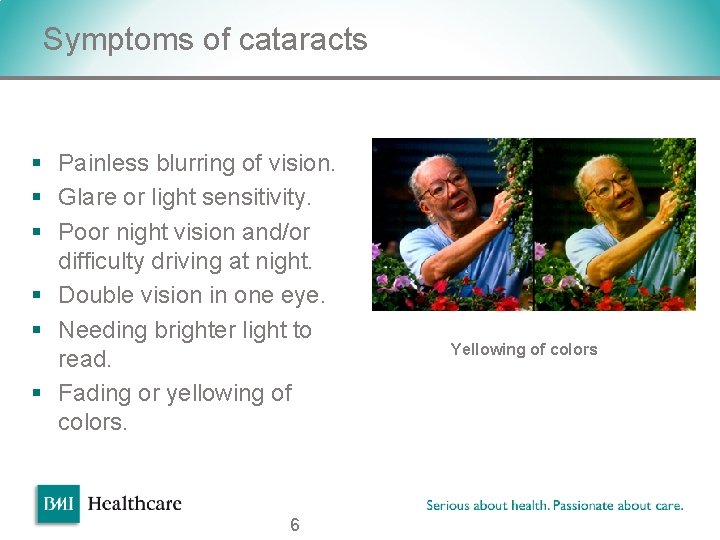
Symptoms of cataracts § Painless blurring of vision. § Glare or light sensitivity. § Poor night vision and/or difficulty driving at night. § Double vision in one eye. § Needing brighter light to read. § Fading or yellowing of colors. 6 v Yellowing of colors
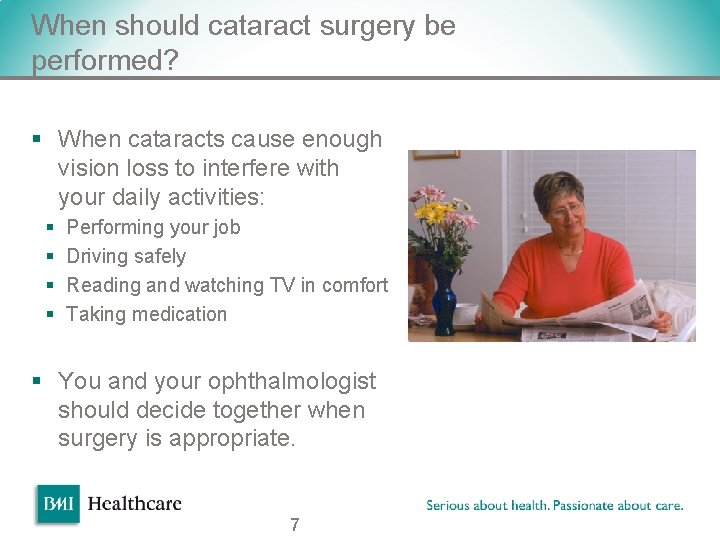
When should cataract surgery be performed? § When cataracts cause enough vision loss to interfere with your daily activities: § § Performing your job Driving safely Reading and watching TV in comfort v Taking medication § You and your ophthalmologist should decide together when surgery is appropriate. 7
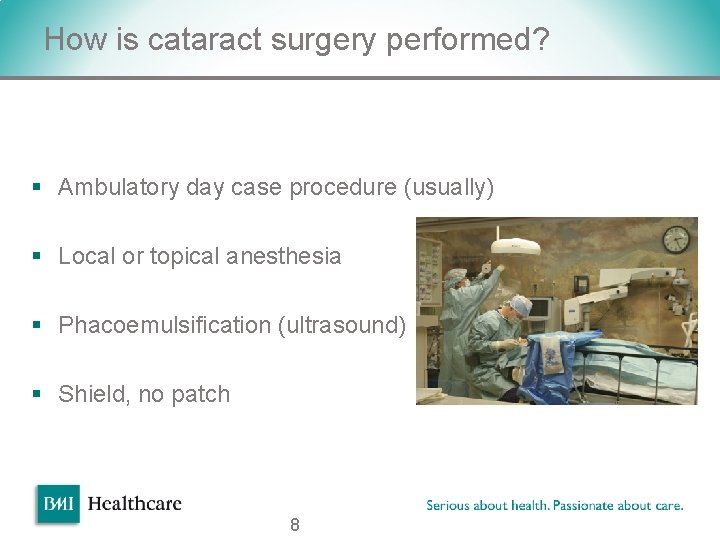
How is cataract surgery performed? § Ambulatory day case procedure (usually) § Local or topical anesthesia v § Phacoemulsification (ultrasound) § Shield, no patch 8
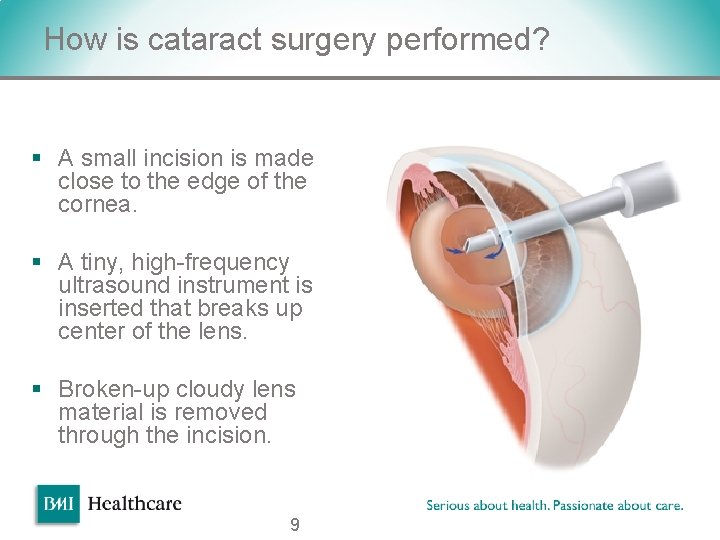
How is cataract surgery performed? § A small incision is made close to the edge of the cornea. § A tiny, high-frequency ultrasound instrument is inserted that breaks up center of the lens. § Broken-up cloudy lens material is removed through the incision. 9 v
Advantages of Phaco(emulsification) § For the surgeon § For the patient- quicker visual rehabilitation, less astigmatism, fewer visits post-op, fewer post-op complications (closed system surgery) § For the health economy v
What can I expect from cataract surgery? § Most cataract surgical procedures are performed without complications and result in immediate improvement in vision (0. 1% chance of reduced vision). § You will apply eye drops for 4 -6 weeks following surgery to reduce the possibility of infection and/or inflammation in the eye- enough dispensed! § You may need an eyeglassv prescription to obtain your clearest vision following surgery. 11
What can I expect from cataract surgery? § § § § Drive after 1 week (use one’s discretion) Care with washing hair and face for 4 weeks No gardening for 4 weeks Continue those glaucoma drops! See consultant after 2 -3 weeks See optician after 6 weeks Not everyone is the same- vglaucoma, ARMD, diabetes
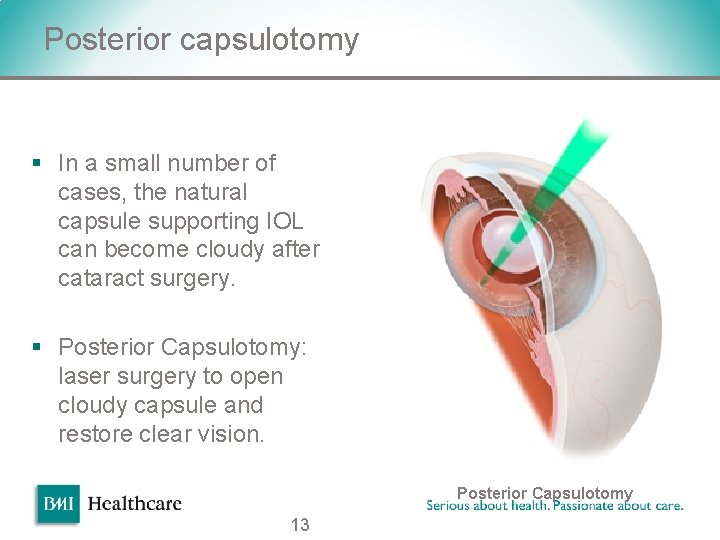
Posterior capsulotomy § In a small number of cases, the natural capsule supporting IOL can become cloudy after cataract surgery. v § Posterior Capsulotomy: laser surgery to open cloudy capsule and restore clear vision. Posterior Capsulotomy 13
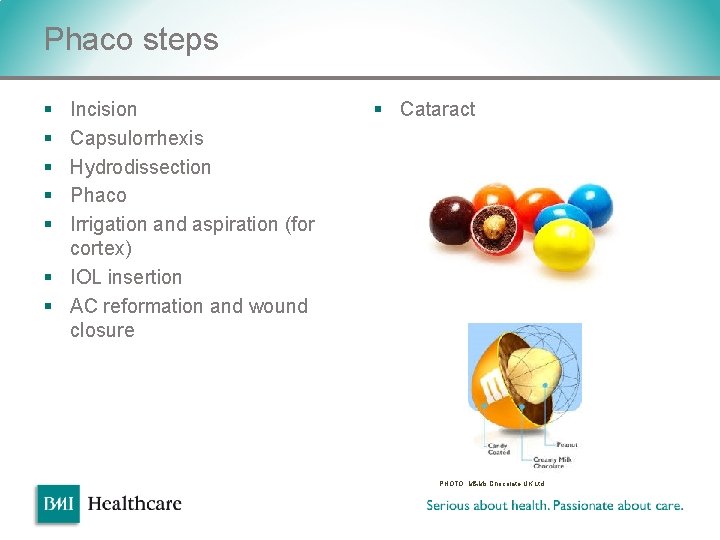
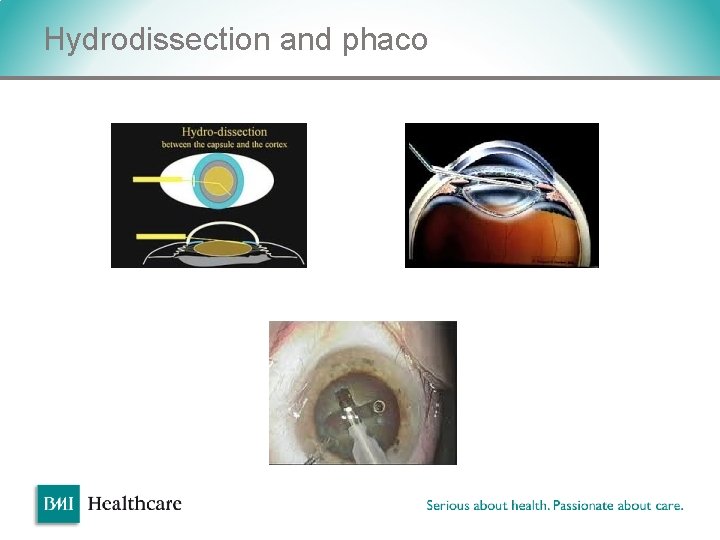
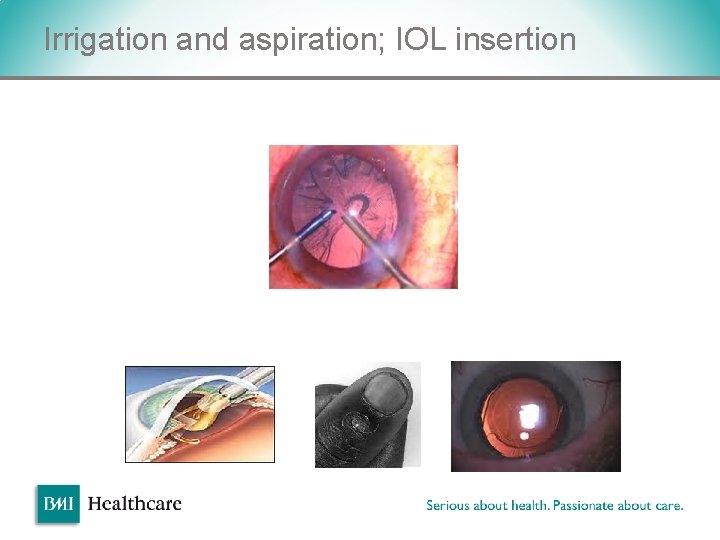
Phaco steps § § § Incision Capsulorrhexis Hydrodissection Phaco Irrigation and aspiration (for cortex) § IOL insertion § AC reformation and wound closure § Cataract v PHOTO: M&Ms Chocolate UK Ltd.
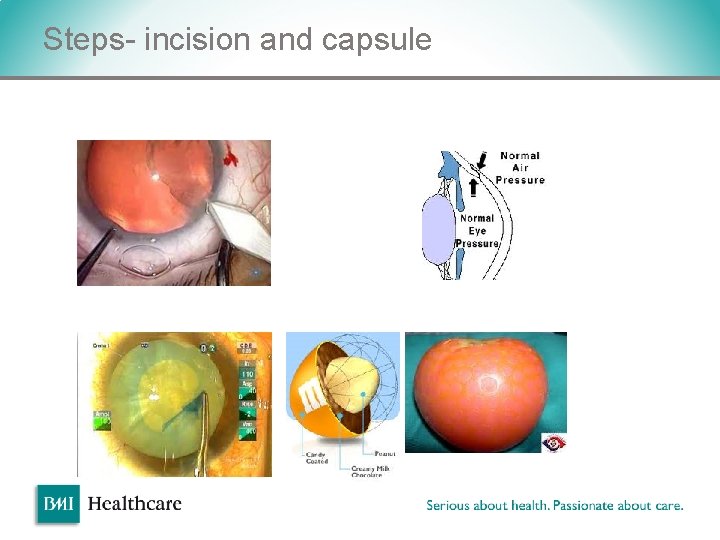
Steps- incision and capsule v
Hydrodissection and phaco v
Irrigation and aspiration; IOL insertion v
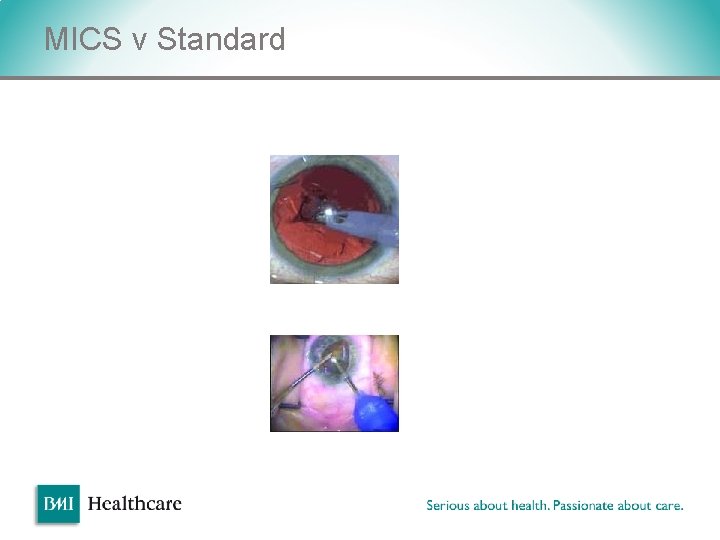
MICS v Standard v
Micro-incision cataract surgery § § § MICS 1. 8 - 2. 2 mm incision (ct. 3 mm) Even quicker visual rehabilitation Fewer post-op meds Fewer post-op visits Less astigmatism: @ 2 weeks post-op -0. 33 D; @6 weeks v with 3 mm incision -0. 67 D; (n=60)
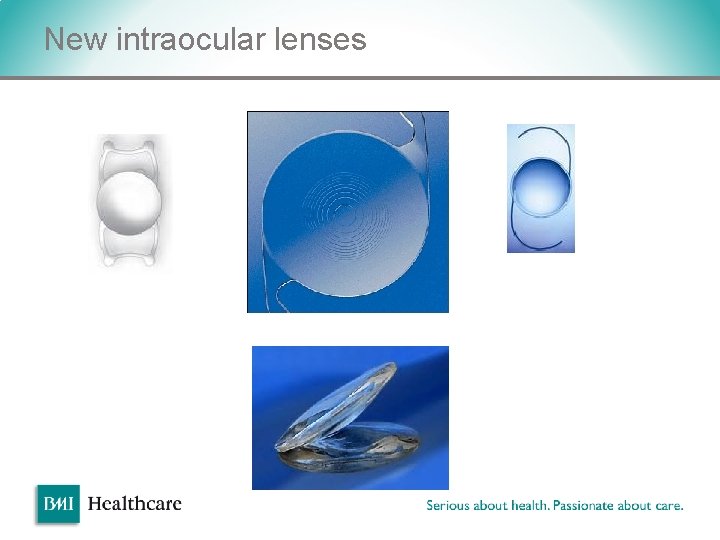
New intraocular lenses v
Is it laser? § NO! It’s ultrasound, but. . . § Laser cataract surgery (femto) is being used in some centres § Even with laser at the moment, phaco is required v
Conclusions § Surgery is the only treatment for cataract § Modern day case micro-incision cataract surgery under topical anaesthesia- gold standard § Post-operative drops for 4 -6 weeks § Range of innovative IOLs available § Femtosecond cataract surgery being improved v