MILLIMETER WAVE SPECTROSCOPY OF THE VINYL RADICAL HDCCH

- Slides: 27
MILLIMETER WAVE SPECTROSCOPY OF THE VINYL RADICAL (HDC=CH) GENERATED BY UV LASER PHOTOLYSIS IN A PULSED SUPERSONIC JET EXPANSION Masato HAYASHI, Kensuke HARADA, Keiichi TANAKA Department of Chemistry, Faculty of Sciences, Kyushu University
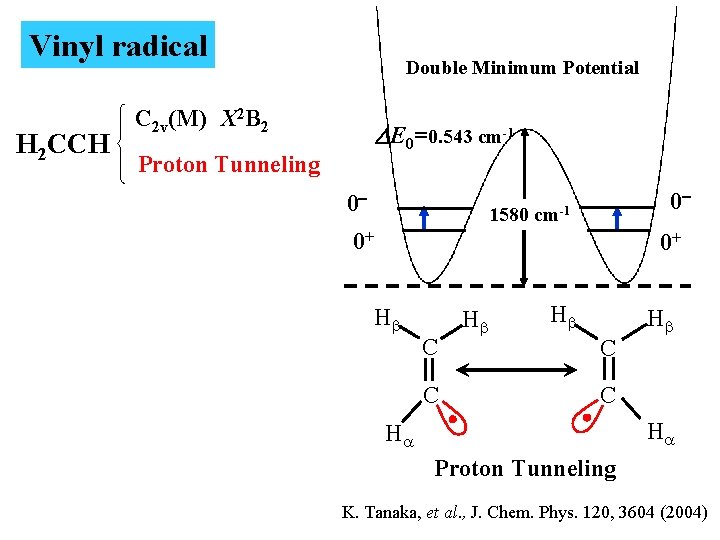
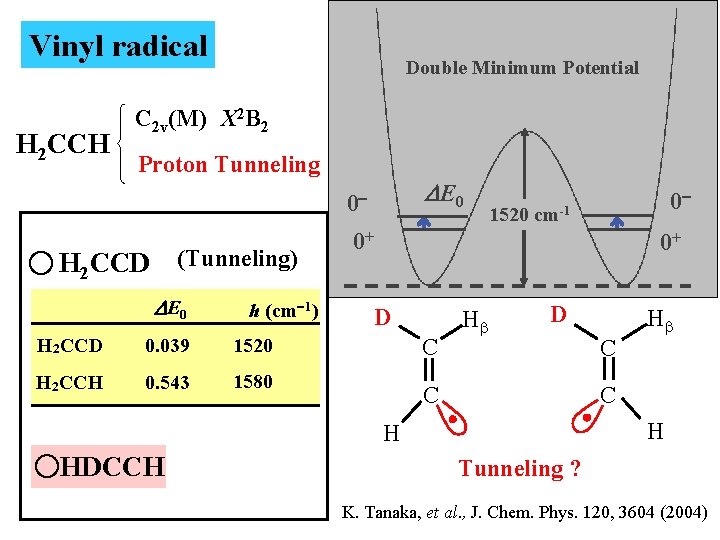
Vinyl radical H 2 CCH Double Minimum Potential C 2 v(M) X 2 B 2 DE 0=0. 543 cm-1 Proton Tunneling 0 - 1580 0 - cm-1 0+ 0+ Hb C C Hb Hb C Ha Ha Proton Tunneling K. Tanaka, et al. , J. Chem. Phys. 120, 3604 (2004)
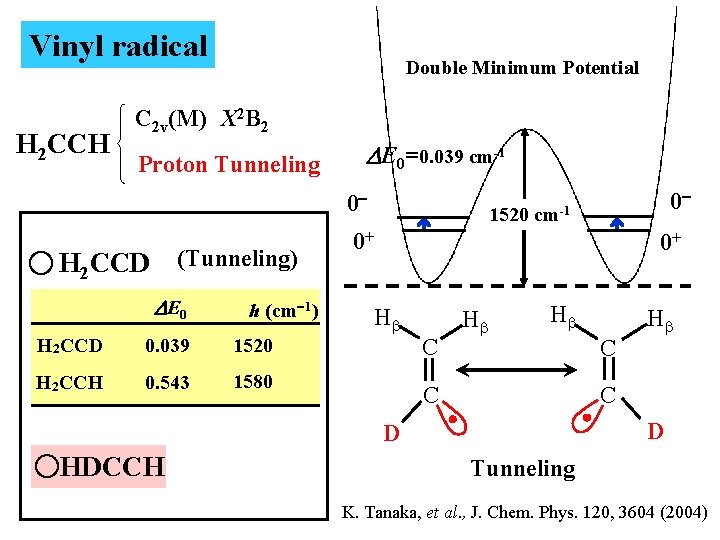
Vinyl radical H 2 CCH Double Minimum Potential C 2 v(M) X 2 B 2 Proton Tunneling DE 0=0. 039 cm-1 0 - H 2 CCD (Tunneling) DE 0 h (cm-1) H 2 CCD 0. 039 1520 H 2 CCH 0. 543 1580 1520 0+ 0+ Hb C Hb Hb C C Hb C D D HDCCH 0 - cm-1 Tunneling K. Tanaka, et al. , J. Chem. Phys. 120, 3604 (2004)
Vinyl radical H 2 CCH Double Minimum Potential C 2 v(M) X 2 B 2 Proton Tunneling DE 0 0 - H 2 CCD (Tunneling) DE 0 h (cm-1) H 2 CCD 0. 039 1520 H 2 CCH 0. 543 1580 1520 0+ 0+ D C Hb D C C Hb C H H HDCCH 0 - cm-1 Tunneling ? K. Tanaka, et al. , J. Chem. Phys. 120, 3604 (2004)
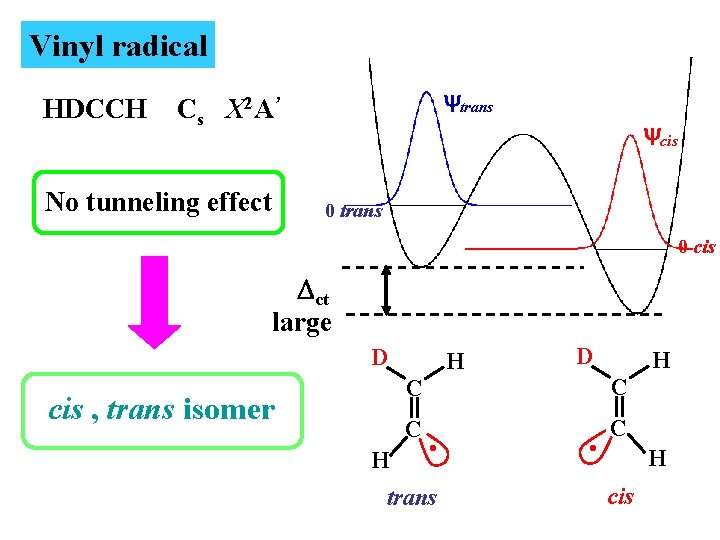
Vinyl radical HDCCH ytrans Cs X 2 A’ No tunneling effect ycis 0 trans 0 cis Dct large D cis , trans isomer H H D H C C . trans . H cis
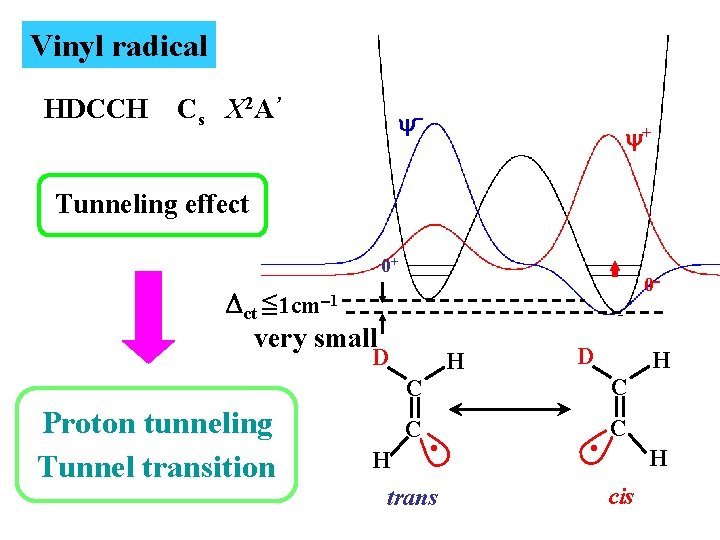
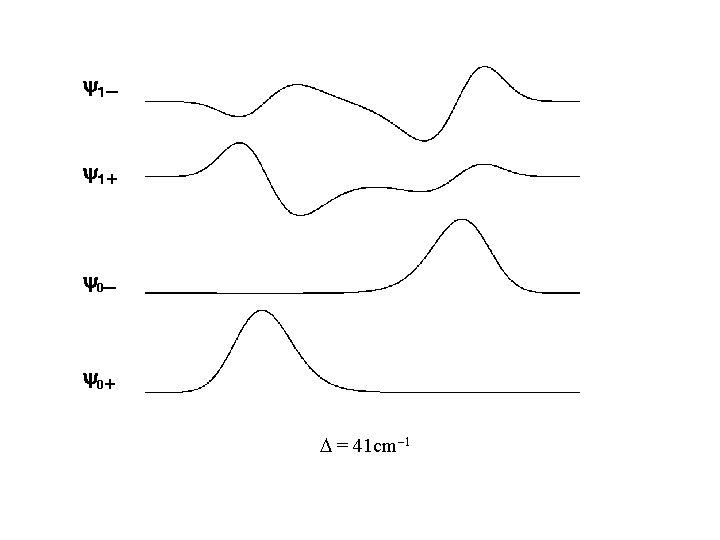
Vinyl radical HDCCH Cs X 2 A’ y- y+ Tunneling effect 0+ 0 - -1 Dct < 1 cm = very small D Proton tunneling Tunnel transition H H D H C C . trans . H cis
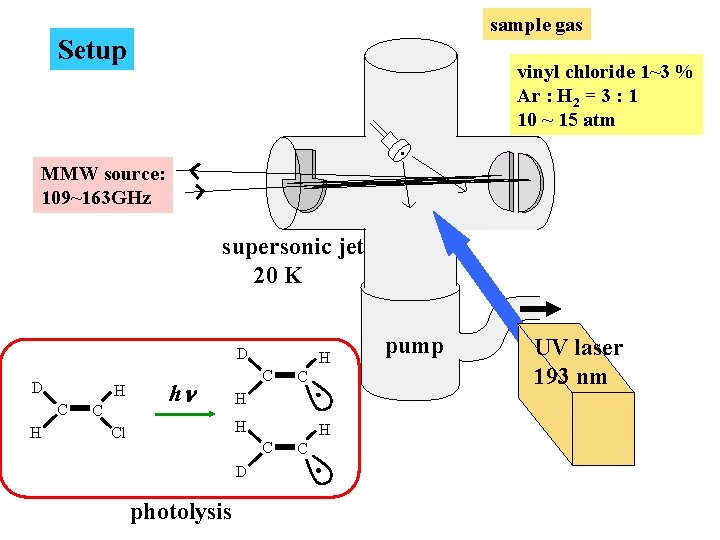
sample gas Setup vinyl chloride 1~3 % Ar : H 2 = 3 : 1 10 ~ 15 atm MMW source: 109~163 GHz supersonic jet 20 K D D H C hn H C C H H Cl H C D photolysis C pump UV laser 193 nm
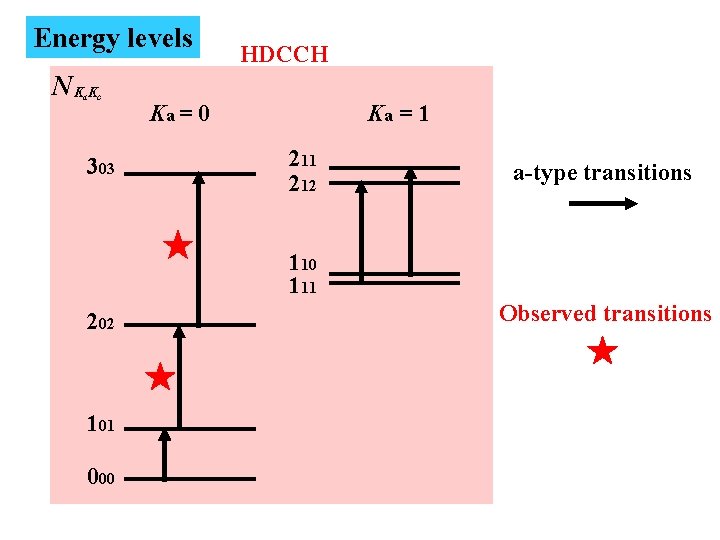
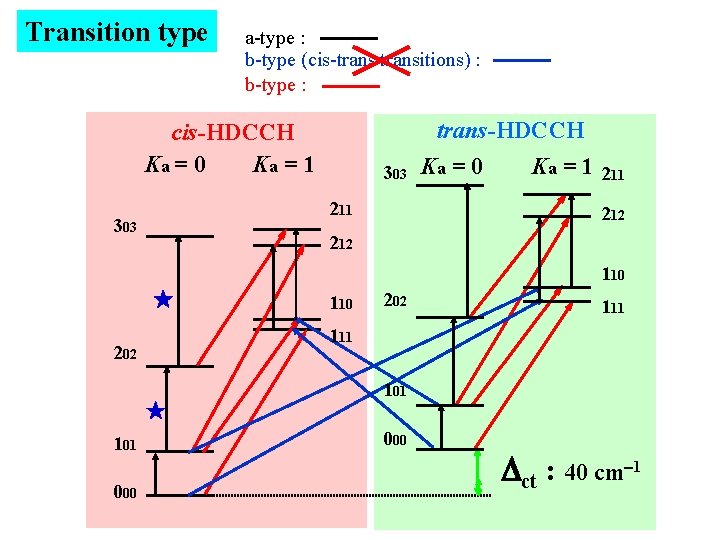
Energy levels NK K a c 303 HDCCH Ka = 0 Ka = 1 212 a-type transitions 110 111 202 101 000 Observed transitions
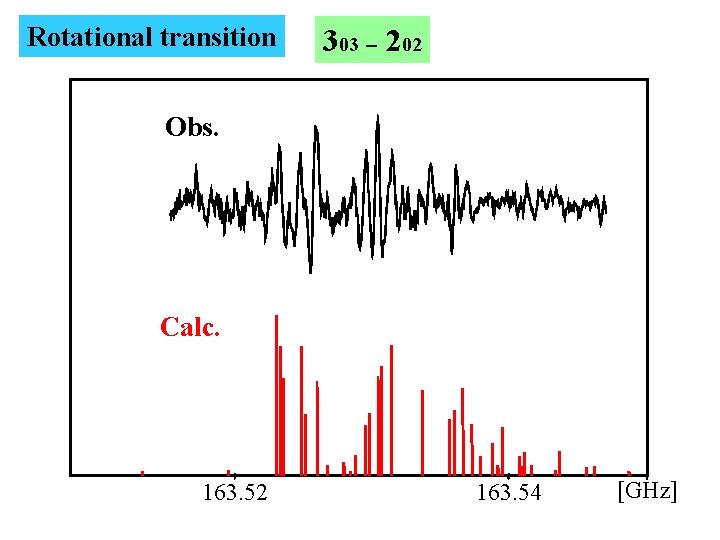
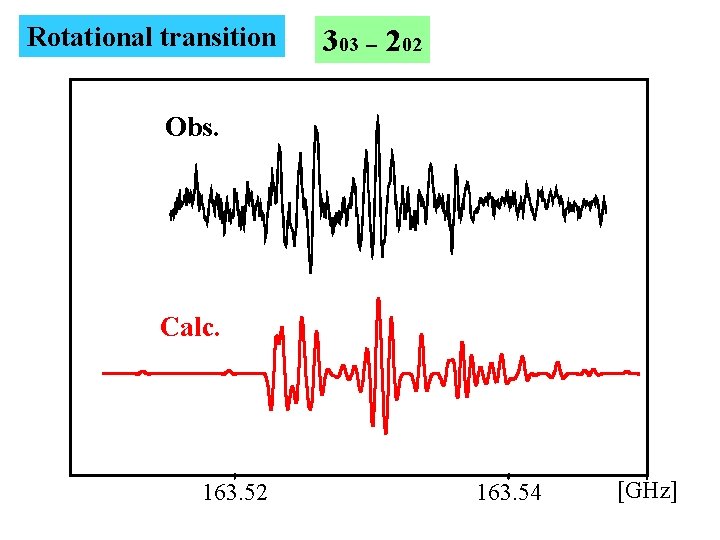
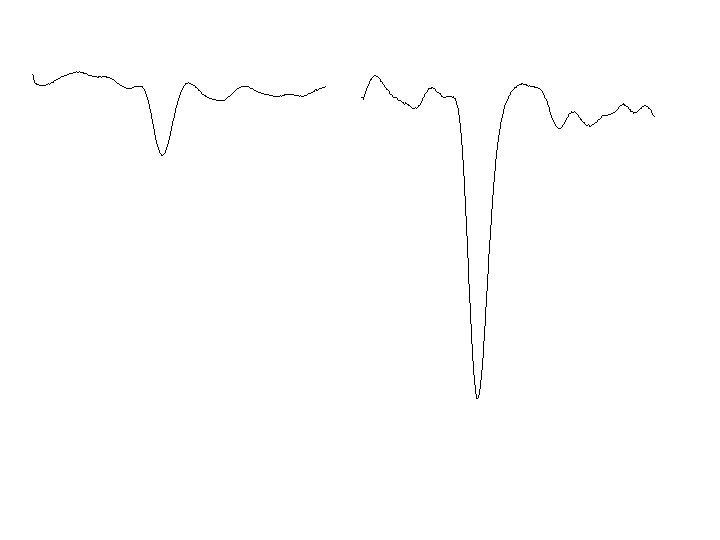
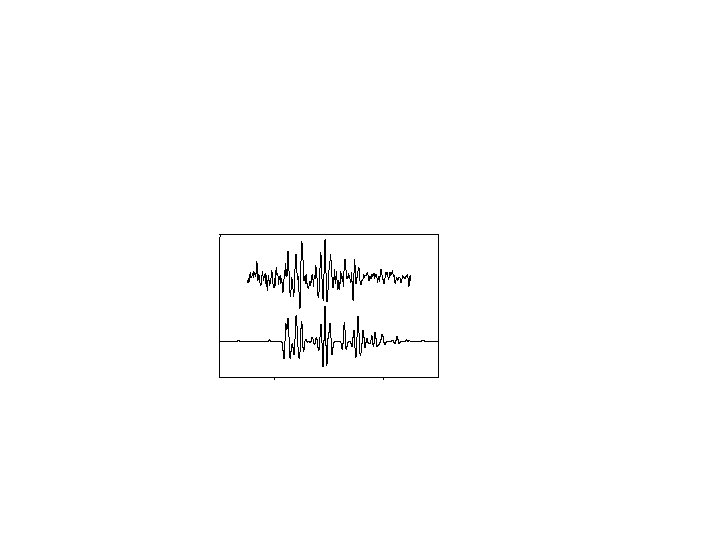
Rotational transition 303 - 202 Obs. Calc. 163. 52 163. 54 [GHz]
Rotational transition 303 - 202 Obs. Calc. 163. 52 163. 54 [GHz]
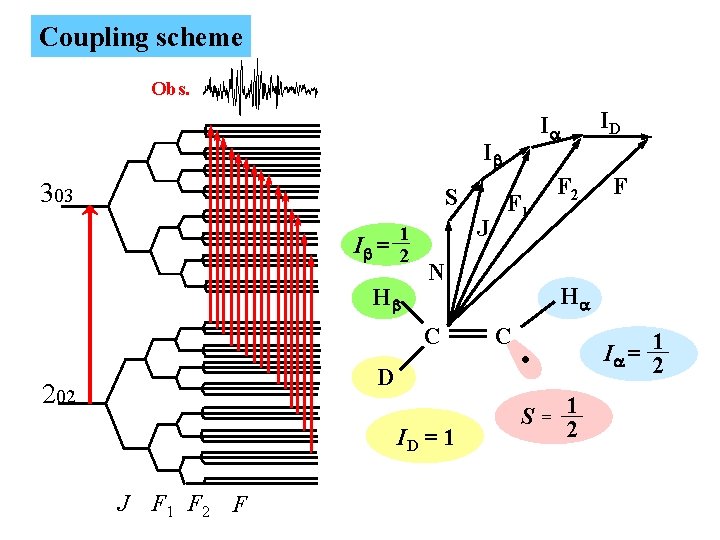
Coupling scheme Obs. Ib 303 S Ib = 1 2 Hb J D 202 ID = 1 J F 1 F 2 F F 1 N C ID Ia F 2 F Ha C . S= 1 2 Ia = 1 2
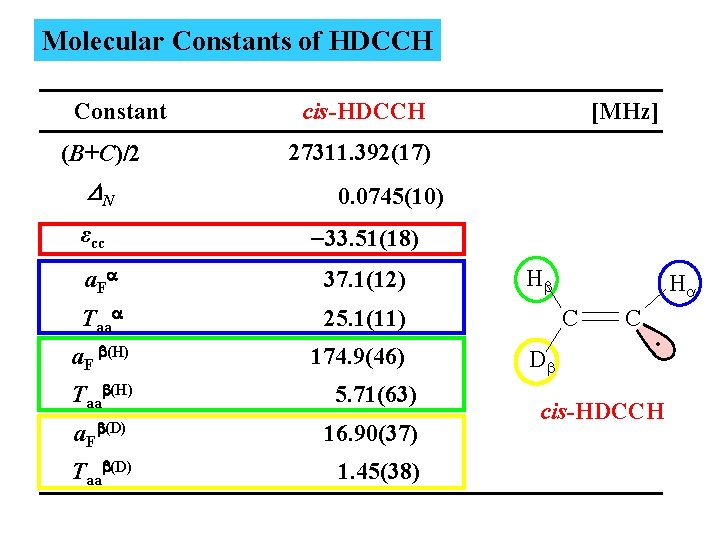
Molecular Constants of HDCCH Constant (B+C)/2 DN εcc 27311. 392(17) 0. 0745(10) -33. 51(18) a. Fa 37. 1(12) Taaa 25. 1(11) a. F b(H) [MHz] cis-HDCCH 174. 9(46) Taab(H) 5. 71(63) a. Fb(D) 16. 90(37) Taab(D) 1. 45(38) Hb Ha C Db C . cis-HDCCH
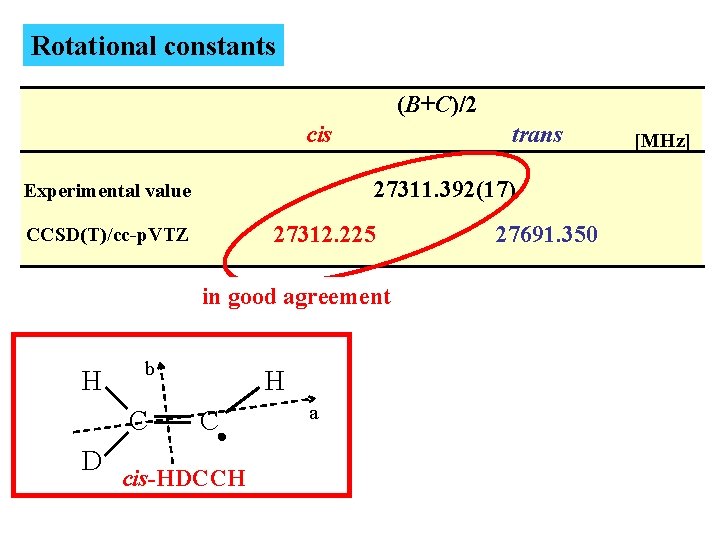
Rotational constants (B+C)/2 trans cis [MHz] 27311. 392(17) Experimental value 27312. 225 CCSD(T)/cc-p. VTZ 27691. 350 in good agreement H b C D H C cis-HDCCH D a H b C C H trans-HDCCH a
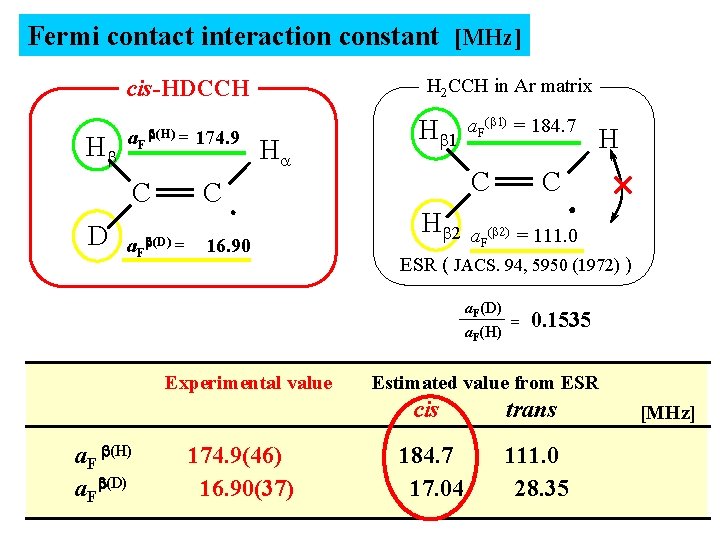
Fermi contact interaction constant [MHz] H 2 CCH in Ar matrix cis-HDCCH Hb a. F b(H) = C D a. F 174. 9 Ha C b(D) = 16. 90 Hb 1 a. F(b 1) = 184. 7 C Hb 2 ESR ( JACS. 94, 5950 (1972) ) a. F(H) a. F b(H) a. Fb(D) 174. 9(46) 16. 90(37) C a. F(b 2) = 111. 0 a. F(D) Experimental value H = 0. 1535 Estimated value from ESR cis trans 184. 7 17. 04 111. 0 28. 35 [MHz]
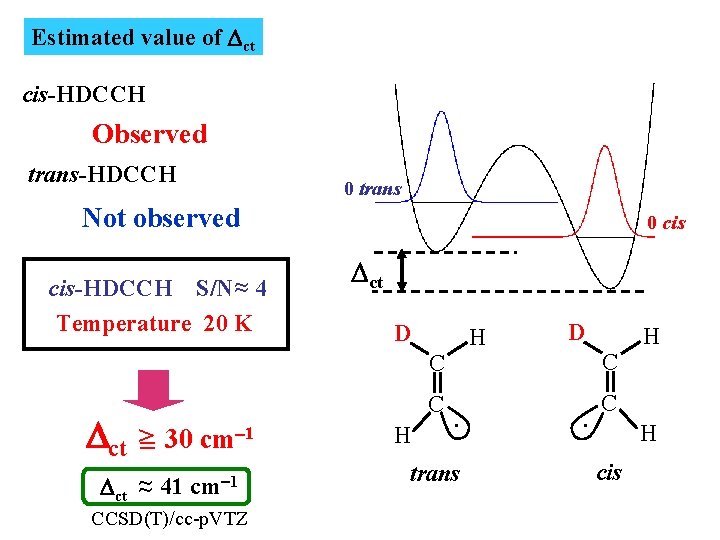
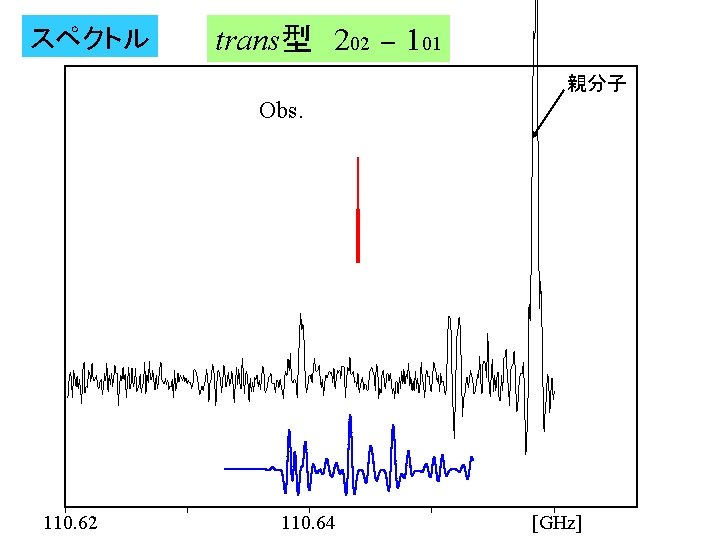
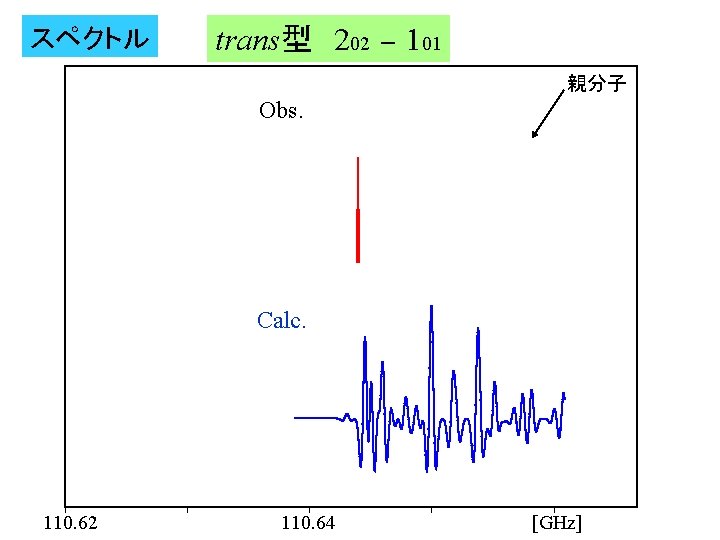
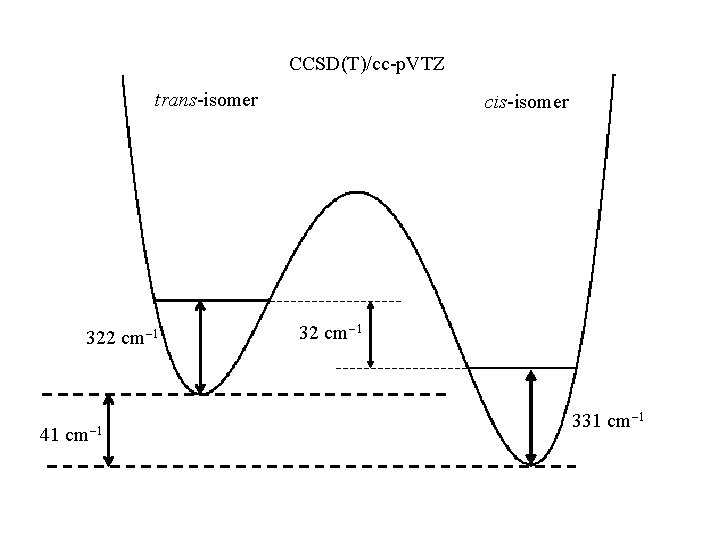
Estimated value of Dct cis-HDCCH Observed trans-HDCCH 202 -101 observed : 110650 MHz Not 0 trans 0 cis search : 110440~840 MHz cis-HDCCH S/N ~ ~4 Temperature 20 K Dct > = 30 cm-1 ~ ~ 41 cm-1 CCSD(T)/cc-p. VTZ Dct D H H D H C C . trans . H cis
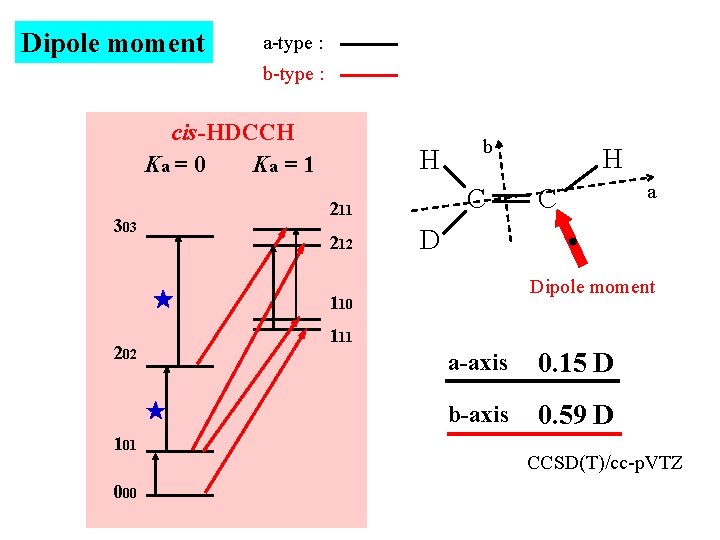
Dipole moment a-type : b-type : cis-HDCCH Ka = 0 Ka = 1 303 H C 211 212 b 101 000 C a D Dipole moment 110 202 H 111 a-axis 0. 15 D b-axis 0. 59 D CCSD(T)/cc-p. VTZ
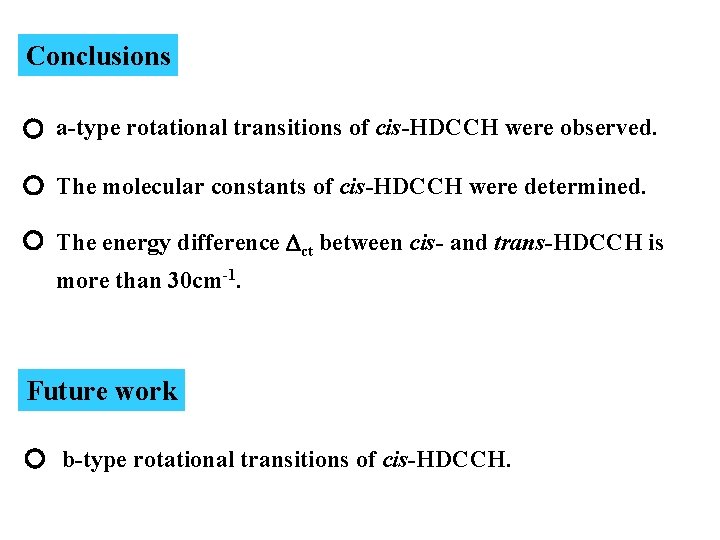
Conclusions a-type rotational transitions of cis-HDCCH were observed. The molecular constants of cis-HDCCH were determined. The energy difference Dct between cis- and trans-HDCCH is more than 30 cm-1. Future work b-type rotational transitions of cis-HDCCH.
end
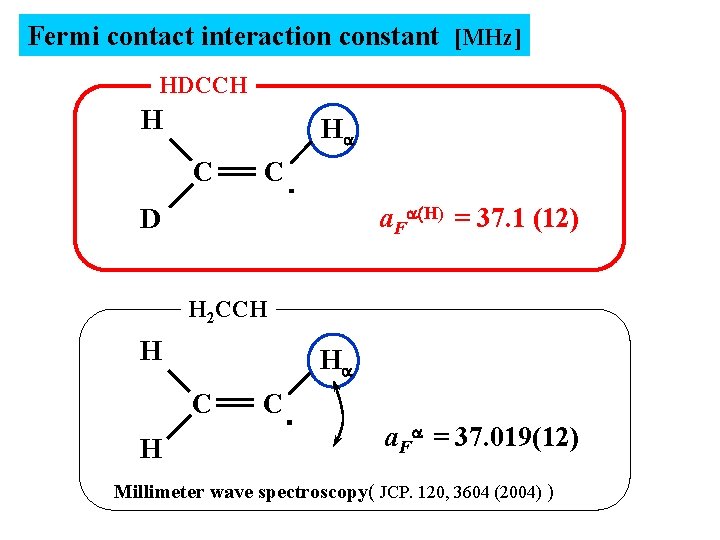
Fermi contact interaction constant [MHz] HDCCH H Ha C C ・ a. Fa(H) = 37. 1 (12) D H 2 CCH H Ha C H C ・ a. Fa = 37. 019(12) Millimeter wave spectroscopy( JCP. 120, 3604 (2004) )
スペクトル trans型 202 - 101 親分子 Obs. 110. 62 110. 64 [GHz]
スペクトル trans型 202 - 101 親分子 Obs. Calc. 110. 62 110. 64 [GHz]
Transition type a-type : b-type (cis-transitions) : b-type : cis-HDCCH Ka = 0 Ka = 1 303 211 trans-HDCCH Ka = 0 Ka = 1 212 212 110 202 111 101 000 Dct : 40 cm-1
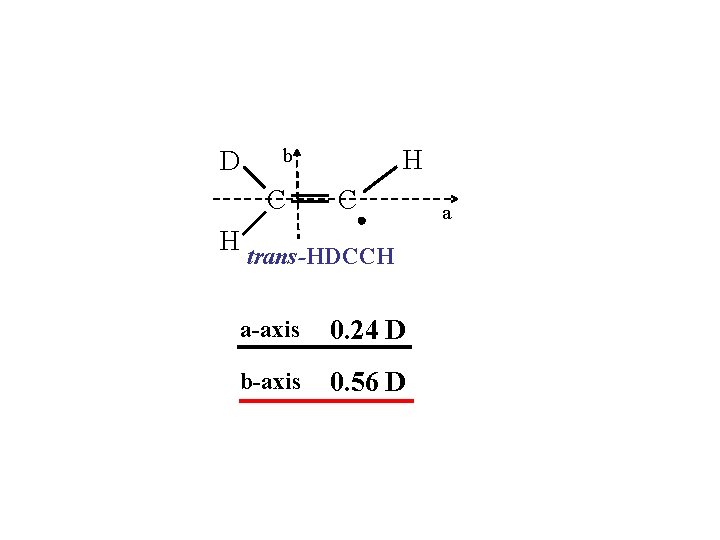
D H b C C H trans-HDCCH a-axis 0. 24 D b-axis 0. 56 D a
CCSD(T)/cc-p. VTZ trans-isomer 322 cm-1 41 cm-1 cis-isomer 32 cm-1 331 cm-1