
Middle Ages Medieval England literature 1066 1485 AD
- Slides: 14
Middle Ages (Medieval) England literature 1066 -1485 AD
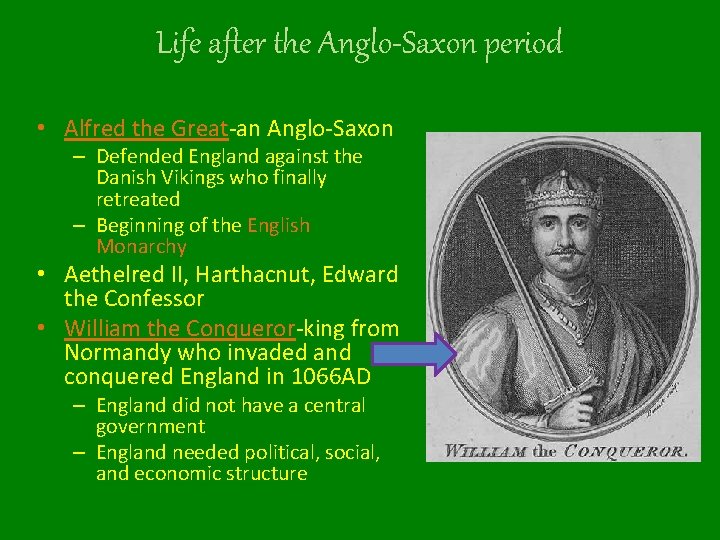
Life after the Anglo-Saxon period • Alfred the Great-an Anglo-Saxon – Defended England against the Danish Vikings who finally retreated – Beginning of the English Monarchy • Aethelred II, Harthacnut, Edward the Confessor • William the Conqueror-king from Normandy who invaded and conquered England in 1066 AD – England did not have a central government – England needed political, social, and economic structure
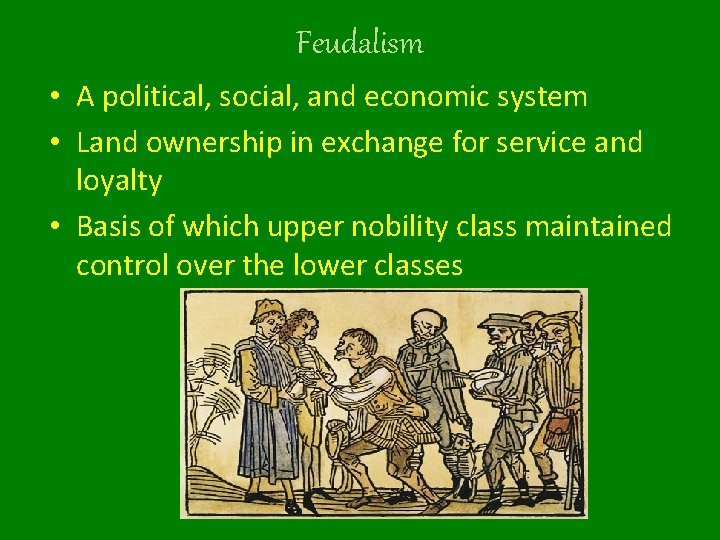
Feudalism • A political, social, and economic system • Land ownership in exchange for service and loyalty • Basis of which upper nobility class maintained control over the lower classes
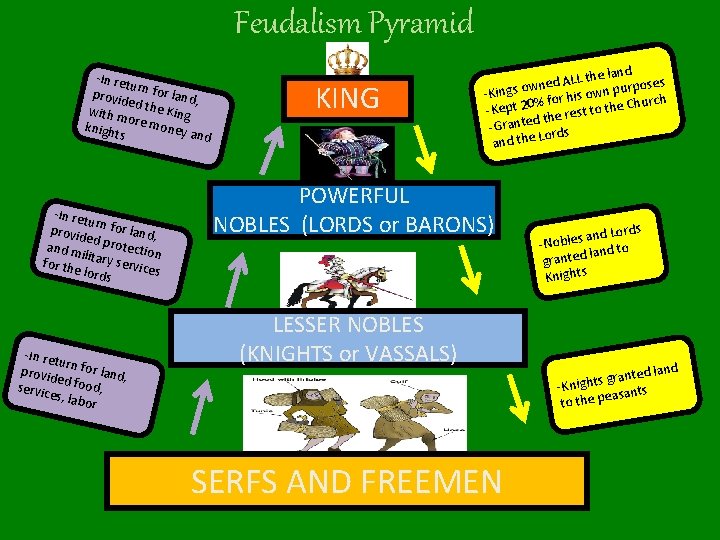
Feudalism Pyramid -In ret u provid rn for land, e with m d the King o knight re money a s nd -In ret u provid rn for land, e and m d protectio n ili for th tary service e lord s s -In ret u provid rn for land, e servic d food, es, lab or KING he land es t L L A d pos wne -Kings o for his own pur % hurch -Kept 20 e rest to the C d th -Grante rds Lo and the POWERFUL NOBLES (LORDS or BARONS) LESSER NOBLES (KNIGHTS or VASSALS) SERFS AND FREEMEN s nd Lord a s e l b o -N land to granted Knights d nted lan a r g s t h g -Kni easants to the p
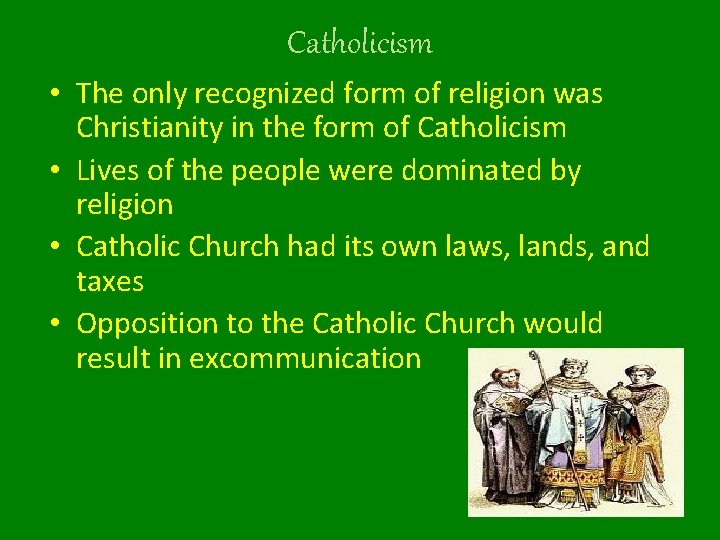
Catholicism • The only recognized form of religion was Christianity in the form of Catholicism • Lives of the people were dominated by religion • Catholic Church had its own laws, lands, and taxes • Opposition to the Catholic Church would result in excommunication
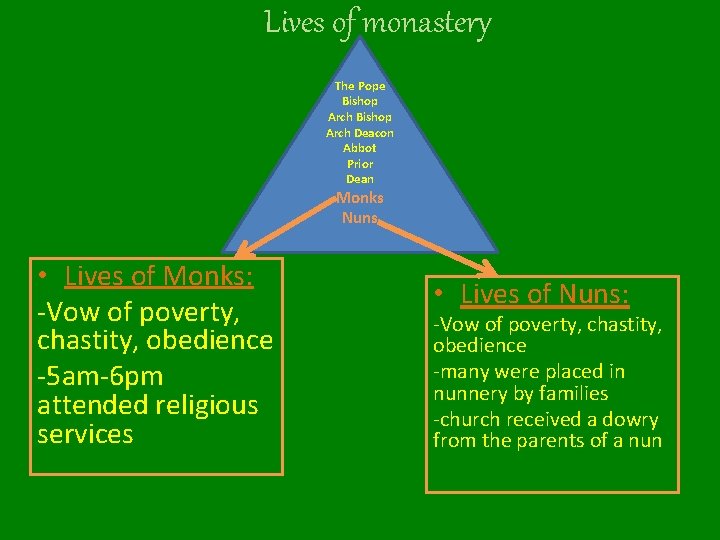
Lives of monastery The Pope Bishop Arch Deacon Abbot Prior Dean Monks Nuns • Lives of Monks: -Vow of poverty, chastity, obedience -5 am-6 pm attended religious services • Lives of Nuns: -Vow of poverty, chastity, obedience -many were placed in nunnery by families -church received a dowry from the parents of a nun
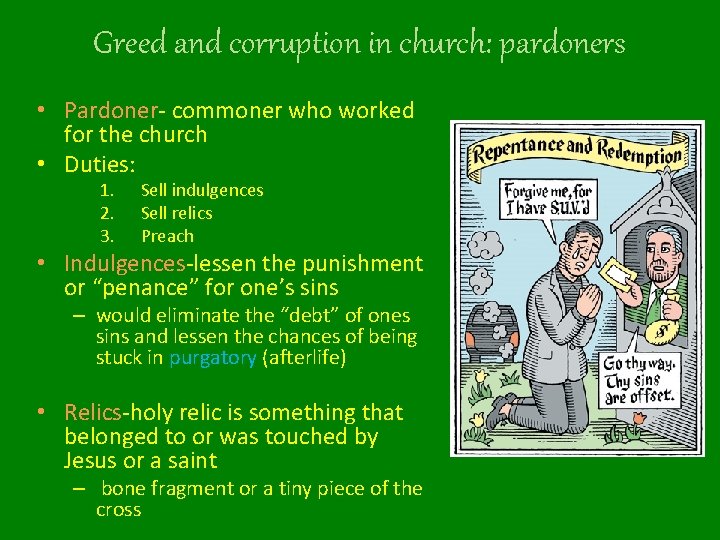
Greed and corruption in church: pardoners • Pardoner- commoner who worked for the church • Duties: 1. 2. 3. Sell indulgences Sell relics Preach • Indulgences-lessen the punishment or “penance” for one’s sins – would eliminate the “debt” of ones sins and lessen the chances of being stuck in purgatory (afterlife) • Relics-holy relic is something that belonged to or was touched by Jesus or a saint – bone fragment or a tiny piece of the cross
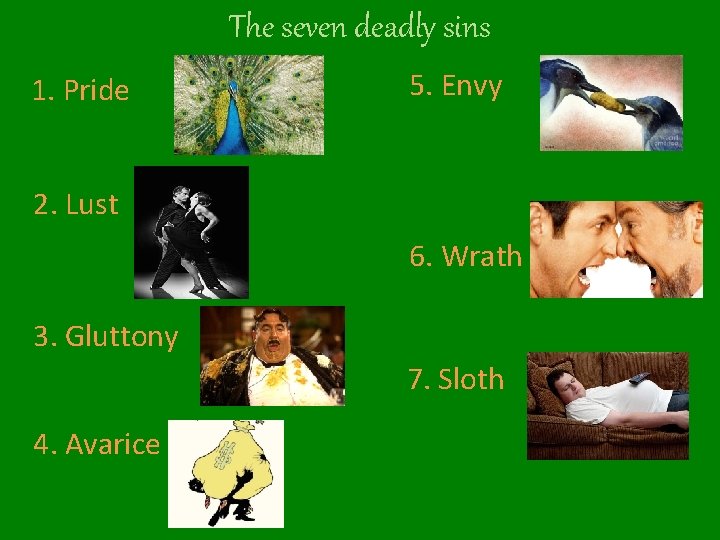
The seven deadly sins 1. Pride 5. Envy 2. Lust 6. Wrath 3. Gluttony 7. Sloth 4. Avarice
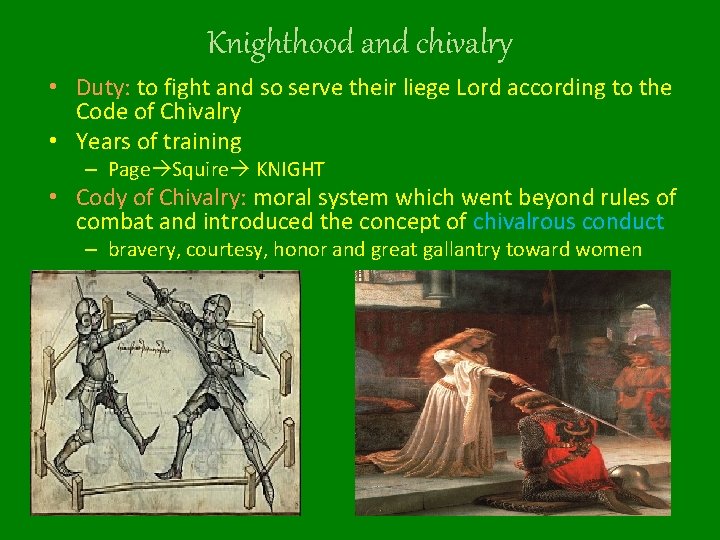
Knighthood and chivalry • Duty: to fight and so serve their liege Lord according to the Code of Chivalry • Years of training – Page Squire KNIGHT • Cody of Chivalry: moral system which went beyond rules of combat and introduced the concept of chivalrous conduct – bravery, courtesy, honor and great gallantry toward women
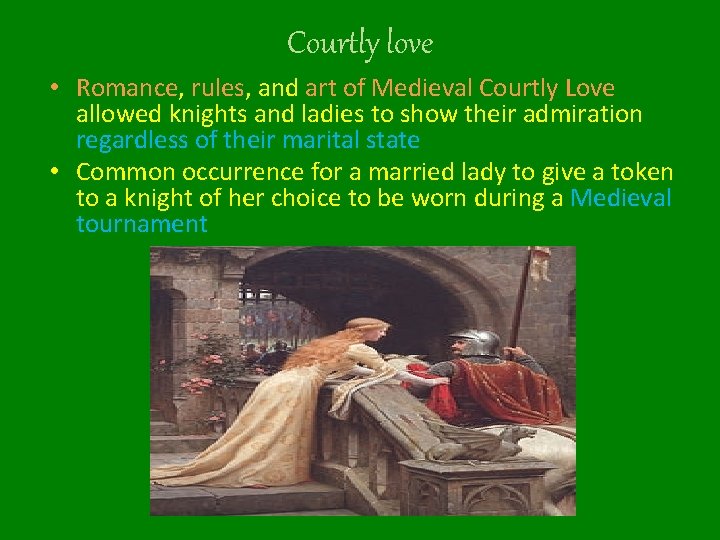
Courtly love • Romance, rules, and art of Medieval Courtly Love allowed knights and ladies to show their admiration regardless of their marital state • Common occurrence for a married lady to give a token to a knight of her choice to be worn during a Medieval tournament
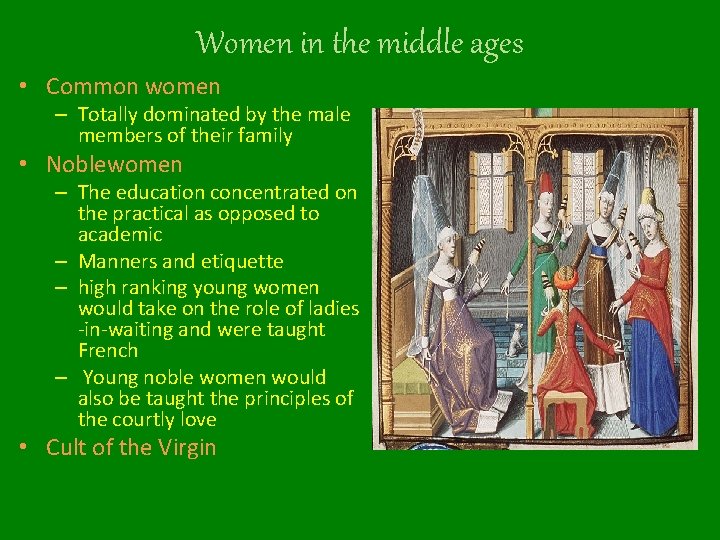
Women in the middle ages • Common women – Totally dominated by the male members of their family • Noblewomen – The education concentrated on the practical as opposed to academic – Manners and etiquette – high ranking young women would take on the role of ladies -in-waiting and were taught French – Young noble women would also be taught the principles of the courtly love • Cult of the Virgin
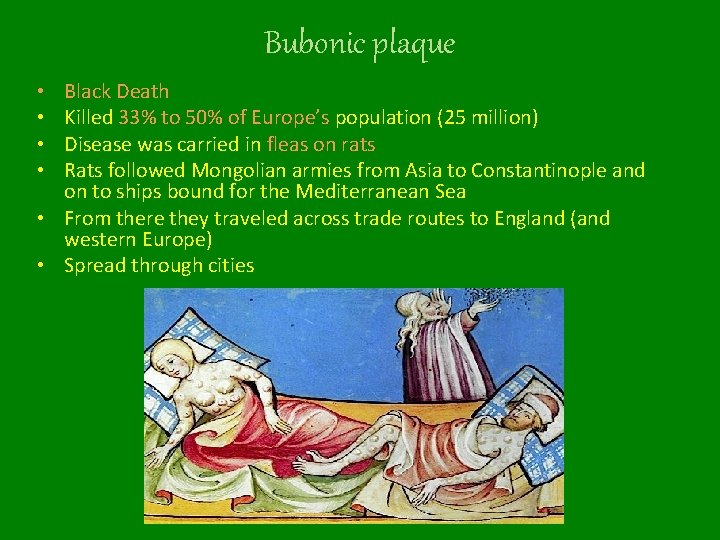
Bubonic plaque Black Death Killed 33% to 50% of Europe’s population (25 million) Disease was carried in fleas on rats Rats followed Mongolian armies from Asia to Constantinople and on to ships bound for the Mediterranean Sea • From there they traveled across trade routes to England (and western Europe) • Spread through cities • •
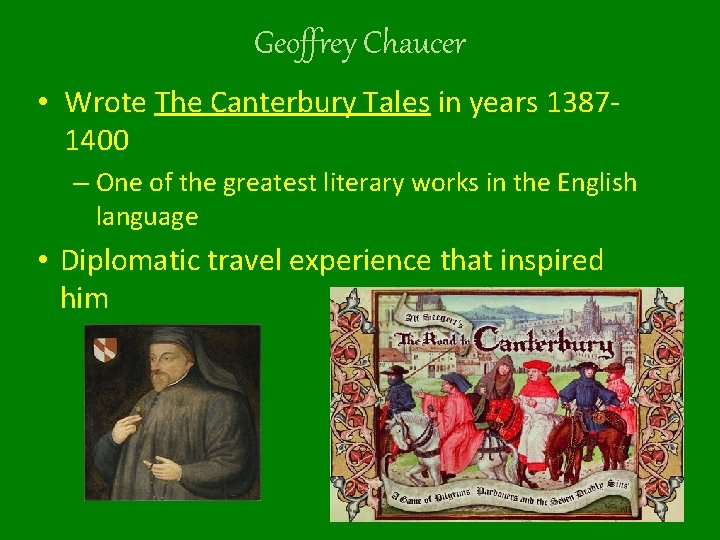
Geoffrey Chaucer • Wrote The Canterbury Tales in years 13871400 – One of the greatest literary works in the English language • Diplomatic travel experience that inspired him
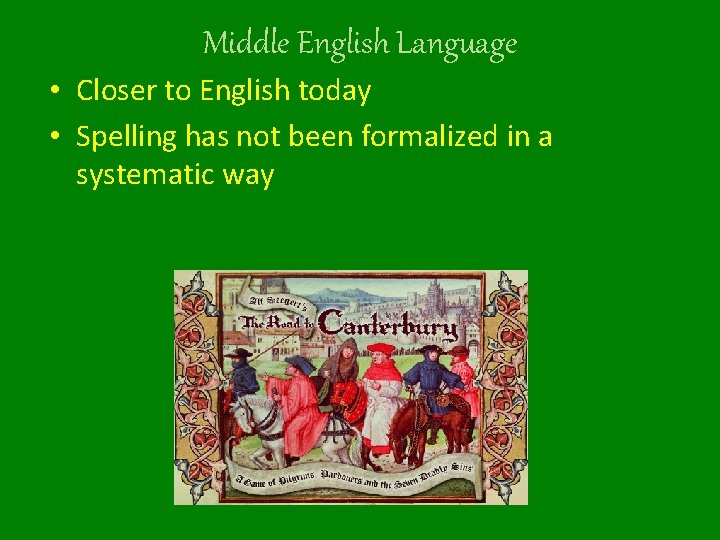
Middle English Language • Closer to English today • Spelling has not been formalized in a systematic way