Microlensing with CCDs Philip Yock University of Auckland


- Slides: 28
Microlensing with CCDs Philip Yock University of Auckland, NZ http: //www. physics. auckland. ac. nz/moa/index. html NZ-Australia Semiconductor Instrumentation Workshop, June 2004
Why microlensing? – Why CCDs? • Precision measurements can be made on stars • Highest precision measurements on planets • Many stars must be monitored – CCDs essential
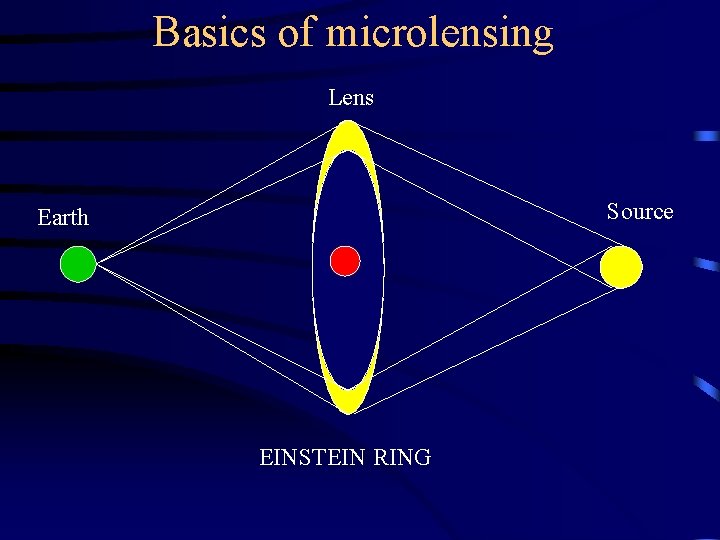
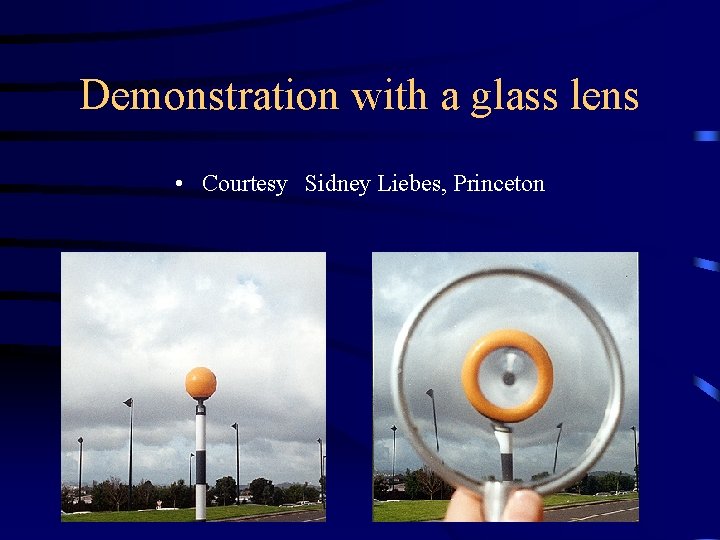
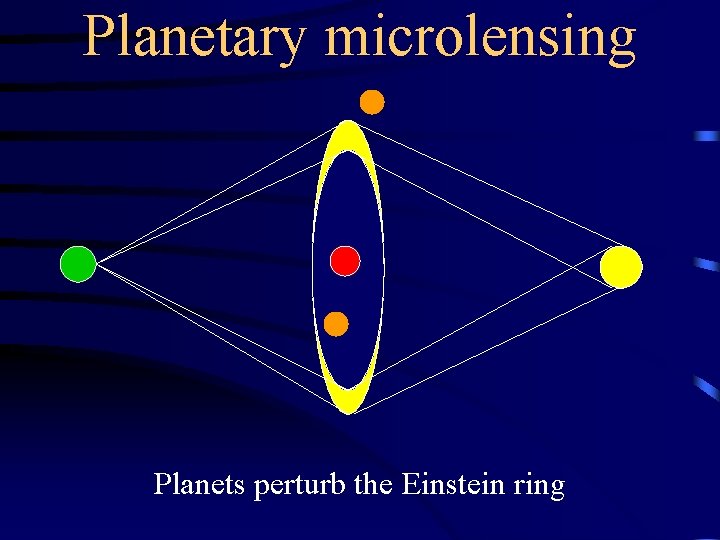
Basics of microlensing Lens Source Earth EINSTEIN RING
Demonstration with a glass lens • Courtesy Sidney Liebes, Princeton
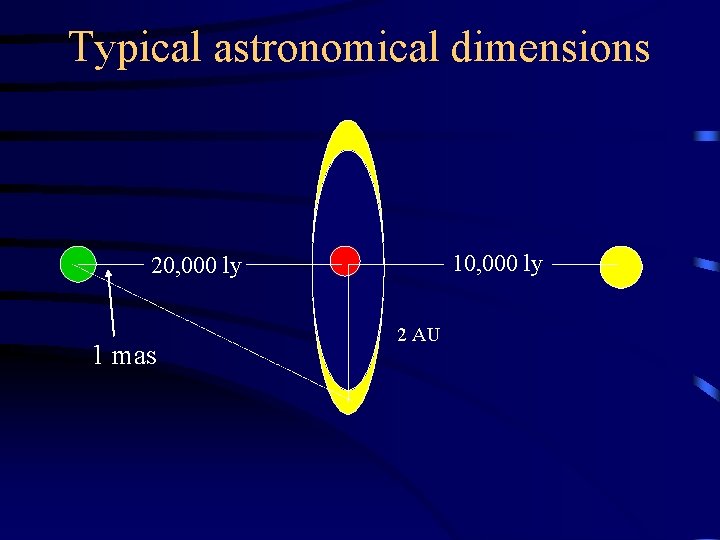
Typical astronomical dimensions 10, 000 ly 20, 000 ly 1 mas 2 AU
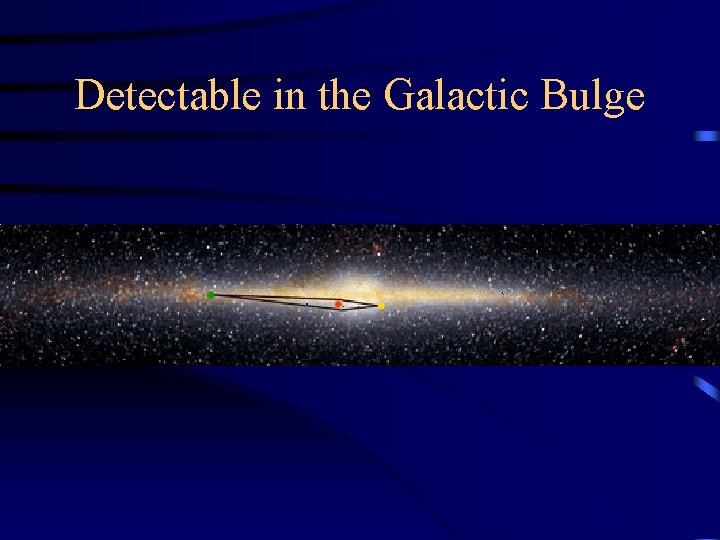
Detectable in the Galactic Bulge
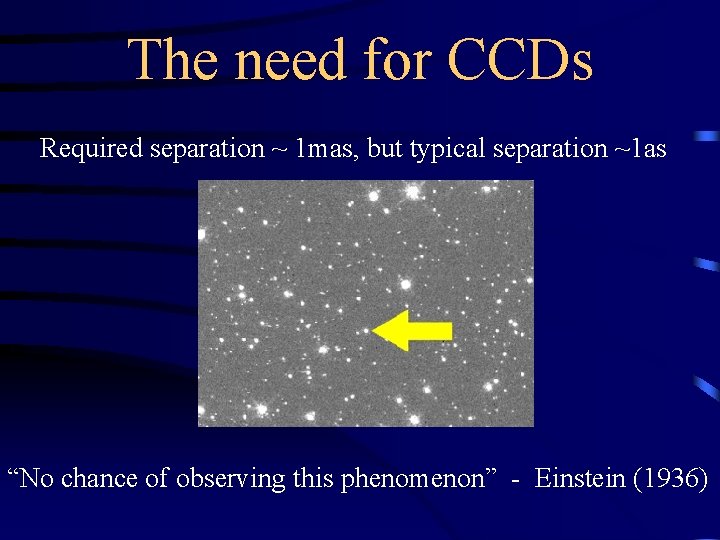
The need for CCDs Required separation ~ 1 mas, but typical separation ~1 as “No chance of observing this phenomenon” - Einstein (1936)
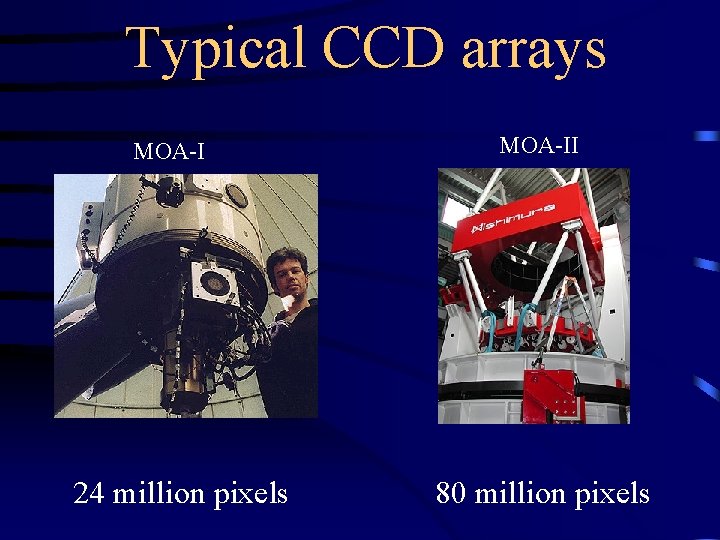
Typical CCD arrays MOA-I 24 million pixels MOA-II 80 million pixels
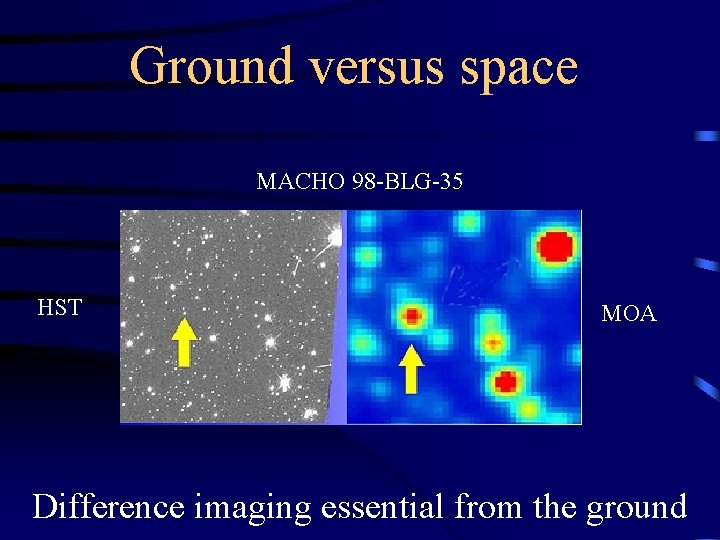
Ground versus space MACHO 98 -BLG-35 HST MOA Difference imaging essential from the ground
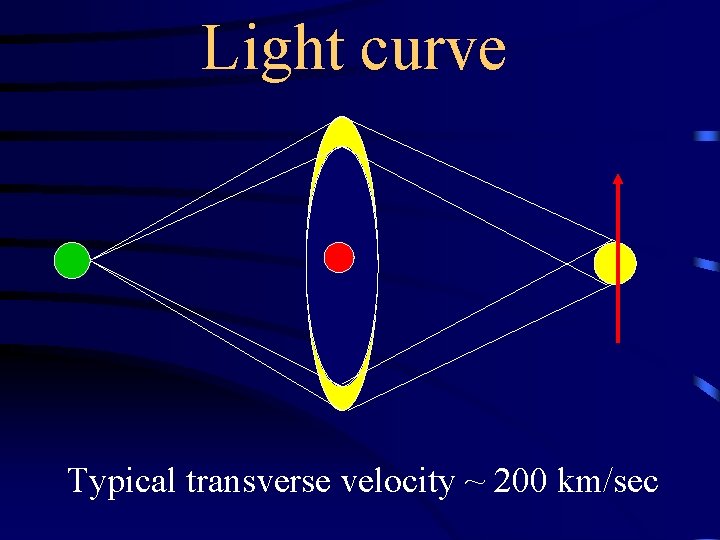
Light curve Typical transverse velocity ~ 200 km/sec
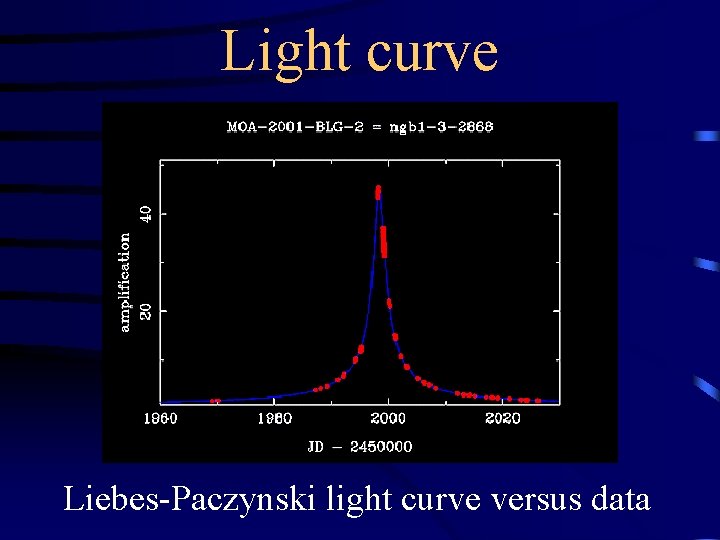
Light curve Liebes-Paczynski light curve versus data
Planetary microlensing Planets perturb the Einstein ring
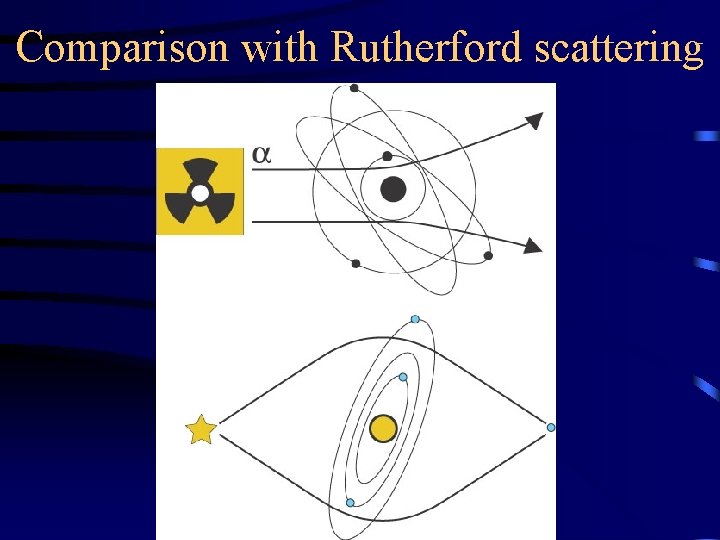
Comparison with Rutherford scattering
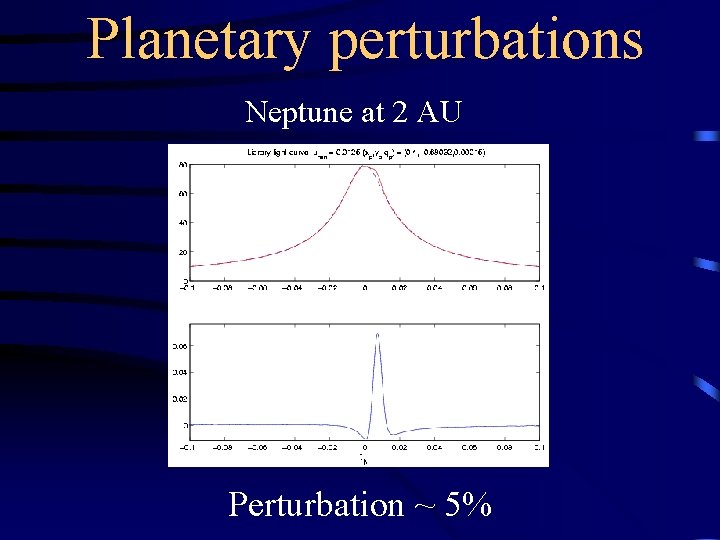
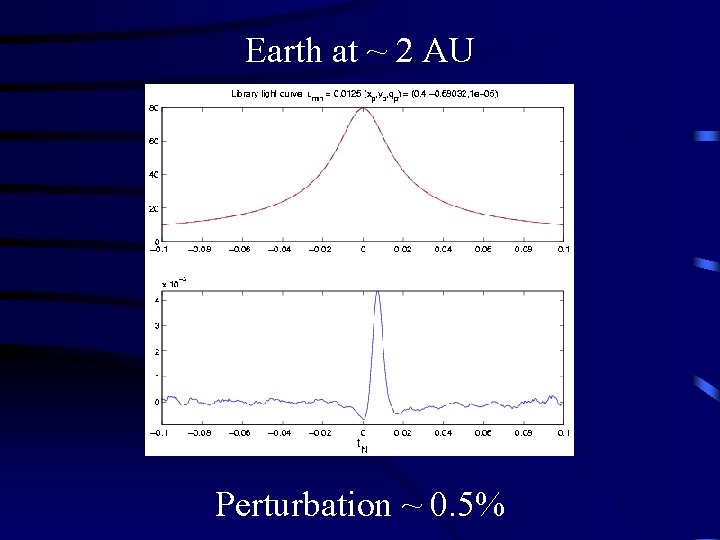
Planetary perturbations Neptune at 2 AU Perturbation ~ 5%
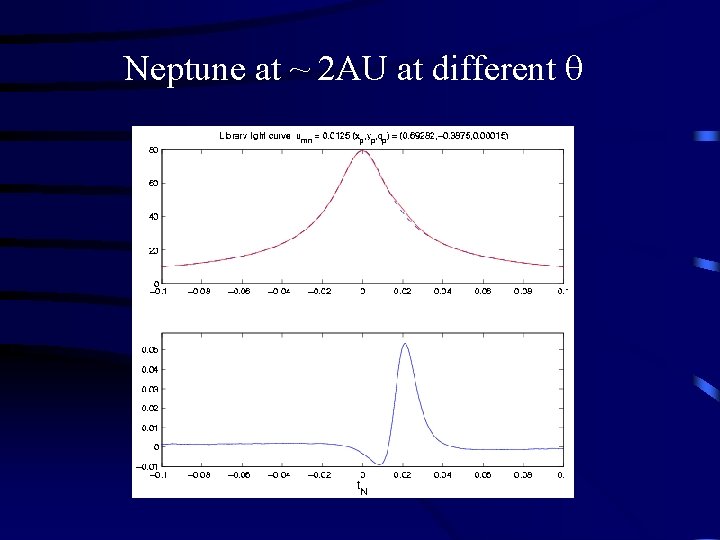
Neptune at ~ 2 AU at different
Earth at ~ 2 AU Perturbation ~ 0. 5%
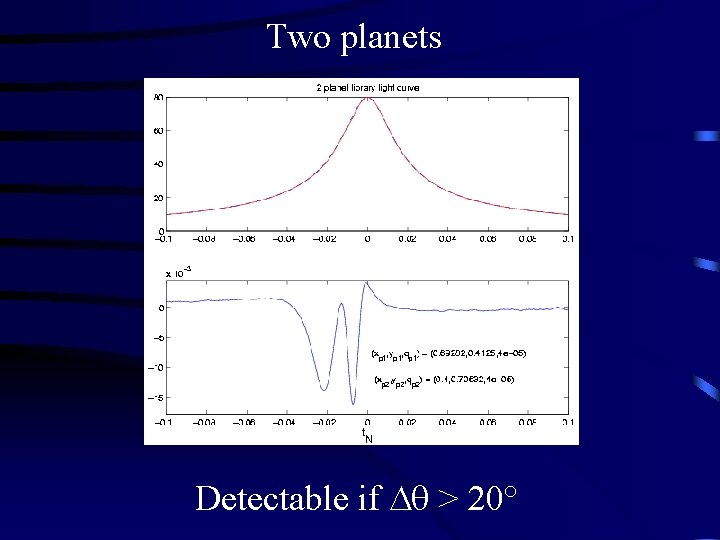
Two planets Detectable if > 20°
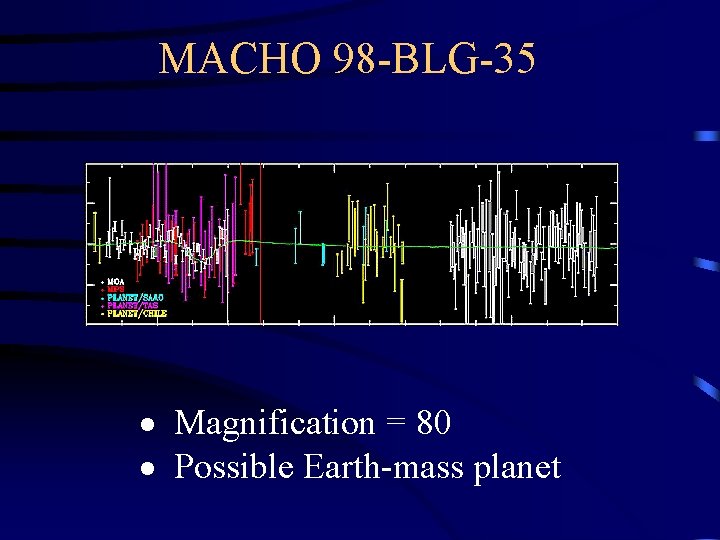
MACHO 98 -BLG-35 Magnification = 80 Possible Earth-mass planet
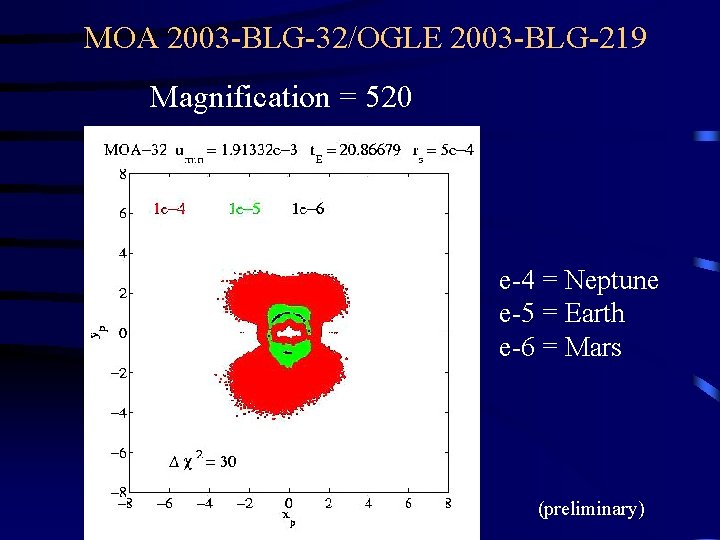
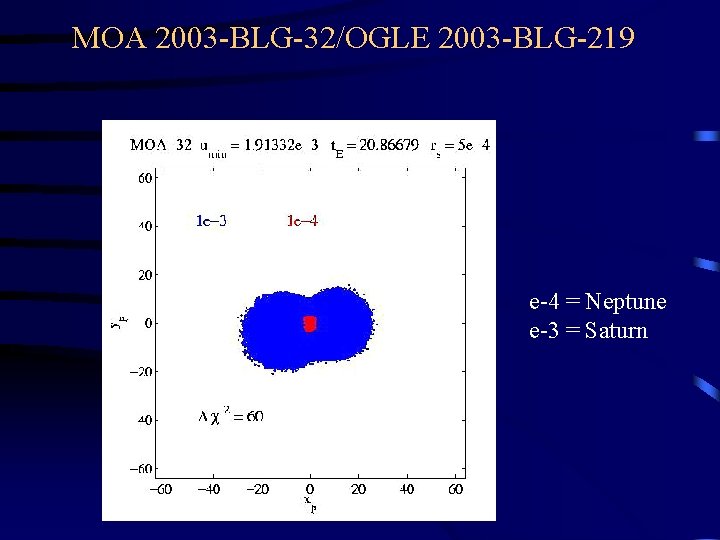
MOA 2003 -BLG-32/OGLE 2003 -BLG-219 Magnification = 520 e-4 = Neptune e-5 = Earth e-6 = Mars (preliminary)
MOA 2003 -BLG-32/OGLE 2003 -BLG-219 e-4 = Neptune e-3 = Saturn
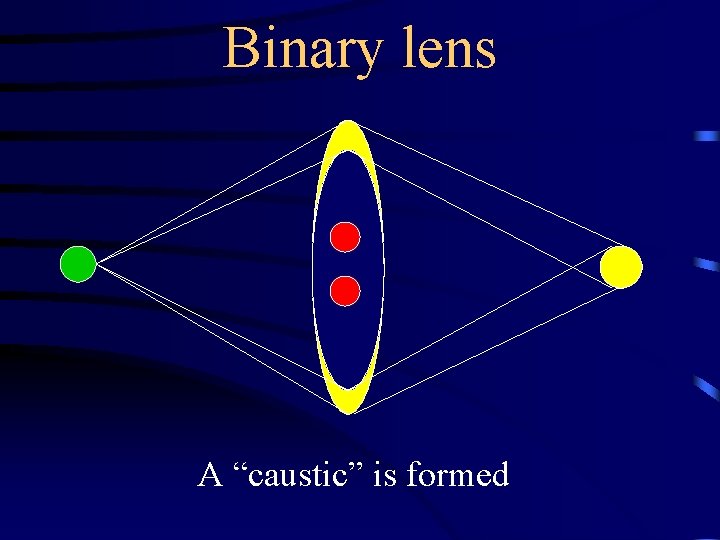
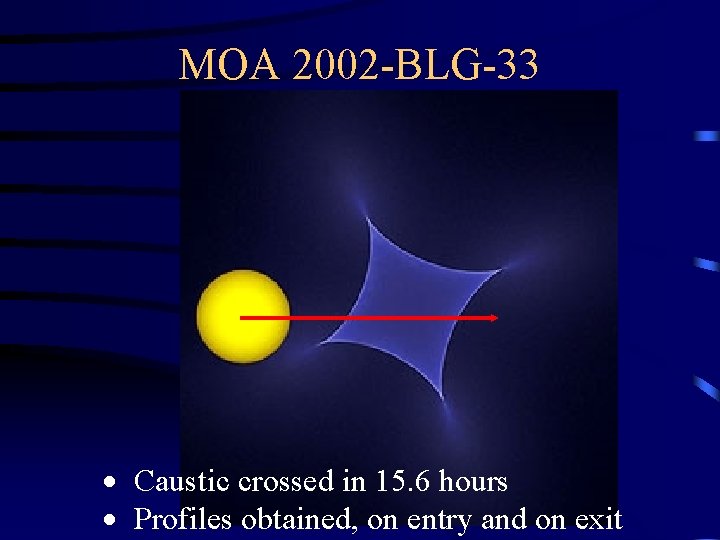
Binary lens A “caustic” is formed
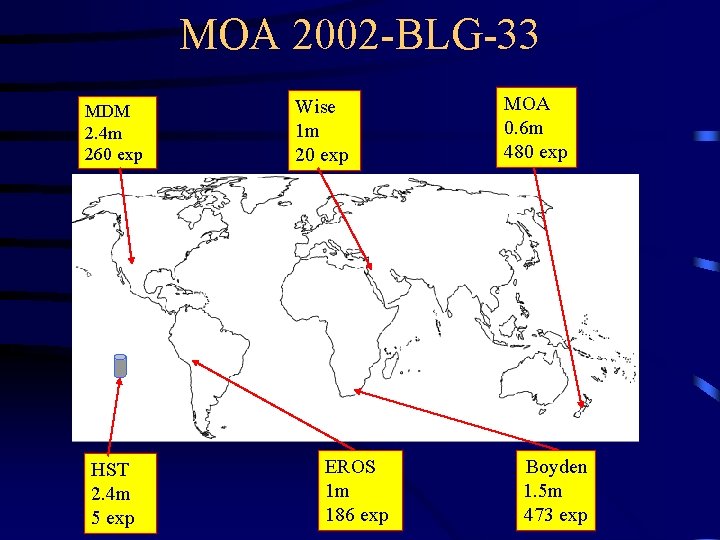
MOA 2002 -BLG-33 MDM 2. 4 m 260 exp HST 2. 4 m 5 exp Wise 1 m 20 exp EROS 1 m 186 exp MOA 0. 6 m 480 exp Boyden 1. 5 m 473 exp
MOA 2002 -BLG-33 The light curve determines the lens geometry The lens profiles the source
MOA 2002 -BLG-33 Caustic crossed in 15. 6 hours Profiles obtained, on entry and on exit
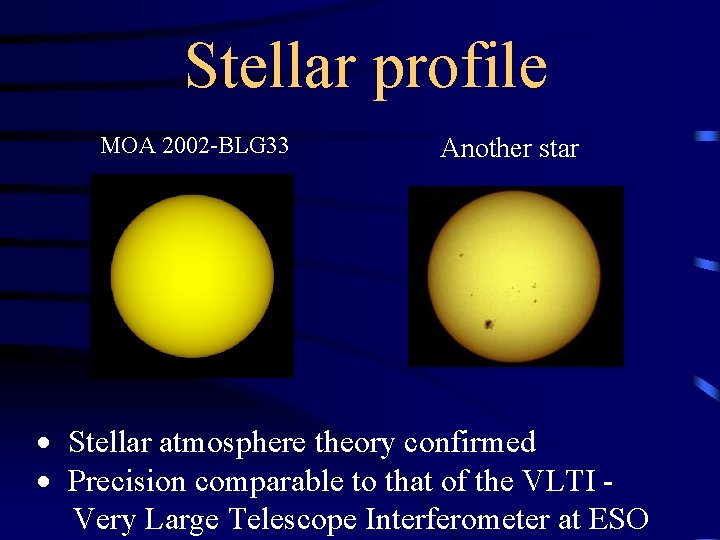
Stellar profile MOA 2002 -BLG 33 Another star Stellar atmosphere theory confirmed Precision comparable to that of the VLTI Very Large Telescope Interferometer at ESO
Conclusions Stellar gravitational lenses exist Extra-solar planets detectable Stars resolvable Nature helpful!
64 million dollar question Is SU(3) SU(2) U(1) being studied on other planets?
Acknowledgements Ian Bond & Nick Rattenbury John Hearnshaw & Yasushi Muraki Colleagues in MOA, MACHO, EROS, OGLE, FUN, PLANET Marsden Fund, Department of Education of Japan