Medicinal Algae For postgraduate students Faculty of Science


- Slides: 18
Medicinal Algae For postgraduate students Faculty of Science
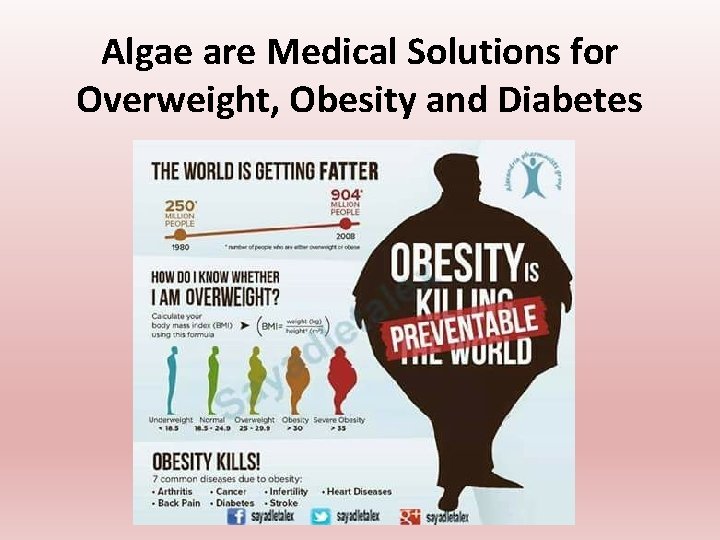
Algae are Medical Solutions for Overweight, Obesity and Diabetes
• Algae offer a set of solutions to moderate obesity, including satiety, fat and nutrient bioavailability. vdietary fiber, digestible crude protein, low saturation triglyceride oil valginates • The weight loss occurs because the alginates form a gel in the stomach, which strengthens the gastrointestinal satiety signals to the brain. The gel takes up space in the stomach and gives an artificial feeling of fullness.
• Algae polysaccharides also demonstrate antiatherosclerotic functions, reducing blood cholesterol concentrations and cardiovascular disease risk. • These soluble polysaccharides stimulating growth of beneficial bacteria in the colon.
Diabetes v. Several studies have shown algae’s ability to decrease lipids, lower blood sugar and improve diabetic symptoms. v. Algae moderate hypoglycemic effects through enhancement of glucose uptake in the liver. v. Improve insulin sensitivity. v. Phenolic-rich extracts from four edible marine macroalgae: Ulva, Ascophyllum, Alaria, and Palmaria achieve anti-diabetic effects
Algae offer global nutrient deficiency solutions The four most prevalent deficiency diseases globally are: Ø malnutrition, Ø nutritional anemia (iron and vitamin B deficiency), Ø xerophthalmia ���� (vitamin A deficiency), Ø endemic goiter (iodine deficiency).
Malnutrition
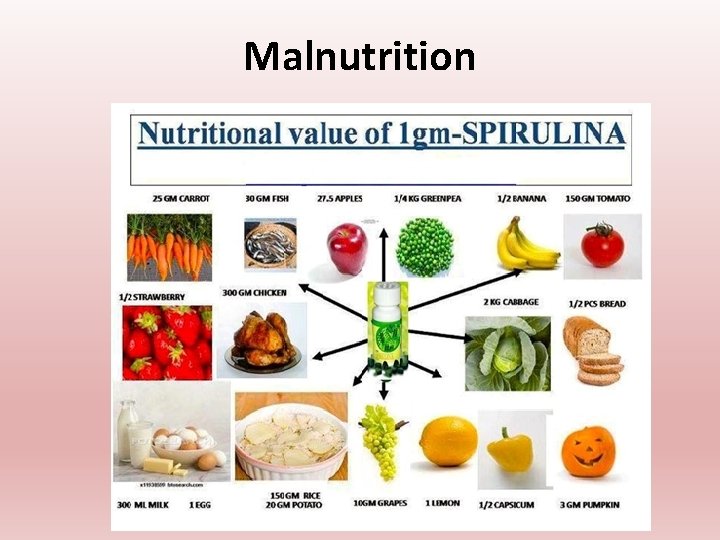
• Malnutrition may occur from insufficient usable protein or deficiencies in specific essential nutrients. • Algae can provide a reliable protein source with three times more protein than rice and twice the protein of meat. • Algae offer all nine of the essential amino acids and nearly all the essential nutrients.
Anemia • Anemia is the most common blood problem and creates a decrease in the normal number of red blood cells or less than the normal quantity of hemoglobin in the blood. • Iron and B vitamins are essential for strong red blood cells and a healthy immune system.
• Algae are a demonstrated source of bioavailable iron. • B vitamin deficiency (B 9, also known as folic acid or B 12) is the leading cause of anemia worldwide. • Folic acid concentrations in algae are comparable to many common fruits and vegetables.
Vitamin A deficiency • Approximately 500, 000 children in the developing world go blind each year from insufficient vitamin A. • Night blindness and color blindness are markers of vitamin A deficiency.
• Algae consumption provides immediate relief from vitamin A deficiency symptoms. • Various algal varieties provide ten times the beta-carotene (a provitamin A carotenoid) than modern carrots. • Vitamin A deficiency is often accompanied by zinc deficiency, which amplifies the health impacts. The same algae supplement provides sufficient daily zinc for adults and children.
Iodine deficiency • The high iodine content in algae contributes to the low rates of goiter observed in countries where people frequently eat algae.
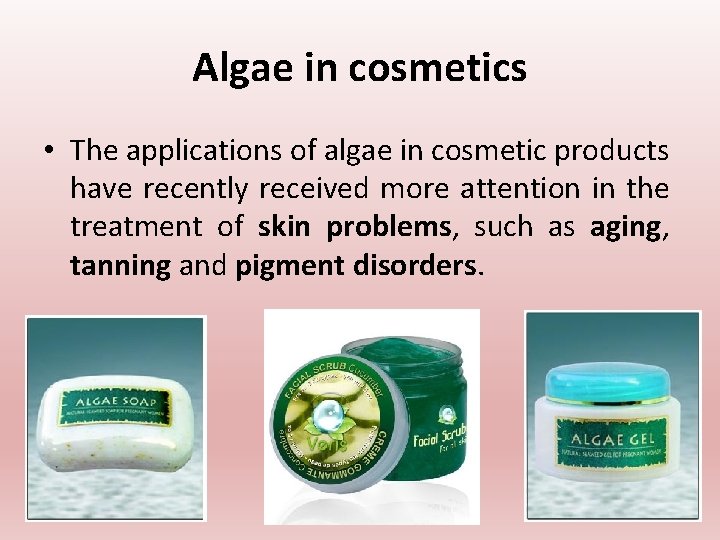
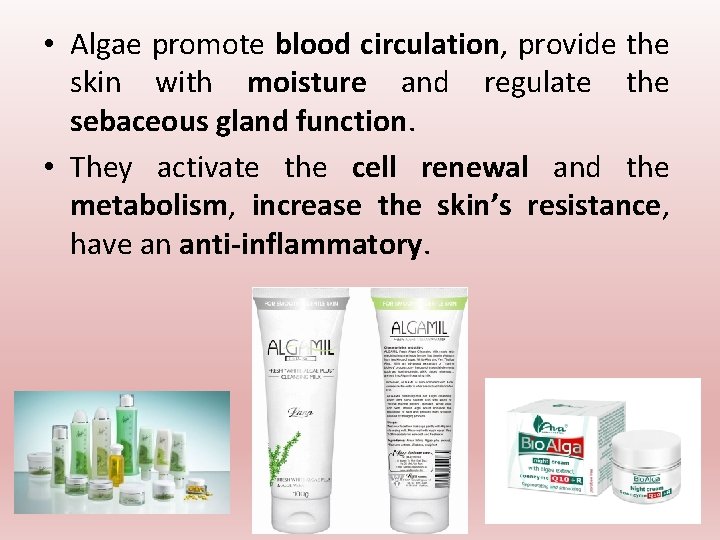
Algae in cosmetics • The applications of algae in cosmetic products have recently received more attention in the treatment of skin problems, such as aging, tanning and pigment disorders.
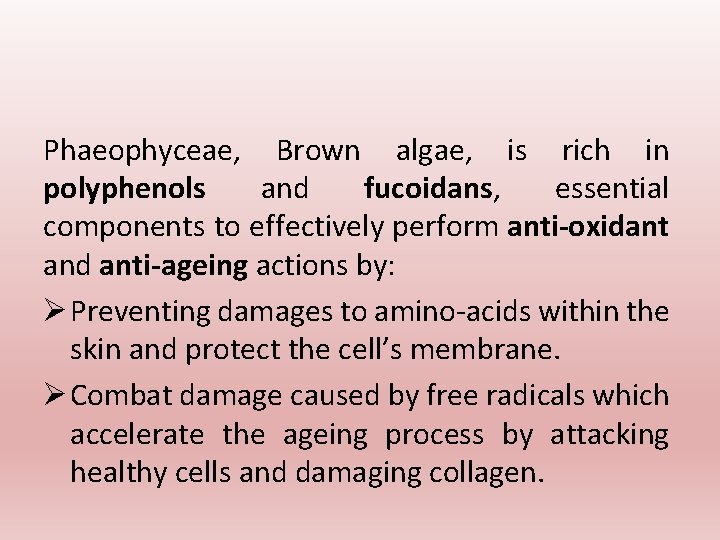
• Algae promote blood circulation, provide the skin with moisture and regulate the sebaceous gland function. • They activate the cell renewal and the metabolism, increase the skin’s resistance, have an anti-inflammatory.
• The antimicrobial substance obtained from algae can be used as soaps, lotions, shampoos, creams, etc. • It is assumed that the possible role of antimicrobial substances contained in this preparation to alleviate the symptoms of adult acne, which are often accompanied by bacterial infection clogged pores.
Phaeophyceae, Brown algae, is rich in polyphenols and fucoidans, essential components to effectively perform anti-oxidant and anti-ageing actions by: Ø Preventing damages to amino-acids within the skin and protect the cell’s membrane. Ø Combat damage caused by free radicals which accelerate the ageing process by attacking healthy cells and damaging collagen.
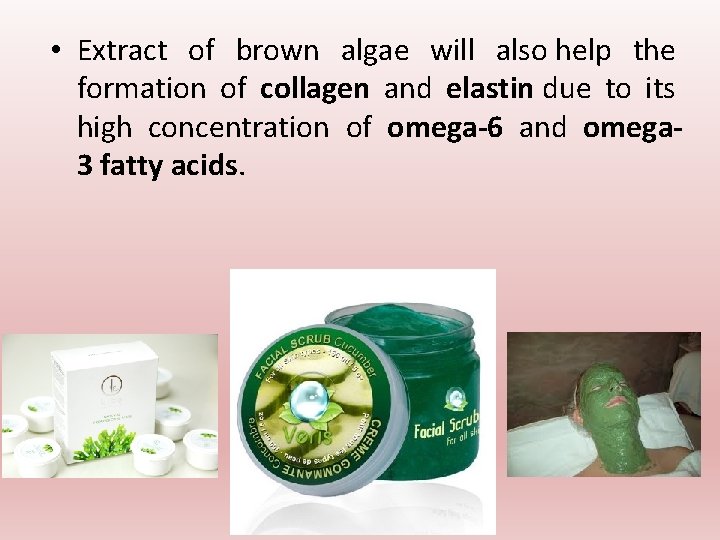
• Extract of brown algae will also help the formation of collagen and elastin due to its high concentration of omega-6 and omega 3 fatty acids.