
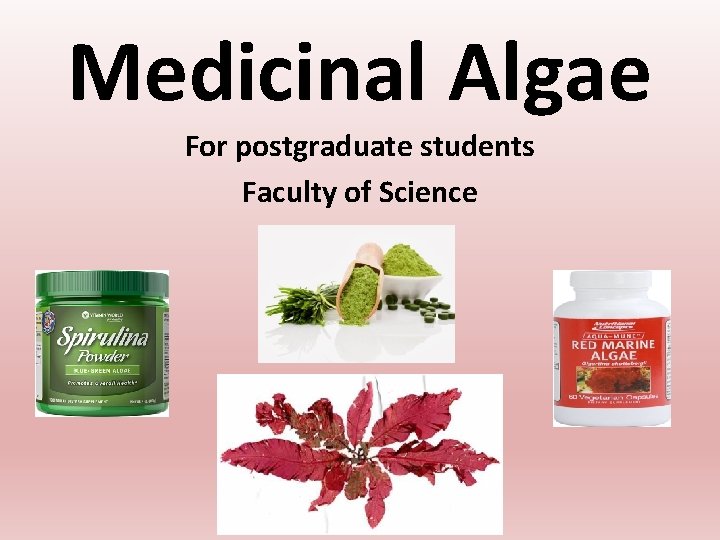
Medicinal Algae For postgraduate students Faculty of Science


- Slides: 11
Medicinal Algae For postgraduate students Faculty of Science
Commercial products are extracted from algae and their cell walls a) b) c) d) Alginates (Alginic acid) Agar (Agar-agar) Carrageenan (Carrageenin) Iodine and other compounds
a) Alginates (Alginic acid) vderived from cellulose free middle lamella and primary wall of the members of phaeophyceae like Macrocystis, Laminaria, Ascophyllum, Lessonia etc. v. Alginic acid content varies with the location, seasons, temperature and parts of the plants. v. Its content approximately 30 -40% in brown algae on dry weight. v. It is similar to cellulose and pectic acids in composition.
v. The soluble calcium salt of alginic acid is algin. v. Algin has remarkable water absorbing capacity, it is used in many industries, thickening, suspending, emulsifying, gelforming, and stabilizing. v. Sodium salt of alginic acid is used in textile industry as they form excellent polishing and dressing material.
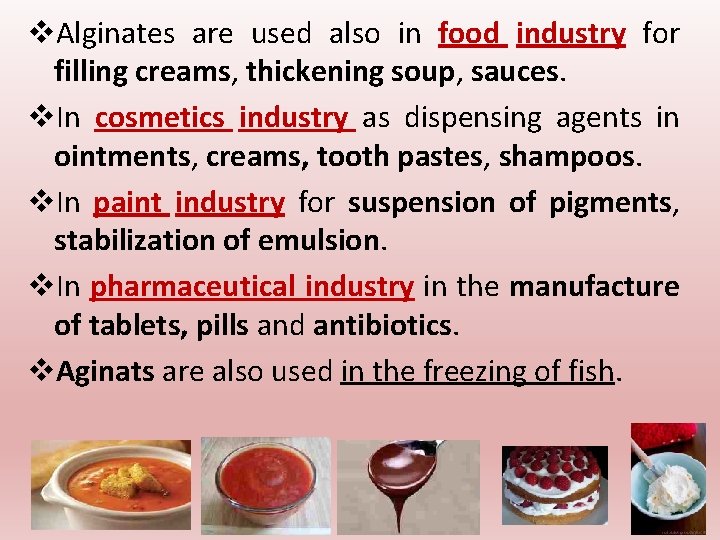
v. Alginates are used also in food industry for filling creams, thickening soup, sauces. v. In cosmetics industry as dispensing agents in ointments, creams, tooth pastes, shampoos. v. In paint industry for suspension of pigments, stabilization of emulsion. v. In pharmaceutical industry in the manufacture of tablets, pills and antibiotics. v. Aginats are also used in the freezing of fish.
b) Agar (Agar-agar) Ø This is dried gel-like non-nitrogenous, gelatinous extract obtained from many red algae. Ø used as a solidifying agent in the preparation of microbiological culture media. Ø Dried agar is insoluble in cold water but soluble in hot water. Ø The important algae used for the extraction of agar are Gelidium, Gracilaria, Pterocladia, Gigartina, Chondrus.
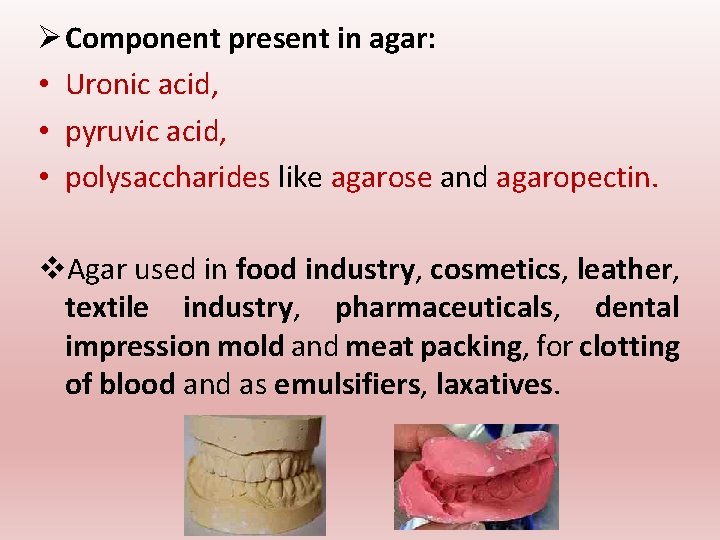
Ø Component present in agar: • Uronic acid, • pyruvic acid, • polysaccharides like agarose and agaropectin. v. Agar used in food industry, cosmetics, leather, textile industry, pharmaceuticals, dental impression mold and meat packing, for clotting of blood and as emulsifiers, laxatives.
c) Carrageenan (Carrageenin) v. It is carbohydrate mucilage named after Irish village Carrageenin which is extracted from red alga Chondrus crispus and to a lesser extent from Gigartina. v. The compound is a cell wall polysaccharide complex of D-galactose, 3, 6 -anhydro-D-galactose and monoesterified sulphuric acid.
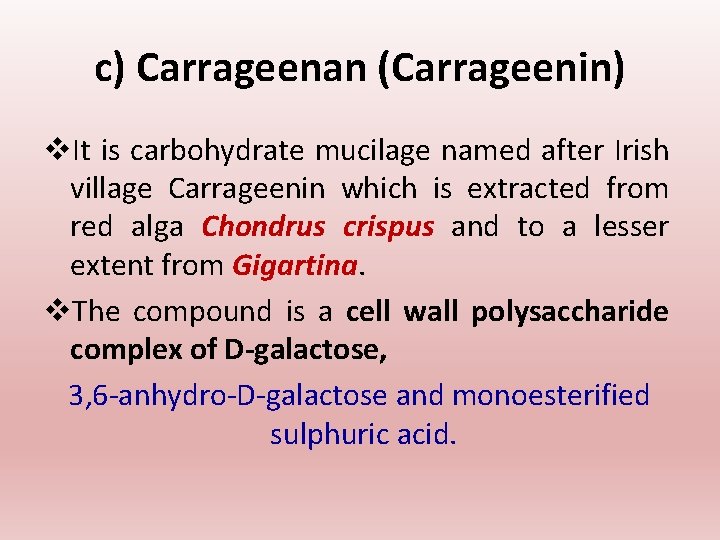
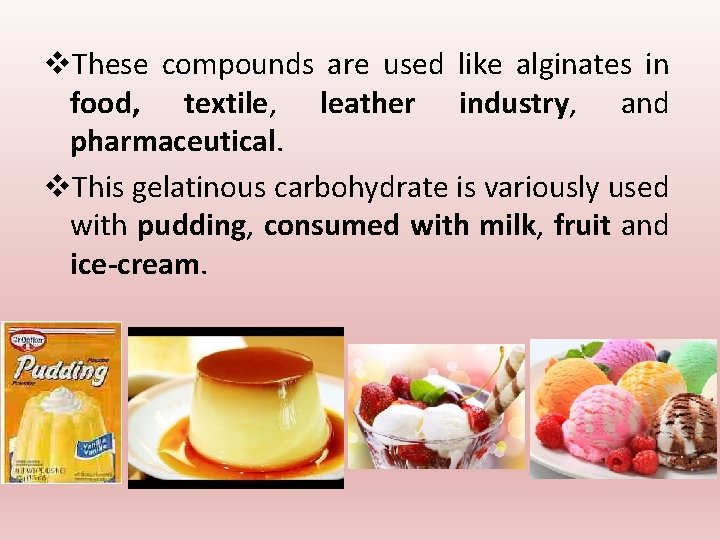
v. These compounds are used like alginates in food, textile, leather industry, and pharmaceutical. v. This gelatinous carbohydrate is variously used with pudding, consumed with milk, fruit and ice-cream.
d) Iodine and other compounds • Members of brown algae such as Laminaria digitata and Fucus spp. are known for the extraction of iodine. • The maximum percentage of iodine (1. 23%) has been obtained in Laminarias of Britsh Coasts.
Seaweed are also known for the presence of nutrients useful for human consumption like iron, manganese, zinc, copper etc. • bromine , formic acid , acetone, acetic acid are also extracted from seaweeds. • Seaweed ash is also used as source of salt and soda. •