Media Computational methods Dr Nel Ruigrok Coowner of

- Slides: 22
Media & Computational methods • Dr. Nel Ruigrok; Co-owner of LJS Media Research and affiliated at the Erasmus University Rotterdam • Dr. Wouter van Atteveldt; Associate Professor at the VU University Amsterdam and co-owner LJS Media Research
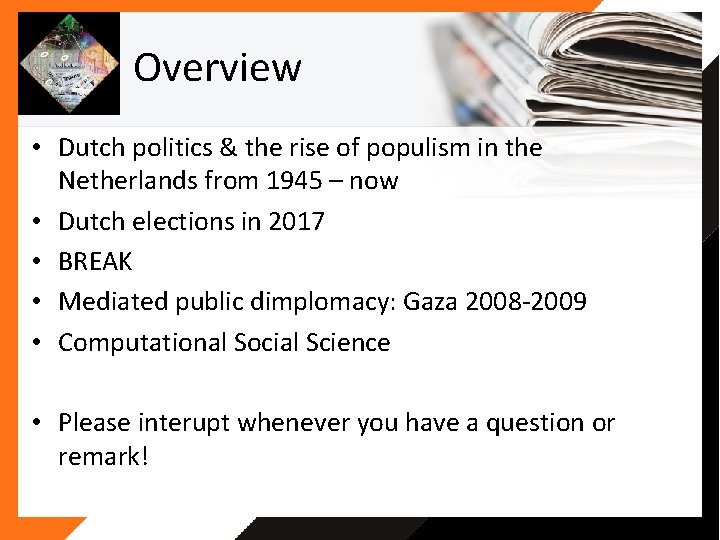
Overview • Dutch politics & the rise of populism in the Netherlands from 1945 – now • Dutch elections in 2017 • BREAK • Mediated public dimplomacy: Gaza 2008 -2009 • Computational Social Science • Please interupt whenever you have a question or remark!
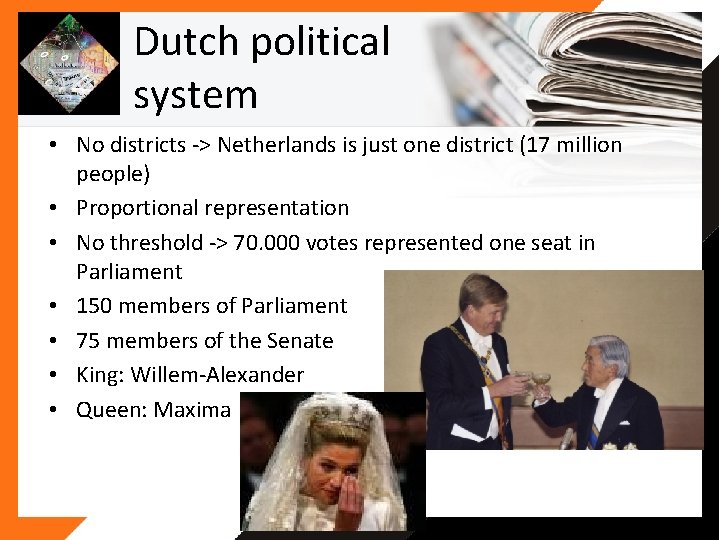
Dutch political system • No districts -> Netherlands is just one district (17 million people) • Proportional representation • No threshold -> 70. 000 votes represented one seat in Parliament • 150 members of Parliament • 75 members of the Senate • King: Willem-Alexander • Queen: Maxima
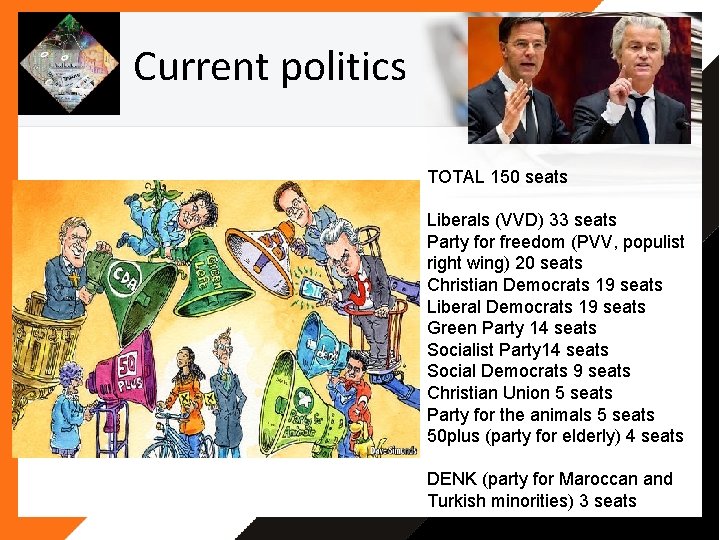
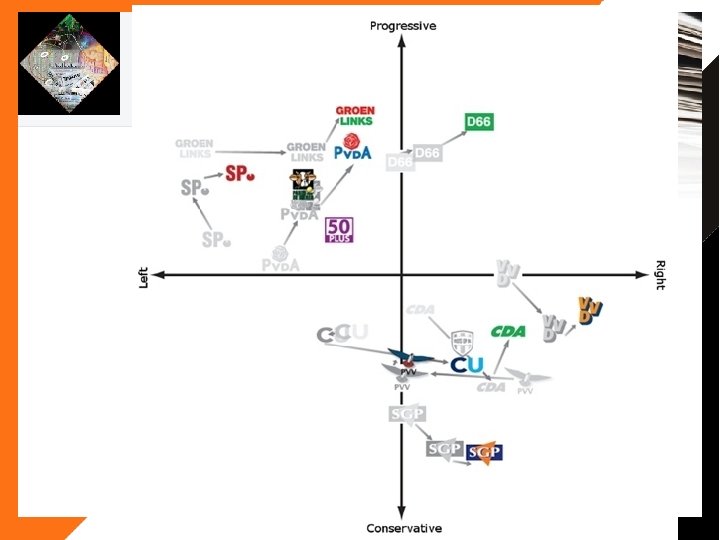
Current politics TOTAL 150 seats Liberals (VVD) 33 seats Party for freedom (PVV, populist right wing) 20 seats Christian Democrats 19 seats Liberal Democrats 19 seats Green Party 14 seats Socialist Party 14 seats Social Democrats 9 seats Christian Union 5 seats Party for the animals 5 seats 50 plus (party for elderly) 4 seats DENK (party for Maroccan and Turkish minorities) 3 seats
Pillarization
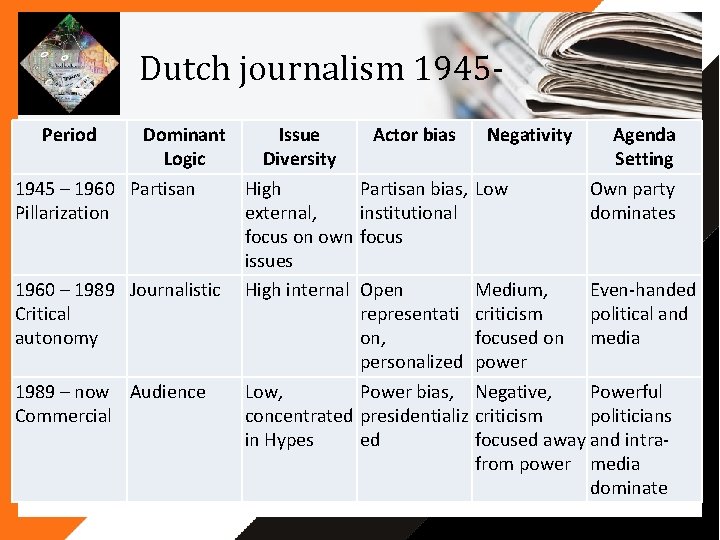
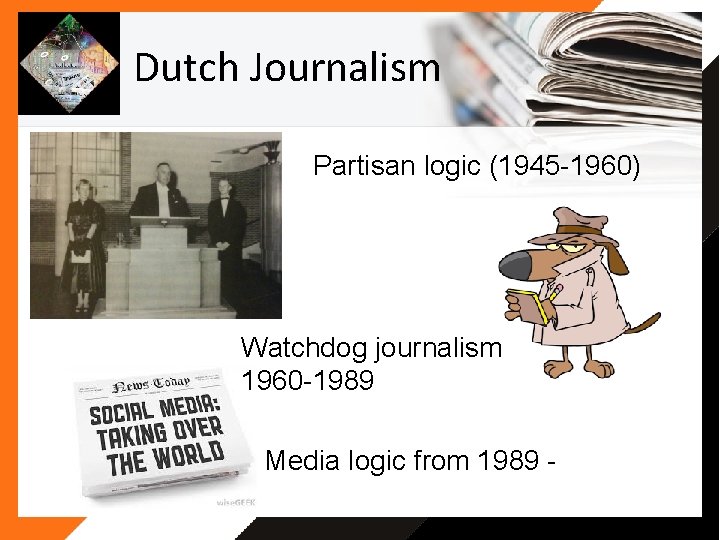
Dutch journalism 1945 Period Dominant Issue Actor bias Negativity Agenda Logic Diversity Setting 1945 – 1960 Partisan High Partisan bias, Low Own party Pillarization external, institutional dominates focus on own focus issues 1960 – 1989 Journalistic High internal Open Medium, Even-handed Critical representati criticism political and autonomy on, focused on media personalized power 1989 – now Audience Low, Power bias, Negative, Powerful Commercial concentrated presidentializ criticism politicians in Hypes ed focused away and intrafrom power media dominate
Dutch Journalism Partisan logic (1945 -1960) Watchdog journalism 1960 -1989 Media logic from 1989 -
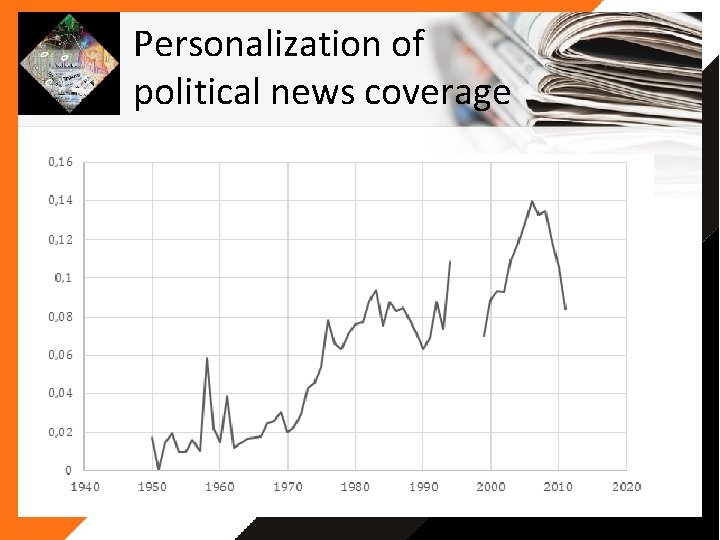
Personalization of political news coverage
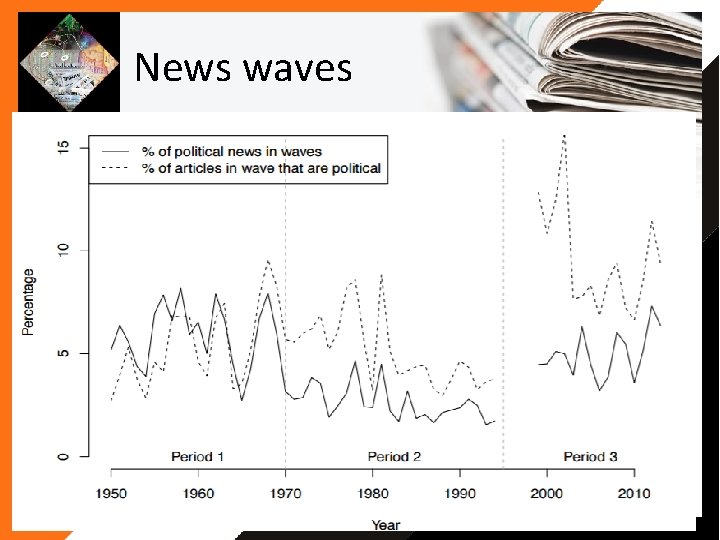
News waves
LJS Media Research nelruigrok@nieuwsmonitor. org http: //www. nieuwsmonitor. org The Netherlands' 15 minutes of (in)fame: political coverage and populism in the Dutch 2017 elections Funded by the Dutch journalism fund
Research question • What media sources are used by different groups of voters in society, what is the content of these media and what is the effect of media coverage on voters’ voting behavior and support for democratic procesesses?
Methods used • Survey in different waves – Ranging from 20. 000 respondents to 7. 000 who filled in every wave • Content analyses (Am. CAT) – Bottom-up analyses – Top-down analyses • In-depth interviews with voters of specific groups (young, angry white man)
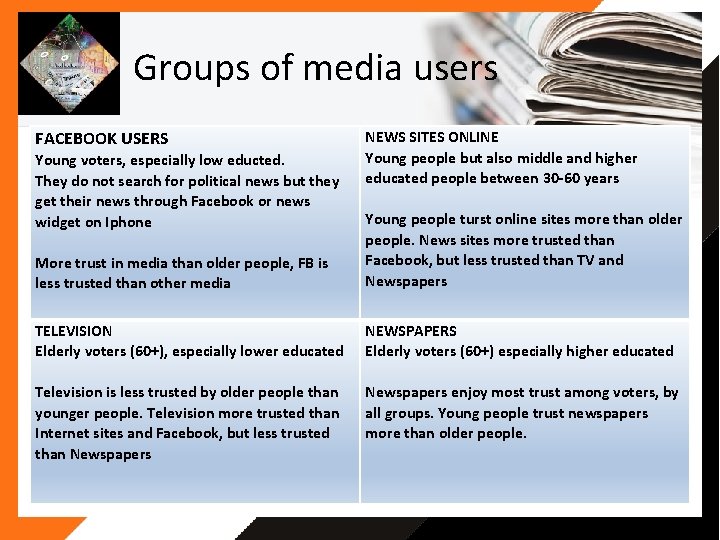
Groups of media users FACEBOOK USERS Young voters, especially low educted. They do not search for political news but they get their news through Facebook or news widget on Iphone NEWS SITES ONLINE Young people but also middle and higher educated people between 30 -60 years More trust in media than older people, FB is less trusted than other media Young people turst online sites more than older people. News sites more trusted than Facebook, but less trusted than TV and Newspapers TELEVISION Elderly voters (60+), especially lower educated NEWSPAPERS Elderly voters (60+) especially higher educated Television is less trusted by older people than younger people. Television more trusted than Internet sites and Facebook, but less trusted than Newspapers enjoy most trust among voters, by all groups. Young people trust newspapers more than older people.
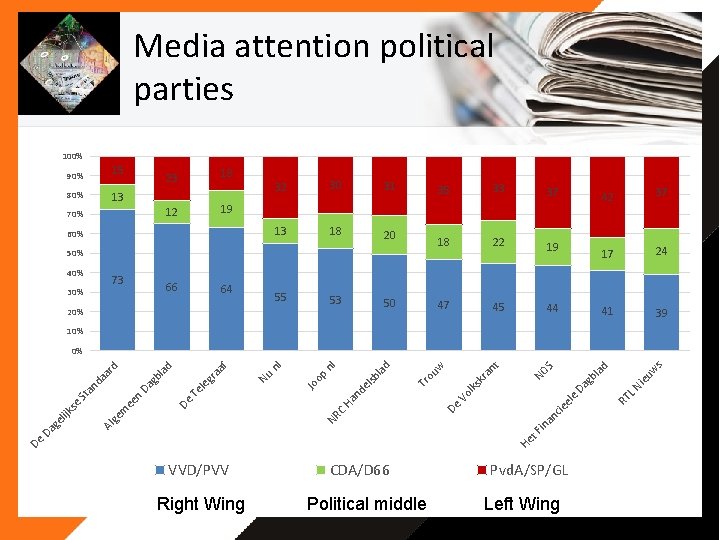
Media attention political parties 100% 90% 15 80% 13 18 23 30 31 13 18 20 60% 50% 40% 73 30% 35 33 37 18 22 19 47 45 44 19 12 70% 32 66 64 55 53 20% 50 42 37 17 24 41 39 10% t F in an He VVD/PVV Right Wing CDA/D 66 Political middle Pvd. A/SP/GL Left Wing s uw ie N RT L cie el De V e D ag bl ad NO S ol ks kr an t uw Tr o d la el sb nd NR C Ha l. n l Jo op gr le T e Nu aa f d De m ge Al De D ag el ijk se St ee n an Da da gb la ar d 0%
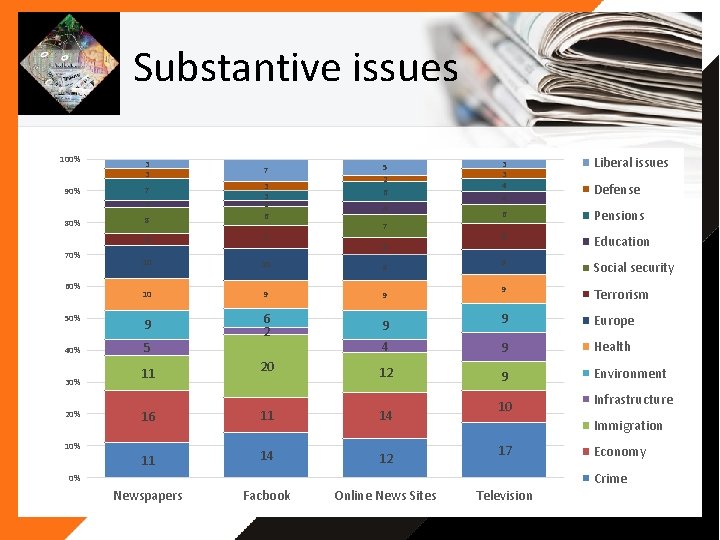
Substantive issues 100% 90% 3 3 70% 60% 50% 40% 30% 20% 5 2 6 3 3 4 4 Liberal issues 6 Pensions 8 Education 8 Social security 9 Terrorism Defense 8 3 3 2 6 4 7 10 10 8 10 9 9 9 6 2 9 9 Europe 4 9 Health 20 12 9 Environment 7 2 80% 7 5 11 4 7 5 16 11 14 12 10% 10 Immigration 17 0% Newspapers Facbook Online News Sites Infrastructure Television Economy Crime
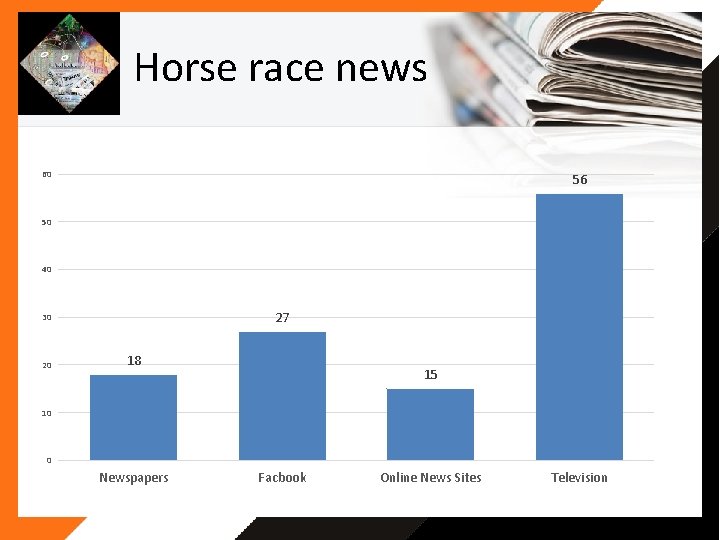
Horse race news 60 56 50 40 27 30 20 18 15 10 0 Newspapers Facbook Online News Sites Television
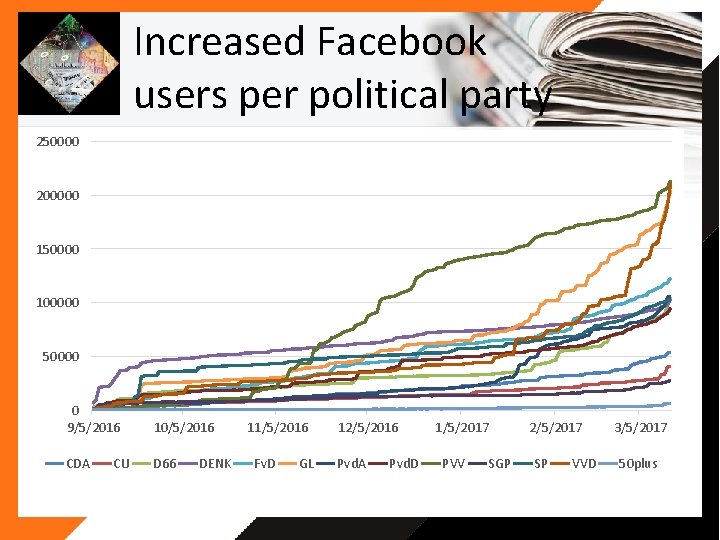
Increased Facebook users per political party 250000 200000 150000 100000 50000 0 9/5/2016 10/5/2016 CDA D 66 CU DENK 11/5/2016 Fv. D GL 12/5/2016 Pvd. A Pvd. D 1/5/2017 PVV 2/5/2017 SGP SP VVD 3/5/2017 50 plus
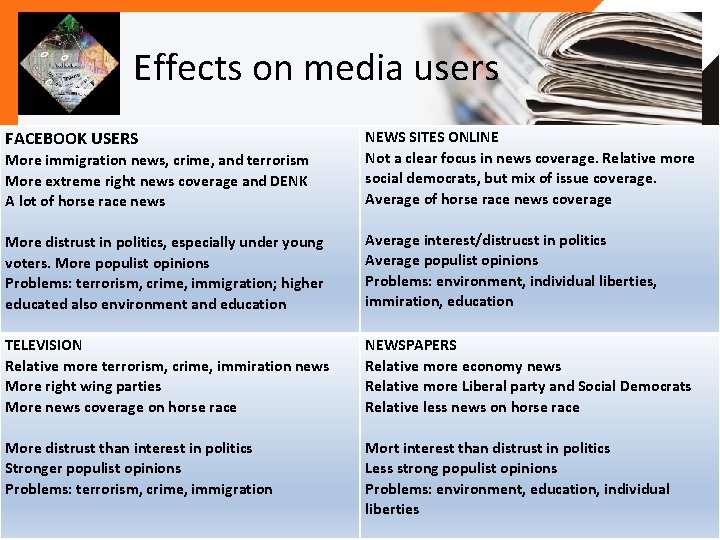
Effects on media users More immigration news, crime, and terrorism More extreme right news coverage and DENK A lot of horse race news NEWS SITES ONLINE Not a clear focus in news coverage. Relative more social democrats, but mix of issue coverage. Average of horse race news coverage More distrust in politics, especially under young voters. More populist opinions Problems: terrorism, crime, immigration; higher educated also environment and education Average interest/distrucst in politics Average populist opinions Problems: environment, individual liberties, immiration, education TELEVISION Relative more terrorism, crime, immiration news More right wing parties More news coverage on horse race NEWSPAPERS Relative more economy news Relative more Liberal party and Social Democrats Relative less news on horse race More distrust than interest in politics Stronger populist opinions Problems: terrorism, crime, immigration Mort interest than distrust in politics Less strong populist opinions Problems: environment, education, individual liberties FACEBOOK USERS
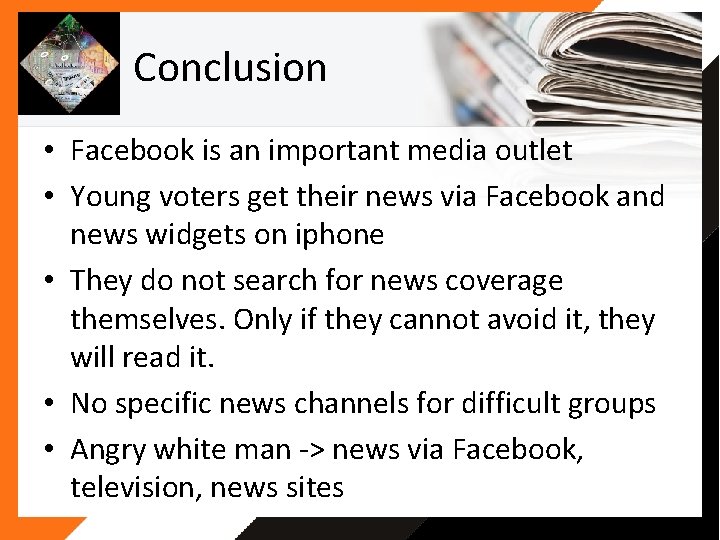
Conclusion • Facebook is an important media outlet • Young voters get their news via Facebook and news widgets on iphone • They do not search for news coverage themselves. Only if they cannot avoid it, they will read it. • No specific news channels for difficult groups • Angry white man -> news via Facebook, television, news sites
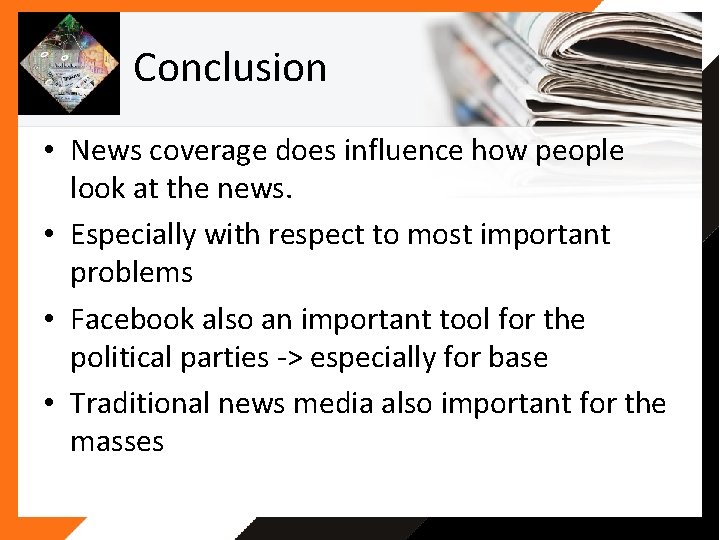
Conclusion • News coverage does influence how people look at the news. • Especially with respect to most important problems • Facebook also an important tool for the political parties -> especially for base • Traditional news media also important for the masses
BREAK! Thanks you for your attention. If you want to know more: http: //nieuwsmonitor. org nelruigrok@nieuwsmonitor. org