Mature vs Immature Reading Education 573 Spring 2012









- Slides: 47
Mature vs. Immature Reading Education 573 Spring, 2012 S. Rosenberg, Ed. D.
1. What is the “consensus” view of reading? • 2. What is the “Simple View” of Reading? • 3. How do beginners and/or struggling readers identify words? • 4. How do mature readers identify words? • 5. When and for what reason do good readers use semantic and syntactic cues?
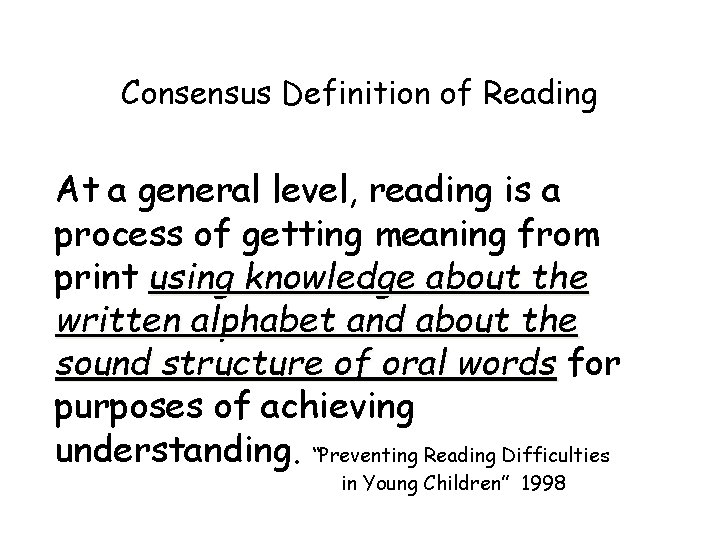
Consensus Definition of Reading At a general level, reading is a process of getting meaning from print using knowledge about the written alphabet and about the sound structure of oral words for purposes of achieving understanding. “Preventing Reading Difficulties in Young Children” 1998
Meaning and understanding Knowledge of alphabetic characters Knowledge of sounds
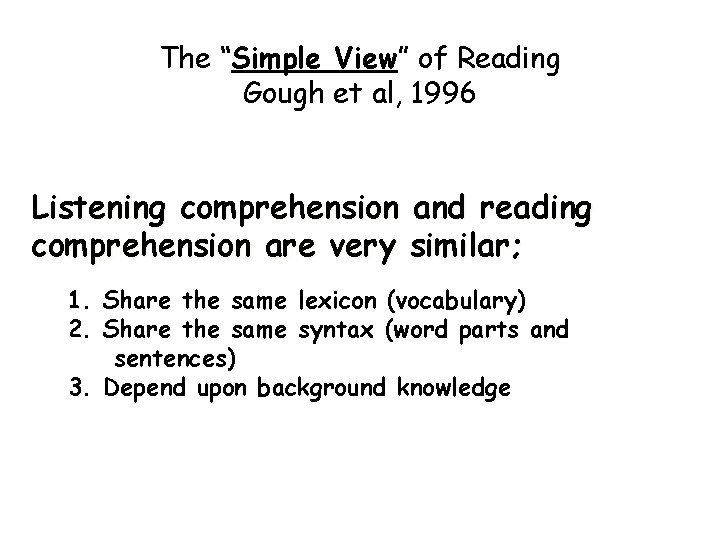
The “Simple View” of Reading Gough et al, 1996 Listening comprehension and reading comprehension are very similar; 1. Share the same lexicon (vocabulary) 2. Share the same syntax (word parts and sentences) 3. Depend upon background knowledge
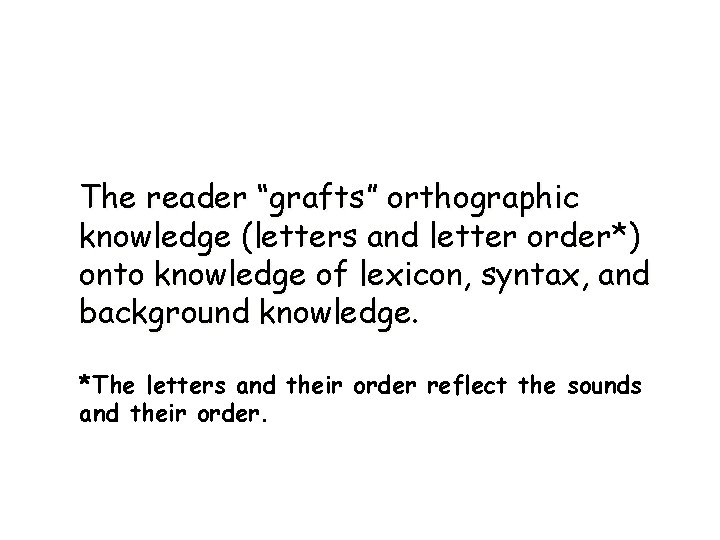
The reader “grafts” orthographic knowledge (letters and letter order*) onto knowledge of lexicon, syntax, and background knowledge. *The letters and their order reflect the sounds and their order.
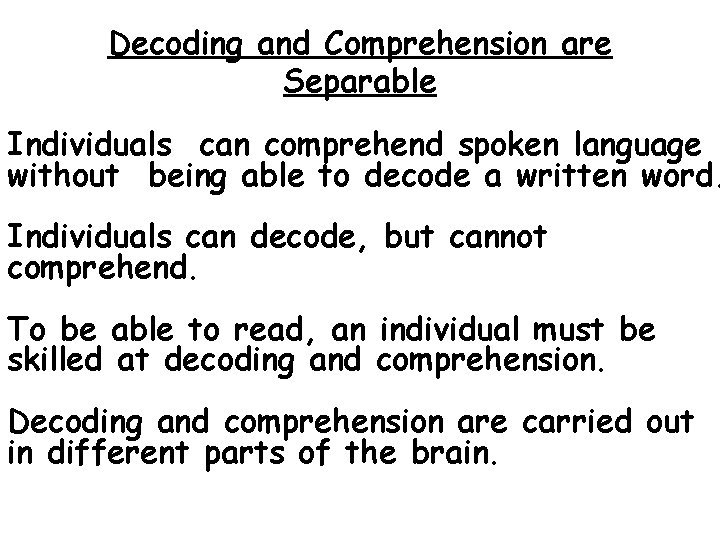
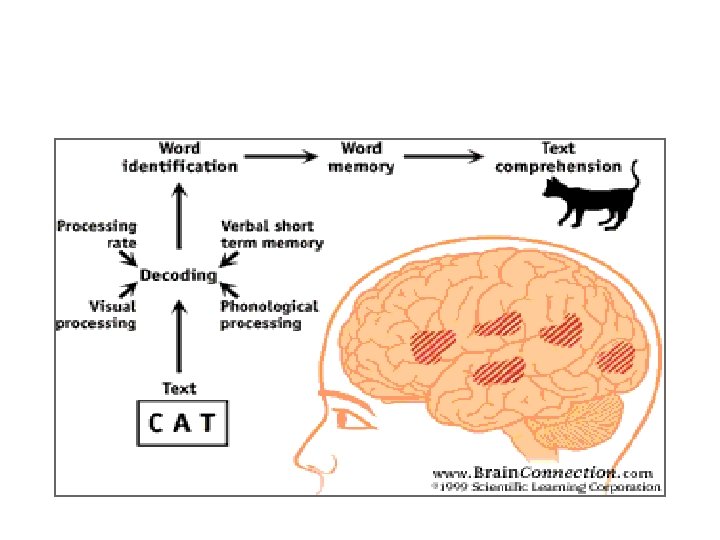
Decoding and Comprehension are Separable Individuals can comprehend spoken language without being able to decode a written word. Individuals can decode, but cannot comprehend. To be able to read, an individual must be skilled at decoding and comprehension. Decoding and comprehension are carried out in different parts of the brain.
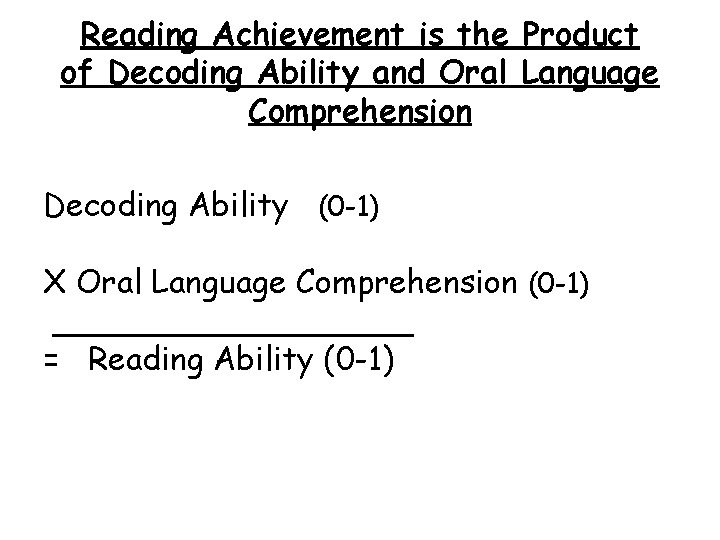
Reading Achievement is the Product of Decoding Ability and Oral Language Comprehension Decoding Ability (0 -1) X Oral Language Comprehension (0 -1) _________ = Reading Ability (0 -1)
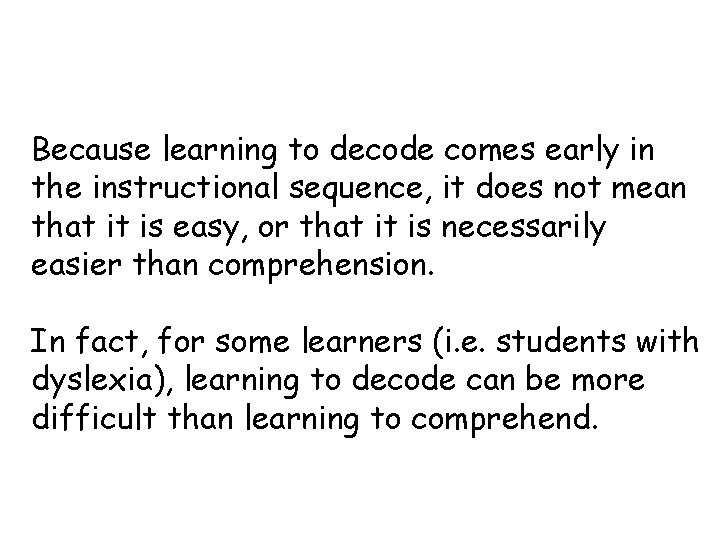
Because learning to decode comes early in the instructional sequence, it does not mean that it is easy, or that it is necessarily easier than comprehension. In fact, for some learners (i. e. students with dyslexia), learning to decode can be more difficult than learning to comprehend.
How do beginners (and struggling readers) recognize words?
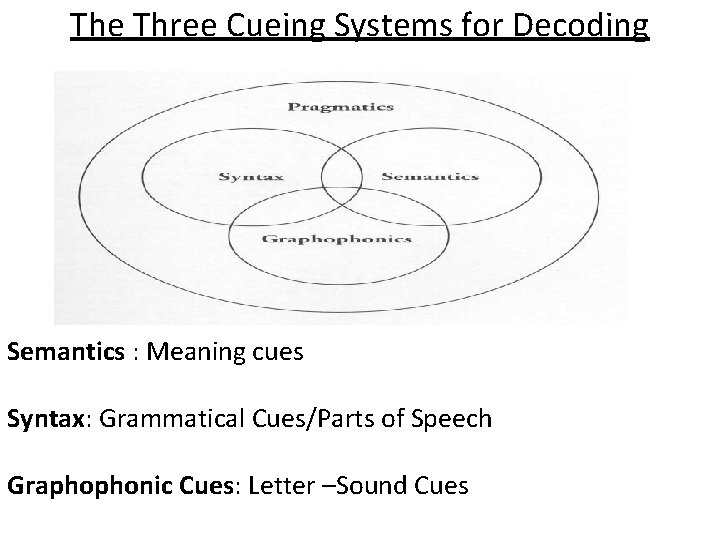
The Three Cueing Systems for Decoding Semantics : Meaning cues Syntax: Grammatical Cues/Parts of Speech Graphophonic Cues: Letter –Sound Cues
Using Visual Cues
Using Visual Cues
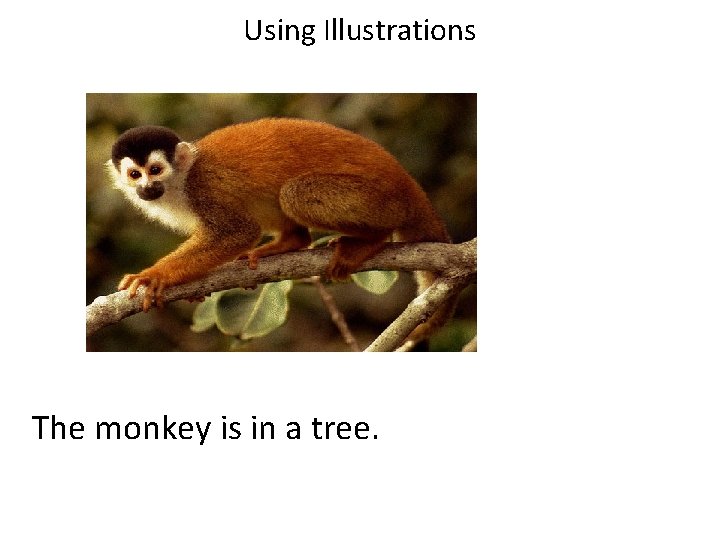
Using Illustrations The monkey is in a tree.
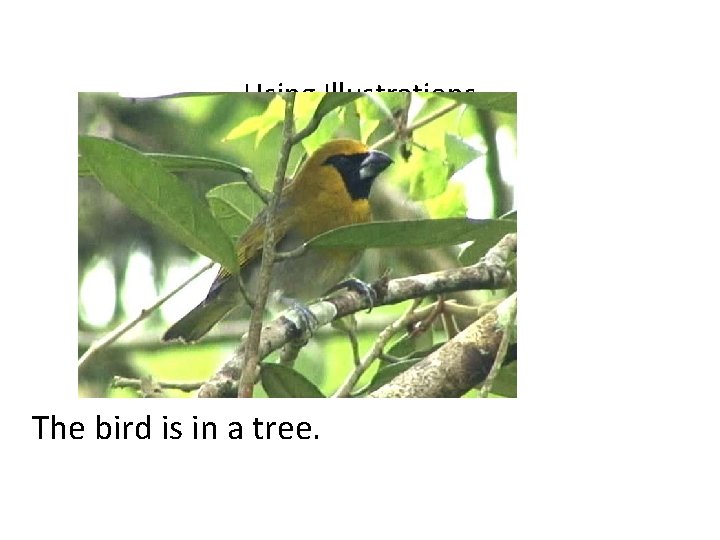
Using Illustrations The bird is in a tree.
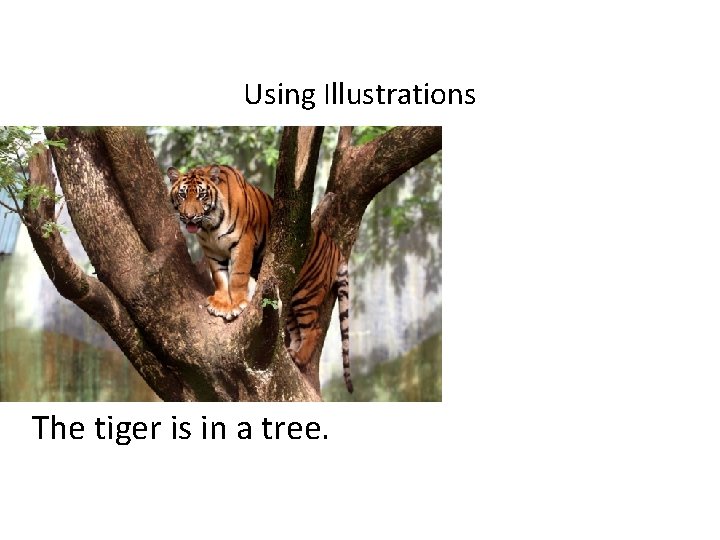
Using Illustrations The tiger is in a tree.
Using Semantic/Meaning Cues Sam ate a red “ . ” Semantics: food Using the meaning of the sentence to identify the unfamiliar word
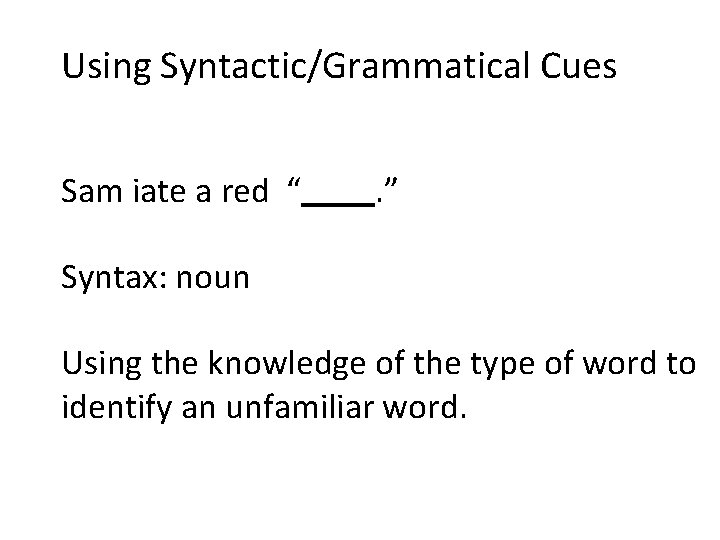
Using Syntactic/Grammatical Cues Sam iate a red “ . ” Syntax: noun Using the knowledge of the type of word to identify an unfamiliar word.
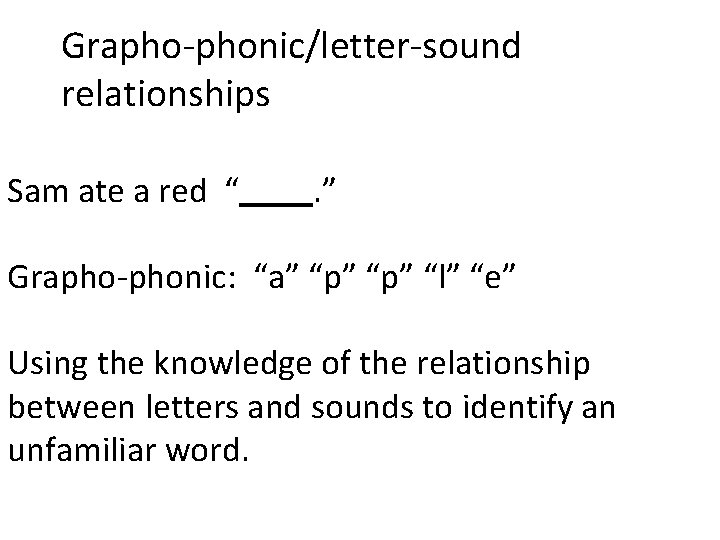
Grapho-phonic/letter-sound relationships Sam ate a red “ . ” Grapho-phonic: “a” “p” “l” “e” Using the knowledge of the relationship between letters and sounds to identify an unfamiliar word.
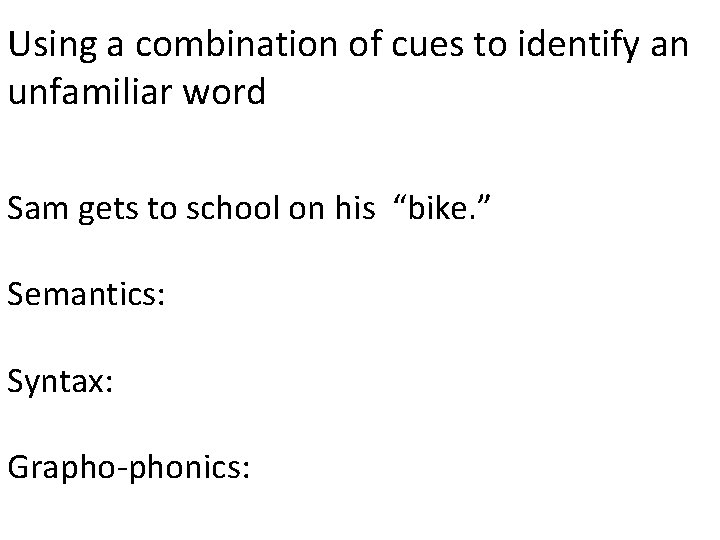
Using a combination of cues to identify an unfamiliar word Sam gets to school on his “bike. ” Semantics: Syntax: Grapho-phonics:
There is sufficient research results to support the conclusion that it is weak (and beginning) readers who rely on semantic and syntactic cues and not good readers.
How do good readers identify words?
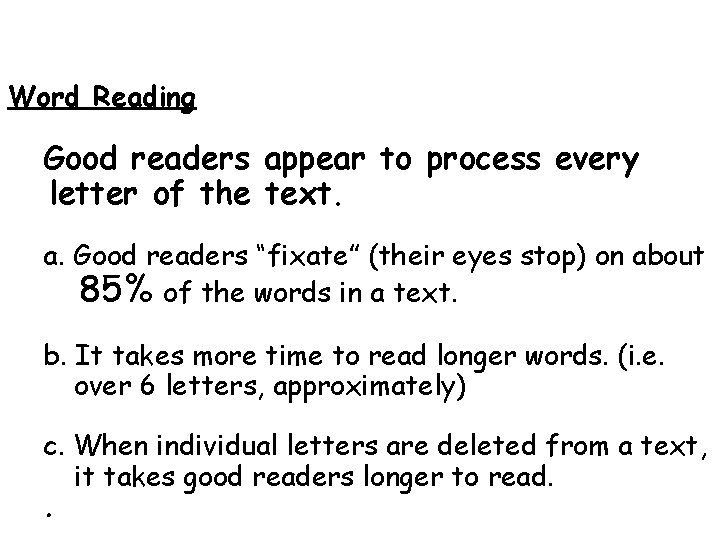
Word Reading Good readers appear to process every letter of the text. a. Good readers “fixate” (their eyes stop) on about 85% of the words in a text. b. It takes more time to read longer words. (i. e. over 6 letters, approximately) c. When individual letters are deleted from a text, it takes good readers longer to read. .
Good readers fixate/stop and focus on almost every word 25 Literacy How, Inc.
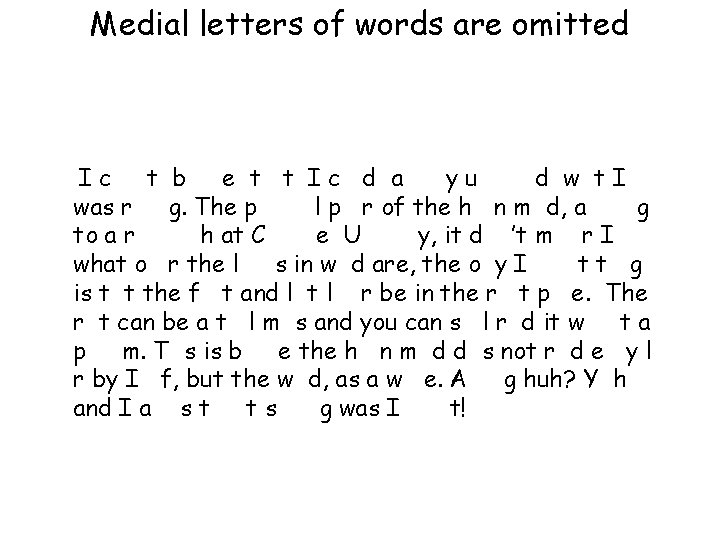
Medial letters of words are omitted Ic t b e t t Ic d a yu d w t. I was r g. The p l p r of the h n m d, a g to a r h at C e U y, it d ’t m r I what o r the l s in w d are, the o y I tt g is t t the f t and l t l r be in the r t p e. The r t can be a t l m s and you can s l r d it w t a p m. T s is b e the h n m d d s not r d e y l r by I f, but the w d, as a w e. A g huh? Y h and I a s t t s g was I t!
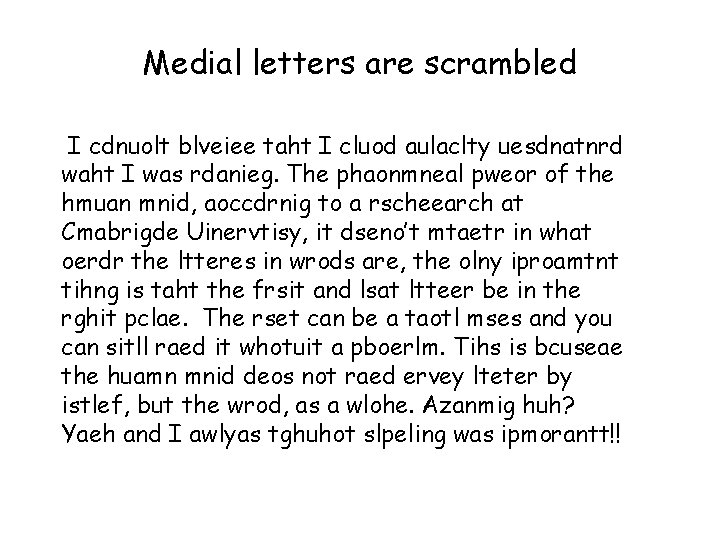
Medial letters are scrambled I cdnuolt blveiee taht I cluod aulaclty uesdnatnrd waht I was rdanieg. The phaonmneal pweor of the hmuan mnid, aoccdrnig to a rscheearch at Cmabrigde Uinervtisy, it dseno’t mtaetr in what oerdr the ltteres in wrods are, the olny iproamtnt tihng is taht the frsit and lsat ltteer be in the rghit pclae. The rset can be a taotl mses and you can sitll raed it whotuit a pboerlm. Tihs is bcuseae the huamn mnid deos not raed ervey lteter by istlef, but the wrod, as a wlohe. Azanmig huh? Yaeh and I awlyas tghuhot slpeling was ipmorantt!!
Letter level cues are the primary means good readers recognize words (and the letters represent sounds) Good readers do not guess based on the meaning of the text up to that point.
Good readers are expert decoders! Good readers are characterized by their ability to read real and non-sense words in isolation, and without any semantic cues. Good readers decode words “accurately” and “automatically; ” that is they can read words with little or no conscious effort.
scuppernogation presterpine planchetting tusiptekable torpoundative unfestability
Good readers can decode novel words accurately and automatically because they can easily associate letters with their sounds, and blend the sounds to pronounce a word; they can recognize common letter combinations automatically, and that makes word recognition for known and unknown words automatic, accurate and fast.
Research results indicated that those first graders who begin to use letter-sound cues earliest go on to be the better readers at the end of the year. The teacher must decide when and how to begin to wean beginners (and struggling readers) away from using the semantic and syntactic context cues. Show them how to build a better mouse trap!
The comprehension of a text depends on accurate and efficient word identification.
Good readers do use semantic and syntactic cues, but only after they identify the word in order to determine its meaning.
compassion reluctant charismatic
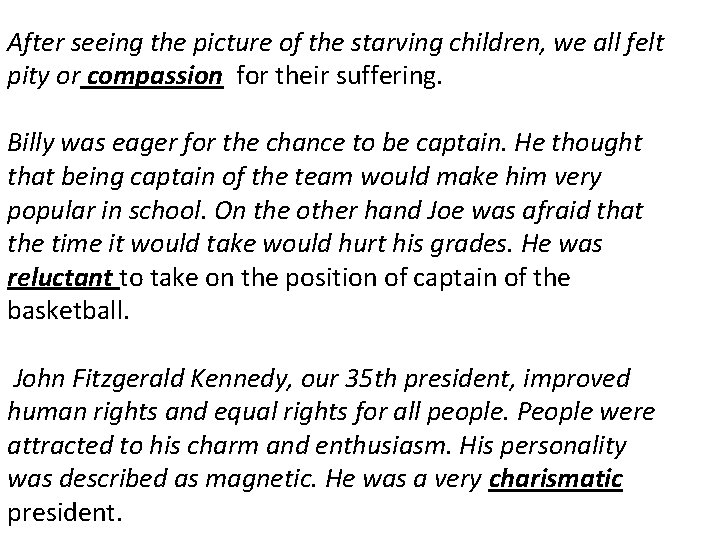
After seeing the picture of the starving children, we all felt pity or compassion for their suffering. Billy was eager for the chance to be captain. He thought that being captain of the team would make him very popular in school. On the other hand Joe was afraid that the time it would take would hurt his grades. He was reluctant to take on the position of captain of the basketball. John Fitzgerald Kennedy, our 35 th president, improved human rights and equal rights for all people. People were attracted to his charm and enthusiasm. His personality was described as magnetic. He was a very charismatic president.
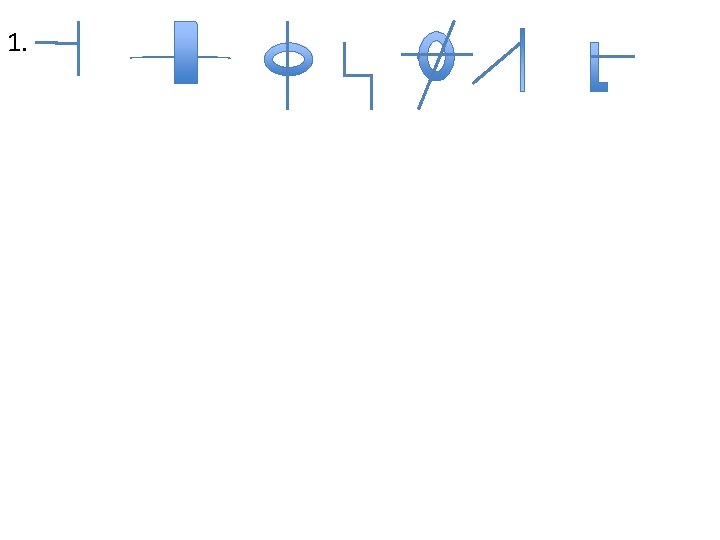
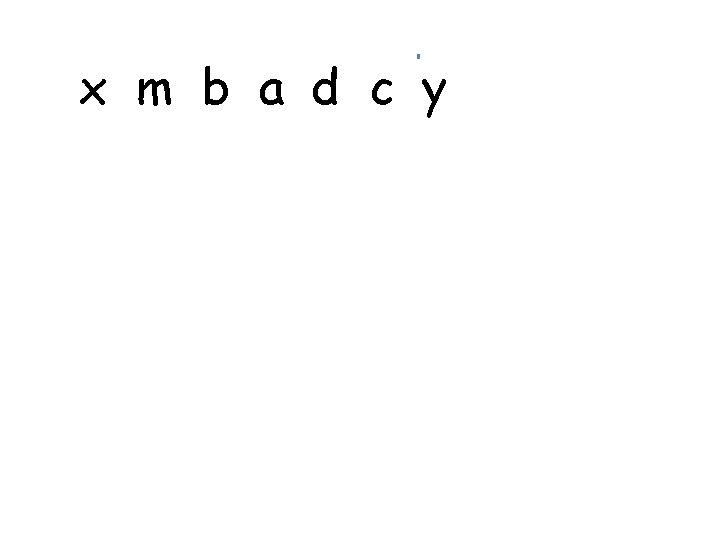
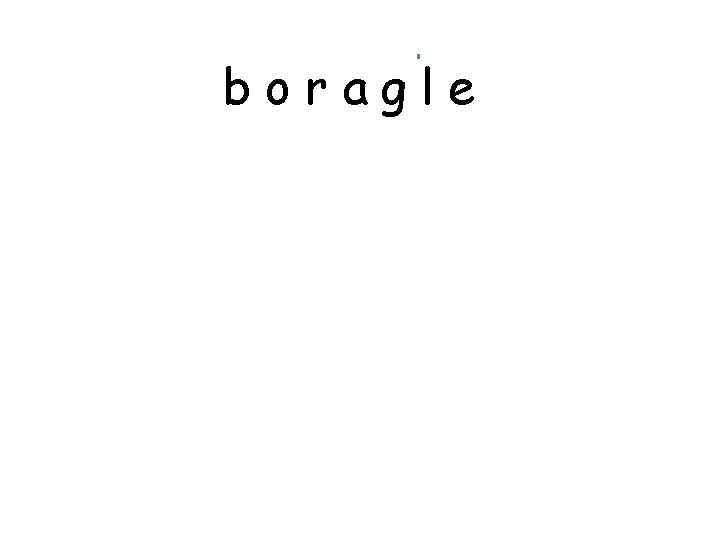
Write down what you see after one second exposure.
1.
x m b a d c y
boragle
current
What does a beginner need to know and do in order to learn how to identify words using the spelling of words/ letters in words?
• 1. Phonemic awareness- the conscious awareness that words are composed of a series of sounds/phonemes in a specific order. The ability to segment words into sounds/phonemes and synthesize sounds/phonemes into words 2. Ability to identify letters 3. Knowledge of letter-sound/phoneme relationships and sound/phoneme-letter relationships 4. Knowledge of common spelling rules and patterns/ syllable types (and syllable division rules for multi-syllable words)