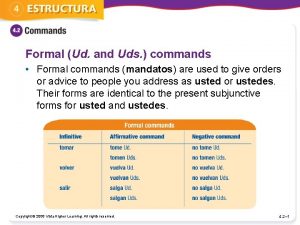
MANDATOS FORMALES FORMAL COMMANDS In Spanish there are

- Slides: 16
MANDATOS FORMALES (FORMAL COMMANDS)
In Spanish, there are special verb forms used when one gives a “command” Ex: Leave now! Do the homework! Don’t talk!
Depending on who you are speaking to, here are the command possibilities…. . “Formal” (USTED & USTEDES) “Informal” (TÚ & VOSOTROS) We are going to learn the USTED, NOSOTROS, & USTEDES now…!
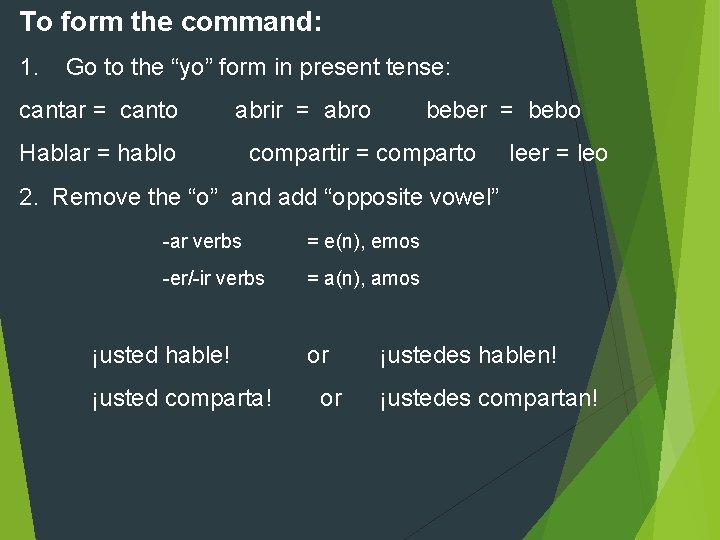
To form the command: 1. Go to the “yo” form in present tense: cantar = canto abrir = abro Hablar = hablo beber = bebo compartir = comparto leer = leo 2. Remove the “o” and add “opposite vowel” -ar verbs = e(n), emos -er/-ir verbs = a(n), amos ¡usted hable! ¡usted comparta! or or ¡ustedes hablen! ¡ustedes compartan!
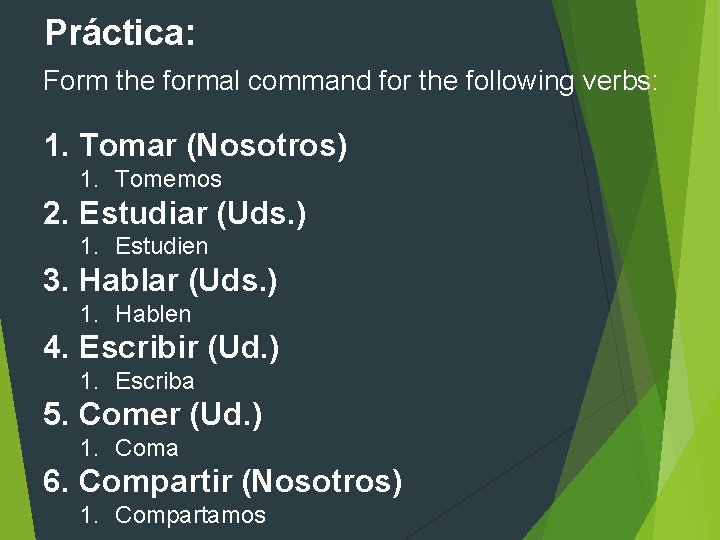
Práctica: Form the formal command for the following verbs: 1. Tomar (Nosotros) 1. Tomemos 2. Estudiar (Uds. ) 1. Estudien 3. Hablar (Uds. ) 1. Hablen 4. Escribir (Ud. ) 1. Escriba 5. Comer (Ud. ) 1. Coma 6. Compartir (Nosotros) 1. Compartamos
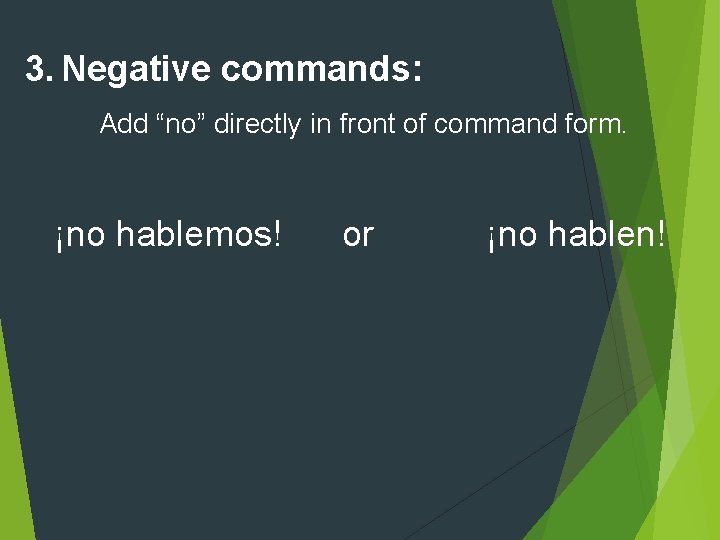
3. Negative commands: Add “no” directly in front of command form. ¡no hablemos! or ¡no hablen!
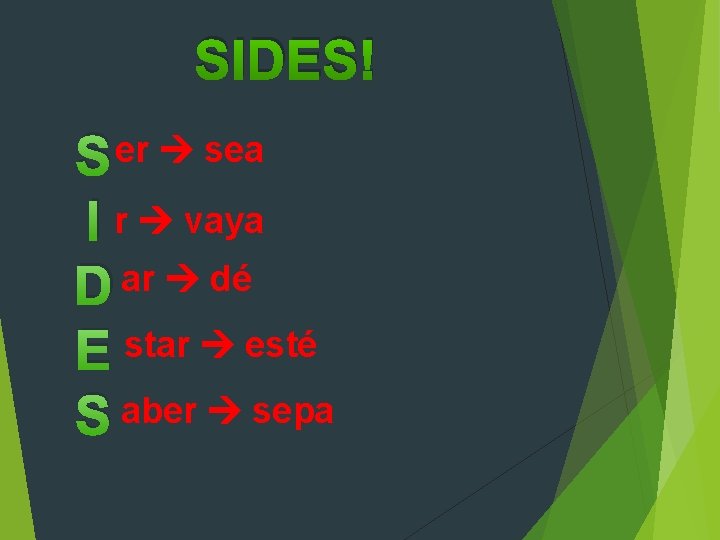
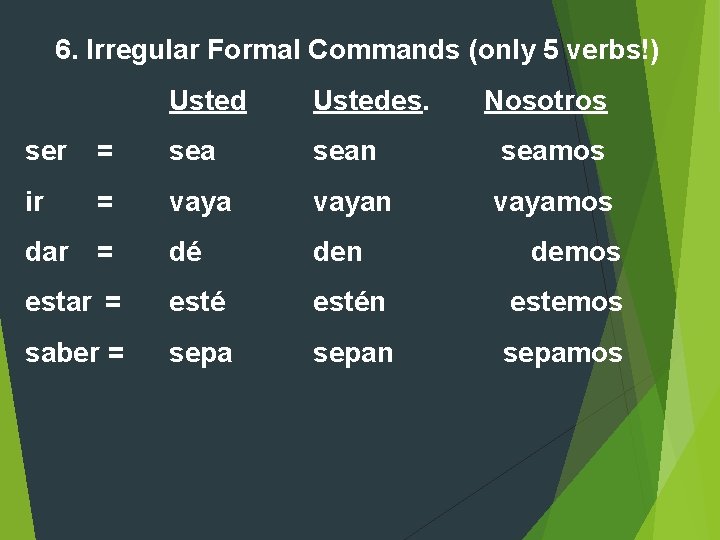
SIDES! S er sea I r vaya D ar dé E star esté S aber sepa
6. Irregular Formal Commands (only 5 verbs!) Ustedes. Nosotros ser = sean seamos ir = vayan vayamos dar = dé den estar = estén estemos saber = sepan sepamos demos
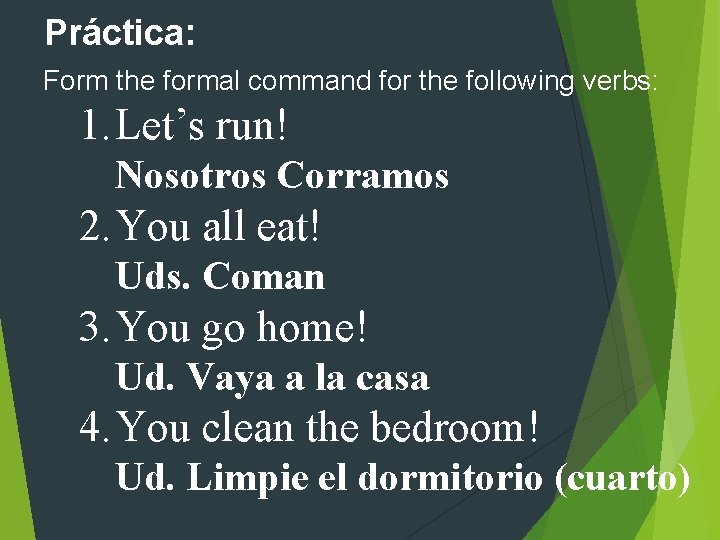
Práctica: Form the formal command for the following verbs: 1. Let’s run! Nosotros Corramos 2. You all eat! Uds. Coman 3. You go home! Ud. Vaya a la casa 4. You clean the bedroom! Ud. Limpie el dormitorio (cuarto)
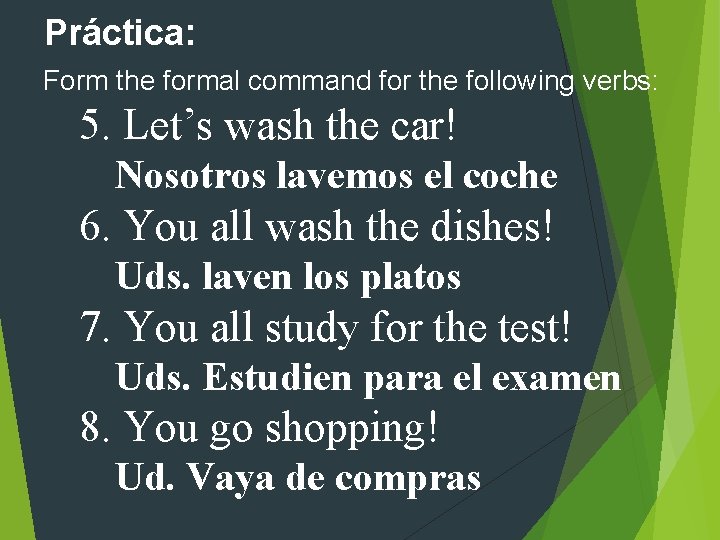
Práctica: Form the formal command for the following verbs: 5. Let’s wash the car! Nosotros lavemos el coche 6. You all wash the dishes! Uds. laven los platos 7. You all study for the test! Uds. Estudien para el examen 8. You go shopping! Ud. Vaya de compras
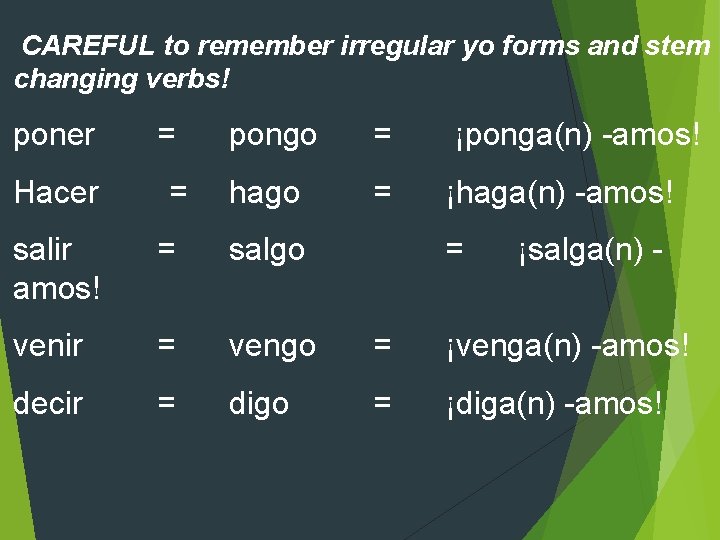
CAREFUL to remember irregular yo forms and stem changing verbs! poner Hacer = = pongo = ¡ponga(n) -amos! hago = ¡haga(n) -amos! salir amos! = salgo = ¡salga(n) - venir = vengo = ¡venga(n) -amos! decir = digo = ¡diga(n) -amos!
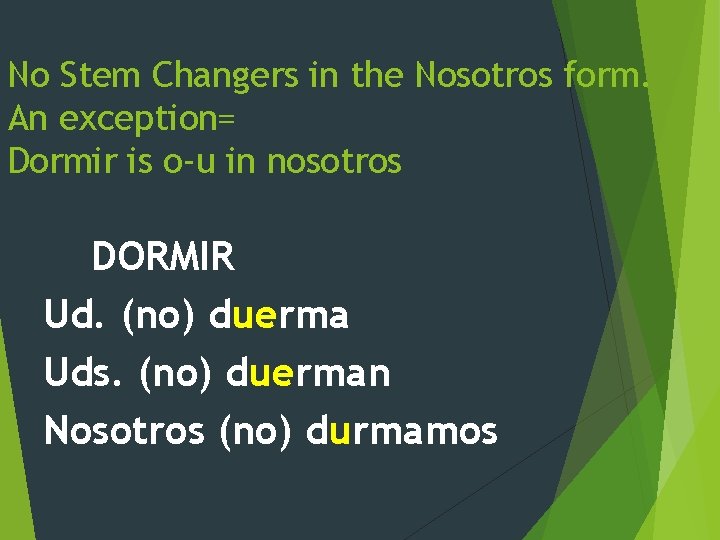
No Stem Changers in the Nosotros form. An exception= Dormir is o-u in nosotros DORMIR Ud. (no) duerma Uds. (no) duerman Nosotros (no) durmamos
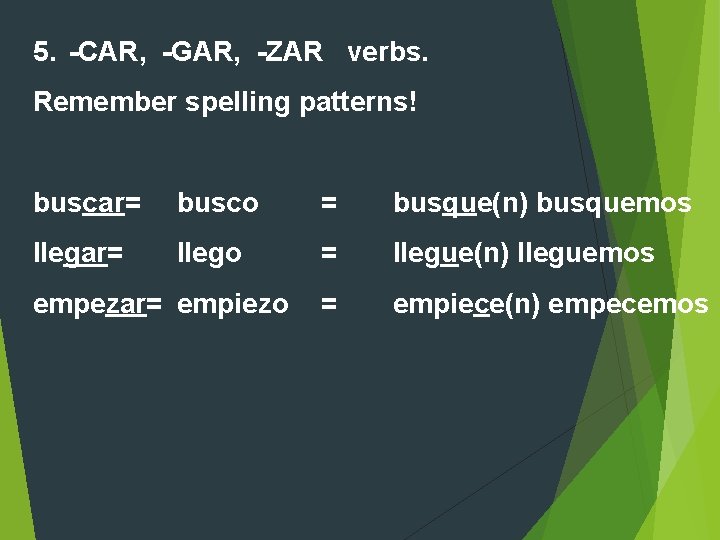
5. -CAR, -GAR, -ZAR verbs. Remember spelling patterns! buscar= busco = busque(n) busquemos llegar= llego = llegue(n) lleguemos = empiece(n) empecemos empezar= empiezo
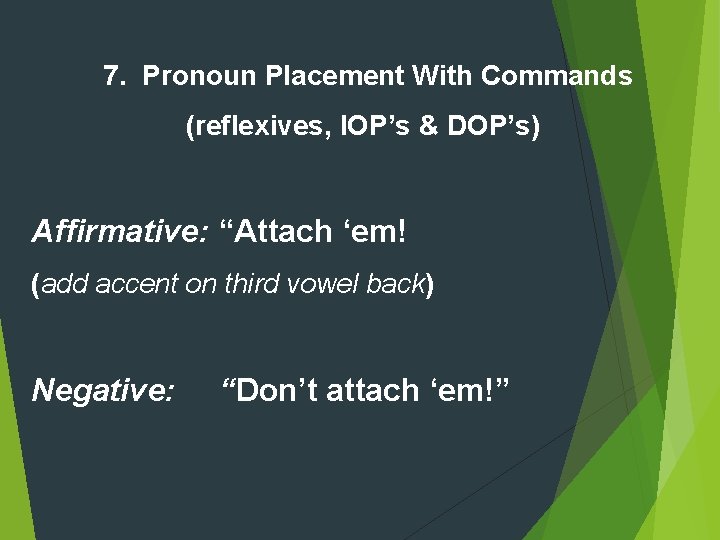
7. Pronoun Placement With Commands (reflexives, IOP’s & DOP’s) Affirmative: “Attach ‘em! (add accent on third vowel back) Negative: “Don’t attach ‘em!”
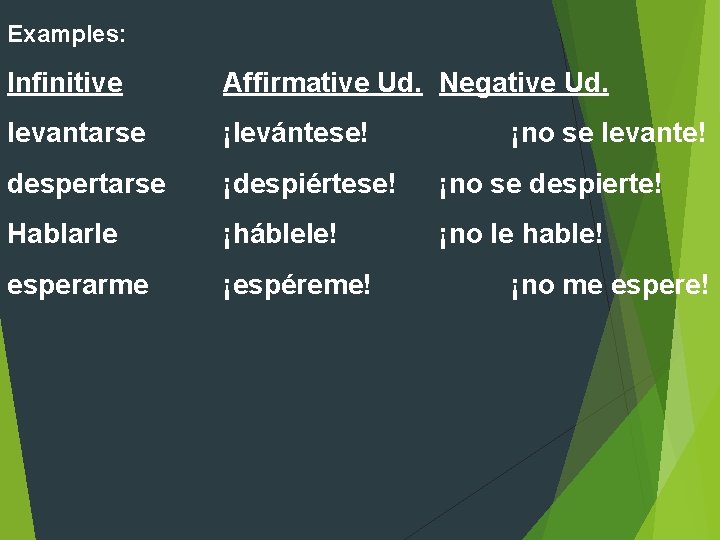
Examples: Infinitive Affirmative Ud. Negative Ud. levantarse ¡levántese! despertarse ¡despiértese! ¡no se despierte! Hablarle ¡háblele! ¡no le hable! esperarme ¡espéreme! ¡no se levante! ¡no me espere!
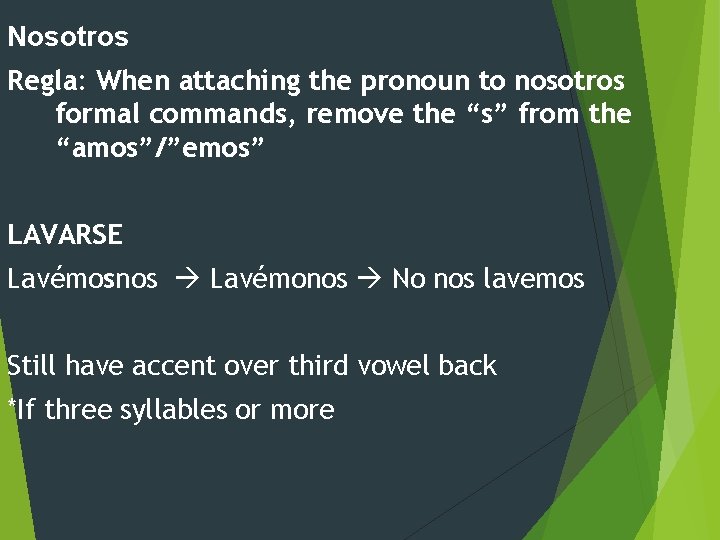
Nosotros Regla: When attaching the pronoun to nosotros formal commands, remove the “s” from the “amos”/”emos” LAVARSE Lavémosnos Lavémonos No nos lavemos Still have accent over third vowel back *If three syllables or more