Liver anatomy functions Pavle Pei Tukuljac Mentor A

- Slides: 14
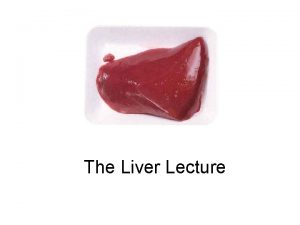
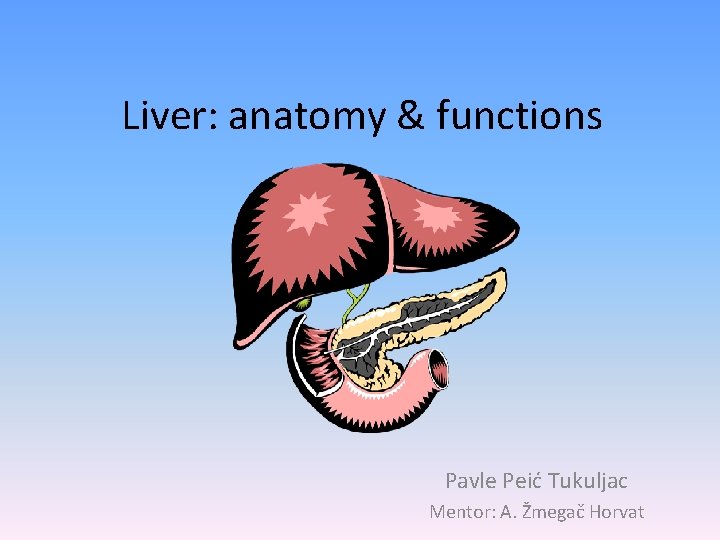
Liver: anatomy & functions Pavle Peić Tukuljac Mentor: A. Žmegač Horvat
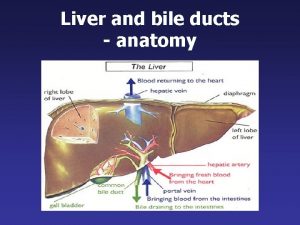
Anatomy • Largest gland in the body (1. 5 Kg) • Under the diaphragm, within the rib cage in the upper right quadrant of the abdomen
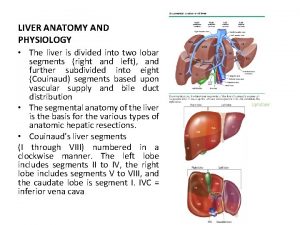
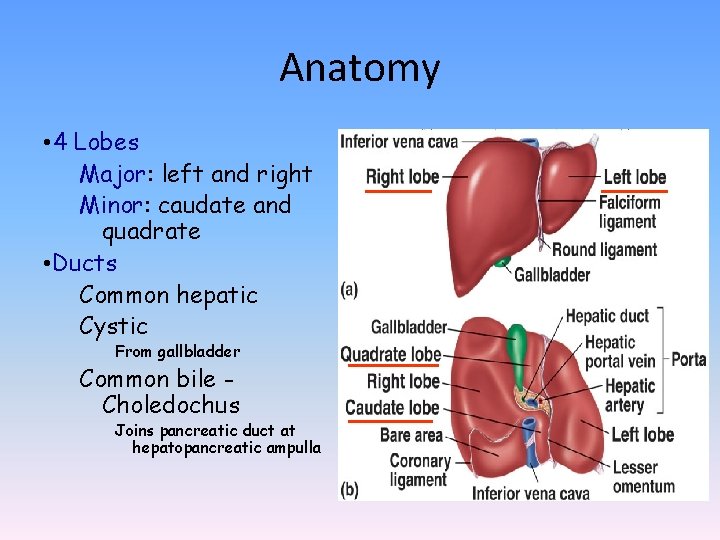
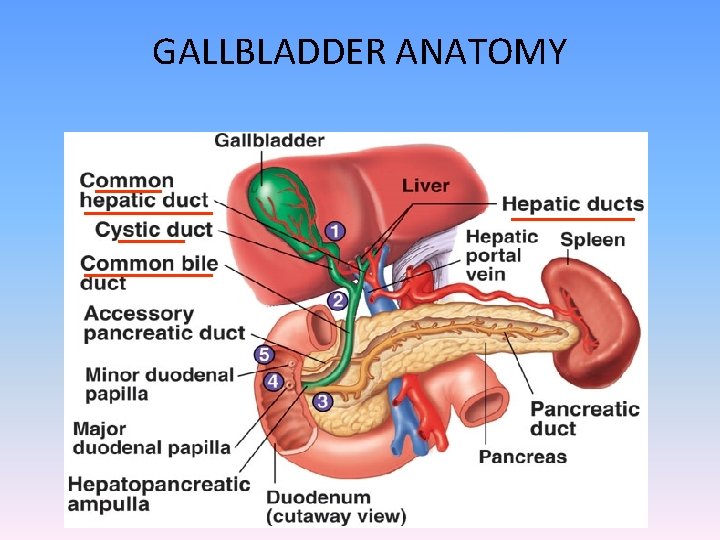
Anatomy • 4 Lobes Major: left and right Minor: caudate and quadrate • Ducts Common hepatic Cystic From gallbladder Common bile Choledochus Joins pancreatic duct at hepatopancreatic ampulla
GALLBLADDER ANATOMY
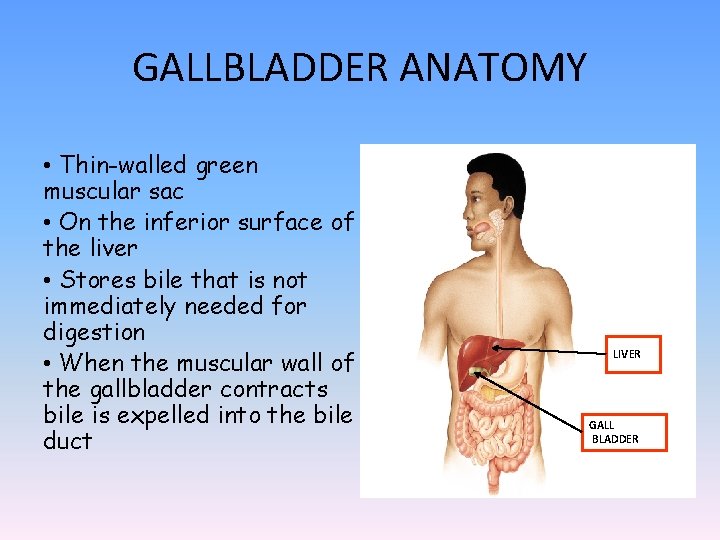
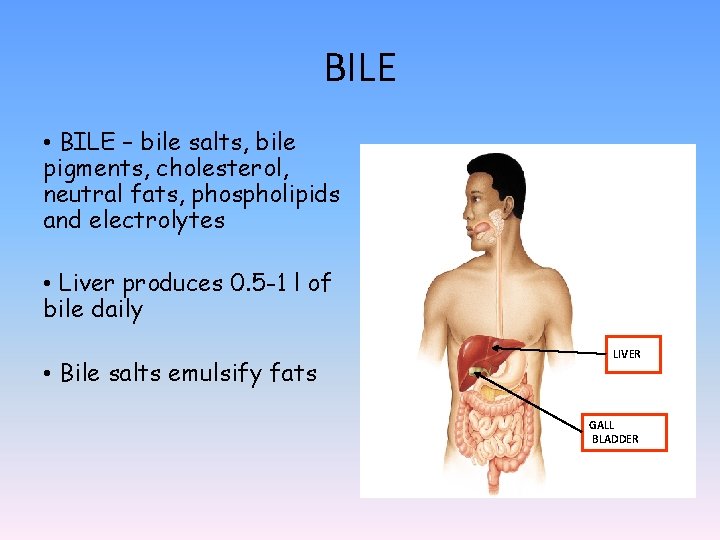
GALLBLADDER ANATOMY • Thin-walled green muscular sac • On the inferior surface of the liver • Stores bile that is not immediately needed for digestion • When the muscular wall of the gallbladder contracts bile is expelled into the bile duct LIVER GALL BLADDER
BILE • BILE – bile salts, bile pigments, cholesterol, neutral fats, phospholipids and electrolytes • Liver produces 0. 5 -1 l of bile daily • Bile salts emulsify fats LIVER GALL BLADDER
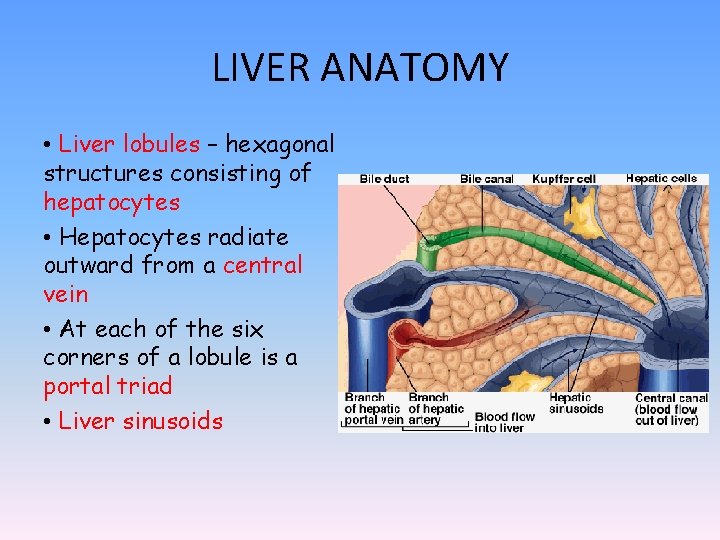
LIVER ANATOMY • Liver lobules – hexagonal structures consisting of hepatocytes • Hepatocytes radiate outward from a central vein • At each of the six corners of a lobule is a portal triad • Liver sinusoids
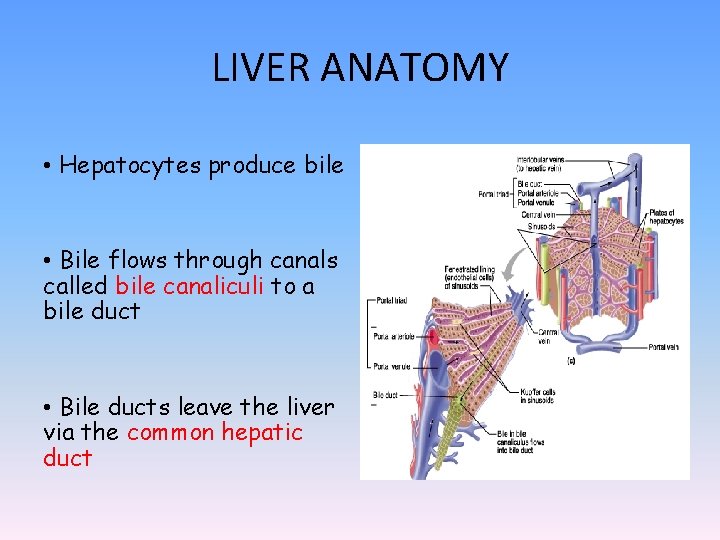
LIVER ANATOMY • Hepatocytes produce bile • Bile flows through canals called bile canaliculi to a bile duct • Bile ducts leave the liver via the common hepatic duct
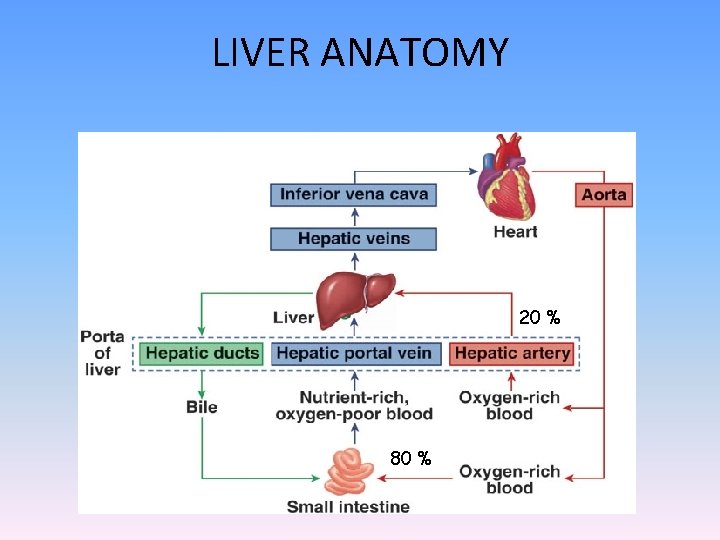
LIVER ANATOMY 20 % 80 %
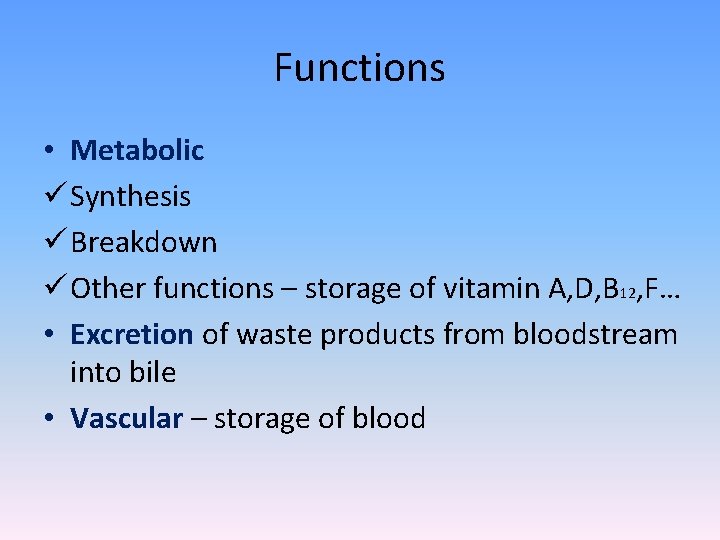
Functions • Metabolic ü Synthesis ü Breakdown ü Other functions – storage of vitamin A, D, B 12, F… • Excretion of waste products from bloodstream into bile • Vascular – storage of blood
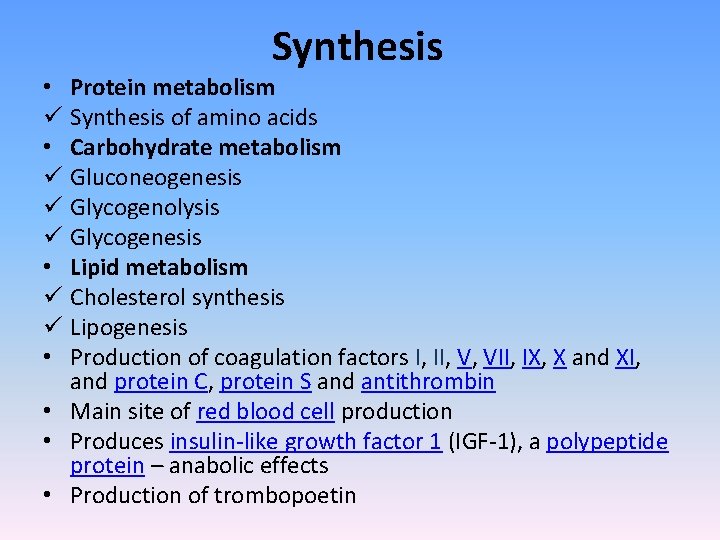
Synthesis • Protein metabolism ü Synthesis of amino acids • Carbohydrate metabolism ü Gluconeogenesis ü Glycogenolysis ü Glycogenesis • Lipid metabolism ü Cholesterol synthesis ü Lipogenesis • Production of coagulation factors I, II, V, VII, IX, X and XI, and protein C, protein S and antithrombin • Main site of red blood cell production • Produces insulin-like growth factor 1 (IGF-1), a polypeptide protein – anabolic effects • Production of trombopoetin
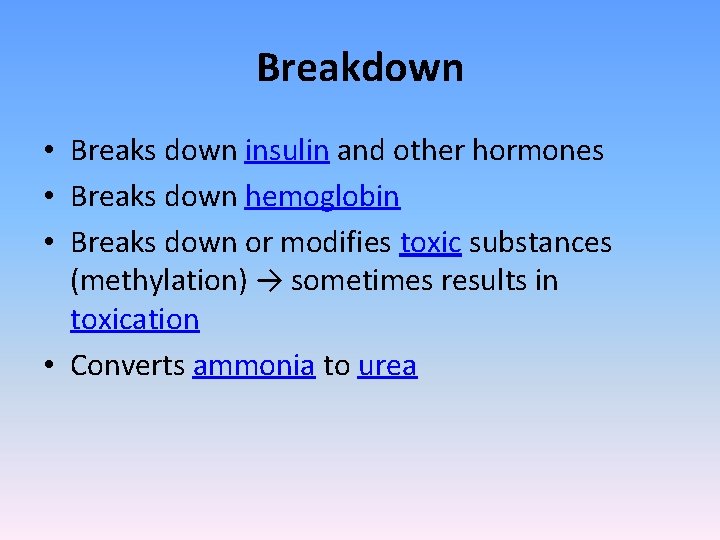
Breakdown • Breaks down insulin and other hormones • Breaks down hemoglobin • Breaks down or modifies toxic substances (methylation) → sometimes results in toxication • Converts ammonia to urea
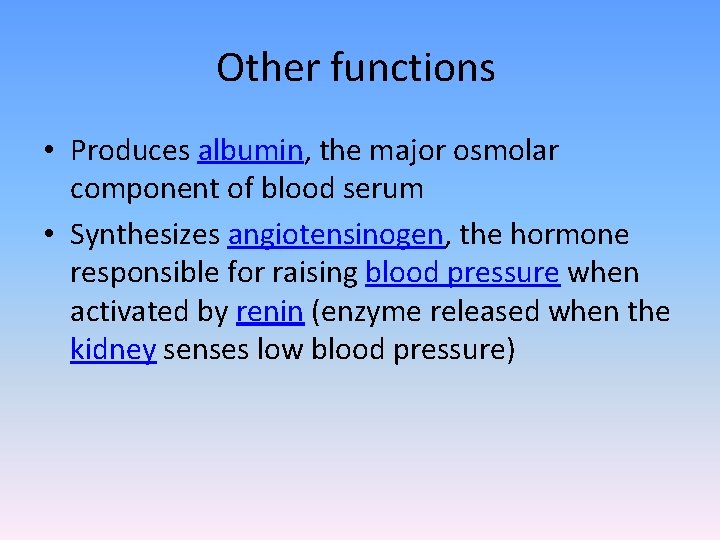
Other functions • Produces albumin, the major osmolar component of blood serum • Synthesizes angiotensinogen, the hormone responsible for raising blood pressure when activated by renin (enzyme released when the kidney senses low blood pressure)
References • http: //en. wikipedia. org/wiki/Liver • http: //www. youtube. com/watch? v=J 0 Ajk. KRxb WM&feature=related • http: //www. mamashealth. com/organs/liver. a sp • www. medterms. com • http: //www. youtube. com/watch? v=bx 6 kj 6 x. LC Zw