Listening 7 DISCUSSION QUESTION 2 HOW COMMUNICATION SHOULD
- Slides: 23
Listening 7
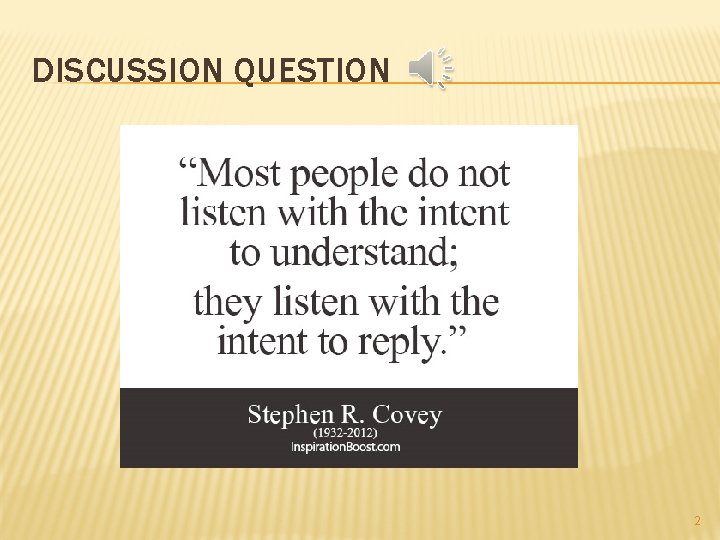
DISCUSSION QUESTION 2
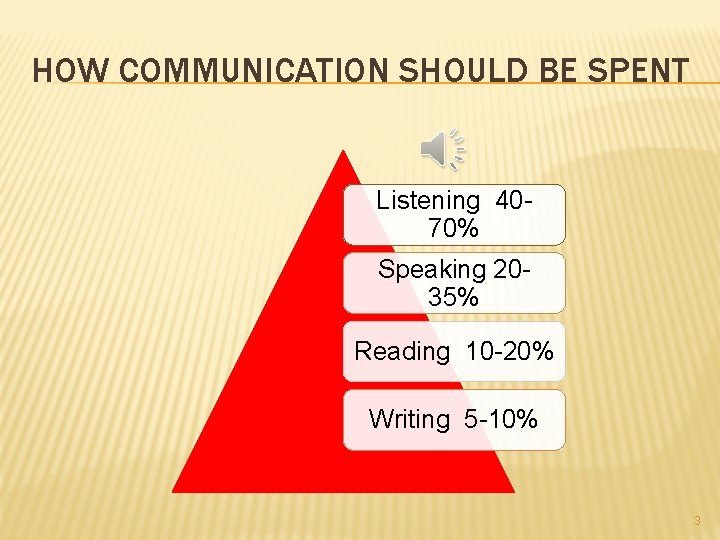
HOW COMMUNICATION SHOULD BE SPENT Listening 4070% Speaking 2035% Reading 10 -20% Writing 5 -10% 3
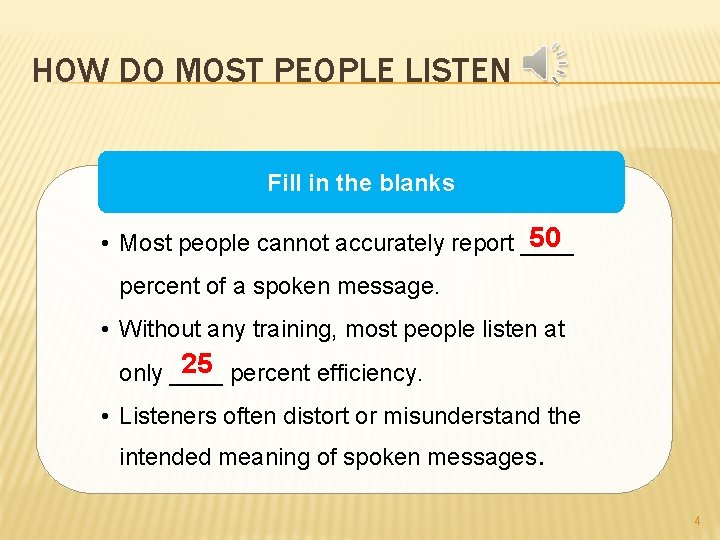
HOW DO MOST PEOPLE LISTEN Fill in the blanks 50 • Most people cannot accurately report ____ percent of a spoken message. • Without any training, most people listen at 25 percent efficiency. only ____ • Listeners often distort or misunderstand the intended meaning of spoken messages. 4
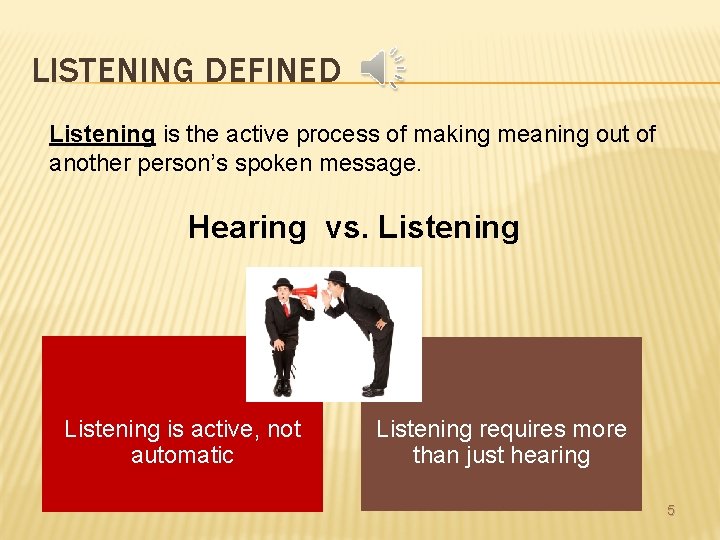
LISTENING DEFINED Listening is the active process of making meaning out of another person’s spoken message. Hearing vs. Listening is active, not automatic Listening requires more than just hearing 5
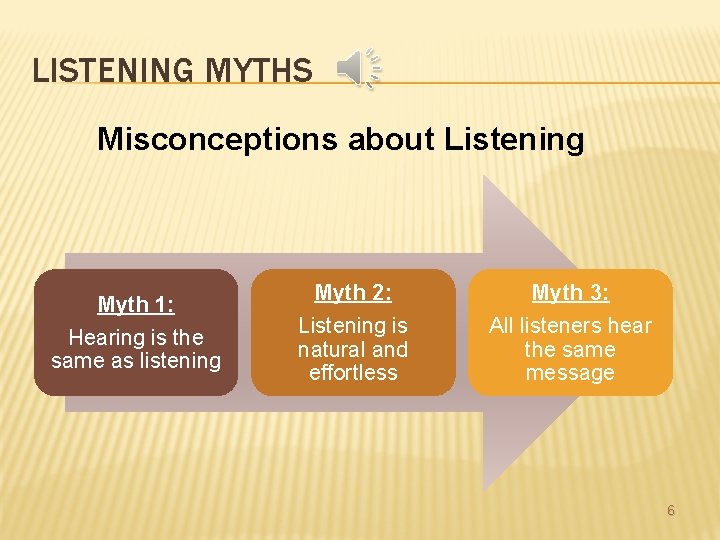
LISTENING MYTHS Misconceptions about Listening Myth 1: Hearing is the same as listening Myth 2: Listening is natural and effortless Myth 3: All listeners hear the same message 6
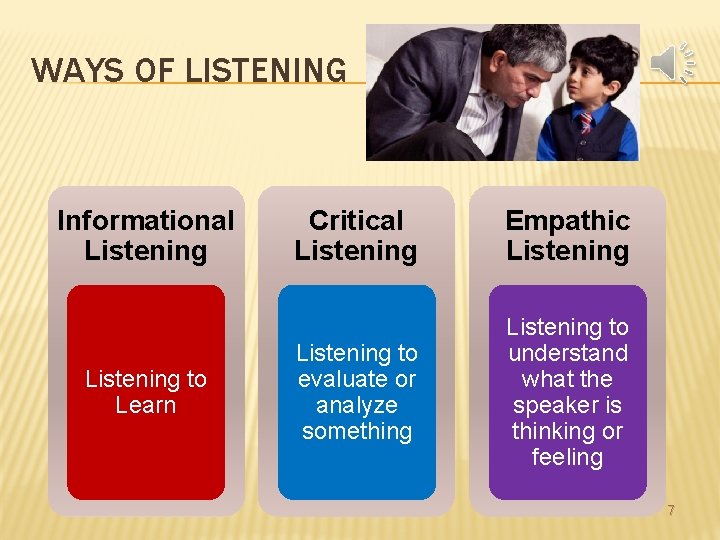
WAYS OF LISTENING Informational Listening to Learn Critical Listening Empathic Listening to evaluate or analyze something Listening to understand what the speaker is thinking or feeling 7
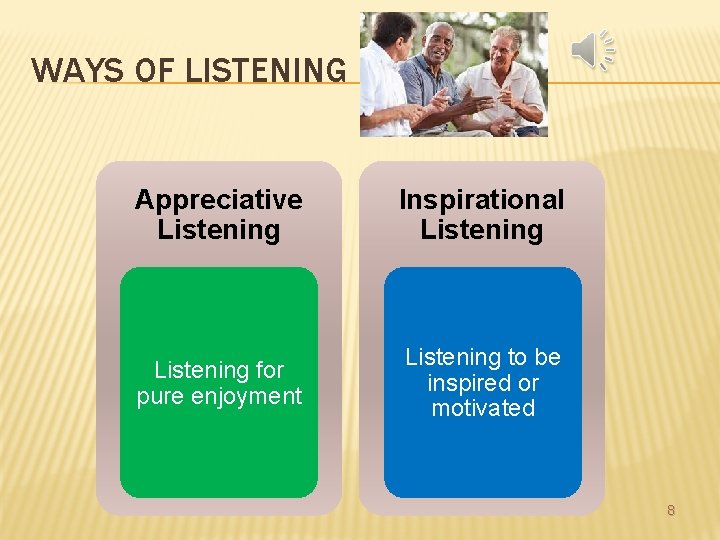
WAYS OF LISTENING Appreciative Listening Inspirational Listening for pure enjoyment Listening to be inspired or motivated 8
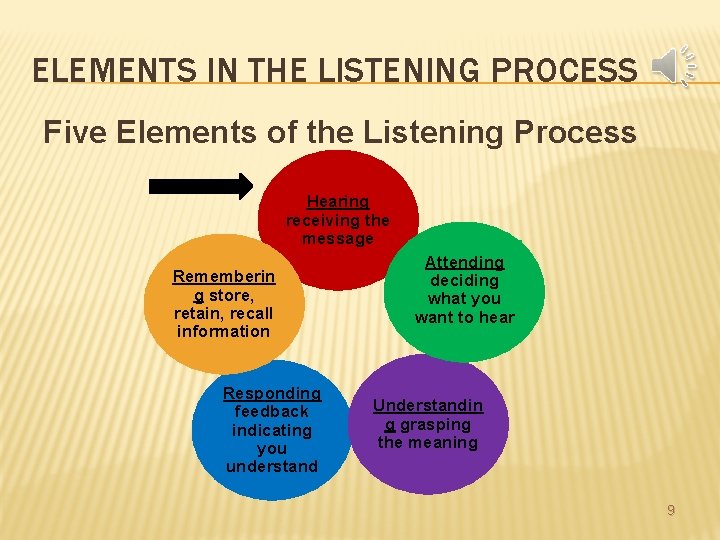
ELEMENTS IN THE LISTENING PROCESS Five Elements of the Listening Process Hearing receiving the message Rememberin g store, retain, recall information Responding feedback indicating you understand Attending deciding what you want to hear Understandin g grasping the meaning 9
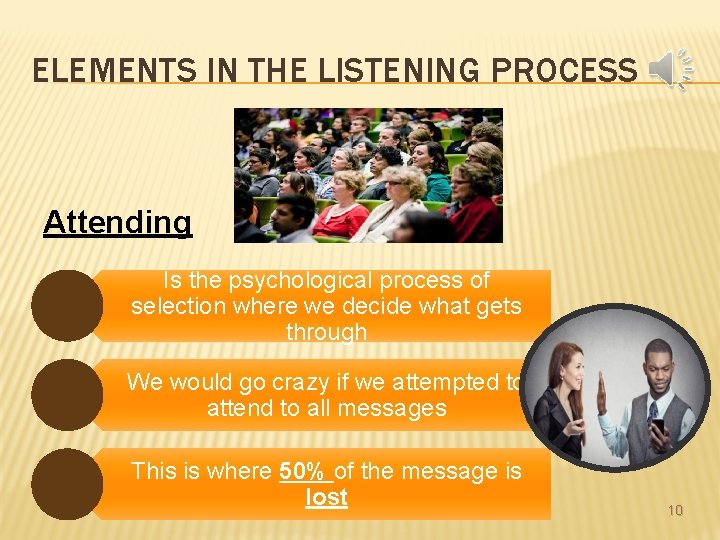
ELEMENTS IN THE LISTENING PROCESS Attending Is the psychological process of selection where we decide what gets through We would go crazy if we attempted to attend to all messages This is where 50% of the message is lost 10
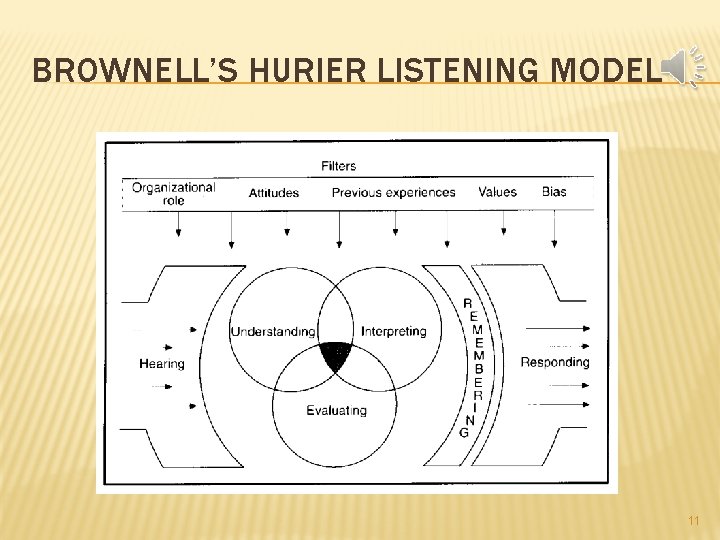
BROWNELL’S HURIER LISTENING MODEL 11
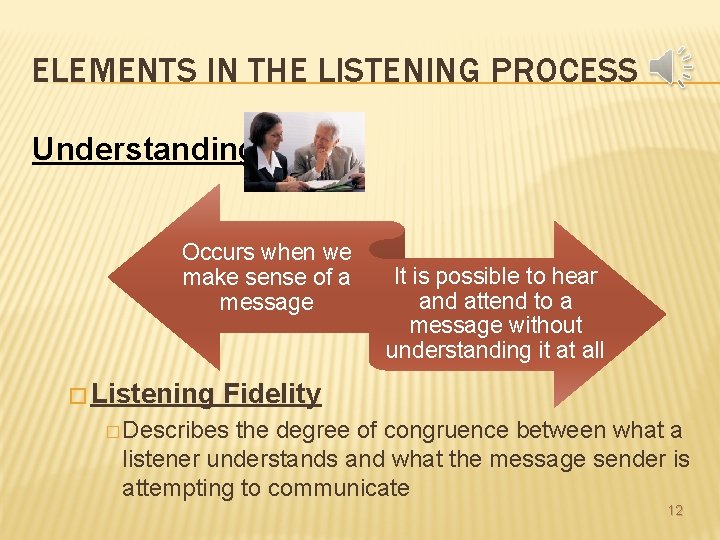
ELEMENTS IN THE LISTENING PROCESS Understanding Occurs when we make sense of a message � Listening It is possible to hear and attend to a message without understanding it at all Fidelity � Describes the degree of congruence between what a listener understands and what the message sender is attempting to communicate 12
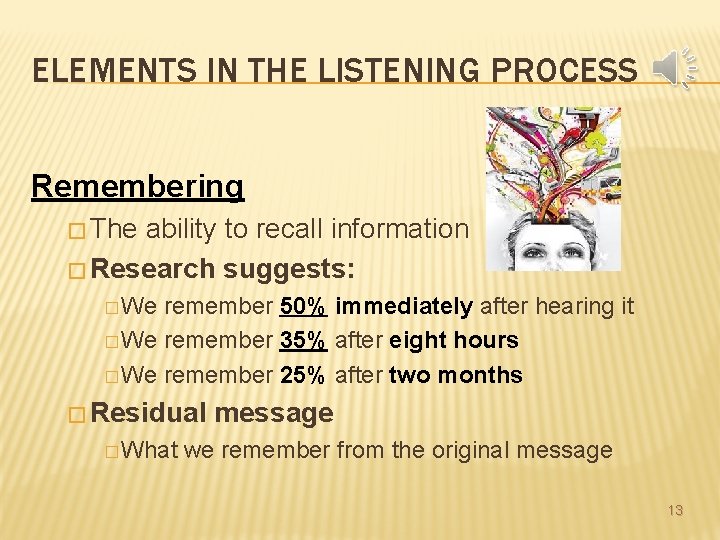
ELEMENTS IN THE LISTENING PROCESS Remembering � The ability to recall information � Research suggests: � We remember 50% immediately after hearing it � We remember 35% after eight hours � We remember 25% after two months � Residual � What message we remember from the original message 13
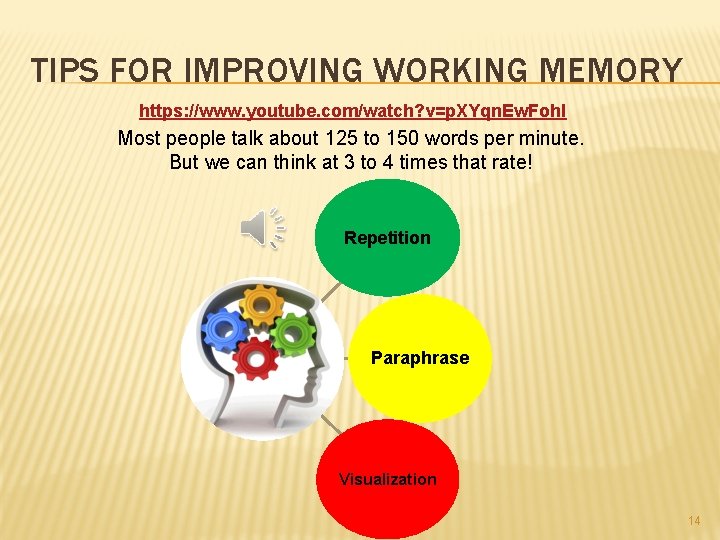
TIPS FOR IMPROVING WORKING MEMORY https: //www. youtube. com/watch? v=p. XYqn. Ew. Foh. I Most people talk about 125 to 150 words per minute. But we can think at 3 to 4 times that rate! Repetition Paraphrase Visualization 14
CHALLENGES TO LISTENING 15
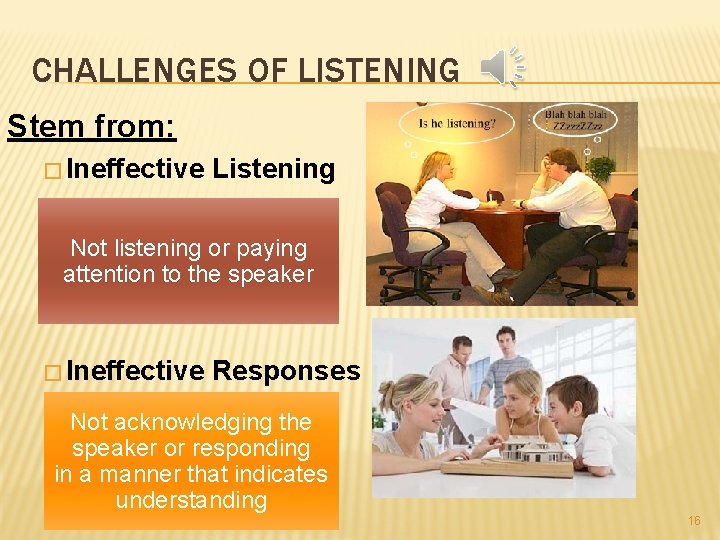
CHALLENGES OF LISTENING Stem from: � Ineffective Listening Not listening or paying attention to the speaker � Ineffective Responses Not acknowledging the speaker or responding in a manner that indicates understanding 16
BARRIERS TO EFFECTIVE LISTENING Pseudo. Listening Selective Attention Pretending to pay attention to someone Listening only to what we want to hear and ignoring the rest http: //www. youtube. com/watch? v=_Zp. Dn. XYIFjo 17
BARRIERS TO EFFECTIVE LISTENING Information Overload We are exposed to multiple messages daily Glazing Over Rebuttal Tendency Our minds can wander when we listen to others Debating a speaker’s point and formulating a reply while the person is still speaking https: //www. youtube. com/watch? v=o. N 6 Vvd. Pn. Oz. M 18
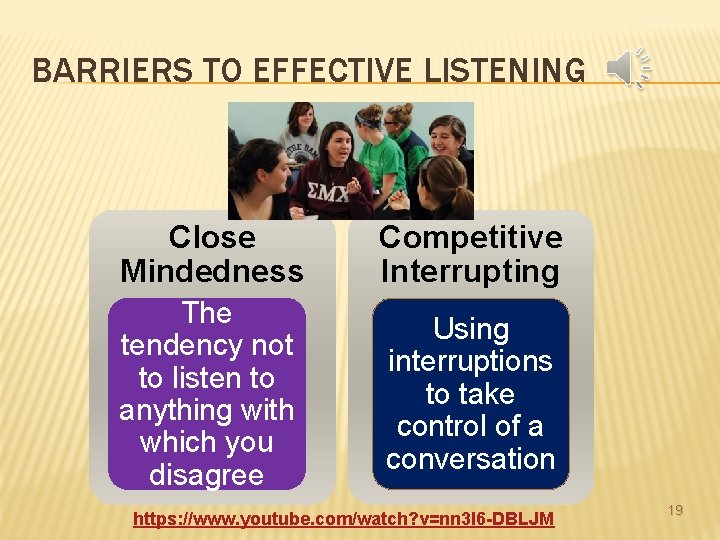
BARRIERS TO EFFECTIVE LISTENING Close Mindedness Competitive Interrupting The tendency not to listen to anything with which you disagree Using interruptions to take control of a conversation https: //www. youtube. com/watch? v=nn 3 I 6 -DBLJM 19
BECOMING A BETTER LISTNER Become a better Informational Listener by: Separating what is and is not said Avoiding the confirmation bias Listening for substance more than style 20
BECOMING A BETTER LISTENING Become a better Critical Listener by: Being a skeptic Evaluating a speaker’s credibility Understanding probability 21
BECOMING A BETTER LISTENER Become a better Empathic Listener by: Listening nonjudgmentally Acknowledging feelings Communicating support nonverbally 22
TIME TO PRACTICE !! Paraphrasing Questions Worksheet 23 23