Life Science Chapter 11 SEED PLANTS PART 2

- Slides: 19
Life Science Chapter 11 SEED PLANTS PART 2
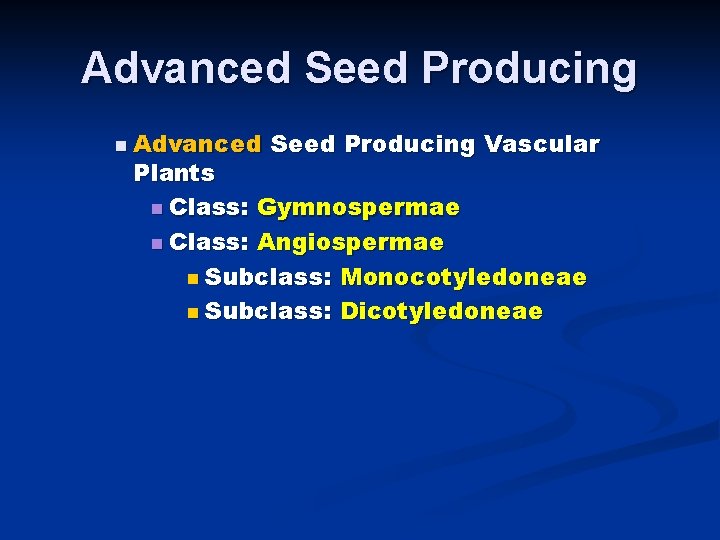
Advanced Seed Producing n Advanced Seed Producing Vascular Plants n Class: Gymnospermae n Class: Angiospermae n Subclass: Monocotyledoneae n Subclass: Dicotyledoneae
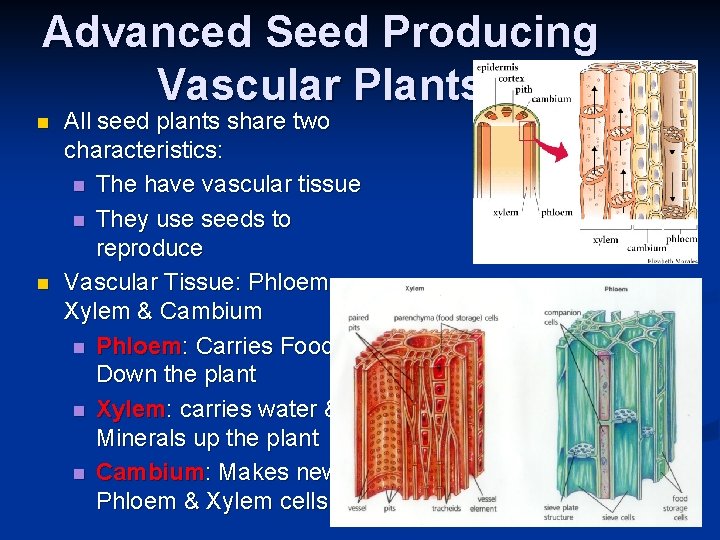
Advanced Seed Producing Vascular Plants n n All seed plants share two characteristics: n The have vascular tissue n They use seeds to reproduce Vascular Tissue: Phloem, Xylem & Cambium n Phloem: Carries Food Down the plant n Xylem: carries water & Minerals up the plant n Cambium: Makes new Phloem & Xylem cells
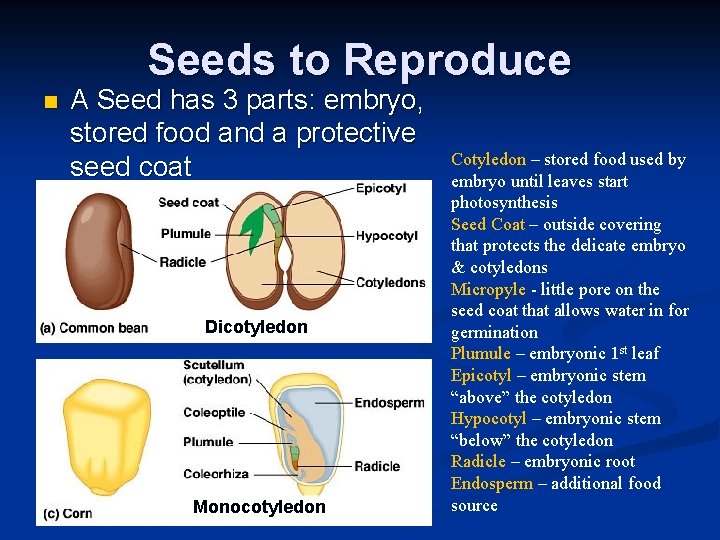
Seeds to Reproduce n A Seed has 3 parts: embryo, stored food and a protective seed coat Dicotyledon Monocotyledon Cotyledon – stored food used by embryo until leaves start photosynthesis Seed Coat – outside covering that protects the delicate embryo & cotyledons Micropyle - little pore on the seed coat that allows water in for germination Plumule – embryonic 1 st leaf Epicotyl – embryonic stem “above” the cotyledon Hypocotyl – embryonic stem “below” the cotyledon Radicle – embryonic root Endosperm – additional food source
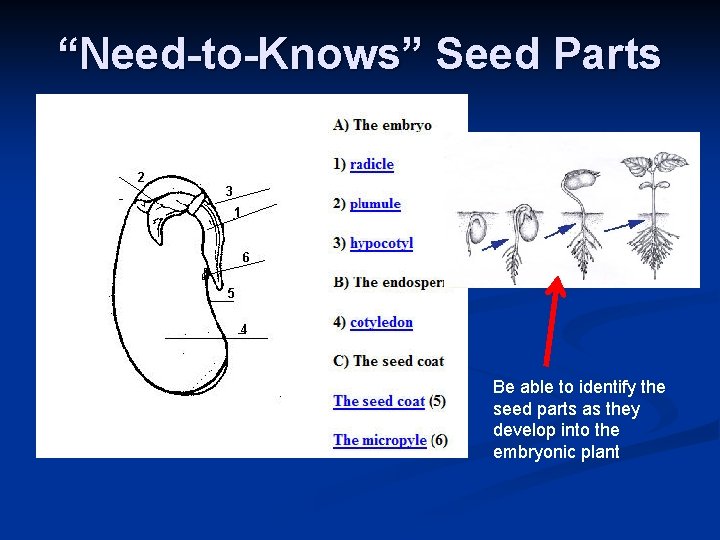
“Need-to-Knows” Seed Parts Be able to identify the seed parts as they develop into the embryonic plant
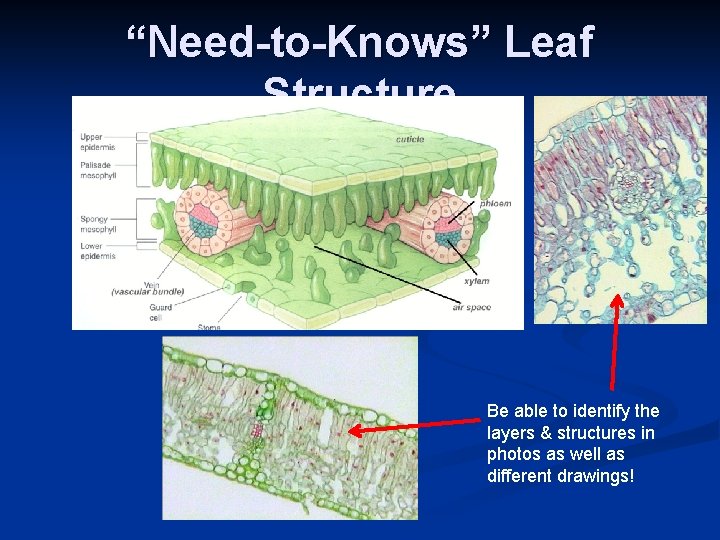
“Need-to-Knows” Leaf Structure Be able to identify the layers & structures in photos as well as different drawings!
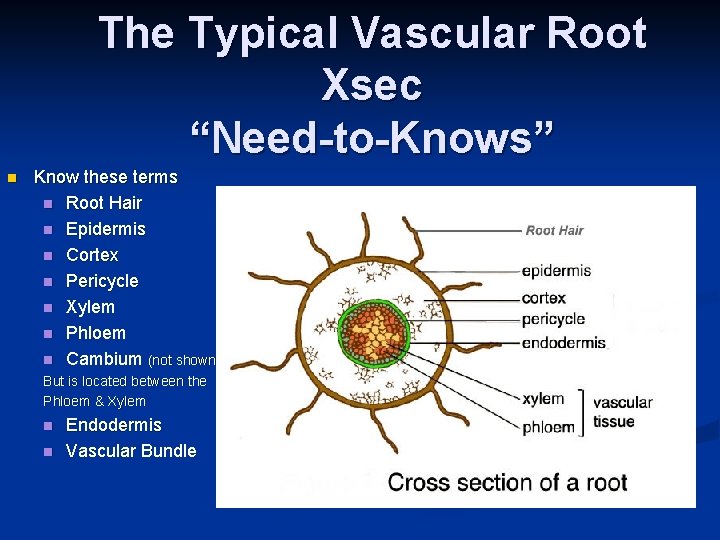
The Typical Vascular Root Xsec “Need-to-Knows” n Know these terms n Root Hair n Epidermis n Cortex n Pericycle n Xylem n Phloem n Cambium (not shown) But is located between the Phloem & Xylem n n Endodermis Vascular Bundle
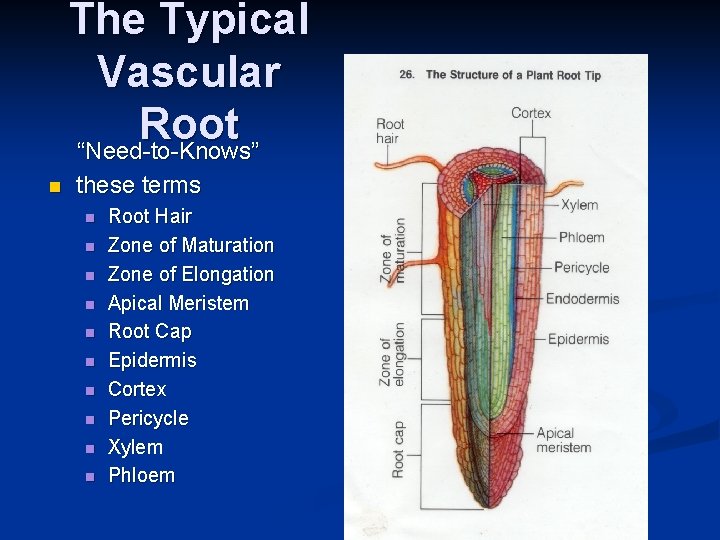
The Typical Vascular Root “Need-to-Knows” n these terms n n n n n Root Hair Zone of Maturation Zone of Elongation Apical Meristem Root Cap Epidermis Cortex Pericycle Xylem Phloem
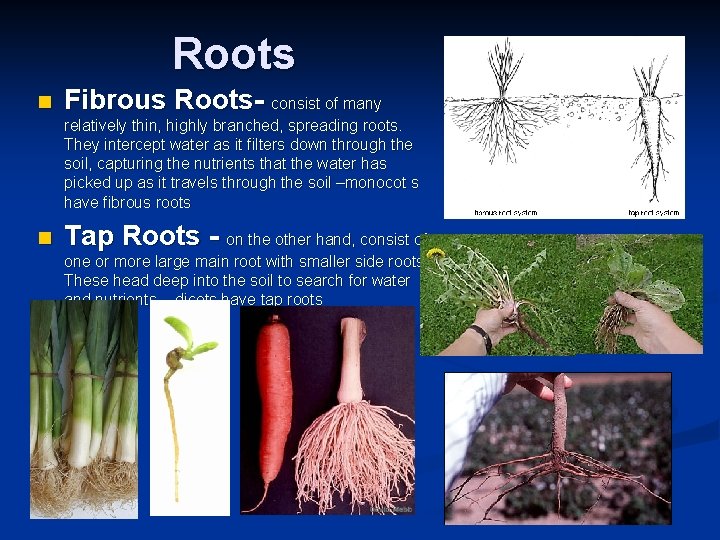
Roots n Fibrous Roots- consist of many relatively thin, highly branched, spreading roots. They intercept water as it filters down through the soil, capturing the nutrients that the water has picked up as it travels through the soil –monocot s have fibrous roots n Tap Roots - on the other hand, consist of one or more large main root with smaller side roots. These head deep into the soil to search for water and nutrients - dicots have tap roots
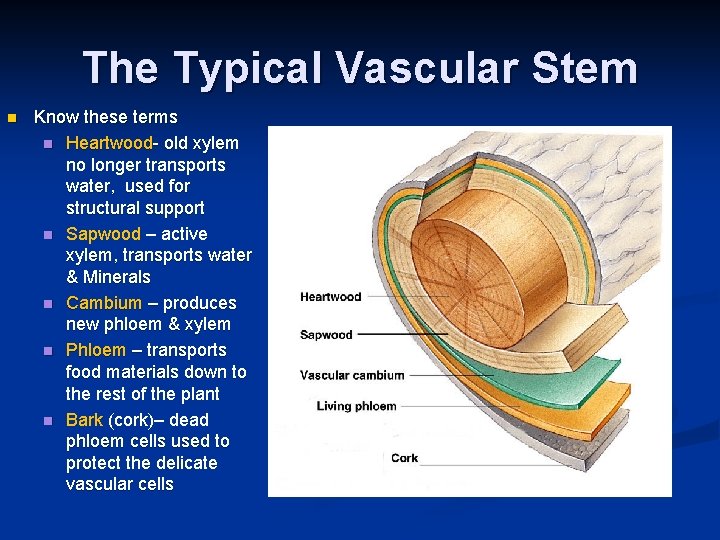
The Typical Vascular Stem n Know these terms n Heartwood- old xylem no longer transports water, used for structural support n Sapwood – active xylem, transports water & Minerals n Cambium – produces new phloem & xylem n Phloem – transports food materials down to the rest of the plant n Bark (cork)– dead phloem cells used to protect the delicate vascular cells
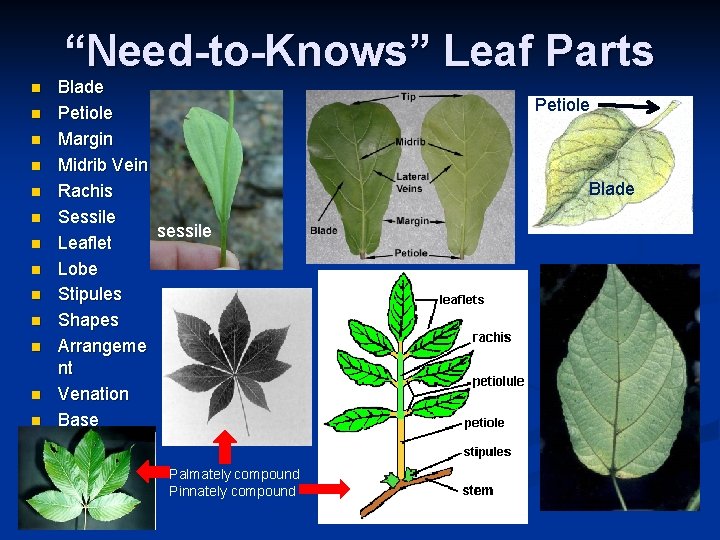
“Need-to-Knows” Leaf Parts n n n n Blade Petiole Margin Midrib Vein Rachis Sessile sessile Leaflet Lobe Stipules Shapes Arrangeme nt Venation Base Palmately compound Pinnately compound Petiole Blade
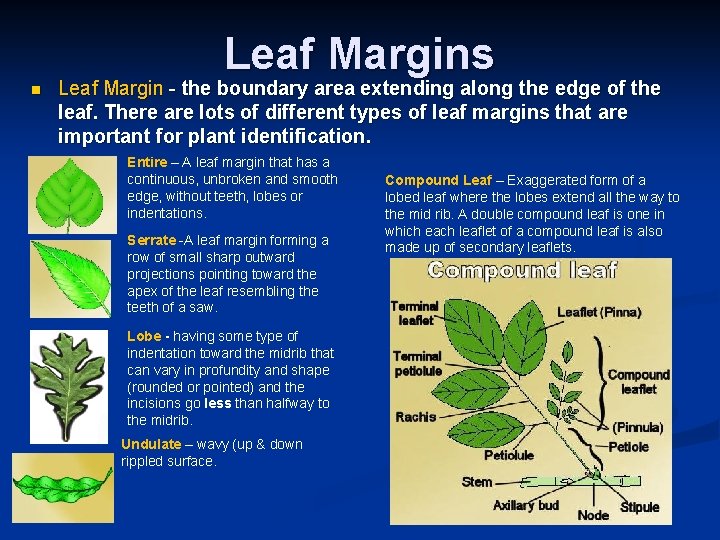
Leaf Margins n Leaf Margin - the boundary area extending along the edge of the leaf. There are lots of different types of leaf margins that are important for plant identification. Entire – A leaf margin that has a continuous, unbroken and smooth edge, without teeth, lobes or indentations. Serrate -A leaf margin forming a row of small sharp outward projections pointing toward the apex of the leaf resembling the teeth of a saw. Lobe - having some type of indentation toward the midrib that can vary in profundity and shape (rounded or pointed) and the incisions go less than halfway to the midrib. Undulate – wavy (up & down rippled surface. Compound Leaf – Exaggerated form of a lobed leaf where the lobes extend all the way to the mid rib. A double compound leaf is one in which each leaflet of a compound leaf is also made up of secondary leaflets.
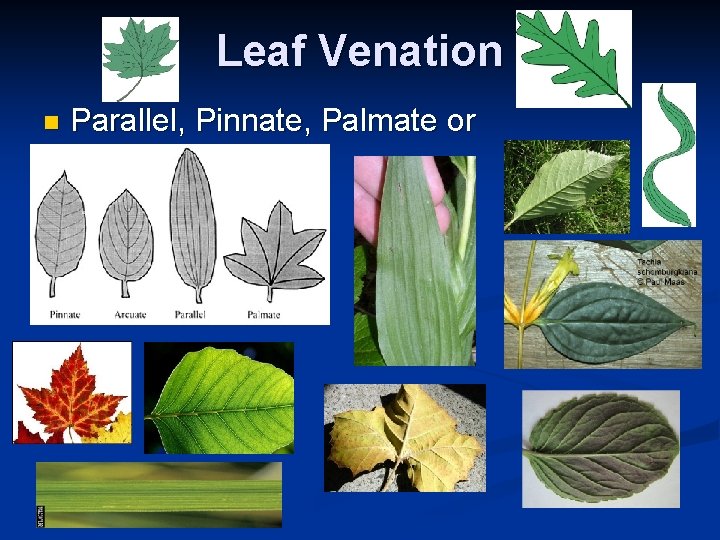
Leaf Venation n Parallel, Pinnate, Palmate or Arcuate
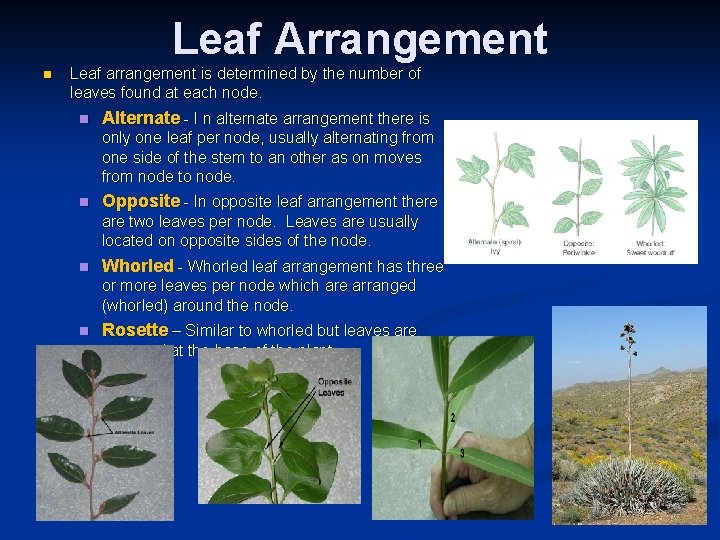
Leaf Arrangement n Leaf arrangement is determined by the number of leaves found at each node. n Alternate - I n alternate arrangement there is only one leaf per node, usually alternating from one side of the stem to an other as on moves from node to node. n Opposite - In opposite leaf arrangement there are two leaves per node. Leaves are usually located on opposite sides of the node. n Whorled - Whorled leaf arrangement has three or more leaves per node which are arranged (whorled) around the node. n Rosette – Similar to whorled but leaves are arranged at the base of the plant
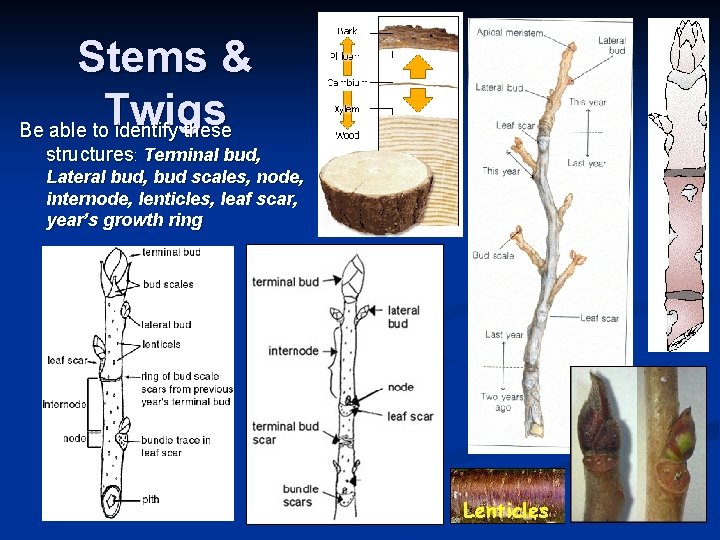
Stems & Twigs Be able to identify these structures: Terminal bud, Lateral bud, bud scales, node, internode, lenticles, leaf scar, year’s growth ring
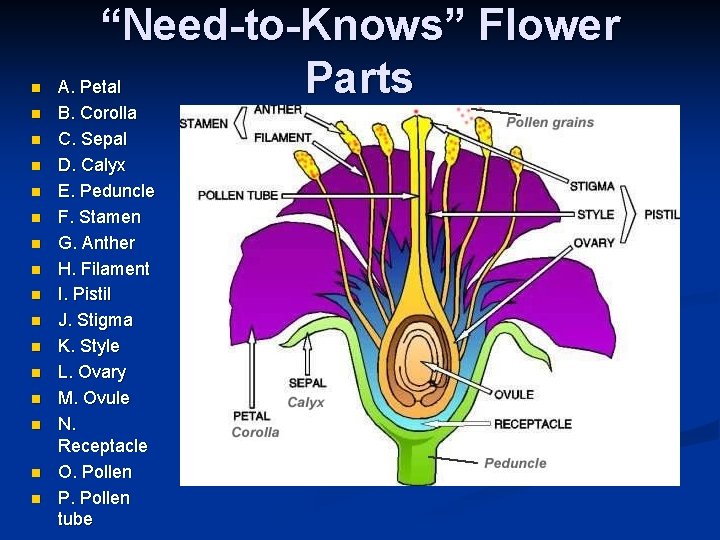
n n n n “Need-to-Knows” Flower Parts A. Petal Petiole B. Corolla C. Sepal D. Calyx E. Peduncle F. Stamen G. Anther H. Filament I. Pistil J. Stigma K. Style L. Ovary M. Ovule N. Receptacle O. Pollen P. Pollen tube
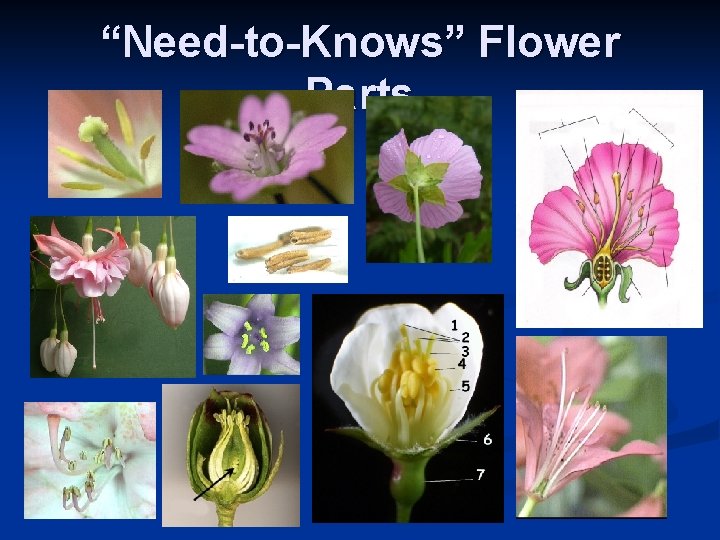
“Need-to-Knows” Flower Parts
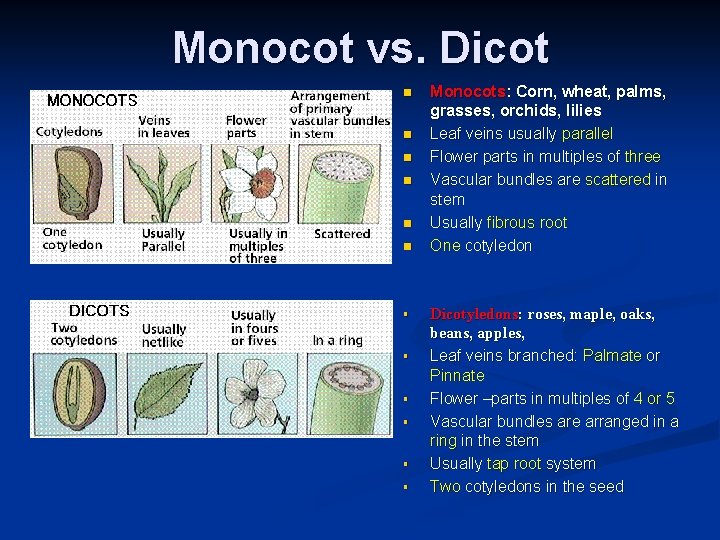
Monocot vs. Dicot n n n § § § Monocots: Corn, wheat, palms, grasses, orchids, lilies Leaf veins usually parallel Flower parts in multiples of three Vascular bundles are scattered in stem Usually fibrous root One cotyledon Dicotyledons: roses, maple, oaks, beans, apples, Leaf veins branched: Palmate or Pinnate Flower –parts in multiples of 4 or 5 Vascular bundles are arranged in a ring in the stem Usually tap root system Two cotyledons in the seed
We are done w/ Plants!!