Lecture Outlines Natural Disasters 7 th edition Patrick


- Slides: 47
Lecture Outlines Natural Disasters, 7 th edition Patrick L. Abbott
The Great Dyings Natural Disasters, 7 th edition, Chapter 16
The Great Dyings • Massive human loss by natural disasters is insignificant when compared to great dyings in fossil record • Entire species, millions of entire species mass extinctions • Knowledge comes through fossil record
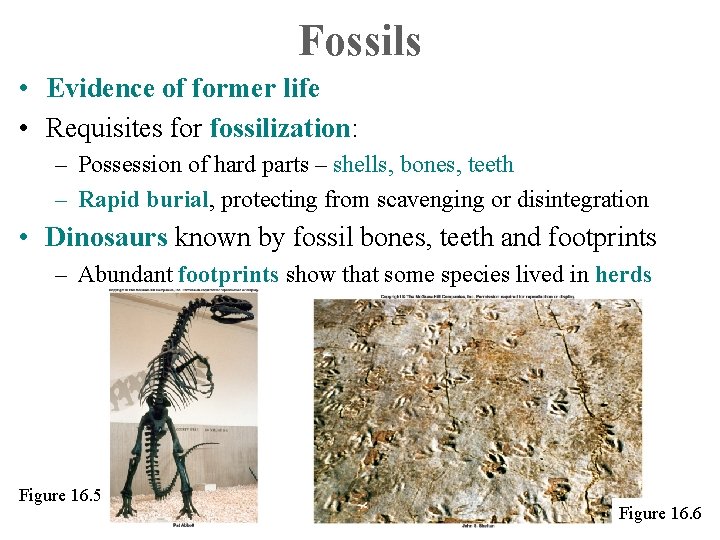
Fossils • Evidence of former life • Requisites for fossilization: – Possession of hard parts – shells, bones, teeth – Rapid burial, protecting from scavenging or disintegration • Dinosaurs known by fossil bones, teeth and footprints – Abundant footprints show that some species lived in herds Figure 16. 5 Figure 16. 6
Fossils Examples: • Fossilized tree sap amber • Burial in oxygen-poor swamps or peat bogs preserves organisms, like tanning • Frozen animals (like mammoths) exposed as glaciers melt • Celtic miner’s body preserved for 2, 300 years in salt mine collapse Figure 16. 8
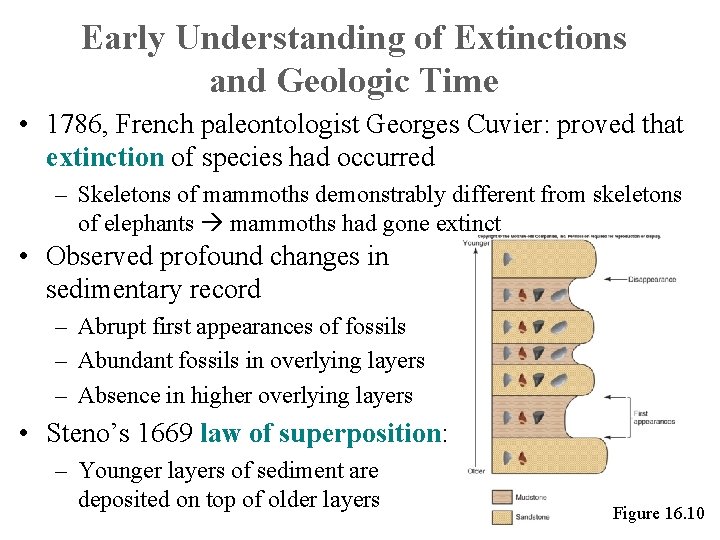
Early Understanding of Extinctions and Geologic Time • 1786, French paleontologist Georges Cuvier: proved that extinction of species had occurred – Skeletons of mammoths demonstrably different from skeletons of elephants mammoths had gone extinct • Observed profound changes in sedimentary record – Abrupt first appearances of fossils – Abundant fossils in overlying layers – Absence in higher overlying layers • Steno’s 1669 law of superposition: – Younger layers of sediment are deposited on top of older layers Figure 16. 10
Early Understanding of Extinctions and Geologic Time • William Smith, 1799: law of faunal assemblages – Strata of same age can be recognized by same fossils – Law of superposition + law of faunal assemblage law of faunal succession: • Fossils from older (lower) rock layers are older and more different from present-day organisms than fossils from younger (higher) rock layers old forms of life have died out and new forms of life have developed – Geologic maps of England Wales published in 1815
Early Understanding of Extinctions and Geologic Time First geologic maps led to global movement in geology • Sedimentary strata from around world classified and subdivided on basis of fossil assemblages • Same fossils found in rocks in different areas same age rocks • 1841: standard geologic column based on fossil succession, relative ages
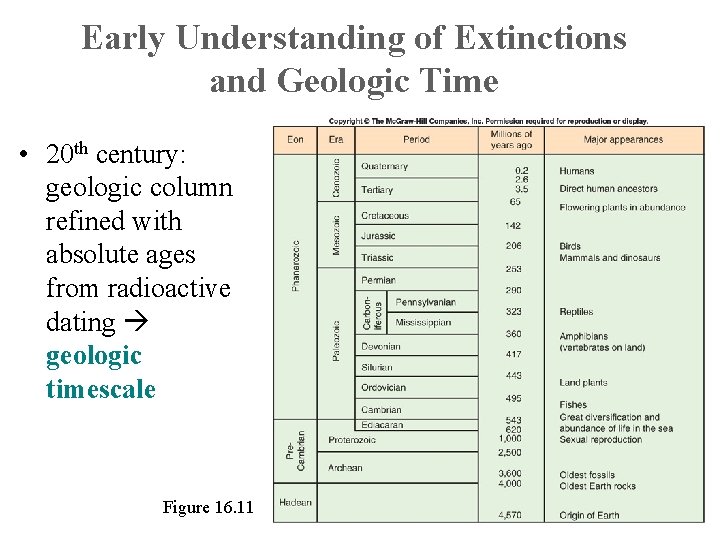
Early Understanding of Extinctions and Geologic Time • 20 th century: geologic column refined with absolute ages from radioactive dating geologic timescale Figure 16. 11
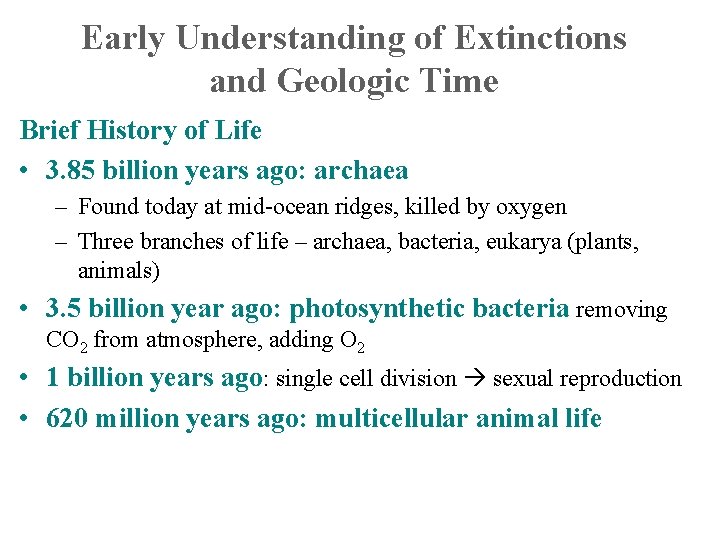
Early Understanding of Extinctions and Geologic Time Brief History of Life • 3. 85 billion years ago: archaea – Found today at mid-ocean ridges, killed by oxygen – Three branches of life – archaea, bacteria, eukarya (plants, animals) • 3. 5 billion year ago: photosynthetic bacteria removing CO 2 from atmosphere, adding O 2 • 1 billion years ago: single cell division sexual reproduction • 620 million years ago: multicellular animal life
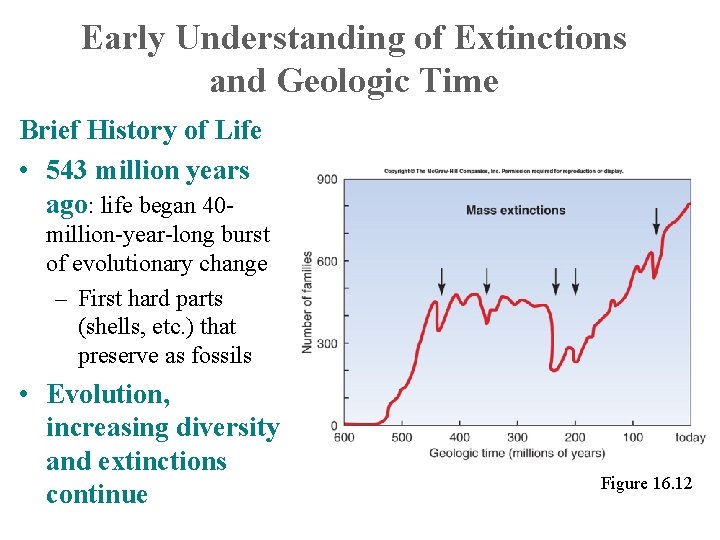
Early Understanding of Extinctions and Geologic Time Brief History of Life • 543 million years ago: life began 40 million-year-long burst of evolutionary change – First hard parts (shells, etc. ) that preserve as fossils • Evolution, increasing diversity and extinctions continue Figure 16. 12
Species and the Fossil Record Swedish botanist Linnaeus laid out basic terminology of divisions of life into kingdoms down to species Species: • Population of organisms so similar in life habits and functions that they can breed together and produce reproductively viable offspring • Reproductively isolated by differences from other species • Share common pool of genetic material (genome) • May migrate over broad area mutation of genes may cause reproductive isolation between local populations evolution (Darwin: descent with modification)
Species and the Fossil Record • Extinction caused by inability to adapt to changes in physical, chemical, biological conditions • Background level of extinctions – always occurring • Present species diversity: 40 to 80 million species – 0. 1% of species that have existed in Earth history – 99. 9% of species that have existed in Earth history are extinct • Extinctions clear out niches opportunity for new organisms to evolve to occupy habitats • Mass extinctions open up many new niches burst of evolution
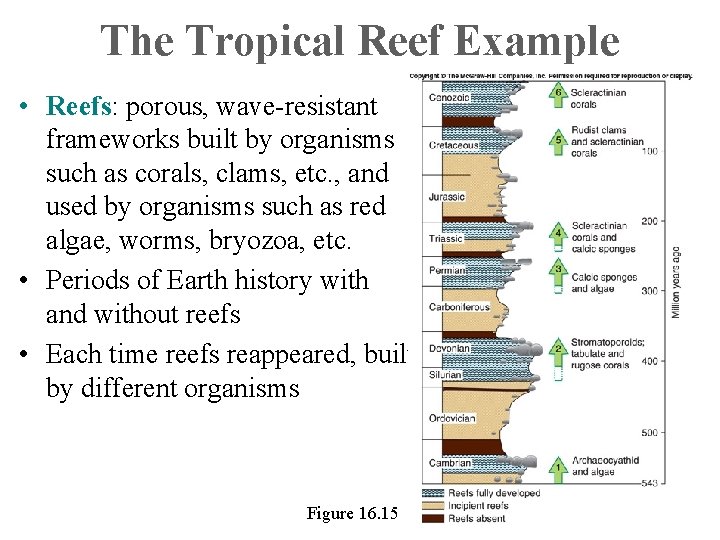
The Tropical Reef Example • Reefs: porous, wave-resistant frameworks built by organisms such as corals, clams, etc. , and used by organisms such as red algae, worms, bryozoa, etc. • Periods of Earth history with and without reefs • Each time reefs reappeared, built by different organisms Figure 16. 15
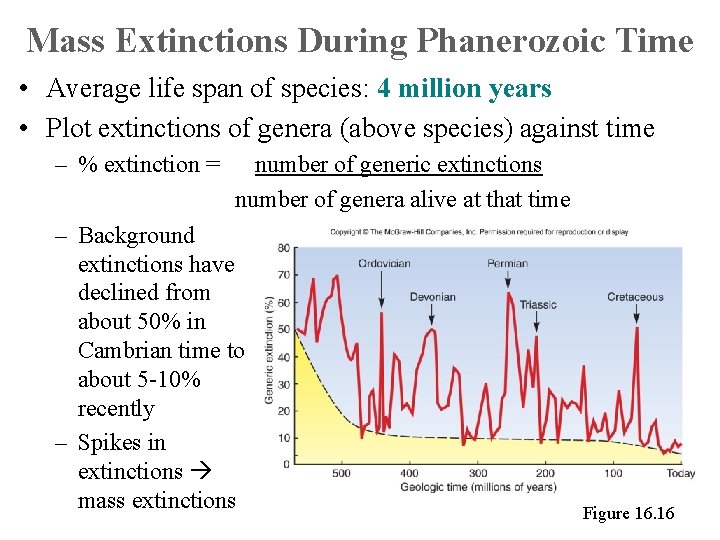
Mass Extinctions During Phanerozoic Time • Average life span of species: 4 million years • Plot extinctions of genera (above species) against time – % extinction = number of generic extinctions number of genera alive at that time – Background extinctions have declined from about 50% in Cambrian time to about 5 -10% recently – Spikes in extinctions mass extinctions Figure 16. 16
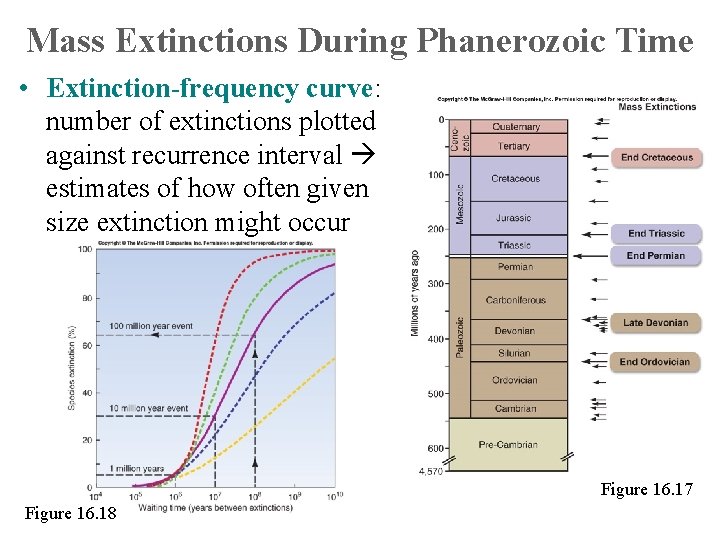
Mass Extinctions During Phanerozoic Time • Extinction-frequency curve: number of extinctions plotted against recurrence interval estimates of how often given size extinction might occur Figure 16. 17 Figure 16. 18
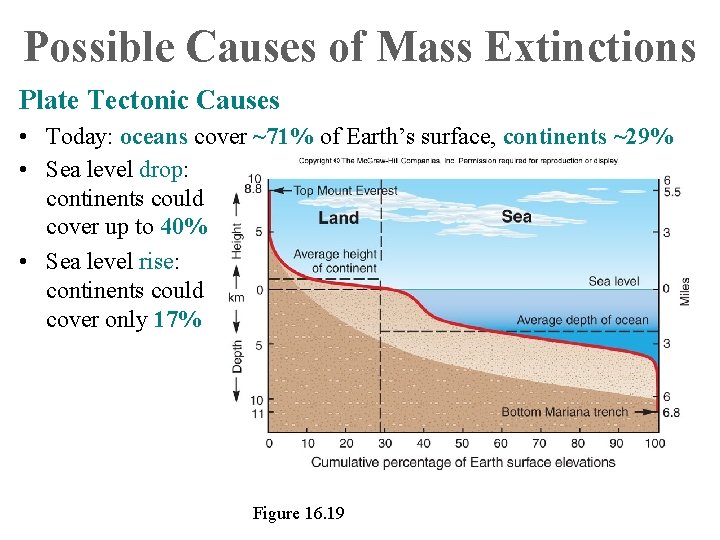
Possible Causes of Mass Extinctions Plate Tectonic Causes • Today: oceans cover ~71% of Earth’s surface, continents ~29% • Sea level drop: continents could cover up to 40% • Sea level rise: continents could cover only 17% Figure 16. 19
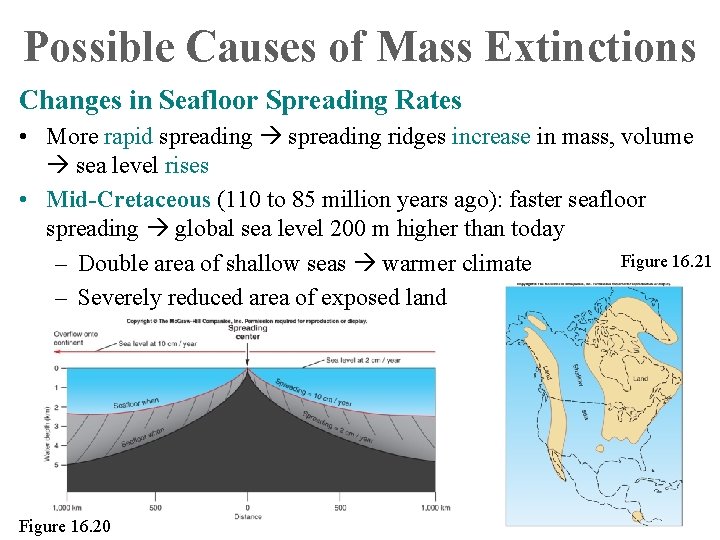
Possible Causes of Mass Extinctions Changes in Seafloor Spreading Rates • More rapid spreading ridges increase in mass, volume sea level rises • Mid-Cretaceous (110 to 85 million years ago): faster seafloor spreading global sea level 200 m higher than today Figure 16. 21 – Double area of shallow seas warmer climate – Severely reduced area of exposed land Figure 16. 20
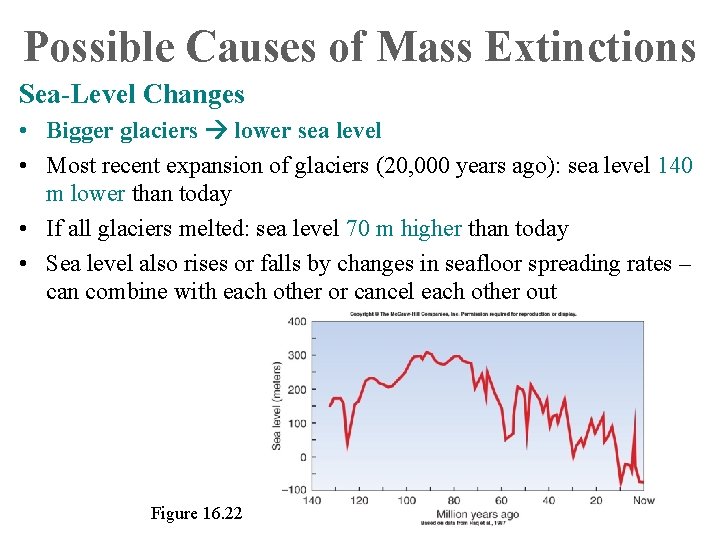
Possible Causes of Mass Extinctions Sea-Level Changes • Bigger glaciers lower sea level • Most recent expansion of glaciers (20, 000 years ago): sea level 140 m lower than today • If all glaciers melted: sea level 70 m higher than today • Sea level also rises or falls by changes in seafloor spreading rates – can combine with each other or cancel each other out Figure 16. 22
Possible Causes of Mass Extinctions Numbers and Sizes of Continents • Late Permian to early Triassic (260 – 240 million years ago): supercontinent Pangaea • 200 million years ago: Pangaea began to be rifted apart into today’s continents – Greatly lengthened world’s shorelines – Reduced areas of climatically harsh continental interiors – Numerous habitat changes • Large, combined landmass fewer number of species • Smaller, isolated landmasses larger number of species
Possible Causes of Mass Extinctions Continental Position and Glaciation • Large landmasses at poles necessary to capture enough snow to create massive ice sheets that cause Ice Age • Ice Age: climatic extremes of glacial advances and retreats stresses on species extinctions
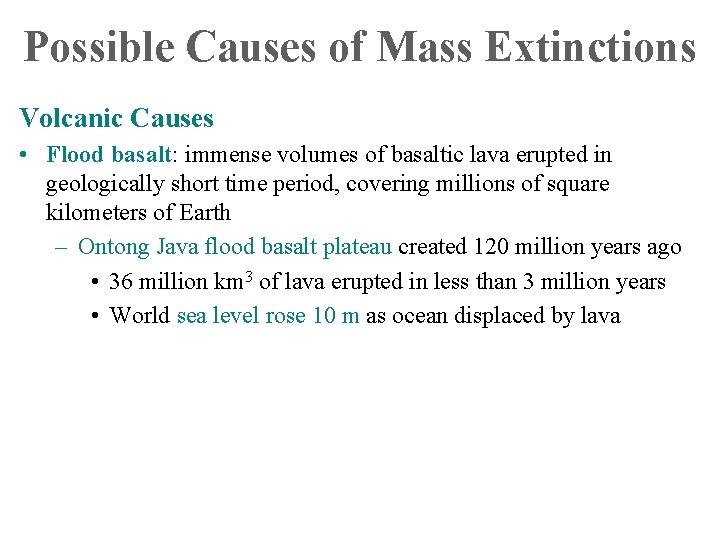
Possible Causes of Mass Extinctions Volcanic Causes • Flood basalt: immense volumes of basaltic lava erupted in geologically short time period, covering millions of square kilometers of Earth – Ontong Java flood basalt plateau created 120 million years ago • 36 million km 3 of lava erupted in less than 3 million years • World sea level rose 10 m as ocean displaced by lava
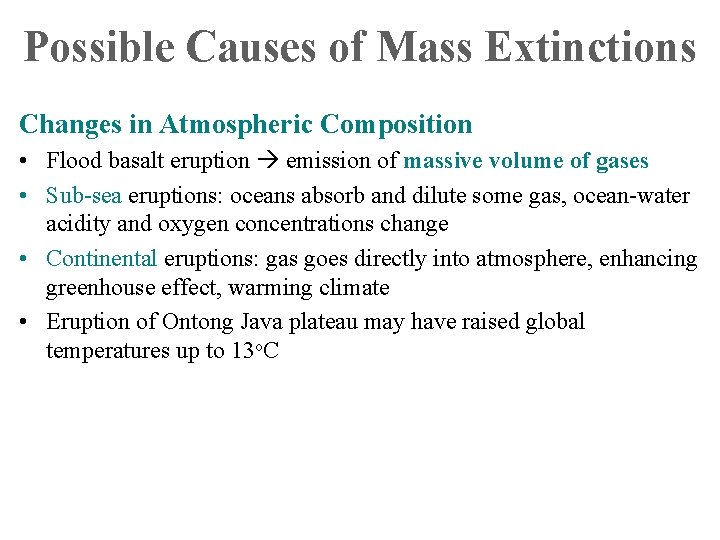
Possible Causes of Mass Extinctions Changes in Atmospheric Composition • Flood basalt eruption emission of massive volume of gases • Sub-sea eruptions: oceans absorb and dilute some gas, ocean-water acidity and oxygen concentrations change • Continental eruptions: gas goes directly into atmosphere, enhancing greenhouse effect, warming climate • Eruption of Ontong Java plateau may have raised global temperatures up to 13 o. C
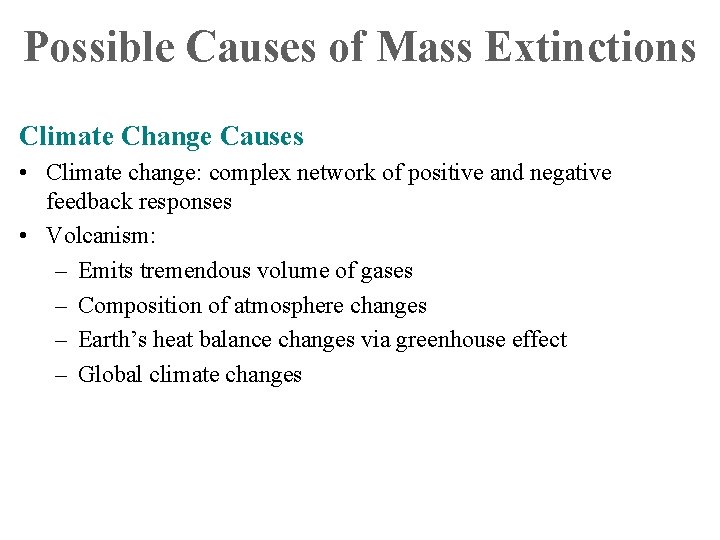
Possible Causes of Mass Extinctions Climate Change Causes • Climate change: complex network of positive and negative feedback responses • Volcanism: – Emits tremendous volume of gases – Composition of atmosphere changes – Earth’s heat balance changes via greenhouse effect – Global climate changes
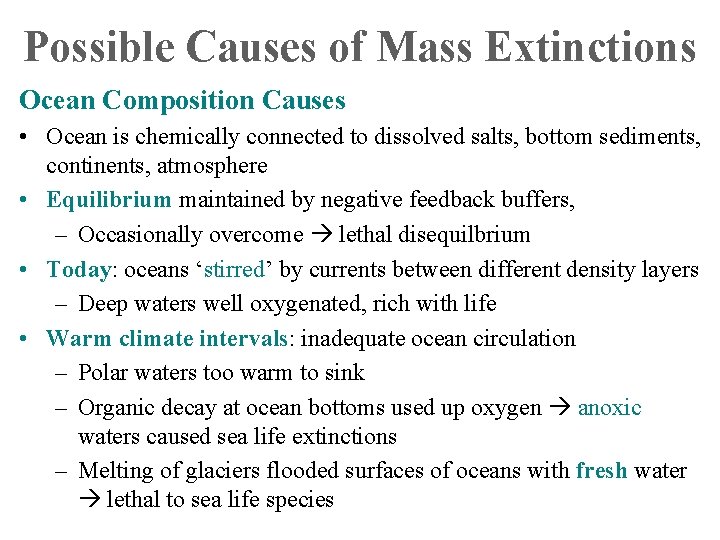
Possible Causes of Mass Extinctions Ocean Composition Causes • Ocean is chemically connected to dissolved salts, bottom sediments, continents, atmosphere • Equilibrium maintained by negative feedback buffers, – Occasionally overcome lethal disequilbrium • Today: oceans ‘stirred’ by currents between different density layers – Deep waters well oxygenated, rich with life • Warm climate intervals: inadequate ocean circulation – Polar waters too warm to sink – Organic decay at ocean bottoms used up oxygen anoxic waters caused sea life extinctions – Melting of glaciers flooded surfaces of oceans with fresh water lethal to sea life species
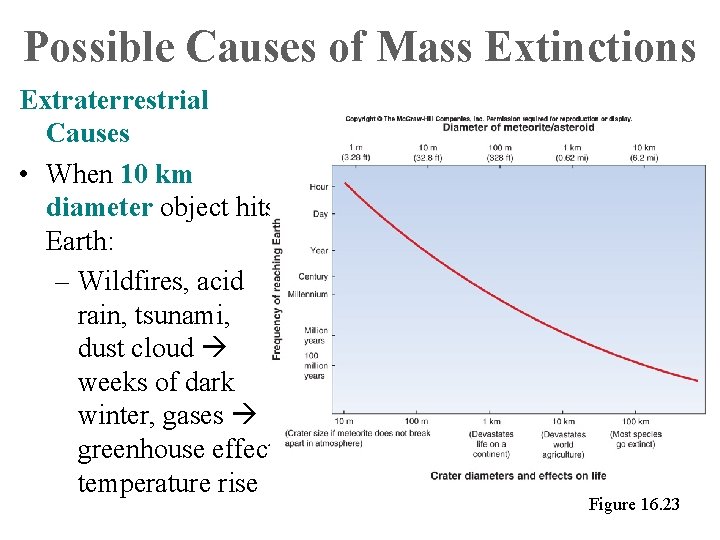
Possible Causes of Mass Extinctions Extraterrestrial Causes • When 10 km diameter object hits Earth: – Wildfires, acid rain, tsunami, dust cloud weeks of dark winter, gases greenhouse effect temperature rise Figure 16. 23
Possible Causes of Mass Extinctions Extraterrestrial Causes • Bombardment of cosmic rays increases if supernova nearby • Bombardment of subatomic particles from Sun increases when Sun’s intensity changes – Both increase during periods of weakened magnetic field – (No correlation to fossil record found)
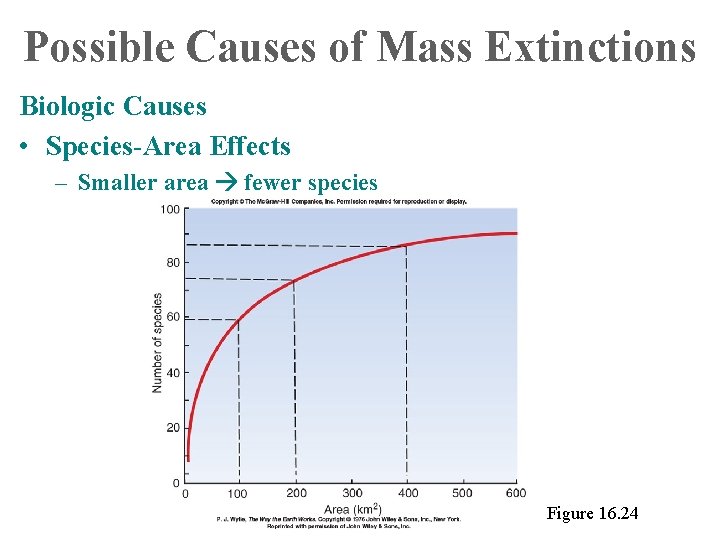
Possible Causes of Mass Extinctions Biologic Causes • Species-Area Effects – Smaller area fewer species Figure 16. 24
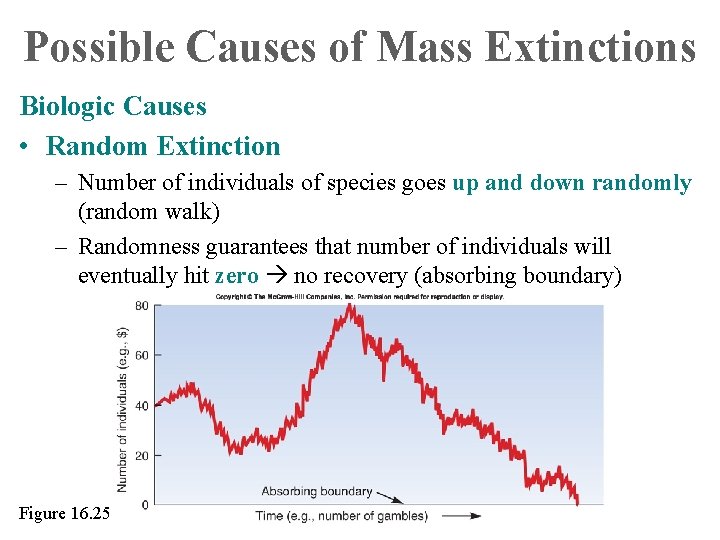
Possible Causes of Mass Extinctions Biologic Causes • Random Extinction – Number of individuals of species goes up and down randomly (random walk) – Randomness guarantees that number of individuals will eventually hit zero no recovery (absorbing boundary) Figure 16. 25
Possible Causes of Mass Extinctions Biologic Causes Predation and Epidemic Disease • Excessive predation can drive number of individuals of species low enough for random extinction to finish the job • Large carnivores or epidemic disease • Today: homo sapiens biggest predator Multiple Causes of Mass Extinction • Any one factor alone can cause local stress to drive a few species to extinction • Extinction of numerous species around world probably requires two or more causes
Examples of Mass Extinctions Closing of Permian Time (Ended 253 Million Years Ago) • On land: ¼ amphibian orders, 1/50 reptile genera survived • Oceans: 80% or more species went extinct • Formation of Supercontinent Pangaea – Uniting of continents into supercontinent closed equatorial sea reduced shallow seas triggered extinctions • Sea-Level Fall – Slower seafloor spreading shrank mid-ocean ridges, lowering sea level 200 m – Reduced area of shallow seas triggered extinctions
Examples of Mass Extinctions Closing of Permian Time (Ended 253 Million Years Ago) • Climate Changes – Supercontinent less shoreline greater percentage of land away from climate-moderating effects of ocean – Drier, more severe climate in interior of landmass • Ocean Composition Changes – End of long Ice Age: disappearance of cold polar waters may have slowed ocean circulation and led to anoxic bottom water, killing deep-water organisms – Turnover of stratified layers may kill surface organisms
Examples of Mass Extinctions Closing of Permian Time (Ended 253 Million Years Ago) • Siberian Traps Flood Basalt – 3 million km 3 of lava erupted within 1 million years, emitted huge volume of gases (CO 2) – Heated permafrost to release water vapor, methane from hydrates – Greenhouse gases raised global temperatures, acid rain • Duration of the Extinction Events – Took less than 1 million years – Change in carbon isotopes (from collapse in biological productivity) in maybe less than 30, 000 years
Examples of Mass Extinctions Closing of Permian Time (Ended 253 Million Years Ago) • Life at the End of Permian Time – Tropical seas virtually eliminated – One major landmass placed species-area effect pressure on terrestrial life – Land covered in desert – Deep-ocean water became anoxic, CO 2 -rich – Climate warmed – Extinction of Permian species allowed Mesozoic reptiles (dinosaurs) to take over
Examples of Mass Extinctions Close of Cretaceous Time (Ended 65 Million Years Ago) • Late Cretaceous: North American heartland covered with herds of dinosaurs and flowering plants • Slow-acting changes elevated background level of extinctions, followed by deadly volcanism and asteroid impact – slow decline abruptly terminated • Over 35% of genera and 65% of species went extinct
Examples of Mass Extinctions Close of Cretaceous Time (Ended 65 Million Years Ago) • Sea Level Fall – During final 18 million years of Cretaceous, global sea levels went from high to low, climate cooled • Deccan Traps Flood Basalt – ‘Deccan’ Sanskrit for southern, ‘trap’ Dutch for staircase: thick piles of basaltic rock – Over 2 million km 3 erupted in less than 1 million years, beginning 65. 5 million years ago – Worldwide climatic effects, like Permian Siberian traps flood basalt
Examples of Mass Extinctions Close of Cretaceous Time (Ended 65 Million Years Ago) • Chicxulub Impact – Yucatan peninsula, Mexico: rings (180 km, 300 km diameter) of shattered rock asteroid impact ~65 million years ago – Worst-case scenario: • 10 km asteroid plunges through atmosphere at 10 km/sec • Fireball with 2, 000 km diameter • Searing hot winds ignite wildfires throughout North America • Earthquake with magnitude greater than 11
Examples of Mass Extinctions Close of Cretaceous Time (Ended 65 Million Years Ago) • Chicxulub Impact – Worst-case scenario: • Tsunami 2 to 3 km high • Blasted hole up to 60 km deep, shot plume of vaporized water and rock into stratosphere • Acid rain (from vaporized rock) killed ocean organisms • Dust blocked sunlight stopped photosynthesis for months • Greenhouse gases remained aloft, raised temperatures • Mass extinctions led to opportunities for surviving organisms (including mammals)
Living Fossils Not all species went extinct at Permian/Triassic and Cretaceous/Tertiary mass extinctions: • Horseshoe crabs have survived for last 450 million years • Sharks have been successful predators for last 350 million years – biggest threat of extinction is today, from humans • Conifers, ferns, horsetail and scouring rushes have existed since 275 million years ago • Norfolk pine, gingko biloba, metasequoia, and sago palm have existed since 235 million years ago
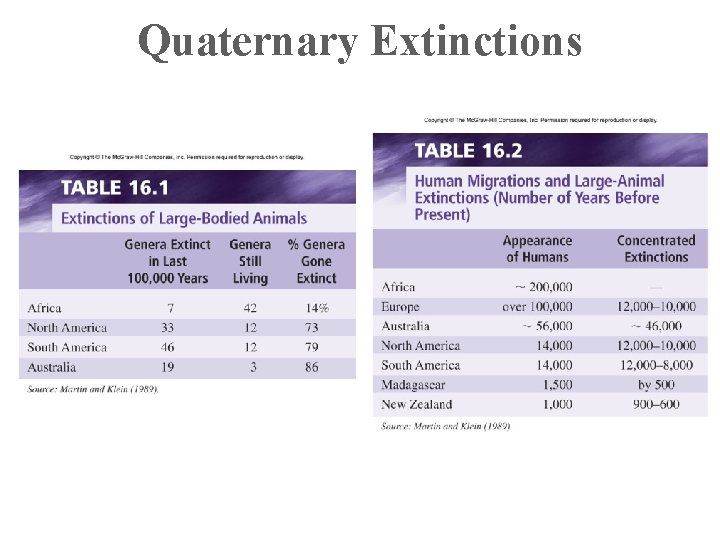
Living Fossils Quaternary Extinctions • Significant extinctions of large-bodied mammals in last 1. 5 million years, during glacial advances and retreats • Concentrations of extinctions multiple causes • Suspected additional cause of many extinctions Homo sapiens • Large animals decimated in Americas and Australia • Large animals fared best in Africa where humans evolved – co-existed for thousands of generations • Wherever humans went, extinctions followed
Quaternary Extinctions • Arguments against climate change as cause: – More large-animal extinctions than plant extinctions – Large mammals not affected by climate change – Increase in habitable land from retreat of glaciers should cause increase in species, not decline – No equivalent extinctions earlier during present Ice Age Australia • Humans arriving in Australia 56, 000 years ago found 24 genera of large-bodied animals 1, 000 years later, 23 of those were extinct – Regional, not global event not climate-caused
Quaternary Extinctions Madagascar and New Zealand • When humans arrived, largest animals were flightless birds – elephant birds in Madagascar and moas in New Zealand • Humans killed birds and stole eggs until populations were low enough that random extinction finished them off • Rate of human-induced or –related extinctions increased in last 12, 000 years, increased even more in last 200 years
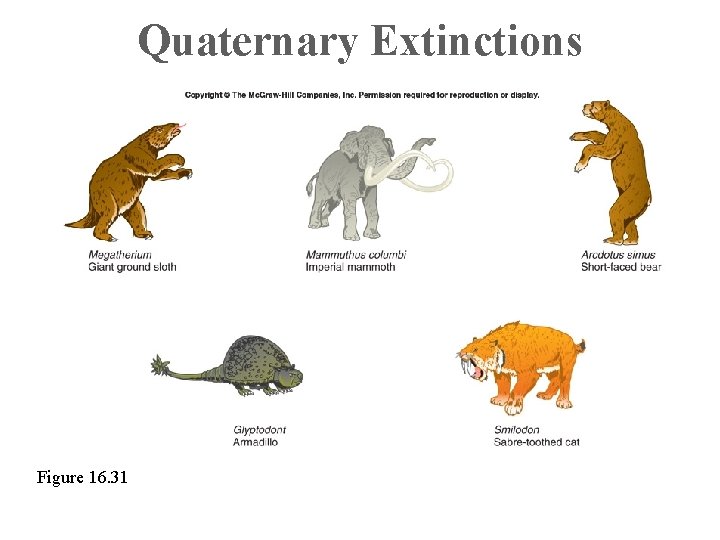
Quaternary Extinctions Figure 16. 31
Quaternary Extinctions
In Greater Depth: La Brea Tar Pits, Metropolitan Los Angeles • One of most spectacular fossil localities in world • Oil from underground reservoirs seeped upward to surface where natural gas and lighter-weight oils evaporated, leaving sticky, high-viscosity tar in pools • Over last 40, 000 years, more than 660 species of organisms trapped and entombed (59 mammal species) • Escape very difficult for four-legged, heavy animal • Distress cries brought carnivores and scavengers 85% of larger-bodied victims • Also one 9, 000 year old partial human skeleton – indicates human presence during extinctions
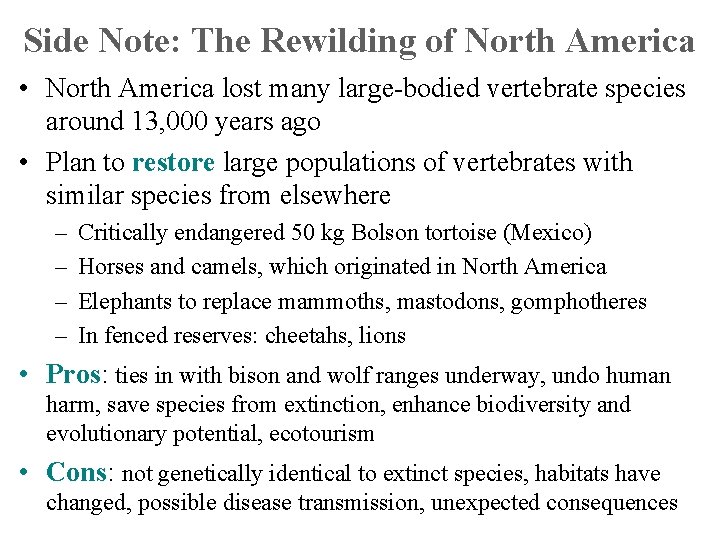
Side Note: The Rewilding of North America • North America lost many large-bodied vertebrate species around 13, 000 years ago • Plan to restore large populations of vertebrates with similar species from elsewhere – – Critically endangered 50 kg Bolson tortoise (Mexico) Horses and camels, which originated in North America Elephants to replace mammoths, mastodons, gomphotheres In fenced reserves: cheetahs, lions • Pros: ties in with bison and wolf ranges underway, undo human harm, save species from extinction, enhance biodiversity and evolutionary potential, ecotourism • Cons: not genetically identical to extinct species, habitats have changed, possible disease transmission, unexpected consequences
End of Chapter 16