Kathryn Oliver and Paul Cairney The Dos and
- Slides: 8
Kathryn Oliver and Paul Cairney The Dos and Don’ts of engaging with policy
1. Policymakers have different ideas about what counts as good evidence (and there are many ‘policymakers’ across many levels and types of government) There are many sources of policy relevant knowledge
2. They have to ignore almost all evidence ‘Bounded rationality’ prompts 2 shortcuts: ‘rational’, to set goals and identify the best sources of information to reduce uncertainty ‘irrational’, to use gut-level, habitual, emotional, or belief-driven short cuts to reduce ambiguity
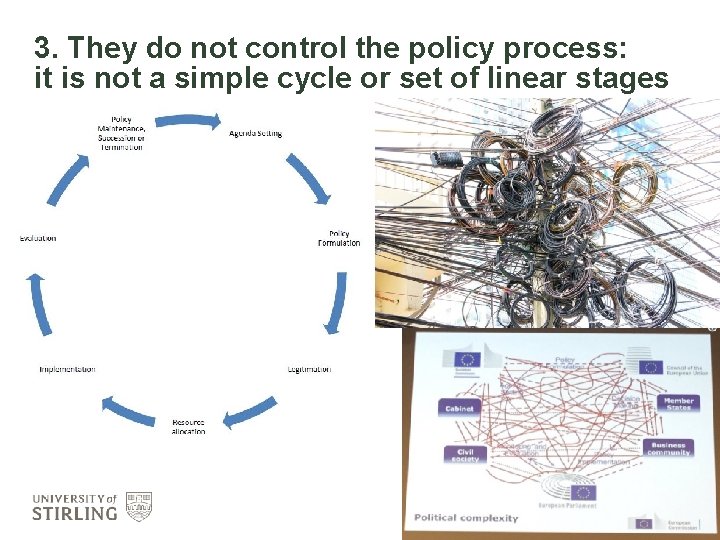
3. They do not control the policy process: it is not a simple cycle or set of linear stages
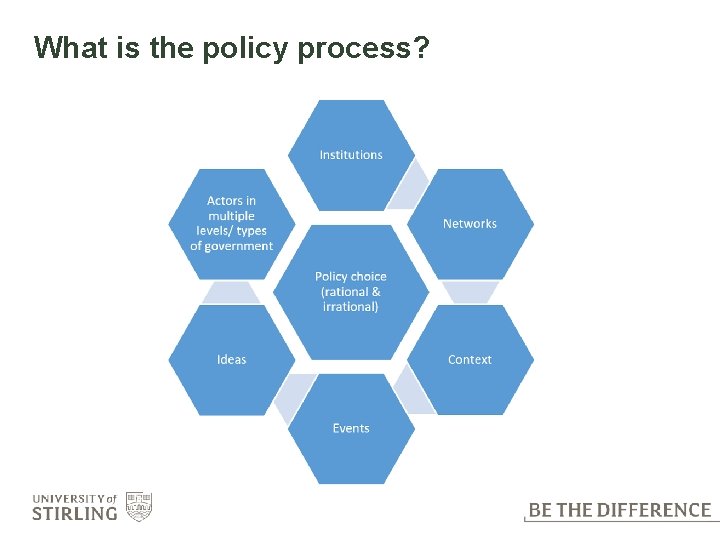
What is the policy process?
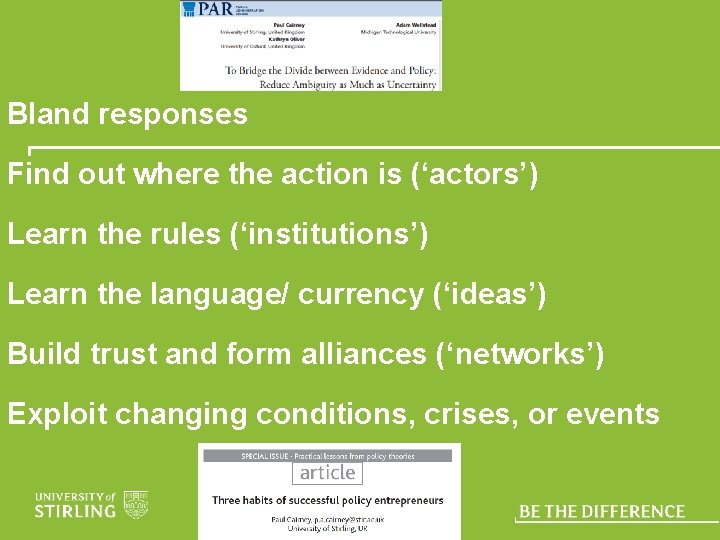
Bland responses Find out where the action is (‘actors’) Learn the rules (‘institutions’) Learn the language/ currency (‘ideas’) Build trust and form alliances (‘networks’) Exploit changing conditions, crises, or events
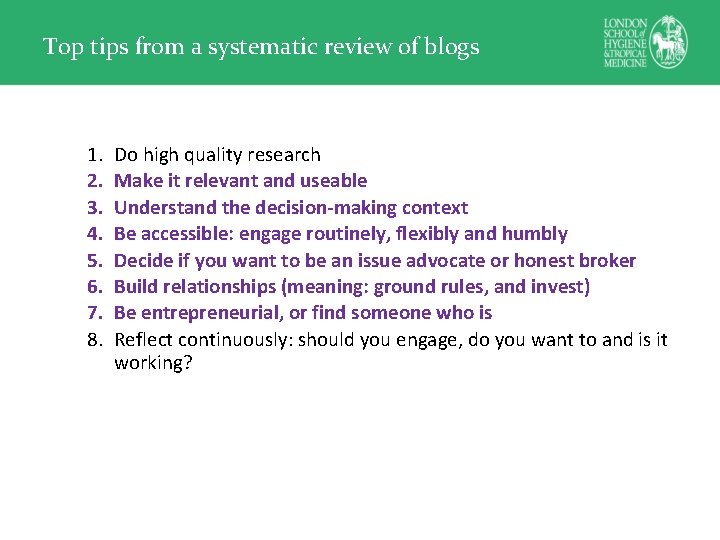
Top tips from a systematic review of blogs 1. 2. 3. 4. 5. 6. 7. 8. Do high quality research Make it relevant and useable Understand the decision-making context Be accessible: engage routinely, flexibly and humbly Decide if you want to be an issue advocate or honest broker Build relationships (meaning: ground rules, and invest) Be entrepreneurial, or find someone who is Reflect continuously: should you engage, do you want to and is it working?
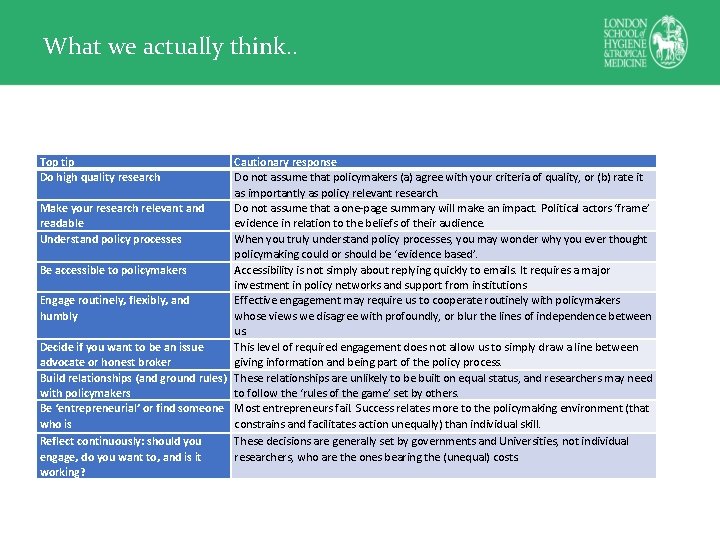
What we actually think. . Top tip Do high quality research Cautionary response Do not assume that policymakers (a) agree with your criteria of quality, or (b) rate it as importantly as policy relevant research. Make your research relevant and Do not assume that a one-page summary will make an impact. Political actors ‘frame’ readable evidence in relation to the beliefs of their audience. Understand policy processes When you truly understand policy processes, you may wonder why you ever thought policymaking could or should be ‘evidence based’. Be accessible to policymakers Accessibility is not simply about replying quickly to emails. It requires a major investment in policy networks and support from institutions Engage routinely, flexibly, and Effective engagement may require us to cooperate routinely with policymakers humbly whose views we disagree with profoundly, or blur the lines of independence between us. Decide if you want to be an issue This level of required engagement does not allow us to simply draw a line between advocate or honest broker giving information and being part of the policy process. Build relationships (and ground rules) These relationships are unlikely to be built on equal status, and researchers may need with policymakers to follow the ‘rules of the game’ set by others. Be ‘entrepreneurial’ or find someone Most entrepreneurs fail. Success relates more to the policymaking environment (that who is constrains and facilitates action unequally) than individual skill. Reflect continuously: should you These decisions are generally set by governments and Universities, not individual engage, do you want to, and is it researchers, who are the ones bearing the (unequal) costs. working?