Introduction to University study www kent ac uklearning


- Slides: 21
Introduction to University study www. kent. ac. uk/learning
Introduction By the end of this tutorial you will know: • What to expect at university • What is expected of you • Key skills for success • Support available
Take ownership As an independent learner you will: • Attend lectures and seminars • Complete assignments on time • Find your best learning methods • Find time and space to work
Get organised • Understand basic course information • Get kitted out • Find out what you need to know
Locate resources • Student Learning Advisory Service (SLAS) https: //www. kent. ac. uk/learning • Online teaching and learning guide for students https: //www. kent. ac. uk/guides/online-teaching-andlearning-a-guide-for-students • Student Support and Wellbeing https: //www. kent. ac. uk/studentsupport/wellbeing/
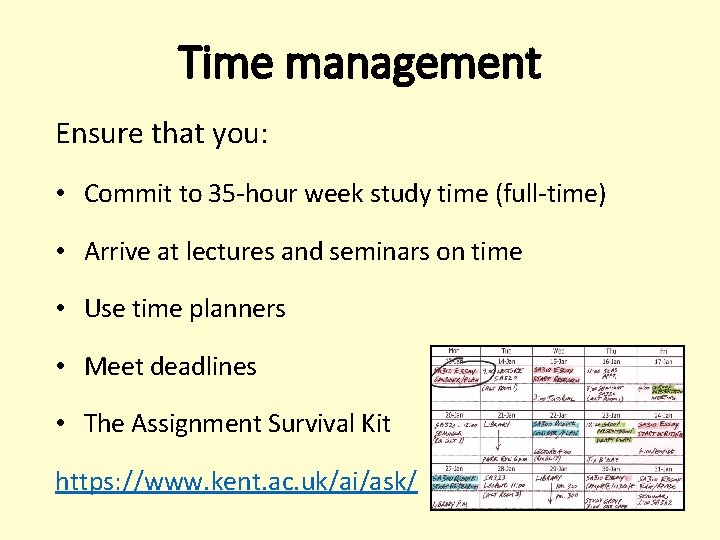
Time management Ensure that you: • Commit to 35 -hour week study time (full-time) • Arrive at lectures and seminars on time • Use time planners • Meet deadlines • The Assignment Survival Kit https: //www. kent. ac. uk/ai/ask/
Lectures The importance of lectures: • Share core up-to-date knowledge about module • Introduce/evaluate evidence that supports module • Examine alternative views and theories • Logical sequence
Make the most of lectures To do this you will need to: • Prepare in advance (background reading) • Turn up (in person/online) in good time • Above all, listen • Stay alert, keep track and follow structure • Seek clarification at the end
Take notes To take good lecture notes you should: • Listen as you write • Key points, theories, arguments, terms, definitions • Circle anything that requires later clarification • Use acronyms (initials) and other shorthand devices • Find a system that works for you • Tidy up for future use
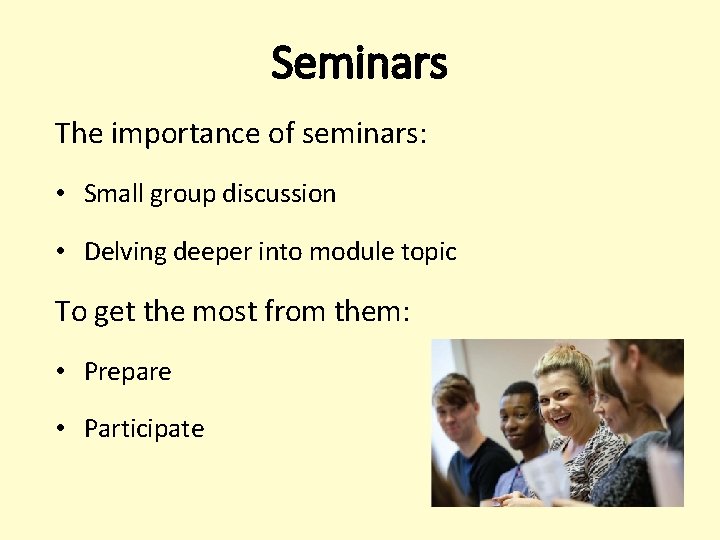
Seminars The importance of seminars: • Small group discussion • Delving deeper into module topic To get the most from them: • Prepare • Participate
Written assignments Allow you to demonstrate that you can: • Find out information through reading/research • Use it to present a clear, convincing argument • Following academic conventions (e. g. referencing)
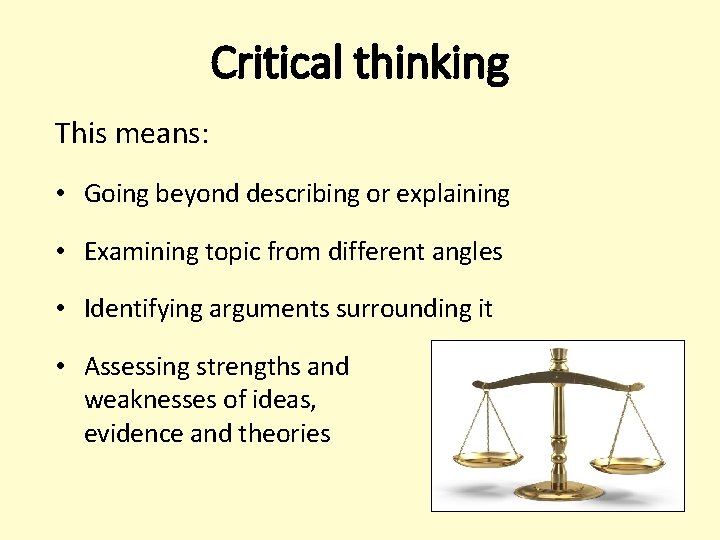
Critical thinking This means: • Going beyond describing or explaining • Examining topic from different angles • Identifying arguments surrounding it • Assessing strengths and weaknesses of ideas, evidence and theories
Referencing Acknowledging your sources: • However you have used them • From wherever they have come To do so: • Demonstrates your research • Helps to avoid plagiarism
Referencing correctly You will need to: • Find out the referencing style used by your School https: //www. kent. ac. uk/ai/styleguides. html • Follow guidelines on how to use it https: //www-citethemrightonline-com. chain. kent. ac. uk/Home
Assessing your assignments The level to which you have: • Answered the question directly • Built a strong argument • Based on critical analysis of evidence/viewpoints • Presented your ideas clearly • Following academic protocols (referencing etc)
Grading system • First Class/Distinction (70 -100) • Upper Second Class/Merit (60 -69) • Lower Second Class/Pass (50 -59) • Third Class/Pass (40 -49) • Fail (0 -39) • Stage one is pass/fail.
Feedback Use feedback as a learning tool: • Always collect and read it • Identifies strengths and weaknesses • Helps you focus on key improvements needed • If you don’t understand it, seek clarification • Seek help or advice to develop skills
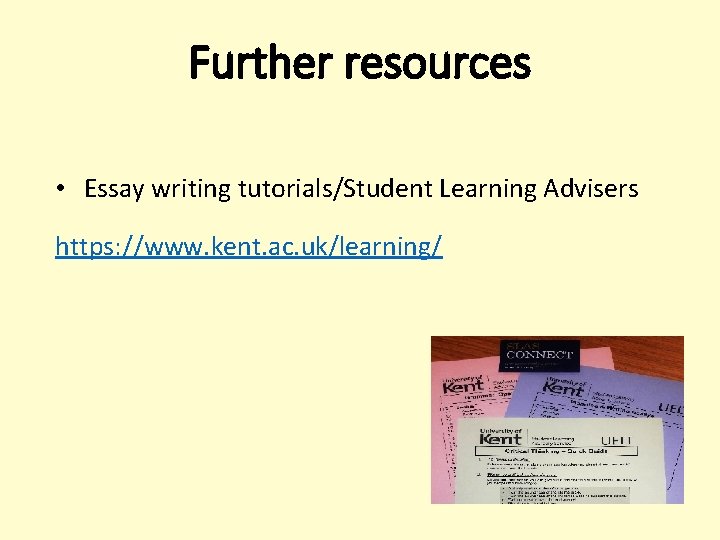
Further resources • Essay writing tutorials/Student Learning Advisers https: //www. kent. ac. uk/learning/
University study You should now have a good idea: • What to expect • What is expected of you • Support available If there’s anything you don’t understand please book an appointment, or contact us at learning@kent. ac. uk
Get in touch… The Student Learning Advisory Service is committed to continually improving the quality of service we offer to our students. Your feedback is very important to us. Please contact us at learning@kent. ac. uk
Get in touch… SLAS CONNECT To book an appointment: www. kent. ac. uk/learning@kent. ac. uk SLASkent Kent. Uni. SLASkent