Introduction to pharmaceutics PHM 224 YPHC 330 Y

- Slides: 12
Introduction to pharmaceutics PHM 224 Y/PHC 330 Y 12. 09. 2005 Gregory Poon, Ph. D, BSc. Phm, RPh
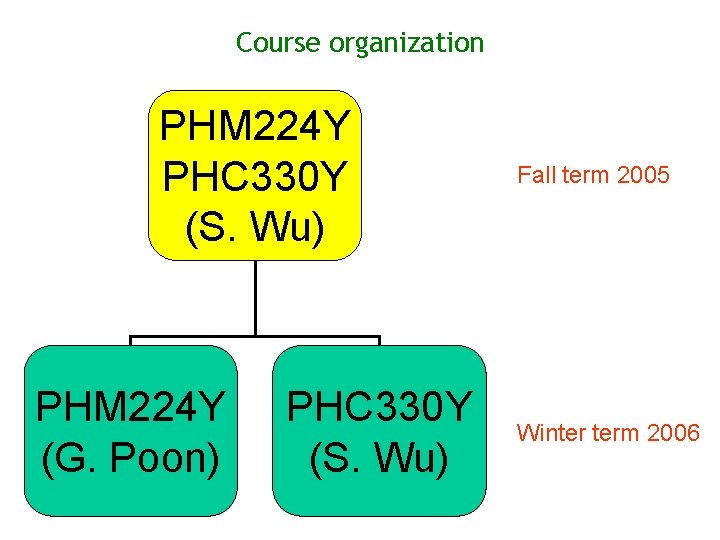
Course organization PHM 224 Y PHC 330 Y (S. Wu) PHM 224 Y (G. Poon) PHC 330 Y (S. Wu) Fall term 2005 Winter term 2006
Contact information • Gregory Poon, Ph. D, BSc. Phm, RPh Ontario Cancer Institute Princess Margaret Hospital • mailto: //mk. poon@utoronto. ca • MSN • mfbncr@hotmail. com • Your friendly TAs • Gamal Rayan • Jim Moselhy • Tony Liu
What is pharmaceutics? • The art and applied science of dosage form design • The interface between drug and body • A broad field that draws from many disciplines • Physical chemistry (organic and inorganic) • Medicinal chemistry • Anatomy, physiology • Microbiology • Atomic physics • Engineering (chemical, material) • Deals with many aspects of interactions both inside and outside the body • It’s not trivial to design and implement a dosage form that is both safe and effective for the drug’s intended use!
Pharmaceutics is unique to pharmacy • Physicians and other prescribers don’t learn and apply physical pharmaceutical principles • Chemists and engineers don’t learn a whole lot of biology • Anyone can read the latest review article of a disease state and play armchair prescriber, but it takes a pharmacist to know how to deliver a drug safely and effectively!
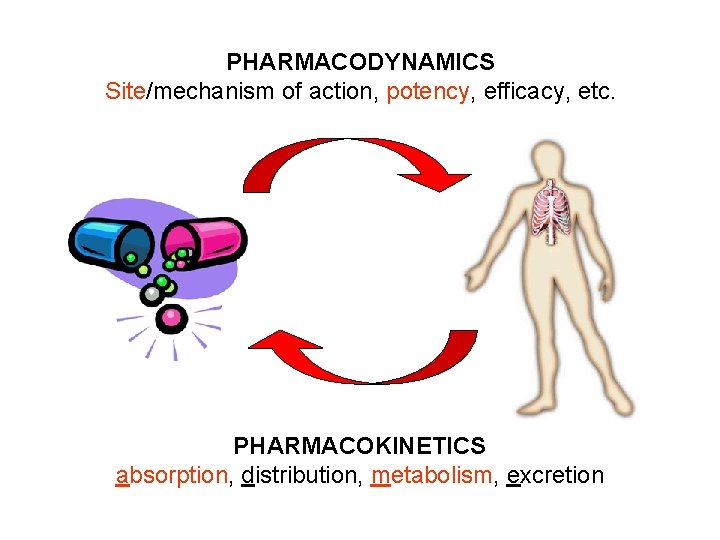
PHARMACODYNAMICS Site/mechanism of action, potency, efficacy, etc. PHARMACOKINETICS absorption, distribution, metabolism, excretion
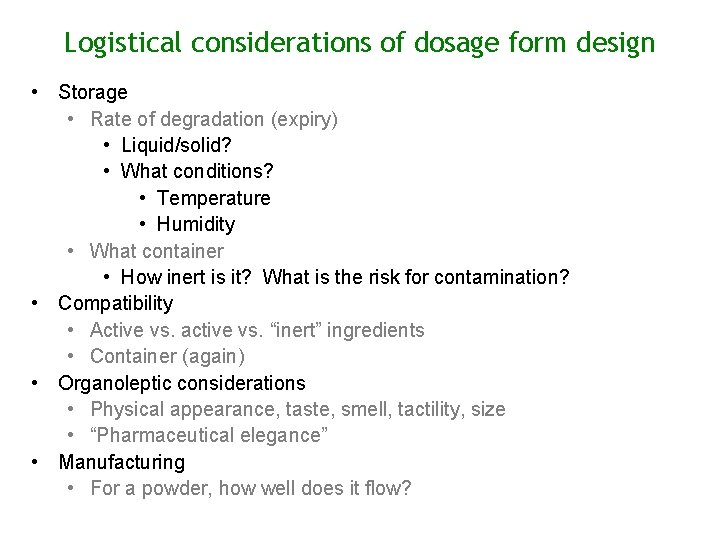
Logistical considerations of dosage form design • Storage • Rate of degradation (expiry) • Liquid/solid? • What conditions? • Temperature • Humidity • What container • How inert is it? What is the risk for contamination? • Compatibility • Active vs. active vs. “inert” ingredients • Container (again) • Organoleptic considerations • Physical appearance, taste, smell, tactility, size • “Pharmaceutical elegance” • Manufacturing • For a powder, how well does it flow?
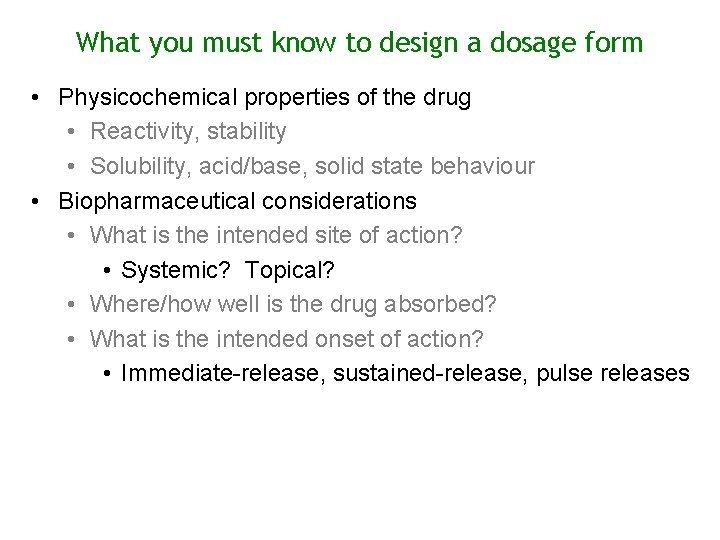
What you must know to design a dosage form • Physicochemical properties of the drug • Reactivity, stability • Solubility, acid/base, solid state behaviour • Biopharmaceutical considerations • What is the intended site of action? • Systemic? Topical? • Where/how well is the drug absorbed? • What is the intended onset of action? • Immediate-release, sustained-release, pulse releases
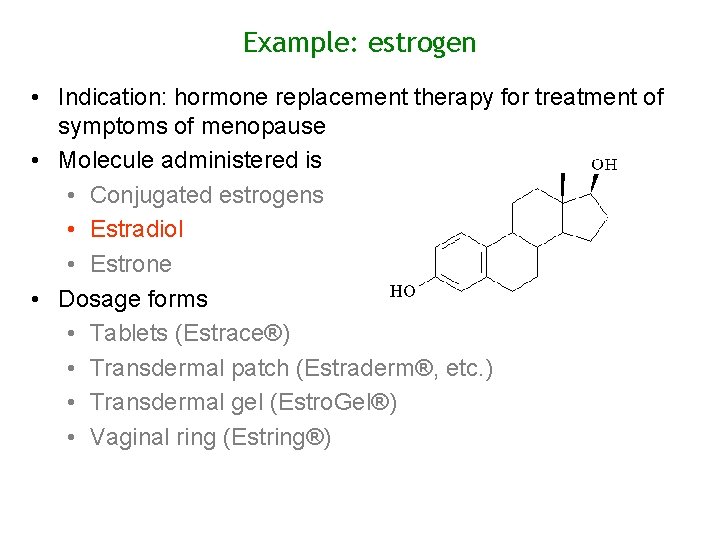
Example: estrogen • Indication: hormone replacement therapy for treatment of symptoms of menopause • Molecule administered is • Conjugated estrogens • Estradiol • Estrone • Dosage forms • Tablets (Estrace®) • Transdermal patch (Estraderm®, etc. ) • Transdermal gel (Estro. Gel®) • Vaginal ring (Estring®)
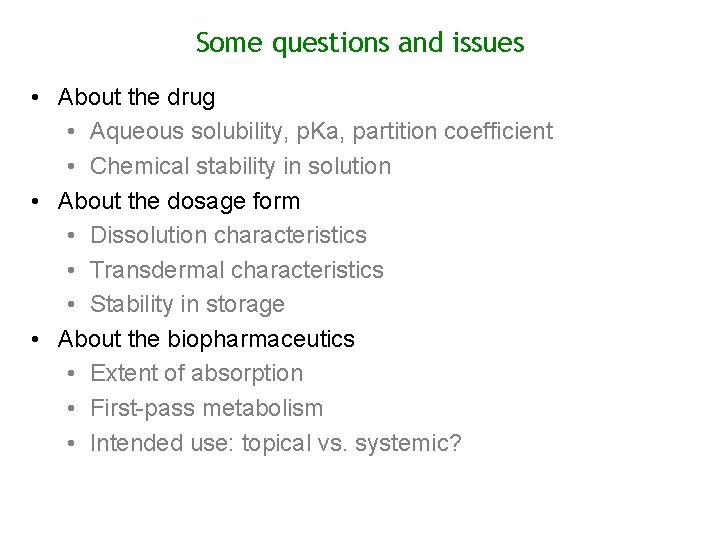
Some questions and issues • About the drug • Aqueous solubility, p. Ka, partition coefficient • Chemical stability in solution • About the dosage form • Dissolution characteristics • Transdermal characteristics • Stability in storage • About the biopharmaceutics • Extent of absorption • First-pass metabolism • Intended use: topical vs. systemic?
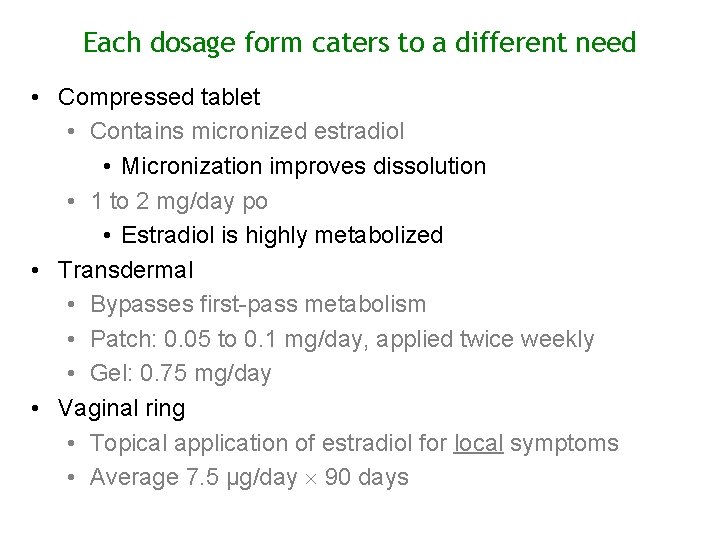
Each dosage form caters to a different need • Compressed tablet • Contains micronized estradiol • Micronization improves dissolution • 1 to 2 mg/day po • Estradiol is highly metabolized • Transdermal • Bypasses first-pass metabolism • Patch: 0. 05 to 0. 1 mg/day, applied twice weekly • Gel: 0. 75 mg/day • Vaginal ring • Topical application of estradiol for local symptoms • Average 7. 5 µg/day 90 days
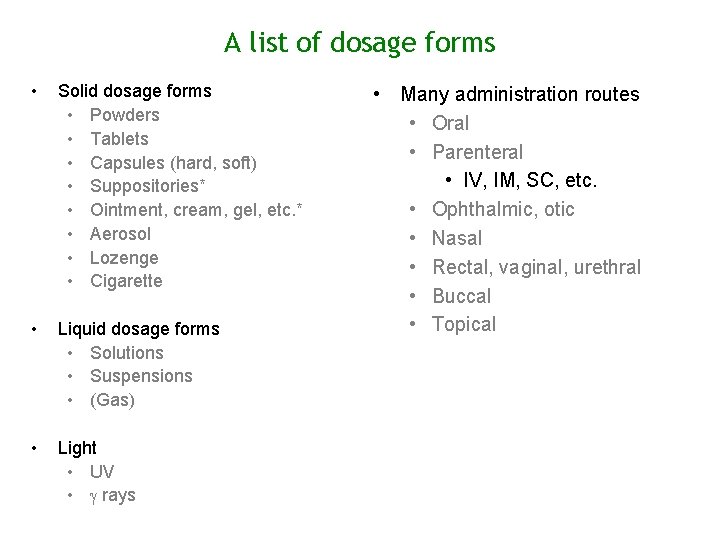
A list of dosage forms • Solid dosage forms • Powders • Tablets • Capsules (hard, soft) • Suppositories* • Ointment, cream, gel, etc. * • Aerosol • Lozenge • Cigarette • Liquid dosage forms • Solutions • Suspensions • (Gas) • Light • UV • rays • Many administration routes • Oral • Parenteral • IV, IM, SC, etc. • Ophthalmic, otic • Nasal • Rectal, vaginal, urethral • Buccal • Topical