Introduction to Child and Adolescent Anxiety Workshop Sally
- Slides: 13
Introduction to Child and Adolescent Anxiety Workshop Sally Siggs Education Wellbeing Practitioner Emotional Health Service Tier 2 CAMHS
These resources are developed and delivered to you by the school based mental health support team Please complete the pre-workshop form using the link attached below to help us design resources that support you! https: //docs. google. com/forms/d/1 v. M 0 u. YEt 4 FBy 56 d. GAaj 28 Hybwhj. G 1 Pe 9 u. O 6 WDv. E 38 Qm 8/edit
Please note In order to hear the voiceover, please download this Powerpoint and press ‘Start Presentation’. The presentation will then automatically run with sound. NOTE: The sound will not play if you are viewing the presentation online on ‘Google Slides. ’
What to expect �This workshop will be split into three 20 minute sessions. �After each video session, we will provide a follow up appointment on Google Hangouts where you can speak to a mental health practitioner via webcam and ask any questions that you may have from the video.
Aims for the Workshop �Session 1: Explanation about anxiety in children. �Session 2: How child anxiety may develop and factors that keep it going. �Session 3: Strategies to manage anxiety and build confidence in your anxious child.
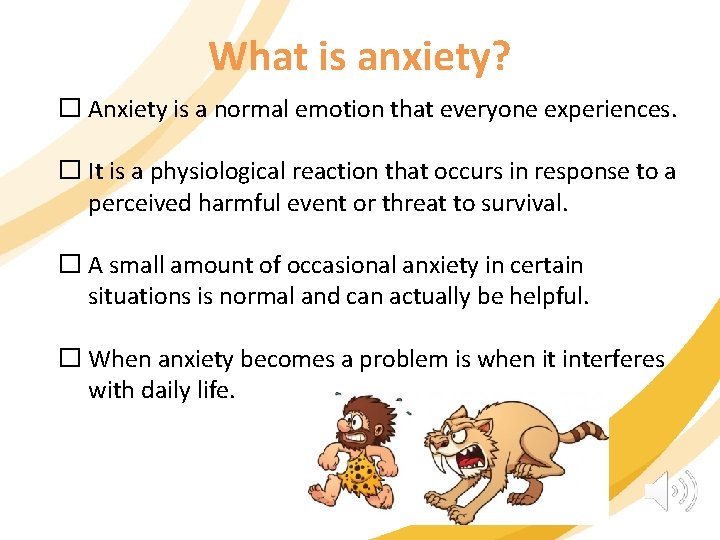
What is anxiety? � Anxiety is a normal emotion that everyone experiences. � It is a physiological reaction that occurs in response to a perceived harmful event or threat to survival. � A small amount of occasional anxiety in certain situations is normal and can actually be helpful. � When anxiety becomes a problem is when it interferes with daily life.
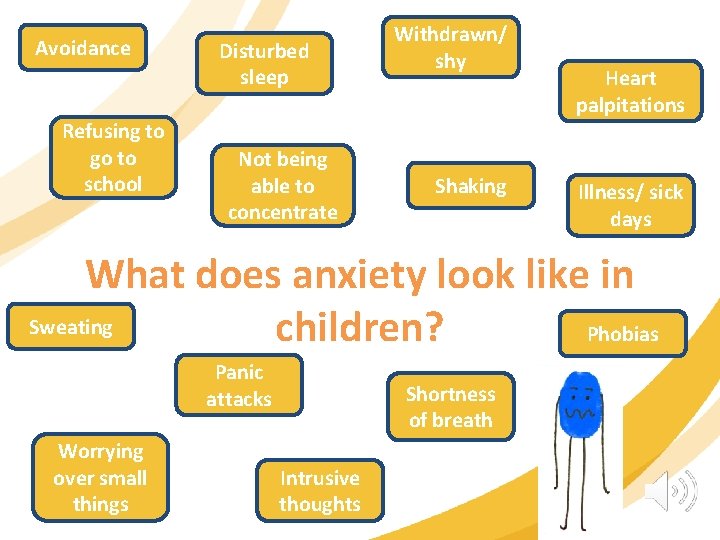
Avoidance Refusing to go to school Disturbed sleep Not being able to concentrate Withdrawn/ shy Shaking Heart palpitations Illness/ sick days What does anxiety look like in Sweating children? Phobias Panic attacks Worrying over small things Shortness of breath Intrusive thoughts
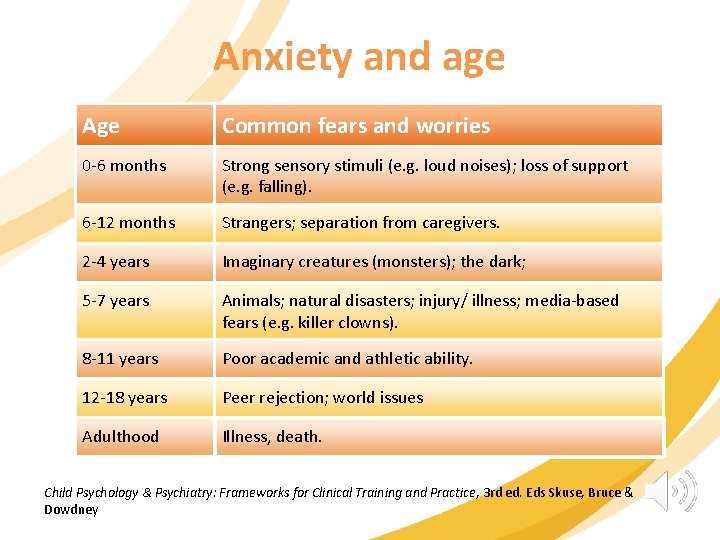
Anxiety and age Age Common fears and worries 0 -6 months Strong sensory stimuli (e. g. loud noises); loss of support (e. g. falling). 6 -12 months Strangers; separation from caregivers. 2 -4 years Imaginary creatures (monsters); the dark; 5 -7 years Animals; natural disasters; injury/ illness; media-based fears (e. g. killer clowns). 8 -11 years Poor academic and athletic ability. 12 -18 years Peer rejection; world issues Adulthood Illness, death. Child Psychology & Psychiatry: Frameworks for Clinical Training and Practice, 3 rd ed. Eds Skuse, Bruce & Dowdney
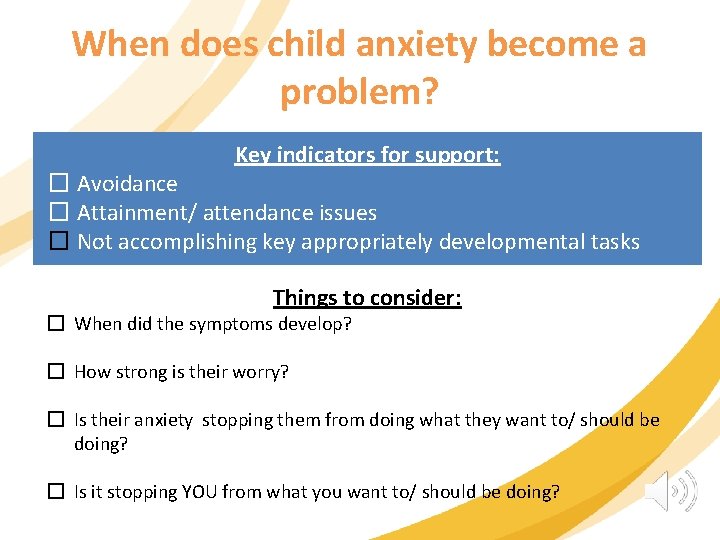
When does child anxiety become a problem? Key indicators for support: � Avoidance � Attainment/ attendance issues � Not accomplishing key appropriately developmental tasks Things to consider: � When did the symptoms develop? � How strong is their worry? � Is their anxiety stopping them from doing what they want to/ should be doing? � Is it stopping YOU from what you want to/ should be doing?
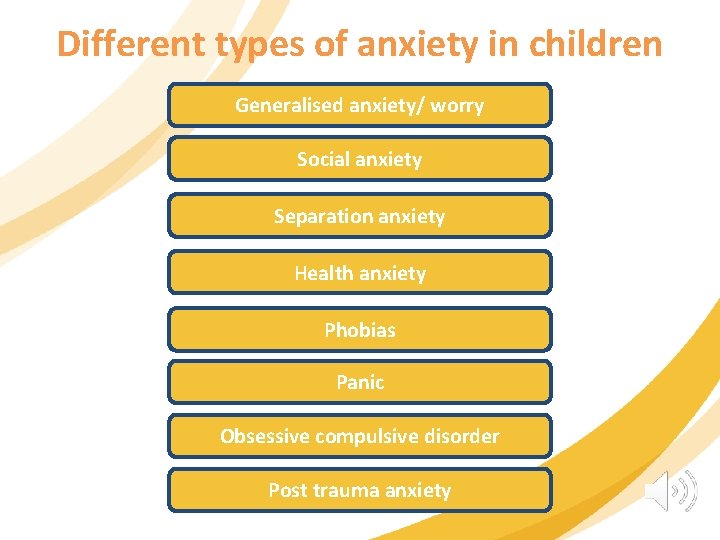
Different types of anxiety in children Generalised anxiety/ worry Social anxiety Separation anxiety Health anxiety Phobias Panic Obsessive compulsive disorder Post trauma anxiety
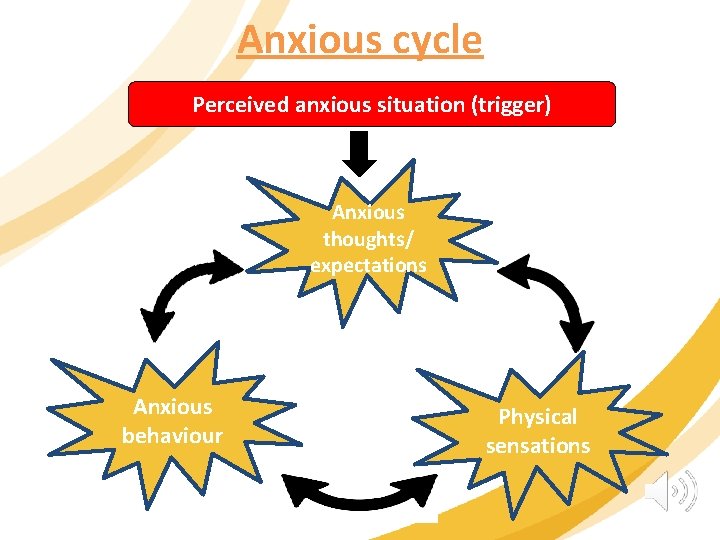
Anxious cycle Perceived anxious situation (trigger) Anxious thoughts/ expectations Anxious behaviour Physical sensations
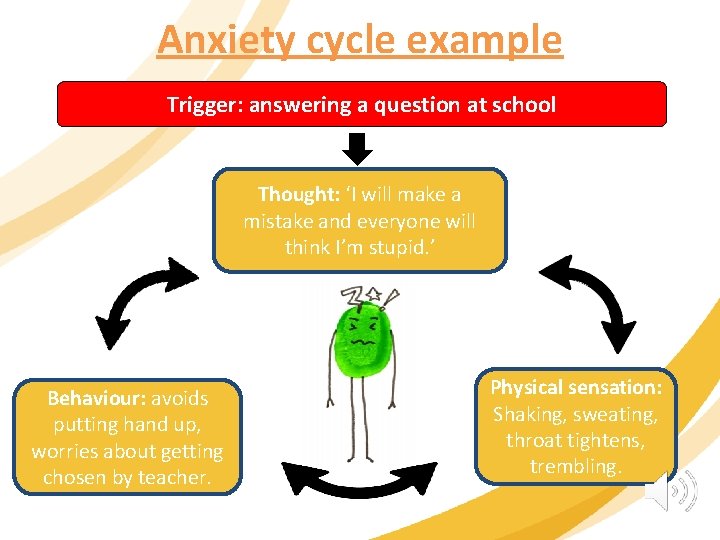
Anxiety cycle example Trigger: answering a question at school Thought: ‘I will make a mistake and everyone will think I’m stupid. ’ Behaviour: avoids putting hand up, worries about getting chosen by teacher. Physical sensation: Shaking, sweating, throat tightens, trembling.
What to expect: If you have any questions/ concerns please contact us at MHST@achievingforchildren. org. uk � Next session = ‘How child anxiety may develop and factors that keep it going. ’