INTELLECTUALS THE STATE AND THE WORLD LEGACIES OF
- Slides: 25
INTELLECTUALS, THE STATE AND THE WORLD: LEGACIES OF THE GREAT WAR Russell A. Berman berman@stanford. edu
The modern “public intellectual’—the scholars, writers and thinkers who address a wide audience on matters of civic concern—took shape in the debates around World War I. Writers addressed the war not only to support or oppose it, but also to establish themselves as authorities for the new mass public.
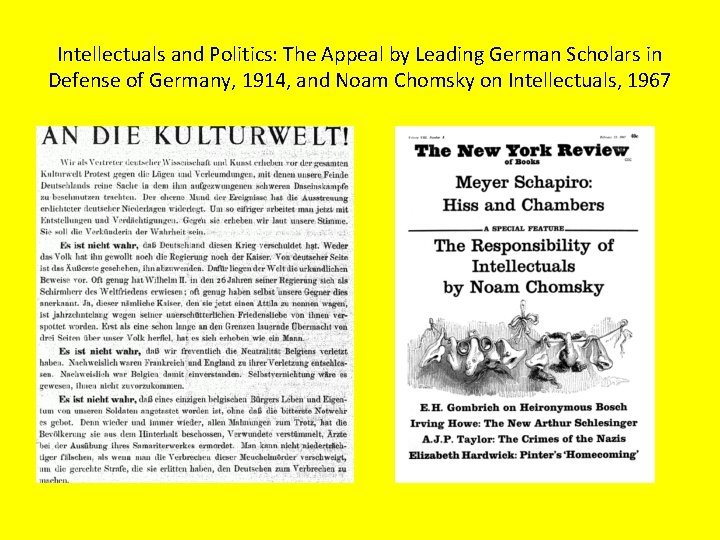
Intellectuals and Politics: The Appeal by Leading German Scholars in Defense of Germany, 1914, and Noam Chomsky on Intellectuals, 1967
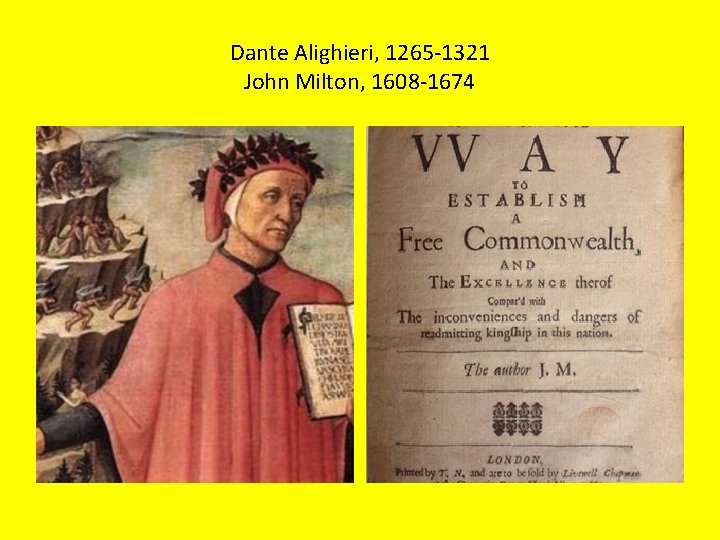
Dante Alighieri, 1265 -1321 John Milton, 1608 -1674
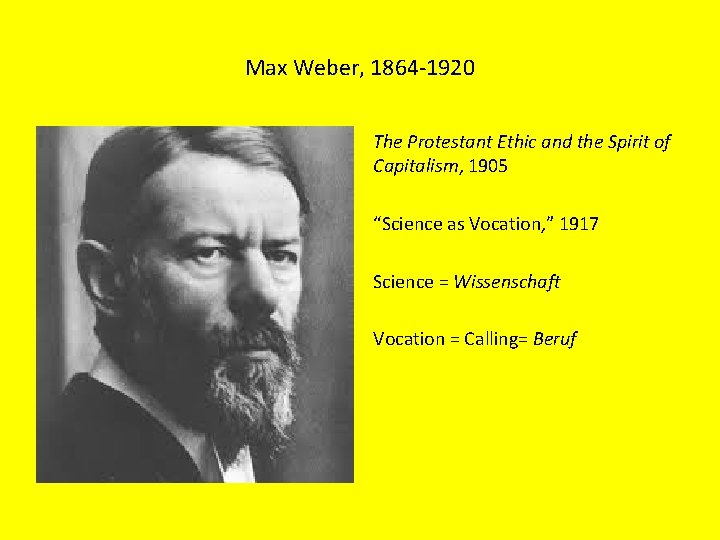
Max Weber, 1864 -1920 The Protestant Ethic and the Spirit of Capitalism, 1905 “Science as Vocation, ” 1917 Science = Wissenschaft Vocation = Calling= Beruf
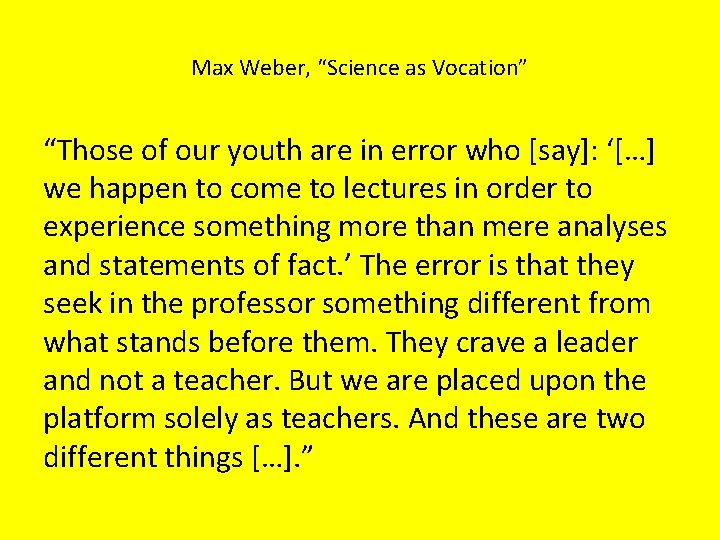
Max Weber, “Science as Vocation” “Those of our youth are in error who [say]: ‘[…] we happen to come to lectures in order to experience something more than mere analyses and statements of fact. ’ The error is that they seek in the professor something different from what stands before them. They crave a leader and not a teacher. But we are placed upon the platform solely as teachers. And these are two different things […]. ”
Max Weber, “Science as Vocation” “Science today is ‘vocation’ organized in special disciplines in the service of self-clarification and knowledge of interrelated facts. It is not the gift of grace of seers and prophets dispensing sacred values and revelations, nor does it partake of the contemplation of sages and philosophers about the meaning of the universe. […] Only a prophet or a savior can give [those] answers. If there is no such man, or if his message is no longer believed in, then you will certainly not compel him to appear on this earth by having thousands of professors, as privileged hirelings of the state, attempt as petty prophets in their lecture-rooms to take over this role. ”
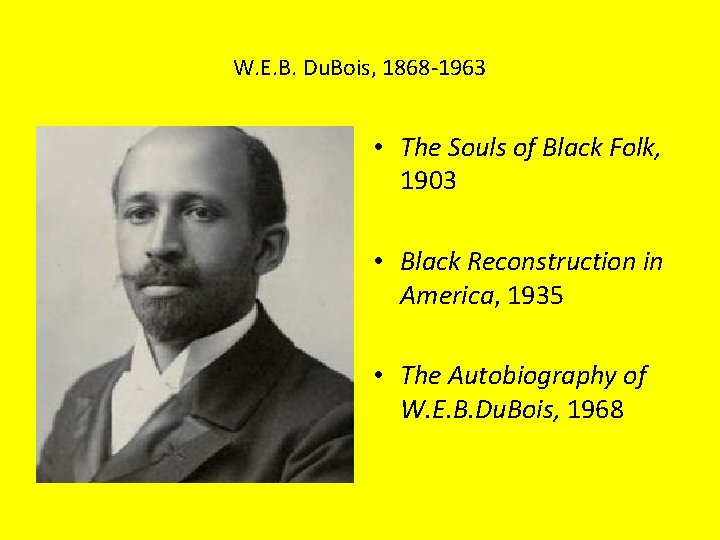
W. E. B. Du. Bois, 1868 -1963 • The Souls of Black Folk, 1903 • Black Reconstruction in America, 1935 • The Autobiography of W. E. B. Du. Bois, 1968
W. E. B. Du. Bois, 1868 -1963 “Our duty is clear: Racial slander must go. Racial prejudice will follow. Steadfast faith in humanity must come. The domination of one people by another without the other’s consent, be the subject people black or white, must stop. The doctrine of forcible economic expansion over subject peoples must go. ” --in “The African Roots of War”, The Atlantic, 1915
W. E. B. Du. Bois, 1868 -1963 “Many colored persons, and persons interested in them, may easily make the mistake of supposing that the present war is far removed from the color problem of America. […] This attitude is a mistake. The present war in Europe is one of the great disasters due to race and color prejudice and it foreshadows greater disasters in the future. ” in: “World War and the Color Line, ” The Crisis November 1914 (Vol. 9, Nr. 1), p. 28.
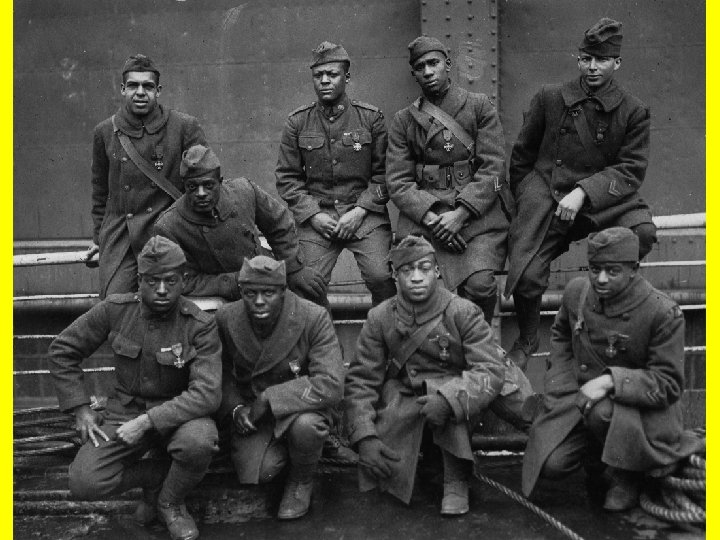
W. E. B. Du. Bois, 1868 -1963 “Let us not hesitate: Let us while this war lasts, forget our special grievances and close our ranks shoulder to shoulder with our own white fellow citizens and the allied nations that are fighting for democracy. ” From “Close Ranks”, in The Crisis, July, 1918
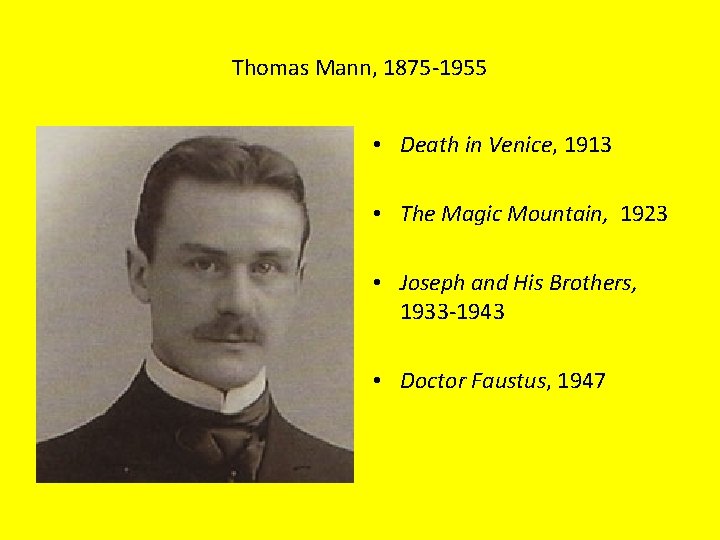
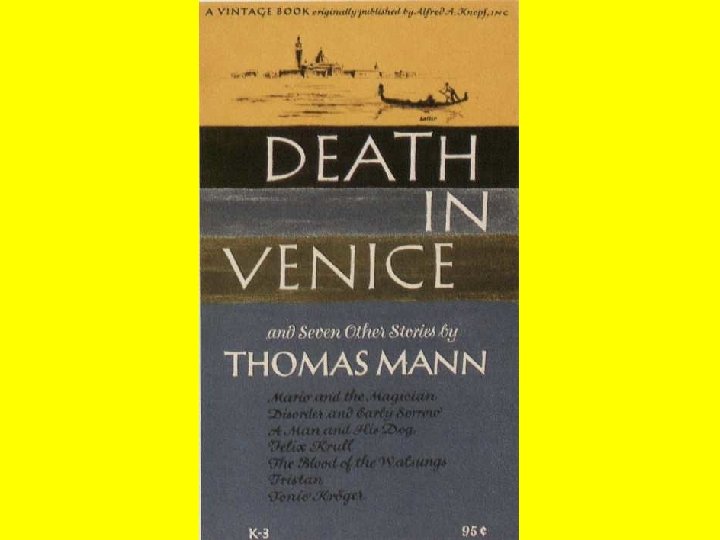
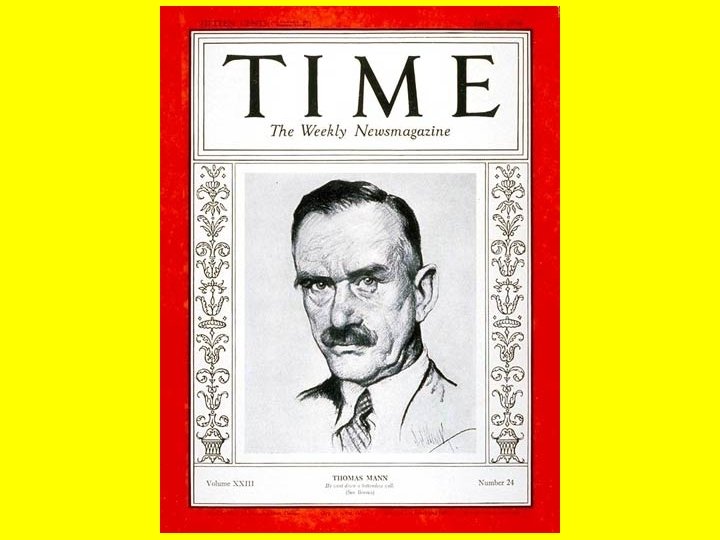
Thomas Mann, 1875 -1955 • Death in Venice, 1913 • The Magic Mountain, 1923 • Joseph and His Brothers, 1933 -1943 • Doctor Faustus, 1947
Concluding Scene of The Magic Mountain, 1923 “He runs with feet weighed down by mud, his bayoneted rifle clutched in his hand hanging at his side. Look, he is stepping on the hand of a fallen comrade, pushing it deep into the soggy, branch-strewn earth. But it is him, all the same. What’s this? He’s singing? The way a man sings to himself in moments of dazed, thoughtless excitement, without even knowing—and he uses what tatters of breath he has let to sing to himself: ‘Upon its bark I ca-arved there So many words of love—’ He stumbles. No, he has thrown himself on his stomach, at the approach of a howling hound of hell, a large explosive shell, a hideous sugarloaf from the abyss. He lies there, face in the cool muck, legs spread, feet twisted until the heels press the earth. ”
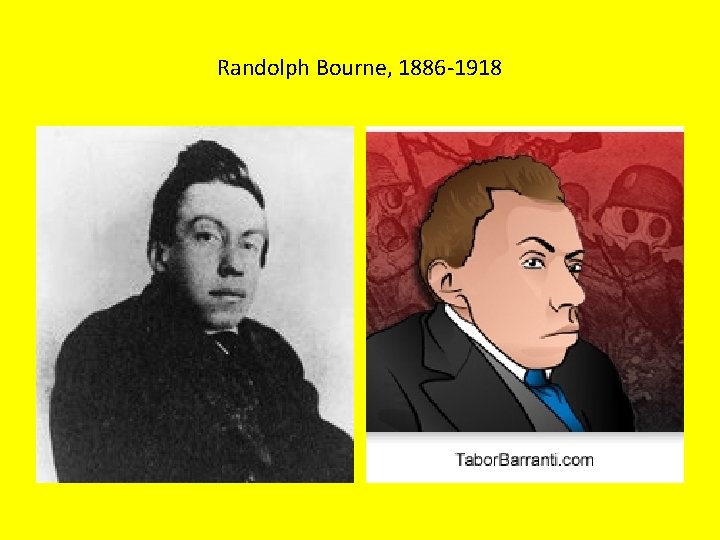
Randolph Bourne, 1886 -1918
Randolph Bourne, “The State” “The State in its inception is pure and undiluted monarchy: it is armed power, culminating in a single head, bent on one primary object, the reducing to subjection, to unconditional and unqualified loyalty of all the people of a certain territory. This is the primary striving of the State, and it is a striving that the State never loses, through all its myriad transformations. ”
Randolph Bourne, “The State” “In times of peace the sense of the State flags in a republic that is not militarized. For war is essentially the health of the State. ”
Randolph Bourne, “The State” “The State is the organization of the herd to act offensively or defensively against another herd similarly organized. The more terrifying the occasion for defense, the closer will become the organization and the more coercive the influence upon each member of the herd. War sends the current of purpose and activity flowing down to the lowest level of the herd, and to its most branches. ”
Randolph Bourne, “The War and the Intellectuals, ” 1917 “It has been a bitter experience to see the unanimity with which the American intellectuals have thrown their support to use of war-technique in the crisis in which America found herself. ” “subtle […] spiritual chemistry of the ‘inside’ that all this intellectual cohesion—heard-instinct become herd-intellect—which seemed abroad so hysterical and so servile comes to us here in highly rational terms. ”
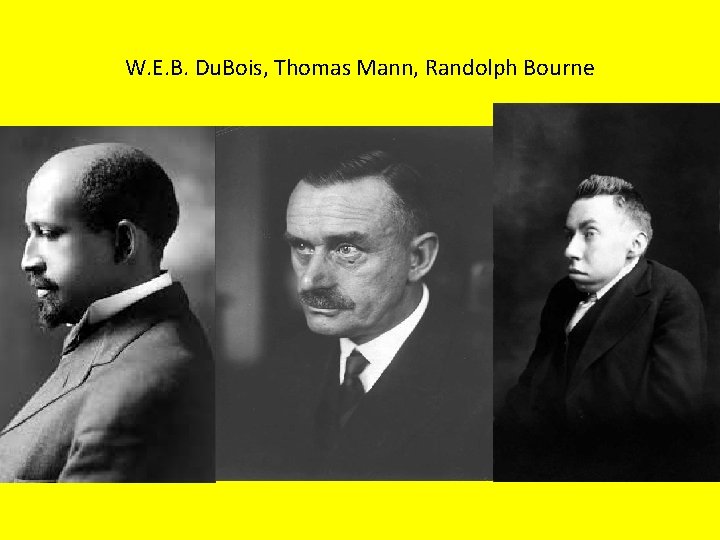
W. E. B. Du. Bois, Thomas Mann, Randolph Bourne
Bourne, “The War and the Intellectuals, ” 1917 “[Intellectuals’] thought becomes little more than a description and justification of what is going on. They turn upon any rash one who continues idly to speculate. Once the war is on, the conviction spreads that individual thought is helpless, that the only way one can count is as a cog in the great wheel. ”