Institute of Surgical Research Surgical Techniques A 2
- Slides: 22
Institute of Surgical Research Surgical Techniques A 2. Practical Module
Surgical Deontology Basic surgical instruments; Textiles in the operating room; Suture materials; Tying surgical knots; Asepsis and the patient: preparing the operative site
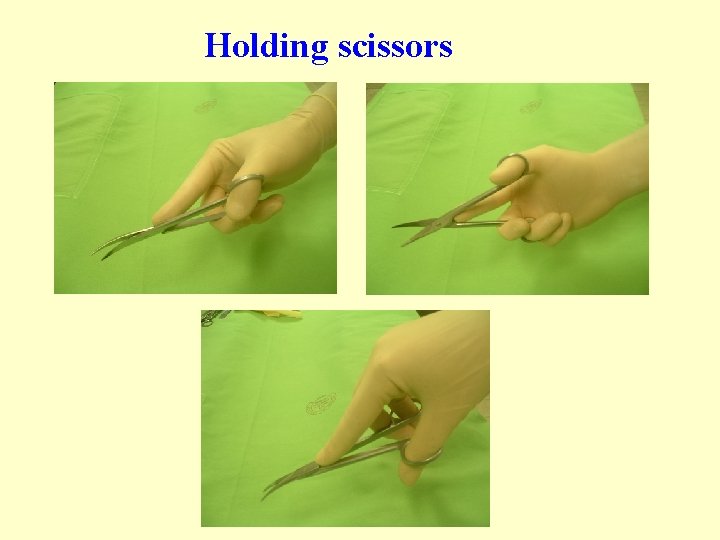
Holding scissors
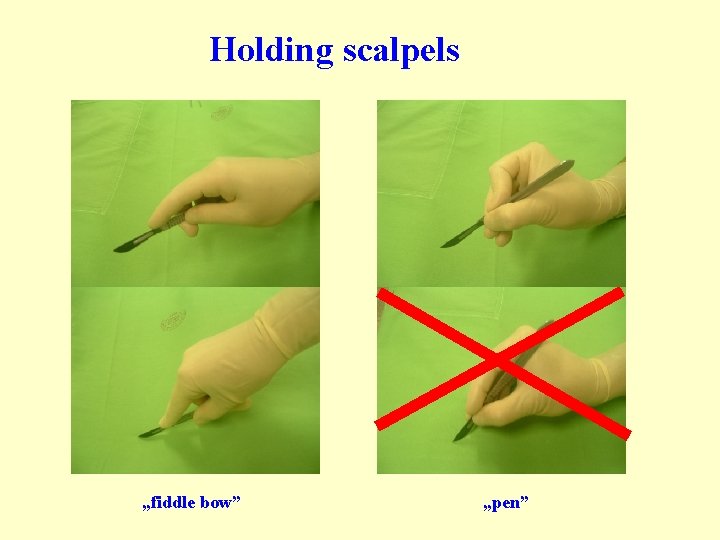
Holding scalpels „fiddle bow” „pen”
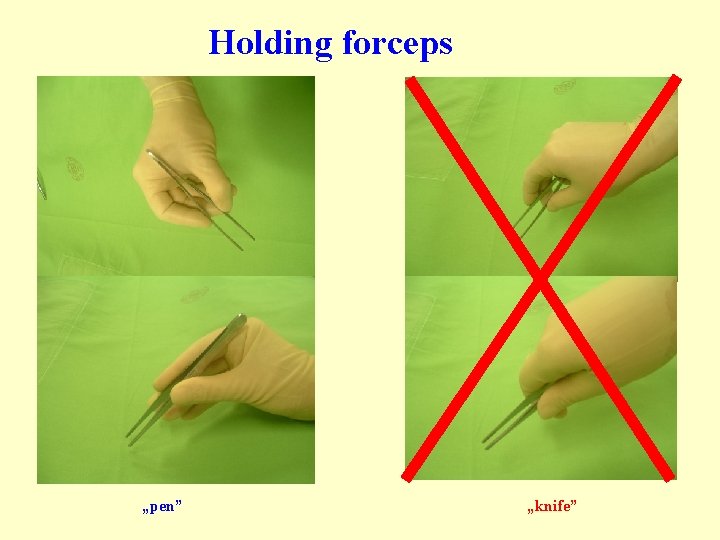
Holding forceps „pen” „knife”
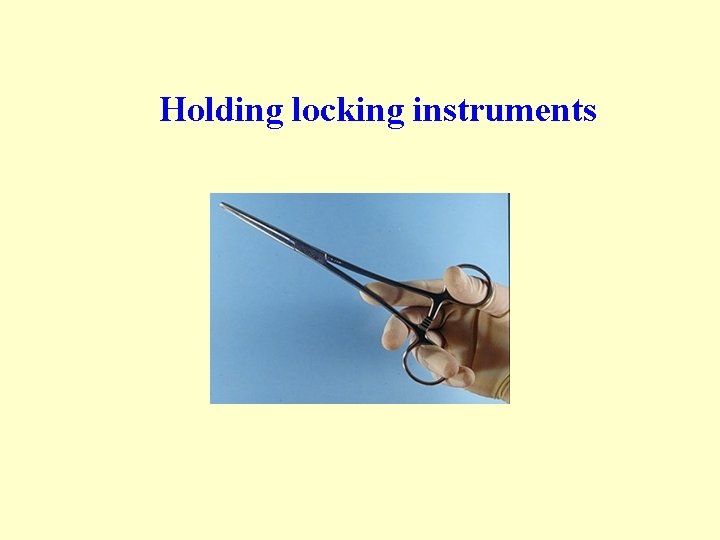
Holding locking instruments
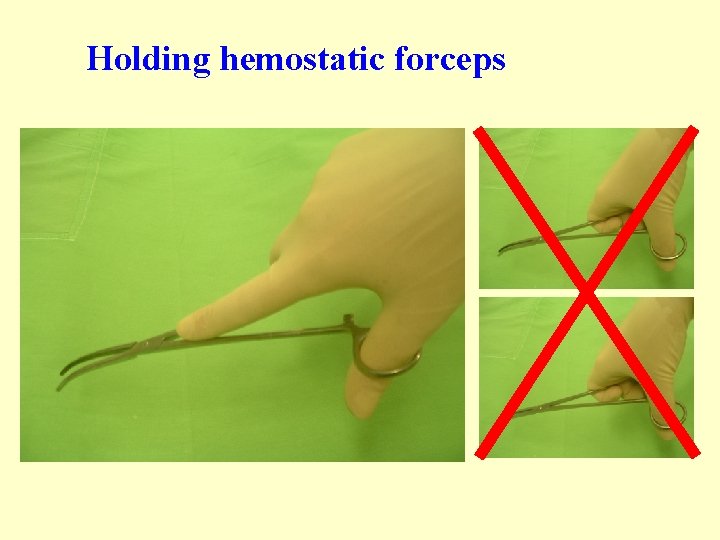
Holding hemostatic forceps
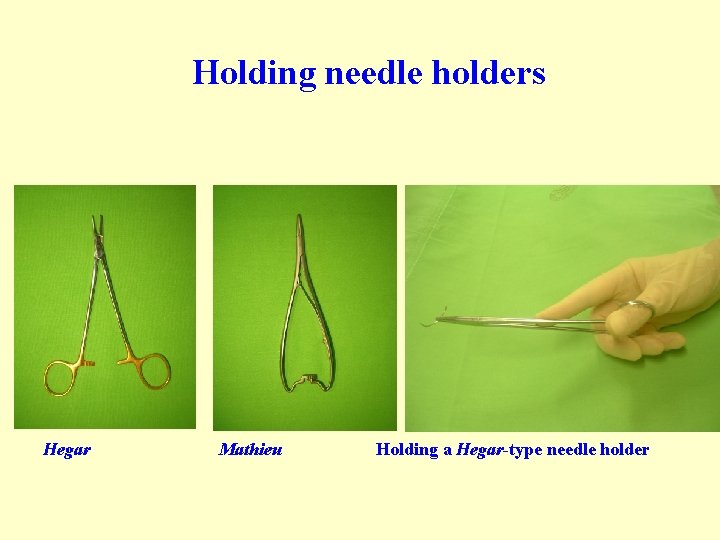
Holding needle holders Hegar Mathieu Holding a Hegar-type needle holder
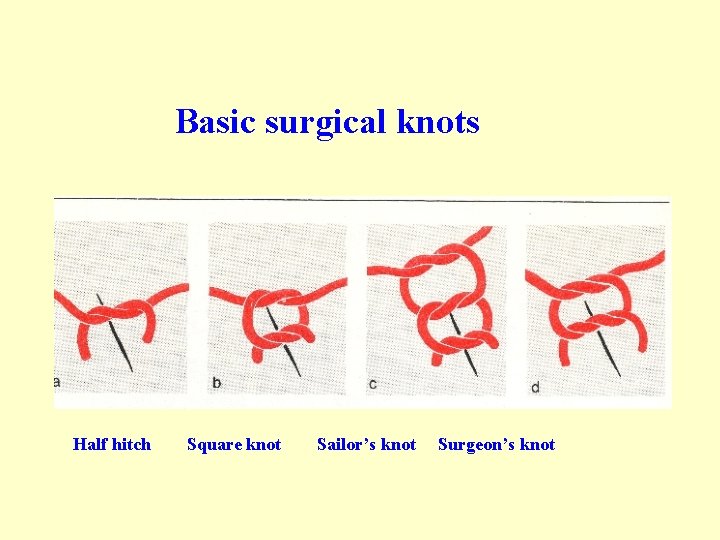
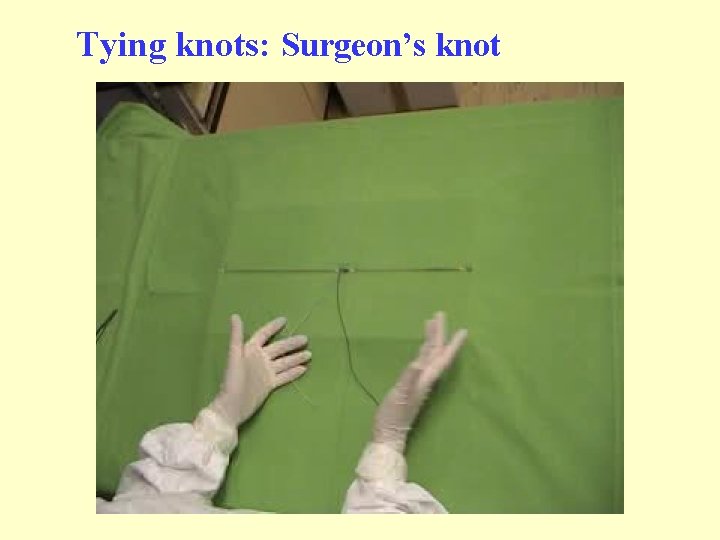
Basic surgical knots Half hitch Square knot Sailor’s knot Surgeon’s knot
Tying surgical knots 1. The ends of sutures and ligatures are joined with surgical knots. Requirements: - quick - strong - safe Incorrect knots can lead to severe postoperative complications ! Loose knot = haemorrhage, thicker scar Fully tightened knot = blocks local blood supply, slow wound healing
Tying surgical knots 2. A half hitch = the threads form a closed loop. Two identical half hitches tied above one another = granny knot but this slips easily, therefore it must not be used in surgery !
Tying surgical knots 3. In surgical practice a knot consists of at least two mirror image half hitches, one placed on the other: base half hitch + second half hitch (in the opposite direction). Before tying a half hitch the threads should be crossed! The number of half hitches depends on the types of threads (synthetic threads require extra ones - up to 6 or more).
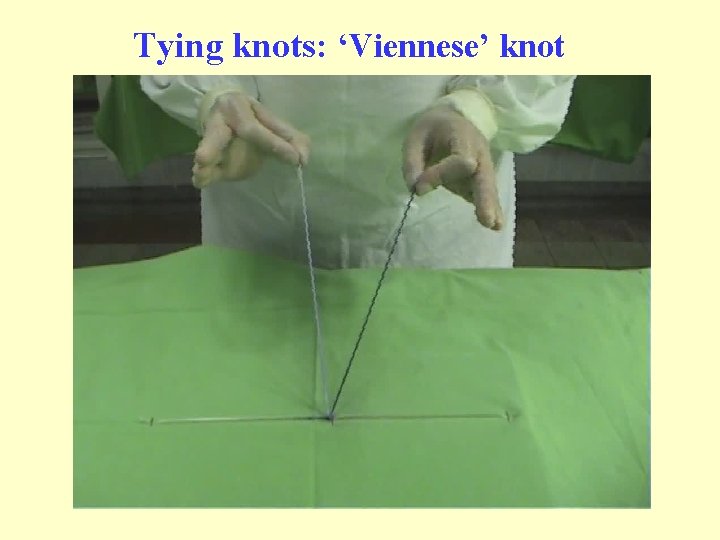
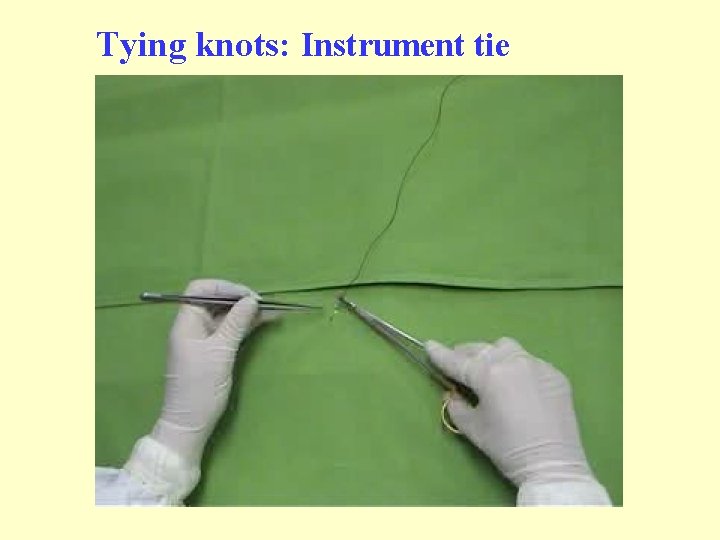
Tying surgical knots 4. Methods of tying knots in surgery: - two-handed knot: both hands take an active part in the formation of the knot - one-handed knot: one hand is active, the other holds the thread, then the knot is tied with both hands - instrument tie: with needle holders, mosquitos (1. in a deep cavity; 2. with atraumatic needles; 3. with short suture materials
Tying surgical knots 5. Methods of tying two hand knots: - two-handed square knot - surgeon’s knot - Viennese knot - instrument tie Methods of tying one-handed knot and instrument tie will be taught by the Suture Tutor program.
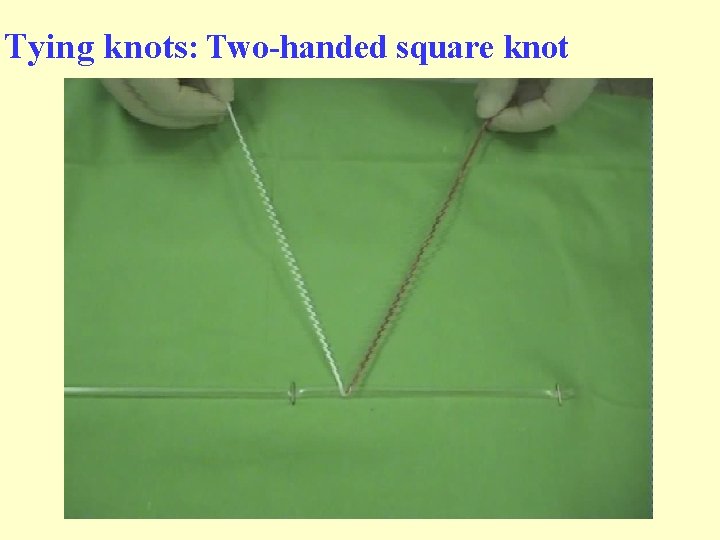
Tying knots: Two-handed square knot
Tying knots: Surgeon’s knot
Tying knots: ‘Viennese’ knot
Tying knots: Instrument tie
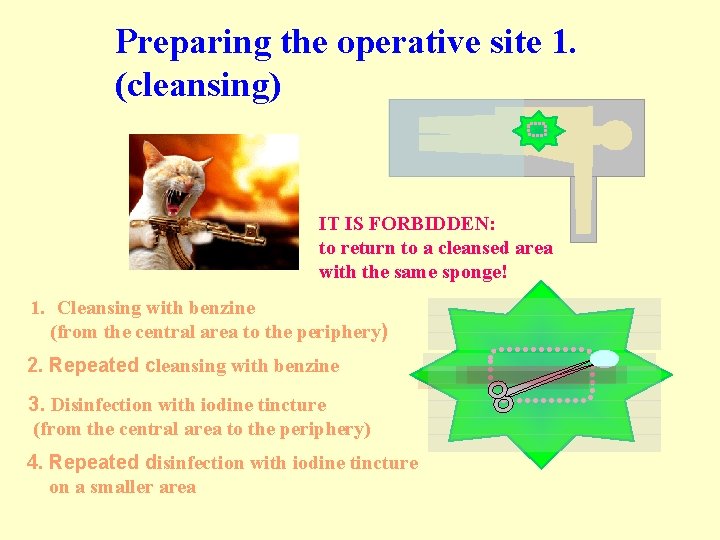
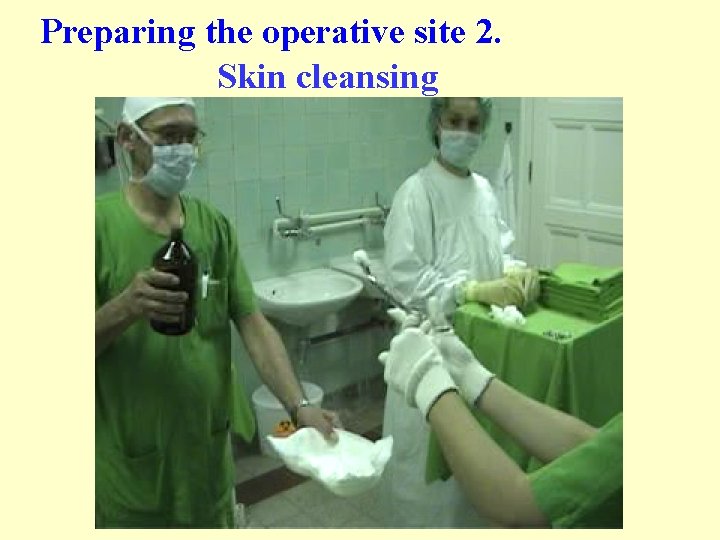
Preparing the operative site 1. (cleansing) IT IS FORBIDDEN: to return to a cleansed area with the same sponge! 1. Cleansing with benzine (from the central area to the periphery) 2. Repeated cleansing with benzine 3. Disinfection with iodine tincture (from the central area to the periphery) 4. Repeated disinfection with iodine tincture on a smaller area
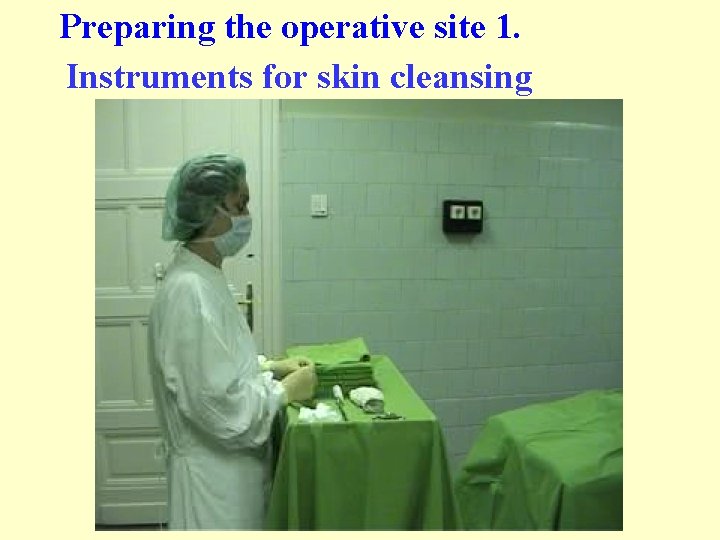
Preparing the operative site 1. Instruments for skin cleansing
Preparing the operative site 2. Skin cleansing
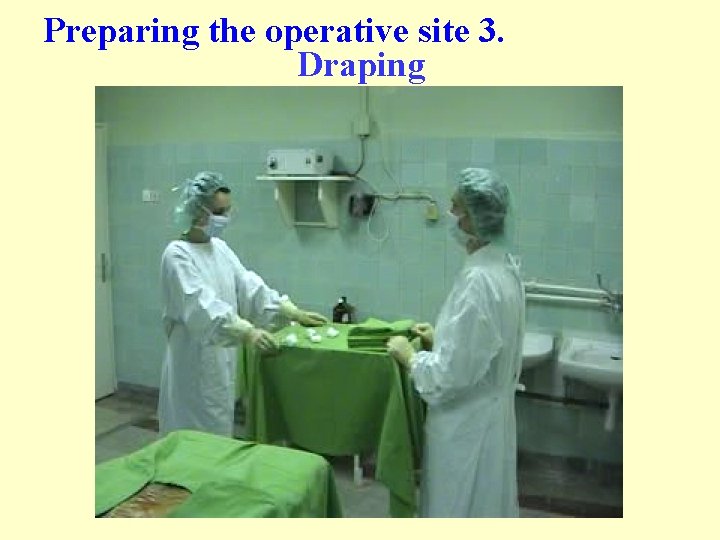
Preparing the operative site 3. Draping