Injuries vulnus reg vulnera mors propter Laesio Any
- Slides: 25
Injuries
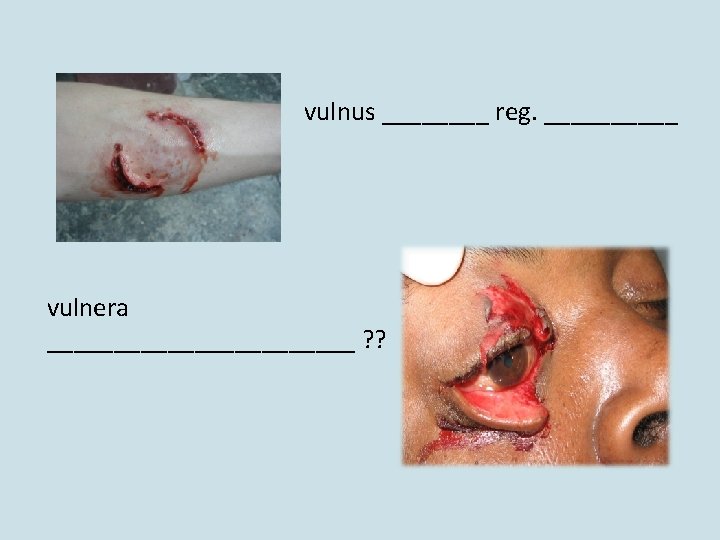
vulnus ____ reg. _____ vulnera ____________ ? ?
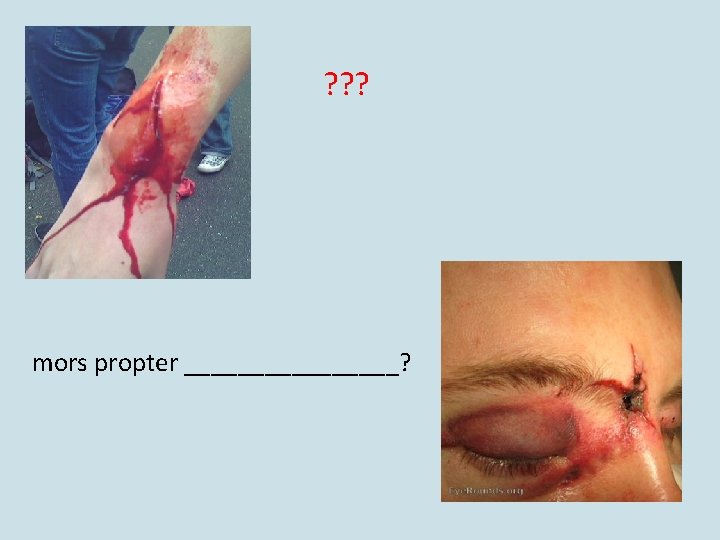
? ? ? mors propter ________?
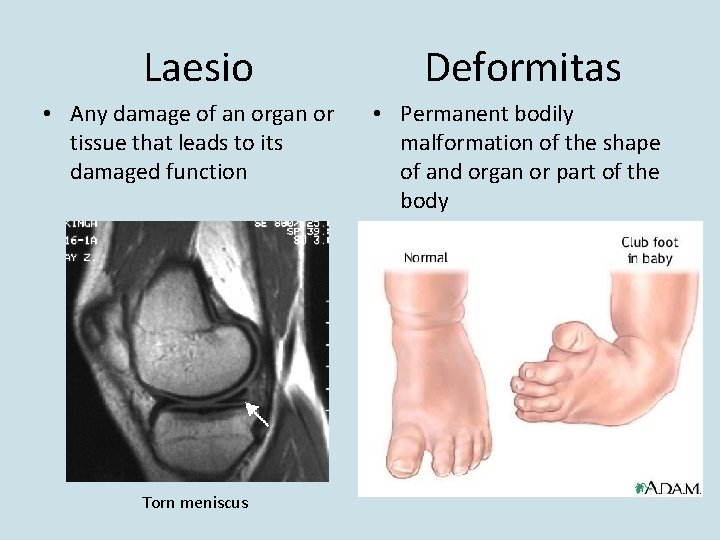
Laesio • Any damage of an organ or tissue that leads to its damaged function Torn meniscus Deformitas • Permanent bodily malformation of the shape of and organ or part of the body
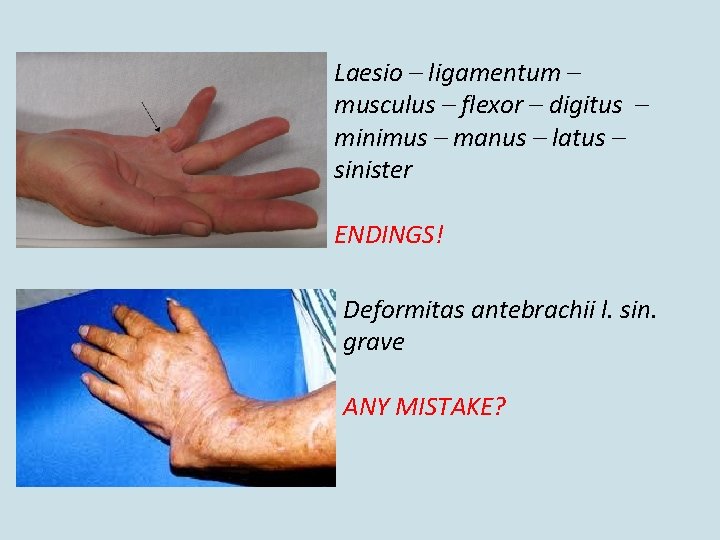
Laesio – ligamentum – musculus – flexor – digitus – minimus – manus – latus – sinister ENDINGS! Deformitas antebrachii l. sin. grave ANY MISTAKE?
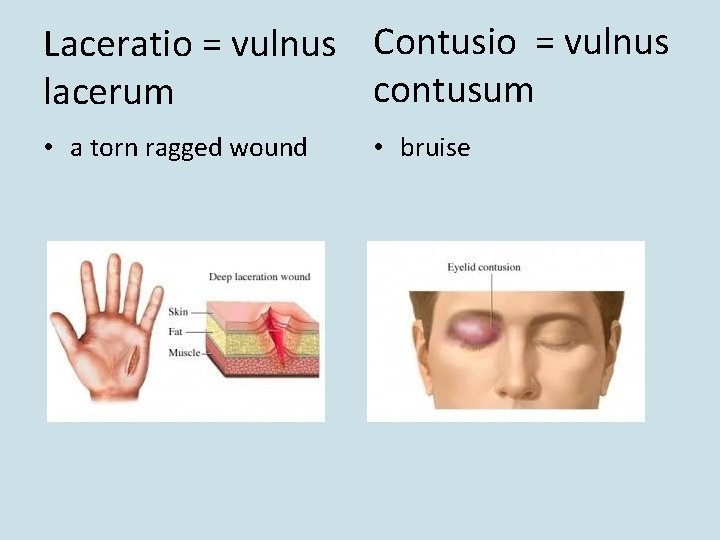
Laceratio = vulnus Contusio = vulnus contusum lacerum • a torn ragged wound • bruise
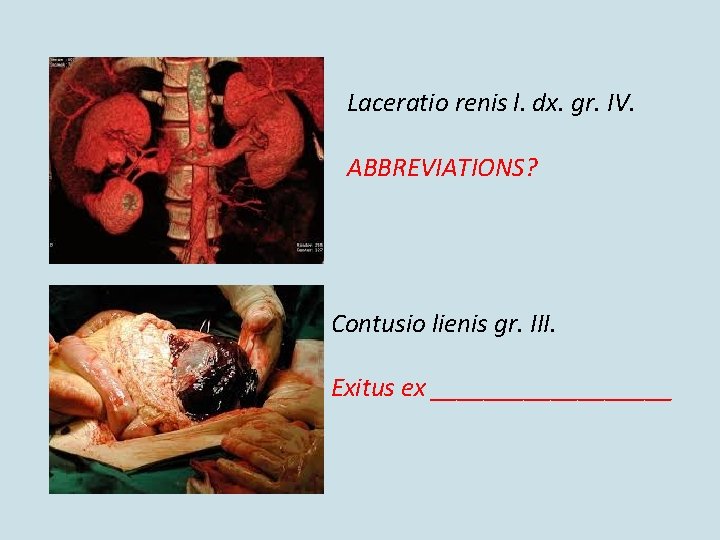
Laceratio renis l. dx. gr. IV. ABBREVIATIONS? Contusio lienis gr. III. Exitus ex _________
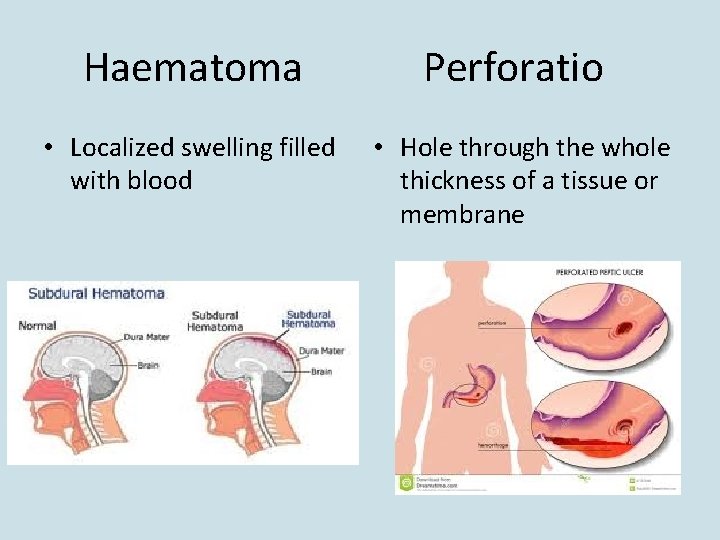
Haematoma Perforatio • Localized swelling filled with blood • Hole through the whole thickness of a tissue or membrane
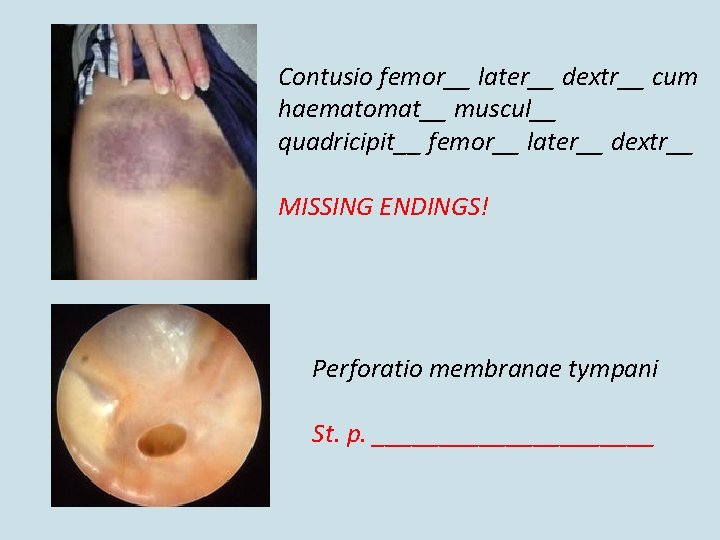
Contusio femor__ later__ dextr__ cum haematomat__ muscul__ quadricipit__ femor__ later__ dextr__ MISSING ENDINGS! Perforatio membranae tympani St. p. ___________
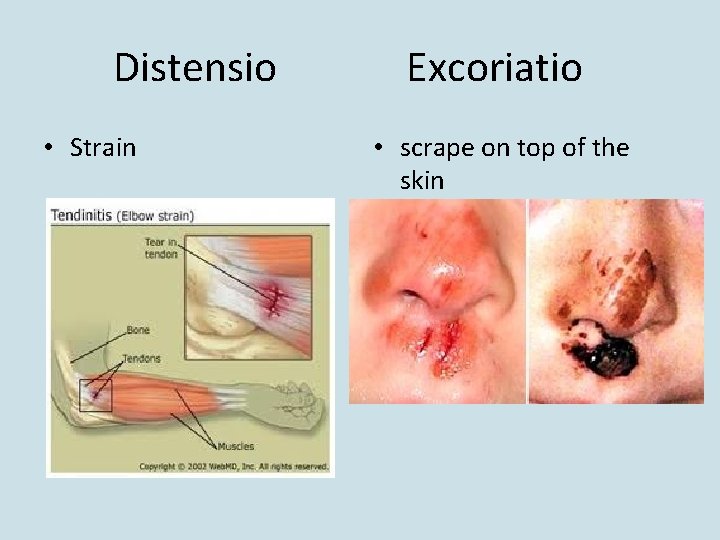
Distensio • Strain Excoriatio • scrape on top of the skin
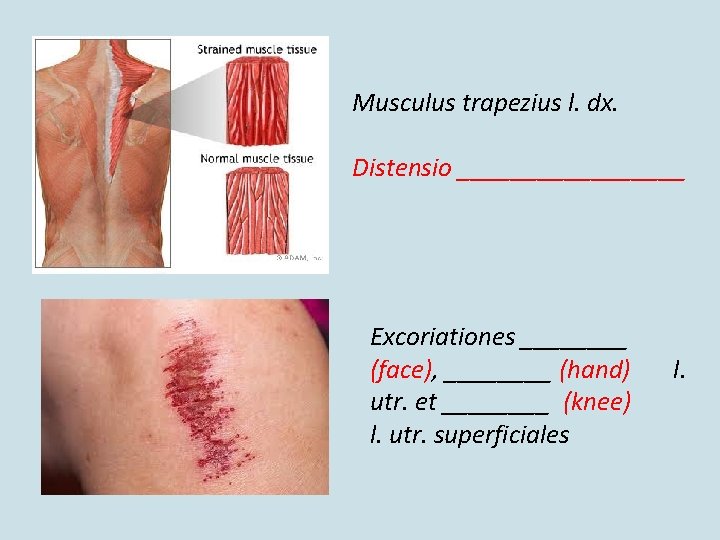
Musculus trapezius l. dx. Distensio _________ Excoriationes ____ (face), ____ (hand) utr. et ____ (knee) l. utr. superficiales l.
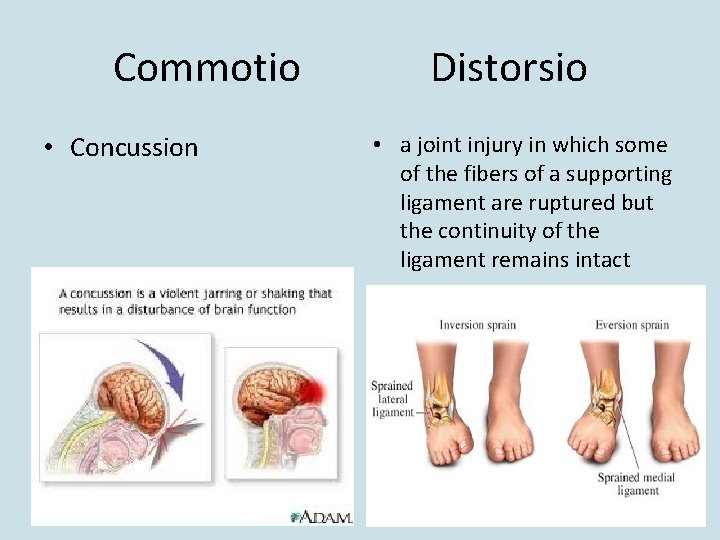
Commotio • Concussion Distorsio • a joint injury in which some of the fibers of a supporting ligament are ruptured but the continuity of the ligament remains intact
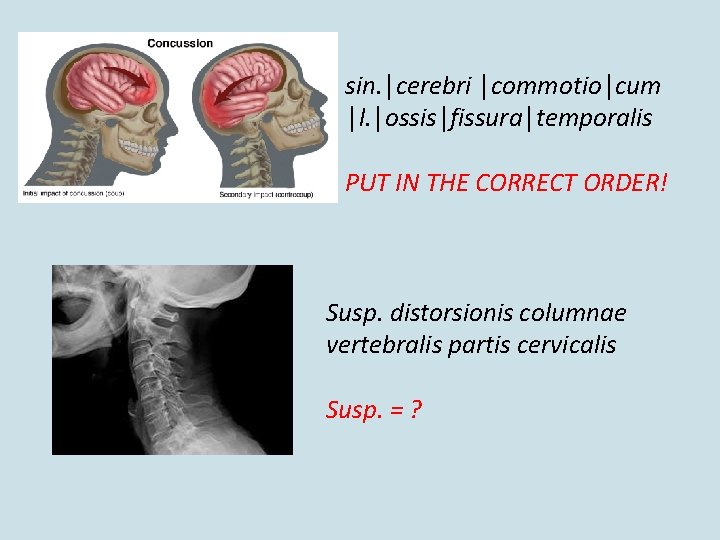
sin. │cerebri │commotio│cum │l. │ossis│fissura│temporalis PUT IN THE CORRECT ORDER! Susp. distorsionis columnae vertebralis partis cervicalis Susp. = ?
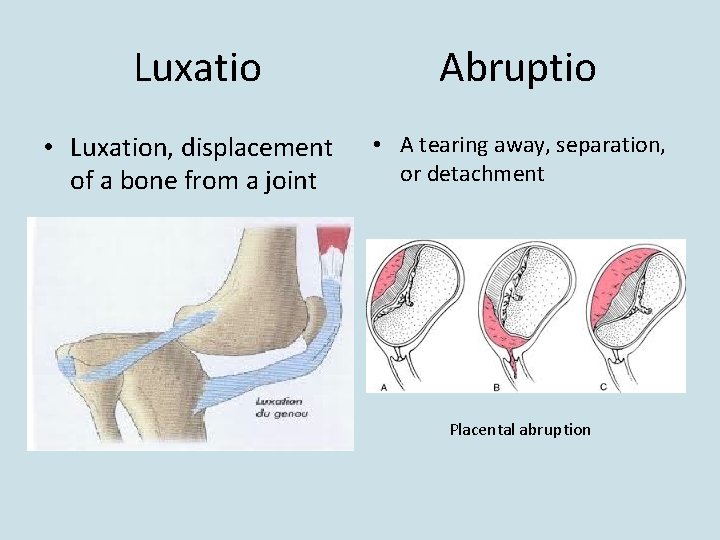
Luxatio • Luxation, displacement of a bone from a joint Abruptio • A tearing away, separation, or detachment Placental abruption
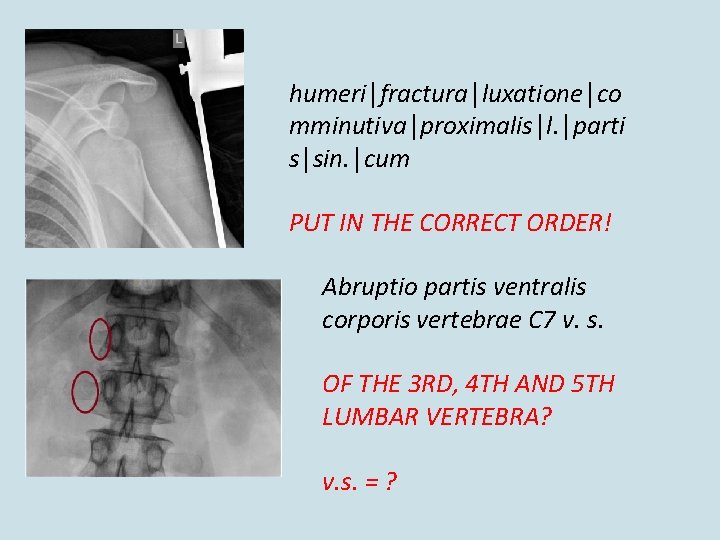
humeri│fractura│luxatione│co mminutiva│proximalis│l. │parti s│sin. │cum PUT IN THE CORRECT ORDER! Abruptio partis ventralis corporis vertebrae C 7 v. s. OF THE 3 RD, 4 TH AND 5 TH LUMBAR VERTEBRA? v. s. = ?
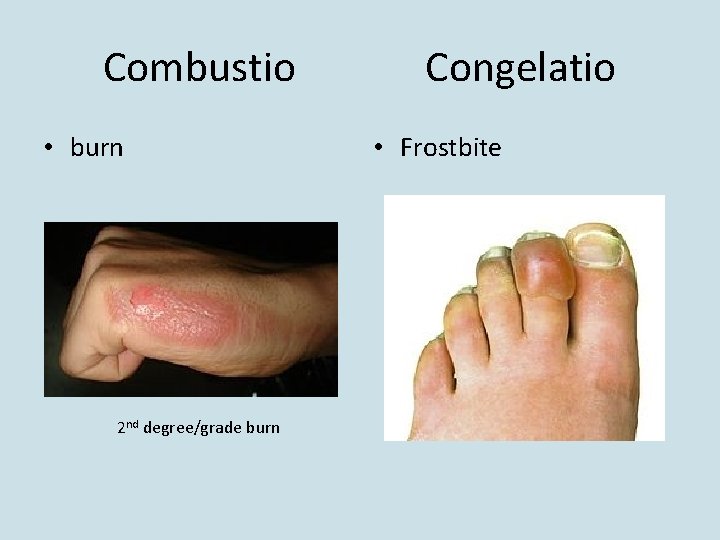
Combustio • burn 2 nd degree/grade burn Congelatio • Frostbite
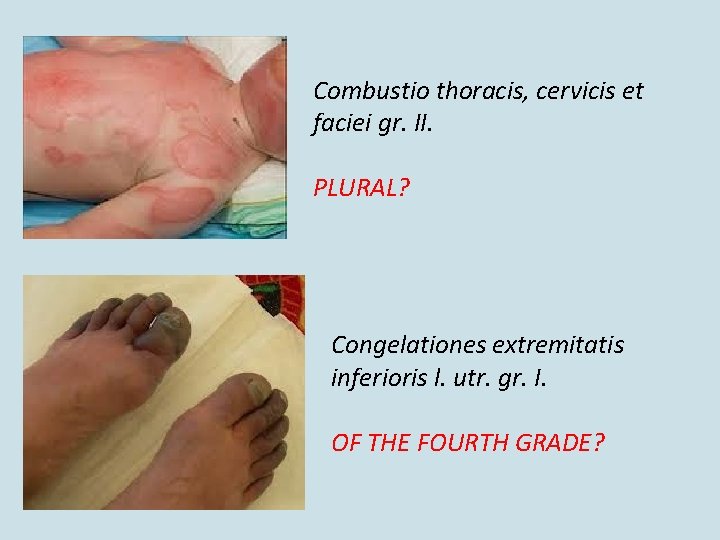
Combustio thoracis, cervicis et faciei gr. II. PLURAL? Congelationes extremitatis inferioris l. utr. gr. I. OF THE FOURTH GRADE?
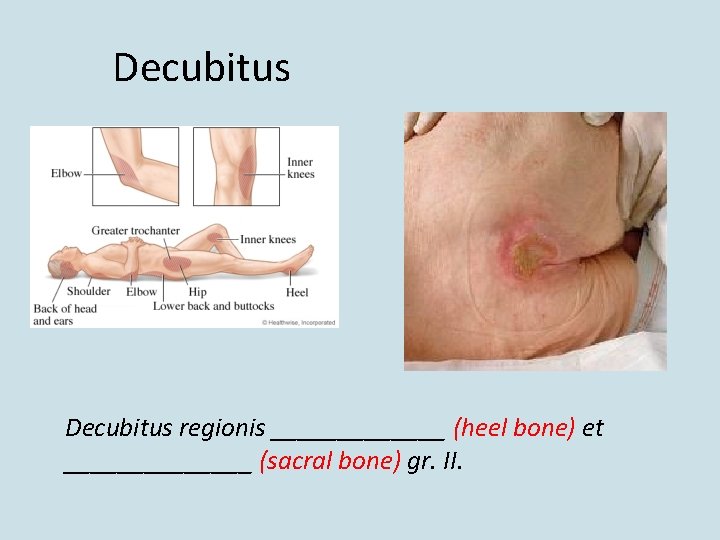
Decubitus regionis _______ (heel bone) et _______ (sacral bone) gr. II.
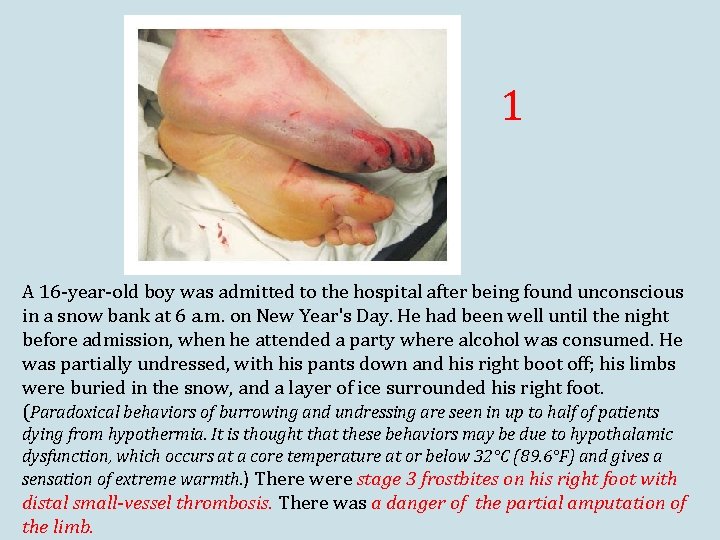
1 A 16 -year-old boy was admitted to the hospital after being found unconscious in a snow bank at 6 a. m. on New Year's Day. He had been well until the night before admission, when he attended a party where alcohol was consumed. He was partially undressed, with his pants down and his right boot off; his limbs were buried in the snow, and a layer of ice surrounded his right foot. (Paradoxical behaviors of burrowing and undressing are seen in up to half of patients dying from hypothermia. It is thought that these behaviors may be due to hypothalamic dysfunction, which occurs at a core temperature at or below 32°C (89. 6°F) and gives a sensation of extreme warmth. ) There were stage 3 frostbites on his right foot with distal small-vessel thrombosis. There was a danger of the partial amputation of the limb.
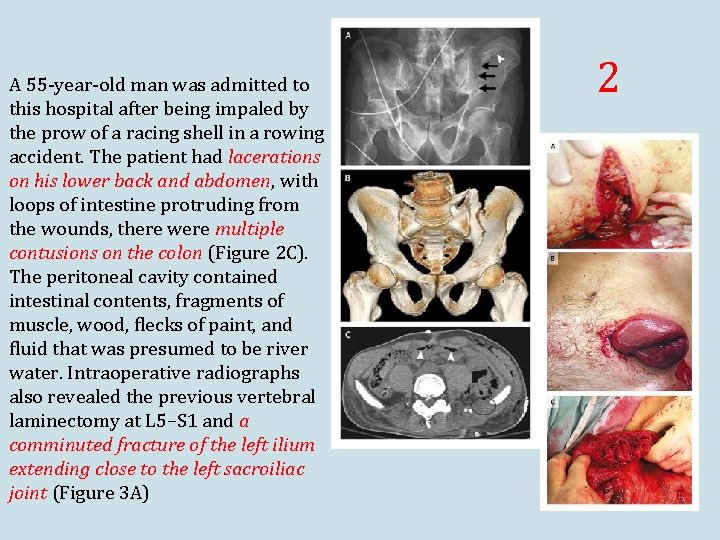
A 55 -year-old man was admitted to this hospital after being impaled by the prow of a racing shell in a rowing accident. The patient had lacerations on his lower back and abdomen, with loops of intestine protruding from the wounds, there were multiple contusions on the colon (Figure 2 C). The peritoneal cavity contained intestinal contents, fragments of muscle, wood, flecks of paint, and fluid that was presumed to be river water. Intraoperative radiographs also revealed the previous vertebral laminectomy at L 5–S 1 and a comminuted fracture of the left ilium extending close to the left sacroiliac joint (Figure 3 A) 2
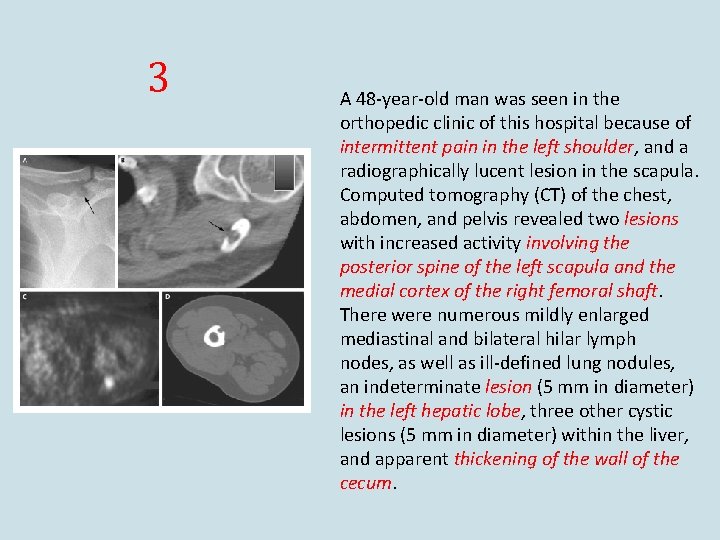
3 A 48 -year-old man was seen in the orthopedic clinic of this hospital because of intermittent pain in the left shoulder, and a radiographically lucent lesion in the scapula. Computed tomography (CT) of the chest, abdomen, and pelvis revealed two lesions with increased activity involving the posterior spine of the left scapula and the medial cortex of the right femoral shaft. There were numerous mildly enlarged mediastinal and bilateral hilar lymph nodes, as well as ill-defined lung nodules, an indeterminate lesion (5 mm in diameter) in the left hepatic lobe, three other cystic lesions (5 mm in diameter) within the liver, and apparent thickening of the wall of the cecum.
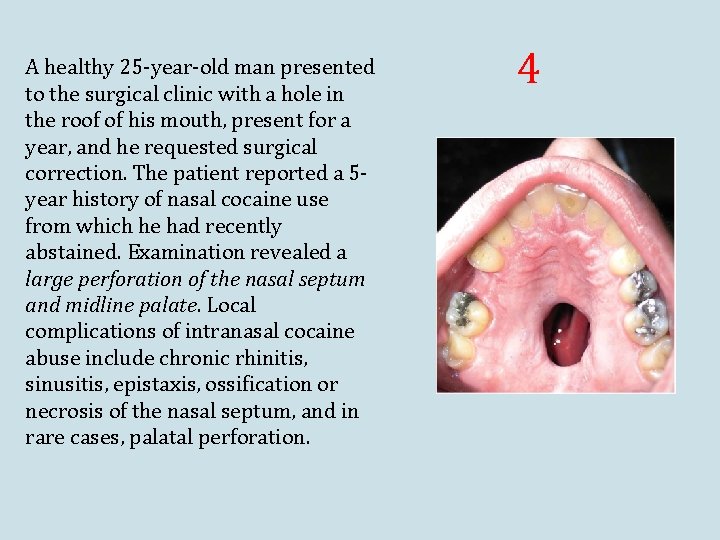
A healthy 25 -year-old man presented to the surgical clinic with a hole in the roof of his mouth, present for a year, and he requested surgical correction. The patient reported a 5 year history of nasal cocaine use from which he had recently abstained. Examination revealed a large perforation of the nasal septum and midline palate. Local complications of intranasal cocaine abuse include chronic rhinitis, sinusitis, epistaxis, ossification or necrosis of the nasal septum, and in rare cases, palatal perforation. 4
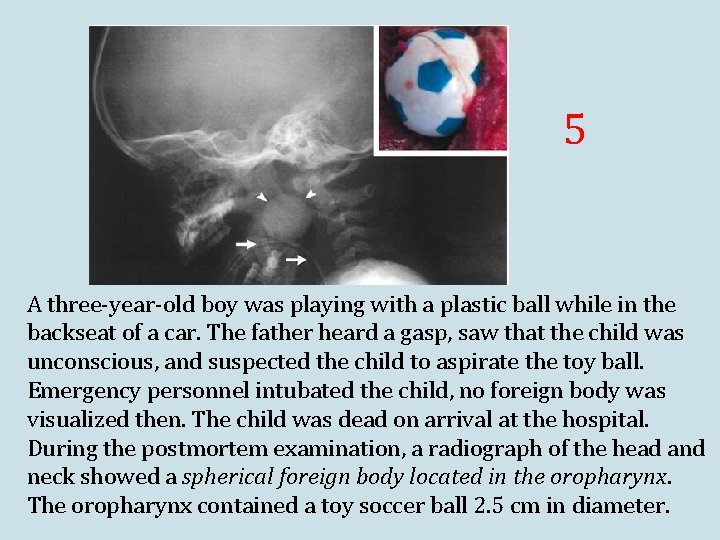
5 A three-year-old boy was playing with a plastic ball while in the backseat of a car. The father heard a gasp, saw that the child was unconscious, and suspected the child to aspirate the toy ball. Emergency personnel intubated the child, no foreign body was visualized then. The child was dead on arrival at the hospital. During the postmortem examination, a radiograph of the head and neck showed a spherical foreign body located in the oropharynx. The oropharynx contained a toy soccer ball 2. 5 cm in diameter.
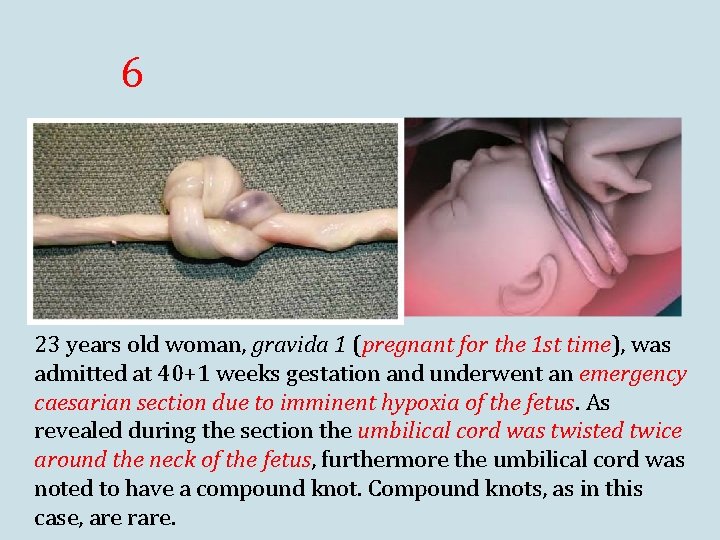
6 23 years old woman, gravida 1 (pregnant for the 1 st time), was admitted at 40+1 weeks gestation and underwent an emergency caesarian section due to imminent hypoxia of the fetus. As revealed during the section the umbilical cord was twisted twice around the neck of the fetus, furthermore the umbilical cord was noted to have a compound knot. Compound knots, as in this case, are rare.