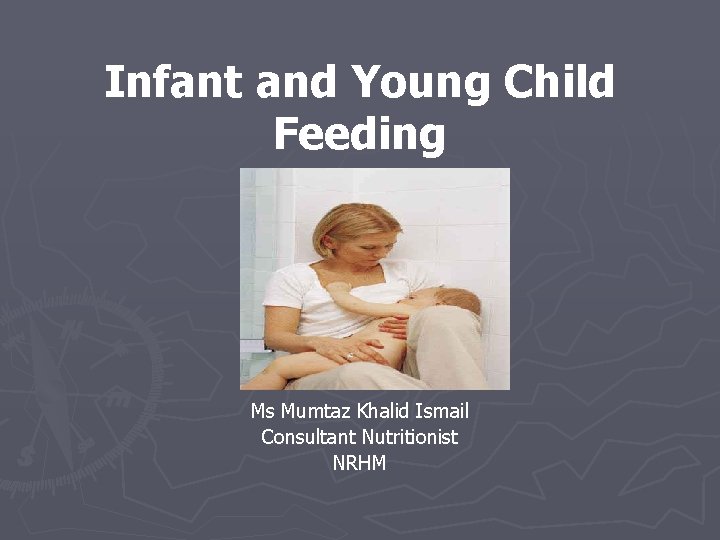
Infant and Young Child Feeding Ms Mumtaz Khalid

- Slides: 22
Infant and Young Child Feeding Ms Mumtaz Khalid Ismail Consultant Nutritionist NRHM
Why Is Infant And Young Child Feeding So Important? ► They are at the most vulnerable age ► Poor Intake of food is common during first two years (Quantity And Quality) ► Poor feeding practices result in malnutrition, contribute to impaired cognitive and social development, poor school performance ► Cause of malnutrition which is responsible directly or indirectly for 60% death among under five.
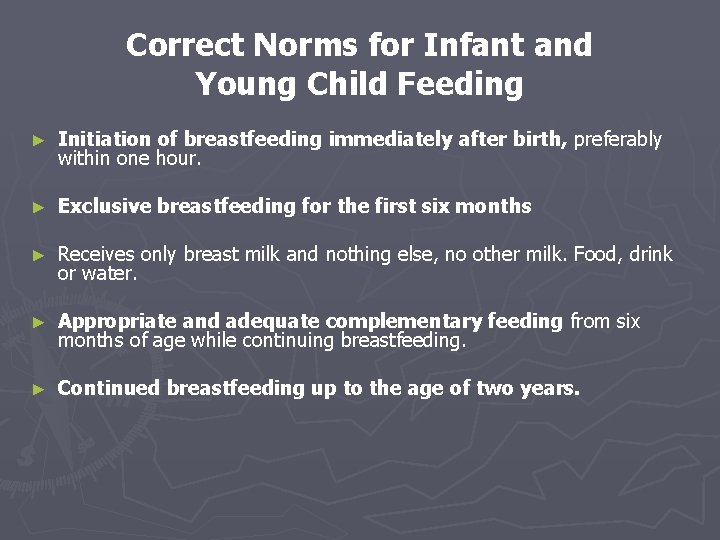
Correct Norms for Infant and Young Child Feeding ► Initiation of breastfeeding immediately after birth, preferably within one hour. ► Exclusive breastfeeding for the first six months ► Receives only breast milk and nothing else, no other milk. Food, drink or water. ► Appropriate and adequate complementary feeding from six months of age while continuing breastfeeding. ► Continued breastfeeding up to the age of two years.
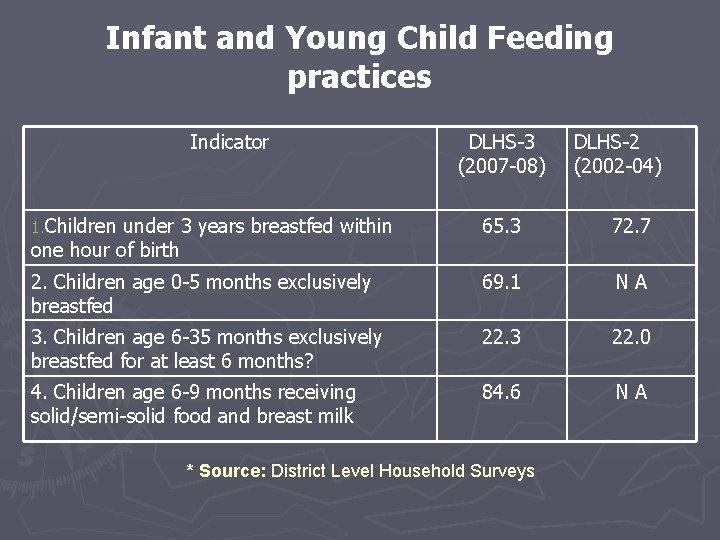
Infant and Young Child Feeding practices Indicator DLHS-3 (2007 -08) DLHS-2 (2002 -04) 1. Children under 3 years breastfed within one hour of birth 65. 3 72. 7 2. Children age 0 -5 months exclusively breastfed 69. 1 NA 3. Children age 6 -35 months exclusively breastfed for at least 6 months? 22. 3 22. 0 4. Children age 6 -9 months receiving solid/semi-solid food and breast milk 84. 6 NA * Source: District Level Household Surveys
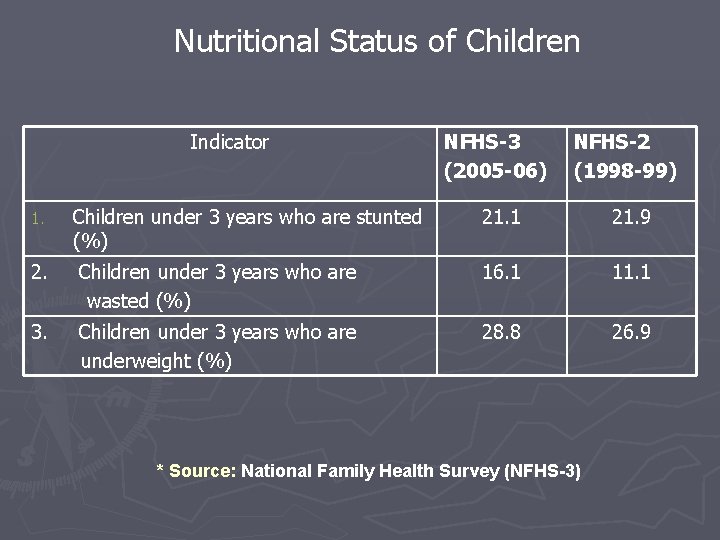
Nutritional Status of Children Indicator 1. Children under 3 years who are stunted (%) NFHS-3 (2005 -06) NFHS-2 (1998 -99) 21. 1 21. 9 2. Children under 3 years who are wasted (%) 16. 1 11. 1 3. Children under 3 years who are underweight (%) 28. 8 26. 9 * Source: National Family Health Survey (NFHS-3)
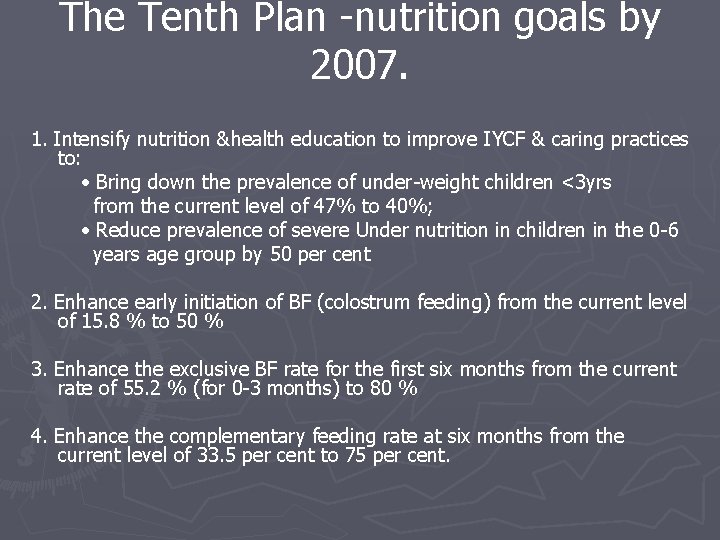
The Tenth Plan -nutrition goals by 2007. 1. Intensify nutrition &health education to improve IYCF & caring practices to: • Bring down the prevalence of under-weight children <3 yrs from the current level of 47% to 40%; • Reduce prevalence of severe Under nutrition in children in the 0 -6 years age group by 50 per cent 2. Enhance early initiation of BF (colostrum feeding) from the current level of 15. 8 % to 50 % 3. Enhance the exclusive BF rate for the first six months from the current rate of 55. 2 % (for 0 -3 months) to 80 % 4. Enhance the complementary feeding rate at six months from the current level of 33. 5 per cent to 75 per cent.
The objectives of the national guidelines on IYCF ► To advocate IYCN and its improvement through optimal feeding practices ► To disseminate widely the correct norms of BF & complementary feeding from policy making level to the public at large in different parts of the country in regional languages ► To help plan efforts for raising awareness and increasing commitment of the concerned sectors of the govt, NGOs and professional groups for achieving optimal feeding practices for infants and young children ► To achieve the national goals for IYCF practices set by the planning commission for the 10 th five year plan so as to achieve reduction in malnutrition levels in children.
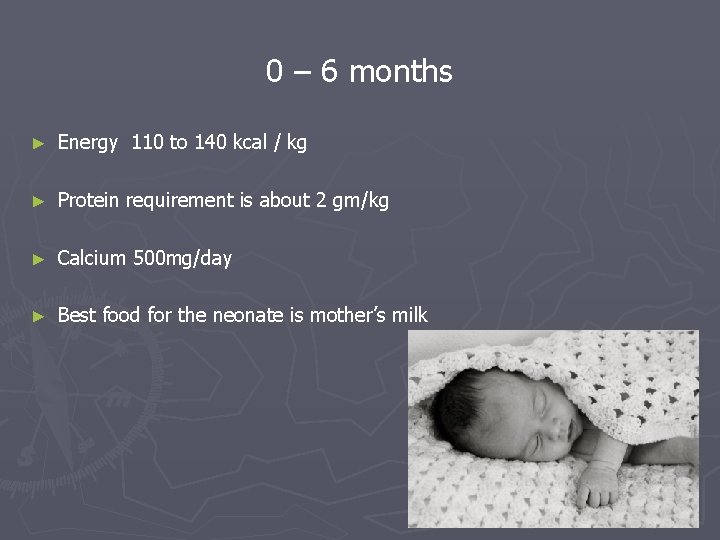
0 – 6 months ► Energy 110 to 140 kcal / kg ► Protein requirement is about 2 gm/kg ► Calcium 500 mg/day ► Best food for the neonate is mother’s milk
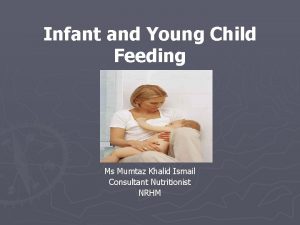
Infant And Young Child Feeding Practices ► Breastfeeding is the best way to satisfy the nutritional and psychological needs of the baby. ► Mother’s milk is designed for easy digestion and assimilation. ► Protein in mother’s milk is in a more soluble form which is easily digested and absorbed by the baby. ► Fat and calcium in human milk which are also easily absorbable. ► The amount of vitamins such as thiamine, vitamin A and vitamin C found in mother’s milk depends on the diet of the mother.
Advantages of breastfeeding ► ► ► ► ► The best natural food for babies. Is always clean. Protects the baby from diseases. Makes the child more intelligent. Available 24 hours a day & requires no special preparation. Nature’s gift to the infant and does not need to be purchased. Makes a special relationship between mother and baby. Helps parents to space their children. Helps a mother to shed extra weight gained during pregnancy.
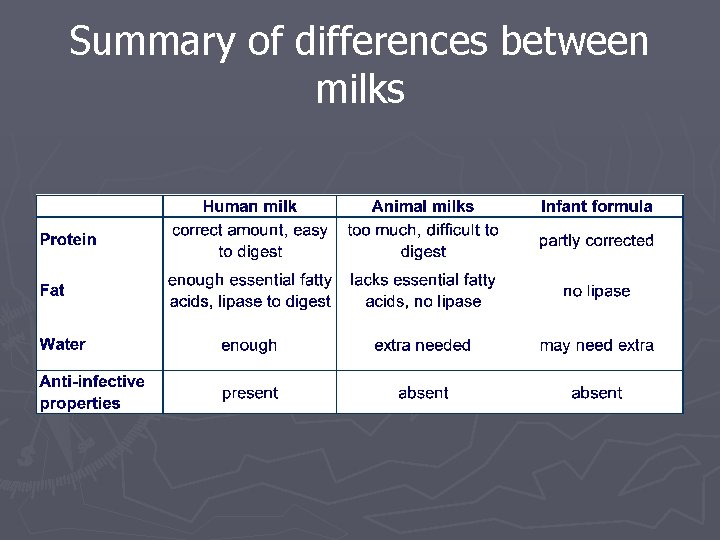
Summary of differences between milks
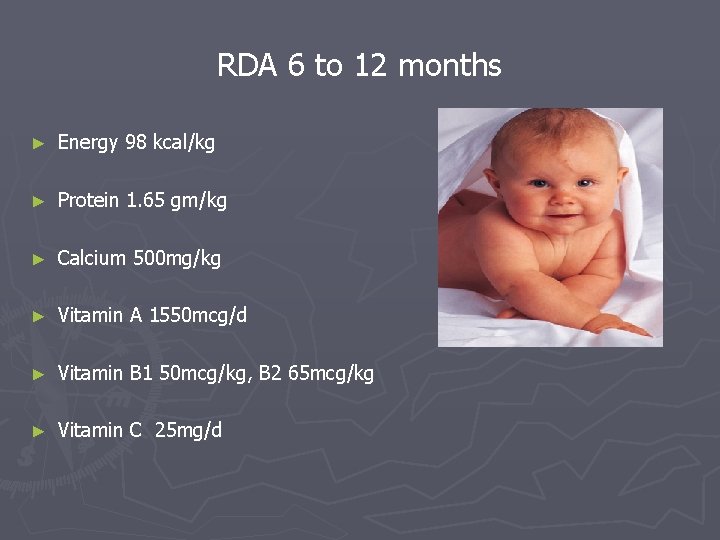
RDA 6 to 12 months ► Energy 98 kcal/kg ► Protein 1. 65 gm/kg ► Calcium 500 mg/kg ► Vitamin A 1550 mcg/d ► Vitamin B 1 50 mcg/kg, B 2 65 mcg/kg ► Vitamin C 25 mg/d
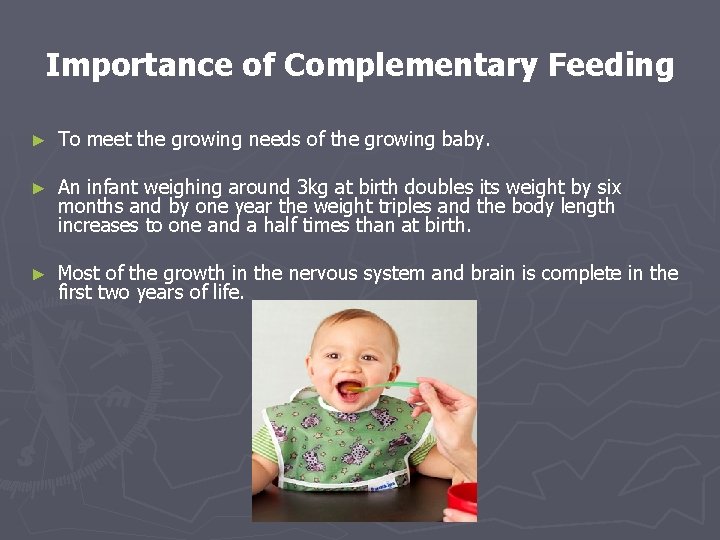
Importance of Complementary Feeding ► To meet the growing needs of the growing baby. ► An infant weighing around 3 kg at birth doubles its weight by six months and by one year the weight triples and the body length increases to one and a half times than at birth. ► Most of the growth in the nervous system and brain is complete in the first two years of life.
COMPLEMENTARY FEEDING ► Complementary feeding at six months ► First food for the baby- Porridge can be made with suji, broken wheat, ground rice, ragi, millet etc ► Traditional foods for infants – mixed food like khichidi, dalia, suji kheer, upma, idli, dokhla. ► Modified family food-rice or wheat preparation couldbe mixed with pulse and/or vegetable ► Mashed potato, carrots, cauliflower, pumpkin, spinach ► Weekly 3 – 4 cooked eggs ► 9 -10 months fish, chicken, and meat
Ensuring safety of complementary foods ► Hands should be washed with soap and water ► Utensils used should be scrubbed, washed well, dried and kept covered. ► Cooking kills most germs. ► After cooking, handle the food as little as possible and keep it in a covered container ► Cooked foods should not be kept for >2 hours. ► The hands of both mother and child should be washed before feeding the child.
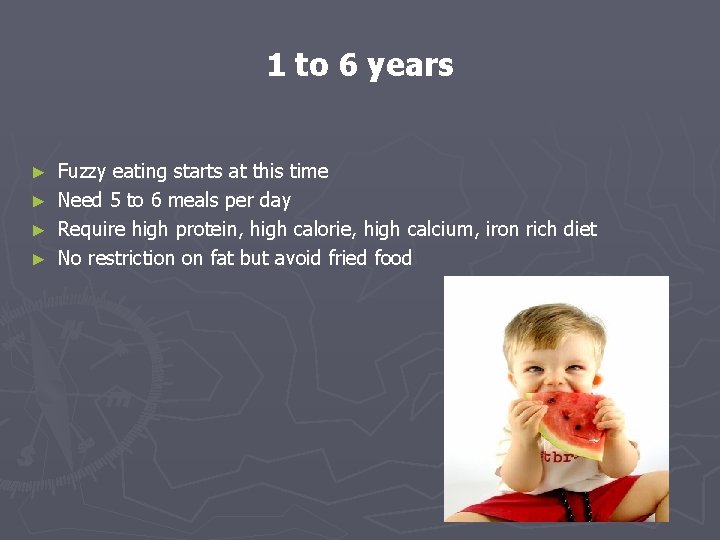
1 to 6 years ► ► Fuzzy eating starts at this time Need 5 to 6 meals per day Require high protein, high calorie, high calcium, iron rich diet No restriction on fat but avoid fried food
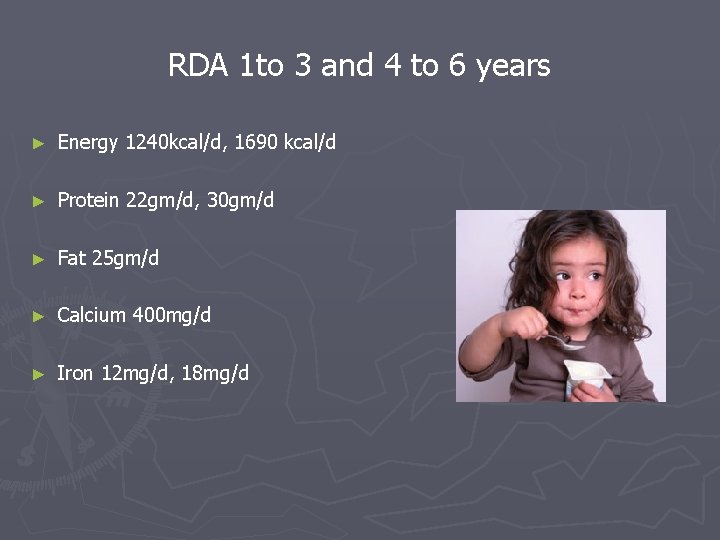
RDA 1 to 3 and 4 to 6 years ► Energy 1240 kcal/d, 1690 kcal/d ► Protein 22 gm/d, 30 gm/d ► Fat 25 gm/d ► Calcium 400 mg/d ► Iron 12 mg/d, 18 mg/d
Energy density of foods can be increased by By adding a teaspoonful of oil or ghee in every feed. ► By adding sugar or jaggery to the child’s food. ► By giving malted foods. Malting reduces viscosity of the foods and hence child can eat more at a time. Malting is germinating whole grain cereal or pulse, drying it after germination and grinding. ► By feeding thick mixtures. ►
FEEDING IN DIFFICULT CIRCUMSTANCES ► Malnourished infants ► Preterm or Low Birth Weight Infants ► Feeding During Emergencies ► Feeding in Maternal HIV – if AFASS AF, exclusive BF or exclusive artificial feeding
Feeding during and after illness ► Malnourishment increases incidence & severity of infection ► Sick child needs more nourishment ► children with measles, diarrhoea and RTI must eat plenty of vitamin A rich foods ► After the illness, a nutritious diet with sufficient ► Energy, protein and other nutrients enable him to catch up growth &replacement of nutrient stores.
Take-home Messages Malnutrition is a serious and prevalent problem ► Malnutrition Increases Morbidity And Mortality and decreases Educational Achievement and lifetime earnings ► Inadequate Infant And Young Child Feeding is the major cause of Malnutrition ► Inadequate IYCF is not primarily due to lack of food (Quantity), But because of poor practices at the household level ► Lack of Information about how feeding young children is a major reason for poor Breastfeeding and complementary feeding of Infants and young children ►
► Thank You