In Spanish the command forms are used to
- Slides: 14
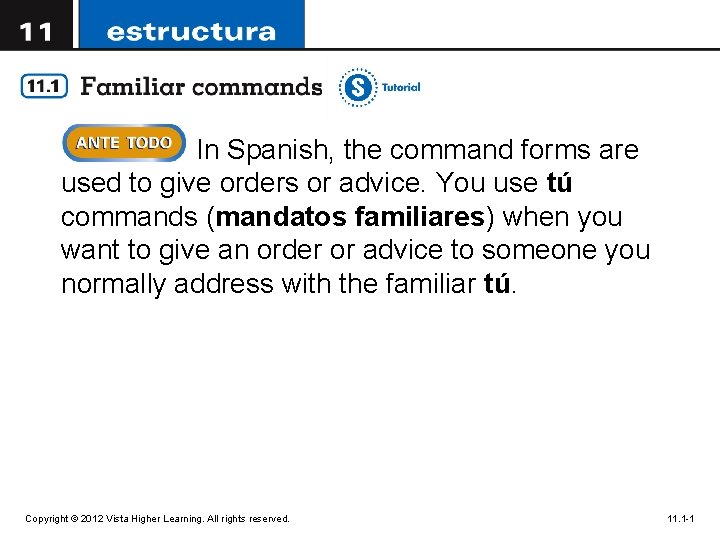
In Spanish, the command forms are used to give orders or advice. You use tú commands (mandatos familiares) when you want to give an order or advice to someone you normally address with the familiar tú. u Copyright © 2012 Vista Higher Learning. All rights reserved. 11. 1 -1
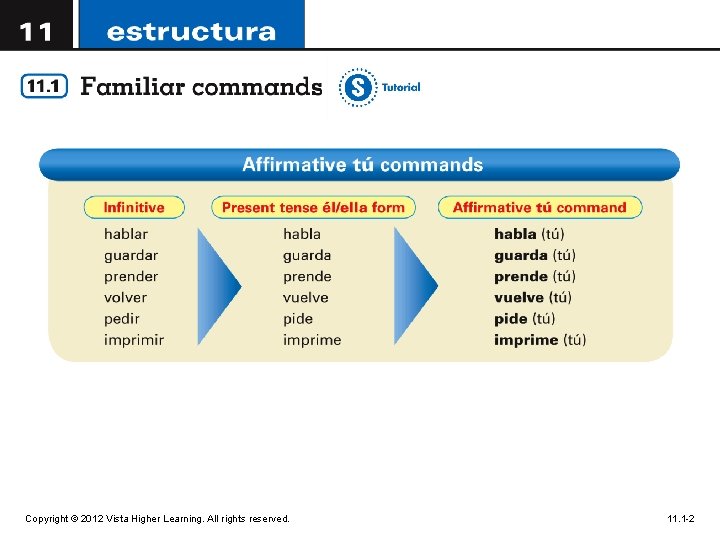
Copyright © 2012 Vista Higher Learning. All rights reserved. 11. 1 -2
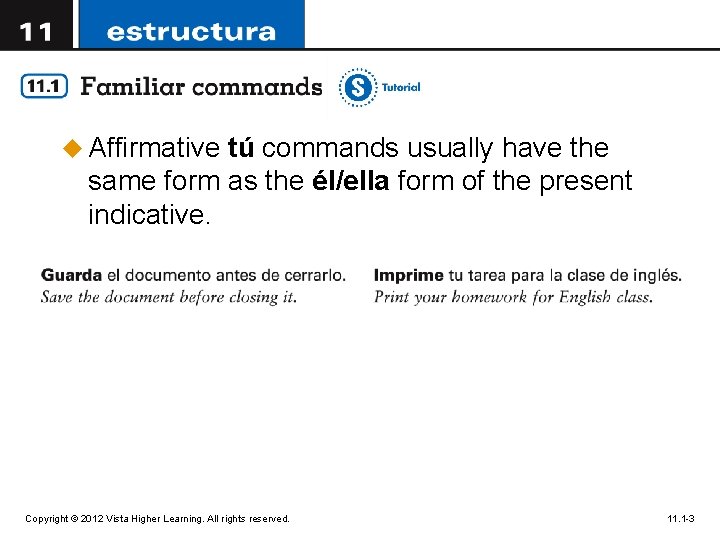
u Affirmative tú commands usually have the same form as the él/ella form of the present indicative. Copyright © 2012 Vista Higher Learning. All rights reserved. 11. 1 -3
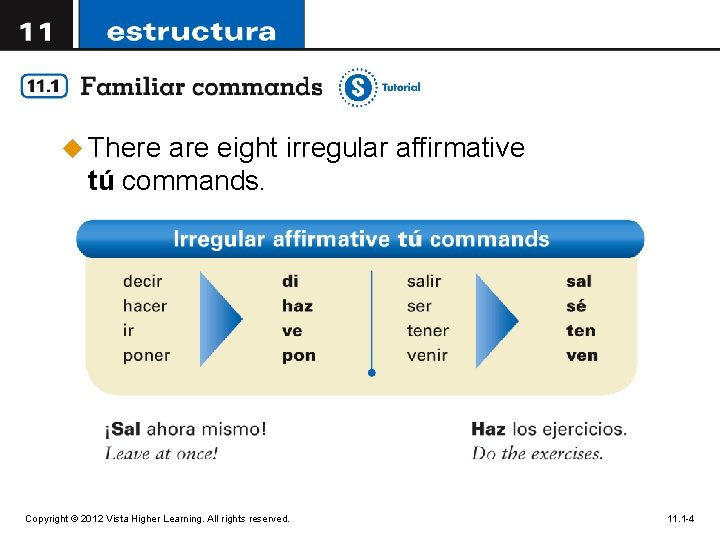
u There are eight irregular affirmative tú commands. Copyright © 2012 Vista Higher Learning. All rights reserved. 11. 1 -4
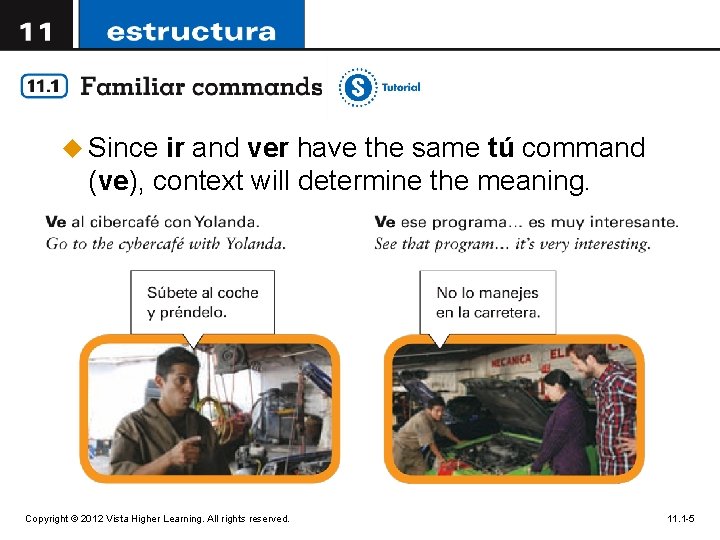
u Since ir and ver have the same tú command (ve), context will determine the meaning. Copyright © 2012 Vista Higher Learning. All rights reserved. 11. 1 -5
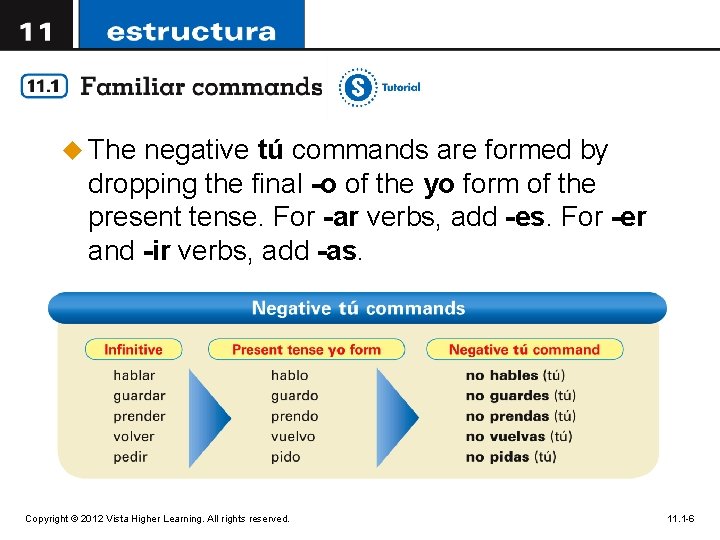
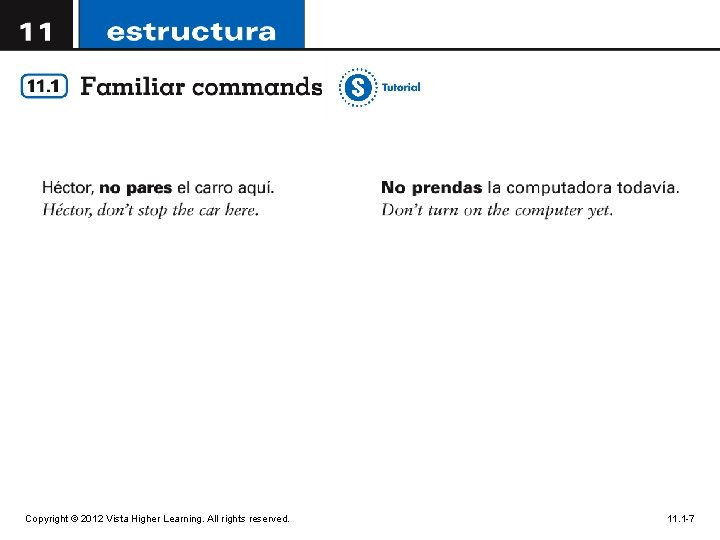
u The negative tú commands are formed by dropping the final -o of the yo form of the present tense. For -ar verbs, add -es. For -er and -ir verbs, add -as. Copyright © 2012 Vista Higher Learning. All rights reserved. 11. 1 -6
Copyright © 2012 Vista Higher Learning. All rights reserved. 11. 1 -7
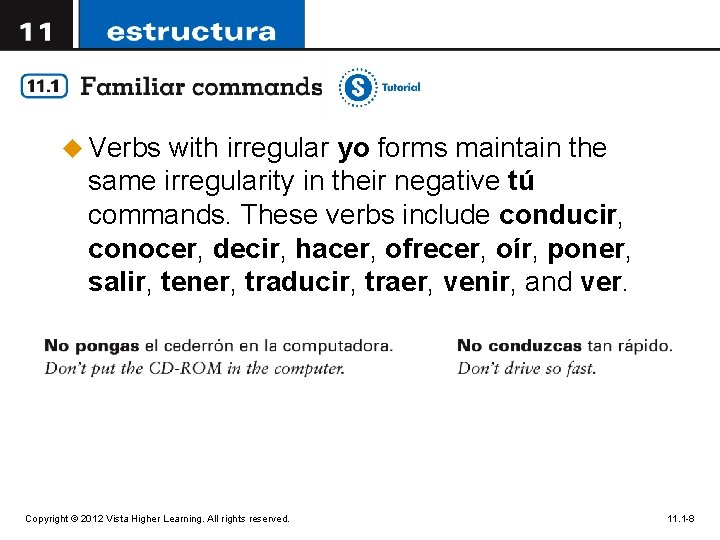
u Verbs with irregular yo forms maintain the same irregularity in their negative tú commands. These verbs include conducir, conocer, decir, hacer, ofrecer, oír, poner, salir, tener, traducir, traer, venir, and ver. Copyright © 2012 Vista Higher Learning. All rights reserved. 11. 1 -8
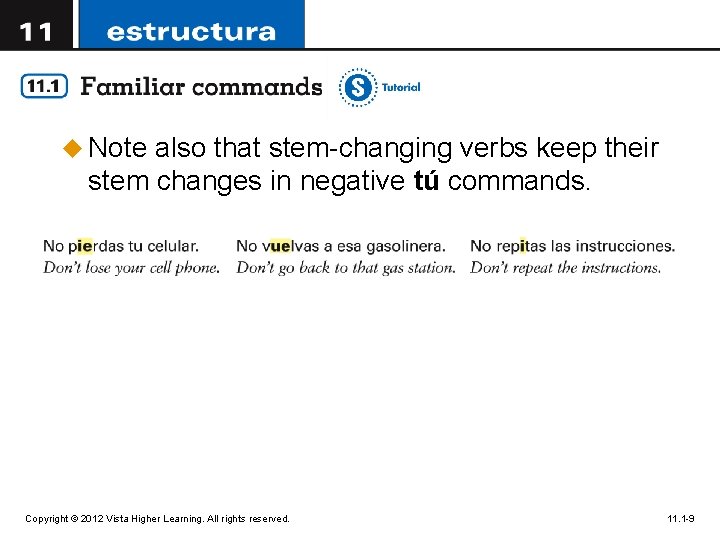
u Note also that stem-changing verbs keep their stem changes in negative tú commands. Copyright © 2012 Vista Higher Learning. All rights reserved. 11. 1 -9
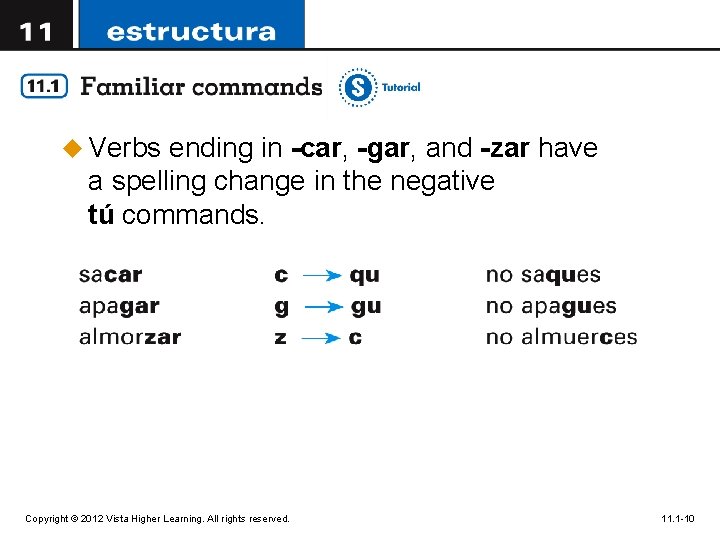
u Verbs ending in -car, -gar, and -zar have a spelling change in the negative tú commands. Copyright © 2012 Vista Higher Learning. All rights reserved. 11. 1 -10
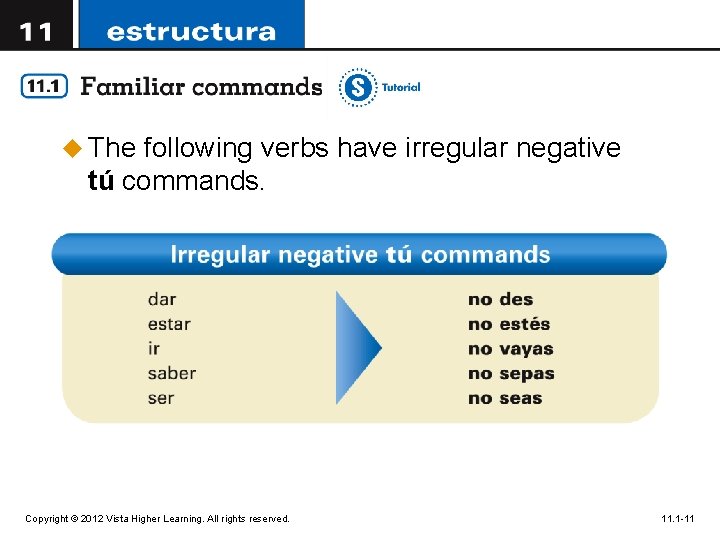
u The following verbs have irregular negative tú commands. Copyright © 2012 Vista Higher Learning. All rights reserved. 11. 1 -11
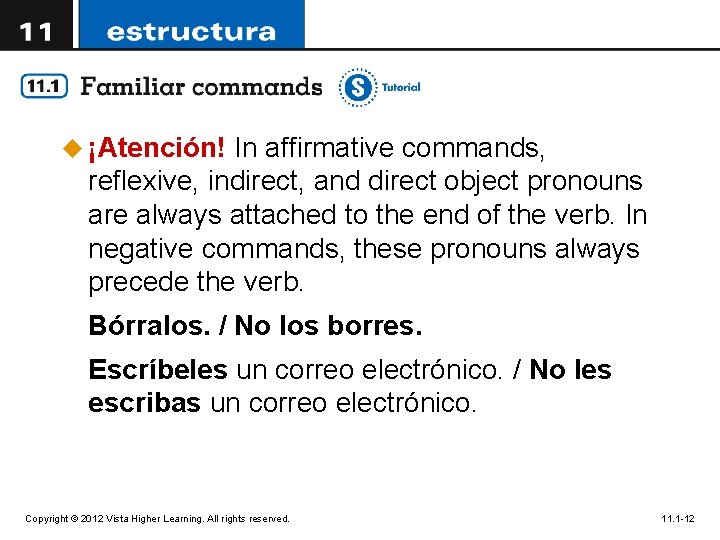
u ¡Atención! In affirmative commands, reflexive, indirect, and direct object pronouns are always attached to the end of the verb. In negative commands, these pronouns always precede the verb. Bórralos. / No los borres. Escríbeles un correo electrónico. / No les escribas un correo electrónico. Copyright © 2012 Vista Higher Learning. All rights reserved. 11. 1 -12
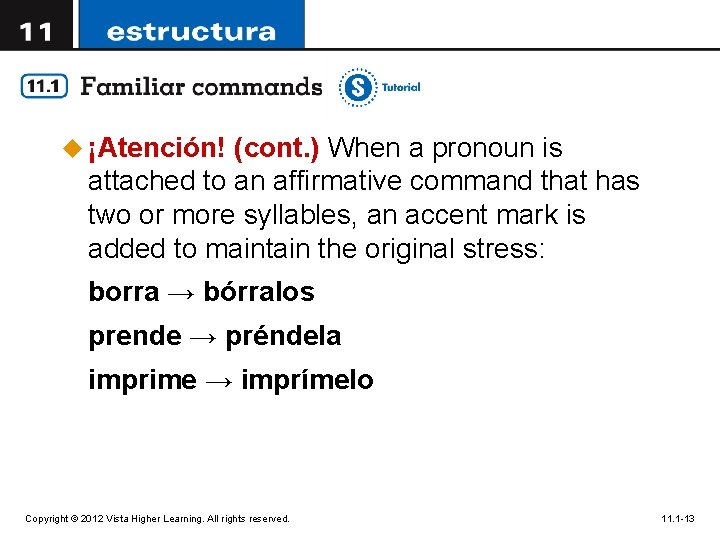
u ¡Atención! (cont. ) When a pronoun is attached to an affirmative command that has two or more syllables, an accent mark is added to maintain the original stress: borra → bórralos prende → préndela imprime → imprímelo Copyright © 2012 Vista Higher Learning. All rights reserved. 11. 1 -13
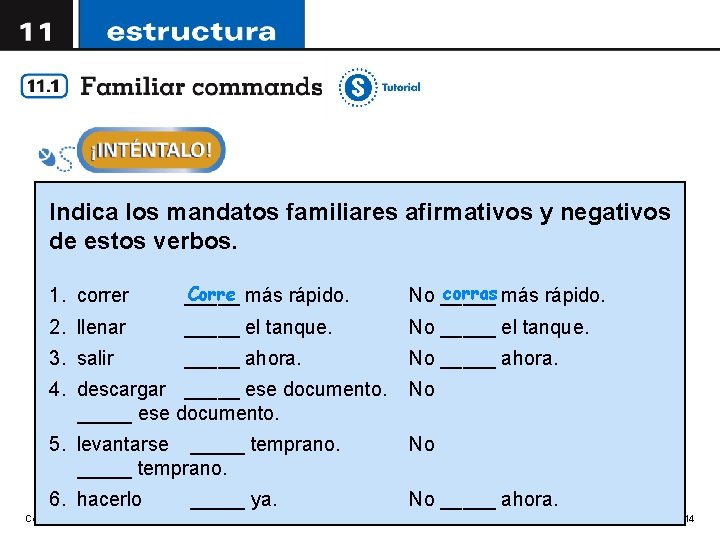
Indica los mandatos familiares afirmativos y negativos de estos verbos. 1. correr Corre más rápido. _____ corras más rápido. No _____ 2. llenar _____ el tanque. No _____ el tanque. 3. salir _____ ahora. No _____ ahora. 4. descargar _____ ese documento. No 5. levantarse _____ temprano. No 6. hacerlo No _____ ahora. _____ ya. Copyright © 2012 Vista Higher Learning. All rights reserved. 11. 1 -14