
Il passato prossimo con avere Il passato prossimo
- Slides: 12
Il passato prossimo (con avere)
Il passato prossimo (con avere) • The passato prossimo is used to describe actions and events that have occurred in the past. • Look for expressions that indicate something has already happened…
Espressioni utili… • Ieri= Yesterday • Ieri mattina/pomeriggio/sera= Yesterday (morning, afternoon, evening) • L’altro ieri= The day before yesterday • Sabato scorso= Last Saturday • La settimana scorsa= Last Week • Il mese/l’anno scorso= Last month/year • Un’ora fa= An hour ago • Due giorni (settimane, mesi, anni) fa= ______ ago • Molto/poco tempo fa= A long/little while ago • Qualche tempo fa= Some time ago • Quanto tempo fa? = How long ago?
Avere… • The passato prossimo is a compound tense that consists of two parts: 1. ) Either avere OR essere (a. k. a. helping verbs) • Note: Transitive verbs (Those that answer what? or whom? ) use AVERE= “To have” Ho Abbiamo Hai Avete Ha Hanno
…. and 2. ) A past participle • -ato (-are verbs) • -uto (-ere verbs) • -ito (-ire verbs)
Irregular past particples… • • • Aprire= aperto Bere= bevuto Chiedere= chiesto Chiudere= chiuso Decidere= deciso Dire= detto Discutere= discusso Fare= fatto Leggere= letto Mettere= messo Offrire= offerto Perdere= perso (perduto) • • Prendere= preso Rispondere= risposto Scrivere= scritto Soffrire= sofferto Spendere= speso Vedere= visto (veduto) Vincere= vinto Correre= corso
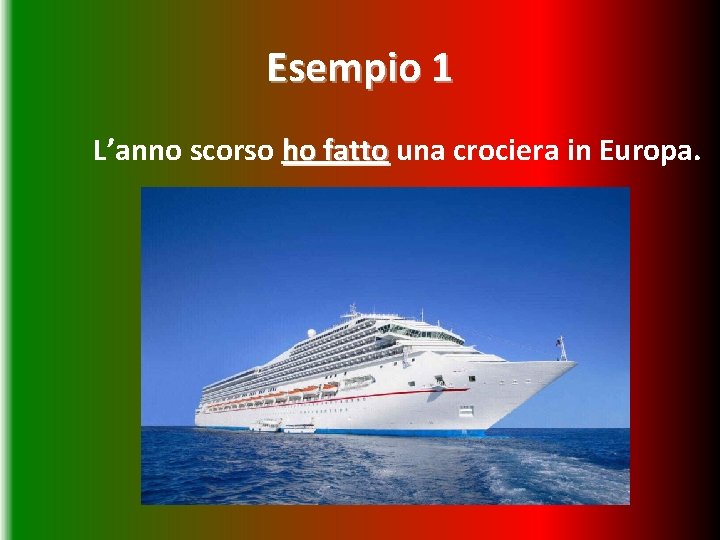
Esempio 1 L’anno scorso ho fatto una crociera in Europa.
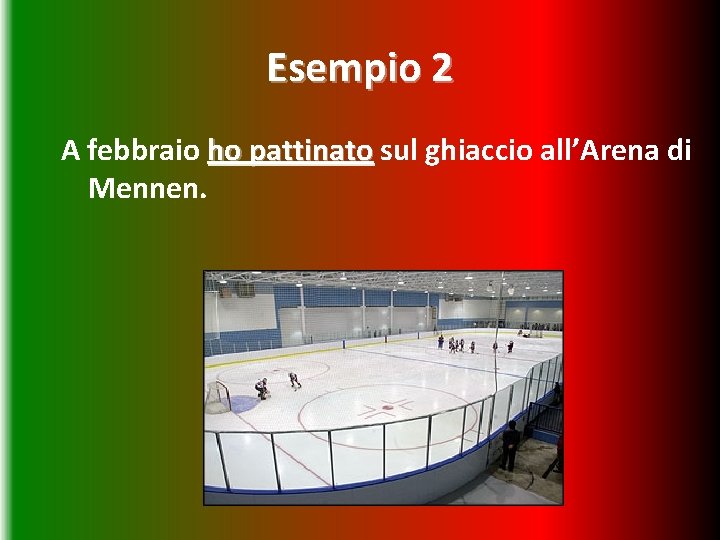
Esempio 2 A febbraio ho pattinato sul ghiaccio all’Arena di Mennen.
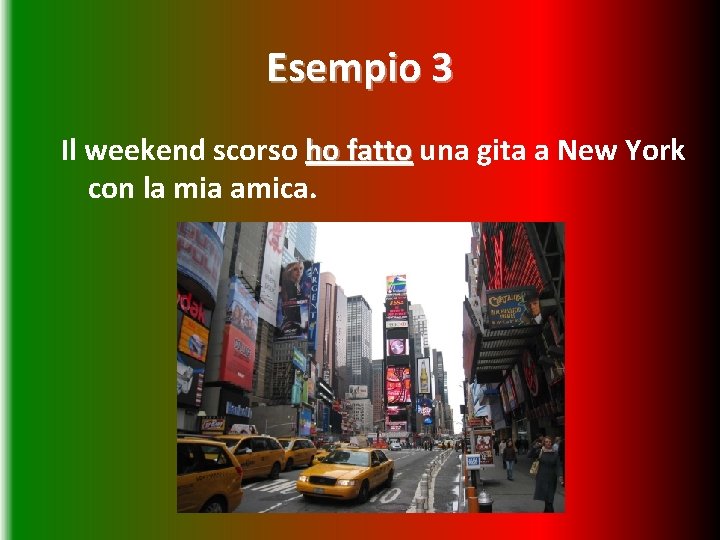
Esempio 3 Il weekend scorso ho fatto una gita a New York con la mia amica.
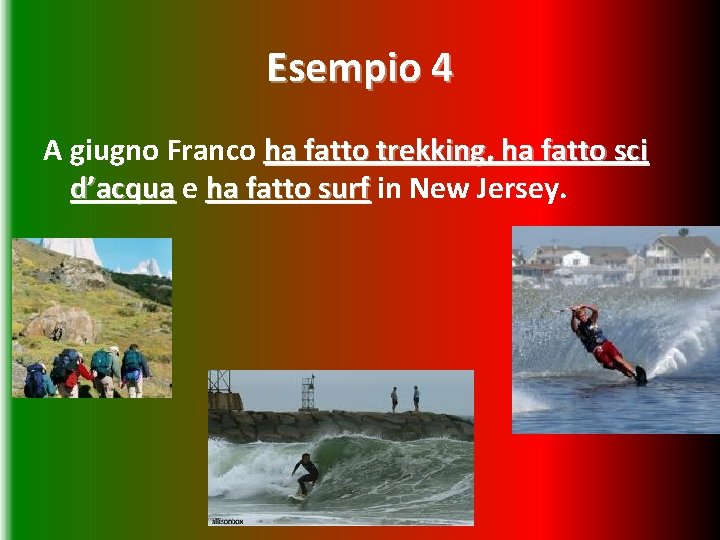
Esempio 4 A giugno Franco ha fatto trekking, ha fatto sci d’acqua e ha fatto surf in New Jersey.
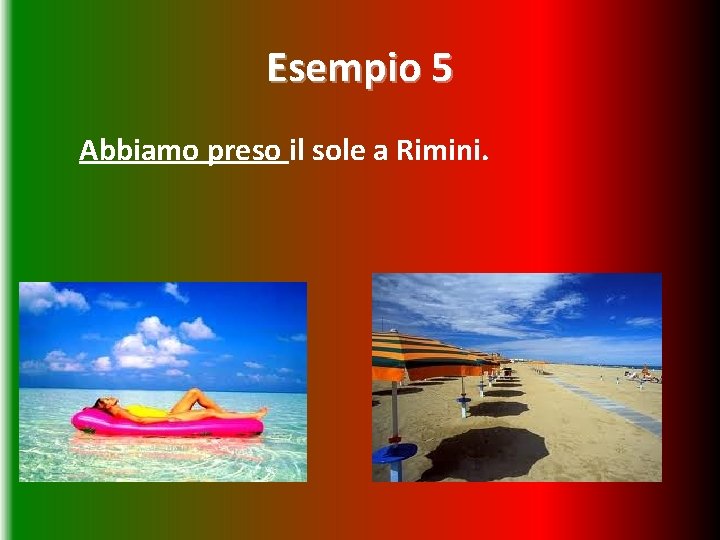
Esempio 5 Abbiamo preso il sole a Rimini.
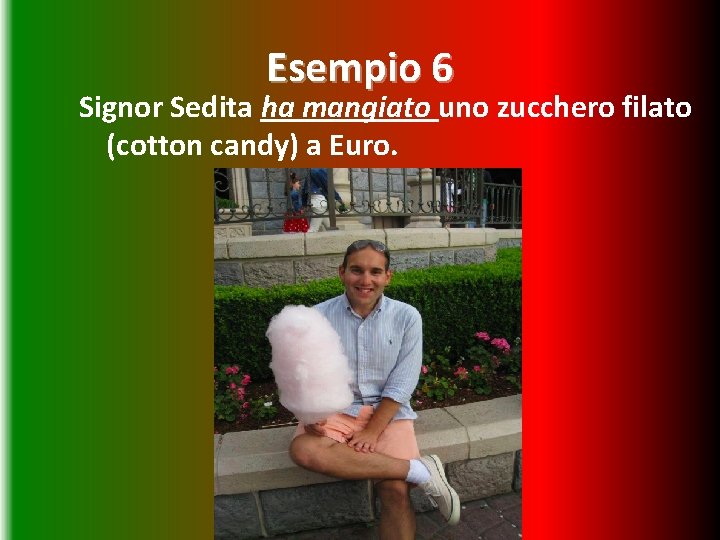
Esempio 6 Signor Sedita ha mangiato uno zucchero filato (cotton candy) a Euro.