Human Impact on Ecosytems Chapter 16 Human Population
- Slides: 24
Human Impact on Ecosytems Chapter 16
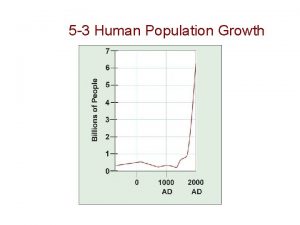
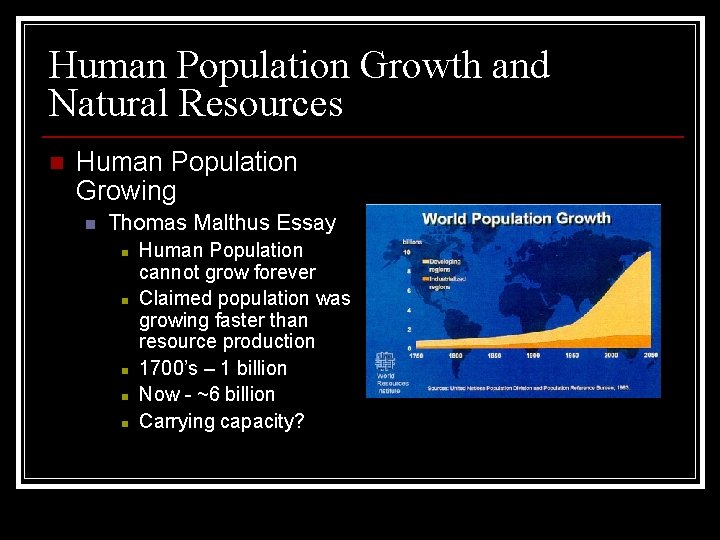
Human Population Growth and Natural Resources n Human Population Growing n Thomas Malthus Essay n n n Human Population cannot grow forever Claimed population was growing faster than resource production 1700’s – 1 billion Now - ~6 billion Carrying capacity?
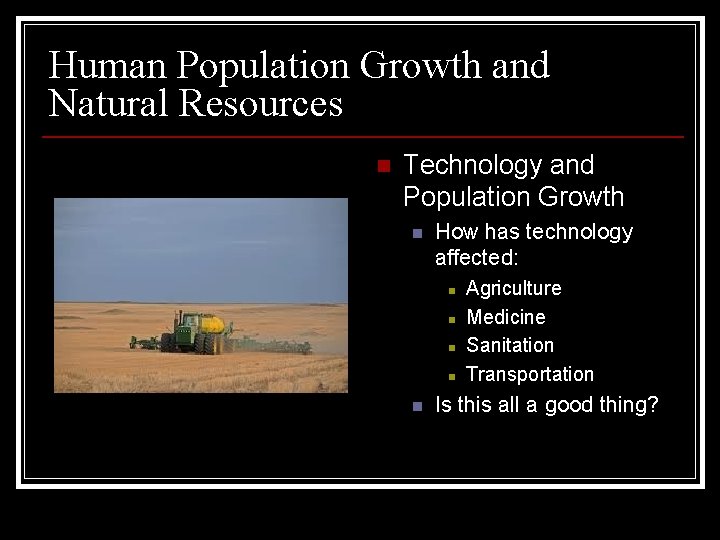
Human Population Growth and Natural Resources n Technology and Population Growth n How has technology affected: n n n Agriculture Medicine Sanitation Transportation Is this all a good thing?
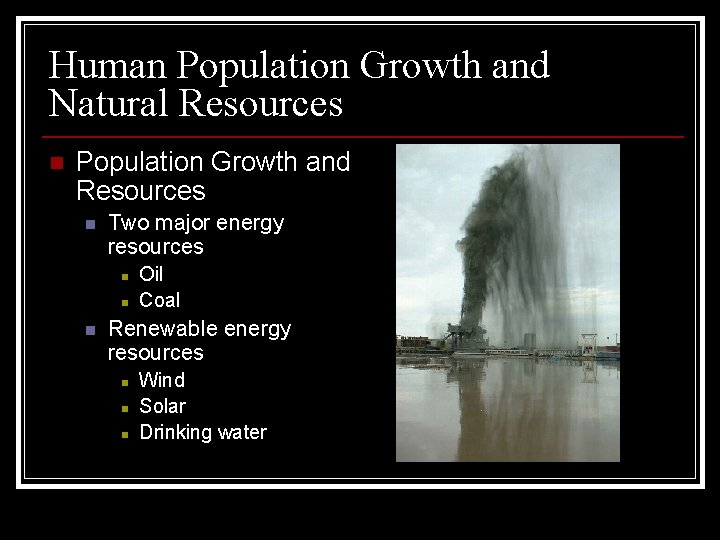
Human Population Growth and Natural Resources n Population Growth and Resources n Two major energy resources n n n Oil Coal Renewable energy resources n n n Wind Solar Drinking water
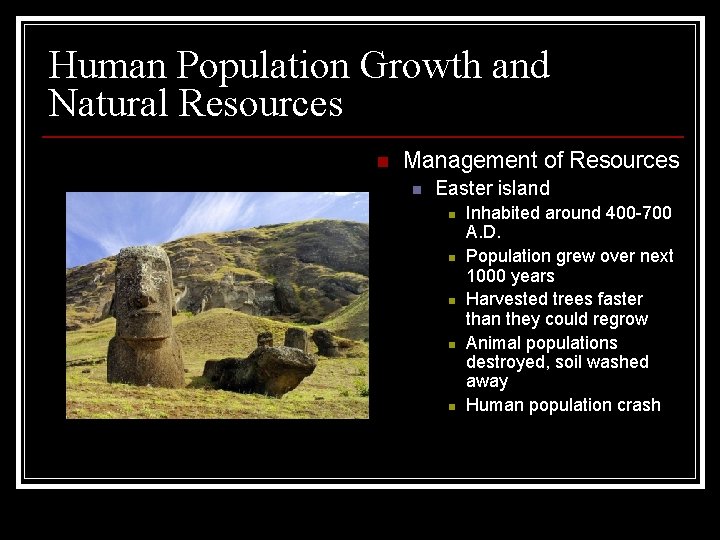
Human Population Growth and Natural Resources n Management of Resources n Easter island n n n Inhabited around 400 -700 A. D. Population grew over next 1000 years Harvested trees faster than they could regrow Animal populations destroyed, soil washed away Human population crash
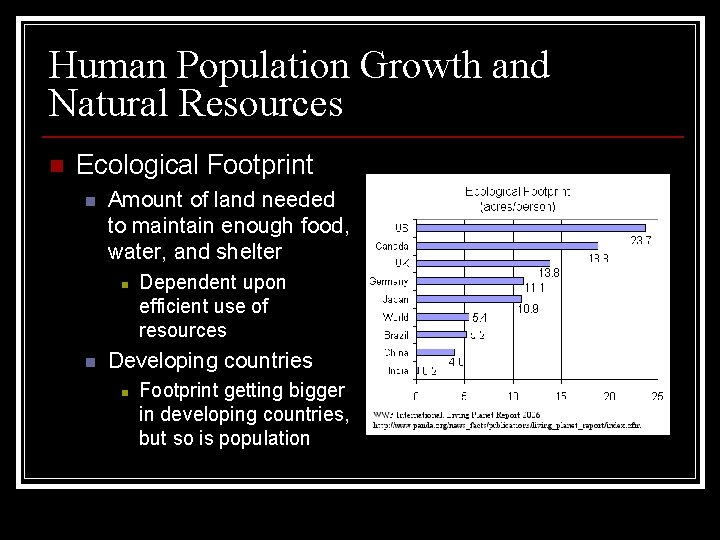
Human Population Growth and Natural Resources n Ecological Footprint n Amount of land needed to maintain enough food, water, and shelter n n Dependent upon efficient use of resources Developing countries n Footprint getting bigger in developing countries, but so is population
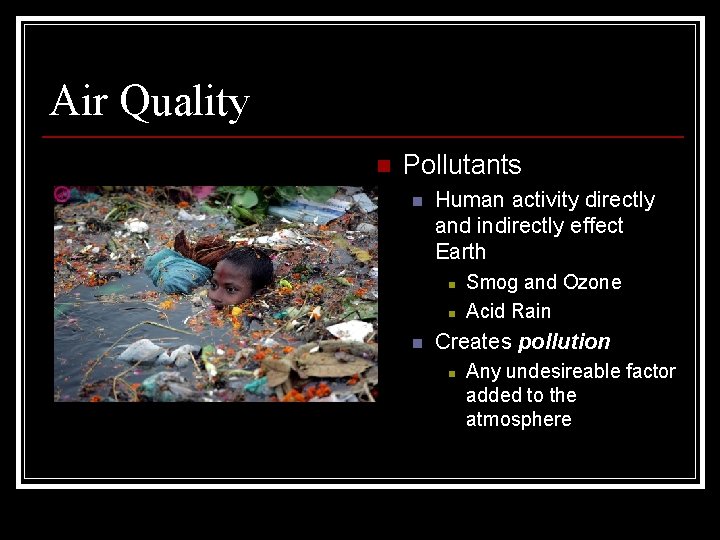
Air Quality n Pollutants n Human activity directly and indirectly effect Earth n n n Smog and Ozone Acid Rain Creates pollution n Any undesireable factor added to the atmosphere
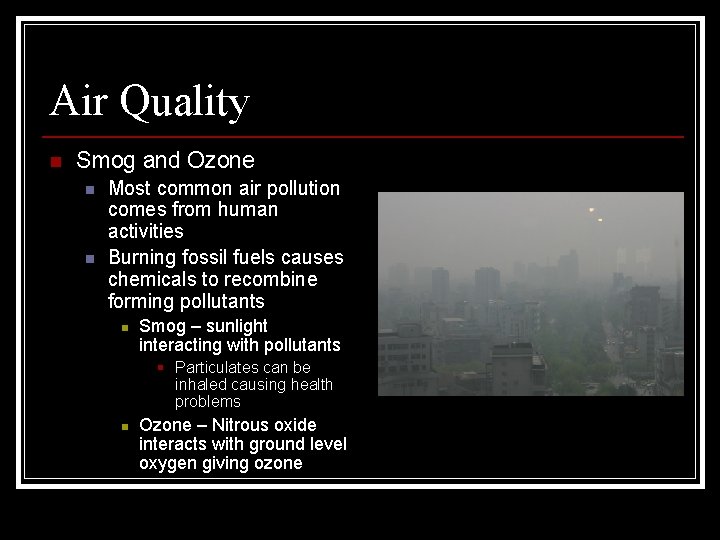
Air Quality n Smog and Ozone n n Most common air pollution comes from human activities Burning fossil fuels causes chemicals to recombine forming pollutants n Smog – sunlight interacting with pollutants § Particulates can be inhaled causing health problems n Ozone – Nitrous oxide interacts with ground level oxygen giving ozone
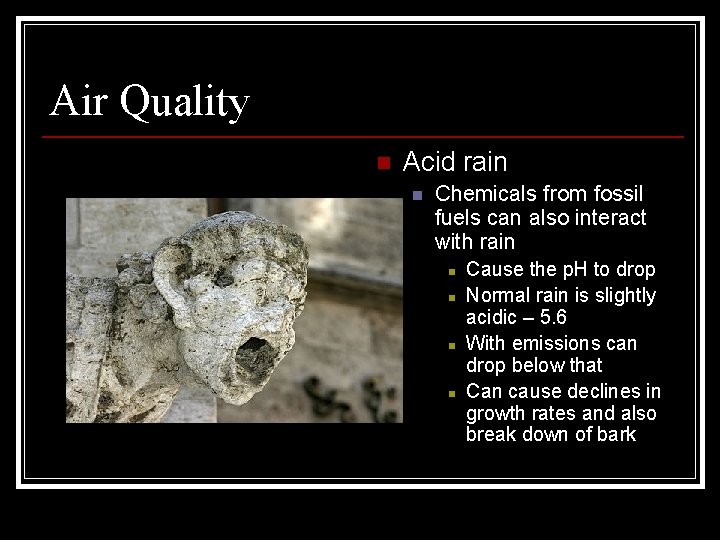
Air Quality n Acid rain n Chemicals from fossil fuels can also interact with rain n n Cause the p. H to drop Normal rain is slightly acidic – 5. 6 With emissions can drop below that Can cause declines in growth rates and also break down of bark
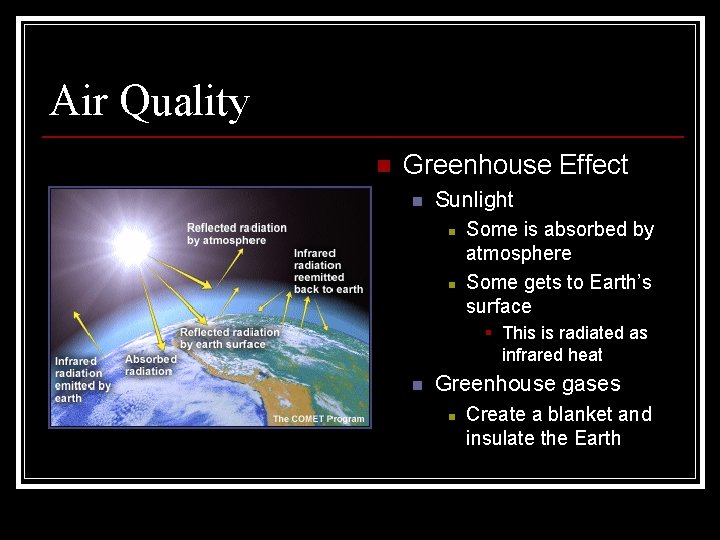
Air Quality n Greenhouse Effect n Sunlight n n Some is absorbed by atmosphere Some gets to Earth’s surface § This is radiated as infrared heat n Greenhouse gases n Create a blanket and insulate the Earth
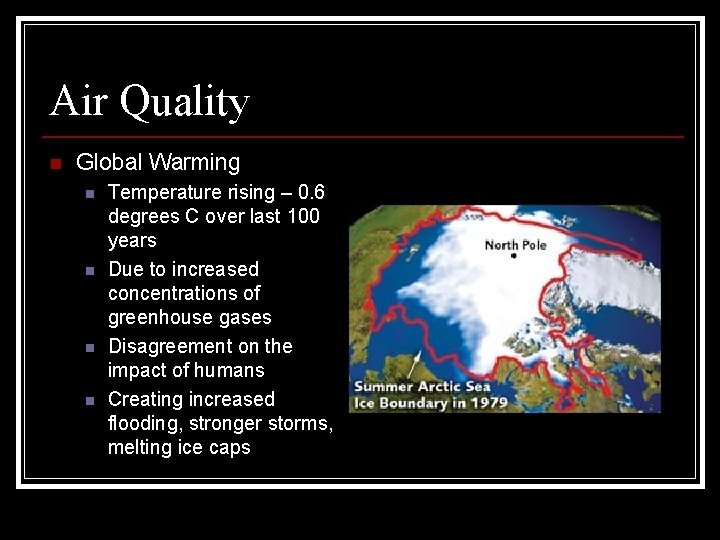
Air Quality n Global Warming n n Temperature rising – 0. 6 degrees C over last 100 years Due to increased concentrations of greenhouse gases Disagreement on the impact of humans Creating increased flooding, stronger storms, melting ice caps
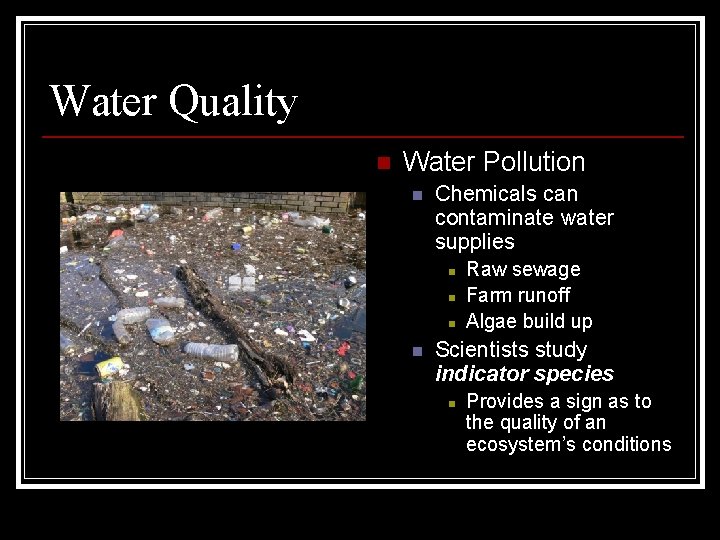
Water Quality n Water Pollution n Chemicals can contaminate water supplies n n Raw sewage Farm runoff Algae build up Scientists study indicator species n Provides a sign as to the quality of an ecosystem’s conditions
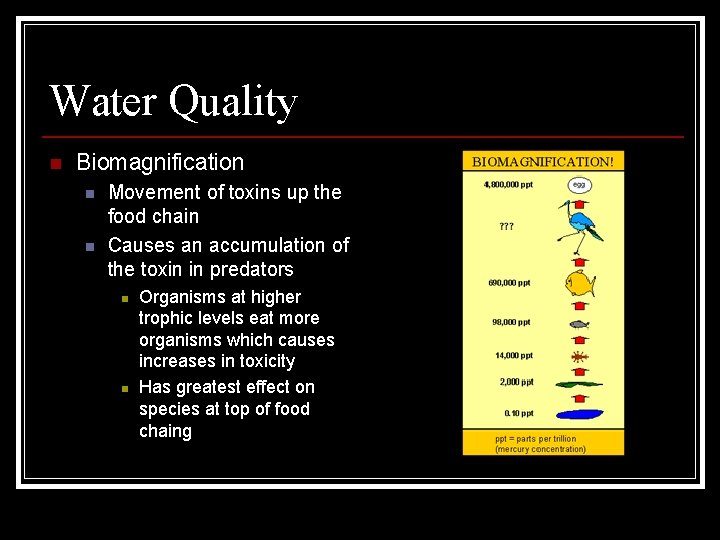
Water Quality n Biomagnification n n Movement of toxins up the food chain Causes an accumulation of the toxin in predators n n Organisms at higher trophic levels eat more organisms which causes increases in toxicity Has greatest effect on species at top of food chaing
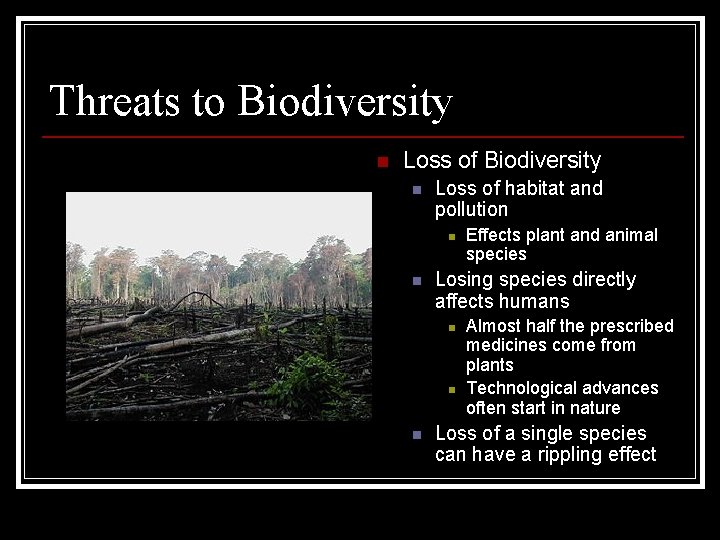
Threats to Biodiversity n Loss of habitat and pollution n n Losing species directly affects humans n n n Effects plant and animal species Almost half the prescribed medicines come from plants Technological advances often start in nature Loss of a single species can have a rippling effect
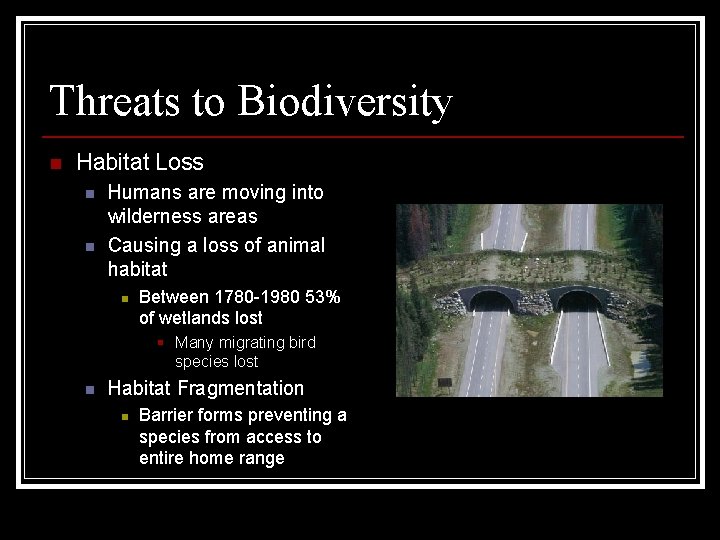
Threats to Biodiversity n Habitat Loss n n Humans are moving into wilderness areas Causing a loss of animal habitat n Between 1780 -1980 53% of wetlands lost § Many migrating bird species lost n Habitat Fragmentation n Barrier forms preventing a species from access to entire home range
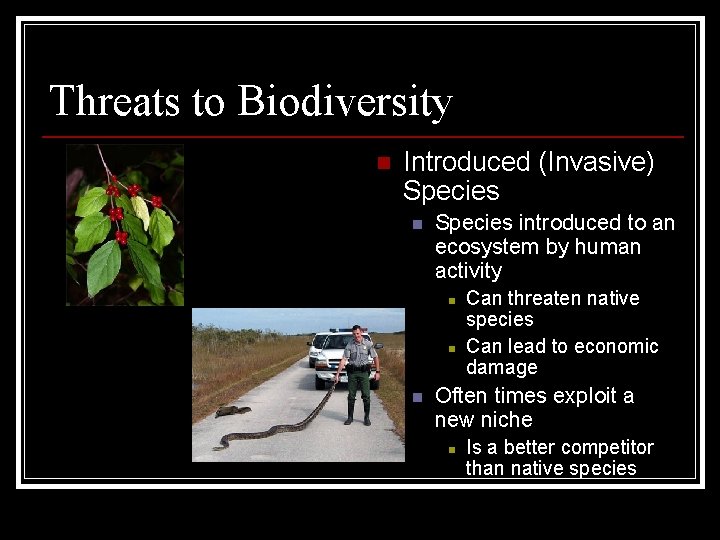
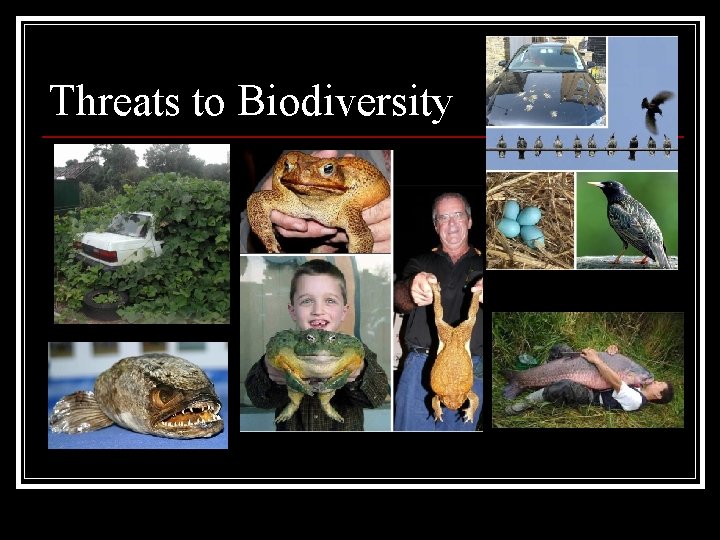
Threats to Biodiversity n Introduced (Invasive) Species n Species introduced to an ecosystem by human activity n n n Can threaten native species Can lead to economic damage Often times exploit a new niche n Is a better competitor than native species
Threats to Biodiversity
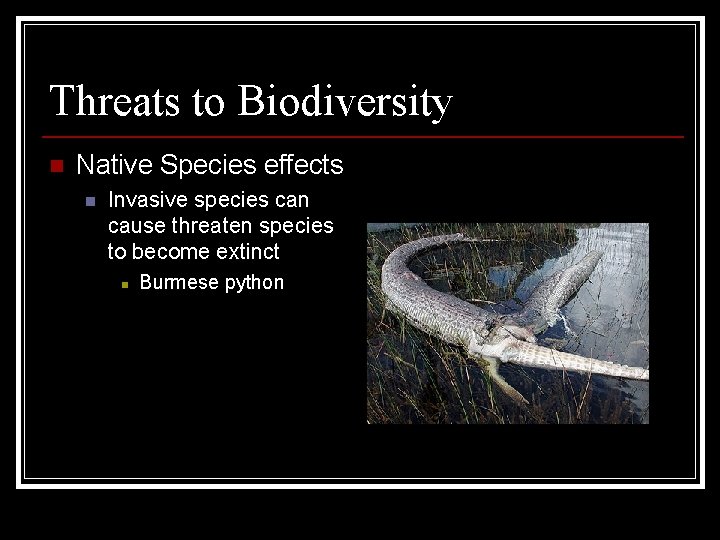
Threats to Biodiversity n Native Species effects n Invasive species can cause threaten species to become extinct n Burmese python
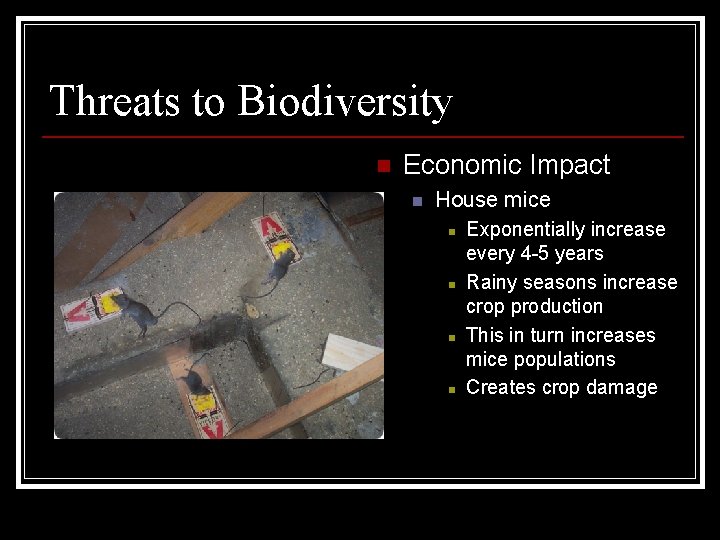
Threats to Biodiversity n Economic Impact n House mice n n Exponentially increase every 4 -5 years Rainy seasons increase crop production This in turn increases mice populations Creates crop damage
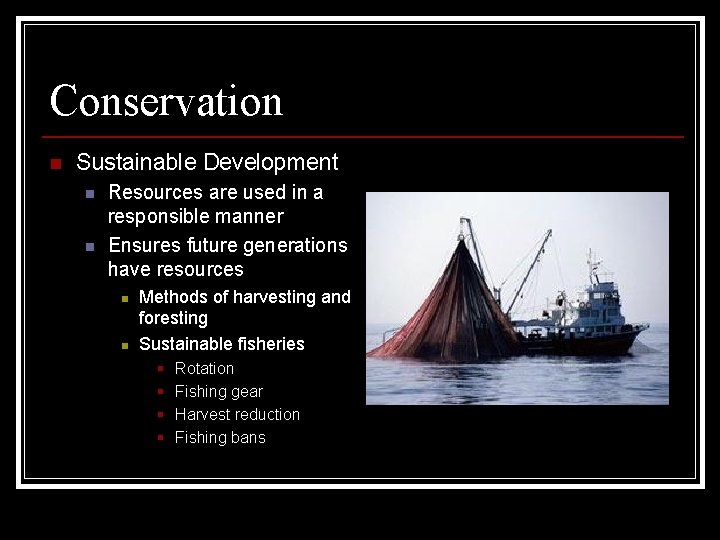
Conservation n Sustainable Development n n Resources are used in a responsible manner Ensures future generations have resources n n Methods of harvesting and foresting Sustainable fisheries § § Rotation Fishing gear Harvest reduction Fishing bans
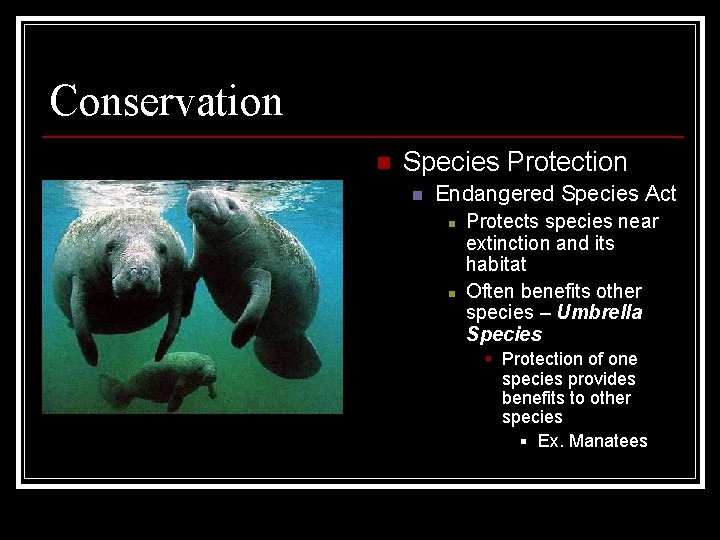
Conservation n Species Protection n Endangered Species Act n n Protects species near extinction and its habitat Often benefits other species – Umbrella Species § Protection of one species provides benefits to other species § Ex. Manatees
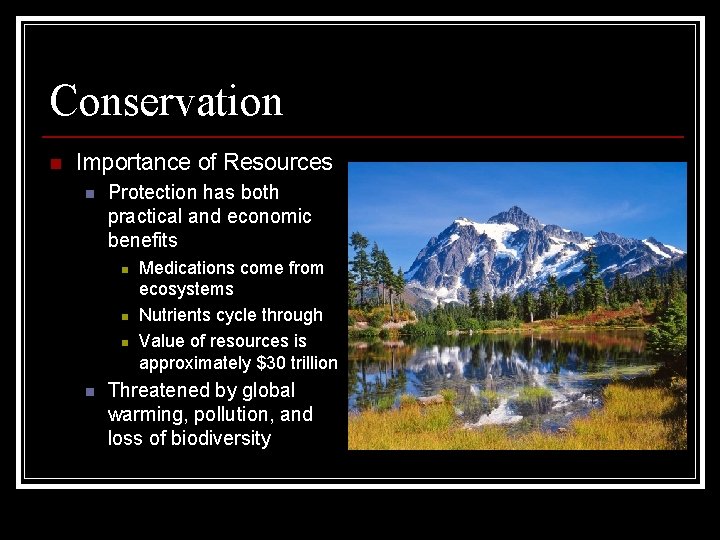
Conservation n Importance of Resources n Protection has both practical and economic benefits n n Medications come from ecosystems Nutrients cycle through Value of resources is approximately $30 trillion Threatened by global warming, pollution, and loss of biodiversity
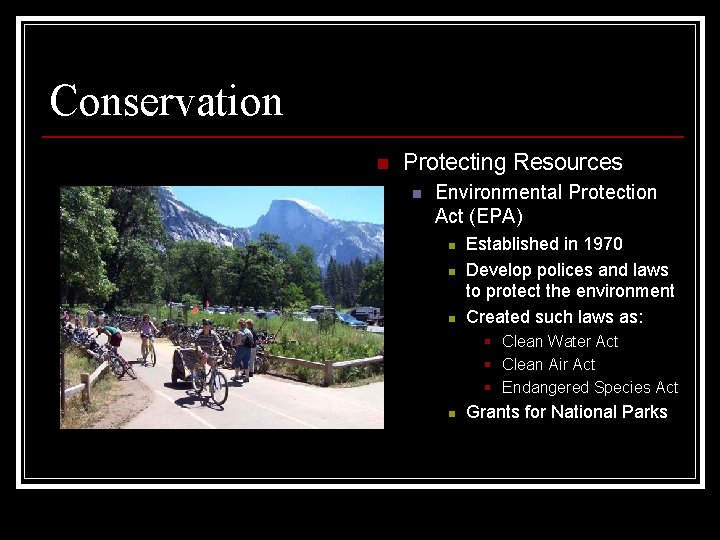
Conservation n Protecting Resources n Environmental Protection Act (EPA) n n n Established in 1970 Develop polices and laws to protect the environment Created such laws as: § Clean Water Act § Clean Air Act § Endangered Species Act n Grants for National Parks
Conservation n Sustainable Earth n n Humans have the greatest impact on resources Control the use n n How fast populations grow Develop technologies to produce more food Ability to change practices regarding forestry, fishing, harvesting No where on Earth is exempt from human interaction