
Chapter 27 Human Impacts on Earth Resources Resources

- Slides: 15
Chapter 27 – Human Impacts on Earth Resources
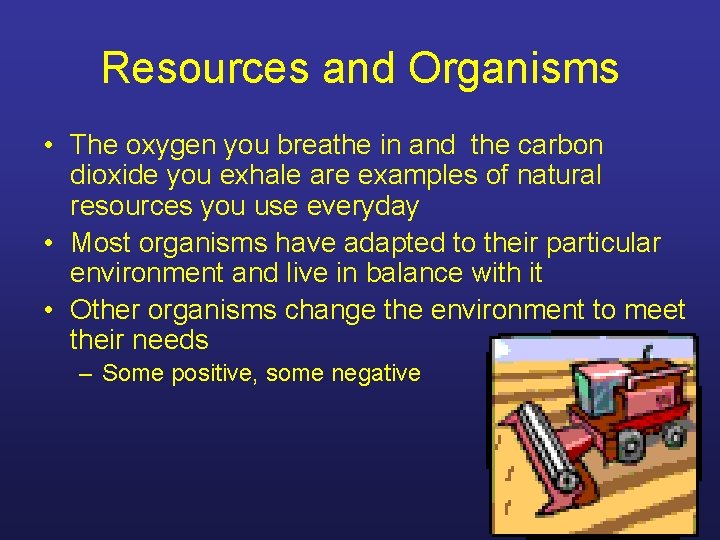
Resources and Organisms • The oxygen you breathe in and the carbon dioxide you exhale are examples of natural resources you use everyday • Most organisms have adapted to their particular environment and live in balance with it • Other organisms change the environment to meet their needs – Some positive, some negative
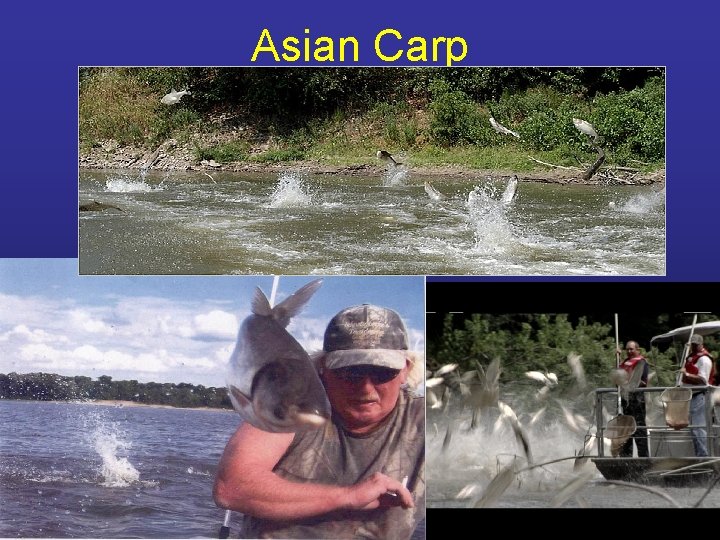
Asian Carp
• Carp 1 • Carp 2
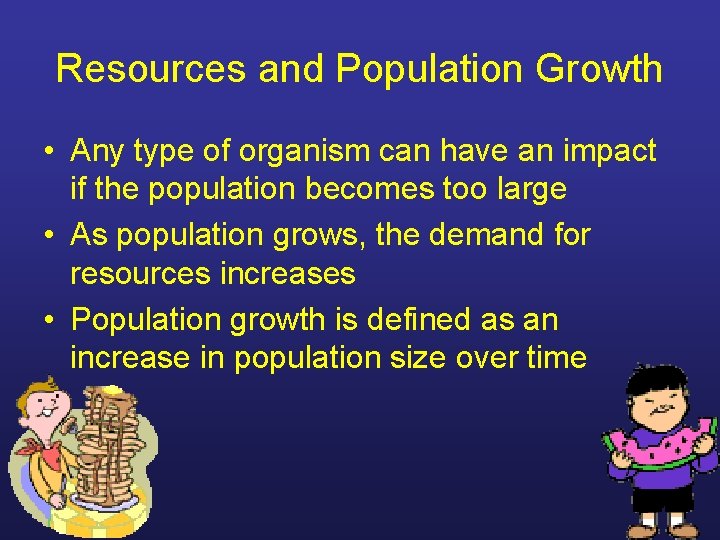
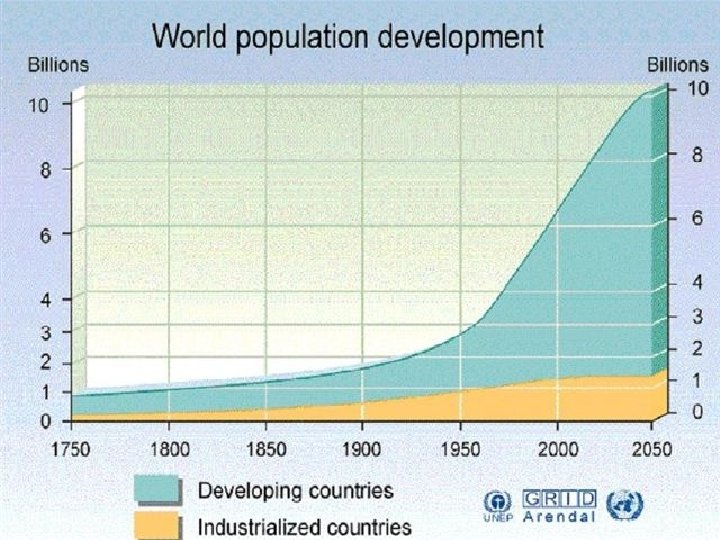
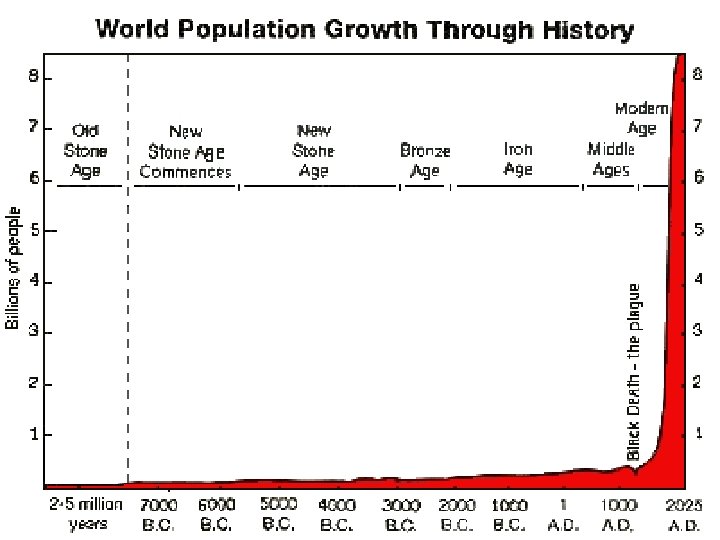
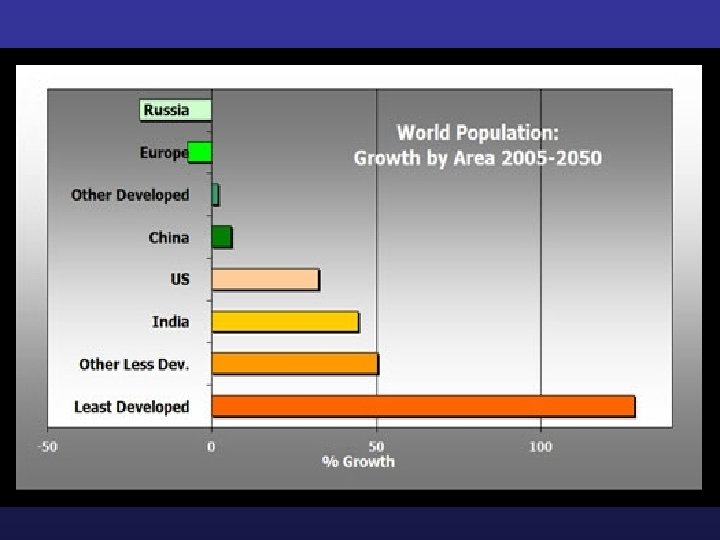
Resources and Population Growth • Any type of organism can have an impact if the population becomes too large • As population grows, the demand for resources increases • Population growth is defined as an increase in population size over time
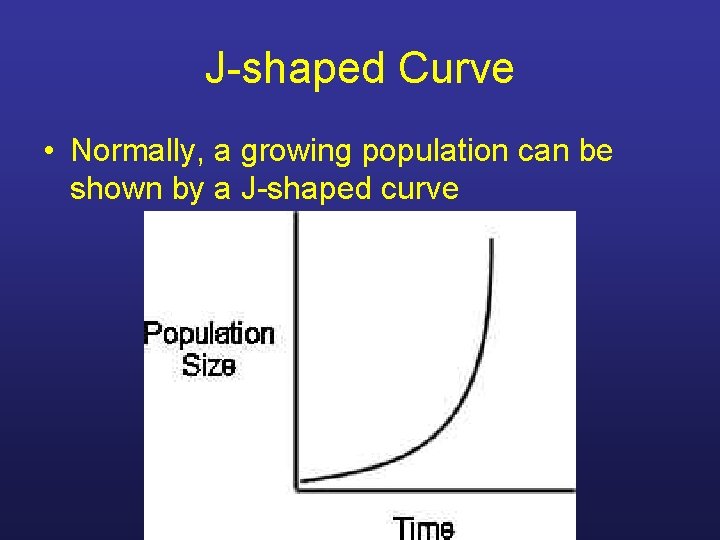
J-shaped Curve • Normally, a growing population can be shown by a J-shaped curve
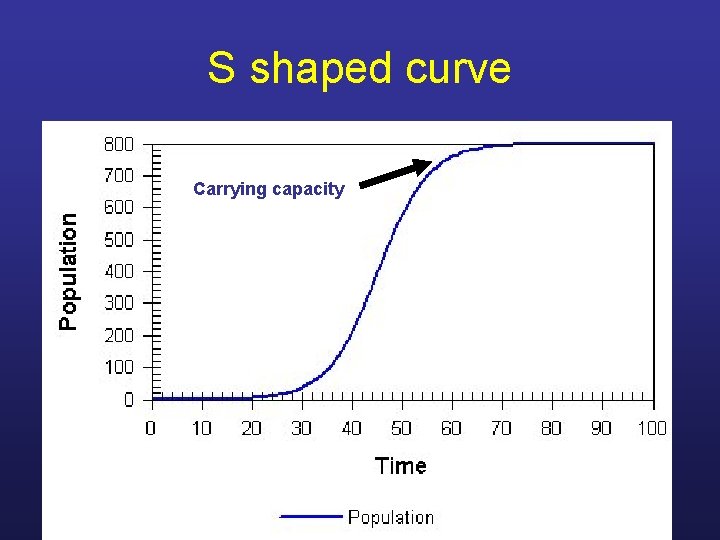
Limits to Population Growth • Earth’s resources are limited, so population cannot grow forever • Limiting factors can be: food, water, or clean air • Number of organisms an environment can support is its carrying capacity
S shaped curve Carrying capacity
Environmental Factors • Storms, extreme changes in temp, droughts, floods and pollution can all affect population size • Disease, parasites, and lack of food can also affect it
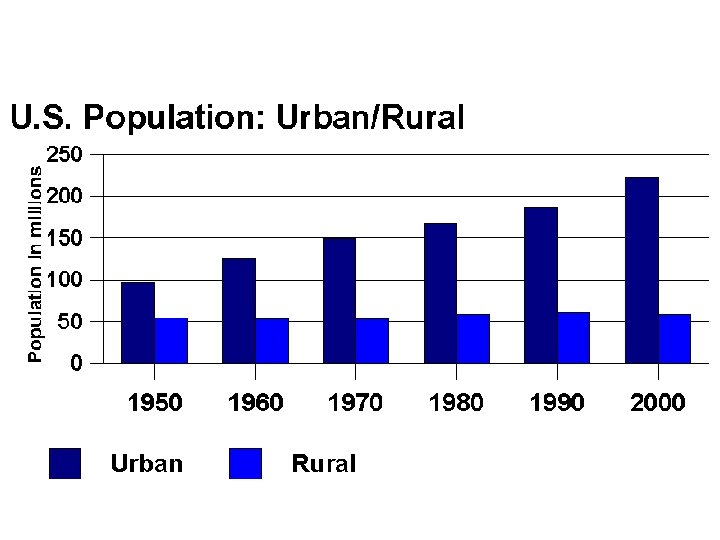
Urban Development • 70% of the North American population live in either urban or suburban areas • Development of land or new construction cause environment problems – Destroys old habitats • Development also takes away from farmland adds pressure to remaining farmland – Increase chance of flooding because of increase of asphalt and concrete – Increase in solid waste
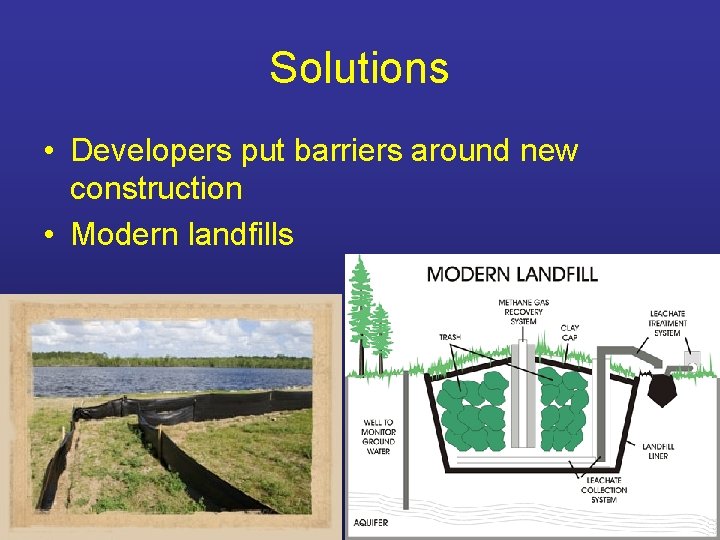
Solutions • Developers put barriers around new construction • Modern landfills