Grignards reagents understand methods of increasing the length
- Slides: 12
Grignard’s reagents understand methods of increasing the length of the carbon chain in a molecule by the use of magnesium to form Grignard reagents and the reactions of the latter with carbon dioxide and with carbonyl compounds in dry ether
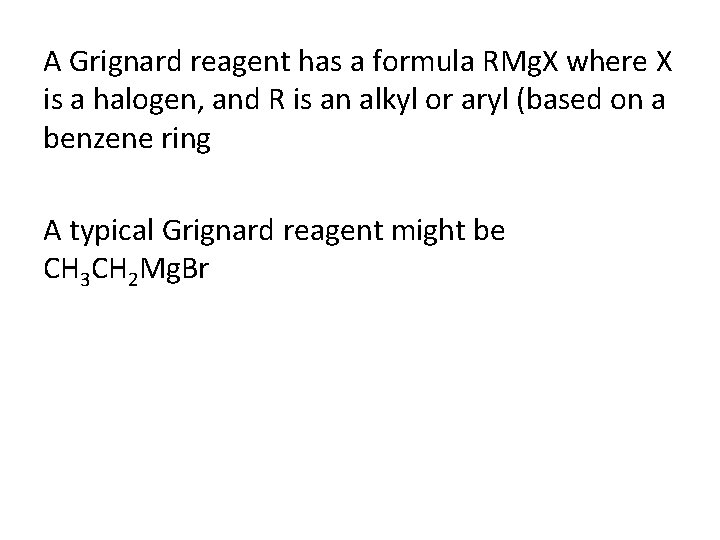
A Grignard reagent has a formula RMg. X where X is a halogen, and R is an alkyl or aryl (based on a benzene ring A typical Grignard reagent might be CH 3 CH 2 Mg. Br
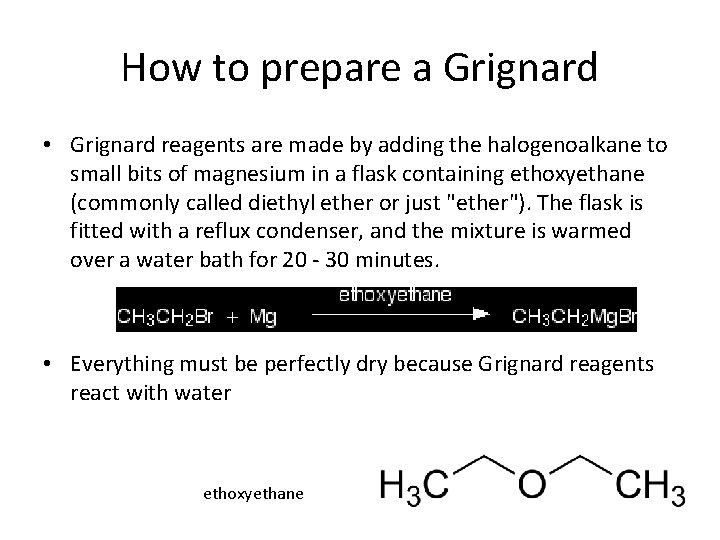
How to prepare a Grignard • Grignard reagents are made by adding the halogenoalkane to small bits of magnesium in a flask containing ethoxyethane (commonly called diethyl ether or just "ether"). The flask is fitted with a reflux condenser, and the mixture is warmed over a water bath for 20 - 30 minutes. • Everything must be perfectly dry because Grignard reagents react with water ethoxyethane
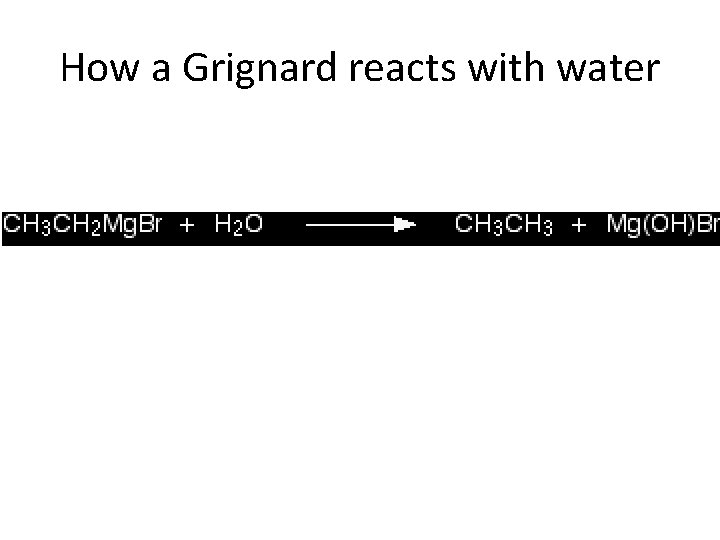
How a Grignard reacts with water
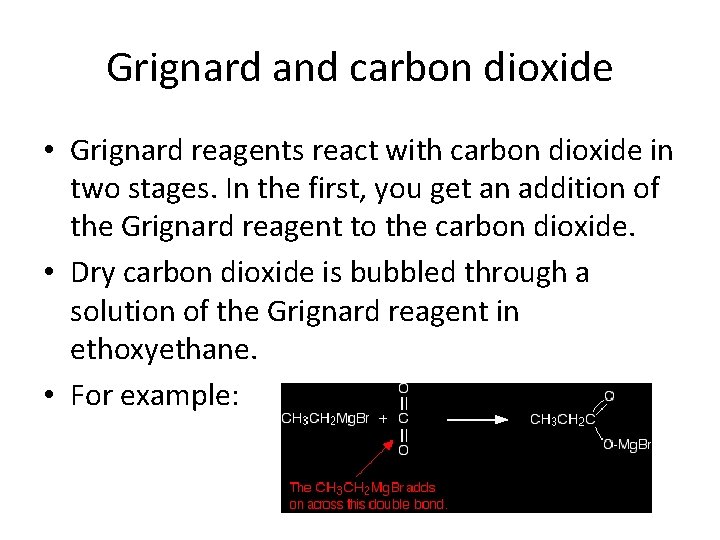
Grignard and carbon dioxide • Grignard reagents react with carbon dioxide in two stages. In the first, you get an addition of the Grignard reagent to the carbon dioxide. • Dry carbon dioxide is bubbled through a solution of the Grignard reagent in ethoxyethane. • For example:
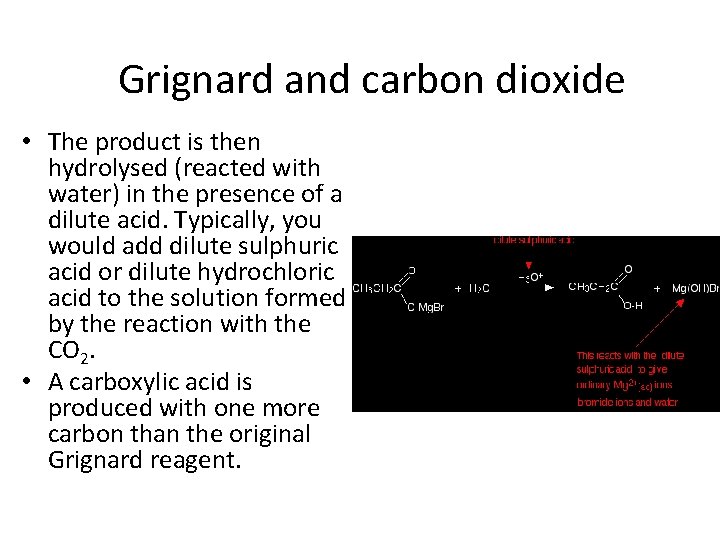
Grignard and carbon dioxide • The product is then hydrolysed (reacted with water) in the presence of a dilute acid. Typically, you would add dilute sulphuric acid or dilute hydrochloric acid to the solution formed by the reaction with the CO 2. • A carboxylic acid is produced with one more carbon than the original Grignard reagent.
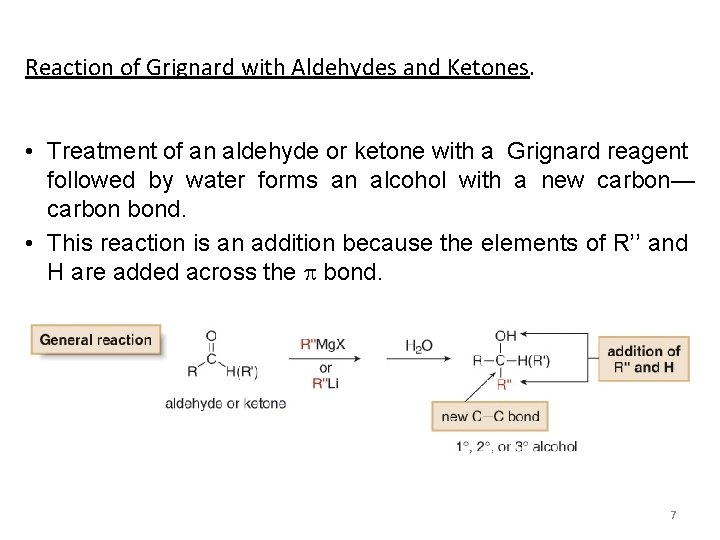
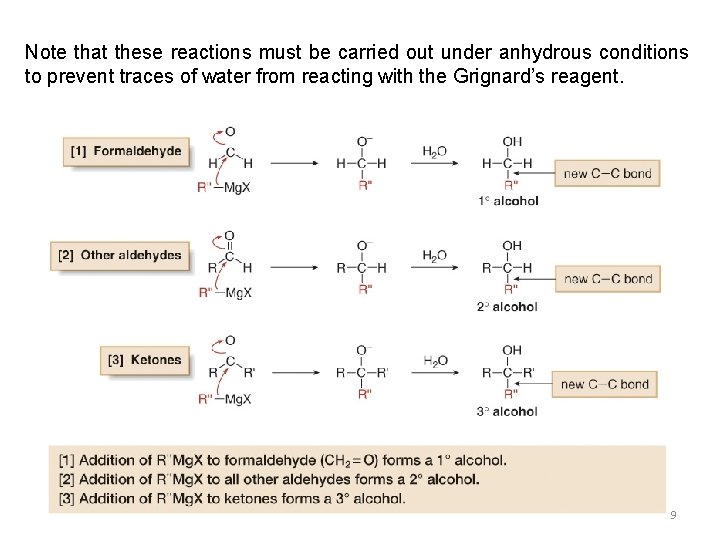
Reaction of Grignard with Aldehydes and Ketones. • Treatment of an aldehyde or ketone with a Grignard reagent followed by water forms an alcohol with a new carbon— carbon bond. • This reaction is an addition because the elements of R’’ and H are added across the bond. 7
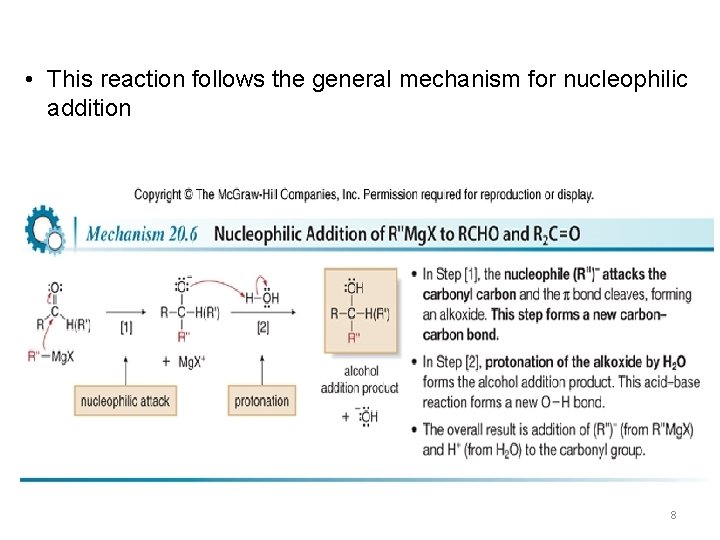
• This reaction follows the general mechanism for nucleophilic addition 8
Note that these reactions must be carried out under anhydrous conditions to prevent traces of water from reacting with the Grignard’s reagent. 9
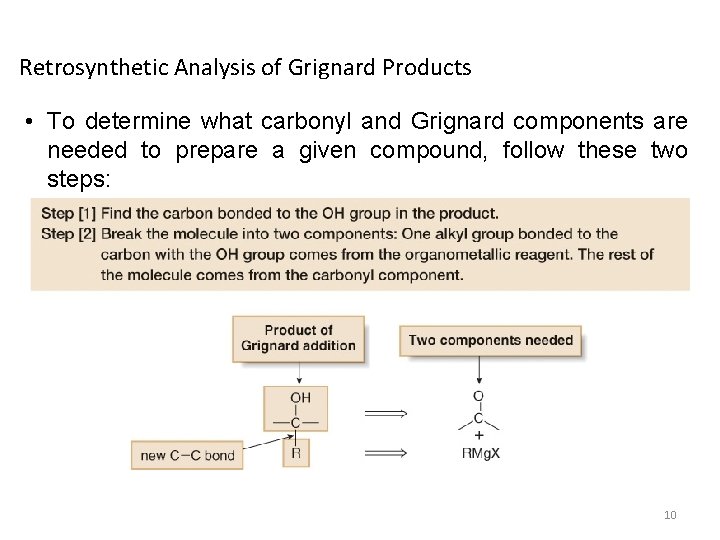
Retrosynthetic Analysis of Grignard Products • To determine what carbonyl and Grignard components are needed to prepare a given compound, follow these two steps: 10
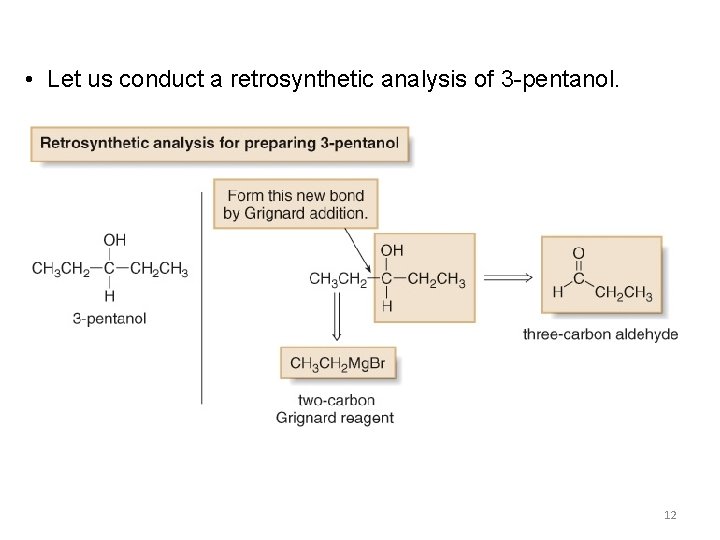
• Let us conduct a retrosynthetic analysis of 3 -pentanol.
• Let us conduct a retrosynthetic analysis of 3 -pentanol. 12