Grey Sentiment Analysis LiviuAdrian Cotfas Camelia Delcea liviuadrian



- Slides: 20
Grey Sentiment Analysis Liviu-Adrian Cotfas, Camelia Delcea liviu-adrian. cotfas@univ-fcomte. fr liviu. cotfas@ase. ro
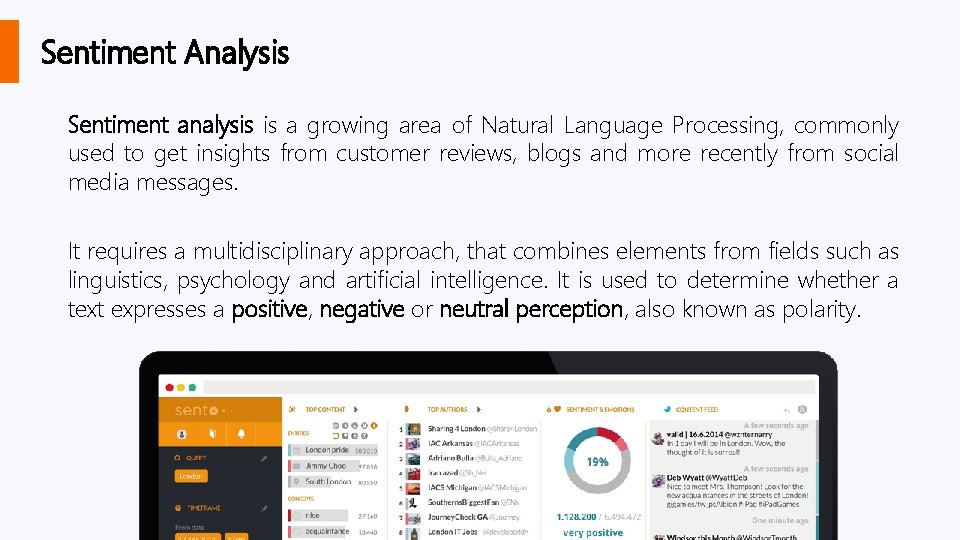
Sentiment Analysis Sentiment analysis is a growing area of Natural Language Processing, commonly used to get insights from customer reviews, blogs and more recently from social media messages. It requires a multidisciplinary approach, that combines elements from fields such as linguistics, psychology and artificial intelligence. It is used to determine whether a text expresses a positive, negative or neutral perception, also known as polarity.
“Everyone’s customer will sooner or later express what they want on the Net. […]. You just put your ear to the ground and listen. You probably want to ask questions too but that will be to get details, to fine tune — not to understand the picture, only to understand what particular shade of green the customer is seeing out of 3, 500 shades of green. ” Source: Sony [http: //breakthroughanalysis. com/]
How? Main approaches: § Lexicon based; § Machine learning based; § Hybrid approaches.
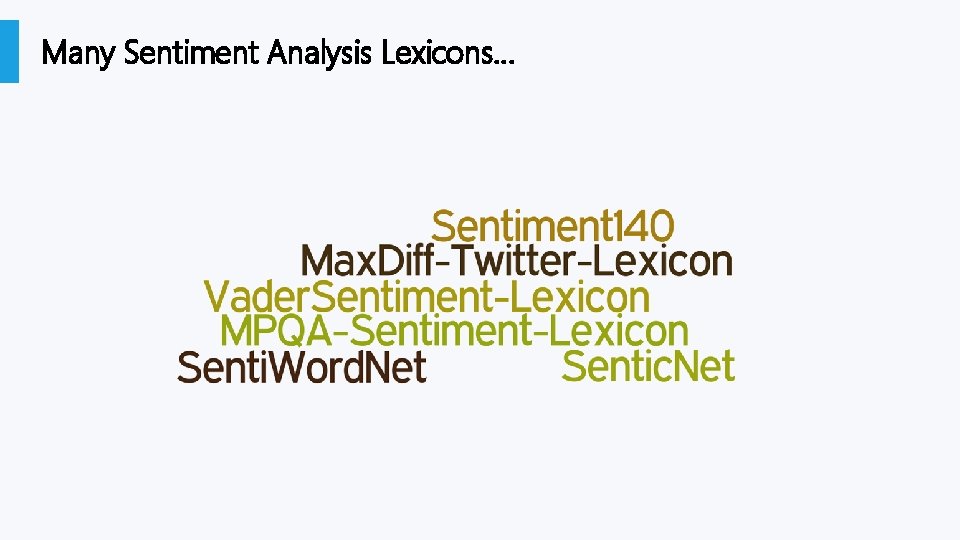
Many Sentiment Analysis Lexicons…
What if? • we could combine existing lexicons using grey systems theory, in order to improve sentiment analysis accuracy
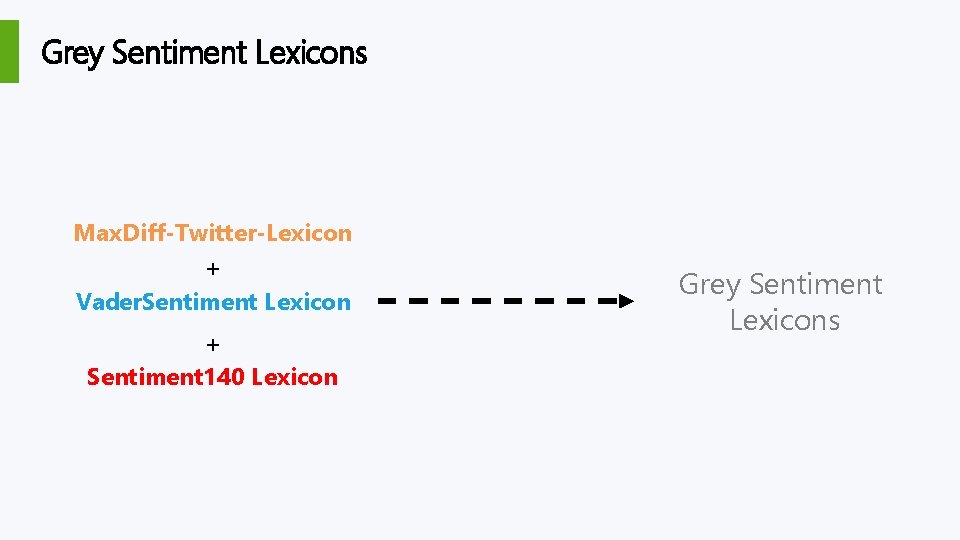
Grey Sentiment Lexicons Max. Diff-Twitter-Lexicon + Vader. Sentiment Lexicon + Sentiment 140 Lexicon Grey Sentiment Lexicons
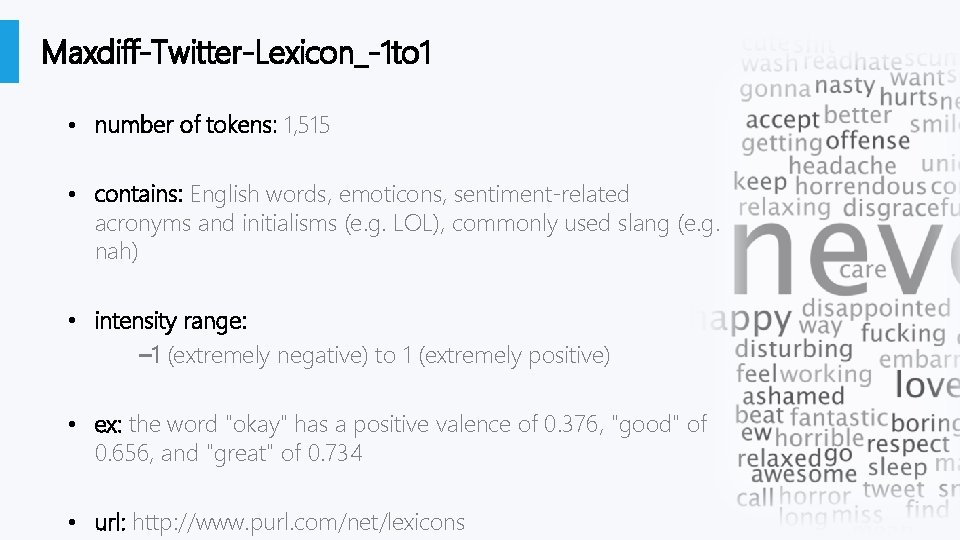
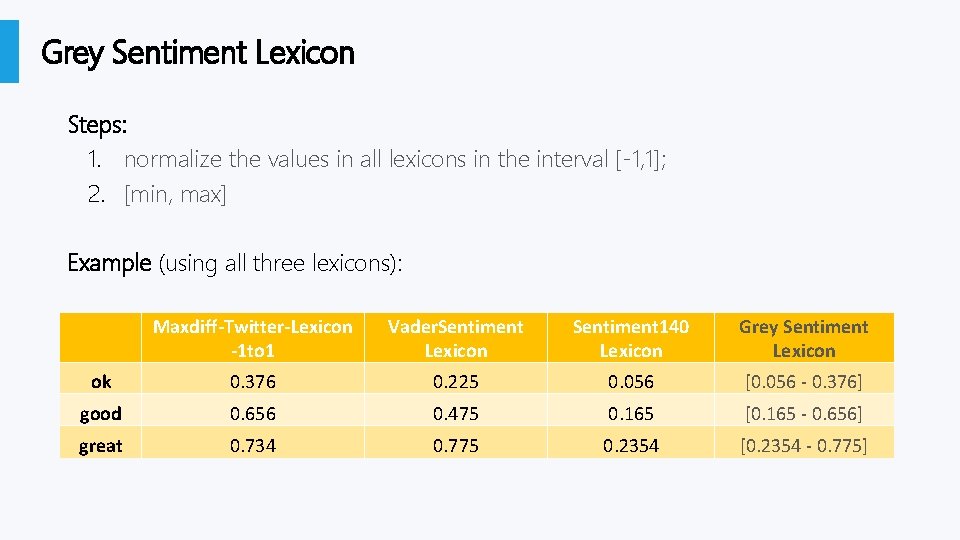
Maxdiff-Twitter-Lexicon_-1 to 1 • number of tokens: 1, 515 • contains: English words, emoticons, sentiment-related acronyms and initialisms (e. g. LOL), commonly used slang (e. g. nah) • intensity range: – 1 (extremely negative) to 1 (extremely positive) • ex: the word "okay" has a positive valence of 0. 376, "good" of 0. 656, and "great" of 0. 734 • url: http: //www. purl. com/net/lexicons
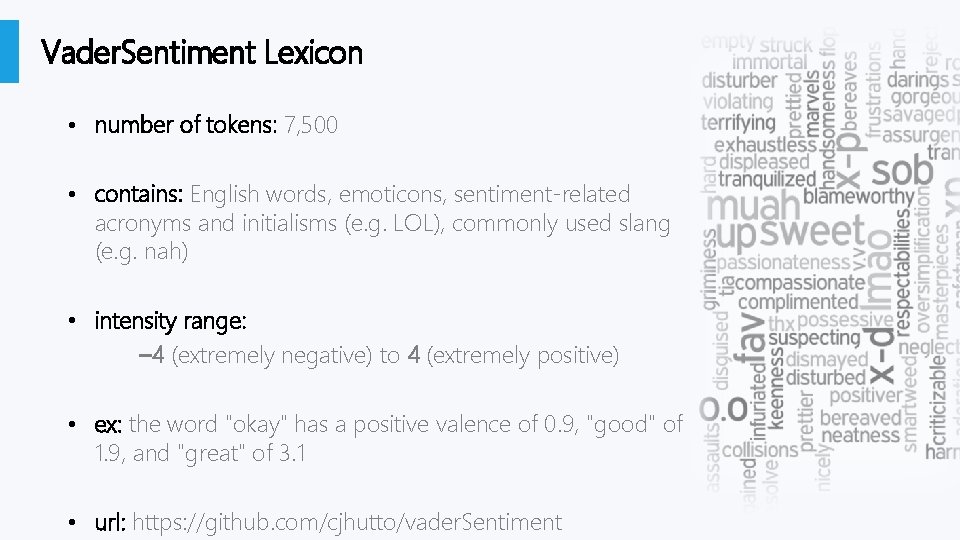
Vader. Sentiment Lexicon • number of tokens: 7, 500 • contains: English words, emoticons, sentiment-related acronyms and initialisms (e. g. LOL), commonly used slang (e. g. nah) • intensity range: – 4 (extremely negative) to 4 (extremely positive) • ex: the word "okay" has a positive valence of 0. 9, "good" of 1. 9, and "great" of 3. 1 • url: https: //github. com/cjhutto/vader. Sentiment
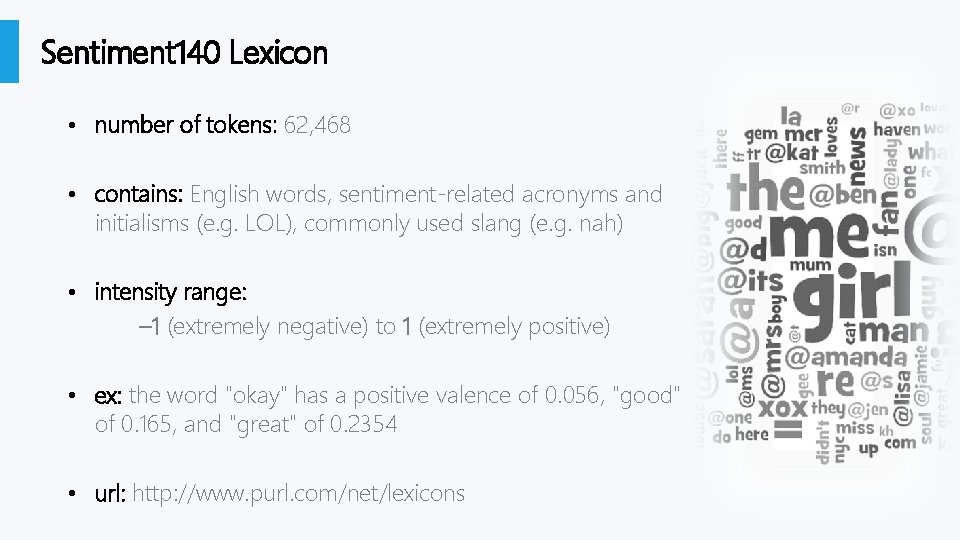
Sentiment 140 Lexicon • number of tokens: 62, 468 • contains: English words, sentiment-related acronyms and initialisms (e. g. LOL), commonly used slang (e. g. nah) • intensity range: – 1 (extremely negative) to 1 (extremely positive) • ex: the word "okay" has a positive valence of 0. 056, "good" of 0. 165, and "great" of 0. 2354 • url: http: //www. purl. com/net/lexicons
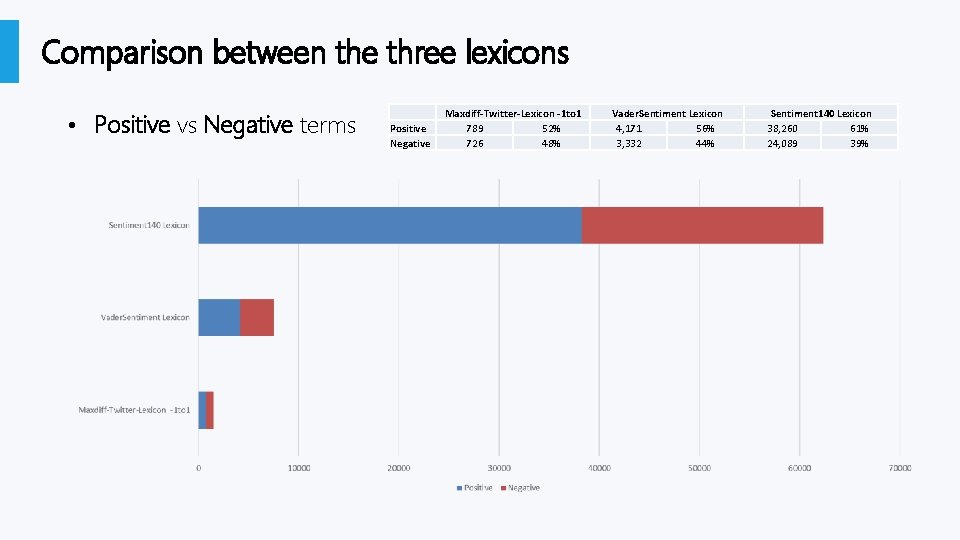
Comparison between the three lexicons • Positive vs Negative terms Positive Negative Maxdiff-Twitter-Lexicon -1 to 1 789 52% 726 48% Vader. Sentiment Lexicon 4, 171 56% 3, 332 44% Sentiment 140 Lexicon 38, 260 61% 24, 089 39%
Grey Sentiment Lexicon Steps: 1. normalize the values in all lexicons in the interval [-1, 1]; 2. [min, max] Example (using all three lexicons): Maxdiff-Twitter-Lexicon -1 to 1 Vader. Sentiment Lexicon Sentiment 140 Lexicon Grey Sentiment Lexicon ok 0. 376 0. 225 0. 056 [0. 056 - 0. 376] good 0. 656 0. 475 0. 165 [0. 165 - 0. 656] great 0. 734 0. 775 0. 2354 [0. 2354 - 0. 775]
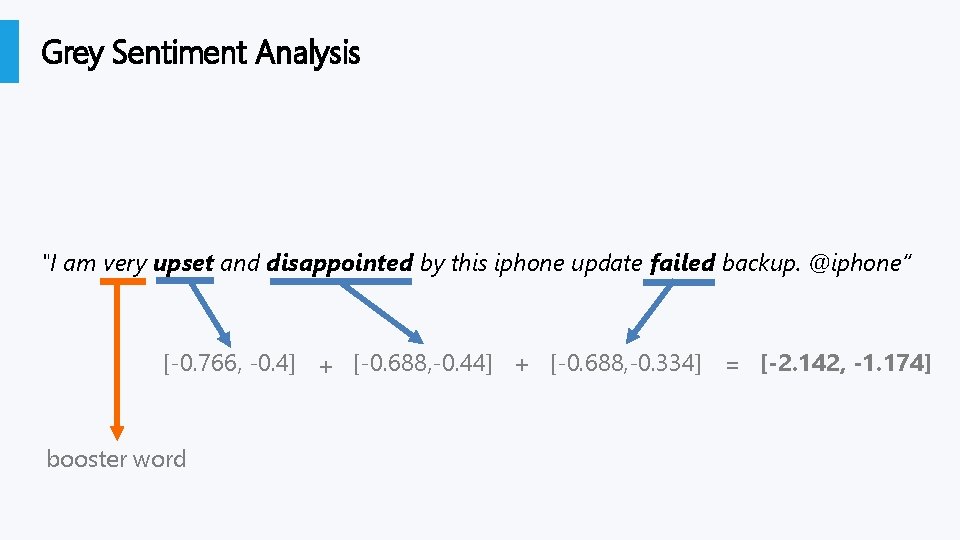
Grey Sentiment Analysis "I am very upset and disappointed by this iphone update failed backup. @iphone“ [-0. 766, -0. 4] + [-0. 688, -0. 44] + [-0. 688, -0. 334] = [-2. 142, -1. 174] booster word
Demo : ) : | : ( http: //scopanum. cloudapp. net/greysentimentanalysis
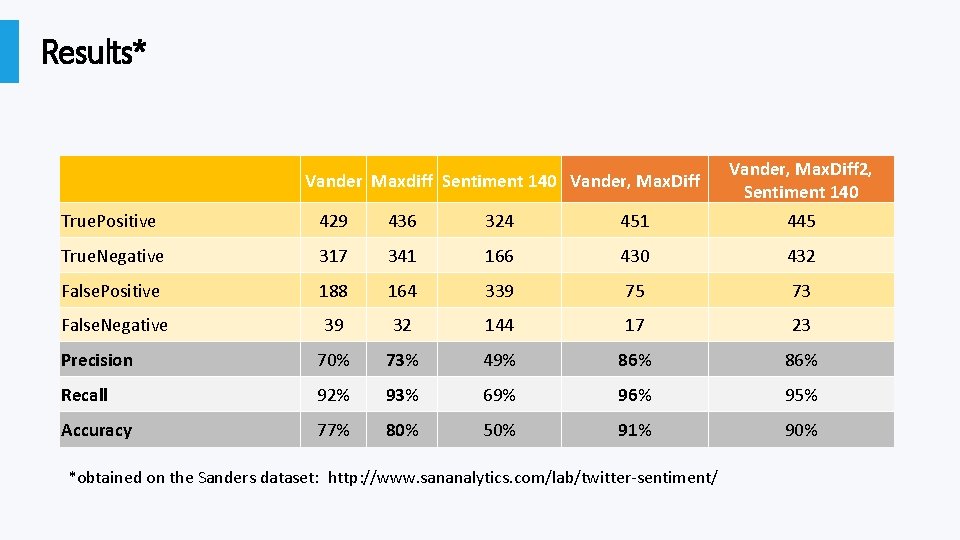
Results* Vander Maxdiff Sentiment 140 Vander, Max. Diff 2, Sentiment 140 True. Positive 429 436 324 451 445 True. Negative 317 341 166 430 432 False. Positive 188 164 339 75 73 False. Negative 39 32 144 17 23 Precision 70% 73% 49% 86% Recall 92% 93% 69% 96% 95% Accuracy 77% 80% 50% 91% 90% *obtained on the Sanders dataset: http: //www. sananalytics. com/lab/twitter-sentiment/
Conclusions § visible improvements in precision, recall and accuracy , when using Grey Lexicons; § extremely noisy lexicons can negatively affect the performance of the resulting Grey Lexicon.
Further Research Directions • integrate additional lexicons such as Senti. Word. Net and Sentic. Net; • validate the approach using a state-of-the-art sentiment analysis algorithm; • extend the proposed approach for emotion analysis.
Source code https: //github. com/lcotfas/Grey. Sentiment. Analysis
Thank you!