From photo data to poles Ron Workman Data

- Slides: 23
From (photo) data to poles Ron Workman Data Analysis Center Institute for Nuclear Studies George Washington University Baryons 2013 University of Glasgow
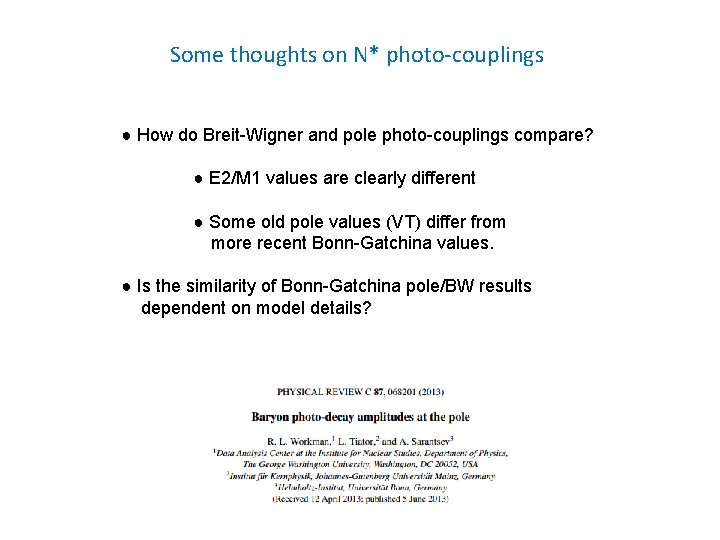
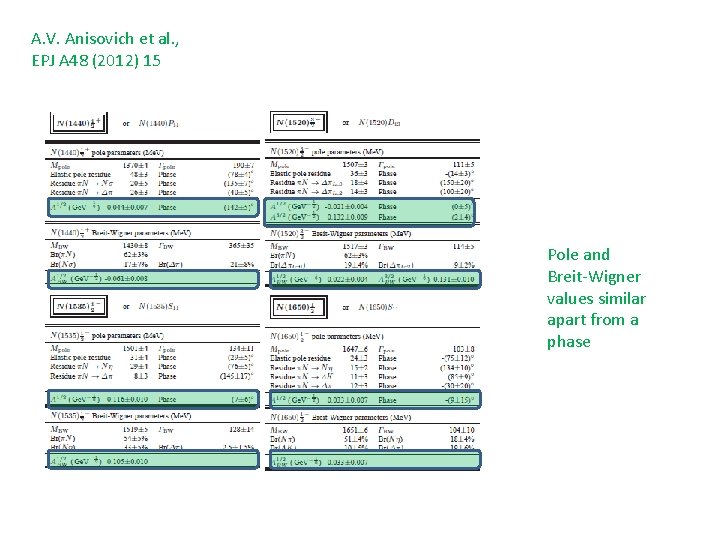
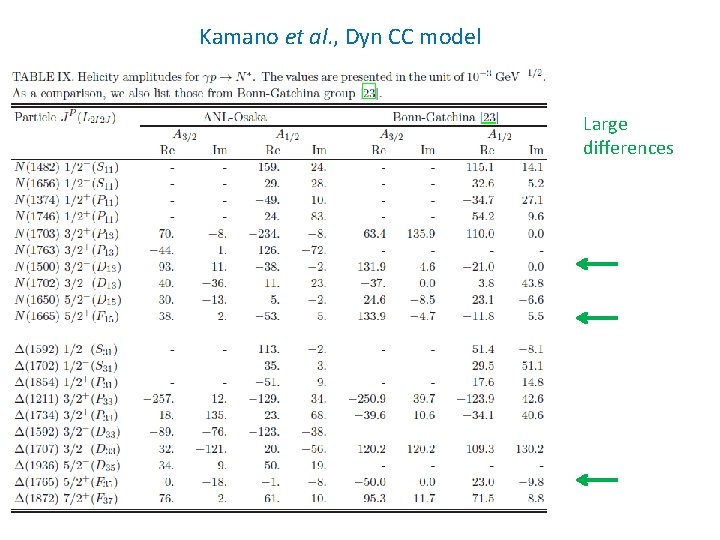
Some thoughts on N* photo-couplings ● How do Breit-Wigner and pole photo-couplings compare? ● E 2/M 1 values are clearly different ● Some old pole values (VT) differ from more recent Bonn-Gatchina values. ● Is the similarity of Bonn-Gatchina pole/BW results dependent on model details?
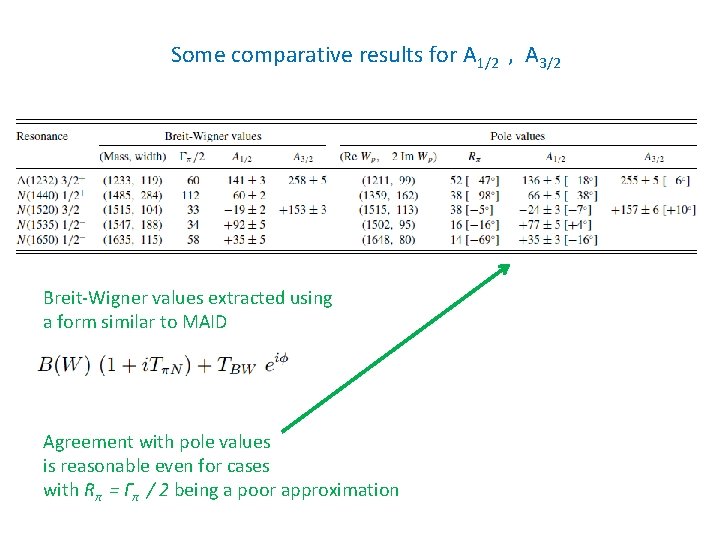
A. V. Anisovich et al. , EPJ A 48 (2012) 15 Pole and Breit-Wigner values similar apart from a phase
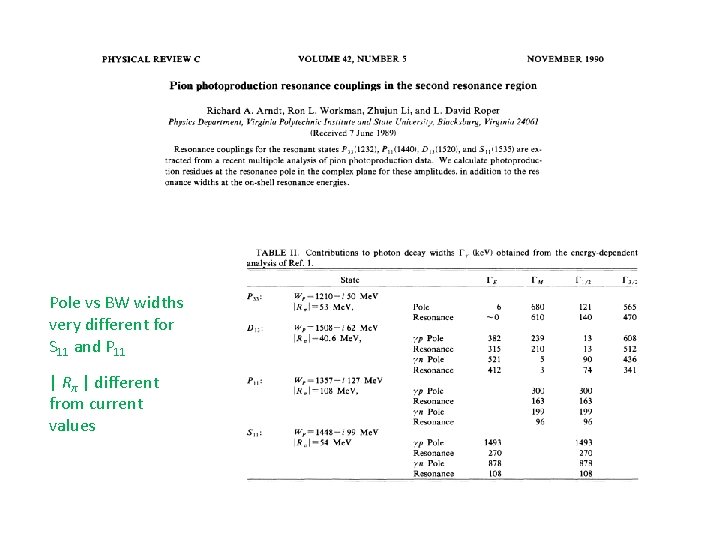
Pole vs BW widths very different for S 11 and P 11 | Rπ | different from current values
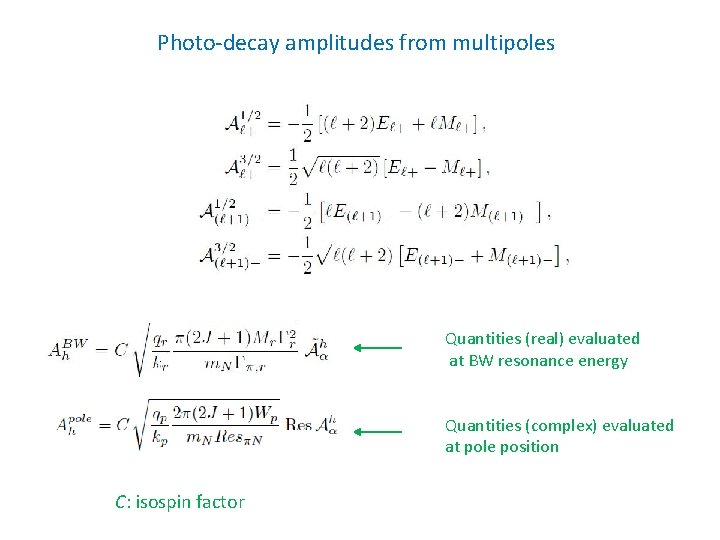
Photo-decay amplitudes from multipoles Quantities (real) evaluated at BW resonance energy Quantities (complex) evaluated at pole position C: isospin factor
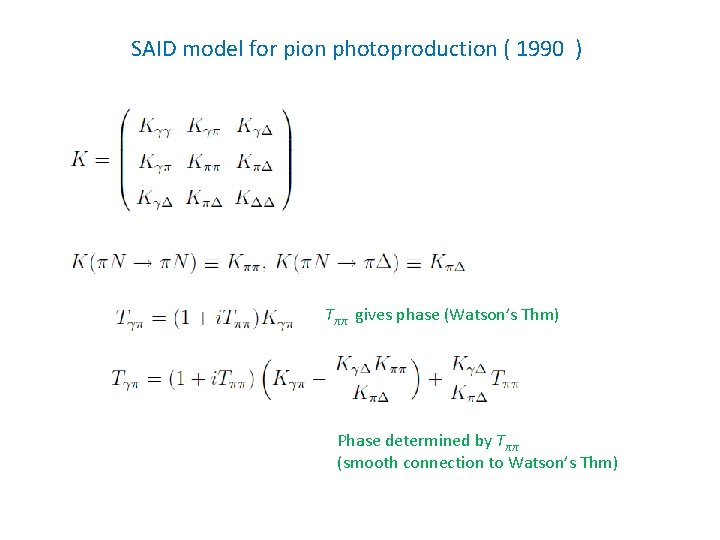
SAID model for pion photoproduction ( 1990 ) Tππ gives phase (Watson’s Thm) Phase determined by Tππ (smooth connection to Watson’s Thm)
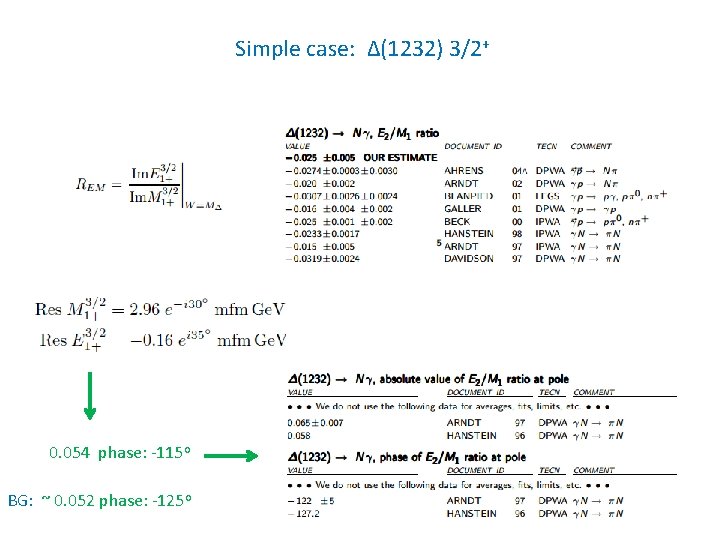
Simple case: Δ(1232) 3/2+ 0. 054 phase: -115 o BG: ~ 0. 052 phase: -125 o
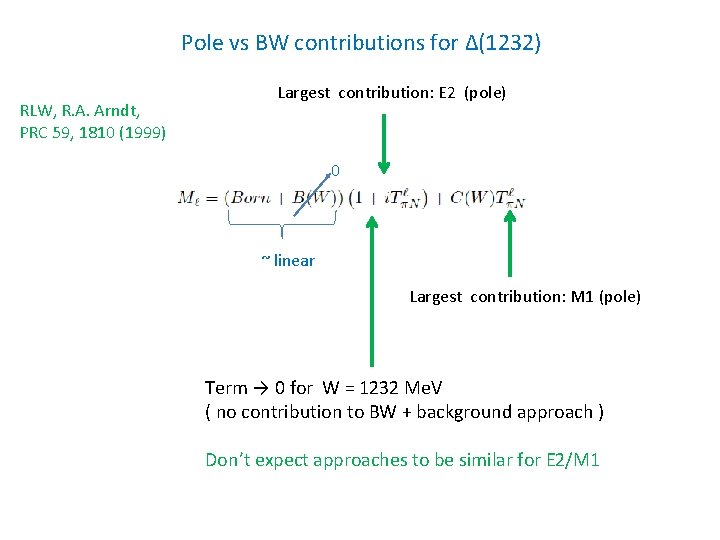
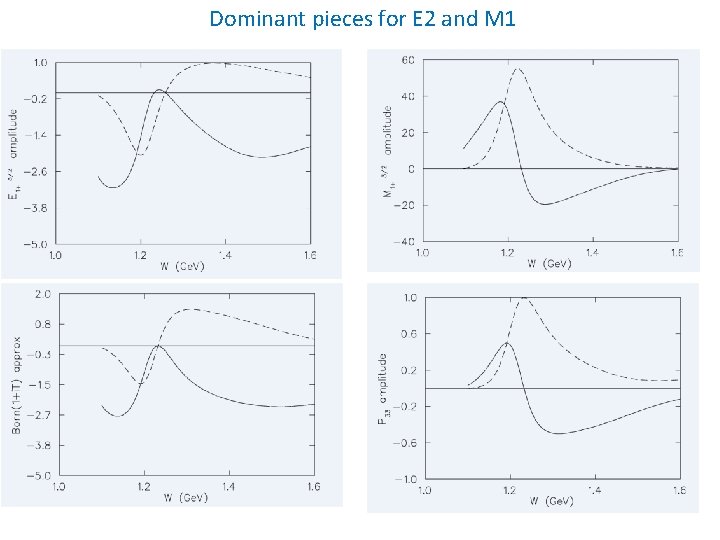
Pole vs BW contributions for Δ(1232) RLW, R. A. Arndt, PRC 59, 1810 (1999) Largest contribution: E 2 (pole) 0 ~ linear Largest contribution: M 1 (pole) Term → 0 for W = 1232 Me. V ( no contribution to BW + background approach ) Don’t expect approaches to be similar for E 2/M 1
Dominant pieces for E 2 and M 1
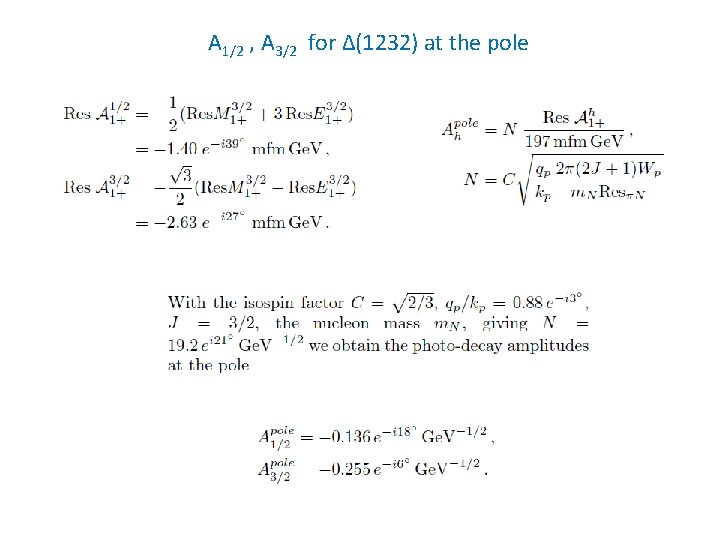
A 1/2 , A 3/2 for Δ(1232) at the pole
Some comparative results for A 1/2 , A 3/2 Breit-Wigner values extracted using a form similar to MAID Agreement with pole values is reasonable even for cases with Rπ = Γπ / 2 being a poor approximation
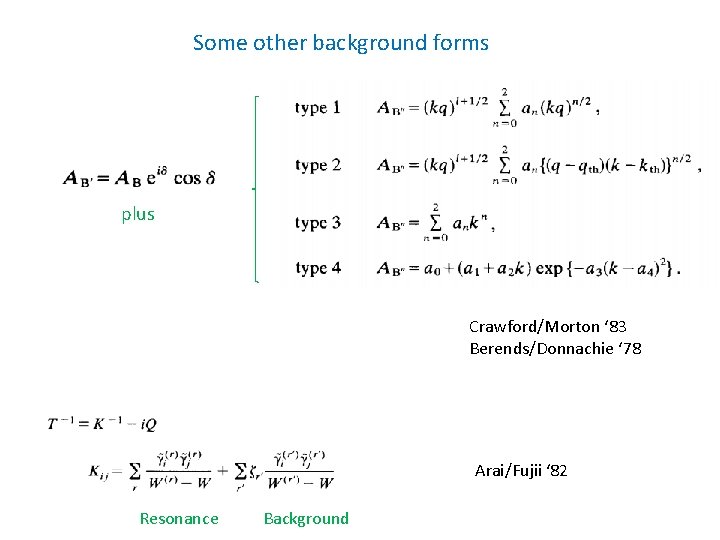
Some other background forms plus Crawford/Morton ‘ 83 Berends/Donnachie ‘ 78 Arai/Fujii ‘ 82 Resonance Background
Kamano et al. , Dyn CC model Large differences
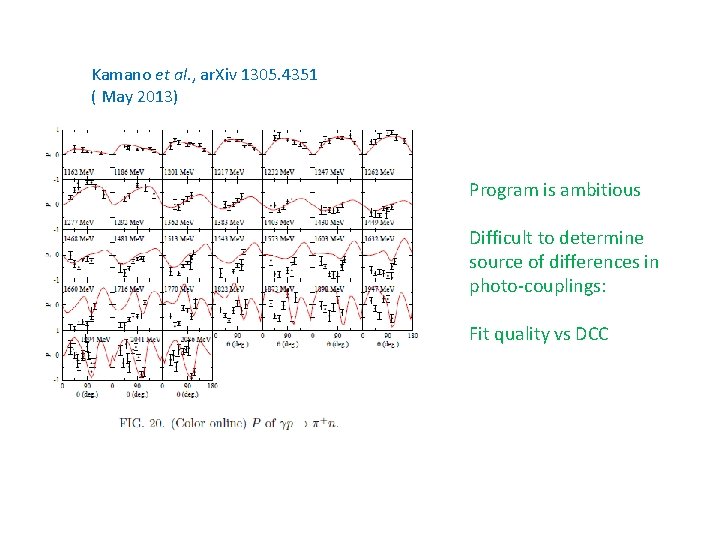
Kamano et al. , ar. Xiv 1305. 4351 ( May 2013) Program is ambitious Difficult to determine source of differences in photo-couplings: Fit quality vs DCC
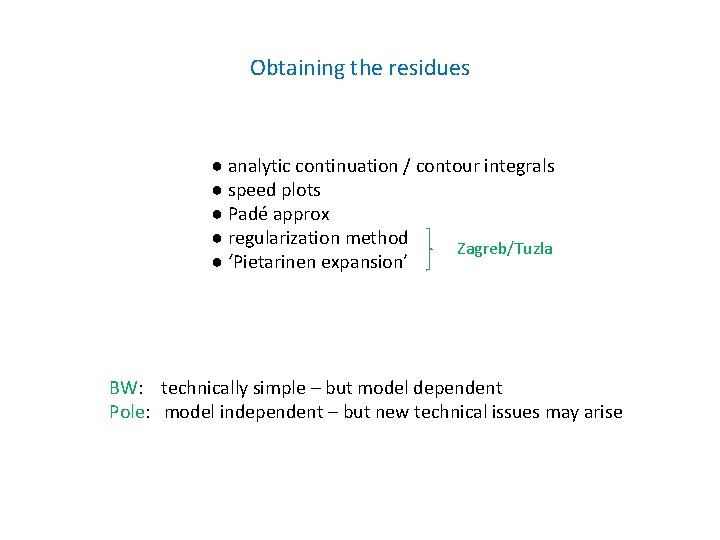
Obtaining the residues ● analytic continuation / contour integrals ● speed plots ● Padé approx ● regularization method Zagreb/Tuzla ● ‘Pietarinen expansion’ BW: technically simple – but model dependent Pole: model independent – but new technical issues may arise
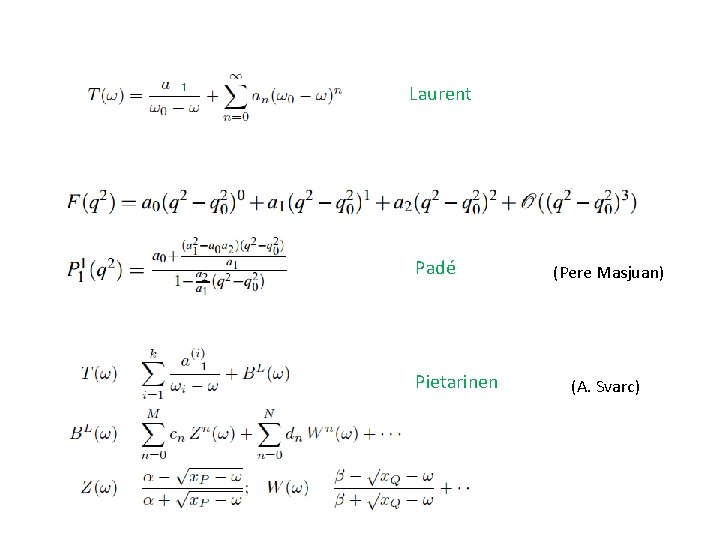
Laurent Padé Pietarinen (Pere Masjuan) (A. Svarc)
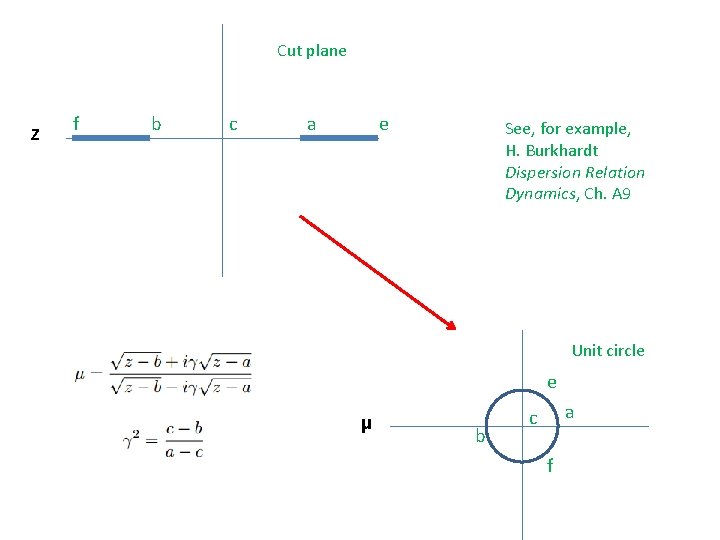
Cut plane Z f b c a e See, for example, H. Burkhardt Dispersion Relation Dynamics, Ch. A 9 Unit circle e μ b a c f
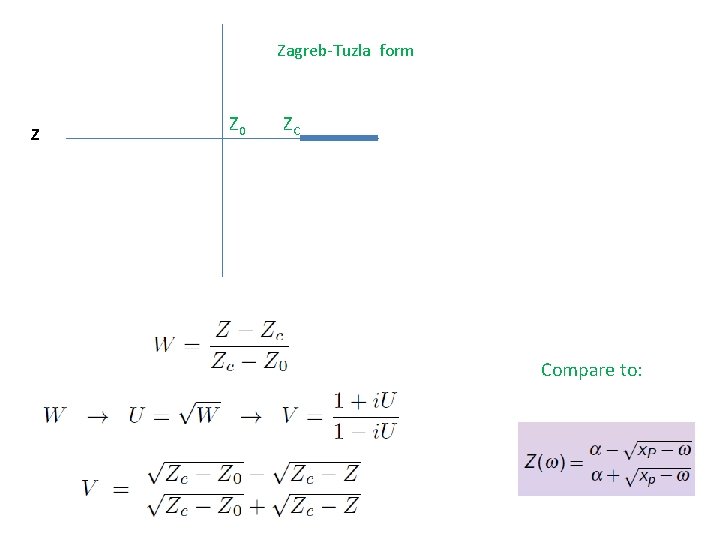
Zagreb-Tuzla form Z Z 0 ZC Compare to:
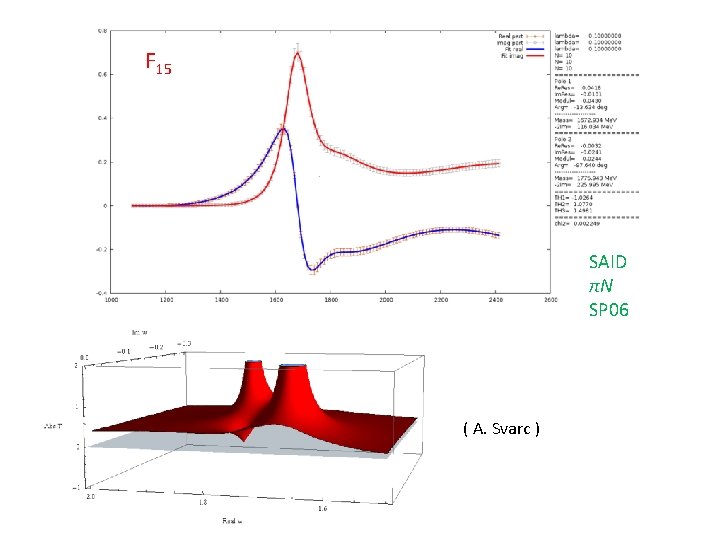
F 15 SAID πN SP 06 ( A. Svarc )
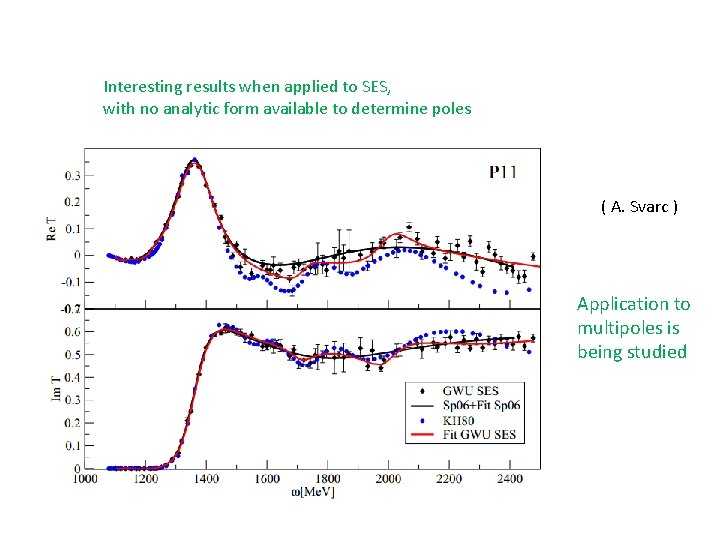
Interesting results when applied to SES, with no analytic form available to determine poles ( A. Svarc ) Application to multipoles is being studied
Other material
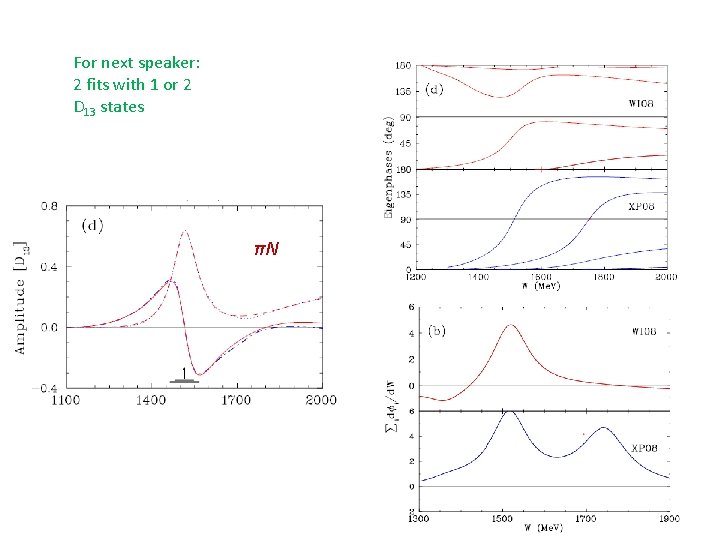
For next speaker: 2 fits with 1 or 2 D 13 states πN
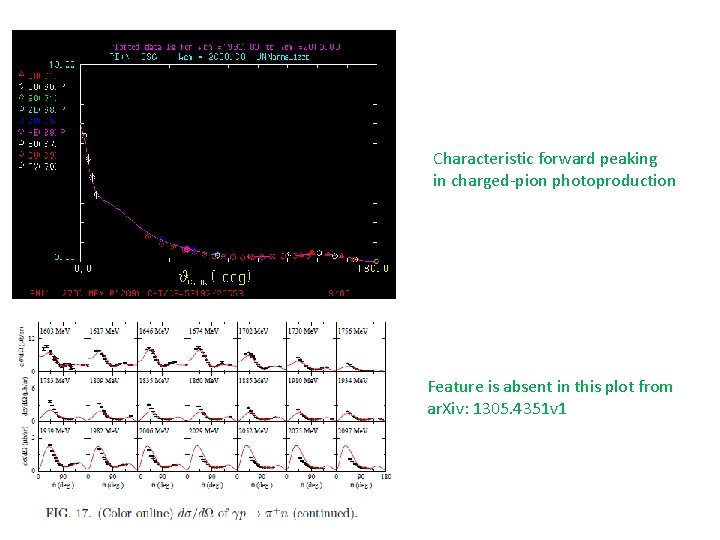
Characteristic forward peaking in charged-pion photoproduction Feature is absent in this plot from ar. Xiv: 1305. 4351 v 1