Forming the Present Imperfect and Perfect Tenses in




- Slides: 17
Forming the Present, Imperfect, and Perfect Tenses in Latin
Present Tense: The present tense is formed by connecting the PRESENT TENSE STEM to the PRESENT TENSE VOWEL and then the PRESENT TENSE ENDINGS (specific to each conjugation)
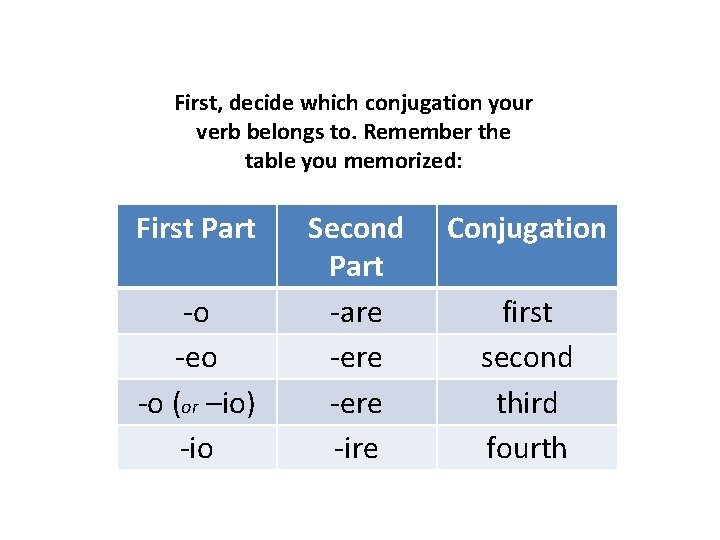
First, decide which conjugation your verb belongs to. Remember the table you memorized: First Part -o -eo -o (or –io) -io Second Part -are -ere -ire Conjugation first second third fourth
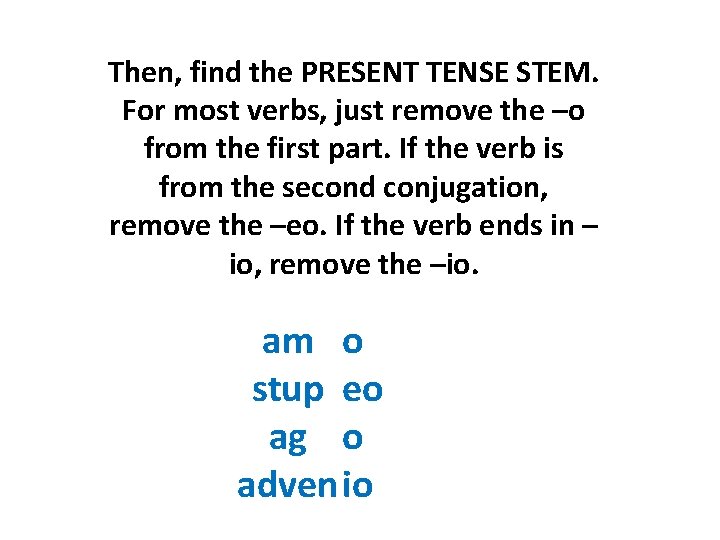
Then, find the PRESENT TENSE STEM. For most verbs, just remove the –o from the first part. If the verb is from the second conjugation, remove the –eo. If the verb ends in – io, remove the –io. am o stup eo ag o adven io
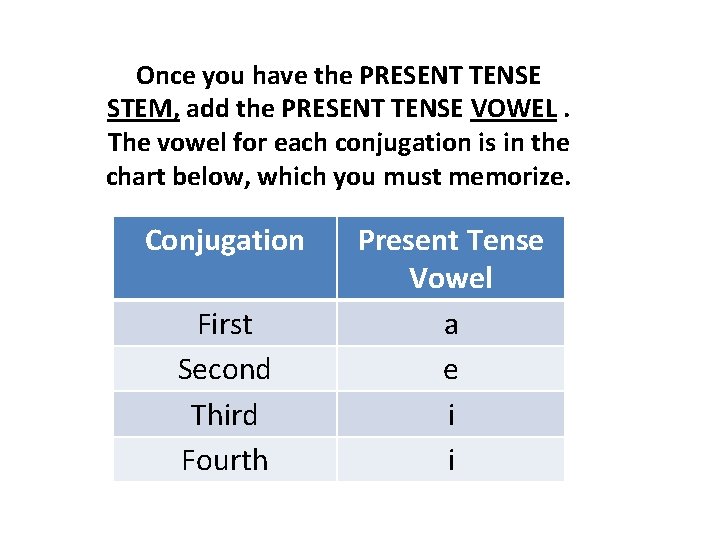
Once you have the PRESENT TENSE STEM, add the PRESENT TENSE VOWEL. The vowel for each conjugation is in the chart below, which you must memorize. Conjugation First Second Third Fourth Present Tense Vowel a e i i
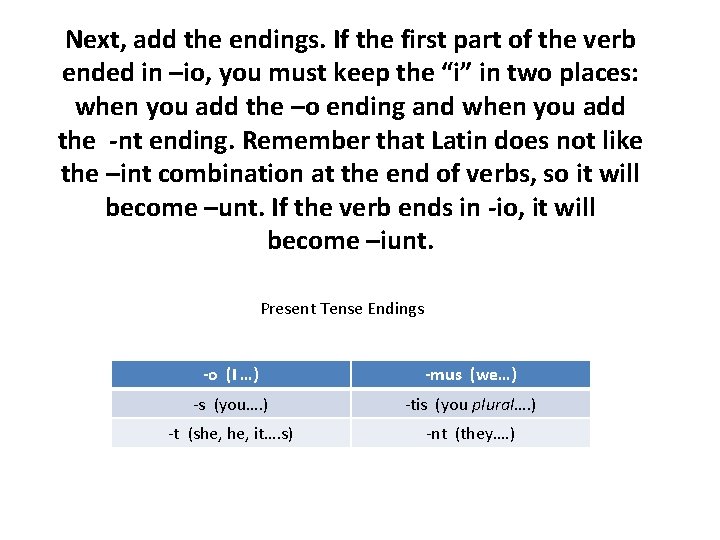
Next, add the endings. If the first part of the verb ended in –io, you must keep the “i” in two places: when you add the –o ending and when you add the -nt ending. Remember that Latin does not like the –int combination at the end of verbs, so it will become –unt. If the verb ends in -io, it will become –iunt. Present Tense Endings -o (I …) -mus (we…) -s (you…. ) -tis (you plural…. ) -t (she, it…. s) -nt (they…. )
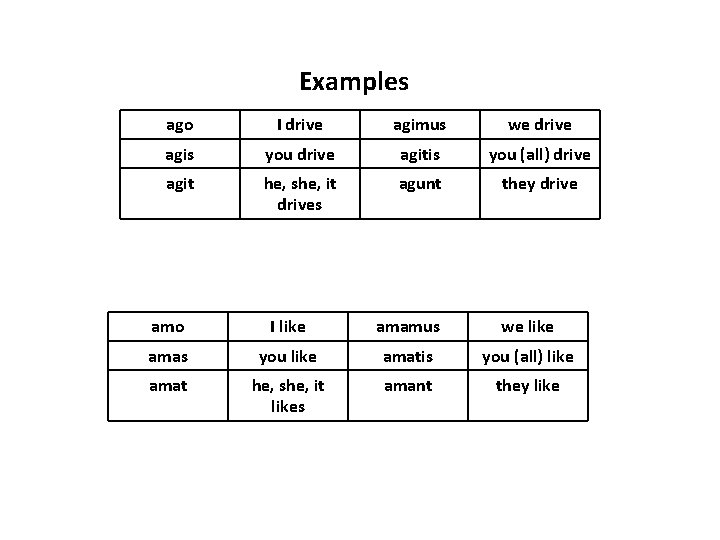
Examples ago I drive agimus we drive agis you drive agitis you (all) drive agit he, she, it drives agunt they drive amo I like amamus we like amas you like amatis you (all) like amat he, she, it likes amant they like
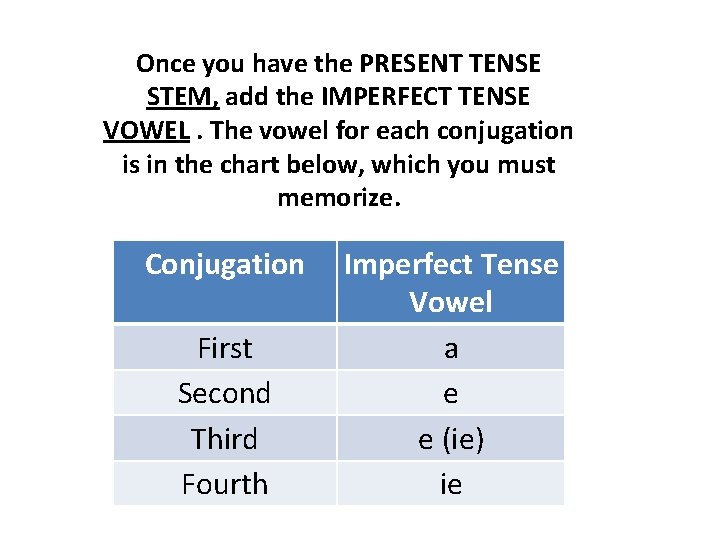
Imperfect Tense: The imperfect tense is formed by connecting the PRESENT TENSE STEM to the IMPERFECT TENSE VOWEL and then the IMPERFECT TENSE ENDINGS (specific to each conjugation)
Once you have the PRESENT TENSE STEM, add the IMPERFECT TENSE VOWEL. The vowel for each conjugation is in the chart below, which you must memorize. Conjugation First Second Third Fourth Imperfect Tense Vowel a e e (ie) ie
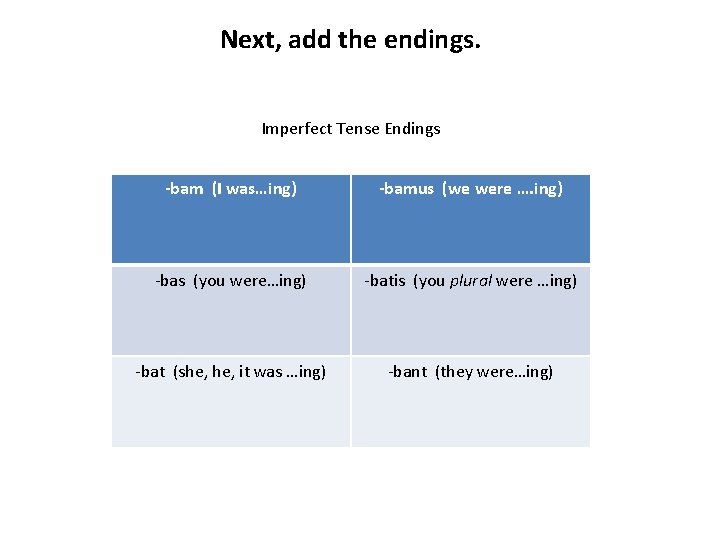
Next, add the endings. Imperfect Tense Endings -bam (I was…ing) -bamus (we were …. ing) -bas (you were…ing) -batis (you plural were …ing) -bat (she, it was …ing) -bant (they were…ing)
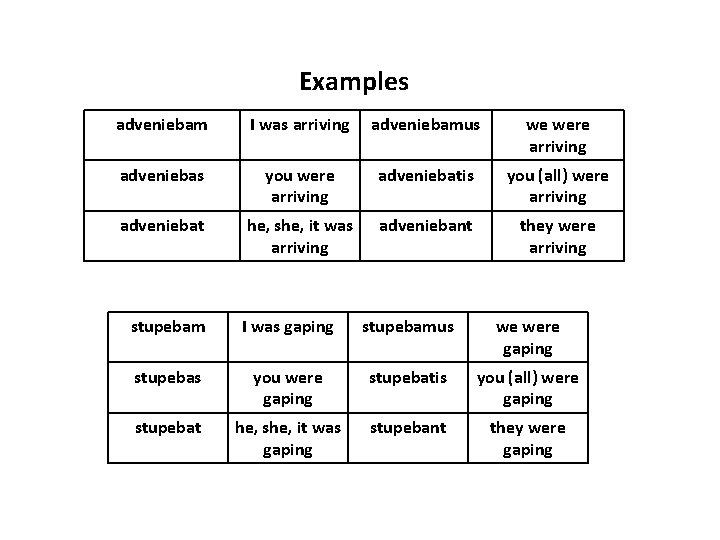
Examples adveniebam I was arriving adveniebamus we were arriving adveniebas you were arriving adveniebatis you (all) were arriving adveniebat he, she, it was arriving adveniebant they were arriving stupebam I was gaping stupebamus we were gaping stupebas you were gaping stupebatis you (all) were gaping stupebat he, she, it was gaping stupebant they were gaping
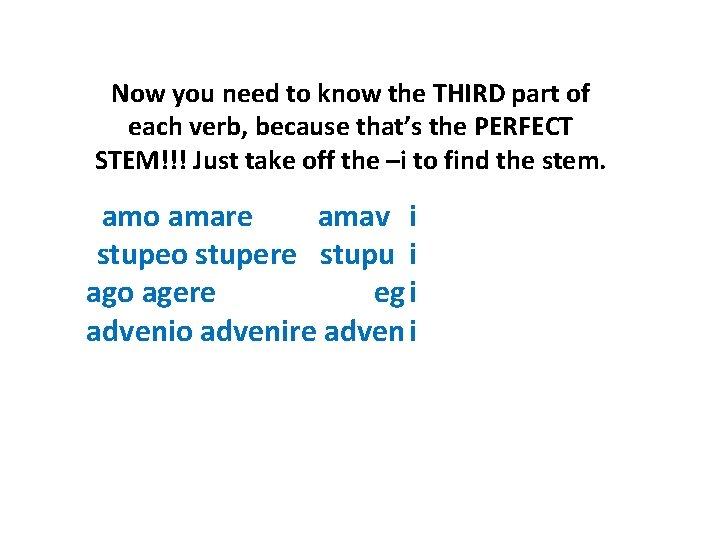
Perfect Tense: The perfect tense is formed by connecting the PERFECT TENSE STEM to the PERFECT TENSE ENDINGS
Now you need to know the THIRD part of each verb, because that’s the PERFECT STEM!!! Just take off the –i to find the stem. amo amare amav i stupeo stupere stupu i ago agere eg i advenio advenire adven i
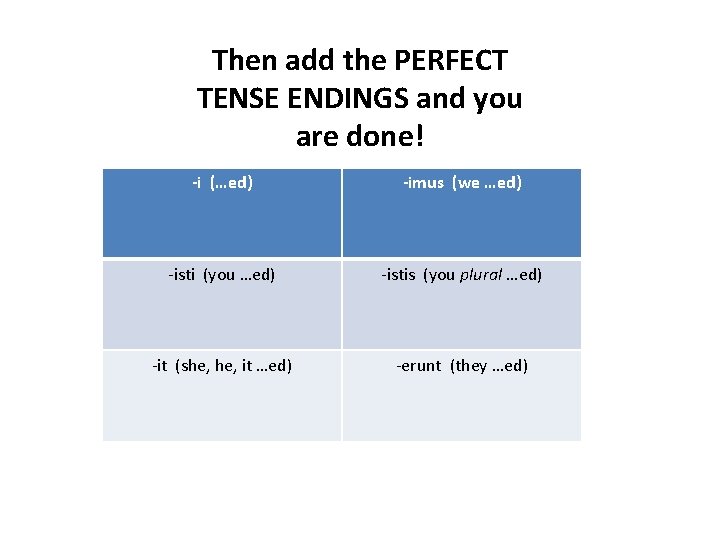
Then add the PERFECT TENSE ENDINGS and you are done! -i (…ed) -imus (we …ed) -isti (you …ed) -istis (you plural …ed) -it (she, it …ed) -erunt (they …ed)
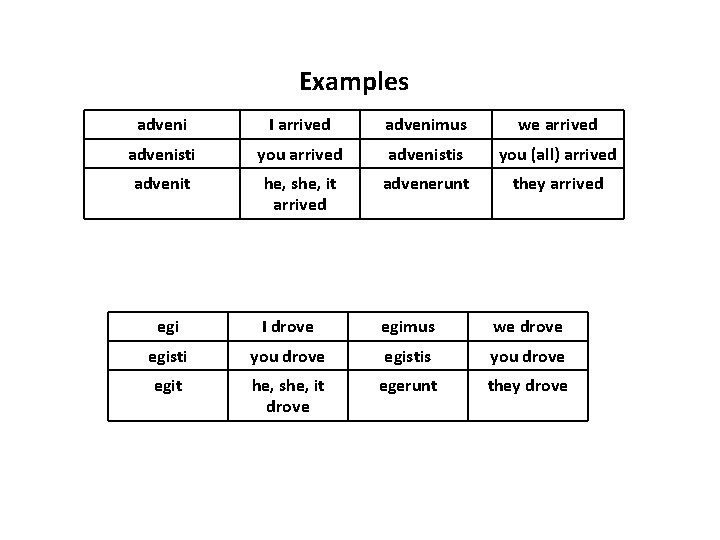
Examples adveni I arrived advenimus we arrived advenisti you arrived advenistis you (all) arrived advenit he, she, it arrived advenerunt they arrived egi I drove egimus we drove egisti you drove egistis you drove egit he, she, it drove egerunt they drove
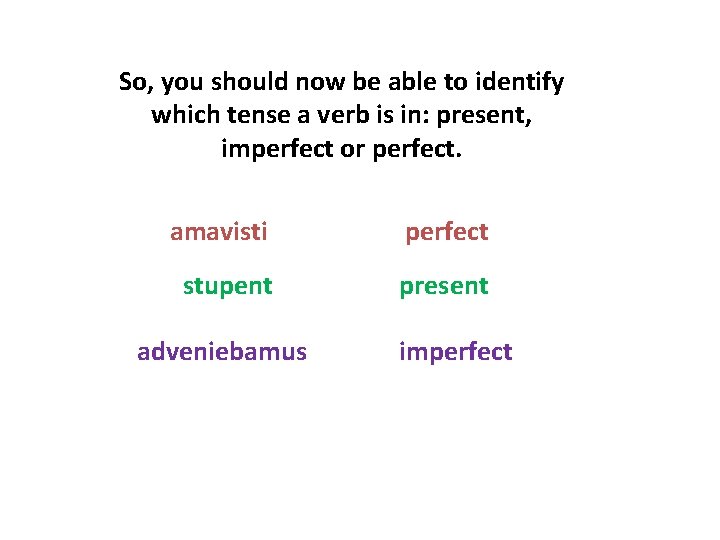
So, you should now be able to identify which tense a verb is in: present, imperfect or perfect. amavisti perfect stupent present adveniebamus imperfect
After reviewing the tenses presented here, you must take the multiple choice quiz on X 2. This quiz will ask you to identify the TENSE of a few verbs. See you tomorrow!