FORENSIC ANTHROPOLOGY WHAT IS IT WHAT DOES A


- Slides: 38
FORENSIC ANTHROPOLOGY WHAT IS IT? WHAT DOES A FORENSIC ANTHROPOLOGIST DO? HOW DOES ONE BECOME A FORENSIC ANTHROPOLOGIST?
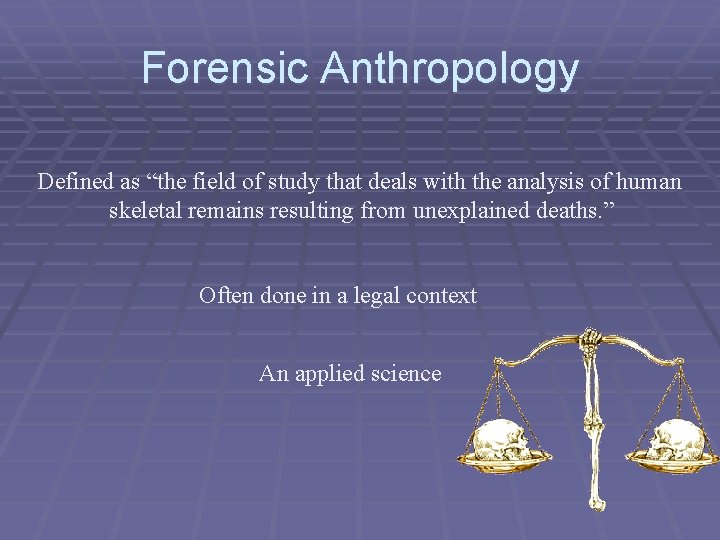
Forensic Anthropology Defined as “the field of study that deals with the analysis of human skeletal remains resulting from unexplained deaths. ” Often done in a legal context An applied science
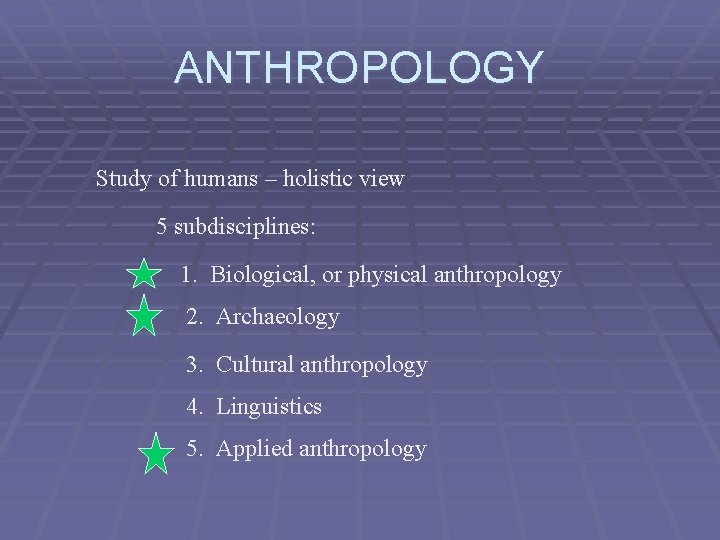
ANTHROPOLOGY Study of humans – holistic view 5 subdisciplines: 1. Biological, or physical anthropology 2. Archaeology 3. Cultural anthropology 4. Linguistics 5. Applied anthropology
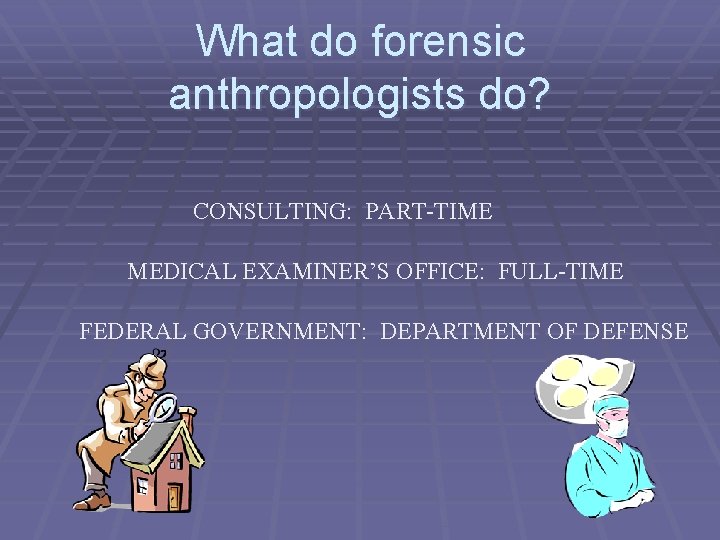
What do forensic anthropologists do? CONSULTING: PART-TIME MEDICAL EXAMINER’S OFFICE: FULL-TIME FEDERAL GOVERNMENT: DEPARTMENT OF DEFENSE
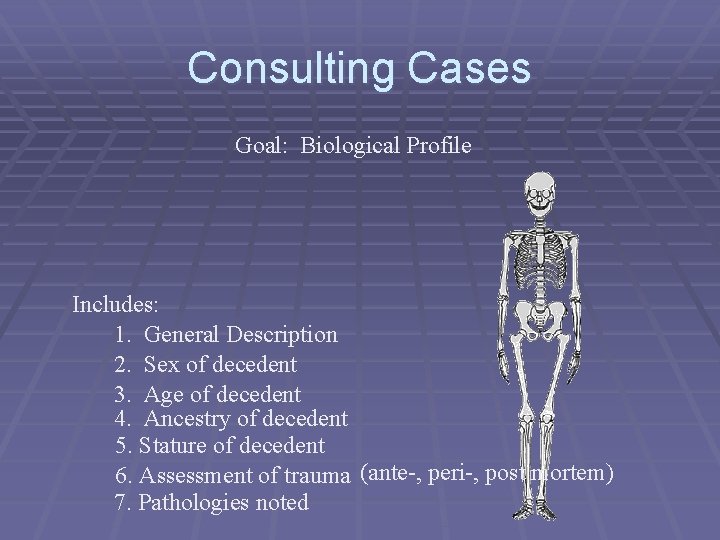
Consulting Cases Goal: Biological Profile Includes: 1. General Description 2. Sex of decedent 3. Age of decedent 4. Ancestry of decedent 5. Stature of decedent 6. Assessment of trauma (ante-, peri-, post mortem) 7. Pathologies noted
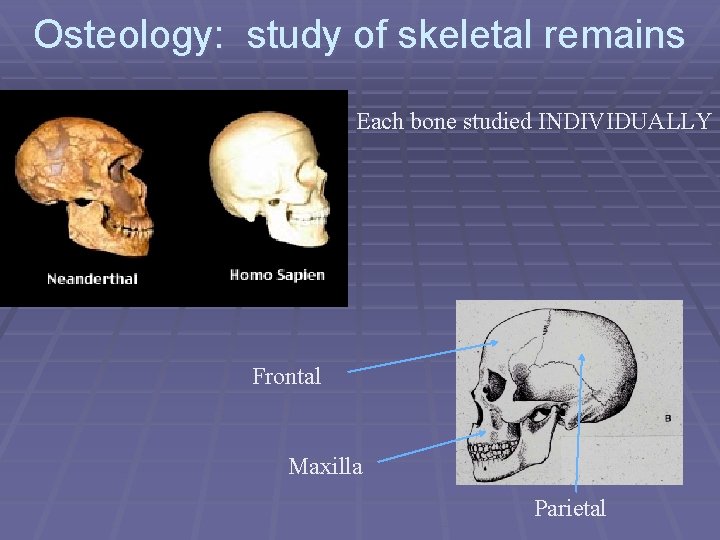
Osteology: study of skeletal remains Each bone studied INDIVIDUALLY Frontal Maxilla Parietal
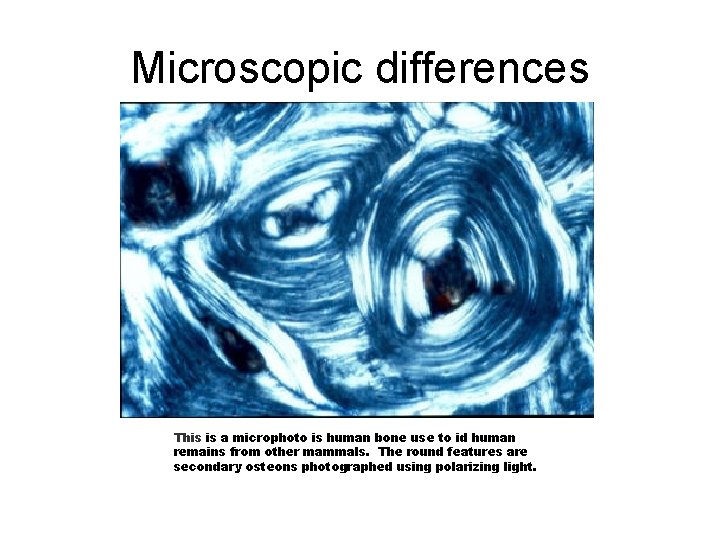
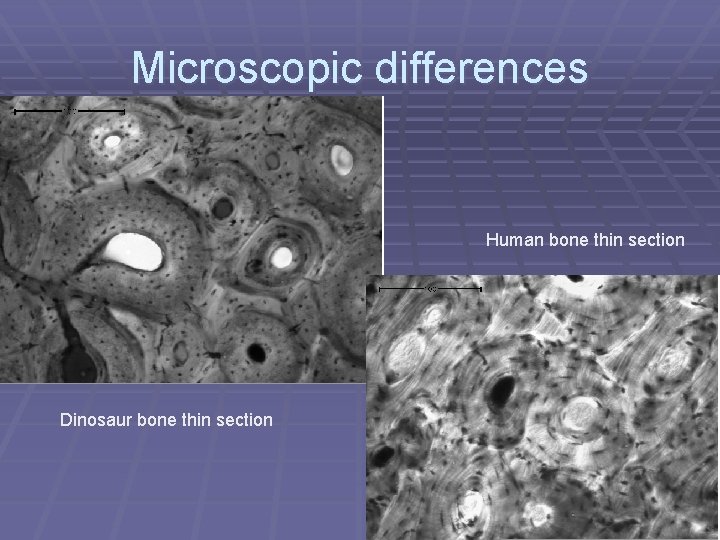
Osteology Human bone –vs- Animal bone Macroscopic differences Microscopic differences
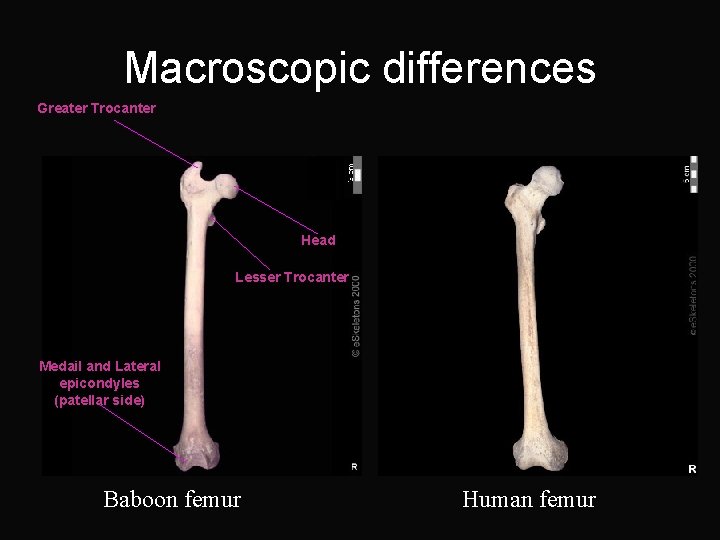
Macroscopic differences Greater Trocanter Head Lesser Trocanter Medail and Lateral epicondyles (patellar side) Baboon femur Human femur
Microscopic differences This is a microphoto is human bone use to id human remains from other mammals. The round features are secondary osteons photographed using polarizing light.
Microscopic differences Human bone thin section Dinosaur bone thin section
Osteology Parts of bone important to know Ridges Projections Grooves Openings (foramina)
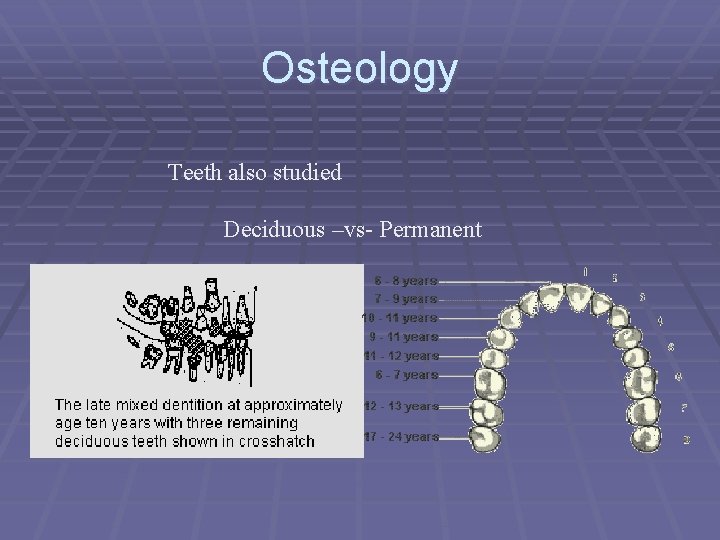
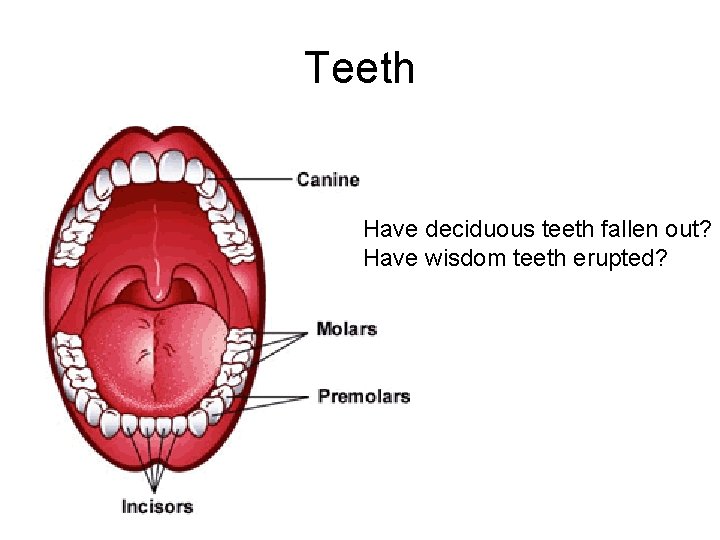
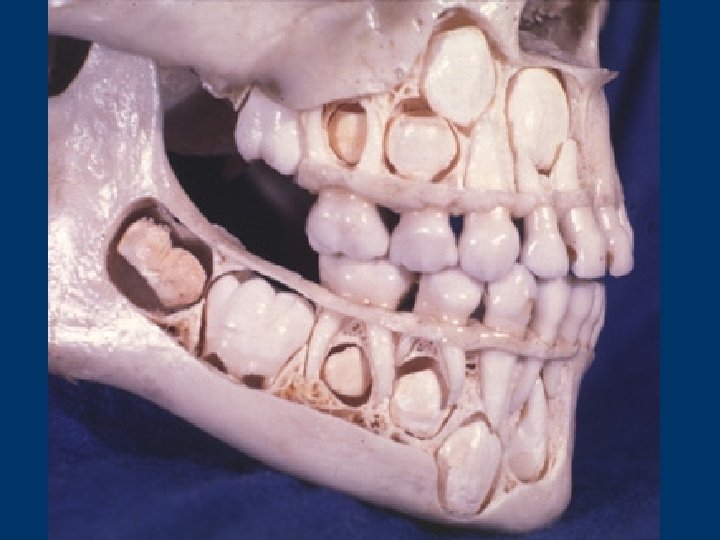
Osteology Teeth also studied Deciduous –vs- Permanent
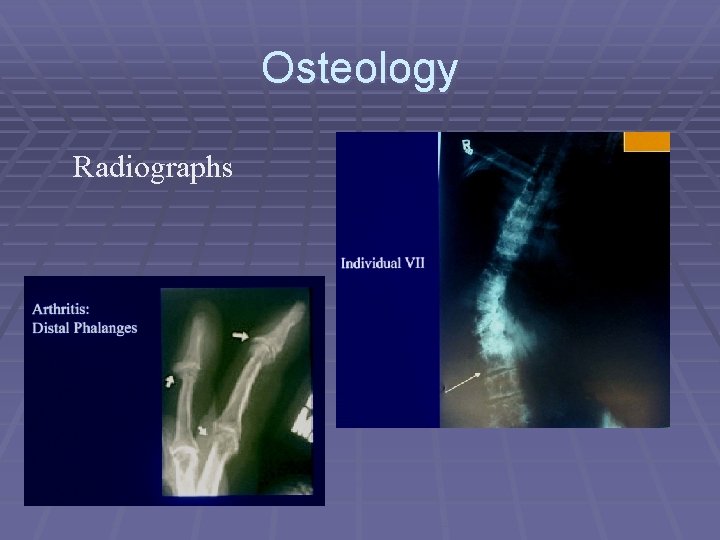
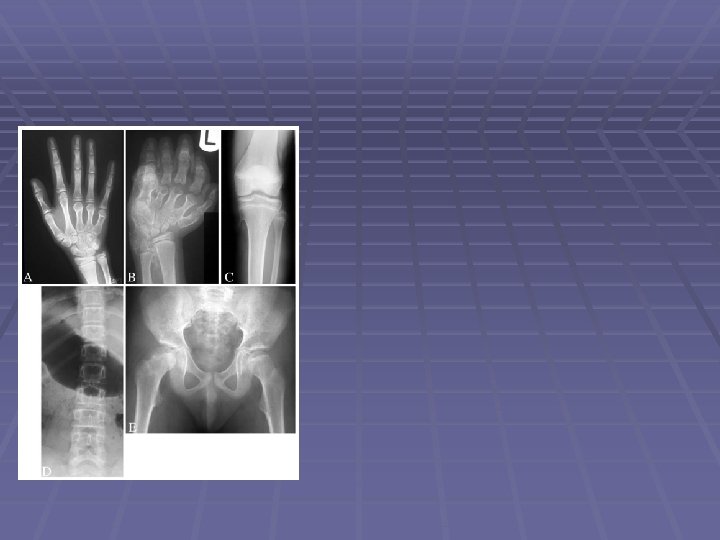
Osteology Radiographs
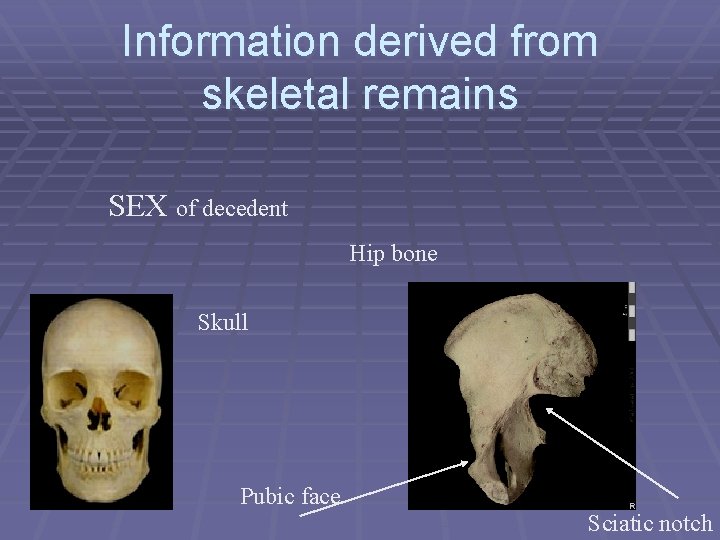
Information derived from skeletal remains SEX of decedent Hip bone Skull Pubic face Sciatic notch
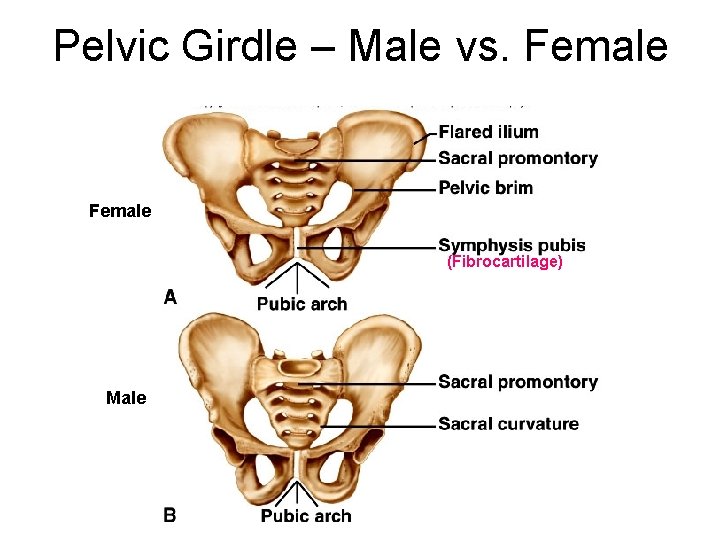
Pelvic Girdle – Male vs. Female (Fibrocartilage) Male
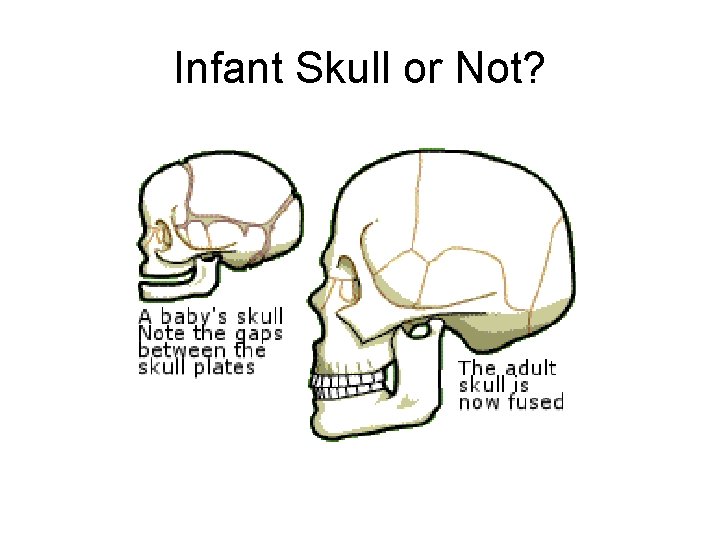
Determining Age At Death
Infant Skull or Not?
Teeth Have deciduous teeth fallen out? Have wisdom teeth erupted?
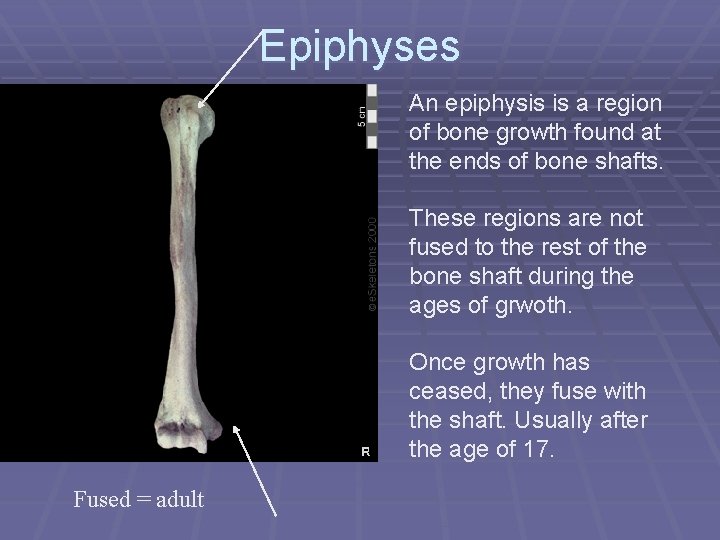
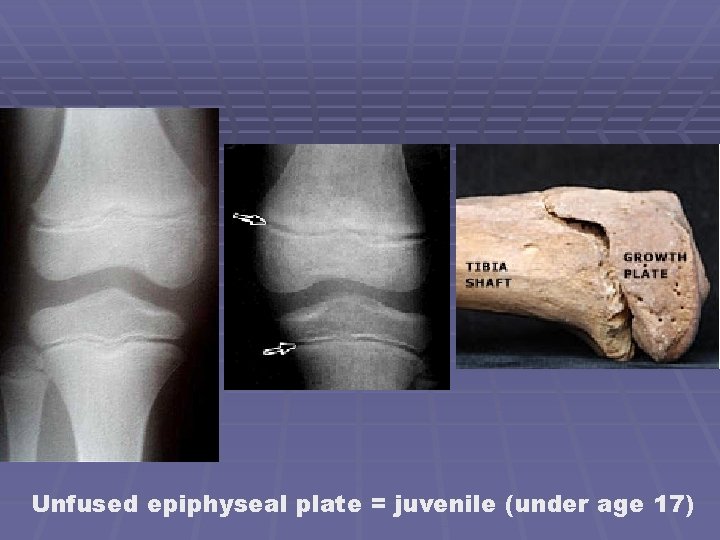
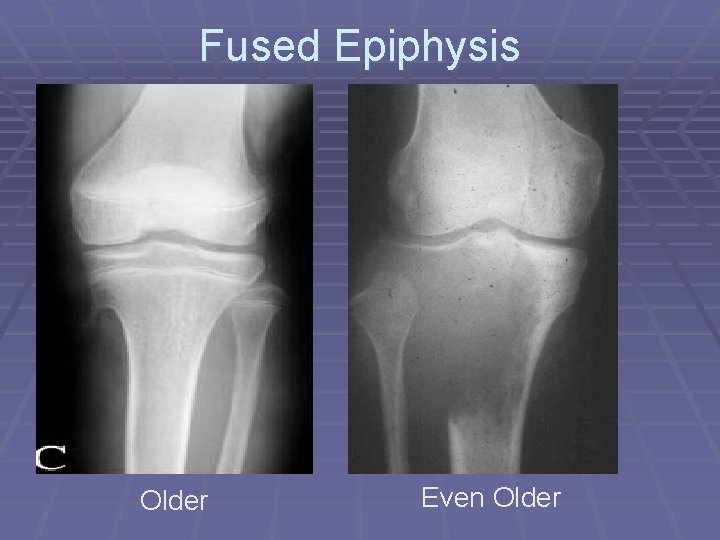
Epiphyses An epiphysis is a region of bone growth found at the ends of bone shafts. These regions are not fused to the rest of the bone shaft during the ages of grwoth. Once growth has ceased, they fuse with the shaft. Usually after the age of 17. Fused = adult
Unfused epiphyseal plate = juvenile (under age 17)
Fused Epiphysis Older Even Older
Determining Ancestry
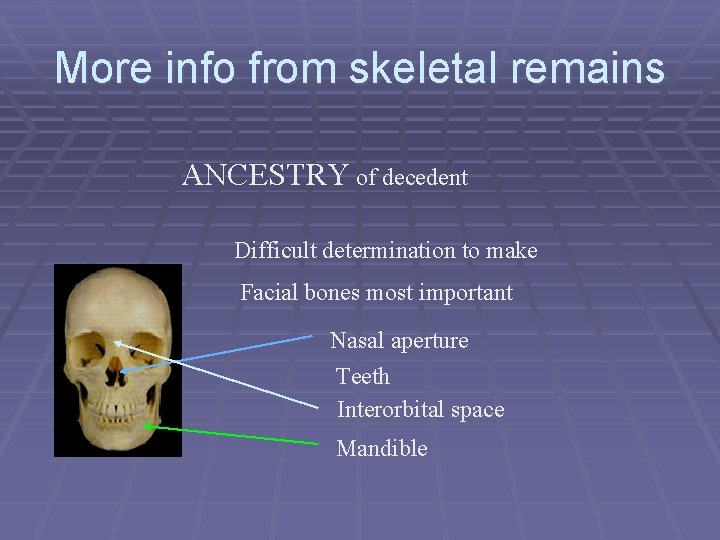
More info from skeletal remains ANCESTRY of decedent Difficult determination to make Facial bones most important Nasal aperture Teeth Interorbital space Mandible
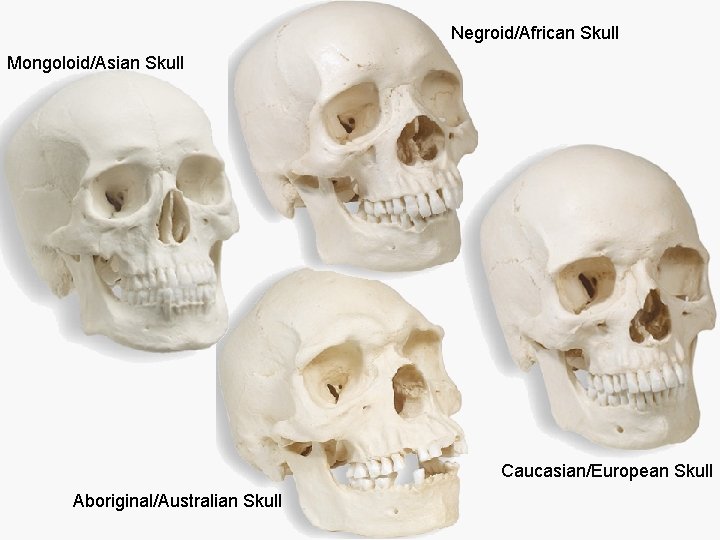
Negroid/African Skull Mongoloid/Asian Skull Caucasian/European Skull Aboriginal/Australian Skull
Determining Stature
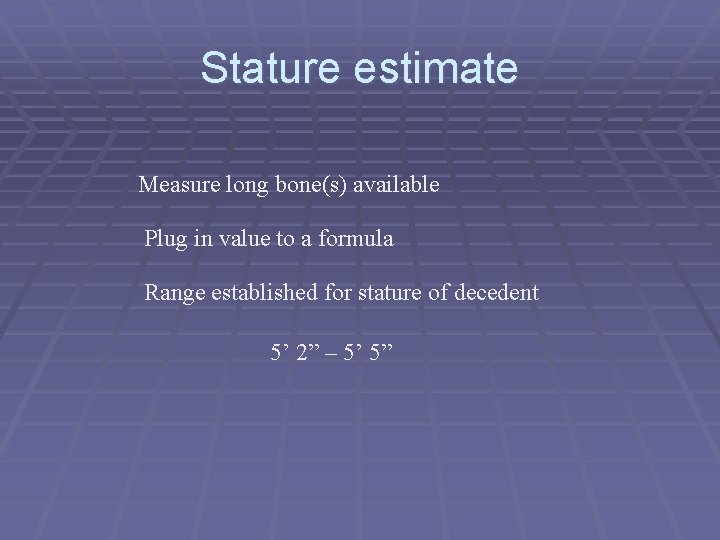
Stature estimate Measure long bone(s) available Plug in value to a formula Range established for stature of decedent 5’ 2” – 5’ 5”
Determining Cause of Death or Other Injuries
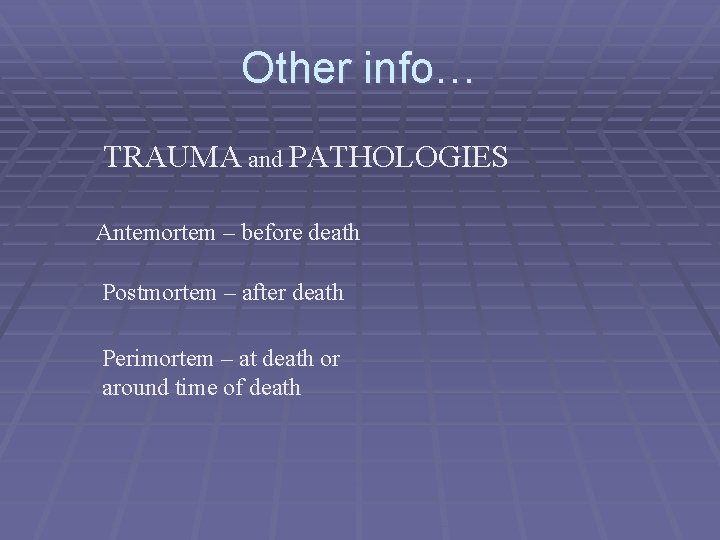
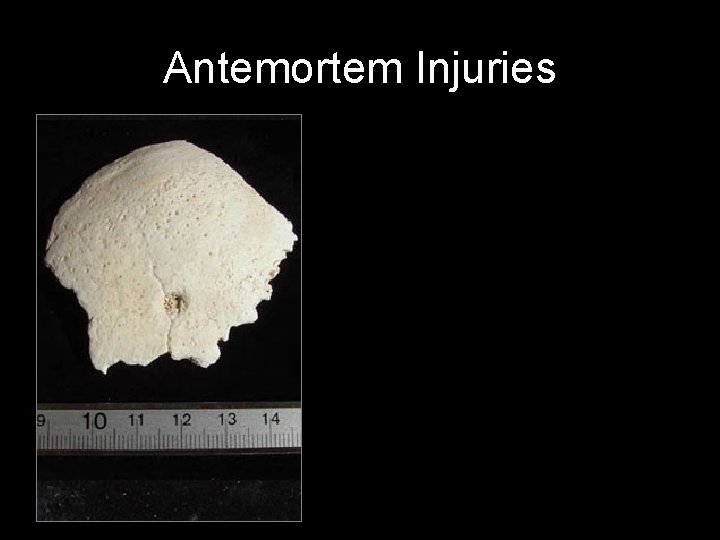
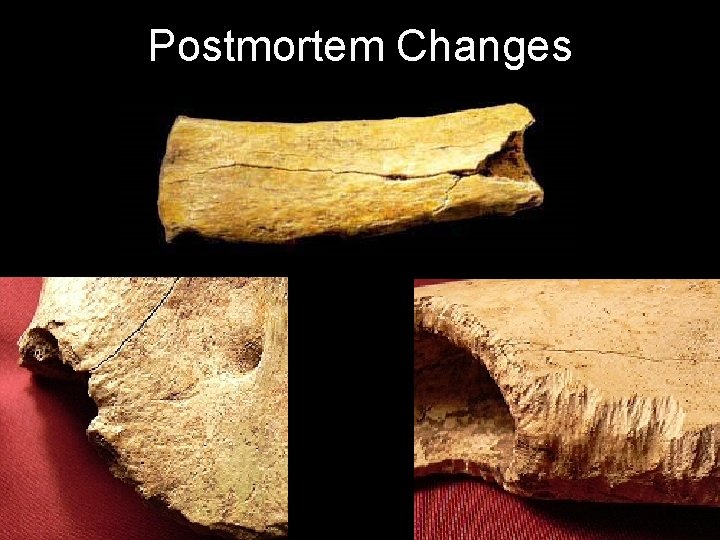
Other info… TRAUMA and PATHOLOGIES Antemortem – before death Postmortem – after death Perimortem – at death or around time of death
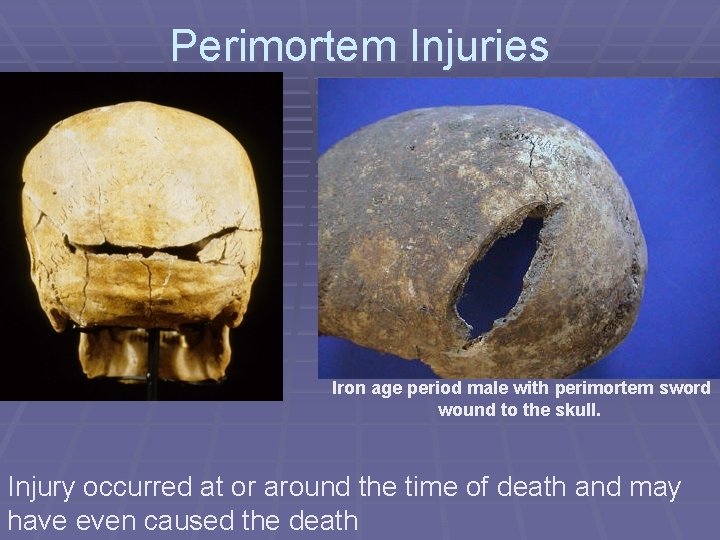
Perimortem Injuries Iron age period male with perimortem sword wound to the skull. Injury occurred at or around the time of death and may have even caused the death
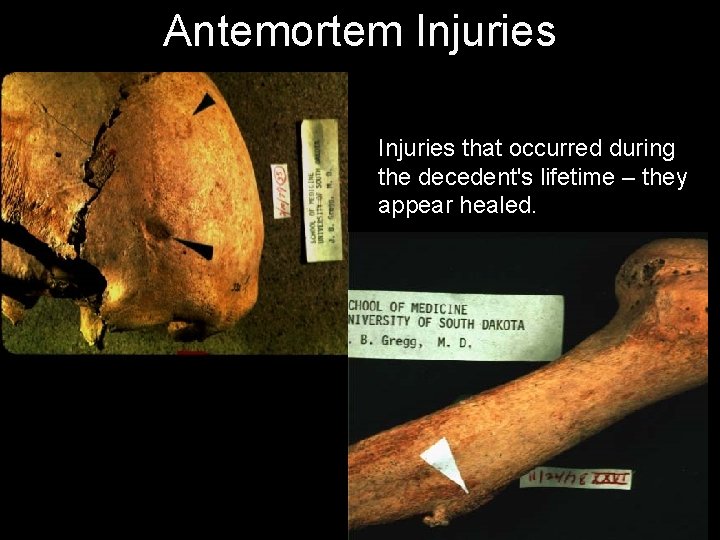
Antemortem Injuries that occurred during the decedent's lifetime – they appear healed.
Antemortem Injuries
Postmortem Changes
The Inca Battlefield Mystery • www. pbs. org/wgbh/nova/inca/grav-nf. html
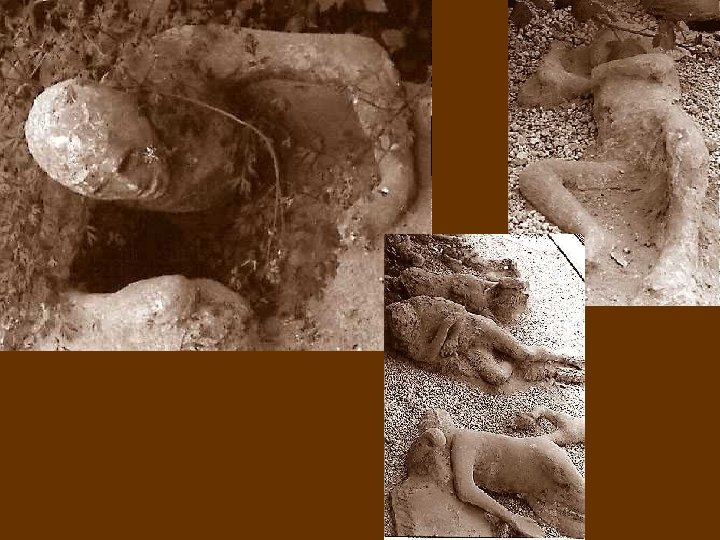
Rediscovering Pompeiani • Giuseppe Fiorelli took charge of the excavations in 1860. During early excavations of the site, occasional voids in the ash layer had been found that contained human remains. • It was Fiorelli who realized these were spaces left by the decomposed bodies and so devised the technique of injecting plaster into them to perfectly recreate the forms of Vesuvius's victims. • What resulted were highly accurate and eerie forms of the doomed Pompeiani who failed to escape, in their last moment of life, with the expression of terror often quite clearly visible. • This technique is still in use today, with resin now used instead of plaster because it is more durable.
THE END