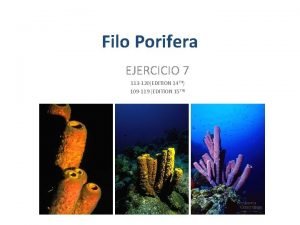
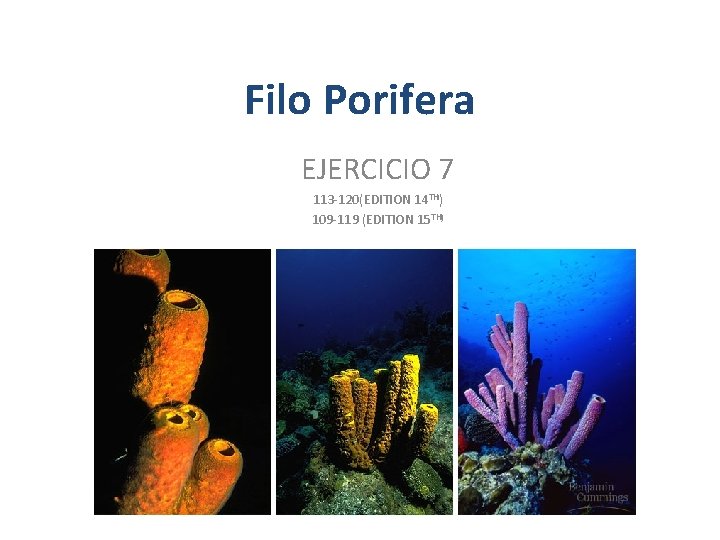
Filo Porifera EJERCICIO 7 113 120EDITION 14 TH


- Slides: 18
Filo Porifera EJERCICIO 7 113 -120(EDITION 14 TH) 109 -119 (EDITION 15 TH)
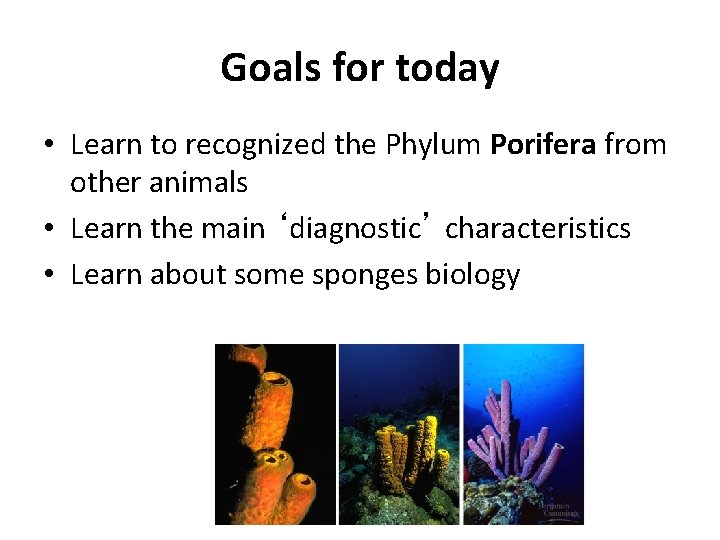
Goals for today • Learn to recognized the Phylum Porifera from other animals • Learn the main ‘diagnostic’ characteristics • Learn about some sponges biology
Porifera These are the simplest metazoans Protostomia Bilateria Radiata Parazoa Eumetazoa Ancestral colonial choanoflagellate Deuterostomia Ecdysozoa Lophotrochozoa Cnidaria and Ctenophora Porifera Parazoa • Little or no tissue organization • Said to belong to the cellular level of organization. • No organs, no systems, no mouth, or digestive tract, only rudimentary nervous integrations. • No germ layers (so neither diplo or triploblastic) • Some have symmetry some don’t
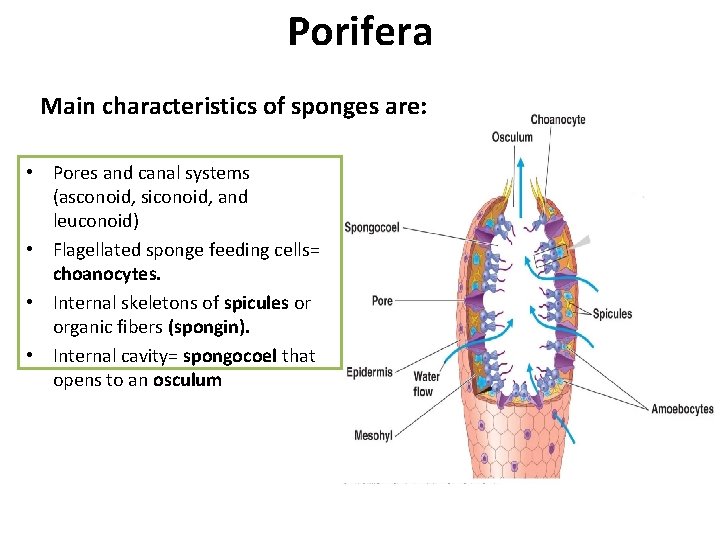
Porifera Main characteristics of sponges are: • Pores and canal systems (asconoid, siconoid, and leuconoid) • Flagellated sponge feeding cells= choanocytes. • Internal skeletons of spicules or organic fibers (spongin). • Internal cavity= spongocoel that opens to an osculum
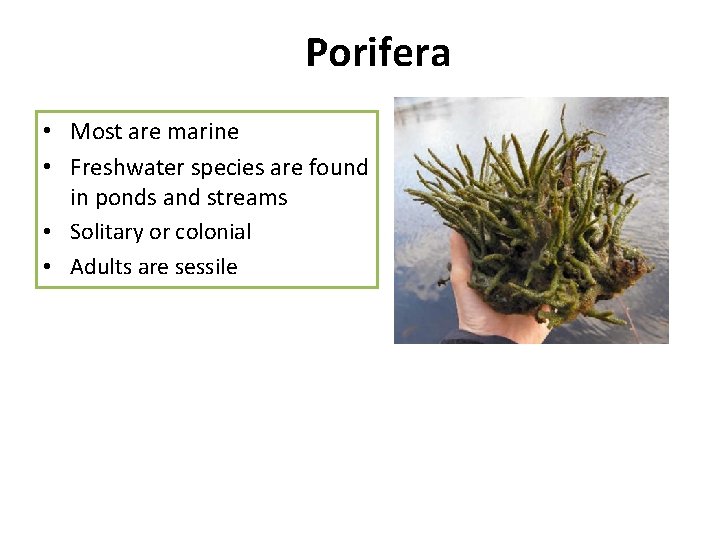
Porifera • Most are marine • Freshwater species are found in ponds and streams • Solitary or colonial • Adults are sessile
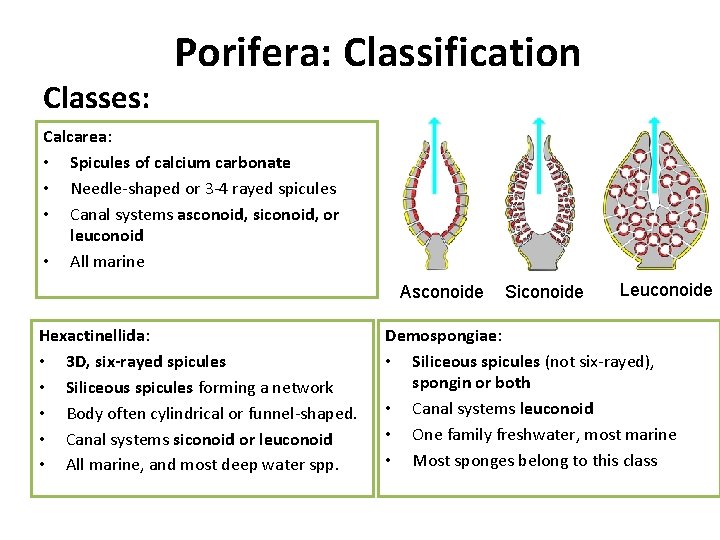
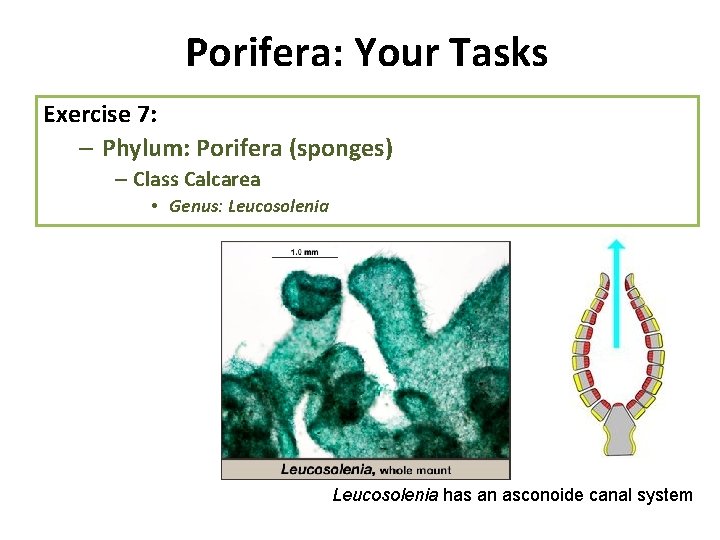
Classes: Porifera: Classification Calcarea: • Spicules of calcium carbonate • Needle-shaped or 3 -4 rayed spicules • Canal systems asconoid, siconoid, or leuconoid • All marine Asconoide Hexactinellida: • 3 D, six-rayed spicules • Siliceous spicules forming a network • Body often cylindrical or funnel-shaped. • Canal systems siconoid or leuconoid • All marine, and most deep water spp. Siconoide Leuconoide Demospongiae: • Siliceous spicules (not six-rayed), spongin or both • Canal systems leuconoid • One family freshwater, most marine • Most sponges belong to this class
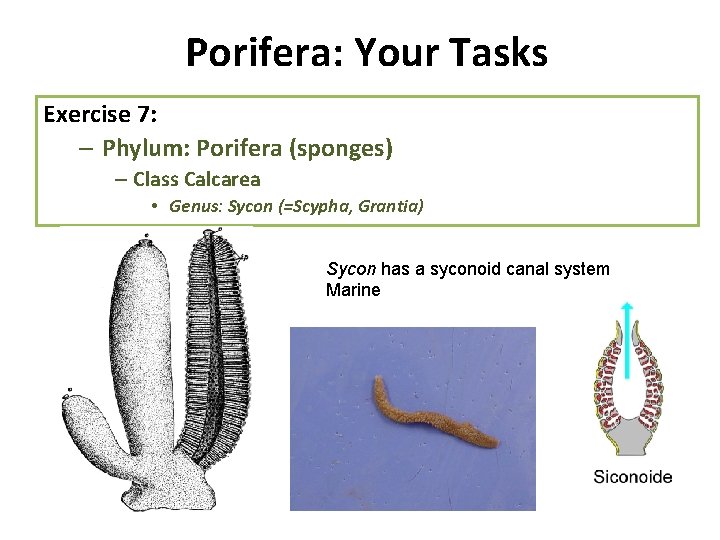
Porifera: Your Tasks Exercise 7: – Phylum: Porifera (sponges) – Class Calcarea • Genus: Sycon (=Scypha, Grantia) Sycon has a syconoid canal system Marine
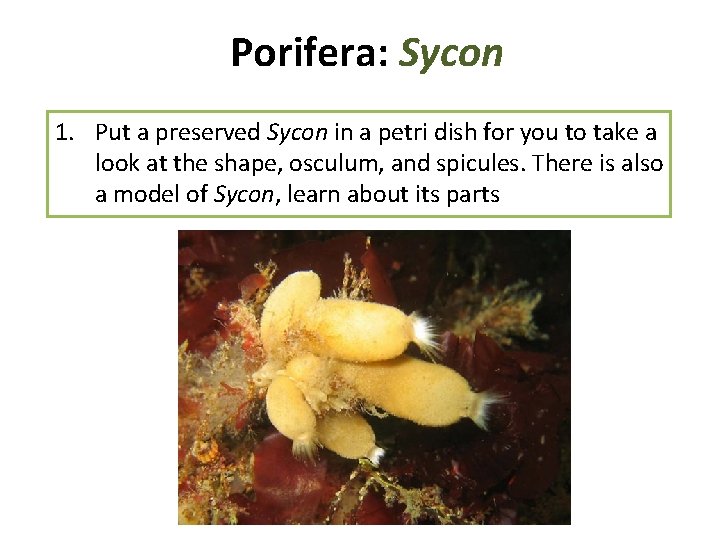
Porifera: Sycon 1. Put a preserved Sycon in a petri dish for you to take a look at the shape, osculum, and spicules. There is also a model of Sycon, learn about its parts
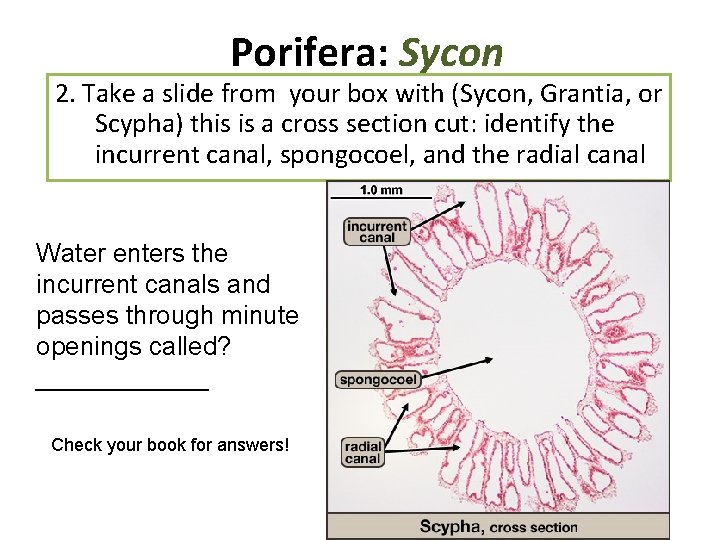
Porifera: Sycon 2. Take a slide from your box with (Sycon, Grantia, or Scypha) this is a cross section cut: identify the incurrent canal, spongocoel, and the radial canal Water enters the incurrent canals and passes through minute openings called? ______ Check your book for answers!
Porifera: Sycon 2. Take a slide from your box with (Sycon, Grantia, or Scypha) this is a cross section cut: identify the incurrent canal, spongocoel, and the radial canal What is the apopyle? Check your book!
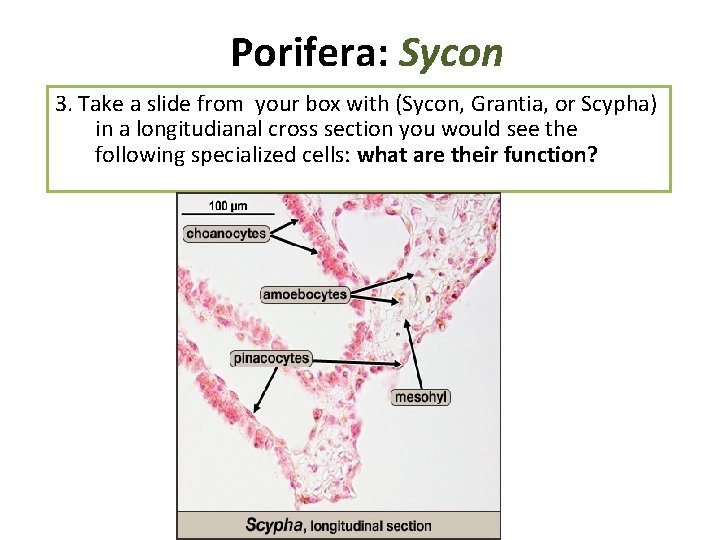
Porifera: Sycon 3. Take a slide from your box with (Sycon, Grantia, or Scypha) in a longitudianal cross section you would see the following specialized cells: what are their function?
Porifera: Your Tasks Exercise 7: – Phylum: Porifera (sponges) – Class Calcarea • Genus: Leucosolenia has an asconoide canal system
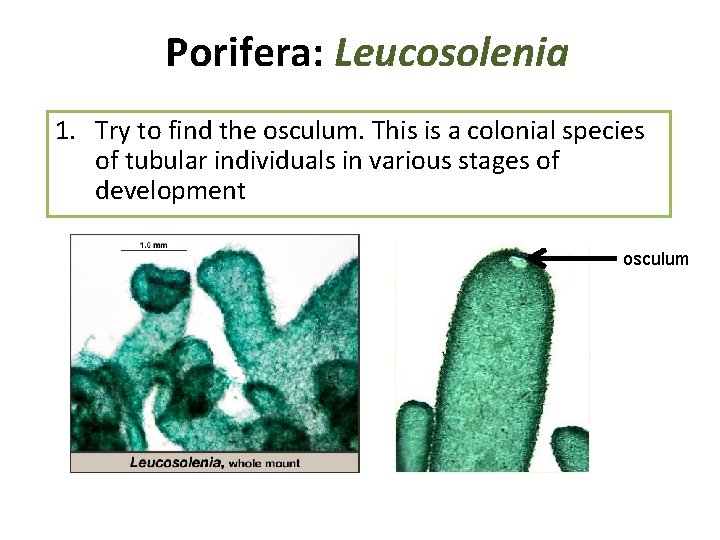
Porifera: Leucosolenia 1. Try to find the osculum. This is a colonial species of tubular individuals in various stages of development osculum
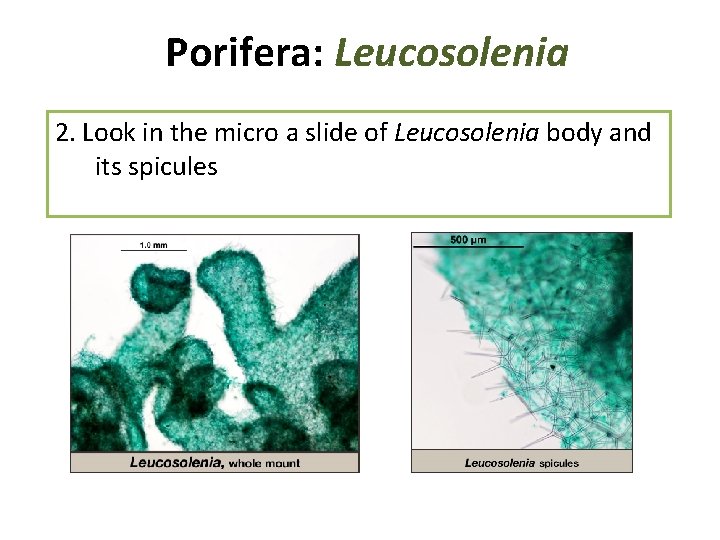
Porifera: Leucosolenia 2. Look in the micro a slide of Leucosolenia body and its spicules
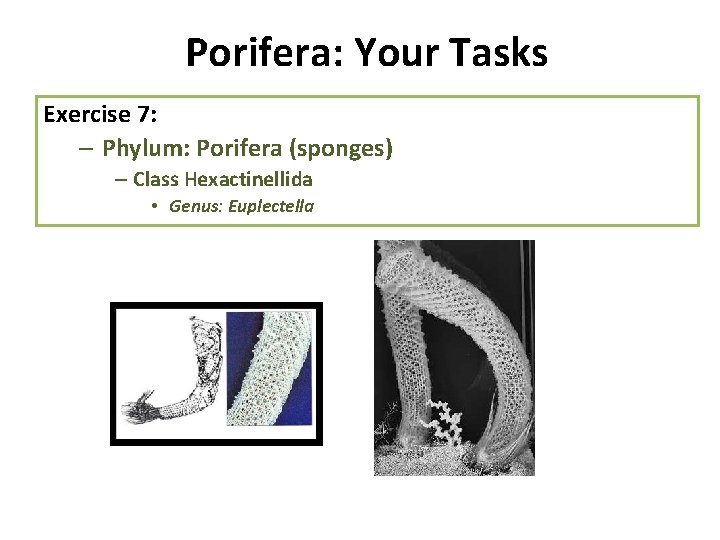
Porifera: Your Tasks Exercise 7: – Phylum: Porifera (sponges) – Class Hexactinellida • Genus: Euplectella
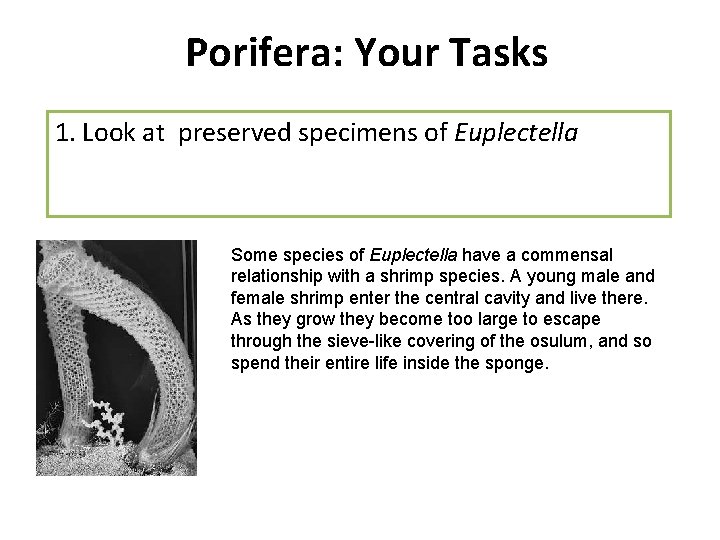
Porifera: Your Tasks 1. Look at preserved specimens of Euplectella Some species of Euplectella have a commensal relationship with a shrimp species. A young male and female shrimp enter the central cavity and live there. As they grow they become too large to escape through the sieve-like covering of the osulum, and so spend their entire life inside the sponge.
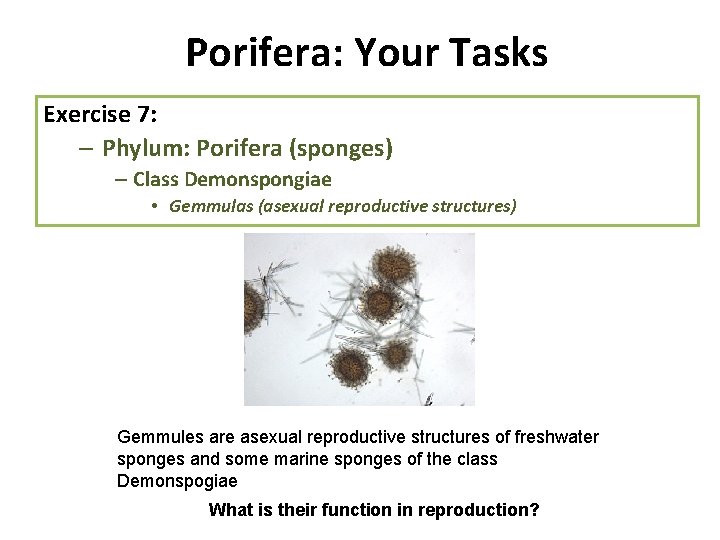
Porifera: Your Tasks Exercise 7: – Phylum: Porifera (sponges) – Class Demonspongiae • Gemmulas (asexual reproductive structures) Gemmules are asexual reproductive structures of freshwater sponges and some marine sponges of the class Demonspogiae What is their function in reproduction?
Important Links Porifera http: //bioweb. uwlax. edu/zoolab/Table-Of-Contents. htm http: //faculty. uml. edu/rhochberg/hochberglab/Courses/Invert. Zool/Quiz es/Porifera%20 Quiz%201. html http: //www. bumblebee. org/invertebrates/Porifera. htm