EXPOSURE ASSESSMENT TO TRIHALOMETHANES IN SWIMMING POOLS G

- Slides: 19
EXPOSURE ASSESSMENT TO TRIHALOMETHANES IN SWIMMING POOLS G. Fantuzzi, E. Righi, and G. Aggazzotti Università di Modena e Reggio Emilia – Italy
Guglielmina Fantuzzi Associate Professor of Hygiene, Faculty of Sciences Elena Righi Fellowship in Environmental Epidemiology, Faculty of Medicine Gabriella Aggazzotti Full Professor of Epidemiology, Faculty of Medicine
Disinfection by-products Trihalomethanes: Chloroform Bromodichloromethane Dibromochloromethane Bromoform
Health risk assessment Hazard identification Dose-response relationship Exposure assessment Risk characterization
Exposure assessment to THMs Environmental monitoring • Water • Ambient air Biological monitoring • Alveolar air • Blood
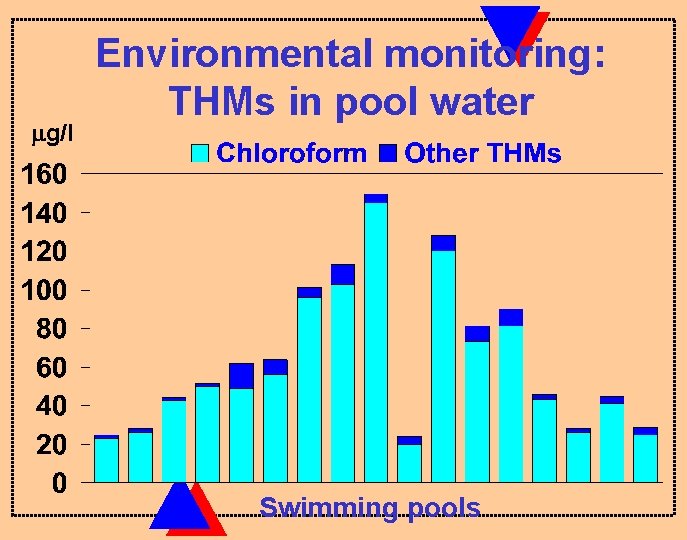
g/l Environmental monitoring: THMs in pool water Swimming pools
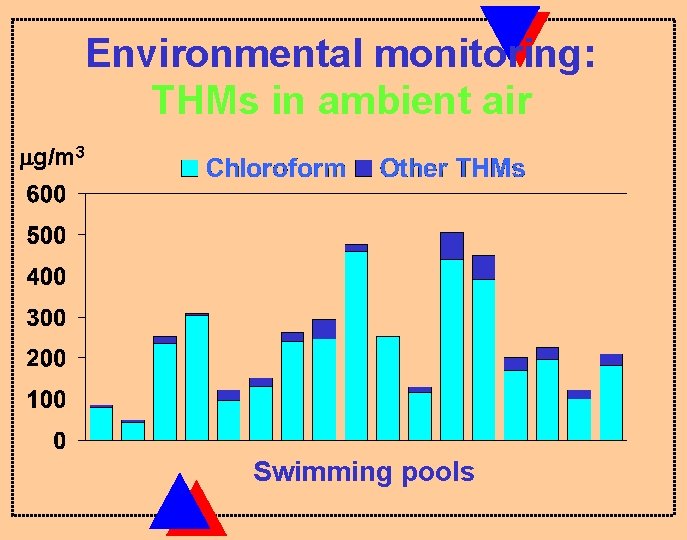
Environmental monitoring: THMs in ambient air g/m 3 Swimming pools
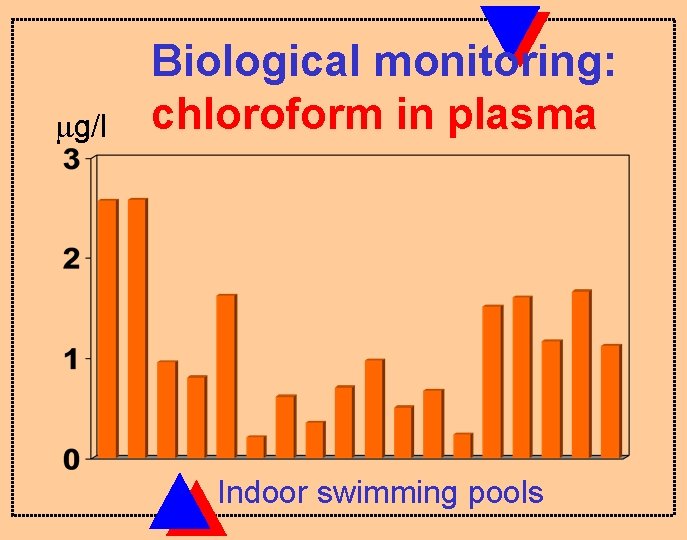
mg/l Biological monitoring: chloroform in plasma Indoor swimming pools
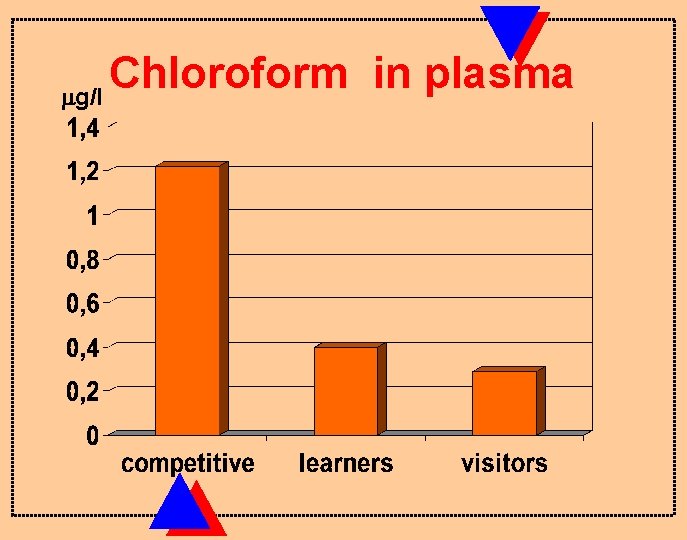
Chloroform in plasma g/l
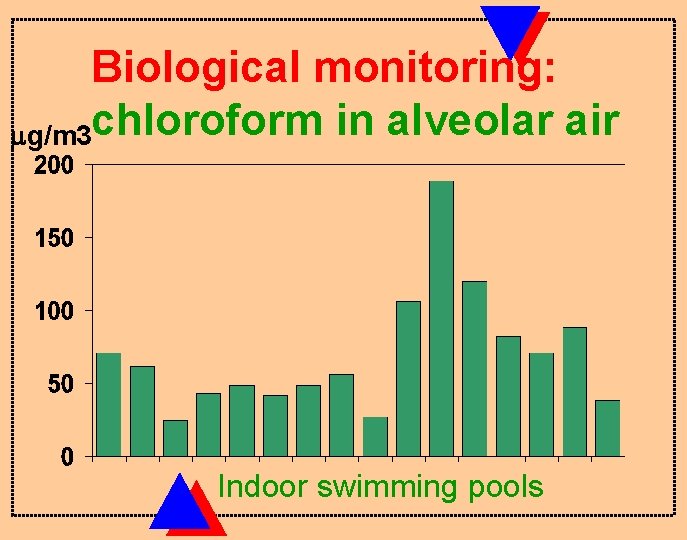
Biological monitoring: g/m 3 chloroform in alveolar air Indoor swimming pools
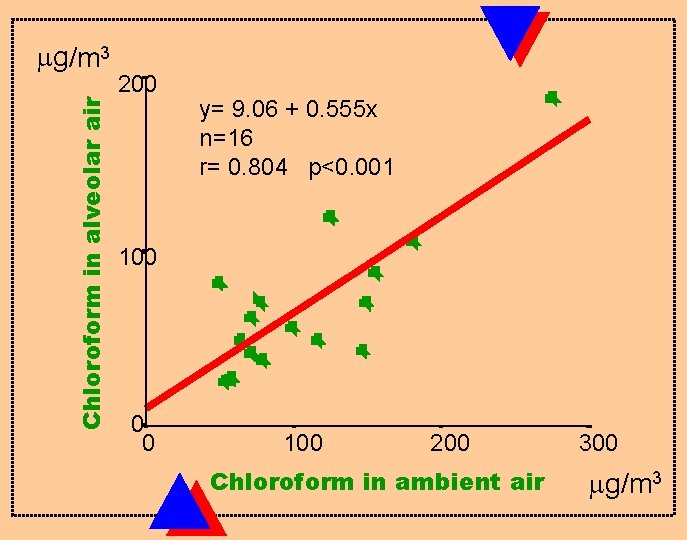
Chloroform in alveolar air mg/m 3 200 y= 9. 06 + 0. 555 x n=16 r= 0. 804 p<0. 001 100 0 0 100 200 Chloroform in ambient air 300 mg/m 3
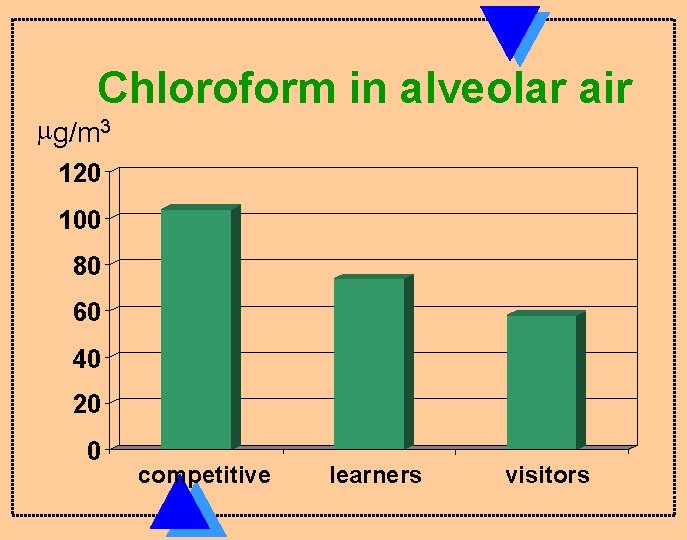
Chloroform in alveolar air mg/m 3 120 100 80 60 40 20 0 competitive learners visitors
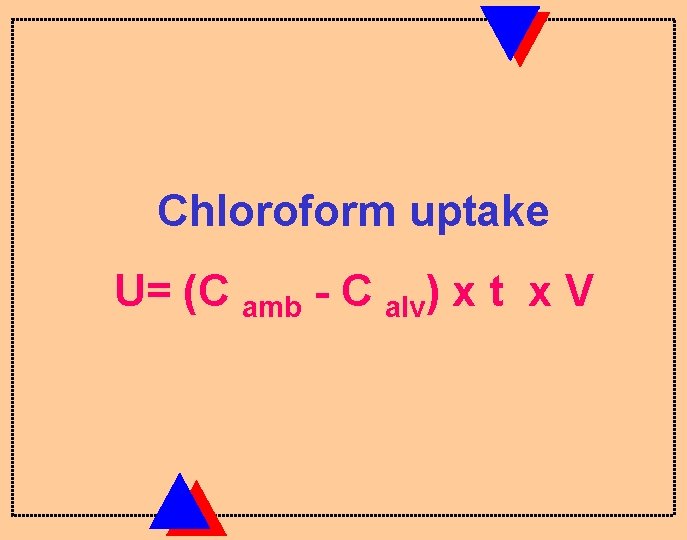
Chloroform uptake U= (C amb - C alv) x t x V
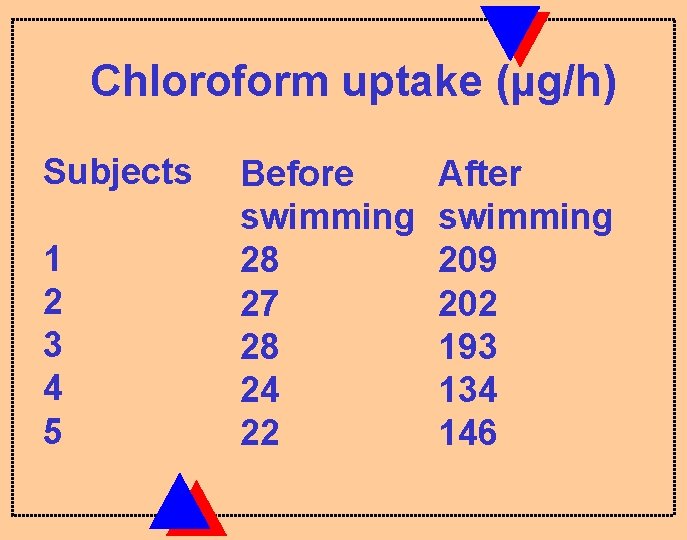
Chloroform uptake (µg/h) Subjects 1 2 3 4 5 Before swimming 28 27 28 24 22 After swimming 209 202 193 134 146
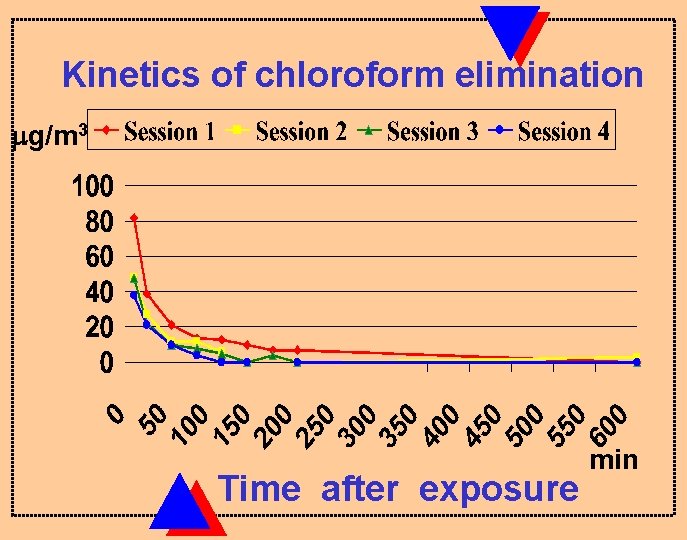
Kinetics of chloroform elimination g/m 3 Time after exposure min
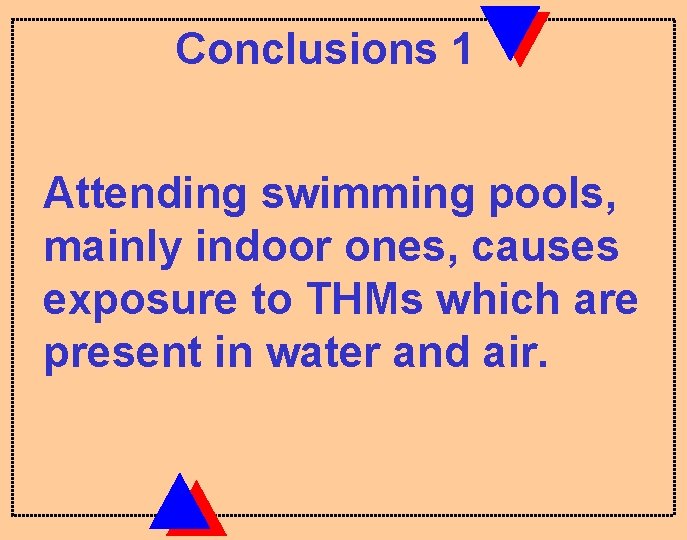
Conclusions 1 Attending swimming pools, mainly indoor ones, causes exposure to THMs which are present in water and air.
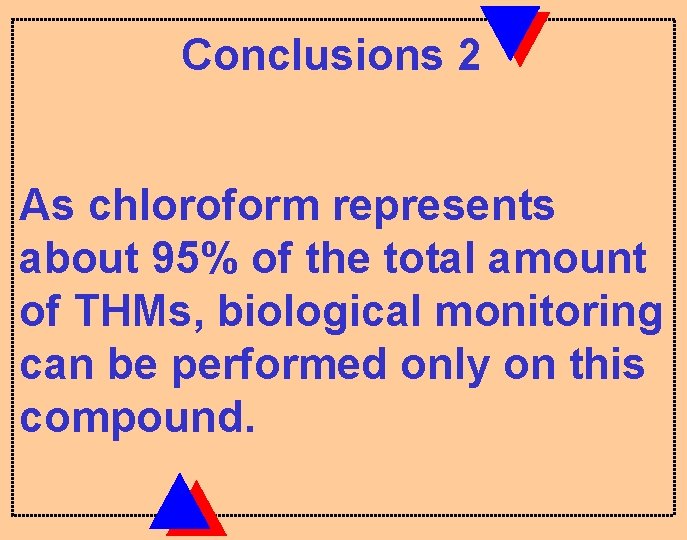
Conclusions 2 As chloroform represents about 95% of the total amount of THMs, biological monitoring can be performed only on this compound.
Conclusions 3 Chloroform in plasma and in alveolar air depends on environmental levels and is influenced by the intensity of the physical activity.
Conclusions 4 Agonistic swimmers are more exposed than non agonistic ones and visitors: however chloroform elimination via exhaled breath usually stops within ten hours.