EXERCISES SIMPLE PRESENT 1 Sarah and Pam often





- Slides: 25
EXERCISES SIMPLE PRESENT
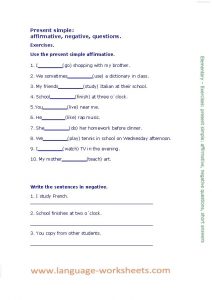
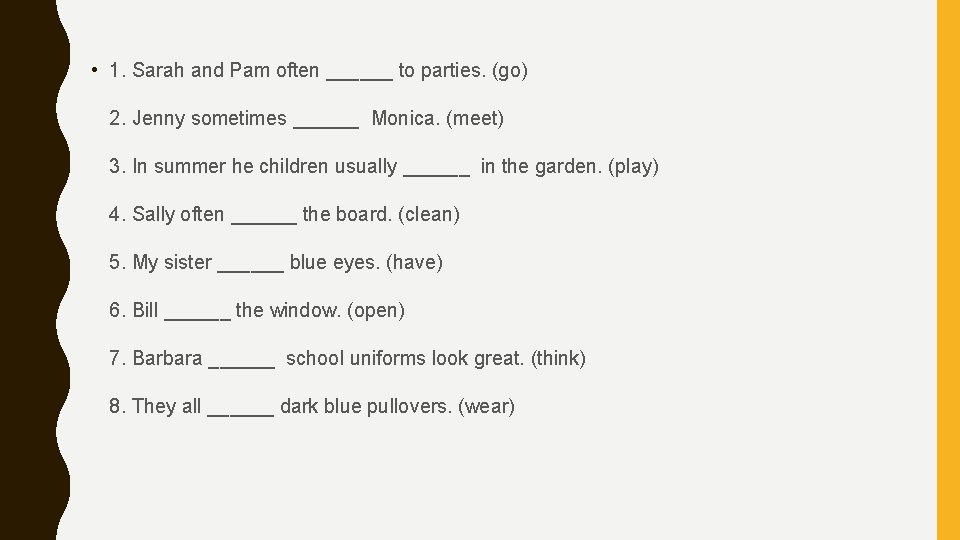
• 1. Sarah and Pam often ______ to parties. (go) 2. Jenny sometimes ______ Monica. (meet) 3. In summer he children usually ______ in the garden. (play) 4. Sally often ______ the board. (clean) 5. My sister ______ blue eyes. (have) 6. Bill ______ the window. (open) 7. Barbara ______ school uniforms look great. (think) 8. They all ______ dark blue pullovers. (wear)
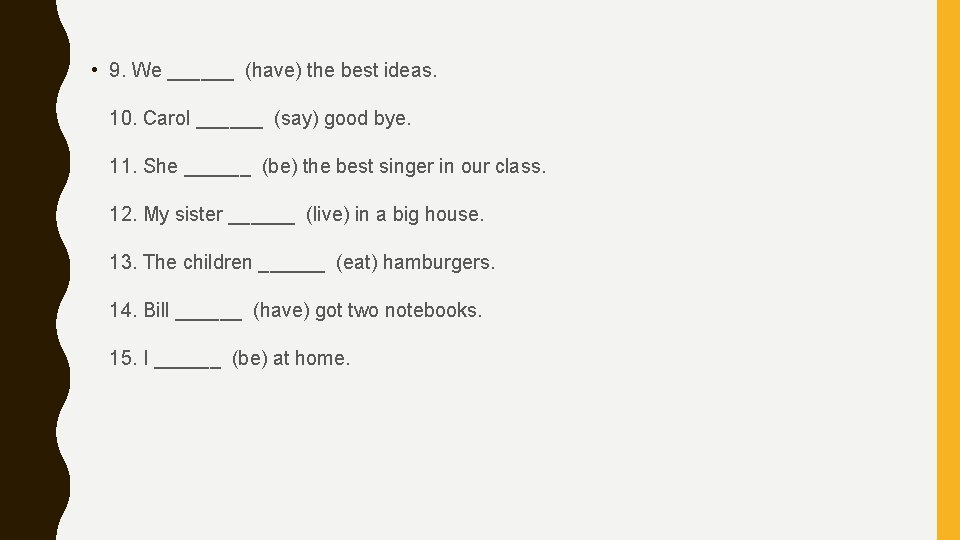
• 9. We ______ (have) the best ideas. 10. Carol ______ (say) good bye. 11. She ______ (be) the best singer in our class. 12. My sister ______ (live) in a big house. 13. The children ______ (eat) hamburgers. 14. Bill ______ (have) got two notebooks. 15. I ______ (be) at home.
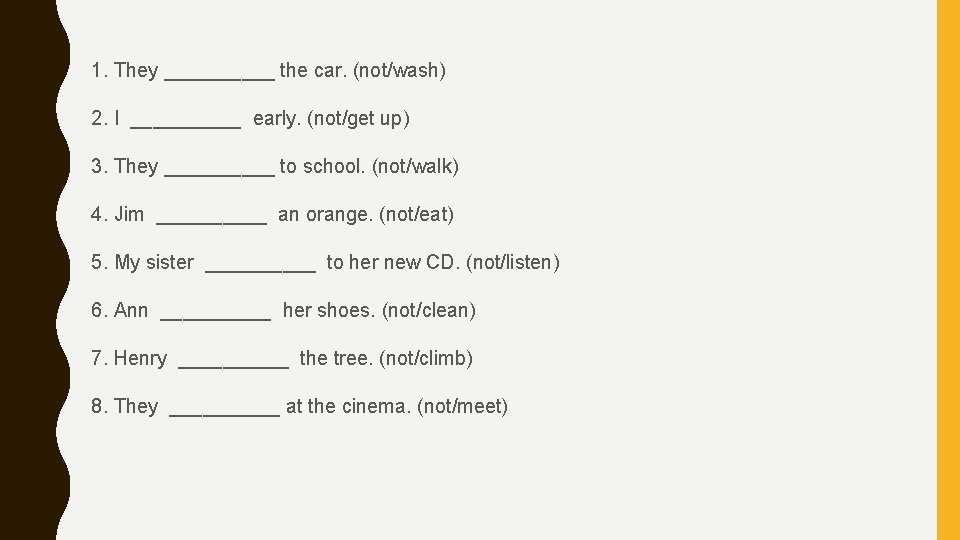
1. They _____ the car. (not/wash) 2. I _____ early. (not/get up) 3. They _____ to school. (not/walk) 4. Jim _____ an orange. (not/eat) 5. My sister _____ to her new CD. (not/listen) 6. Ann _____ her shoes. (not/clean) 7. Henry _____ the tree. (not/climb) 8. They _____ at the cinema. (not/meet)
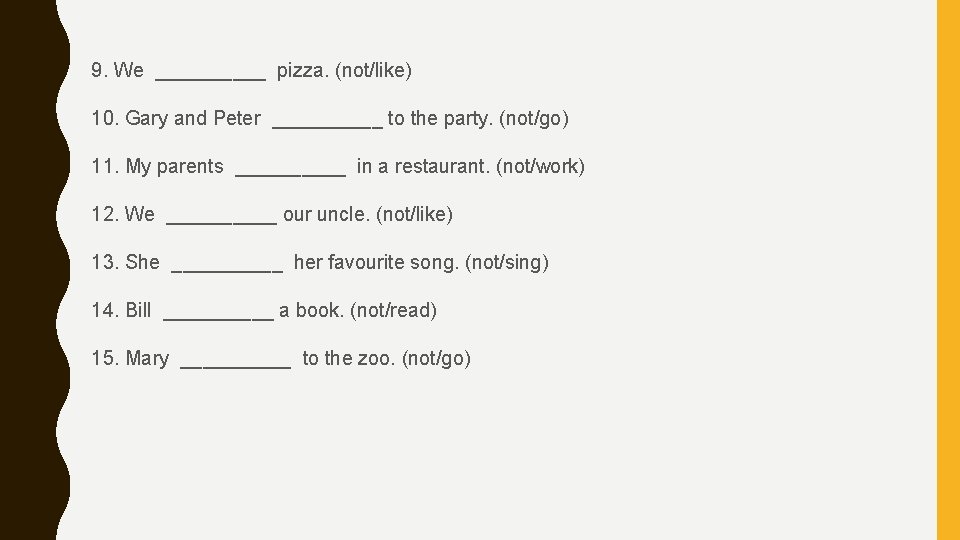
9. We _____ pizza. (not/like) 10. Gary and Peter _____ to the party. (not/go) 11. My parents _____ in a restaurant. (not/work) 12. We _____ our uncle. (not/like) 13. She _____ her favourite song. (not/sing) 14. Bill _____ a book. (not/read) 15. Mary _____ to the zoo. (not/go)
PRESENT PROGRESSIVE (CONTINUOUS)
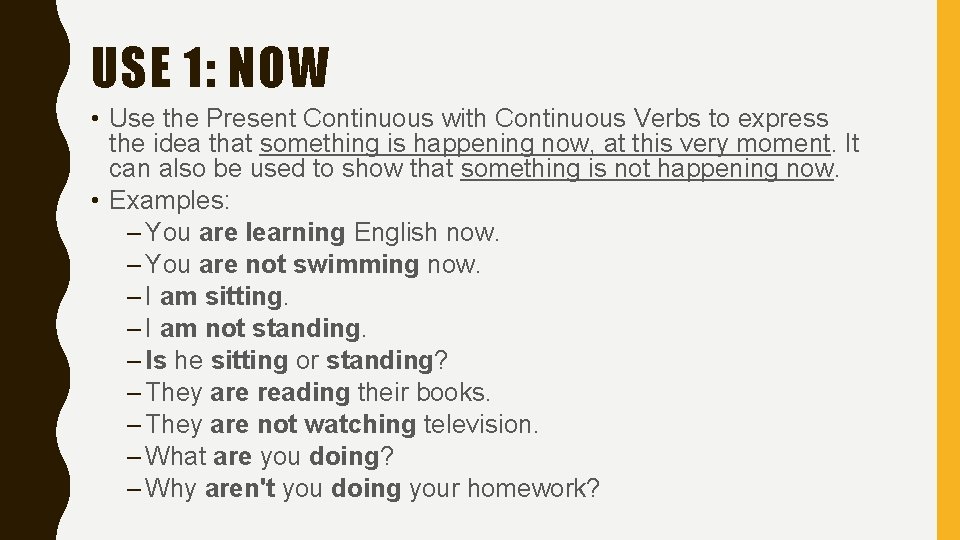
USE 1: NOW • Use the Present Continuous with Continuous Verbs to express the idea that something is happening now, at this very moment. It can also be used to show that something is not happening now. • Examples: – You are learning English now. – You are not swimming now. – I am sitting. – I am not standing. – Is he sitting or standing? – They are reading their books. – They are not watching television. – What are you doing? – Why aren't you doing your homework?
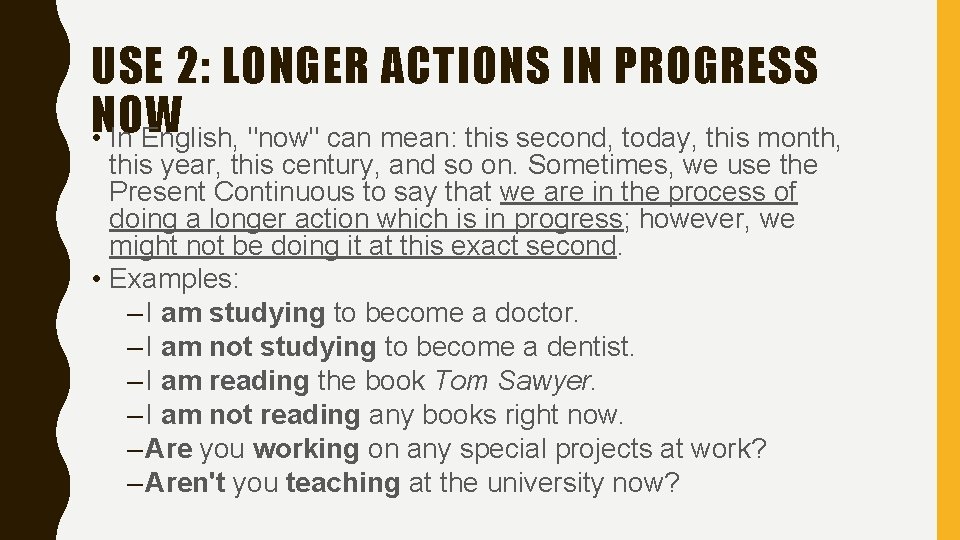
USE 2: LONGER ACTIONS IN PROGRESS NOW • In English, "now" can mean: this second, today, this month, this year, this century, and so on. Sometimes, we use the Present Continuous to say that we are in the process of doing a longer action which is in progress; however, we might not be doing it at this exact second. • Examples: – I am studying to become a doctor. – I am not studying to become a dentist. – I am reading the book Tom Sawyer. – I am not reading any books right now. – Are you working on any special projects at work? – Aren't you teaching at the university now?
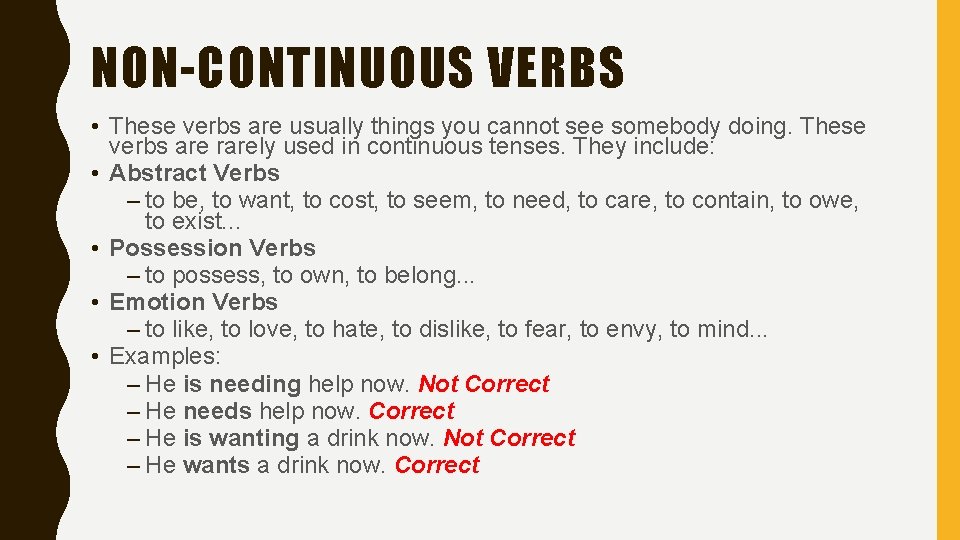
NON-CONTINUOUS VERBS • These verbs are usually things you cannot see somebody doing. These verbs are rarely used in continuous tenses. They include: • Abstract Verbs – to be, to want, to cost, to seem, to need, to care, to contain, to owe, to exist. . . • Possession Verbs – to possess, to own, to belong. . . • Emotion Verbs – to like, to love, to hate, to dislike, to fear, to envy, to mind. . . • Examples: – He is needing help now. Not Correct – He needs help now. Correct – He is wanting a drink now. Not Correct – He wants a drink now. Correct
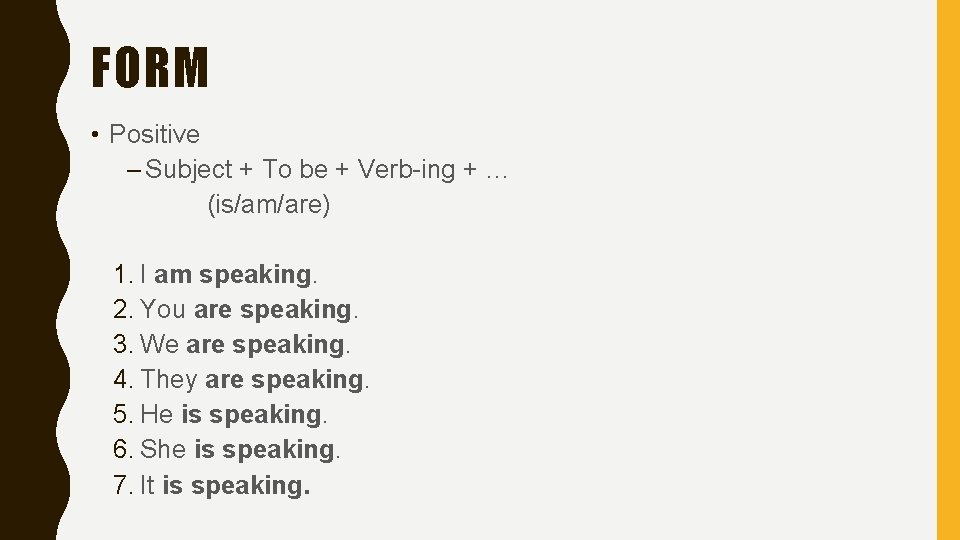
FORM • Positive – Subject + To be + Verb-ing + … (is/am/are) 1. I am speaking. 2. You are speaking. 3. We are speaking. 4. They are speaking. 5. He is speaking. 6. She is speaking. 7. It is speaking.
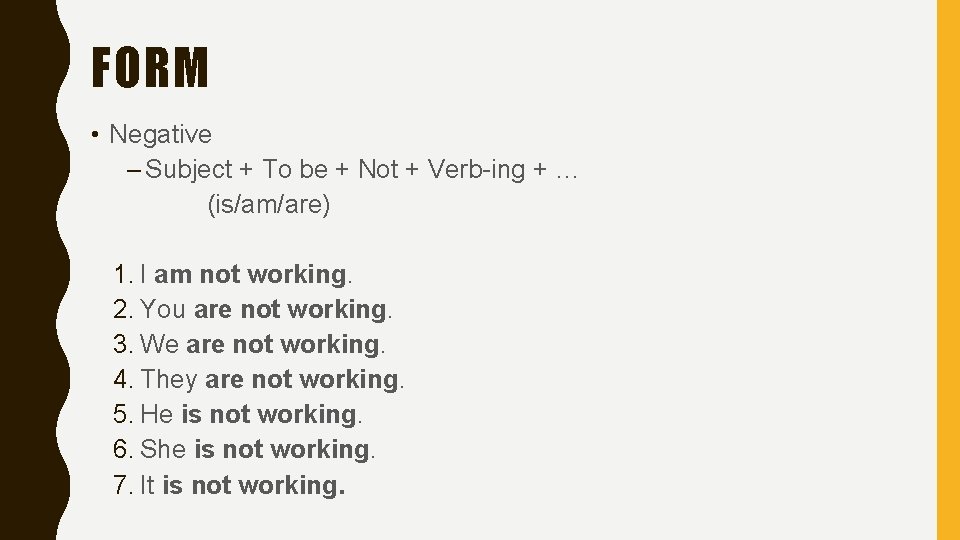
FORM • Negative – Subject + To be + Not + Verb-ing + … (is/am/are) 1. I am not working. 2. You are not working. 3. We are not working. 4. They are not working. 5. He is not working. 6. She is not working. 7. It is not working.
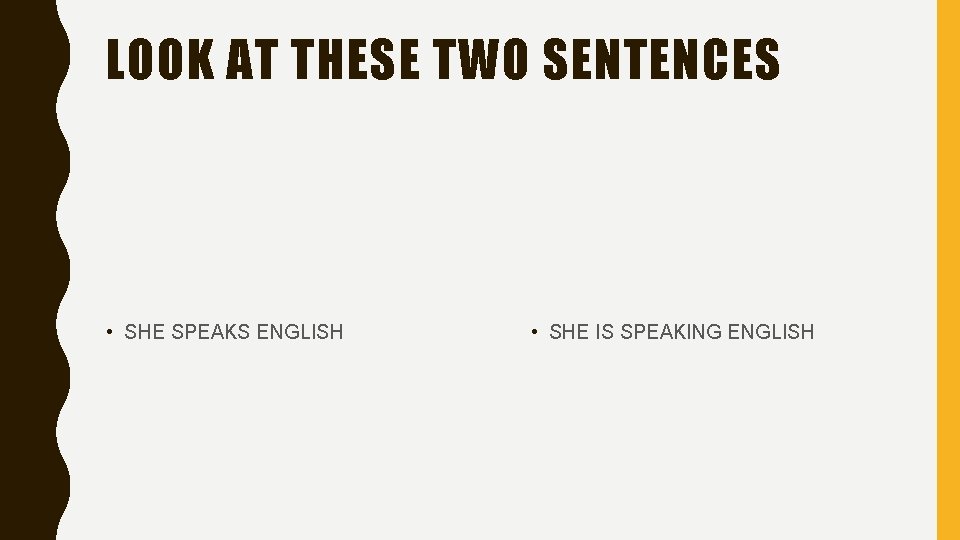
LOOK AT THESE TWO SENTENCES • SHE SPEAKS ENGLISH • SHE IS SPEAKING ENGLISH
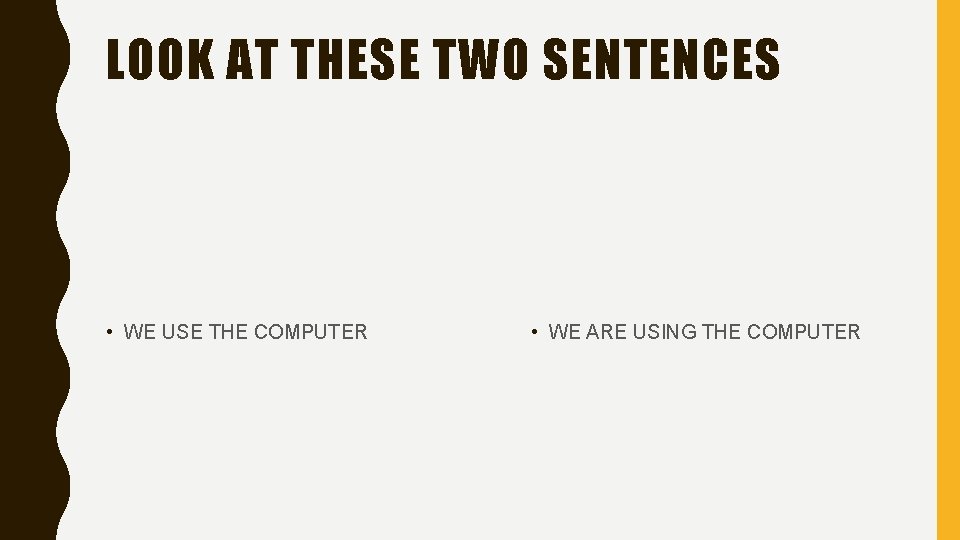
LOOK AT THESE TWO SENTENCES • WE USE THE COMPUTER • WE ARE USING THE COMPUTER
EXERCISES PRESENT PROGRESSIVE
• My sister (to clean) _____ the bathroom. • Look! They (to go) _____ inside. • I (to wait) _____ in the car now. • Mrs Miller (to listen) _____ to CDs. • We (to speak) _____ English at the moment.
• Rewrite the sentences using the negative forms. 1. We are playing a game. 2. I'm drawing a picture. 3. He is making pizza right now. 4. Susan and her brother are taking photos. 5. Dad is working in the kitchen.