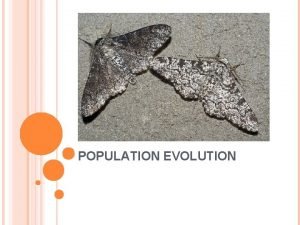
Evolution of Populations DO NOW Adaptation vs Acclimation

- Slides: 29
Evolution of Populations
DO NOW Adaptation vs Acclimation
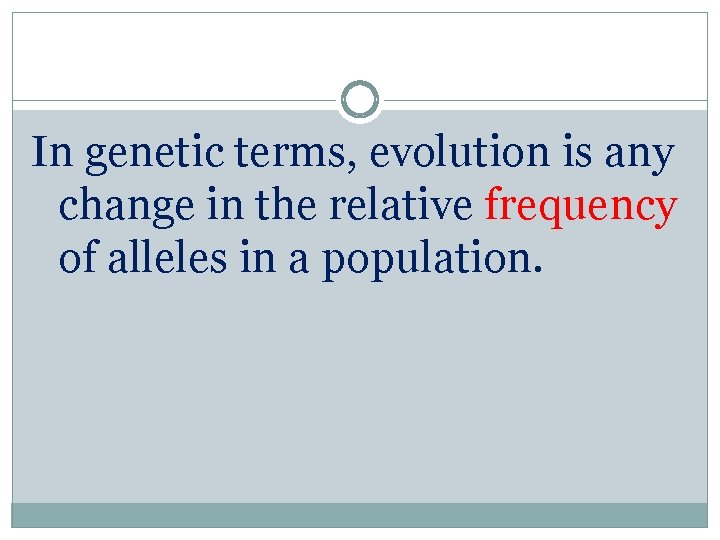
In genetic terms, evolution is any change in the relative frequency of alleles in a population.
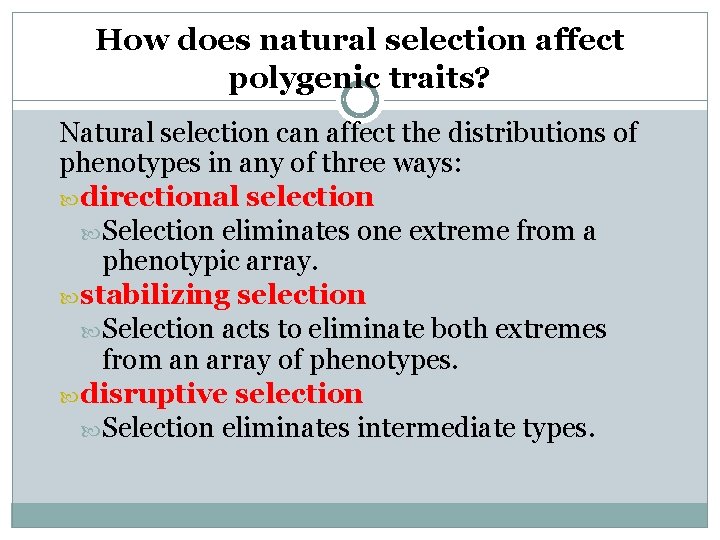
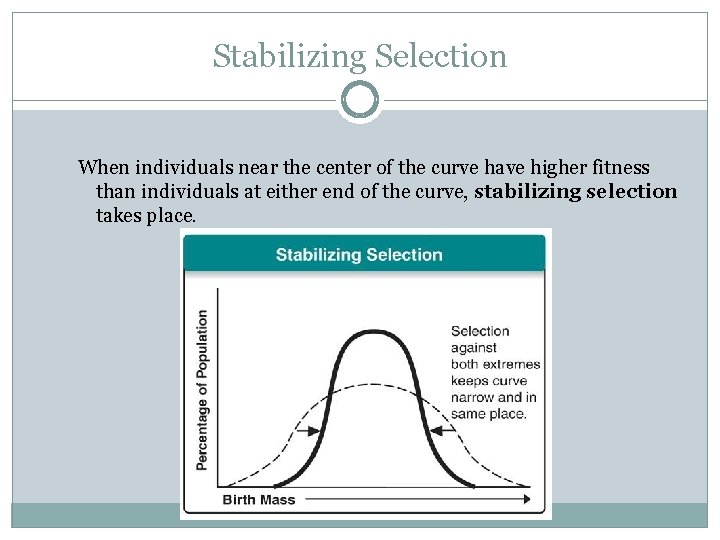
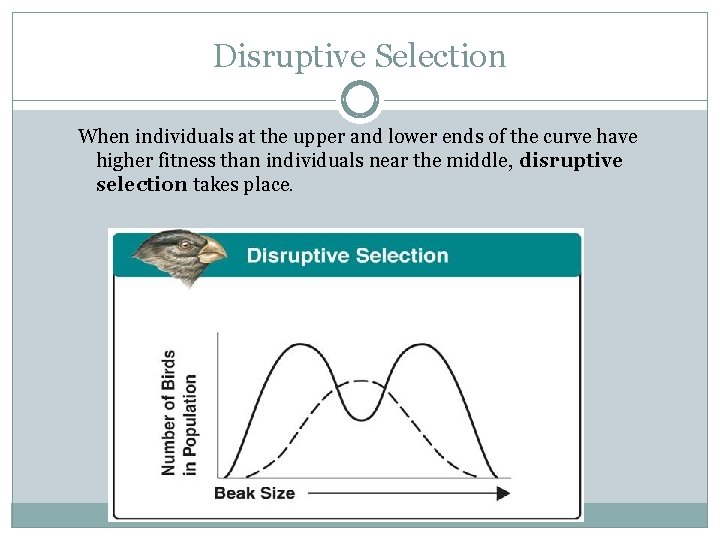
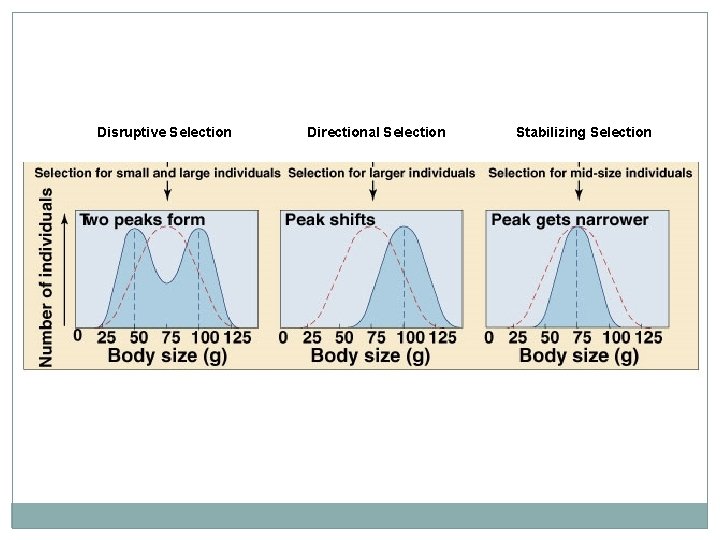
How does natural selection affect polygenic traits? Natural selection can affect the distributions of phenotypes in any of three ways: directional selection Selection eliminates one extreme from a phenotypic array. stabilizing selection Selection acts to eliminate both extremes from an array of phenotypes. disruptive selection Selection eliminates intermediate types.
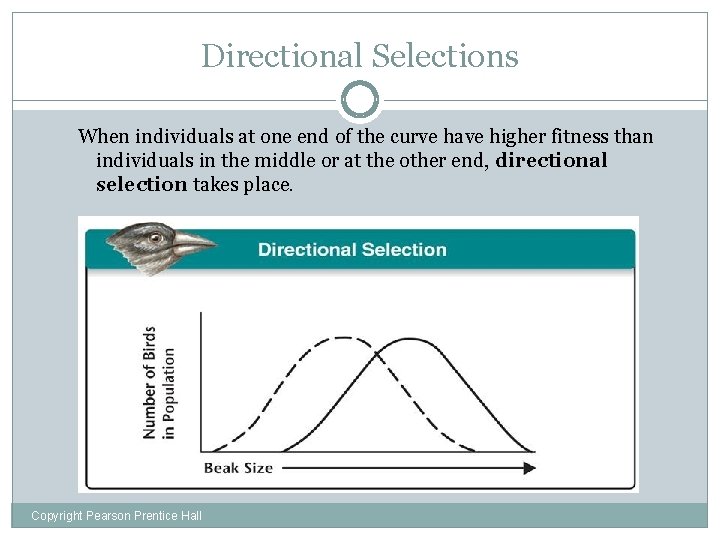
Directional Selections When individuals at one end of the curve have higher fitness than individuals in the middle or at the other end, directional selection takes place. Copyright Pearson Prentice Hall
Stabilizing Selection When individuals near the center of the curve have higher fitness than individuals at either end of the curve, stabilizing selection takes place.
Disruptive Selection When individuals at the upper and lower ends of the curve have higher fitness than individuals near the middle, disruptive selection takes place.
Disruptive Selection Directional Selection Stabilizing Selection
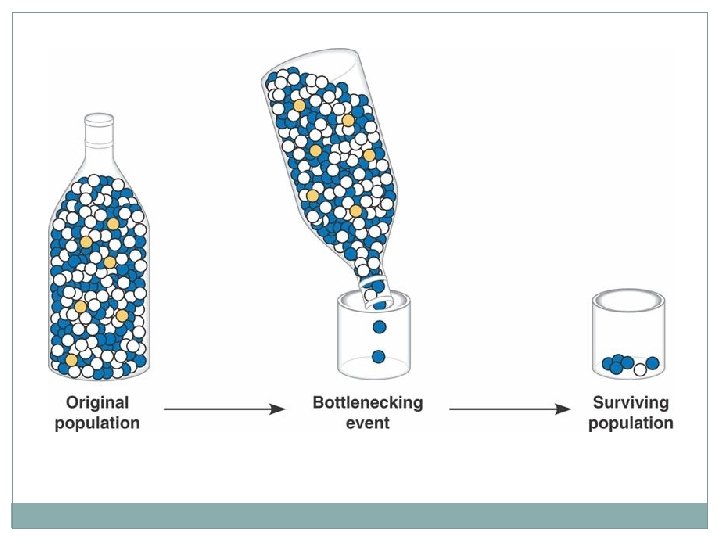
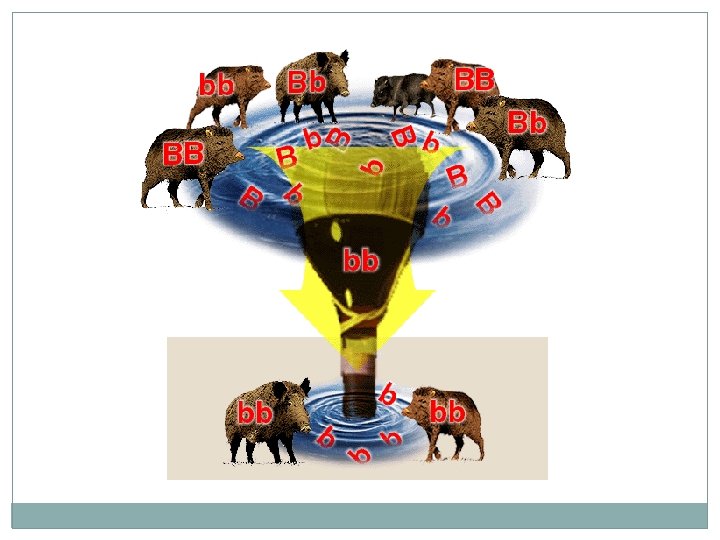
Genetic Drift A random change in allele frequency Can cause a loss of genetic diversity in a population. Bottleneck Effect Founder Effect Genetic drift may occur when a small group of individuals colonizes a new habitat. Individuals may carry alleles in different relative frequencies than did the larger population from which they came.
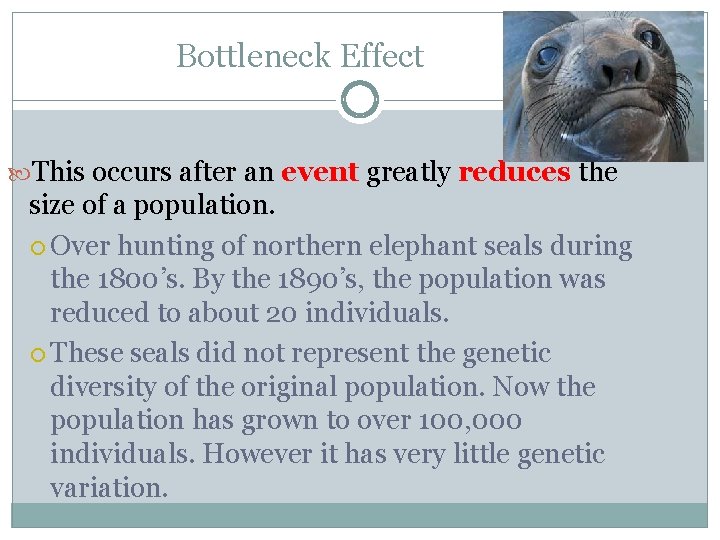
Bottleneck Effect This occurs after an event greatly reduces the size of a population. Over hunting of northern elephant seals during the 1800’s. By the 1890’s, the population was reduced to about 20 individuals. These seals did not represent the genetic diversity of the original population. Now the population has grown to over 100, 000 individuals. However it has very little genetic variation.
Founder Effect Occurs when a small number of individuals colonize a new area. The gene pool of these populations are often very different from those of the larger populations. The Founder Effect can be studied in human population.
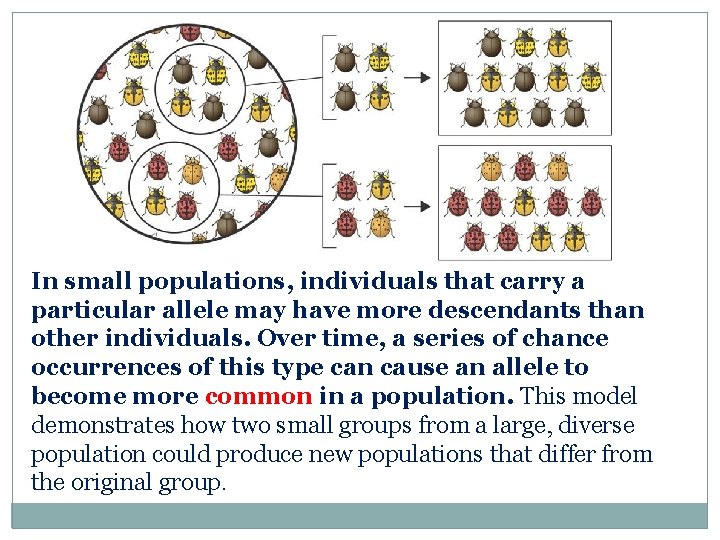
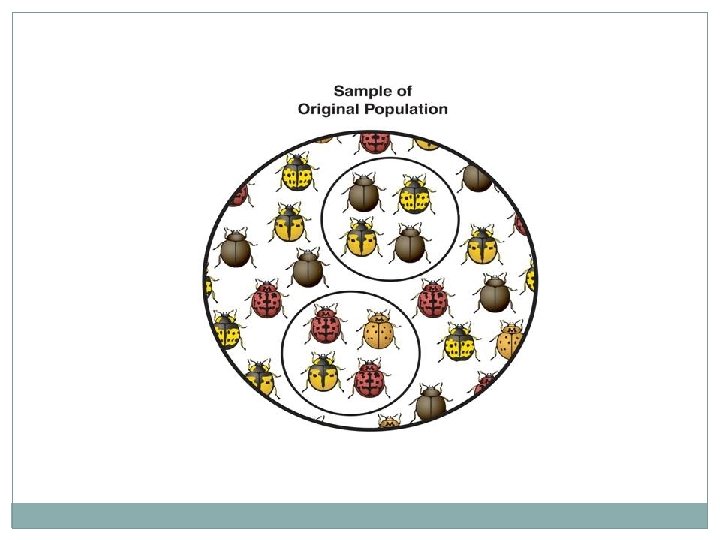
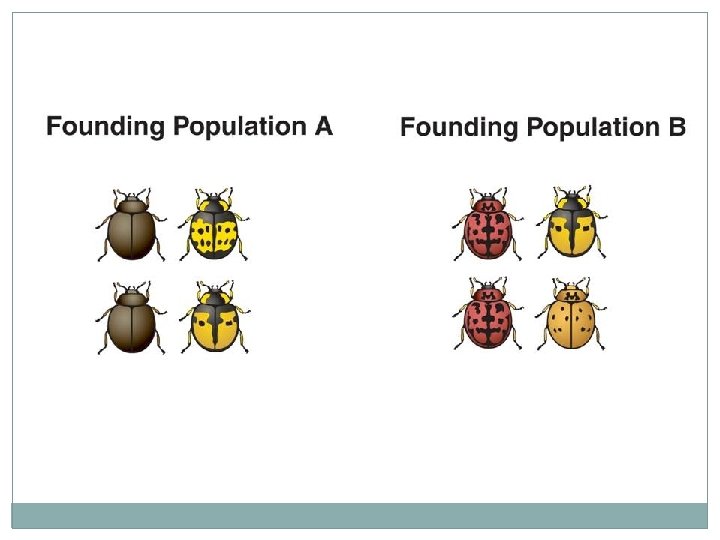
In small populations, individuals that carry a particular allele may have more descendants than other individuals. Over time, a series of chance occurrences of this type can cause an allele to become more common in a population. This model demonstrates how two small groups from a large, diverse population could produce new populations that differ from the original group.
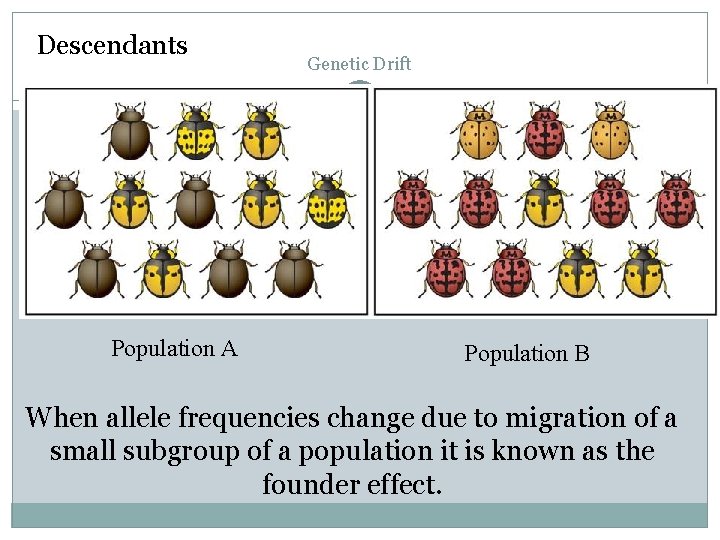
Descendants Population A Genetic Drift Population B When allele frequencies change due to migration of a small subgroup of a population it is known as the founder effect.
The Process of Speciation
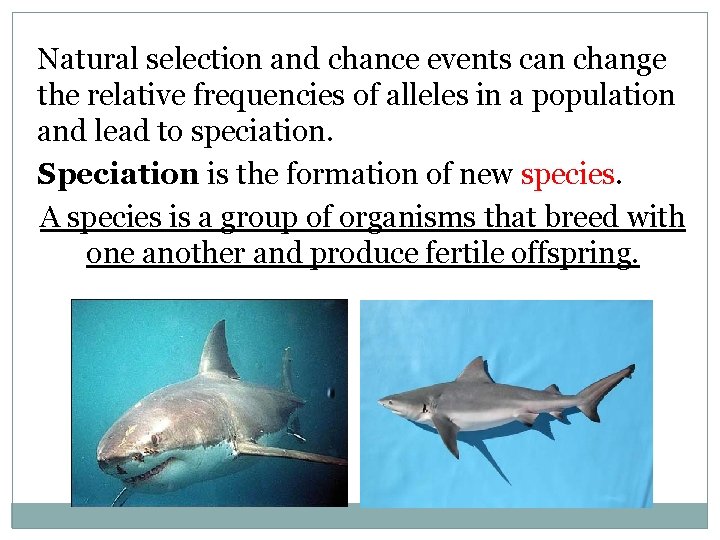
Natural selection and chance events can change the relative frequencies of alleles in a population and lead to speciation. Speciation is the formation of new species. A species is a group of organisms that breed with one another and produce fertile offspring.
Isolating Mechanism What factors are involved in the formation of new species? The gene pools of two populations must become separated for them to become new species. As new species evolve, populations become reproductively isolated from each other. When the members of two populations cannot interbreed and produce fertile offspring, reproductive isolation has occurred.
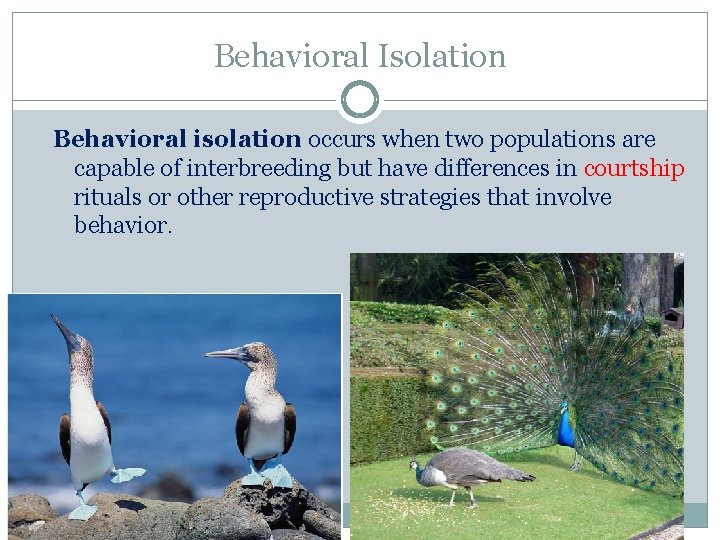
Behavioral Isolation Behavioral isolation occurs when two populations are capable of interbreeding but have differences in courtship rituals or other reproductive strategies that involve behavior. Copyright Pearson Prentice Hall
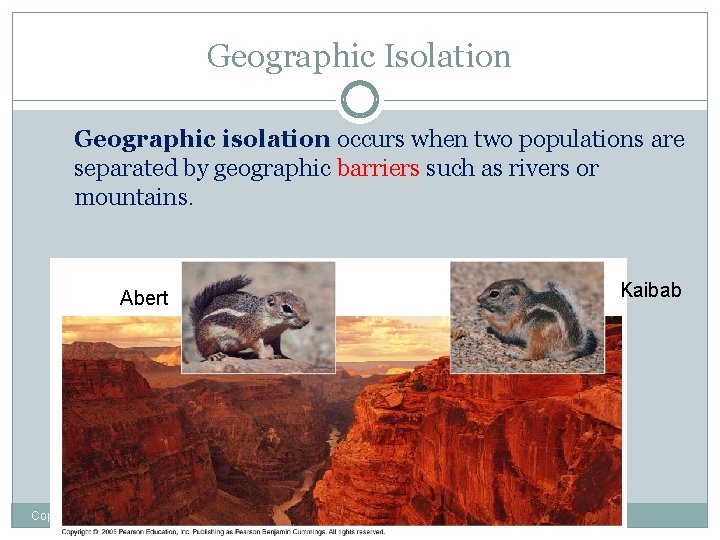
Geographic Isolation Geographic isolation occurs when two populations are separated by geographic barriers such as rivers or mountains. Abert Copyright Pearson Prentice Hall Kaibab
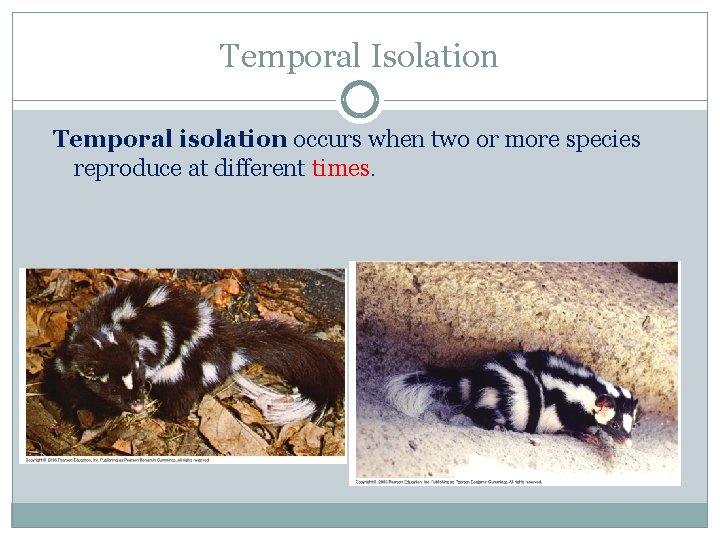
Temporal Isolation Temporal isolation occurs when two or more species reproduce at different times.
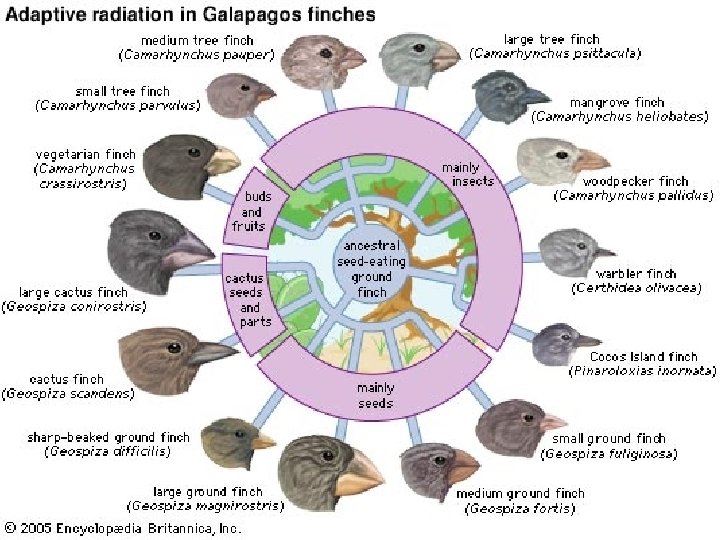
Adaptive Radiation Adaptive radiation is one example of divergent evolution. Divergent evolution is the process of two or more related species becoming more and more dissimilar. Adaptive radiation is the process by which a single species or a small group of species evolves into several different forms that live in different ways. For example, in the adaptive radiation of Darwin's finches, more than a dozen species evolved from a single species.
Copyright Pearson Prentice Hall
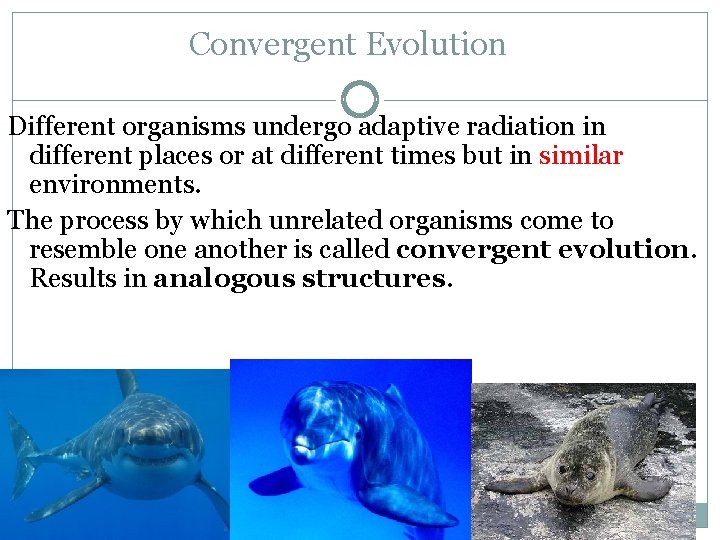
Convergent Evolution Different organisms undergo adaptive radiation in different places or at different times but in similar environments. The process by which unrelated organisms come to resemble one another is called convergent evolution. Results in analogous structures. Copyright Pearson Prentice Hall
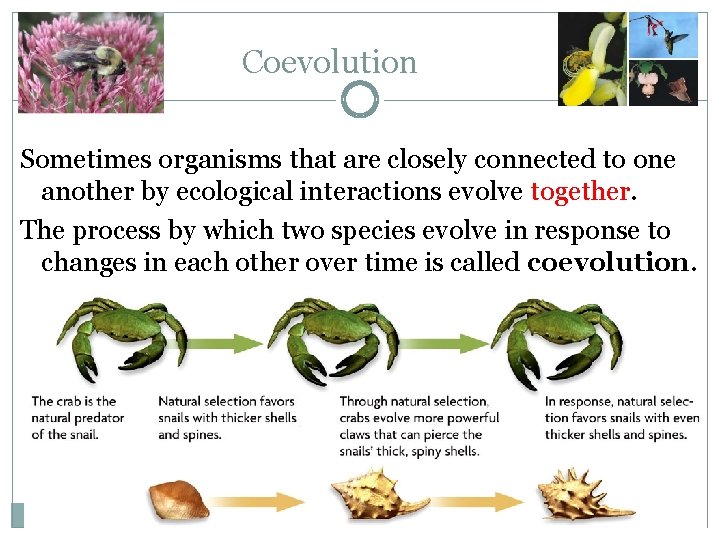
Coevolution Sometimes organisms that are closely connected to one another by ecological interactions evolve together. The process by which two species evolve in response to changes in each other over time is called coevolution.