ERP System Installation Options MIS 489 IST 402
- Slides: 15
ERP System Installation Options MIS 489 / IST 402
ERP Projects �ERP system implementations have unique features: �Less system design than conventional IT projects �Contract for help from vendor, consultants �Large project management team �Outsource all or part of operation
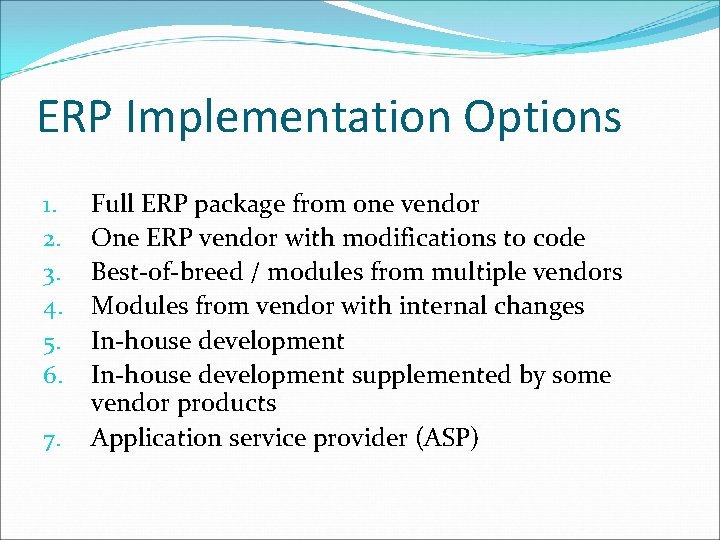
ERP Implementation Options 1. 2. 3. 4. 5. 6. 7. Full ERP package from one vendor One ERP vendor with modifications to code Best-of-breed / modules from multiple vendors Modules from vendor with internal changes In-house development supplemented by some vendor products Application service provider (ASP)
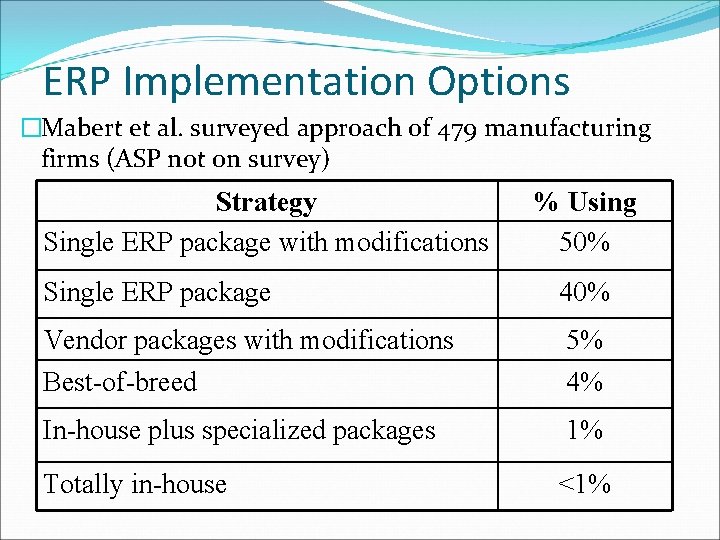
ERP Implementation Options �Mabert et al. surveyed approach of 479 manufacturing firms (ASP not on survey) Strategy Single ERP package with modifications % Using 50% Single ERP package 40% Vendor packages with modifications Best-of-breed 5% 4% In-house plus specialized packages 1% Totally in-house <1%
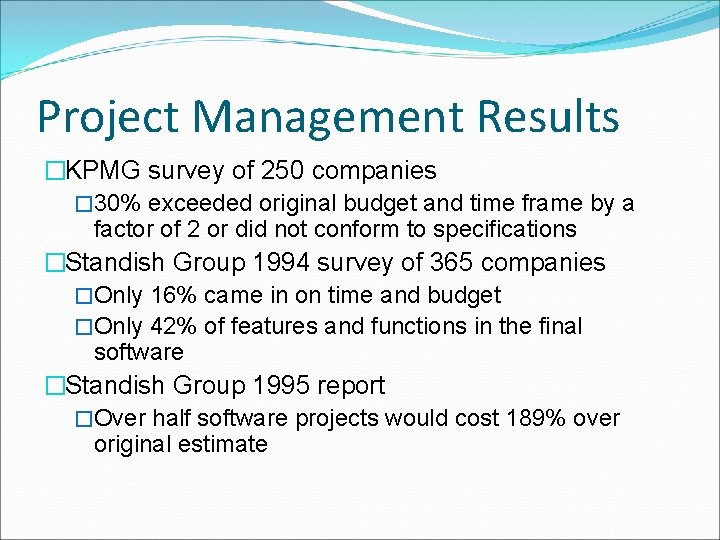
Project Management Results �KPMG survey of 250 companies � 30% exceeded original budget and time frame by a factor of 2 or did not conform to specifications �Standish Group 1994 survey of 365 companies �Only 16% came in on time and budget �Only 42% of features and functions in the final software �Standish Group 1995 report �Over half software projects would cost 189% over original estimate
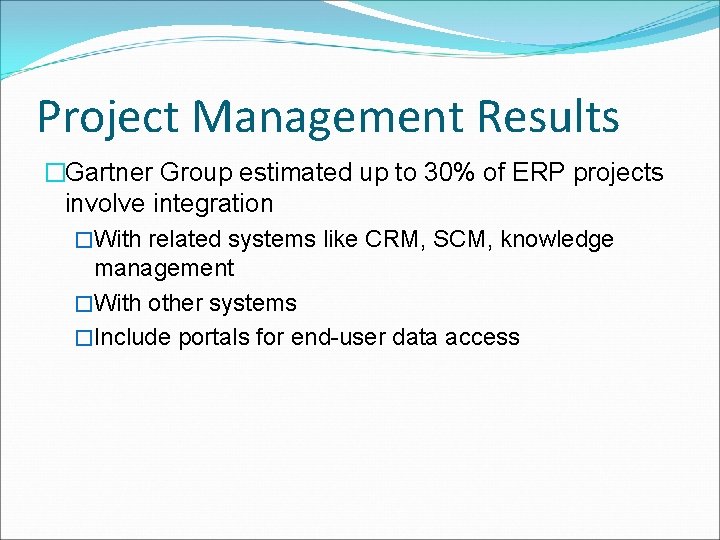
Project Management Results �Gartner Group estimated up to 30% of ERP projects involve integration �With related systems like CRM, SCM, knowledge management �With other systems �Include portals for end-user data access
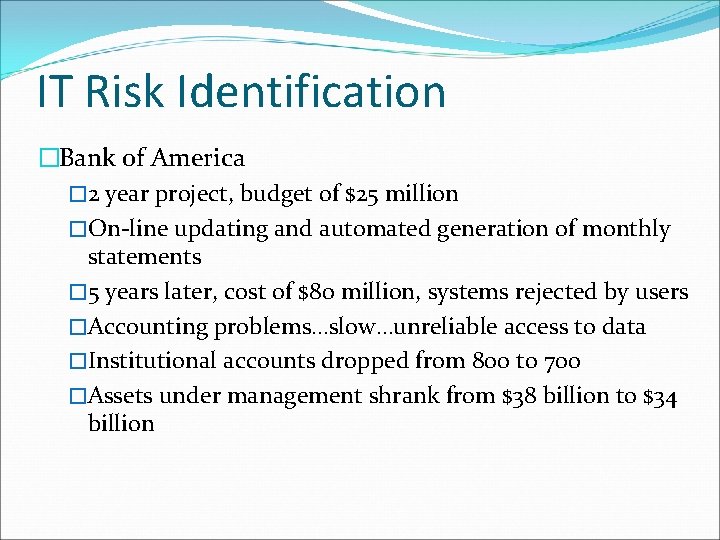
IT Risk Identification �Bank of America � 2 year project, budget of $25 million �On-line updating and automated generation of monthly statements � 5 years later, cost of $80 million, systems rejected by users �Accounting problems…slow…unreliable access to data �Institutional accounts dropped from 800 to 700 �Assets under management shrank from $38 billion to $34 billion
IT Risk Identification �Primary ways to identify risk: �Individual work by a risk analyst �Interview project team �Discuss with those impacted…especially users �Risk management is a continuous process, occurring throughout a project
Systems Failure Method Fortune and Peters �Systems view intending to identify risk in proposed projects by examining failure in similar efforts in the past �Disasters – systems that do not satisfactorily support users �Negative disasters – decisions to substantially modify a project, reverse a project, or abandon it. �Positive disasters – system implemented despite heavy criticism and dissatisfaction of key users
Systems Failure Method �Try to understand cause-and-effect relationships 1. Pre-analysis: define purpose, determine perspectives, gather source material 2. Identification of failures and select systems 3. Modeling: clarify the nature of the system 4. Comparison: gain understanding 5. Analysis 6. Synthesis
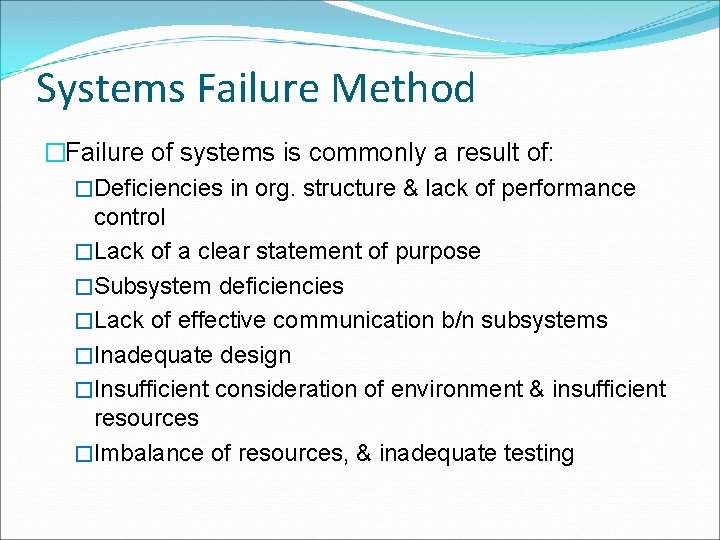
Systems Failure Method �Failure of systems is commonly a result of: �Deficiencies in org. structure & lack of performance control �Lack of a clear statement of purpose �Subsystem deficiencies �Lack of effective communication b/n subsystems �Inadequate design �Insufficient consideration of environment & insufficient resources �Imbalance of resources, & inadequate testing
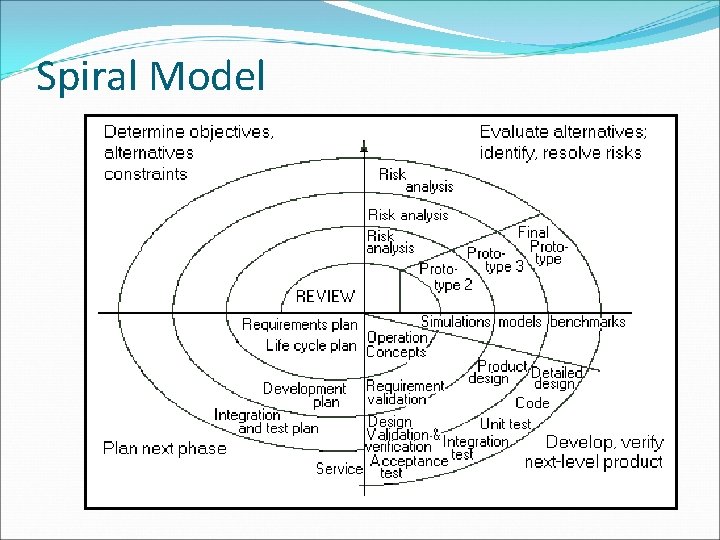
Techniques to Implement �Waterfall Model �Software Life-Cycle �Prototyping �Spiral Model �Outsourcing �Application service providers (ASP)
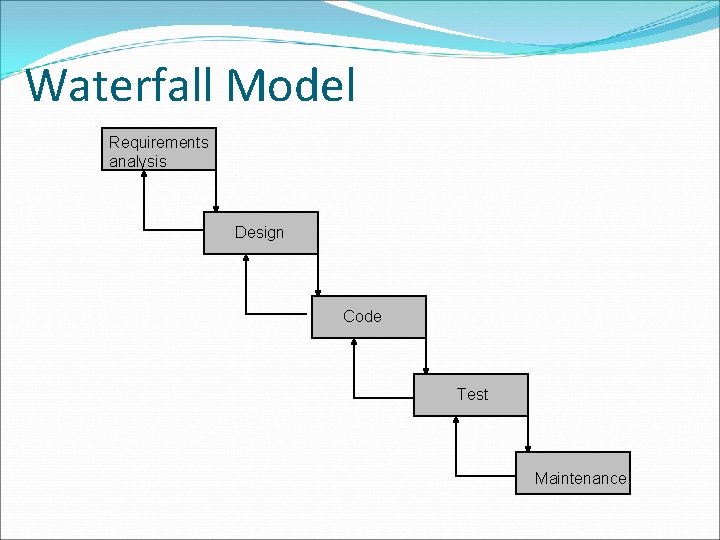
Waterfall Model Requirements analysis Design Code Test Maintenance
Spiral Model �Important features: �Risk analysis �Prototyping �Iterative framework allowing ideas to be checked and evaluated �Explicitly encourages alternatives to be considered �Good for large and complex projects but not simple ones
Spiral Model