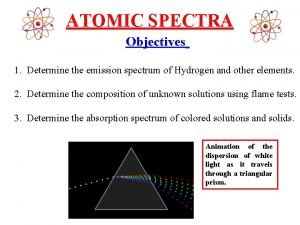
Emission Spectrum Hydrogen of 1 nm 1 x

- Slides: 13
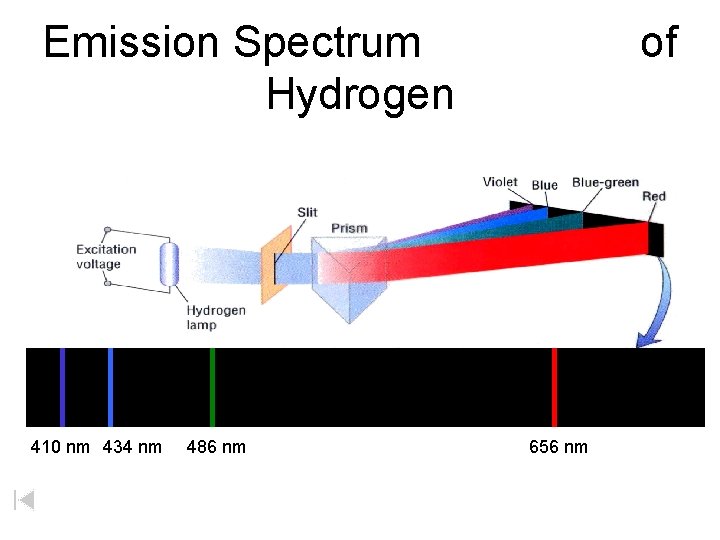
Emission Spectrum Hydrogen of 1 nm = 1 x 10 -9 m = “a billionth of a meter” 410 nm 434 nm 486 nm 656 nm
Emission Spectrum of an Element 410 nm 434 nm 486 nm 656 nm 1 nm = 1 x 10 -9 m = “a billionth of a meter”
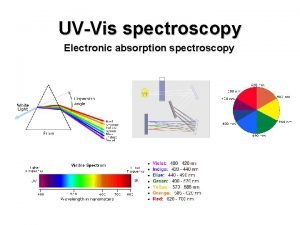
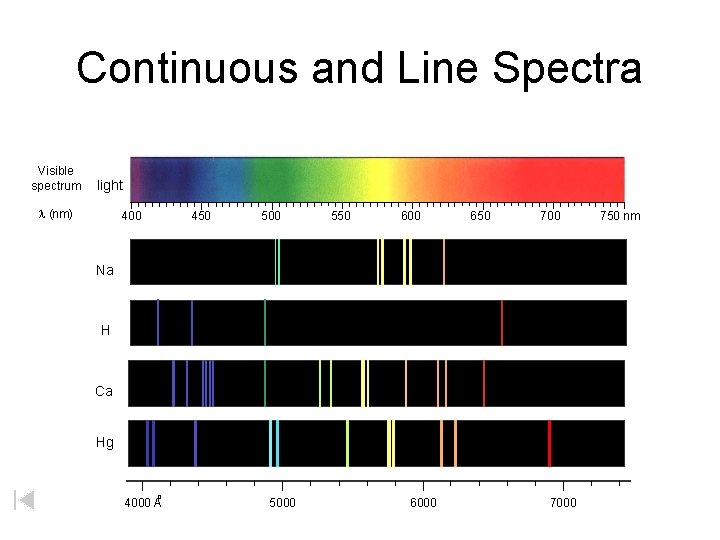
Continuous and Line Spectra Visible spectrum light l (nm) 400 450 500 550 600 650 700 Na H Ca Hg o 4000 A 5000 6000 750 nm
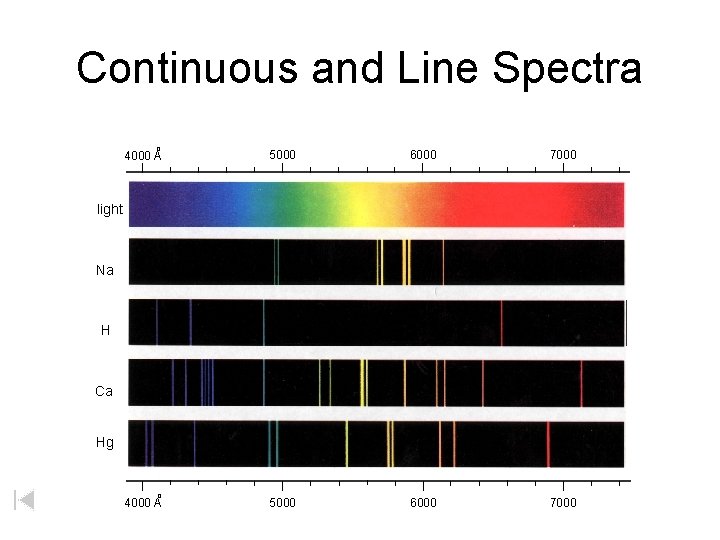
Continuous and Line Spectra o 4000 A 5000 6000 7000 light Na H Ca Hg o 4000 A
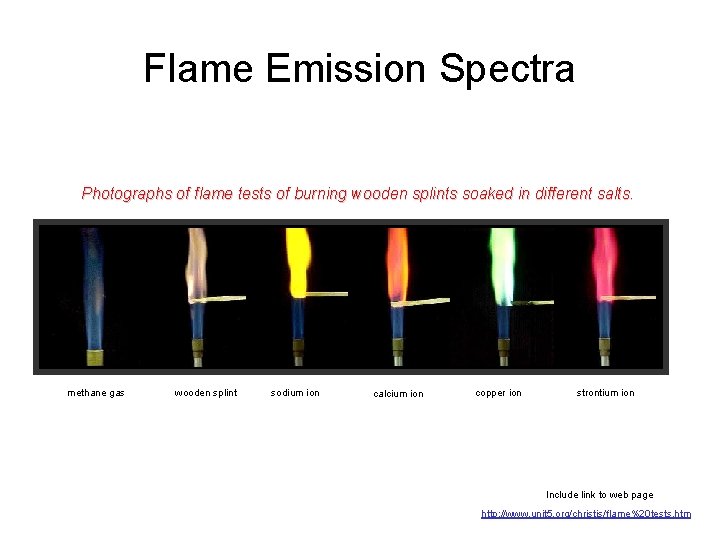
Flame Emission Spectra Photographs of flame tests of burning wooden splints soaked in different salts. methane gas wooden splint sodium ion calcium ion copper ion strontium ion Include link to web page http: //www. unit 5. org/christjs/flame%20 tests. htm
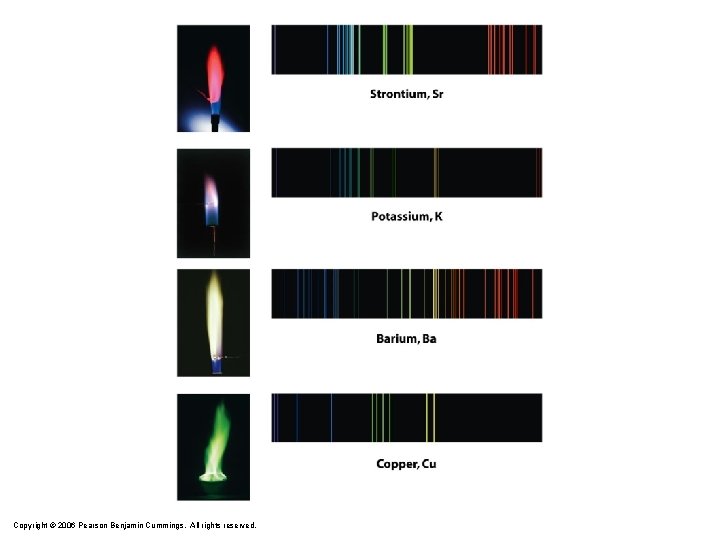
Copyright © 2006 Pearson Benjamin Cummings. All rights reserved.
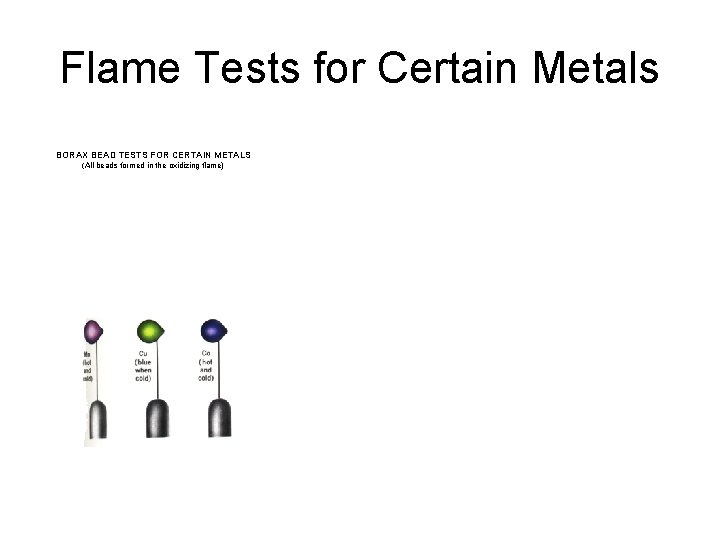
Flame Tests for Certain Metals BORAX BEAD TESTS FOR CERTAIN METALS (All beads formed in the oxidizing flame)
Fireworks
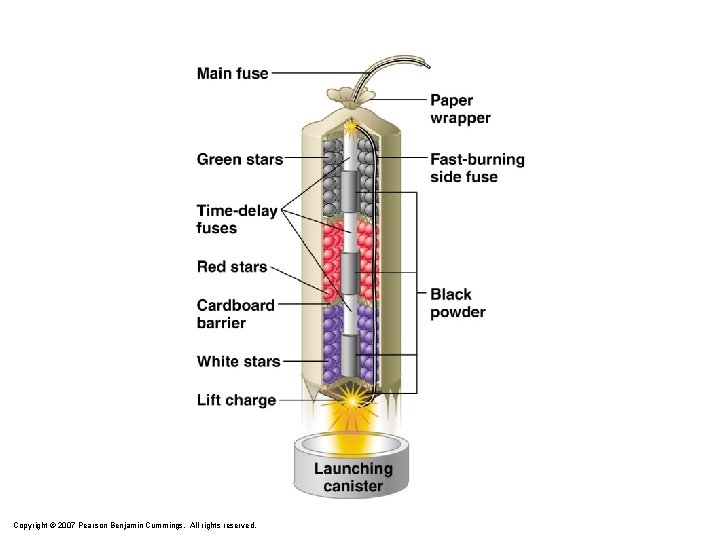
Fireworks Copyright © 2007 Pearson Benjamin Cummings. All rights reserved.
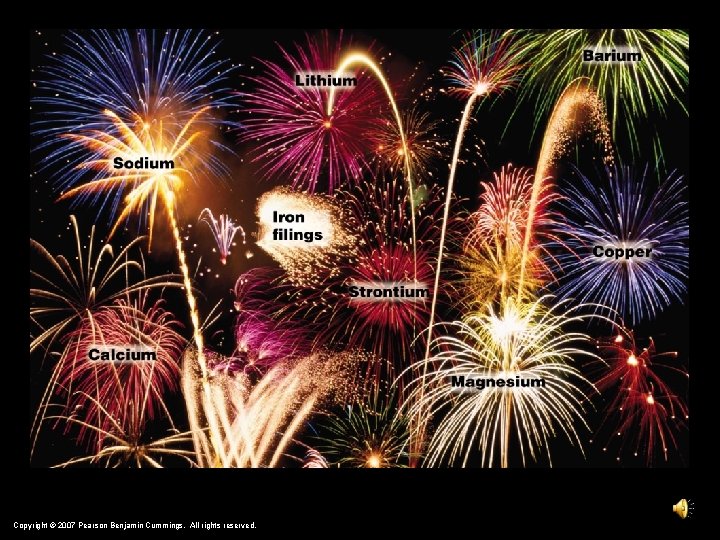
Copyright © 2007 Pearson Benjamin Cummings. All rights reserved.
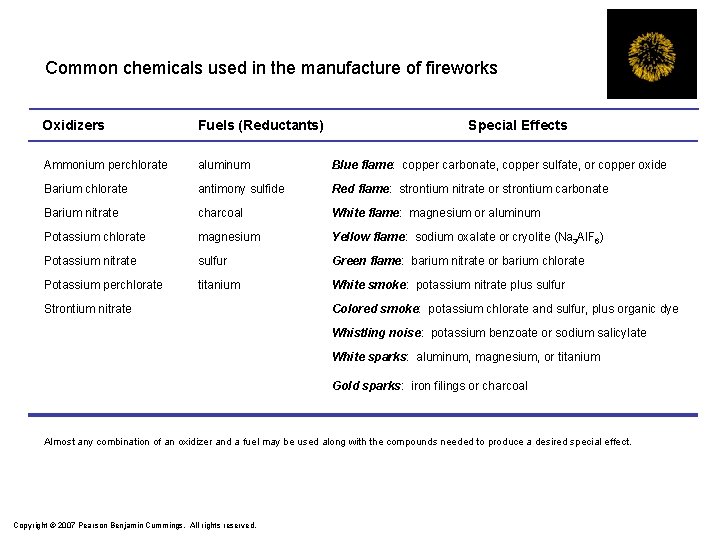
Common chemicals used in the manufacture of fireworks Oxidizers Fuels (Reductants) Ammonium perchlorate aluminum Blue flame: copper carbonate, copper sulfate, or copper oxide Barium chlorate antimony sulfide Red flame: strontium nitrate or strontium carbonate Barium nitrate charcoal White flame: magnesium or aluminum Potassium chlorate magnesium Yellow flame: sodium oxalate or cryolite (Na 3 Al. F 6) Potassium nitrate sulfur Green flame: barium nitrate or barium chlorate Potassium perchlorate titanium White smoke: potassium nitrate plus sulfur Strontium nitrate Special Effects Colored smoke: potassium chlorate and sulfur, plus organic dye Whistling noise: potassium benzoate or sodium salicylate White sparks: aluminum, magnesium, or titanium Gold sparks: iron filings or charcoal Almost any combination of an oxidizer and a fuel may be used along with the compounds needed to produce a desired special effect. Copyright © 2007 Pearson Benjamin Cummings. All rights reserved.
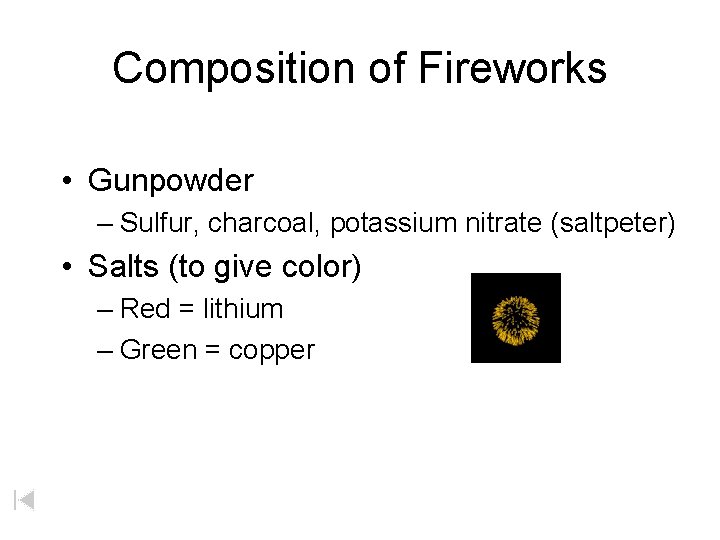
Composition of Fireworks • Gunpowder – Sulfur, charcoal, potassium nitrate (saltpeter) • Salts (to give color) – Red = lithium – Green = copper
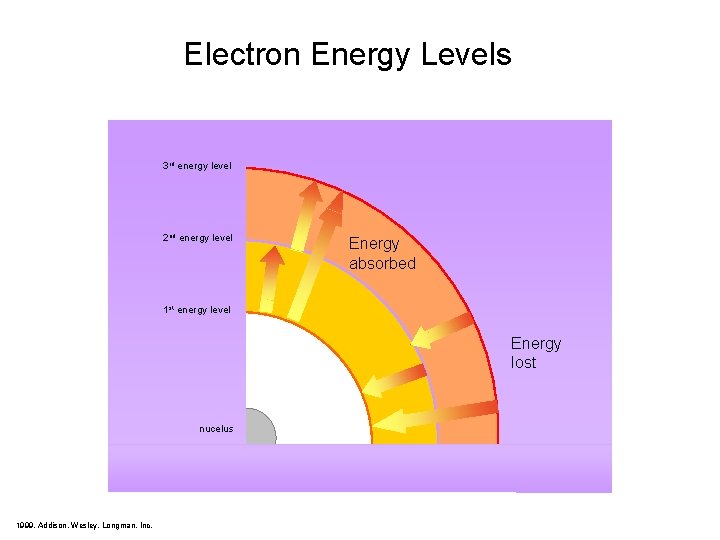
Electron Energy Levels 3 rd energy level 2 nd energy level Energy absorbed 1 st energy level Energy lost nucelus 1999, Addison, Wesley, Longman, Inc.