
Section 4 7Light Matter Electrons Absorbing Energy If
Section 4. 7—Light & Matter
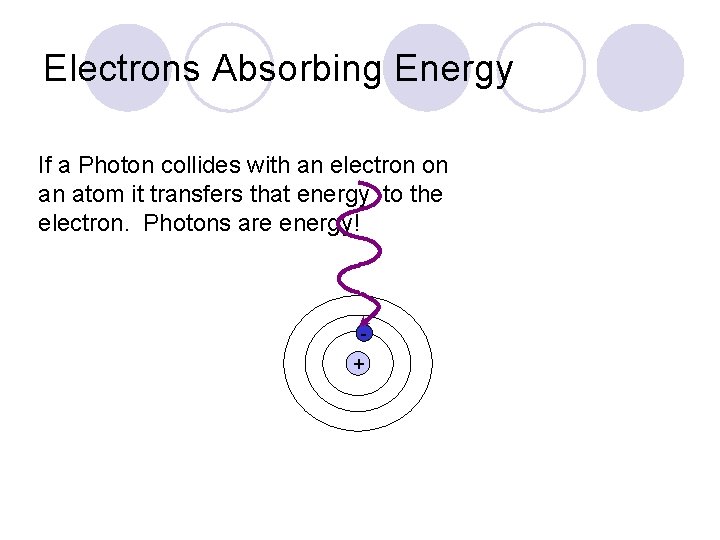
Electrons Absorbing Energy If a Photon collides with an electron on an atom it transfers that energy to the electron. Photons are energy! +
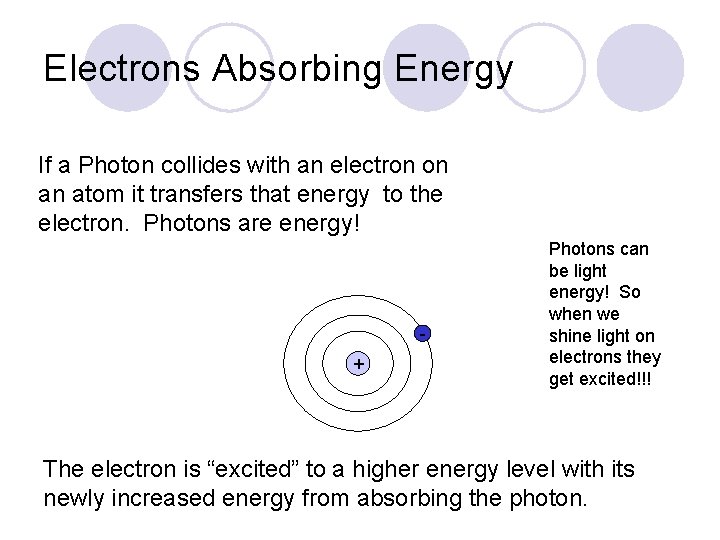
Electrons Absorbing Energy If a Photon collides with an electron on an atom it transfers that energy to the electron. Photons are energy! + Photons can be light energy! So when we shine light on electrons they get excited!!! The electron is “excited” to a higher energy level with its newly increased energy from absorbing the photon.
Excitation l Excitation Definition: The process of an electron absorbing a photon of light (energy) and being promoted to a higher energy level from its “ground state”
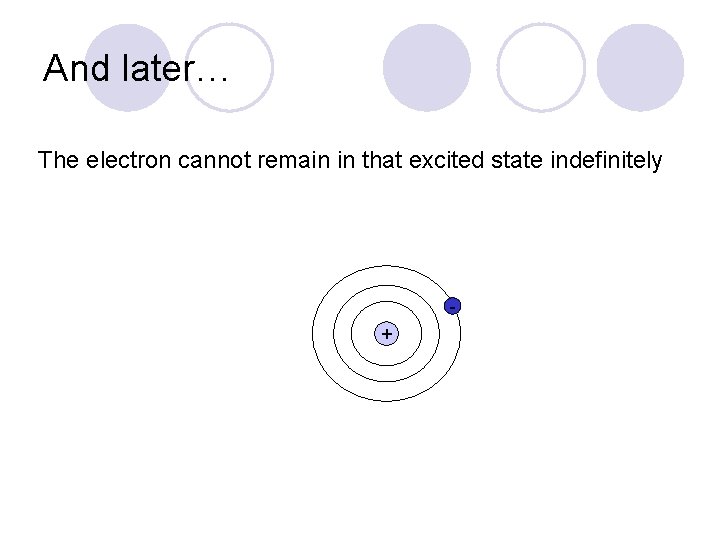
And later… The electron cannot remain in that excited state indefinitely +
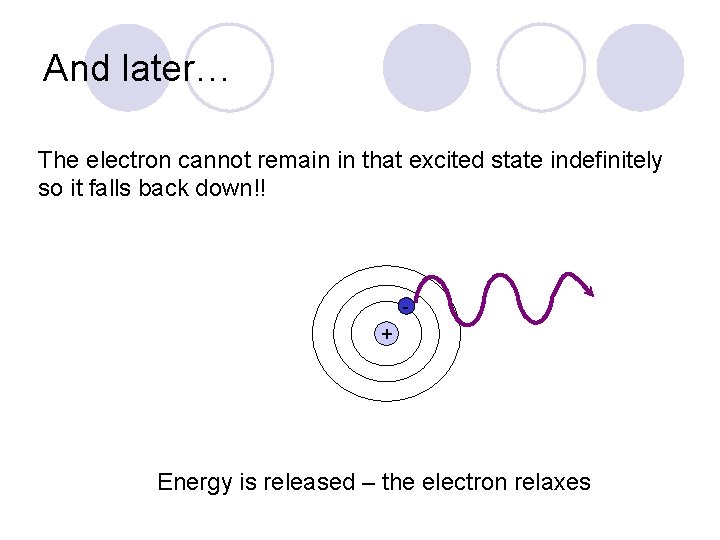
And later… The electron cannot remain in that excited state indefinitely so it falls back down!! + Energy is released – the electron relaxes
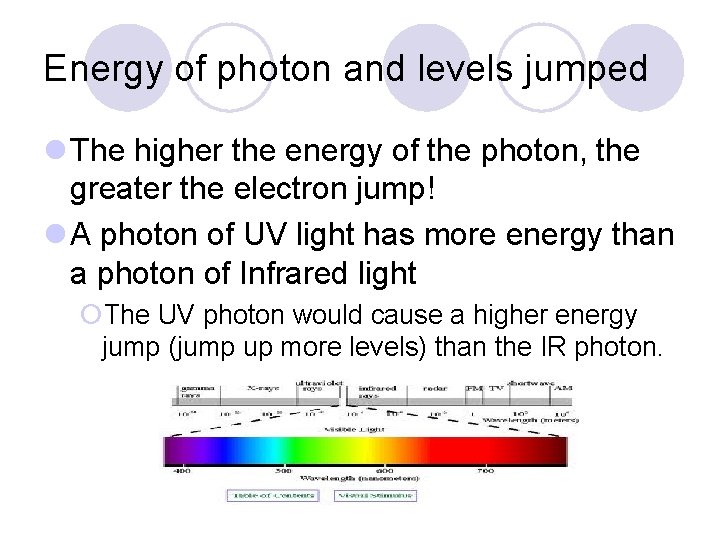
Energy of photon and levels jumped l The higher the energy of the photon, the greater the electron jump! l A photon of UV light has more energy than a photon of Infrared light ¡The UV photon would cause a higher energy jump (jump up more levels) than the IR photon.
Total energy in = Total energy out l However much energy was absorbed must be released again. .
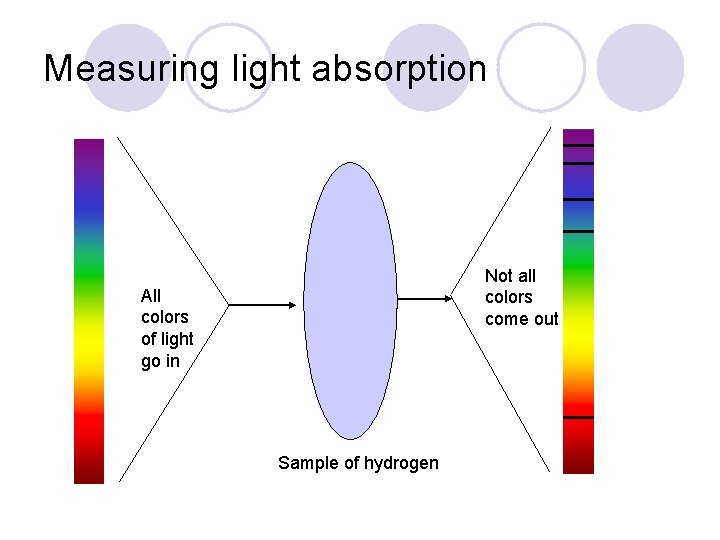
Measuring light absorption Not all colors come out All colors of light go in Sample of hydrogen
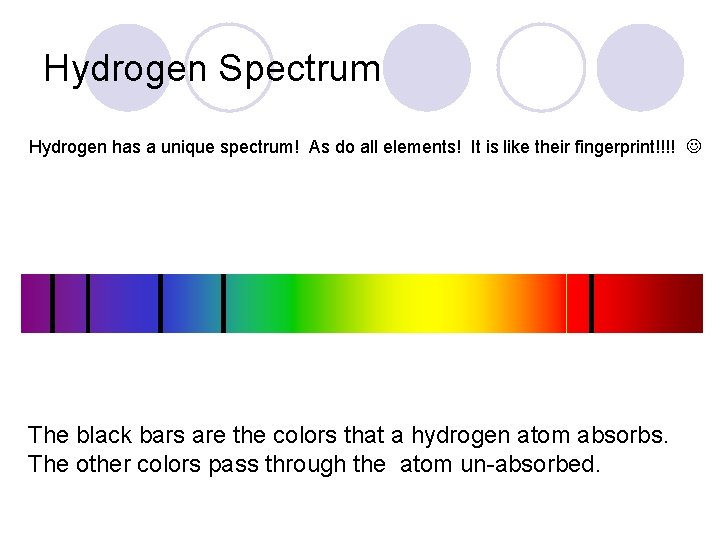
Hydrogen Spectrum Hydrogen has a unique spectrum! As do all elements! It is like their fingerprint!!!! The black bars are the colors that a hydrogen atom absorbs. The other colors pass through the atom un-absorbed.
Ways of producing light l Fluorescence: visible light is absorbed and visible light is emitted at the same l Phosphorescence: Visible light is absorbed and then a while later is l Incandescence: Energy is put in from heat and given off as visible light l Chemiluminescence: Energy released during a chemical reaction is absorbed to cause excitation. Relaxation produces visible light l Biolouminescence: Chemiluminescence that occurs in a biological organism.
- Slides: 11