Ecosystems What Are They and How Do They





- Slides: 26
Ecosystems: What Are They and How Do They Work? Chapter 3, Part 2
Key Concepts
PART 2 Section 3 -4 WHAT HAPPENS TO MATTER IN AN ECOSYSTEM?
Nutrients cycle within and among ecosystems: CHNOPS • Elements and compounds move through air, water, soil, rock and living organisms in biogeochemical, or nutrient, cycles. • Major nutrients cycling through the biosphere: • Carbon (carbon cycle) • Hydrogen (water/hydrologic cycle) • Nitrogen (nitrogen cycle) • Oxygen (through photosynth. and cellular respiration) • Phosphorous (phosphorous cycle) • Sulphur (sulphur cycle)
The Water/Hydrologic Cycle Solar energy evaporates water; the water returns as precipitation (rain or snow), goes through organisms, goes into bodies of water, and evaporates again. Water is filtered and partly purified as it moves through the hydrological cycle. Water can be stored as ice in glaciers or in underground aquifers.
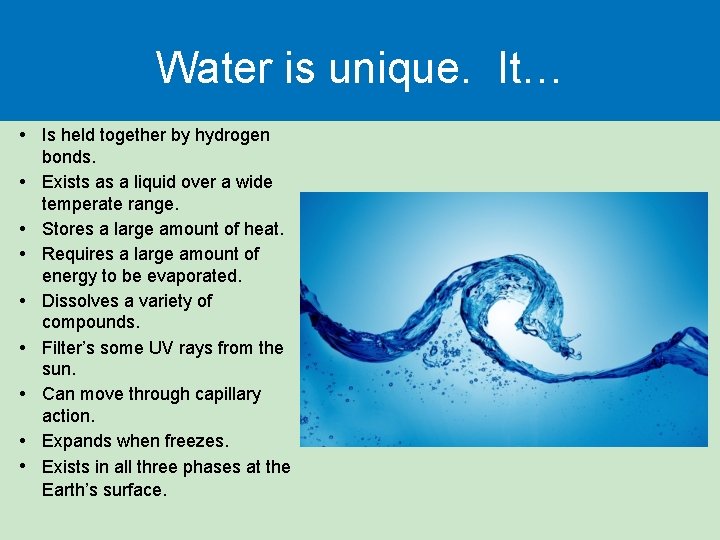
Water is unique. It… • Is held together by hydrogen bonds. • Exists as a liquid over a wide temperate range. • Stores a large amount of heat. • Requires a large amount of energy to be evaporated. • Dissolves a variety of compounds. • Filter’s some UV rays from the sun. • Can move through capillary action. • Expands when freezes. • Exists in all three phases at the Earth’s surface.
Human Impacts on the water cycle • Humans alter the water cycle in many ways: • Withdrawing freshwater at faster rates than nature can replenish it. • Clearing vegetation which increases runoff and decreases replenishment of groundwater supplies. • Draining wetlands which interferes with flood control. • Pollution addition of nutrients and/or toxins
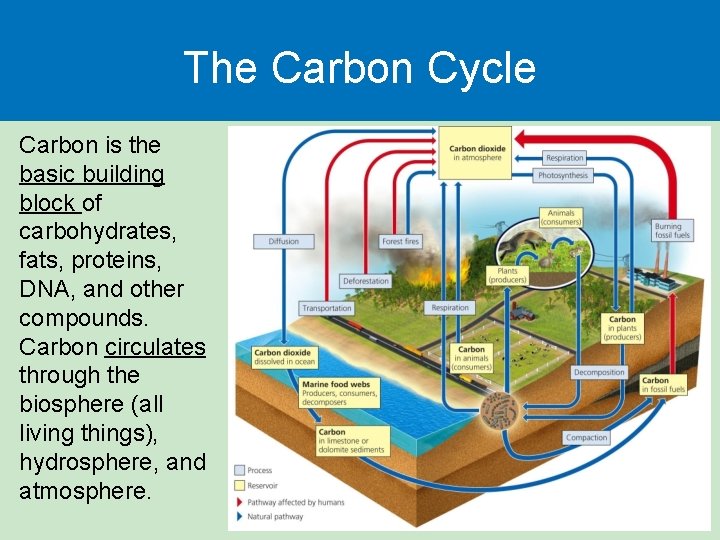
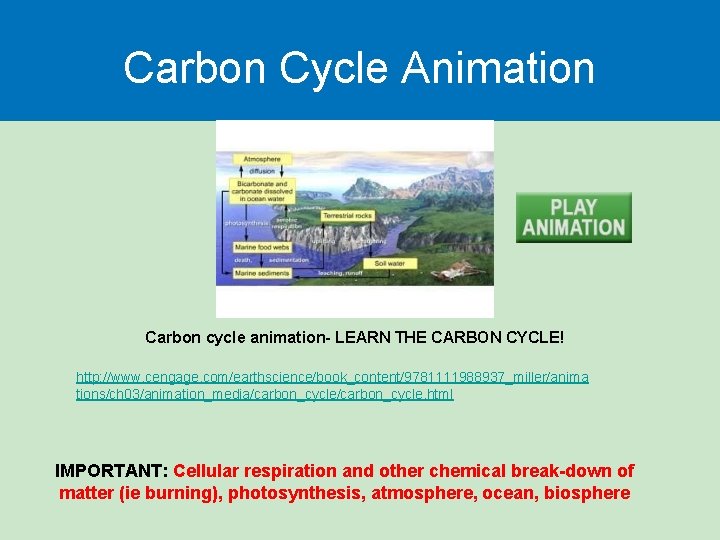
The Carbon Cycle Carbon is the basic building block of carbohydrates, fats, proteins, DNA, and other compounds. Carbon circulates through the biosphere (all living things), hydrosphere, and atmosphere.
Carbon Cycle Animation Carbon cycle animation- LEARN THE CARBON CYCLE! http: //www. cengage. com/earthscience/book_content/9781111988937_miller/anima tions/ch 03/animation_media/carbon_cycle. html IMPORTANT: Cellular respiration and other chemical break-down of matter (ie burning), photosynthesis, atmosphere, ocean, biosphere
Human Impacts on the Global Carbon Cycle 1. Clearing Vegetation 2. Burning Fossil Fuels Consider the consequences… Fig. 3 -26, p. 56
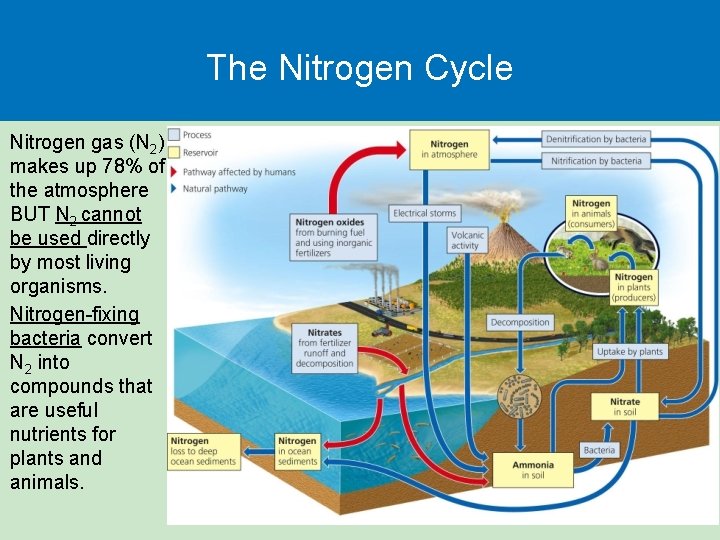
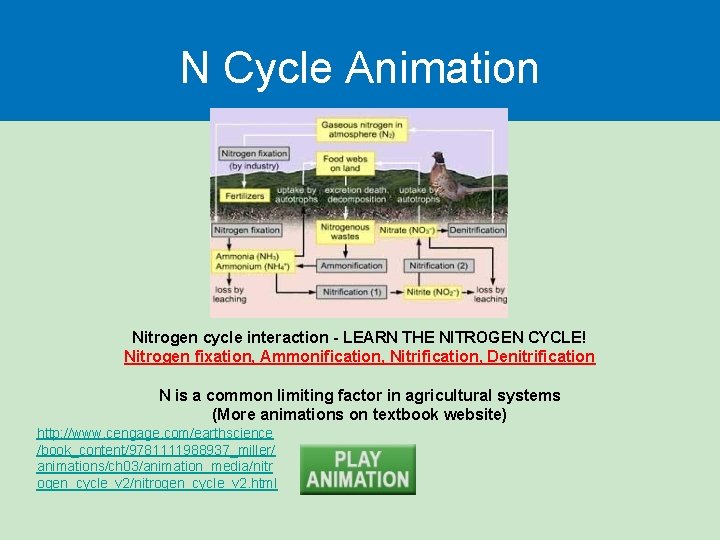
The Nitrogen Cycle Nitrogen gas (N 2) makes up 78% of the atmosphere BUT N 2 cannot be used directly by most living organisms. Nitrogen-fixing bacteria convert N 2 into compounds that are useful nutrients for plants and animals.
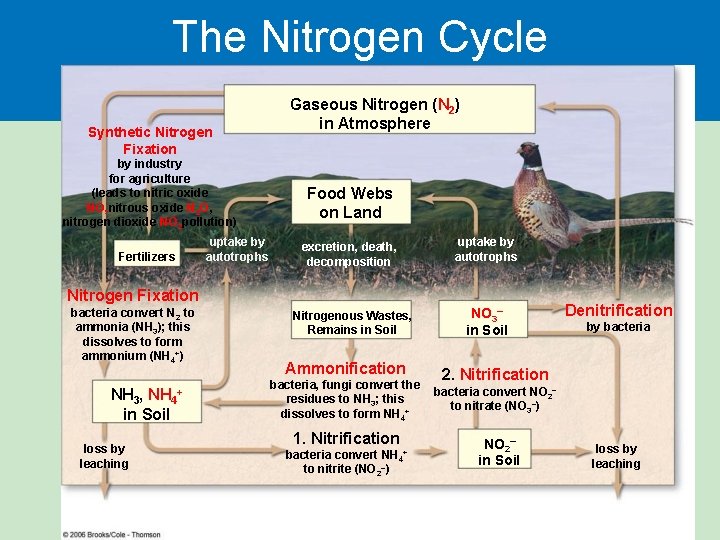
The Nitrogen Cycle Synthetic Nitrogen Fixation by industry for agriculture (leads to nitric oxide NO, nitrous oxide N 2 O, nitrogen dioxide NO 2 pollution) uptake by autotrophs Fertilizers Gaseous Nitrogen (N 2) in Atmosphere Food Webs on Land excretion, death, decomposition uptake by autotrophs Nitrogenous Wastes, Remains in Soil NO 3– in Soil Nitrogen Fixation bacteria convert N 2 to ammonia (NH 3); this dissolves to form ammonium (NH 4+) NH 3, NH 4 in Soil loss by leaching + Ammonification bacteria, fungi convert the residues to NH 3; this dissolves to form NH 4+ 1. Nitrification bacteria convert NH 4+ to nitrite (NO 2–) Denitrification by bacteria 2. Nitrification bacteria convert NO 2– to nitrate (NO 3–) NO 2– in Soil loss by leaching
N Cycle Animation Nitrogen cycle interaction - LEARN THE NITROGEN CYCLE! Nitrogen fixation, Ammonification, Nitrification, Denitrification N is a common limiting factor in agricultural systems (More animations on textbook website) http: //www. cengage. com/earthscience /book_content/9781111988937_miller/ animations/ch 03/animation_media/nitr ogen_cycle_v 2/nitrogen_cycle_v 2. html
Human Impacts on the N Cycle Human agricultural practices have more than doubled the amount of N in the atmosphere and hydrosphere. 1. Production of inorganic fertilizers and the burning of fossils fuels produce: • Nitrogen oxides (NOx) cause smog and acid rain (includes nitric oxide NO, nitrogen dioxide NO 2), AND • Nitrous oxide (N 2 O), a powerful greenhouse gas 2. Excess Nitrate (NO 3 -) from fertilizer, agricultural waste, and sewage can leach thru soil to contaminate groundwater and become runoff that causes eutrophication
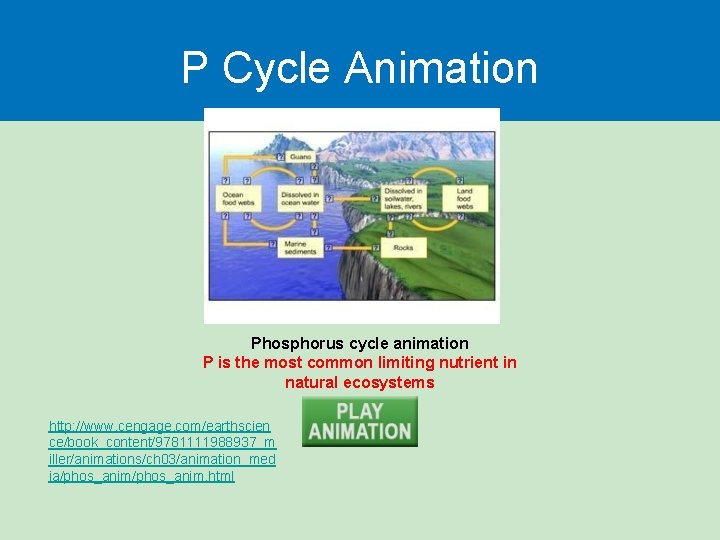
The Phosphorus Cycle Phosphorus circulates through water, rock, and living things. Phosphorus does not cycle through the atmosphere. Major reservoirs: rock, ocean bottom.
P Cycle Animation Phosphorus cycle animation P is the most common limiting nutrient in natural ecosystems http: //www. cengage. com/earthscien ce/book_content/9781111988937_m iller/animations/ch 03/animation_med ia/phos_anim. html
Human Interventions in the Phosphorus Cycle 1. Mining of phosphate rock 2. Clearing tropical forests reduces available phosphate in tropical soils 3. Phosphates from runoff of animal wastes, sewage & fertilizers disrupts aquatic ecosystems - eutrophication. Since 1900, human activities have increased the natural rate of phosphorous release to environment by about 3. 7 fold.
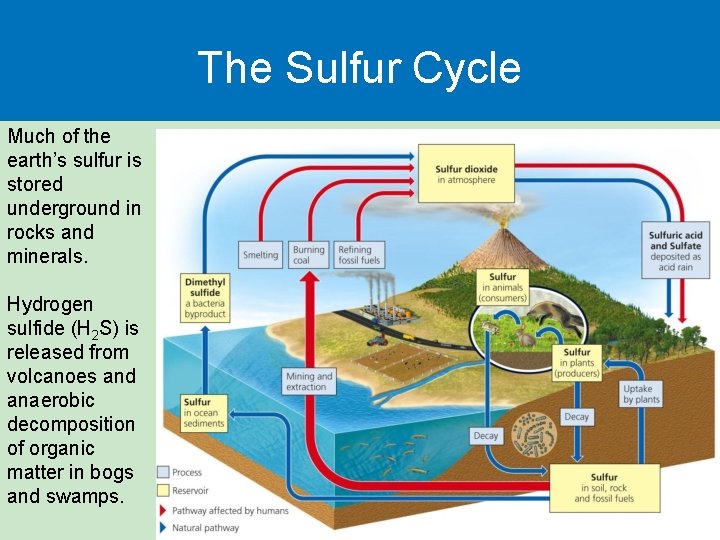
The Sulfur Cycle Much of the earth’s sulfur is stored underground in rocks and minerals. Hydrogen sulfide (H 2 S) is released from volcanoes and anaerobic decomposition of organic matter in bogs and swamps.
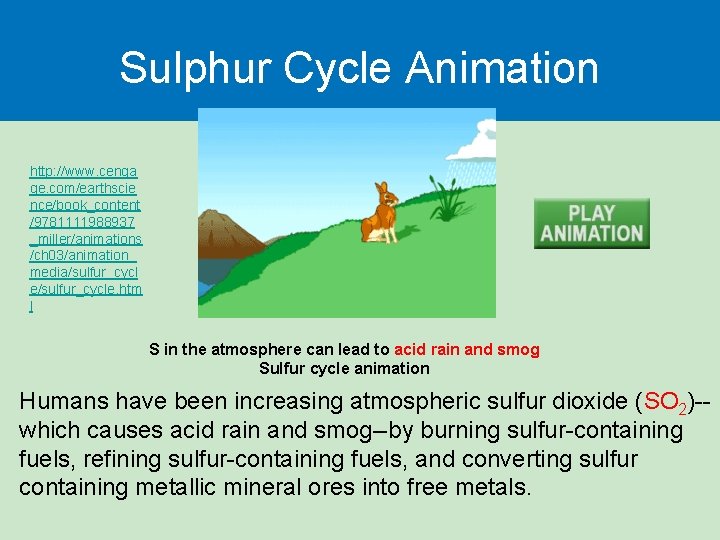
Sulphur Cycle Animation http: //www. cenga ge. com/earthscie nce/book_content /9781111988937 _miller/animations /ch 03/animation_ media/sulfur_cycl e/sulfur_cycle. htm l S in the atmosphere can lead to acid rain and smog Sulfur cycle animation Humans have been increasing atmospheric sulfur dioxide (SO 2)-which causes acid rain and smog--by burning sulfur-containing fuels, refining sulfur-containing fuels, and converting sulfur containing metallic mineral ores into free metals.
Nutrient cycling in the environment impacts life in the environment
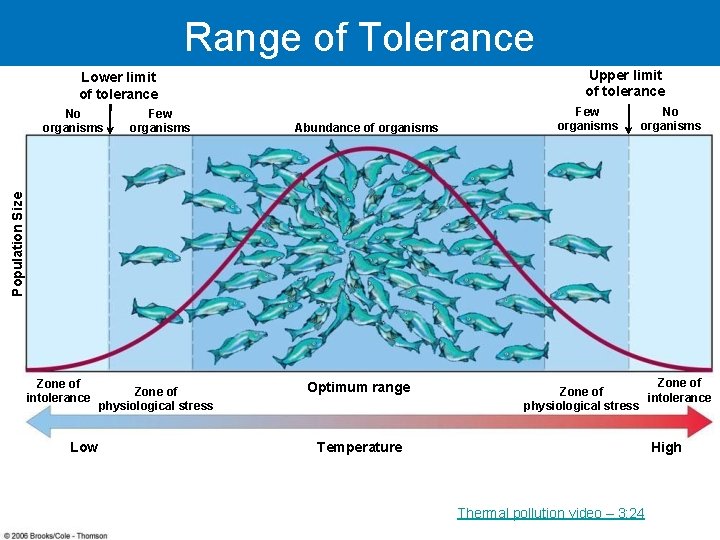
Range of Tolerance Upper limit of tolerance Lower limit of tolerance Few organisms Abundance of organisms Few organisms No organisms Population Size No organisms Zone of intolerance Low Zone of physiological stress Optimum range Zone of intolerance physiological stress Temperature High Thermal pollution video – 3: 24
Bioaccumulation & Biomagnification • Bioaccumulation = The buildup of a persistent toxic substance, such as certain pesticides, in an organism’s body, often in fatty tissues. • Biomagnification = increase in concentration of fat-soluable chemicals in organisms at successively higher trophic levels of a food web.
Nutrient and Pollution Levels Influence Populations
Section 3 -5 HOW DO SCIENTISTS STUDY ECOSYSTEMS?
How Do Ecologists Learn about Ecosystems? • Field research. Gather comparative baseline data. • Remote sensing • Geographic information system (GIS). Example: computerized maps of an area that are used to examine forest cover, water resources, air pollution emissions, coastal changes, and changes in global sea temperatures. • Laboratory research • Systems analysis, Mathematical models, Simulations. All rely on accurate input of “real world” parameters.
Three Big Ideas • PART 1: Life is sustained by the flow of energy from the sun through the biosphere, the cycling of nutrients within the biosphere, and gravity. • PART 2: Some organisms produce the nutrients they need, some survive by consuming other organisms, and others recycle nutrients back to producers. • Human activities are altering the flow of energy through food chains and webs, and the cycling of nutrients within ecosystems and the biosphere.